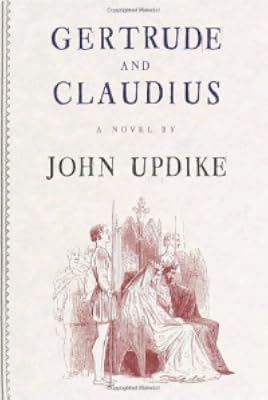
Gertrude and Claudius
by John Updike
On This Page
Description
Tells the story of Claudius and Gertrude, King and Queen of Denmark, before the action of Shakespeare's Hamlet begins. Employing the nomenclature and certain details of the ancient Scandinavian legends that first describe the prince who feigns madness to achieve revenge upon his father's slayer, Updike brings to life Gertrude's girlhood as the daughter of King Rorik, her arranged marriage to the man who becomes King Hamlet, and her middle-aged affair with her husband's younger brother.Tags
Recommendations
























Member Reviews
Who knew we needed a Hamlet-from-Gertrude’s-POV? Middle-aged woman trapped in dull dynastic marriage to beefy warrior finds happiness with her sexy and sophisticated brother-in-law, only to have her life messed up by her censorious perpetual-student son. Quite a fun idea, but I’m not sure if it really had enough substance to justify a whole novel.
Perhaps it would have been more convincing as a happy second marriage if Updike had somehow managed to find a way to get Hamlet sr. out of the way without involving actual fratricide. But no-fault divorce wasn’t really a thing (or even a thing) in medieval Denmark. It’s also slightly unclear to me how Gertrude’s father could be a first-generation Christian convert while her son was show more dabbling his toes in the renaissance. But it’s all just a bit of fun from a writer who was established enough to be able to publish whatever caprices happened to take his fancy, we probably shouldn’t look too closely… show less
Perhaps it would have been more convincing as a happy second marriage if Updike had somehow managed to find a way to get Hamlet sr. out of the way without involving actual fratricide. But no-fault divorce wasn’t really a thing (or even a thing) in medieval Denmark. It’s also slightly unclear to me how Gertrude’s father could be a first-generation Christian convert while her son was show more dabbling his toes in the renaissance. But it’s all just a bit of fun from a writer who was established enough to be able to publish whatever caprices happened to take his fancy, we probably shouldn’t look too closely… show less
John Updike chose to carry out a difficult task. He imagined and created the complex (?) relationship between Gertrude and Claudius before the climax of the events that consist Shakespeare’s masterpiece. One could say that this is an attempt of a prequel to ''Hamlet'' and as such it has the quality of the majority of prequels and sequels in Literature and in Cinema. It falls frightfully short.
Even as I’m writing this review, I am unable to understand how I feel about this book. It left me completely indifferent, it didn't create any feelings in me, any images in my mind. I cannot say I hated it because hate needs a whole array of feelings to be invoked and those were simply absent here. Updike’s writing was completely empty, show more devoid of any warmth and soul, any real sentiment that would be required when an author is dealing -or messing with- the task to breathe new life to the Bard’s larger than life characters.
If I want to be honest, I need to say that I never considered Gertrude a villain. However, neither she nor Claudius are particularly interesting characters. Naturally, Hamlet erases all, but Laertes, Ophelia, Horatio are people I would like to read more about. So are Gertrude and Claudius. I’ve often wondered about the marriage between Hamlet’s parents. Was it happy? Was Gertrude aware of her brother-in-law’s intentions? These are questions that have been plaguing scholars for centuries. Updike presents his own vision, which I won't spoil here, and it is quite plausible. The problem is that it’s inconsistent with the characters he reconstructed. He managed to turn the infamous couple into a snooze-fest, people who speak like automatons, without any substance. They’re not even archetypes, they’re plain air.There is nothing they offer to the reader. Even Polonius- who’s named Corambis here after the version of the Bad Folio- becomes more boring than our familiar Shakespearean councillor. Well, at least that’s an achievement there for you…
Where is Hamlet, you may ask? Hamlet is completely absent for the majority of the narration and thank Jesus and Mr. Wednesday and all the Old Gods and the New for that, because who knows what treatment would be in store for our beloved, melancholic, black clad Prince of Denmark?In the few lines that are uttered by Gertrude, Hamlet isn’t positively portrayed. Yes, Updike creates the Queen as an unloving, cold mother whose only thoughts are how to fall in bed with her husband’s brother. Forgive me, but I have lost count on how many times I have read ''Hamlet'' and I’ve never thought that she was distant, devoid of maternal feelings.
Many of the excellent reviewers here have already mentioned the writing issues so I won’t bore you further. Updike attempted to create a kind of pseudo-medieval language. In my opinion,it didn’t work to the advantage of the story. It was exactly this issue that made every interaction so dry it was almost unbearable. The fact that Claudius uses the word ‘’connoisseur’’ or speaks Italian and Spanish interrupting his speech was something I couldn't take seriously. Not to mention, that the writer had the audacity to insert quotes from Shakespeare's play in the dialogues.
Updike is an author I wasn’t familiar with before I read ‘’Gertrude and Claudius’’ and I don’t intend to try my luck with any other book of his. In our times,we have experienced examples of re-imagining Shakespeare with beautiful results. Unfortunately, this novel wasn't true to the Bard and to the nature of his characters. It wasn’t even respectful. Perhaps, Hamlet and his troubled family should be left alone by now...No need to torture them more... show less
Even as I’m writing this review, I am unable to understand how I feel about this book. It left me completely indifferent, it didn't create any feelings in me, any images in my mind. I cannot say I hated it because hate needs a whole array of feelings to be invoked and those were simply absent here. Updike’s writing was completely empty, show more devoid of any warmth and soul, any real sentiment that would be required when an author is dealing -or messing with- the task to breathe new life to the Bard’s larger than life characters.
If I want to be honest, I need to say that I never considered Gertrude a villain. However, neither she nor Claudius are particularly interesting characters. Naturally, Hamlet erases all, but Laertes, Ophelia, Horatio are people I would like to read more about. So are Gertrude and Claudius. I’ve often wondered about the marriage between Hamlet’s parents. Was it happy? Was Gertrude aware of her brother-in-law’s intentions? These are questions that have been plaguing scholars for centuries. Updike presents his own vision, which I won't spoil here, and it is quite plausible. The problem is that it’s inconsistent with the characters he reconstructed. He managed to turn the infamous couple into a snooze-fest, people who speak like automatons, without any substance. They’re not even archetypes, they’re plain air.There is nothing they offer to the reader. Even Polonius- who’s named Corambis here after the version of the Bad Folio- becomes more boring than our familiar Shakespearean councillor. Well, at least that’s an achievement there for you…
Where is Hamlet, you may ask? Hamlet is completely absent for the majority of the narration and thank Jesus and Mr. Wednesday and all the Old Gods and the New for that, because who knows what treatment would be in store for our beloved, melancholic, black clad Prince of Denmark?In the few lines that are uttered by Gertrude, Hamlet isn’t positively portrayed. Yes, Updike creates the Queen as an unloving, cold mother whose only thoughts are how to fall in bed with her husband’s brother. Forgive me, but I have lost count on how many times I have read ''Hamlet'' and I’ve never thought that she was distant, devoid of maternal feelings.
Many of the excellent reviewers here have already mentioned the writing issues so I won’t bore you further. Updike attempted to create a kind of pseudo-medieval language. In my opinion,it didn’t work to the advantage of the story. It was exactly this issue that made every interaction so dry it was almost unbearable. The fact that Claudius uses the word ‘’connoisseur’’ or speaks Italian and Spanish interrupting his speech was something I couldn't take seriously. Not to mention, that the writer had the audacity to insert quotes from Shakespeare's play in the dialogues.
Updike is an author I wasn’t familiar with before I read ‘’Gertrude and Claudius’’ and I don’t intend to try my luck with any other book of his. In our times,we have experienced examples of re-imagining Shakespeare with beautiful results. Unfortunately, this novel wasn't true to the Bard and to the nature of his characters. It wasn’t even respectful. Perhaps, Hamlet and his troubled family should be left alone by now...No need to torture them more... show less
To Updike or not to Updike.
That is the question some readers will ponder as they consider the prolific author’s nineteenth novel, Gertrude and Claudius, a densely-worded tale of the events leading up to Hamlet.
To those indecisive readers, I say, “Get thee to a bookery!âÂ?
Updike is at his finest hour in these pages, delivering a fresh view of the Hamlet tale that will especially appeal to lovers of the Bard. Even those members of the population whose acquaintance with the Prince of Denmark only extends to the Ethan Hawke version currently in theaters will want to give this novel a try.
UpdikeâÂÂs narrative focuses on the years prior to the first âÂÂIs that a ghost I see before me?âÂ? scene of show more ShakespeareâÂÂs play. Using ancient texts as well as ShakespeareâÂÂs Quarto versions as his basis, Updike begins with Gertrude forced into marriage with King Hamlet. An âÂÂample, serene, dewy and sensible girl,âÂ? she resists the political union at first. However, a night of Nordic sex, written with UpdikeâÂÂs typically delicate earthiness, soon changes her mind and she lends her heart to the king.
Waiting in the shadows, however, is her brother-in-law Claudius, a well-traveled warrior who falls for Gertrude the moment he sees her. He tries to stay away from Elsinore castle, busying himself with foreign wars, wine, women and song, but eventually he returns and finds himself more in love with Gertrude than before.
Adultery ensues, of course, and as anyone familiar with UpdikeâÂÂs eighteen other novels knows, heâÂÂs not shy in describing such matters. The sex in Gertrude and Claudius is moist and sensual in a manner more suited to Danielle Steele than the Bard. Updike has never been one to blush at descriptions of bedroom matters and here he recreates medieval couplings with a 21st-century lustiness. The adultery between Gertrude and Claudius is vivid and unforgettable.
Ominous music begins to play in our heads as familiar events begin to unfold: the king begins to suspect his wife and brother, Hamlet is sent away to school, Yorik dies. It is a chilly kingdom, made colder by royal sin.
We all know what happens next: the sleeping king in the garden, the poison in the ear, the final bloody family feud. The novel doesnâÂÂt cover the events of the play, but stops short at Act I, Scene 2 where Hamlet mutters, âÂÂA little more than kin and less than kind.âÂ? The final paragraphs, in which Claudius envisions a rosy future, are a rousing symphony of irony, told only as Updike can.
We donâÂÂt see much of the young princeâÂÂhe makes an appearance in the final pages, but beyond that, we mostly hear Gertrude referring to him as âÂÂisolated,âÂ? âÂÂbroodingâÂ? and âÂÂquirkishâÂ? (and thatâÂÂs when heâÂÂs five years old!). You wonâÂÂt learn much about the character of Hamlet (Shakespeare does a good enough job of that, in my opinion), but you will get to know the playâÂÂs more peripheral characters: Gertrude, Claudius, Hamlet Sr., and Polonius (who, in true fashion, goes around dispensing homilies like âÂÂUnease, Your Majesty, is the human lot, even for the most exalted. The pampered foot most feels the pinch.âÂ?). Polonius turns out to be not such a doddering old fool after all and Gertrude is less conniving than Shakespeare would have us believe.
The novel is a bit slow out of the starting gates. Some readers will have trouble with the long, meandering paragraphs; others will be confused by the unfamiliar names given to familiar characters. In a Foreword, Updike notes that the names are taken from ancient legends and thus Gertrude=Gerutha, Claudius=Feng, Hamlet=Amleth, and so on. To make matters tougher, Updike switches spellings between each of the novelâÂÂs three parts. But if you bear with him, you soon settle into the rhythm of the archaic construction. After all, wasnâÂÂt it Hamlet himself who said, âÂÂwords, words, wordsâÂ??
Contemporary novelists have re-visioned old texts beforeâÂÂNorman Mailer and the New Testament (The Gospel According to the Son), John Gardner and Beowulf (Grendel), Updike himself and Nathaniel Hawthorne (S.)âÂÂbut this is by far the best IâÂÂve read yet. UpdikeâÂÂs language mirrors ShakespeareâÂÂs with a fresh contemporary spin. The images, and the words used to describe them, are earthy, dank and greasy. HereâÂÂs Gertrude doing her own Hamlet-ish monologue as she ponders her future between husband and lover:
O the days, the days in their all but unnoticed beauty and varietyâÂÂdays of hurtling sun and shade like the dapples of an exhilarated beast, days of steady strong cold and a blood-red dusk, tawny autumn days smelling of hay and grapes, spring days tasting of salty wave-froth and of hearth-smoke blown down from the chimney pots, misty days of sifted sunshine and gentle fitful rain that glistened and purred on the windowsill like a silvery catâ¦days of high ribbed skies like an angelâÂÂs carcass, December days of howling sideways snow (and so on for many more phrases of this full-bodied paragraph).
Such heady sentences like that might turn away some readers. I, on the other hand, happen to really enjoy UpdikeâÂÂs brash use of English, his sentences that feel at once unfettered and tightly controlled.
HereâÂÂs another passage with tasty language that got my writerâÂÂs blood simmering as Gertrude (Gerutha) disrobes for her husband on their wedding night:
By the snapping firelight her nakedness felt like a film of thin metal, an ultimate angelic costume. From throat to ankles her skin had never seen the sun. Gerutha was as white as an onion, as smooth as a root fresh-pulled from the earth.
Updike certainly has a tough row to hoe in todayâÂÂs market whose bookstore browsers have grown used to taking their Shakespeare in DiCaprio-sized bites. Can he, the scribe who once shaped a generation with a character named Rabbit, pull another hare from his hat of literary tricks?
The answer comes trippingly off my tongue: âÂÂAye!âÂ? show less
That is the question some readers will ponder as they consider the prolific author’s nineteenth novel, Gertrude and Claudius, a densely-worded tale of the events leading up to Hamlet.
To those indecisive readers, I say, “Get thee to a bookery!âÂ?
Updike is at his finest hour in these pages, delivering a fresh view of the Hamlet tale that will especially appeal to lovers of the Bard. Even those members of the population whose acquaintance with the Prince of Denmark only extends to the Ethan Hawke version currently in theaters will want to give this novel a try.
UpdikeâÂÂs narrative focuses on the years prior to the first âÂÂIs that a ghost I see before me?âÂ? scene of show more ShakespeareâÂÂs play. Using ancient texts as well as ShakespeareâÂÂs Quarto versions as his basis, Updike begins with Gertrude forced into marriage with King Hamlet. An âÂÂample, serene, dewy and sensible girl,âÂ? she resists the political union at first. However, a night of Nordic sex, written with UpdikeâÂÂs typically delicate earthiness, soon changes her mind and she lends her heart to the king.
Waiting in the shadows, however, is her brother-in-law Claudius, a well-traveled warrior who falls for Gertrude the moment he sees her. He tries to stay away from Elsinore castle, busying himself with foreign wars, wine, women and song, but eventually he returns and finds himself more in love with Gertrude than before.
Adultery ensues, of course, and as anyone familiar with UpdikeâÂÂs eighteen other novels knows, heâÂÂs not shy in describing such matters. The sex in Gertrude and Claudius is moist and sensual in a manner more suited to Danielle Steele than the Bard. Updike has never been one to blush at descriptions of bedroom matters and here he recreates medieval couplings with a 21st-century lustiness. The adultery between Gertrude and Claudius is vivid and unforgettable.
Ominous music begins to play in our heads as familiar events begin to unfold: the king begins to suspect his wife and brother, Hamlet is sent away to school, Yorik dies. It is a chilly kingdom, made colder by royal sin.
We all know what happens next: the sleeping king in the garden, the poison in the ear, the final bloody family feud. The novel doesnâÂÂt cover the events of the play, but stops short at Act I, Scene 2 where Hamlet mutters, âÂÂA little more than kin and less than kind.âÂ? The final paragraphs, in which Claudius envisions a rosy future, are a rousing symphony of irony, told only as Updike can.
We donâÂÂt see much of the young princeâÂÂhe makes an appearance in the final pages, but beyond that, we mostly hear Gertrude referring to him as âÂÂisolated,âÂ? âÂÂbroodingâÂ? and âÂÂquirkishâÂ? (and thatâÂÂs when heâÂÂs five years old!). You wonâÂÂt learn much about the character of Hamlet (Shakespeare does a good enough job of that, in my opinion), but you will get to know the playâÂÂs more peripheral characters: Gertrude, Claudius, Hamlet Sr., and Polonius (who, in true fashion, goes around dispensing homilies like âÂÂUnease, Your Majesty, is the human lot, even for the most exalted. The pampered foot most feels the pinch.âÂ?). Polonius turns out to be not such a doddering old fool after all and Gertrude is less conniving than Shakespeare would have us believe.
The novel is a bit slow out of the starting gates. Some readers will have trouble with the long, meandering paragraphs; others will be confused by the unfamiliar names given to familiar characters. In a Foreword, Updike notes that the names are taken from ancient legends and thus Gertrude=Gerutha, Claudius=Feng, Hamlet=Amleth, and so on. To make matters tougher, Updike switches spellings between each of the novelâÂÂs three parts. But if you bear with him, you soon settle into the rhythm of the archaic construction. After all, wasnâÂÂt it Hamlet himself who said, âÂÂwords, words, wordsâÂ??
Contemporary novelists have re-visioned old texts beforeâÂÂNorman Mailer and the New Testament (The Gospel According to the Son), John Gardner and Beowulf (Grendel), Updike himself and Nathaniel Hawthorne (S.)âÂÂbut this is by far the best IâÂÂve read yet. UpdikeâÂÂs language mirrors ShakespeareâÂÂs with a fresh contemporary spin. The images, and the words used to describe them, are earthy, dank and greasy. HereâÂÂs Gertrude doing her own Hamlet-ish monologue as she ponders her future between husband and lover:
O the days, the days in their all but unnoticed beauty and varietyâÂÂdays of hurtling sun and shade like the dapples of an exhilarated beast, days of steady strong cold and a blood-red dusk, tawny autumn days smelling of hay and grapes, spring days tasting of salty wave-froth and of hearth-smoke blown down from the chimney pots, misty days of sifted sunshine and gentle fitful rain that glistened and purred on the windowsill like a silvery catâ¦days of high ribbed skies like an angelâÂÂs carcass, December days of howling sideways snow (and so on for many more phrases of this full-bodied paragraph).
Such heady sentences like that might turn away some readers. I, on the other hand, happen to really enjoy UpdikeâÂÂs brash use of English, his sentences that feel at once unfettered and tightly controlled.
HereâÂÂs another passage with tasty language that got my writerâÂÂs blood simmering as Gertrude (Gerutha) disrobes for her husband on their wedding night:
By the snapping firelight her nakedness felt like a film of thin metal, an ultimate angelic costume. From throat to ankles her skin had never seen the sun. Gerutha was as white as an onion, as smooth as a root fresh-pulled from the earth.
Updike certainly has a tough row to hoe in todayâÂÂs market whose bookstore browsers have grown used to taking their Shakespeare in DiCaprio-sized bites. Can he, the scribe who once shaped a generation with a character named Rabbit, pull another hare from his hat of literary tricks?
The answer comes trippingly off my tongue: âÂÂAye!âÂ? show less
Wow! Bought this book for 50 cents at St Vinnies just because it was by John Updike and I liked his poetry but I was not enthusiastic about it being a Shakespeare derivative. It anything but a derivative. From the first pages I was hooked. Such beautiful writing. It was like travelling though the illustrations of an illuminated manuscript. I kept reading out passages to my wife. Nothing less than a treat.
This is the story of what happened before Hamlet. As a teenage princess Gerutha argues with her father against her upcoming wedding to the much older soldier Horwendil, an argument she loses. The result of this marriage is a boy whom Gerutha never feels very motherly towards, claiming the child is cold to her. All the while, her brother-in-law has been circling Gerutha, desperately in love.
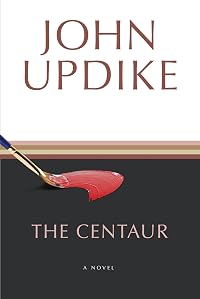
This is the second Updike I've read, having read The Centaur many years ago and liked it. I can't say that I liked this one though. Gerutha's own life wasn't explored, she is shown only in connection to the men in her life, and because of that, her portrayal is sexualized much of the time, while her role as mother to Hamlet is thin in the story, he show more actually figures little.
I got the feeling pretty quickly that Updike was a guy who liked the sound of his own voice. The sentences are packed with as many descriptors as could be jammed in, making for heavy paragraphs. show less
This is the second Updike I've read, having read The Centaur many years ago and liked it. I can't say that I liked this one though. Gerutha's own life wasn't explored, she is shown only in connection to the men in her life, and because of that, her portrayal is sexualized much of the time, while her role as mother to Hamlet is thin in the story, he show more actually figures little.
I got the feeling pretty quickly that Updike was a guy who liked the sound of his own voice. The sentences are packed with as many descriptors as could be jammed in, making for heavy paragraphs. show less
"The New York Times" voted Gertrude and Claudius one of the ten best novels of the year 2000. It is certainly an interesting exercise in literary imagination and a little gem of a book. The eponymous characters are the parents of Shakespeare’s Prince Hamlet, and the book is a prequel to the play.
Updike tells us what was rotten in Denmark: old King Hamlet (the Prince’s father) is first cuckolded and then murdered by his younger brother, who takes the kingly name Claudius and marries Prince Hamlet’s mother, Gertrude. The three main protagonists in the book [King Hamlet, Claudius, and Gertrude] are complex characters richly developed in Updike’s matchless prose. Prince Hamlet is off studying in Wittenberg, and plays only a minor show more role.
Apparently, Shakespeare’s Hamlet is a retelling of an older Norse tale in which the main characters had more Nordic names than those in the famous play. Updike calls them by their ancient names in the early part of the book, but changes the names to the more modern form as the book proceeds. Thus, the young queen is Gerutha; later she becomes Geruthe and finally Gertrude. Her first husband is Horwendil, who evolves into the elder Hamlet; his brother is Feng and then Fengon before becoming Claudius. The baby born to Gerutha and Horwendil is Amleth, who becomes Hamlet in the last chapter.
In Updike’s retelling, Gerutha’s father requires her to marry a rather gruff, somewhat unfeeling but very competent warrior named Horwendil, who becomes king of Denmark. Horwendil’s younger, more romantic brother Feng returns from wandering around Europe and Byzantium. Later, Fengon seduces Geruthe. [That’s right, their names have changed.] Horwendil confronts Fengon in a dramatic scene that demonstrates how wise, strong, and canny the old king is. Nevertheless, with the help of the doddering old Polonius, Fengon is able to poison his elder brother before he wreaks his revenge.
The book ends with Fengon, now Claudius, assuming the kingship and some of the behavioral characteristics of his elder brother. Claudius hopes to win over the affections of his stepson-nephew, Hamlet, and marry him off to Ophelia, the daughter of Polonius. And now we can proceed to Act I, Scene I of Shakespeare’s play.
Updike’s description of the long process of seduction is sympathetic and sensitive. As usual, his prose is scintillating. This is a clever exercise, well worth reading.
(JAB) show less
Updike tells us what was rotten in Denmark: old King Hamlet (the Prince’s father) is first cuckolded and then murdered by his younger brother, who takes the kingly name Claudius and marries Prince Hamlet’s mother, Gertrude. The three main protagonists in the book [King Hamlet, Claudius, and Gertrude] are complex characters richly developed in Updike’s matchless prose. Prince Hamlet is off studying in Wittenberg, and plays only a minor show more role.
Apparently, Shakespeare’s Hamlet is a retelling of an older Norse tale in which the main characters had more Nordic names than those in the famous play. Updike calls them by their ancient names in the early part of the book, but changes the names to the more modern form as the book proceeds. Thus, the young queen is Gerutha; later she becomes Geruthe and finally Gertrude. Her first husband is Horwendil, who evolves into the elder Hamlet; his brother is Feng and then Fengon before becoming Claudius. The baby born to Gerutha and Horwendil is Amleth, who becomes Hamlet in the last chapter.
In Updike’s retelling, Gerutha’s father requires her to marry a rather gruff, somewhat unfeeling but very competent warrior named Horwendil, who becomes king of Denmark. Horwendil’s younger, more romantic brother Feng returns from wandering around Europe and Byzantium. Later, Fengon seduces Geruthe. [That’s right, their names have changed.] Horwendil confronts Fengon in a dramatic scene that demonstrates how wise, strong, and canny the old king is. Nevertheless, with the help of the doddering old Polonius, Fengon is able to poison his elder brother before he wreaks his revenge.
The book ends with Fengon, now Claudius, assuming the kingship and some of the behavioral characteristics of his elder brother. Claudius hopes to win over the affections of his stepson-nephew, Hamlet, and marry him off to Ophelia, the daughter of Polonius. And now we can proceed to Act I, Scene I of Shakespeare’s play.
Updike’s description of the long process of seduction is sympathetic and sensitive. As usual, his prose is scintillating. This is a clever exercise, well worth reading.
(JAB) show less
Very enjoyable prequel to Hamlet. Casts the "incestuous" couple in a very sexy light. It also rang true for the characters as they emerged in Hamlet. I could see the motivations and reactions as making sense in both works so he must have done something right.
Members
- Recently Added By
Lists

METAfiction
21 works; 4 members

Retellings of Shakespeare Plays
42 works; 12 members

Lucy's Long List
69 works; 1 member

In Our Time books
4,934 works; 2 members
Author Information

343+ Works 53,923 Members
American novelist, poet, and critic John Updike was born in Reading, Pennsylvania on March 18, 1932. He received an A.B. degree from Harvard University, which he attended on a scholarship, in 1954. After graduation, he accepted a one-year fellowship to study painting at the Ruskin School of Drawing and Fine Art in Oxford, England. After returning show more from England in 1955, he worked for two years on the staff of The New Yorker. This marked the beginning of a long relationship with the magazine, during which he has contributed numerous short stories, poems, and book reviews. Although Updike's first published book was a collection of verse, The Carpentered Hen and Other Tame Creatures (1958), his renown as a writer is based on his fiction, beginning with The Poorhouse Fair (1959). During his lifetime, he wrote more than 50 books and primarily focused on middle-class America and their major concerns---marriage, divorce, religion, materialism, and sex. Among his best-known works are the Rabbit tetrology---Rabbit, Run (1960), Rabbit Redux (1971), Rabbit Is Rich (1981), and Rabbit at Rest (1988). Rabbit, Run introduces Harry "Rabbit" Angstrom as a 26-year-old salesman of dime-store gadgets trapped in an unhappy marriage in a dismal Pennsylvania town, looking back wistfully on his days as a high school basketball star. Rabbit Redux takes up the story 10 years later, and Rabbit's relationship with representative figures of the 1960s enables Updike to provide social commentary in a story marked by mellow wisdom and compassion in spite of some shocking jolts. In Rabbit Is Rich, Harry is comfortably middle-aged and complacent, and much of the book seems to satirize the country-club set and the swinging sexual/social life of Rabbit and his friends. Finally, in Rabbit at Rest, Harry arrives at the age where he must confront his mortality. Updike won the Pulitzer Prize for both Rabbit Is Rich and Rabbit at Rest. Updike's other novels range widely in subject and locale, from The Poorhouse Fair, about a home for the aged that seems to be a microcosm for society as a whole, through The Court (1978), about a revolution in Africa, to The Witches of Eastwick (1984), in which Updike tries to write from inside the sensibilities of three witches in contemporary New England. The Centaur (1963) is a subtle, complicated allegorical novel that won Updike the National Book Award in 1964. In addition to his novels, Updike also has written short stories, poems, critical essays, and reviews. Self-Consciousness (1989) is a memoir of his early life, his thoughts on issues such as the Vietnam War, and his attitude toward religion. He was elected to the American Academy of Arts and Letters in 1977. He died of lung cancer on January 27, 2009 at the age of 76. (Bowker Author Biography) John Updike was born in 1932, in Shillington, Pennsylvania. Since 1957 he has lived in Massachusetts. His novels have won the Pulitzer Prize, the National Book Award, the National Book Critics Circle Award, & the Howells Medal. (Publisher Provided) John Updike was born in 1932 and attended Harvard College and the Ruskin School of Drawing and Fine Art in Oxford, England. Form 1955 to 1957 he was a staff member of The New Yorker, which he contributed numerous writings. Updike's art criticism has appeared in publications including Arts and Antiques, The New Republic, The New York Times Book Review, and Realites, among many others. He is the author of such best-selling novels as Rabbit Run and Rabbit is Rich. His many works of fiction, poetry and criticism have been awarded the Pulitzer Prize, the National Book Award, the American Book Award, and the National Book Critics Circle Award. For the past 40 years he has lived in Massachusetts. (Publisher Provided) John Updike is the author of some 50 books, including collections of short stories, poems, & criticism. His novels have won the Pulitzer Prize, the National Book Award, the National Book Critics Circle Award, & the Howells Medal. Born in Shillington, Pennsylvania, in 1932, he has lived in Massachusetts since 1957. (Publisher Provided) show less
Awards and Honors
Awards
Distinctions
Work Relationships
Is contained in
Is a (non-series) prequel to
Common Knowledge
- Original publication date
- 2000
- People/Characters
- Hamlet; Gertrude; Claudius
- Important places
- Denmark
- Important events
- Middle Ages
- Dedication
- To Martha / De dezir mos cors no fina / vas selha ren qu'ieu pus am
- First words
- The king was irate.
- Last words
- (Click to show. Warning: May contain spoilers.)He had gotten away with it. All would be well.
- Publisher's editor
- Jones, Judith
Classifications
Statistics
- Members
- 1,192
- Popularity
- 21,068
- Reviews
- 20
- Rating
- (3.56)
- Languages
- 14 — Catalan, Dutch, English, Estonian, French, German, Hungarian, Italian, Norwegian, Portuguese, Romanian, Croatian, Spanish, Swedish
- Media
- Paper, Audiobook, Ebook
- ISBNs
- 27
- ASINs
- 7