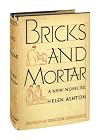
Bricks and Mortar
by Helen Ashton
On This Page
Description
Describes the life of a London architect from the 1890s to the early 1930s. This novel is about a 'very decent, simple, sweet-minded creature' who realises that his marriage has been a mistake yet makes the best of things: because he has dignity, commonsense and kindness, and is 'very much in love with his profession'.Tags
Recommendations









































Member Reviews
"He was an architect, and very much in love with his profession"
By sally tarbox on 19 Jan. 2014
Format: Paperback
I couldn't put this down from page 1, where we are introduced to pleasant, enthusiastic young Martin Lovell, off on a visit to Rome where he can indulge his passion for architecture. But at the guest-house he encounters the redoubtable Lady Stapleford, a widow in straitened circumstances, resolved in marrying off her pretty but non-academic daughter Letty:
' "Now I don't believe", said Lady Stapleford with deceptive candour, "in keeping young people waiting about after they've made up their minds to marry each other...It would be extremely selfish of me", said the judge's widow, who did not mean to incur the expense of a London show more wedding, or risk the sobering effect of a change of scene and the likelihood of a young man's inconstancy.'
The novel then covers the next forty years; the married life of two such different characters, Martin's unabating interest in his subject, children, an interfering mother-in-law... Beautifully written, with a very moving ending. show less
By sally tarbox on 19 Jan. 2014
Format: Paperback
I couldn't put this down from page 1, where we are introduced to pleasant, enthusiastic young Martin Lovell, off on a visit to Rome where he can indulge his passion for architecture. But at the guest-house he encounters the redoubtable Lady Stapleford, a widow in straitened circumstances, resolved in marrying off her pretty but non-academic daughter Letty:
' "Now I don't believe", said Lady Stapleford with deceptive candour, "in keeping young people waiting about after they've made up their minds to marry each other...It would be extremely selfish of me", said the judge's widow, who did not mean to incur the expense of a London show more wedding, or risk the sobering effect of a change of scene and the likelihood of a young man's inconstancy.'
The novel then covers the next forty years; the married life of two such different characters, Martin's unabating interest in his subject, children, an interfering mother-in-law... Beautifully written, with a very moving ending. show less
In a sense Bricks and Mortar is a pretty typical Persephone novel, a largely domestic novel which follow the fortunes of a family across more than three decades. What sets this lovely novel a little apart from the other wonderful domestic set novels which Persephone publish, is that the main point of view in the novel is that of a man and that his career as an architect lies at the centre of the whole story.
“Martin fell in love with Letty quite simply and immediately, without any suspicion that the matter was being arranged for him. He mooned about after her, watched her across the dinner-table with unconcealed adoration, and manoeuvred constantly for a chance to go with her and her domineering, efficient little mother to visit some show more church or gallery or ruin.”
In 1892 Martin Lovell an awkward, young architect travels to Rome, here he meets Letty Stapleford his future wife. Wanting only to revel in the architecture, ambitious and endearingly passionate about his work, he’s a stuttering nervous young man and no match for Lady Stapleford. Recently returned from India, a widow, Lady Stapleford is almost penniless, her pretty daughter soon to be launched into London society, something Lady Stapleford can little afford. Recognising Martin Lovell to be at least a gentleman – Lady Stapleford sets out to secure the marriage of her daughter to Martin as quickly as possible. Martin Lovell returns to England to begin his career a newly married man, taking a small flat in Gray’s Inn Square. Letty doesn’t share Martin’s love of bricks and mortar, and although the young couple love each other, this is a small irreparable fissure in their relationship.bricksandmortar
Martin starts working for Nicholas Barford, they don’t always agree on architectural matters but rub along fairly well, and in time Martin becomes Barford’s partner and later, following Barford’s retirement takes over the business completely. For lovers of architecture, there is plenty to love in this novel, Martin’s own enthusiasm really very infectious, and Helen Ashton’s descriptions really lovely and seemingly very knowledgeable, and if, like me, you don’t know much about architecture; it really doesn’t matter at all. Martin’s development as an architect is explored brilliantly; with his youthful dreams of cathedral building and his early overly ornate projects later coming to embarrass him.
“standing under the light Renaissance arcade in the vine-wreathed courtyard of the Plantin-Moretius house, he decided, finally and obstinately, that he did not care for Flemish Gothic. There was something sinister, high-shouldered and constricted about the steeply-pitched roofs with their peering suspicious rows of dormer windows, the crowded, intricate tracery of the canopied windows and niches, the florid, soaring multiplicity of pierced belfries and arrowy slender spires. It all seemed as angular and ascetic as the tortured, lean-ribbed saints and prudish, shrinking virgin martyrs in the jewel coloured primitives of the museums. He took much greater delight in this warm sixteenth-century brickwork, these light round arches and tall mullioned windows; they satisfied his domestic and balanced mind.”
Letty and Martin have two children, Anatastasia (known always as Stacy) and Aubrey. Stacy very much her father’s child, takes a delightful interest in his work, while Aubrey his mother’s son, is spoiled and sickly. Letty frequently clashes with her daughter, far preferring her darling boy to the girl she doesn’t really understand, while Martin is often bored and irritated by his son. As the years pass, the family move several times, allowing Martin to put into practise his never waning fascination for houses. Stacy’s passion for bricks and mortar soon almost equals Martin’s and he is able to take comfort in the relationship that develops between them. When Martin takes on a new young architect, Nicholas Barford’s nephew Oliver, he and Stacy seem attracted to one another, something Letty is quick to make plain she’ll never condone. Stacy and Oliver move off in different directions, marrying other people, but almost inevitably come together again following the First World War. During the upheaval to traditional gender roles that came about following The Great War, Stacy finally begins her own architectural training. Her own career is not followed in any great detail, which is a shame; the focus is more on her disastrous first marriage, and her relationship with Oliver Barford.
Although I loved the character of Martin, Stacy really is the star of the show, and I wouldn’t have minded much more of her. The end of the novel is a little overly dramatic perhaps and certainly wasn’t quite what I had expected, but I am maybe just being picky. Overall Bricks and Mortar is a lovely novel, and if you want a novel which explores the changing nature of architecture in Britain in the first thirty years of the twentieth century, then this is certainly the book for you. show less
“Martin fell in love with Letty quite simply and immediately, without any suspicion that the matter was being arranged for him. He mooned about after her, watched her across the dinner-table with unconcealed adoration, and manoeuvred constantly for a chance to go with her and her domineering, efficient little mother to visit some show more church or gallery or ruin.”
In 1892 Martin Lovell an awkward, young architect travels to Rome, here he meets Letty Stapleford his future wife. Wanting only to revel in the architecture, ambitious and endearingly passionate about his work, he’s a stuttering nervous young man and no match for Lady Stapleford. Recently returned from India, a widow, Lady Stapleford is almost penniless, her pretty daughter soon to be launched into London society, something Lady Stapleford can little afford. Recognising Martin Lovell to be at least a gentleman – Lady Stapleford sets out to secure the marriage of her daughter to Martin as quickly as possible. Martin Lovell returns to England to begin his career a newly married man, taking a small flat in Gray’s Inn Square. Letty doesn’t share Martin’s love of bricks and mortar, and although the young couple love each other, this is a small irreparable fissure in their relationship.bricksandmortar
Martin starts working for Nicholas Barford, they don’t always agree on architectural matters but rub along fairly well, and in time Martin becomes Barford’s partner and later, following Barford’s retirement takes over the business completely. For lovers of architecture, there is plenty to love in this novel, Martin’s own enthusiasm really very infectious, and Helen Ashton’s descriptions really lovely and seemingly very knowledgeable, and if, like me, you don’t know much about architecture; it really doesn’t matter at all. Martin’s development as an architect is explored brilliantly; with his youthful dreams of cathedral building and his early overly ornate projects later coming to embarrass him.
“standing under the light Renaissance arcade in the vine-wreathed courtyard of the Plantin-Moretius house, he decided, finally and obstinately, that he did not care for Flemish Gothic. There was something sinister, high-shouldered and constricted about the steeply-pitched roofs with their peering suspicious rows of dormer windows, the crowded, intricate tracery of the canopied windows and niches, the florid, soaring multiplicity of pierced belfries and arrowy slender spires. It all seemed as angular and ascetic as the tortured, lean-ribbed saints and prudish, shrinking virgin martyrs in the jewel coloured primitives of the museums. He took much greater delight in this warm sixteenth-century brickwork, these light round arches and tall mullioned windows; they satisfied his domestic and balanced mind.”
Letty and Martin have two children, Anatastasia (known always as Stacy) and Aubrey. Stacy very much her father’s child, takes a delightful interest in his work, while Aubrey his mother’s son, is spoiled and sickly. Letty frequently clashes with her daughter, far preferring her darling boy to the girl she doesn’t really understand, while Martin is often bored and irritated by his son. As the years pass, the family move several times, allowing Martin to put into practise his never waning fascination for houses. Stacy’s passion for bricks and mortar soon almost equals Martin’s and he is able to take comfort in the relationship that develops between them. When Martin takes on a new young architect, Nicholas Barford’s nephew Oliver, he and Stacy seem attracted to one another, something Letty is quick to make plain she’ll never condone. Stacy and Oliver move off in different directions, marrying other people, but almost inevitably come together again following the First World War. During the upheaval to traditional gender roles that came about following The Great War, Stacy finally begins her own architectural training. Her own career is not followed in any great detail, which is a shame; the focus is more on her disastrous first marriage, and her relationship with Oliver Barford.
Although I loved the character of Martin, Stacy really is the star of the show, and I wouldn’t have minded much more of her. The end of the novel is a little overly dramatic perhaps and certainly wasn’t quite what I had expected, but I am maybe just being picky. Overall Bricks and Mortar is a lovely novel, and if you want a novel which explores the changing nature of architecture in Britain in the first thirty years of the twentieth century, then this is certainly the book for you. show less
A quiet and straight-ahead novel about a British family before, during, and after WWI. Martin and Letty meet on vacation in their youth and Letty's mother pushes them into marriage. The two create a perfectly comfortable though vaguely unsatisfying life. Martin is an architect, they have two kids, they vacation at the seaside. The children grow up an have their own lives and issues. WWI comes along and changes things, but they come out the other side and continue on.
Even for me, who loves a quiet British novel from this time period, it was kind of boring.
Even for me, who loves a quiet British novel from this time period, it was kind of boring.
In Bricks and Mortar, a young architect meets and marries a young woman named Letty, mostly through the finagling of her mother. Unhappy in his home life, over the next thirty years, Martin Lovell looses himself in his work, moving houses every now and then. He also takes comfort in his relationship with his daughter Stacy.
Although not written in the first person, we see everything from Martin’s point of view, so, for example, in the opening scene when he arrives in Rome, the first thing that’s described is the city’s buildings. Ashton’s descriptions of architecture are truly beautiful. Poor Martin gets trodden on right from the first, but he takes comfort in the work he’s passionate about, and in the daughter who possesses a show more fiery spirit and a passion almost equal to his own. It’s a beautifully written book, contrasting Martin and Stacy against Letty and his son Aubrey (like his mother, weak and useless to Martin). Then there’s Stacy’s interesting relationship with Martin’s young associate, Oliver… we know where that story line goes, but it’s interesting to watch how all of that unfolds.
Martin is a great hero, not in the over sense, but in a quiet, understated way. He knows that his marriage is a mistake and that Letty isn’t quite on his intellectual level, but he tries to make the best of things. As such, the end of the book is truly heartbreaking. show less
Although not written in the first person, we see everything from Martin’s point of view, so, for example, in the opening scene when he arrives in Rome, the first thing that’s described is the city’s buildings. Ashton’s descriptions of architecture are truly beautiful. Poor Martin gets trodden on right from the first, but he takes comfort in the work he’s passionate about, and in the daughter who possesses a show more fiery spirit and a passion almost equal to his own. It’s a beautifully written book, contrasting Martin and Stacy against Letty and his son Aubrey (like his mother, weak and useless to Martin). Then there’s Stacy’s interesting relationship with Martin’s young associate, Oliver… we know where that story line goes, but it’s interesting to watch how all of that unfolds.
Martin is a great hero, not in the over sense, but in a quiet, understated way. He knows that his marriage is a mistake and that Letty isn’t quite on his intellectual level, but he tries to make the best of things. As such, the end of the book is truly heartbreaking. show less
Bought 29 Oct 2008 at the Persephone Bookshop, Notting Hill
This is the one I bought for myself when I was on my little shopping expedition on behalf of a group of friends.
It's the story of a man who is, ultimately, more interested in architecture than anything else. And why blame him? He is bamboozled into marriage by a pretty young girl and her formidable mother, then finds said mother inserting herself into his marriage and his relationship with his children. A wimpy boy and a hard-edged girl give him more challenges and he retreats into regular house-moves and an obsession with his business in order to escape. Beautifully drawn, bitter-sweet and moving. The best bits are the descriptions of the houses he lives in and visits, and the show more nature surrounding especially his country retreat. A lovely read. show less
This is the one I bought for myself when I was on my little shopping expedition on behalf of a group of friends.
It's the story of a man who is, ultimately, more interested in architecture than anything else. And why blame him? He is bamboozled into marriage by a pretty young girl and her formidable mother, then finds said mother inserting herself into his marriage and his relationship with his children. A wimpy boy and a hard-edged girl give him more challenges and he retreats into regular house-moves and an obsession with his business in order to escape. Beautifully drawn, bitter-sweet and moving. The best bits are the descriptions of the houses he lives in and visits, and the show more nature surrounding especially his country retreat. A lovely read. show less
Ratings
Members
- Recently Added By
Lists

Persephone
148 works; 3 members
Author Information

25 Works 334 Members
Series
Belongs to Publisher Series
Persephone (49)
Common Knowledge
- Original title
- Bricks And Mortar
- Original publication date
- 1932
- Epigraph
- Lie heavy on him, Earth, for he
Laid many a heavy load on thee
Epitaph for Sir John Vanbrugh, architect - Dedication
- for Leigh and Kitty
- First words
- Martin Lovell met Letty Stapleford in Rome, in the autumn of 1892.
- Last words
- (Click to show. Warning: May contain spoilers.)'My God! he's over!'
Classifications
Statistics
- Members
- 118
- Popularity
- 274,771
- Reviews
- 5
- Rating
- (3.92)
- Languages
- English
- Media
- Paper
- ISBNs
- 1
- ASINs
- 2