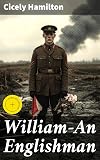
William: An Englishman
by Cicely Hamilton
On This Page
Description
A satirical view of the suffragette movement and an unblinking yet compassionate story that chronicles the impact of the First World War on an ordinary young couple, William – an Englishman by Cicely Hamilton won the first Prix Femina-Vie Heureuse prize in 1919.Written in a hospital tent to the sound of gunfire and shells falling, Cicely Hamilton drew on her experiences working in France during WW1 to tell the story of William Tully and his new bride Griselda, who are wrenched away from show more their all-consuming interests – socialism and votes for women – and plunged into the almost dream-like horror of war. As brutal tragedy strikes, their attitude to both pacifism and patriotism is altered and their lives are changed forever.William - An Englishman is part of the Persephone Audiobook Collection, a series of forgotten classics that includes neglected fiction and non-fiction by women writers. First published in 1919, this edition includes a preface by writer and MD of Persephone Books, Nicola Beauman. show lessTags
Recommendations
















Member Reviews
Persephone book #1. Another excellent book from Persephone that I would never have found otherwise. One thing I love about the Persephone publications is that they don't really do a book summary on the book jacket, so unless you dig a little, as a reader you really don't know what you're getting into. That worked really well for this novel.
In [William - An Englishman], William is sort of floundering as an adult. His domineering mother has died and left him enough money to live on. He falls into a political group dedicated to pacifism and women's suffrage. There he meets Griselda and the two fall in love. For their honeymoon they travel to Belgium. Before they leave they hear that "some Archduke" has been assassinated, but it feels show more remote and they continue their honeymoon travels. While there, on a secluded farm in the countryside, they start to hear distant "thunder" and the family hosting them disappears. It becomes violently clear that they are trapped in the middle of a world war. The rest of the book details their war experience, and I won't give away any additional plot.
I really liked this. The plot was exciting and the character development and insights into WWI were well-written. show less
In [William - An Englishman], William is sort of floundering as an adult. His domineering mother has died and left him enough money to live on. He falls into a political group dedicated to pacifism and women's suffrage. There he meets Griselda and the two fall in love. For their honeymoon they travel to Belgium. Before they leave they hear that "some Archduke" has been assassinated, but it feels show more remote and they continue their honeymoon travels. While there, on a secluded farm in the countryside, they start to hear distant "thunder" and the family hosting them disappears. It becomes violently clear that they are trapped in the middle of a world war. The rest of the book details their war experience, and I won't give away any additional plot.
I really liked this. The plot was exciting and the character development and insights into WWI were well-written. show less
I was prompted to read this by Savidgereads who has started his Persephone reading challenge. However I didn’t have a copy, and couldn’t really justify buying myself a Persephone book just before Christmas. So I downloaded a free copy from the open archive. It is testament to the brilliance of this book that I bothered to continue reading – the text was full of ridiculous errors, which drove me slightly mad. I will definitely buy the Persephone edition to add to my collection when I can – as I will surely want to re-read it at some stage.
This novel originally published in 1920 was Cicely Hamilton’s blistering answer to the realities of war as experienced by Mr and Mrs Everyman. Cicely Hamilton was serving in France at the show more time that she wrote this novel, and we see the war ravaged landscape through her eyes. Lulling the reader into a false sense of security, the novel starts off benignly enough; William Tully is an unremarkable young man in an insurance office, small, weak, pale and rather dominated by his mother. When his mother dies – William delights in his freedom, and uses it to launch himself upon the world of political agitators, aided and abetted by his new friend Faraday. He meets Griselda a young suffragette ‘his exact counterpart in petticoats’ who has already spent time in prison and is a zealous agitator herself, these two ideally suited young people, inevitably marry. So concerned are they with their own political ideals and activist confederates that they have very little idea of the gathering storm clouds over Europe in the summer of 1914. They honeymoon in Ardennes in Belgium where they bury themselves in a cottage for three weeks, neither of them able to converse with the locals, and having no contact with anyone back in England they are in total ignorance that war has broken out. On the day they start to think about returning to England and the hustle, bustle and political landscape they have both so missed, they find the farm nearby inexplicably deserted. The following day outside the gates of this same farm, the young couple come across a group of German soldiers. Instantly they are faced with the brutalities ad horrors of wartime as they are taken hostage.
“There, in the middle of the road, they also halted—the soldiers smartly, the captives uncertainly—and William saw the two civilians clearly. One was a short and rotund little man who might have been sixty to sixty-five and might have been a local tradesman—nearly bald and with drooping moustaches, rather like a stout little seal. Essentially an ordinary and unpretentious creature, he was obviously aiming at dignity; his chin was lifted at an angle that revealed the measure of the roll of fat that rested on his collar, and he walked almost with a strut, as if he were attempting to march. Afterwards William remembered that he had seen on the little man’s portly stomach some sort of insignia or ribbon; at the time it conveyed nothing to him, he was told later that it was the outward token of a mayor. He remembered also that the little man’s face was pale, with a sickly yellow-grey pallor; and that as he came down the steps with his head held up the drooping moustache quivered and the fat chin beneath it twitched spasmodically. There was something extraordinarily pitiful about his attempt at a personal dignity which nature had wholly denied him; William felt the appeal in it even before he grasped the situation the meaning and need of pose.”
Over the next few days the horrors which face both William and the reader are desperate, the images which Hamilton leaves the reader with are reminiscent of Pat Barker and even the war poets themselves. However it is William’s later response to his experiences in Belgium which are at the heart of this novel, his disappointment in the small contribution he must inevitably play is heart-breaking. Cicely Hamilton’s powerful and enormously readable novel is an important and brilliant piece of writing not just about War, but about socialism, suffrage and the naivety of youth, and the response of the many to the threat imposed on one nation by another. How different are today’s celebrity obsessed young people with their sense of entitlement! show less
This novel originally published in 1920 was Cicely Hamilton’s blistering answer to the realities of war as experienced by Mr and Mrs Everyman. Cicely Hamilton was serving in France at the show more time that she wrote this novel, and we see the war ravaged landscape through her eyes. Lulling the reader into a false sense of security, the novel starts off benignly enough; William Tully is an unremarkable young man in an insurance office, small, weak, pale and rather dominated by his mother. When his mother dies – William delights in his freedom, and uses it to launch himself upon the world of political agitators, aided and abetted by his new friend Faraday. He meets Griselda a young suffragette ‘his exact counterpart in petticoats’ who has already spent time in prison and is a zealous agitator herself, these two ideally suited young people, inevitably marry. So concerned are they with their own political ideals and activist confederates that they have very little idea of the gathering storm clouds over Europe in the summer of 1914. They honeymoon in Ardennes in Belgium where they bury themselves in a cottage for three weeks, neither of them able to converse with the locals, and having no contact with anyone back in England they are in total ignorance that war has broken out. On the day they start to think about returning to England and the hustle, bustle and political landscape they have both so missed, they find the farm nearby inexplicably deserted. The following day outside the gates of this same farm, the young couple come across a group of German soldiers. Instantly they are faced with the brutalities ad horrors of wartime as they are taken hostage.
“There, in the middle of the road, they also halted—the soldiers smartly, the captives uncertainly—and William saw the two civilians clearly. One was a short and rotund little man who might have been sixty to sixty-five and might have been a local tradesman—nearly bald and with drooping moustaches, rather like a stout little seal. Essentially an ordinary and unpretentious creature, he was obviously aiming at dignity; his chin was lifted at an angle that revealed the measure of the roll of fat that rested on his collar, and he walked almost with a strut, as if he were attempting to march. Afterwards William remembered that he had seen on the little man’s portly stomach some sort of insignia or ribbon; at the time it conveyed nothing to him, he was told later that it was the outward token of a mayor. He remembered also that the little man’s face was pale, with a sickly yellow-grey pallor; and that as he came down the steps with his head held up the drooping moustache quivered and the fat chin beneath it twitched spasmodically. There was something extraordinarily pitiful about his attempt at a personal dignity which nature had wholly denied him; William felt the appeal in it even before he grasped the situation the meaning and need of pose.”
Over the next few days the horrors which face both William and the reader are desperate, the images which Hamilton leaves the reader with are reminiscent of Pat Barker and even the war poets themselves. However it is William’s later response to his experiences in Belgium which are at the heart of this novel, his disappointment in the small contribution he must inevitably play is heart-breaking. Cicely Hamilton’s powerful and enormously readable novel is an important and brilliant piece of writing not just about War, but about socialism, suffrage and the naivety of youth, and the response of the many to the threat imposed on one nation by another. How different are today’s celebrity obsessed young people with their sense of entitlement! show less
"What he termed public life-a ferment of protestation and grievance...with all the extremist's contempt for those who balance"
By sally tarbox on 23 March 2018
Format: Paperback
William Tully is a quiet little clerk in pre-WW1 London, described as 'painstaking and obedient...unobtrusive and diffident. To his colleagues, he is 'a negligible quantity. He was not unpopular- it was merely that he did not matter.'
Cowed by his redoubtable mother, William finds himself - following her unexpected death- a free agent, possessed of a small income. But what to do now? "His life had been so ordered, so bound down and directed by others, that even his desires were tamed to the wishes of others and left to himself he could not tell what he desired."
By show more chance, he latches on to colleague Faraday, whose private life is entirely dedicated to social activism; under his tutelage, William becomes a regular at meetings promoting women's suffrage, pacifism and other causes. And here he meets his future wife Griselda; their shallow, ignorant outlook focussing on protests and struggles.
"They believed (quite rightly) in the purity of their own intentions; and concluded (quite wrongly) that the intentions of all persons who did not agree with them must therefore be evil and impure...They read newspapers written by persons who wholly agreed with their views...From these they quoted, in public and imposingly, with absolute faith in their statements."
Paying no heed to the greater world affairs of 1914, they spend their honeymoon in the Belgian Ardennes...and find themselves in the middle of hideous war. Slowly, as he witnesses the atrocities, William's mindset changes; a realisation that the trivial complaints they made about British society were as nothing compared with this:
"He remembered -quite plainly, he remembered - a letter writte to the daily Press to point out with indignation that one of the Leaders of the Movement had been hurt in the ankle in the course of the Great Civil War."
With experience, William renounces pacifism for militarism, but even here he is doomed to disappointment...
A very well-written novel; the author herself was both a suffragette and a nurse in WW1 France. Comic at times, as we follow the committed but narrow-minded young couple in their efforts to redeem society, the descriptions of the war are vivid and shocking. I'm not sure we really get to know William; written in the 3rd person, he is brought to us through Hamilton's eyes, and perhaps it loses a little immediacy through that. But an unusual and interesting work. show less
By sally tarbox on 23 March 2018
Format: Paperback
William Tully is a quiet little clerk in pre-WW1 London, described as 'painstaking and obedient...unobtrusive and diffident. To his colleagues, he is 'a negligible quantity. He was not unpopular- it was merely that he did not matter.'
Cowed by his redoubtable mother, William finds himself - following her unexpected death- a free agent, possessed of a small income. But what to do now? "His life had been so ordered, so bound down and directed by others, that even his desires were tamed to the wishes of others and left to himself he could not tell what he desired."
By show more chance, he latches on to colleague Faraday, whose private life is entirely dedicated to social activism; under his tutelage, William becomes a regular at meetings promoting women's suffrage, pacifism and other causes. And here he meets his future wife Griselda; their shallow, ignorant outlook focussing on protests and struggles.
"They believed (quite rightly) in the purity of their own intentions; and concluded (quite wrongly) that the intentions of all persons who did not agree with them must therefore be evil and impure...They read newspapers written by persons who wholly agreed with their views...From these they quoted, in public and imposingly, with absolute faith in their statements."
Paying no heed to the greater world affairs of 1914, they spend their honeymoon in the Belgian Ardennes...and find themselves in the middle of hideous war. Slowly, as he witnesses the atrocities, William's mindset changes; a realisation that the trivial complaints they made about British society were as nothing compared with this:
"He remembered -quite plainly, he remembered - a letter writte to the daily Press to point out with indignation that one of the Leaders of the Movement had been hurt in the ankle in the course of the Great Civil War."
With experience, William renounces pacifism for militarism, but even here he is doomed to disappointment...
A very well-written novel; the author herself was both a suffragette and a nurse in WW1 France. Comic at times, as we follow the committed but narrow-minded young couple in their efforts to redeem society, the descriptions of the war are vivid and shocking. I'm not sure we really get to know William; written in the 3rd person, he is brought to us through Hamilton's eyes, and perhaps it loses a little immediacy through that. But an unusual and interesting work. show less
CAUTION: substantial SPOILERS!
I really have to give this one some thought before I'm sure of it. It's a novel that clearly depicts the futility of war (in this case, World War I, and I've read this book as the start in the VMC Group's The Great War Theme Read), but I'm not entirely sure of what the author's ultimate response is to her characters – or to the War itself.
Before I go on, I see one serious stylistic default in the novel. Prior to their encounter with the War in France, there are some quite funny scenes with William and Griselda, but unfortunately Hamilton doesn't leave well-enough alone. I mean by this, she tends to over-explain things to her readers rather than just let the satire of well-meaning but dim-witted "radicals" show more speak for itself. It's a problem of excessive authorial editorializing.
For example:
(ch. 4). Hey, thanks, but we know there's humbuggery involved and you don't have to tell us. Let their actions speak for themselves without authorial editorializing. This happens too often throughout the novel.
And now, the real problem: Who is the real William? And what is Hamilton's response to him (and to her other characters)? Obviously William in the end is not an "internationally minded" revolutionary, and I think Hamilton – despite her own "radical" credentials – ultimately takes a "blood and soil" approach to the War, particularly considering the eventual "heroism" (at least after conscription) of many of William's old friends like Faraday.
But what is the ultimate result of William's life?
(ending pages). He's buried "without mourners," and we never do find out whether anyone wrote to Edith Haynes, though we strongly suspect that they did not.
(On this latter point, I like the ambiguity, because once William is dead, he's dead and the story ends with him. What's the effect, if any, on survivors? Does Edith mourn? Does she ever even find out enough to mourn? Is William just one of an entire generation of forgotten casualties? We don't know one way or the other, and this ambiguity gives the novel's ending a real – indeed, a real-life – strength.)
I'm giving this 3*** at least tentatively, though I might revisit it and rate it perhaps a bit more highly. My criticism isn't based on agreement or disagreement with the author's views but on whether she's adequately expressed them. On the one hand, her satire is often quite humorous but can also unnecessarily overstate the obvious. The ultimate conclusion leaves us with a sense of complete futility to William's life – but at the same time, I'm not entirely sure of Hamilton's own position on the War or whether she's in fact as wavering as William was. show less
I really have to give this one some thought before I'm sure of it. It's a novel that clearly depicts the futility of war (in this case, World War I, and I've read this book as the start in the VMC Group's The Great War Theme Read), but I'm not entirely sure of what the author's ultimate response is to her characters – or to the War itself.
Before I go on, I see one serious stylistic default in the novel. Prior to their encounter with the War in France, there are some quite funny scenes with William and Griselda, but unfortunately Hamilton doesn't leave well-enough alone. I mean by this, she tends to over-explain things to her readers rather than just let the satire of well-meaning but dim-witted "radicals" show more speak for itself. It's a problem of excessive authorial editorializing.
For example:
And the unconscious little humbug clasped her hands and, from force of habit, rose to her feet, addressing an imaginary audience. William, an equally unconscious humbug, also rose to his feet and kissed her. It was one of those happy and right-minded moments in which inclination agrees with duty, and they were able to admire themselves and each other for a sacrifice which had cost them nothing.
(ch. 4). Hey, thanks, but we know there's humbuggery involved and you don't have to tell us. Let their actions speak for themselves without authorial editorializing. This happens too often throughout the novel.
And now, the real problem: Who is the real William? And what is Hamilton's response to him (and to her other characters)? Obviously William in the end is not an "internationally minded" revolutionary, and I think Hamilton – despite her own "radical" credentials – ultimately takes a "blood and soil" approach to the War, particularly considering the eventual "heroism" (at least after conscription) of many of William's old friends like Faraday.
But what is the ultimate result of William's life?
"I don't seem to have been much good . . . but there comes a time . . . when nothing matters."
"Not even," asked the chaplain, feeling his way, "the sense that you have done your duty?"
"Most people do that," said William. "The question is . . . if you've been much use when you've done it."
The chaplain, puzzled, said something of infinite mercy and the standard of God not being as the standard of man.
"If you've done your best . . ." he suggested. "Most people do that," said William again . . . and slid back once more without into silence.
(ending pages). He's buried "without mourners," and we never do find out whether anyone wrote to Edith Haynes, though we strongly suspect that they did not.
(On this latter point, I like the ambiguity, because once William is dead, he's dead and the story ends with him. What's the effect, if any, on survivors? Does Edith mourn? Does she ever even find out enough to mourn? Is William just one of an entire generation of forgotten casualties? We don't know one way or the other, and this ambiguity gives the novel's ending a real – indeed, a real-life – strength.)
I'm giving this 3*** at least tentatively, though I might revisit it and rate it perhaps a bit more highly. My criticism isn't based on agreement or disagreement with the author's views but on whether she's adequately expressed them. On the one hand, her satire is often quite humorous but can also unnecessarily overstate the obvious. The ultimate conclusion leaves us with a sense of complete futility to William's life – but at the same time, I'm not entirely sure of Hamilton's own position on the War or whether she's in fact as wavering as William was. show less
William Tully is a quiet unassuming clerk in an insurance office, when his mother's death leaves him a little money and the independence to please himself as to how to spend his life. A chance encounter turns the easily influenced William into a key advocate of social reform. And with sufficient funds to enable him to give up work, William finds a certain success in the new circles in which he moves, and on meeting Griselda, an ardent suffragette, he finds love in a true meeting of minds:
But although William and Griselda are portrayed by the author with all their faults, there is also something touching about the way that their romance and subsequent marriage is dealt with. While neither of them are initially appealing characters, they are irritating rather than unpleasant, and are clearly very much in love: at the end of the day they are decent human beings. Hamilton deals with their political activism and romance in a light-hearted way which does engender a certain affection for the characters, even if they are not necessarily the sort of people the reader might want to spend a large amount of time with:
But William and Griselda's marriage takes place on the 23rd July 1914, and they set off for their four week long honeymoon in a very remote part of the Belgian Ardennes that afternoon. And deliberately out of the reach of newspapers, not speaking French, and out of contact with any other English speakers, they are completely oblivious that Europe has descended into all out war. So that when the war finds them they are completely unprepared ...
This is a tremendously sad book, as William tries to come to terms with what happens in the Ardennes, and also with the complete destruction of his long cherished beliefs. For the pacifist circles in which William has moved up until that point believes fervently that the workers of Europe would in no way allow themselves to be drawn into a war which was merely required by the machinations of their governments.
There have been mixed reviews of this book on LT, but I found it a rewarding read. Some readers have questioned whether William and Griselda could be so naive as to spent their honeymoon in Europe in a time of such heightened tension, but this seems plausible to me. They are very naive in anything outside their own experience, and with the views of all around them agreeing that a war is impossible, why should they feel the need to change their holiday plans? After all, Britain hadn't been involved in a war in continental Europe since the end of the Napoleonic wars a hundred years previously, so why should 1914 have been any different? So overall I found this a rewarding and poignant read dealing with a very ordinary man caught up in events that were completely outside his experience or even imagination. show less
They believed (quite rightly) in the purity of their own intentions; and concluded (quite wrongly) that the intentions of all persons who did not agree with them must therefore be evil and impure ... They held .,, to their opinions strongly and wouldshow more
have died rather than renounce, or seem to renounce, them -- which did not restrain them from resenting the same attitude of mind and heart in others. What in themselves they admired as loyalty, they denounced in others as interested and malignant stubbornness.'
But although William and Griselda are portrayed by the author with all their faults, there is also something touching about the way that their romance and subsequent marriage is dealt with. While neither of them are initially appealing characters, they are irritating rather than unpleasant, and are clearly very much in love: at the end of the day they are decent human beings. Hamilton deals with their political activism and romance in a light-hearted way which does engender a certain affection for the characters, even if they are not necessarily the sort of people the reader might want to spend a large amount of time with:
'The advanced Press spread itself over the description of the ceremony and - in view of the fact that the bridesmaids, six in number, had all done time for assault - even the Press that was not advanced considered the event worth a paragraph'
But William and Griselda's marriage takes place on the 23rd July 1914, and they set off for their four week long honeymoon in a very remote part of the Belgian Ardennes that afternoon. And deliberately out of the reach of newspapers, not speaking French, and out of contact with any other English speakers, they are completely oblivious that Europe has descended into all out war. So that when the war finds them they are completely unprepared ...
This is a tremendously sad book, as William tries to come to terms with what happens in the Ardennes, and also with the complete destruction of his long cherished beliefs. For the pacifist circles in which William has moved up until that point believes fervently that the workers of Europe would in no way allow themselves to be drawn into a war which was merely required by the machinations of their governments.
There have been mixed reviews of this book on LT, but I found it a rewarding read. Some readers have questioned whether William and Griselda could be so naive as to spent their honeymoon in Europe in a time of such heightened tension, but this seems plausible to me. They are very naive in anything outside their own experience, and with the views of all around them agreeing that a war is impossible, why should they feel the need to change their holiday plans? After all, Britain hadn't been involved in a war in continental Europe since the end of the Napoleonic wars a hundred years previously, so why should 1914 have been any different? So overall I found this a rewarding and poignant read dealing with a very ordinary man caught up in events that were completely outside his experience or even imagination. show less
Like many, I read this for the VMC "Beginning of the War" read. I honestly have to say that I do not know what to think of this book, which tells the story of a young Englishman and his new wife - both devotees of leftist causes - who are unwittingly caught up in the outbreak of WWI (specifically the Battle of Ardennes) as they honeymoon in Belgium in August 1914. I am very glad I read it, but it was extremely problematic for me. I will be thinking about it for a while and trying to dig up more on this author.
William, the title character, is a "negligible" person who has so little imagination he cannot even determine his own desires; throughout the book, he will be tossed about by circumstance from one extreme set of affiliations to show more another. He inadvertently becomes a "Social Reformer" after a misunderstanding with a socialist co-worker and quickly develops into an "extremist, passionately well-intentioned and with all the extremist's contempt for those who balance, see difficulties and strive to give the other side its due." Later, after a series of traumatizing events in Europe, he will abandon pacifism and embrace militarism and nationalism with equal fervor before becoming disillusioned with everything.
At first it was easy to read Hamilton's book as a satire of ignorant young people and be amused by their foolishness, but I gradually grew very uncomfortable with this book as it started to seem more and more like an indictment of anti-war sentiment and of "...those who had fiery little battles of their own to fight, and whose own warfare was suddenly rendered null and incompetent by a sudden diversion of energy and interest in the face of the national danger."
Hamilton seems for a period of time to be glorying in militaristic nationalism and issuing a call to arms. But then the book's attitude shifts yet again, as William's dreams of martial glory are replaced by the reality of service. "She knew him for a man disillusioned, in whom the imaginings of his pre-soldier days had died as completely as his faith in his pre-war creed."
I share (substantial spoilers in the linked review) CurrerBell's perplexity at the author's attitude toward her own characters. Is Hamilton critiquing all anti-war and leftist activists? Only stupid activists (because William and his wife are so ignorant and narrow-minded as to be almost unreal)? Is the book a critique of militarism and war, as most reviews suggest, given that Hamilton wrote it during her service as a nurse during the war? I was also confused by Hamilton's frequent references to people who denied that the war was happening. I understand that there was a segment of the public - particularly among leftists - who thought that European war was impossible before it began and another segment among leftists who thought that the war was a conspiracy to distract the common man from the goal of reform and splinter the international labor cause. But was there a group who denied the fact of the war?
Ultimately, I think Hamilton is trying to criticize both those who deny the possibility of war and those who glorify it as somehow redemptive, but I think a lot of her narrative choices are really problematic and end up reinforcing more of a nationalistic, "rally around the crown" perspective. She strongly suggests that suffragists, labor activists, and other leftists who did not suspend their activism during the war - as did the main suffragette group with which Hamilton herself was associated - were somehow unpatriotic, an attitude that really rankled me, especially after reading Adam Hochschild's wonderful history of pacifists and leftists during WWI, To End All Wars: A Story of Loyalty and Rebellion, which explored the moral and political struggles that these activists went through as they tried how to push for domestic reform without being tarred as traitors to the British Government.
I found some comprehensive biographical information on Hamilton that gets more into some of the issues I've raised in my review.
(Cross posted at ClubRead 2014 and VMC WWI Read) show less
William, the title character, is a "negligible" person who has so little imagination he cannot even determine his own desires; throughout the book, he will be tossed about by circumstance from one extreme set of affiliations to show more another. He inadvertently becomes a "Social Reformer" after a misunderstanding with a socialist co-worker and quickly develops into an "extremist, passionately well-intentioned and with all the extremist's contempt for those who balance, see difficulties and strive to give the other side its due." Later, after a series of traumatizing events in Europe, he will abandon pacifism and embrace militarism and nationalism with equal fervor before becoming disillusioned with everything.
At first it was easy to read Hamilton's book as a satire of ignorant young people and be amused by their foolishness, but I gradually grew very uncomfortable with this book as it started to seem more and more like an indictment of anti-war sentiment and of "...those who had fiery little battles of their own to fight, and whose own warfare was suddenly rendered null and incompetent by a sudden diversion of energy and interest in the face of the national danger."
Hamilton seems for a period of time to be glorying in militaristic nationalism and issuing a call to arms. But then the book's attitude shifts yet again, as William's dreams of martial glory are replaced by the reality of service. "She knew him for a man disillusioned, in whom the imaginings of his pre-soldier days had died as completely as his faith in his pre-war creed."
I share (substantial spoilers in the linked review) CurrerBell's perplexity at the author's attitude toward her own characters. Is Hamilton critiquing all anti-war and leftist activists? Only stupid activists (because William and his wife are so ignorant and narrow-minded as to be almost unreal)? Is the book a critique of militarism and war, as most reviews suggest, given that Hamilton wrote it during her service as a nurse during the war? I was also confused by Hamilton's frequent references to people who denied that the war was happening. I understand that there was a segment of the public - particularly among leftists - who thought that European war was impossible before it began and another segment among leftists who thought that the war was a conspiracy to distract the common man from the goal of reform and splinter the international labor cause. But was there a group who denied the fact of the war?
Ultimately, I think Hamilton is trying to criticize both those who deny the possibility of war and those who glorify it as somehow redemptive, but I think a lot of her narrative choices are really problematic and end up reinforcing more of a nationalistic, "rally around the crown" perspective. She strongly suggests that suffragists, labor activists, and other leftists who did not suspend their activism during the war - as did the main suffragette group with which Hamilton herself was associated - were somehow unpatriotic, an attitude that really rankled me, especially after reading Adam Hochschild's wonderful history of pacifists and leftists during WWI, To End All Wars: A Story of Loyalty and Rebellion, which explored the moral and political struggles that these activists went through as they tried how to push for domestic reform without being tarred as traitors to the British Government.
I found some comprehensive biographical information on Hamilton that gets more into some of the issues I've raised in my review.
(Cross posted at ClubRead 2014 and VMC WWI Read) show less
William was an insignificant man, ruled by his mother, with no will of his own. He was employed as a clerk in a firm where he made no impression, but his life changed when his mother died. Under the influence of a colleague he took up causes and became immersed in the anti-war and labour movements. At this stage of the book Hamilton is so condescending to William and his fellow activists whom she denigrates as thoughtless, closed-minded and petty, that I assumed she held conservative political views herself and was contemptuous of anyone who thought differently, but the opposite is true and she changed her anti-militaristic views when war broke out and she realised what was happening in Europe. William is also forced to reconsider.
I show more found this short book to be a bit heavy-handed, but extremely interesting, and would recommend it. show less
I show more found this short book to be a bit heavy-handed, but extremely interesting, and would recommend it. show less
Members
- Recently Added By
Lists

A Good Read (Radio 4)
287 works; 1 member

Books referenced in A Very Great Profession: The Woman's Novel 1914-39
199 works; 6 members

Persephone
148 works; 3 members
Author Information

19+ Works 347 Members
Some Editions
Awards and Honors
Awards
Series
Belongs to Publisher Series
Persephone (1)
Common Knowledge
- Canonical title
- William: An Englishman
- Original publication date
- 1919
- Important events
- World War I (1914 | 1918)
- First words
- William Tully was a little over three-and-twenty when he emerged from the chrysalis stage of his clerkdom and became a Social Reformer.
- Last words
- (Click to show. Warning: May contain spoilers.)His death, duly entered in the hospital books, was reported to the Casualty Department; and the Graves Registration clerks took note of his burial and filed it for possible inquiries.
Classifications
Statistics
- Members
- 239
- Popularity
- 136,127
- Reviews
- 19
- Rating
- (3.79)
- Languages
- English
- Media
- Paper, Ebook
- ISBNs
- 11
- ASINs
- 9