The Book of Dead Philosophers
by Simon Critchley
On This Page
Description
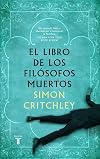
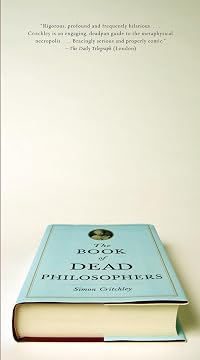
In this collection of brief lives--and deaths--of nearly two hundred of the world's greatest thinkers, noted philosopher Simon Critchley creates a register of mortality that is tragic, amusing, absurd, and exemplary. From the self-mocking haikus of Zen masters on their deathbeds to the last words of Christian saints and modern-day sages, this irresistible book contains much to inspire both amusement and reflection.--From publisher description.Tags
Recommendations








Member Recommendations

Daily Rituals: How Great Minds Make Time, Find Inspiration, and Get to Work: How Artists Work by Mason Currey
akblanchard Short chapters and limited scopes make these books good for browsing.
br77rino Will Durant, a gifted historian, does a better job of bringing the philosophies of the philosophers to life.

Member Reviews
Questo è uno dei libri più curiosi, ma anche più divertenti, che mi sia mai capitato di leggere. Ho scoperto che nella vita, chi più chi meno, tutti facciamo della "filosofia". Filosofeggiare sarebbe il verbo esatto. In effetti la vita ci insegna a come sopravvivere, quindi a trovarci un sistema prima di passare dall'altra parte. E' una cosa questa che tocca tutti, filosofi veri e non. Un libro che si legge con piacere, dopo avere fatto ovviamente i dovuti scongiuri scaramantici che valgono ben poco, in quanto nessuno scappa alla sorte finale.
Eraclito pensava che ogni cosa fosse in una condizione di continuo divenire. Morì, secondo quanto si dice, annegato in un vortice di liquido di vacca. Francesco Bacone, il padre della show more filosofia empirica inglese finì per mano della sua stessa filosofia. Morì mentre stava tentando di osservare gli effetti del congelamento di un pollo, in una fredda giornata di inverno. Aveva riempito il pennuto di ghiaccio e si beccò una polomonite mortale. Secondo l’autore di questo libro ogni filosofo muore così come è vissuto e così abbiamo modo di comprendere anche la sua filosofia.
Simon Critchley nello scrivere questo libro, da buon filosofo quale lui stesso è, basa il suo ragionamento sull’affermazione di Cicerone secondo il quale “filosofare significa imparare a morire”. Non a caso Critchley è professore di Filosofia alla New School for Social Research a New York. Autore di diversi studi ha scritto questo suo libro su di una collina che guarda su Los Angeles, pensiamo in attenta concentrazione filosofica. Per comprendere il significato della vita il filosofo deve cercare di capire la morte ed il suo significato. Il che non significa che lo debba per forza trovare. Può anche scoprire che di significati, secondo il filosofo che la pensa così, non ce ne siano affatto. Critchley ritiene che non è possibile separare lo spirito della filosofia dal corpo del filosofo. Egli afferma che “la storia della filosofia la si può intendere come la storia dei filosofi che procedono per esempi da ricordare, spesso nobili e virtuosi, ma qualche volta umili e addirittura comici”. La maniera in cui un filosofo muore umanizza sia l’una che l’altro e ci fa capire che tutto sommato poi i filosofi non sono affatto tanto lontani da noi gente comune. Che “filosofi” non siamo affatto.
Il libro contiene poco meno di duecento riferimenti a pensatori passati a miglior vita ognuno di essi esposti in altrettanti aneddoti. Il pregio principale del libro è che non lo si deve leggere dalla prima all’ultima pagina e tutto insieme. Lo si può aprire a caso e leggere di qualche filosofo spesso in non più di due pagine di testo. Gli esempi da riportare sarebbero tanti. Basta ricordarne qualcuno. Diogene, uno che disdegnava i piaceri della carne, si dice che abbia commesso suicidio trattenendo il respiro, autosoffocandosi, quindi. Julien Offray de la Mettrie, ateista ed edonista, morì dopo di avere festeggiato mangiando una grande quantità di patate tartufate. Ludwig Wittgenstein considerò la vita e la morte come realtà senza tempo. Morì il giorno dopo il suo compleanno. Un amico gli aveva regalato una coperta elettrica. “Tanti auguri” gli disse. In inglese “many happy returns” - “tanti felici ritorni” - letteralmente. Al che lui rispose “Non ci saranno ritorni”.
Critchley racconta poi di Voltaire il quale, dopo di avere denunciato per decenni la Chiesa Cattolica di Roma, annunciò sul letto di morte che voleva morire da cattolico. Il parroco che lo assisteva stupito dalla richiesta gli chiese ripetutamente “credi nella divinità di Cristo?”. Voltaire rispose: “In nome di Dio non mi parli più di quell’uomo e mi lasci morire in pace”.
Questo libro all’apparenza sembra un libro leggero. Non lo è affatto. L’autore viene segnalato oltre come essere professore di filosofia anche a capo di una organizzazione internazionale denominata “International Necronautical Society”, un gruppo di avanguardia nella cui pagina web si afferma che il suo intento fondamentale è la “inautenticità”. Il suo scopo è lo studio della morte. Il sito vuole essere uno spazio che “intendiamo definire, colonizzare ed eventualmente abitare”. Sembrerebbe un’autentica follia se non fosse un fatto che il prof. Critchley è anche autore di numerosi altri libri e può esibire in questo suo volume sui filosofi una bibliografia di una decina di pagine.
Secondo quanto dice poi Critchley la filosofia occidentale è stata vista sempre come derivata principalmente da quella greca, il che, secondo lui è sbagliato. Egli afferma che le sue origini sono anche arabe, persiane, indiane, cinesi e molte altre ancora. La filosofia, egli sostiene, ha abbandonato la sua ragione originaria quella cioè di trasmettere saggezza e aiutarci ad essere felici. La filosofia ha cercato inoltre di imitare la scienza nella sua costante ricerca delle idee perfette e della verità assoluta. A poco a poco è venuta ad astrarsi dalla vita di tutti i giorni lasciandoci in preda alla paura di ciò che egli chiama “terror of annihilation”. Per calmarci, egli dice, ci sono infinite sofisterie in giro come la New Age e tutta una letteratura del “fai da te” oltre alla fiflosofia dell’accumulo sconsiderato di danaro e proprietà.
Fin qui tutto bene. Ma a questo punto possiamo domandare a Critchley qual’è il principio organizzatore di tutta la saggezza che abbiamo perduto nelle morti dei filosofi? Kant morì di malattia di stomaco. Come si giustifica allora la sua “Critica della ragion pura”? Le sue ultime parole non furono molte. Una sola. Quella che sussurrò al suo discepolo quando gli diede un pò d’acqua mescolata con vino. “Sufficit” sussurrò. Ma ciò che Kant voleva dire era che egli aveva vissuto a sufficienza per definire le sue teorie sulla metafisica o sulla epistemologia oppure semplicemente che egli non voleva più acqua?
Alcuni filosofi di cui Critchley parla possono addirittura non essere mai vissuti. Lui stesso dice che ci sono filosofi nel suo libro della cui morte non si sa nulla e non si conoscono le loro ultime parole. D’altra parte egli molto spesso non riesce a dare nessuna connessione tra le opere dei filosofi che ha preso in considerazione, la loro morte e le loro idee. Ma non importa. Non tutto ciò che egli scrive in molti casi è apocrifo oppure è stato detto dai loro discepoli. Dalle loro opere vengono fuori soltanto le metafore. Il libro, comunque, è piacevole a leggersi, c’è molto da apprendere inclusa la previsione che egli avanza sulla sua morte. “Fuga”, anzi egli dice letteralmente: “exit” inseguito da un orso. Un libro questo, tutto sommato utile a pensare come sarà l’exit di ognuno di noi quando sarà il momento. Il più tardi possibile, s’intende ... show less
Eraclito pensava che ogni cosa fosse in una condizione di continuo divenire. Morì, secondo quanto si dice, annegato in un vortice di liquido di vacca. Francesco Bacone, il padre della show more filosofia empirica inglese finì per mano della sua stessa filosofia. Morì mentre stava tentando di osservare gli effetti del congelamento di un pollo, in una fredda giornata di inverno. Aveva riempito il pennuto di ghiaccio e si beccò una polomonite mortale. Secondo l’autore di questo libro ogni filosofo muore così come è vissuto e così abbiamo modo di comprendere anche la sua filosofia.
Simon Critchley nello scrivere questo libro, da buon filosofo quale lui stesso è, basa il suo ragionamento sull’affermazione di Cicerone secondo il quale “filosofare significa imparare a morire”. Non a caso Critchley è professore di Filosofia alla New School for Social Research a New York. Autore di diversi studi ha scritto questo suo libro su di una collina che guarda su Los Angeles, pensiamo in attenta concentrazione filosofica. Per comprendere il significato della vita il filosofo deve cercare di capire la morte ed il suo significato. Il che non significa che lo debba per forza trovare. Può anche scoprire che di significati, secondo il filosofo che la pensa così, non ce ne siano affatto. Critchley ritiene che non è possibile separare lo spirito della filosofia dal corpo del filosofo. Egli afferma che “la storia della filosofia la si può intendere come la storia dei filosofi che procedono per esempi da ricordare, spesso nobili e virtuosi, ma qualche volta umili e addirittura comici”. La maniera in cui un filosofo muore umanizza sia l’una che l’altro e ci fa capire che tutto sommato poi i filosofi non sono affatto tanto lontani da noi gente comune. Che “filosofi” non siamo affatto.
Il libro contiene poco meno di duecento riferimenti a pensatori passati a miglior vita ognuno di essi esposti in altrettanti aneddoti. Il pregio principale del libro è che non lo si deve leggere dalla prima all’ultima pagina e tutto insieme. Lo si può aprire a caso e leggere di qualche filosofo spesso in non più di due pagine di testo. Gli esempi da riportare sarebbero tanti. Basta ricordarne qualcuno. Diogene, uno che disdegnava i piaceri della carne, si dice che abbia commesso suicidio trattenendo il respiro, autosoffocandosi, quindi. Julien Offray de la Mettrie, ateista ed edonista, morì dopo di avere festeggiato mangiando una grande quantità di patate tartufate. Ludwig Wittgenstein considerò la vita e la morte come realtà senza tempo. Morì il giorno dopo il suo compleanno. Un amico gli aveva regalato una coperta elettrica. “Tanti auguri” gli disse. In inglese “many happy returns” - “tanti felici ritorni” - letteralmente. Al che lui rispose “Non ci saranno ritorni”.
Critchley racconta poi di Voltaire il quale, dopo di avere denunciato per decenni la Chiesa Cattolica di Roma, annunciò sul letto di morte che voleva morire da cattolico. Il parroco che lo assisteva stupito dalla richiesta gli chiese ripetutamente “credi nella divinità di Cristo?”. Voltaire rispose: “In nome di Dio non mi parli più di quell’uomo e mi lasci morire in pace”.
Questo libro all’apparenza sembra un libro leggero. Non lo è affatto. L’autore viene segnalato oltre come essere professore di filosofia anche a capo di una organizzazione internazionale denominata “International Necronautical Society”, un gruppo di avanguardia nella cui pagina web si afferma che il suo intento fondamentale è la “inautenticità”. Il suo scopo è lo studio della morte. Il sito vuole essere uno spazio che “intendiamo definire, colonizzare ed eventualmente abitare”. Sembrerebbe un’autentica follia se non fosse un fatto che il prof. Critchley è anche autore di numerosi altri libri e può esibire in questo suo volume sui filosofi una bibliografia di una decina di pagine.
Secondo quanto dice poi Critchley la filosofia occidentale è stata vista sempre come derivata principalmente da quella greca, il che, secondo lui è sbagliato. Egli afferma che le sue origini sono anche arabe, persiane, indiane, cinesi e molte altre ancora. La filosofia, egli sostiene, ha abbandonato la sua ragione originaria quella cioè di trasmettere saggezza e aiutarci ad essere felici. La filosofia ha cercato inoltre di imitare la scienza nella sua costante ricerca delle idee perfette e della verità assoluta. A poco a poco è venuta ad astrarsi dalla vita di tutti i giorni lasciandoci in preda alla paura di ciò che egli chiama “terror of annihilation”. Per calmarci, egli dice, ci sono infinite sofisterie in giro come la New Age e tutta una letteratura del “fai da te” oltre alla fiflosofia dell’accumulo sconsiderato di danaro e proprietà.
Fin qui tutto bene. Ma a questo punto possiamo domandare a Critchley qual’è il principio organizzatore di tutta la saggezza che abbiamo perduto nelle morti dei filosofi? Kant morì di malattia di stomaco. Come si giustifica allora la sua “Critica della ragion pura”? Le sue ultime parole non furono molte. Una sola. Quella che sussurrò al suo discepolo quando gli diede un pò d’acqua mescolata con vino. “Sufficit” sussurrò. Ma ciò che Kant voleva dire era che egli aveva vissuto a sufficienza per definire le sue teorie sulla metafisica o sulla epistemologia oppure semplicemente che egli non voleva più acqua?
Alcuni filosofi di cui Critchley parla possono addirittura non essere mai vissuti. Lui stesso dice che ci sono filosofi nel suo libro della cui morte non si sa nulla e non si conoscono le loro ultime parole. D’altra parte egli molto spesso non riesce a dare nessuna connessione tra le opere dei filosofi che ha preso in considerazione, la loro morte e le loro idee. Ma non importa. Non tutto ciò che egli scrive in molti casi è apocrifo oppure è stato detto dai loro discepoli. Dalle loro opere vengono fuori soltanto le metafore. Il libro, comunque, è piacevole a leggersi, c’è molto da apprendere inclusa la previsione che egli avanza sulla sua morte. “Fuga”, anzi egli dice letteralmente: “exit” inseguito da un orso. Un libro questo, tutto sommato utile a pensare come sarà l’exit di ognuno di noi quando sarà il momento. Il più tardi possibile, s’intende ... show less
Critchley quotes Cicero as capturing a sentiment that is axiomatic for most of philosophy: “To philosophize is to learn how to die,” and he continues, “The main task of philosophy, in this view, is to prepare us for death, to provide a kind of training for death, the cultivation of an attitude towards our finitude that faces—and faces down—the terror of annihilation without offering promises of an afterlife.” Critchley agrees but takes the thought further: “…it is my belief that philosophy can teach a readiness for death without which any conception of contentment, let alone happiness, is illusory. Strange as it may sound, my constant concern in these seemingly morbid pages is the meaning and possibility of happiness.” show more
Critchley admits that his view of death is closer to that of Epicurus and what is known as the four-part cure: “don’t fear God, don’t worry abut death, what is good is easy to get and what is terrible is easy to endure.” Epicurus wrote: “Get used to believing that death is nothing to us. For all good and bad consists in sense-experience, and death is the privation of sense-experience. Hence a correct knowledge of the fact of death makes the mortality of life a matter for contentment, not by adding a limitless time to life but by removing the longing for immortality.” Critchley believes this view of death is a powerful sub-tradition in Western thought to which insufficient attention has been given: “when death is, I am not; when I am, death is not. Therefore, it is useless to worry about death and the only way to attain tranquility of is by removing the anxious longing for an afterlife.” He argues that, “Paradoxically, intimations of mortality allow us to seize hold of the accidental but precious portion of existence that is our life. The remedy for death is not turn away in fright, but to move through it and back to our elemental vitality.”
What follows is an entertaining, thought-provoking romp through “190 or so dead philosophers” from Thales (pre-Socratic) to many representing the 20th century, developing threads of changing ideas towards death (especially with the advent of Christianity and religion in general) and, to some extent, the views, and experiences, of specific philosophers. It is not meant to be a history of philosophy, nor even capsule biographies of the philosophers surveyed, but a more of a survey of a nevertheless serious subject: how we deal with death as individuals, and as societies. Some thoughts that struck me.
Emmanuel Levinas (1905-1995) argued (reversing Heidegger) that, “…death is the ‘impossibility of possibility’. That is, death is something that cannot be predicted, represented or even understood. Death is not that by virtue of which the self becomes authentic, but is rather that ever-unknowable event that shatters the framework of my life and leaves me in a position of powerlessness and passivity. In other words, for Levinas, death is not mine, but something other. On this basis, he tries to construct an ethics that is endlessly open to the surprise of an otherness whose most eloquent expression is that of the other person.”
Simon de Beauvoir (1908-1960) argued that we do not experience old age from within, but without. Old age is not discovered, it is imposed from outside. Critchley quotes Stella Sandford (How to Read Beauvoir): “It also reveals the fundamental mistake—the pathetic delusion—in the claim that ‘you are only as old as you feel.’ You are, on the contrary, as old as the others say you are.”
In his piece on Hannah Arendt and comparisons with Heidegger (great philosopher and unrepentant Nazi), Critchely writes: “…if one views political life from a contemplative philosophical distance, one inevitably sees the people as a rabble to be controlled by one form of other of authoritarianism, rather than a human plurality to be participated in and celebrated. In other words, the philosopher may be an expert in thinking, but not in judging, especially political judgment.”
Jacques Derrida (1929-2007) wrote intensely about the experience of “bereaved memory”. For Derrida, “…to be bereft of a friend is to bear their memory trace within one in a way that cannot simply be internalized. It is as if the dead friend continues to live on in a way that haunts the self like a spectre. The self is not healed or made good after the other’s death, but wounded and divided against itself. This defies what Freud calls ‘normal mourning’ where the ego is meant to recover its integrity and unity aft it has ‘got over’ the death of the beloved. By contrast, Derrida argues for what he calls ‘impossible mourning,’ where we precisely do not get over the other’s death, but where they live on in our bereaved memory. To be clear, Derrida insists that impossible mourning is neither the resurrection of the other, nor their narcissistic possession by the self. Rather, the friend or beloved lives on within me like a ghost that troubles the line that divides the living from the dead.”
“ Existence is the passage from the formlessness that precedes life to the formlessness that succeeds death.” A book worth reading and contemplating. show less
Critchley admits that his view of death is closer to that of Epicurus and what is known as the four-part cure: “don’t fear God, don’t worry abut death, what is good is easy to get and what is terrible is easy to endure.” Epicurus wrote: “Get used to believing that death is nothing to us. For all good and bad consists in sense-experience, and death is the privation of sense-experience. Hence a correct knowledge of the fact of death makes the mortality of life a matter for contentment, not by adding a limitless time to life but by removing the longing for immortality.” Critchley believes this view of death is a powerful sub-tradition in Western thought to which insufficient attention has been given: “when death is, I am not; when I am, death is not. Therefore, it is useless to worry about death and the only way to attain tranquility of is by removing the anxious longing for an afterlife.” He argues that, “Paradoxically, intimations of mortality allow us to seize hold of the accidental but precious portion of existence that is our life. The remedy for death is not turn away in fright, but to move through it and back to our elemental vitality.”
What follows is an entertaining, thought-provoking romp through “190 or so dead philosophers” from Thales (pre-Socratic) to many representing the 20th century, developing threads of changing ideas towards death (especially with the advent of Christianity and religion in general) and, to some extent, the views, and experiences, of specific philosophers. It is not meant to be a history of philosophy, nor even capsule biographies of the philosophers surveyed, but a more of a survey of a nevertheless serious subject: how we deal with death as individuals, and as societies. Some thoughts that struck me.
Emmanuel Levinas (1905-1995) argued (reversing Heidegger) that, “…death is the ‘impossibility of possibility’. That is, death is something that cannot be predicted, represented or even understood. Death is not that by virtue of which the self becomes authentic, but is rather that ever-unknowable event that shatters the framework of my life and leaves me in a position of powerlessness and passivity. In other words, for Levinas, death is not mine, but something other. On this basis, he tries to construct an ethics that is endlessly open to the surprise of an otherness whose most eloquent expression is that of the other person.”
Simon de Beauvoir (1908-1960) argued that we do not experience old age from within, but without. Old age is not discovered, it is imposed from outside. Critchley quotes Stella Sandford (How to Read Beauvoir): “It also reveals the fundamental mistake—the pathetic delusion—in the claim that ‘you are only as old as you feel.’ You are, on the contrary, as old as the others say you are.”
In his piece on Hannah Arendt and comparisons with Heidegger (great philosopher and unrepentant Nazi), Critchely writes: “…if one views political life from a contemplative philosophical distance, one inevitably sees the people as a rabble to be controlled by one form of other of authoritarianism, rather than a human plurality to be participated in and celebrated. In other words, the philosopher may be an expert in thinking, but not in judging, especially political judgment.”
Jacques Derrida (1929-2007) wrote intensely about the experience of “bereaved memory”. For Derrida, “…to be bereft of a friend is to bear their memory trace within one in a way that cannot simply be internalized. It is as if the dead friend continues to live on in a way that haunts the self like a spectre. The self is not healed or made good after the other’s death, but wounded and divided against itself. This defies what Freud calls ‘normal mourning’ where the ego is meant to recover its integrity and unity aft it has ‘got over’ the death of the beloved. By contrast, Derrida argues for what he calls ‘impossible mourning,’ where we precisely do not get over the other’s death, but where they live on in our bereaved memory. To be clear, Derrida insists that impossible mourning is neither the resurrection of the other, nor their narcissistic possession by the self. Rather, the friend or beloved lives on within me like a ghost that troubles the line that divides the living from the dead.”
“ Existence is the passage from the formlessness that precedes life to the formlessness that succeeds death.” A book worth reading and contemplating. show less
Simon Critchley admits up front that writing about how philosophers died is, well, odd, and that reading about such things is perhaps even odder. Then again, there are lots of good reasons to write and read about death. It’s inevitable, after all, the one truly irremediable cipher confronting each of us. We know nothing about death (though plenty about how it gets caused), or would say so if we were truly honest about the limits of our cognitive abilities.
And of course we’re fascinated with ciphers, mad to construe their hidden meanings and to make sense out of what, so often, is a devastation for those of us who go on living.
Besides, philosophers are especially good at dying. Not all of them, of course, but the good deaths (the show more ones that fascinate, the ones that cause the brow to crinkle, the ones that cause us to splutter, wave the storyteller away and take drink with a secret, hidden smile lurking on our lips) tend to be remembered, to be passed on down the line of storytellers. A good death becomes a point of imaginative departure. Here are snippets from Critchley’s wonderful vignettes on my three favorite philosophers.
Ludwig Wittgenstein, whom Critchley considers “a saint for our time,” had terminal cancer. Wittgenstein died one night in 1951 with his boots on, in the company of his friend, Mrs. Bevan. Wittgenstein stirred the pot by questioning the questioners: he interrogated the norms of Western philosophy (though he was notably ignorant of its history, as Critchley points out) and caused a wave that has come down to us as post-modernism, or more generally as a bumper sticker: Question Authority. For Wittgenstein, the authority was language, and it needed close scrutiny: words, slippery with the oil of human intercourse, had to be refined into the fuel of truth. That last night, when Mrs. Bevan told him his friends would be coming to visit the next morning, he asked her to tell them “I’ve had a wonderful life.”
Heraclitus, known as the weeping philosopher because he was so distressed at the crappiness of our moral fiber, may have shuffled off his mortal coil by drowning in cow dung. He thought it would draw out the bad humours—and he was always of fairly poor humor. His surviving writings (or sayings, since he wasn’t the type to write things down; “everything flows,” he said, nothing stays the same and permanence is an illusion) are wonderful: droll, biting and often mysterious: “Souls have a sense of smell in Hades.” Or perhaps he didn’t drown in shit. Another version of his death has it that his friends couldn’t scrape the crap off the philosopher and had to stand by, watching in horror, as dogs devoured him. So it goes.
Diogenes the Dog, the Cynic, always a willful bastard, is said to have committed suicide by holding his breath. And thousands of miles away and on the same day Alexander the Great died, at that. The philosopher would have been about 90. Both Heraclitus and Diogenes lived in an era when Greece was having a lot of intercourse with India, so it’s not so surprising that both philosophers have strong resonance with ancient Hindu and Buddhist thought. Heraclitus saw through the veil of maya and Diogenes tackled the ego by living like an animal. (For years, all he carried was a staff and a bowl. Then one day he saw someone drinking out of her cupped hands. He threw his bowl away.) Another story has it that Diogenes died from eating raw octopus.
One thing I learn for sure from Critchley’s marvelous book is to be careful what I put in my mouth.
We should also be careful about what we put in our heads, which is to say, we should be generous with good books. Critchley has read a lot of good books (many of them, no doubt, in odd, difficult and long-dead languages) and gives them back most generously. Feed your head; read some dead philosophers.
Originally published on Curled Up With A Good Book. show less
And of course we’re fascinated with ciphers, mad to construe their hidden meanings and to make sense out of what, so often, is a devastation for those of us who go on living.
Besides, philosophers are especially good at dying. Not all of them, of course, but the good deaths (the show more ones that fascinate, the ones that cause the brow to crinkle, the ones that cause us to splutter, wave the storyteller away and take drink with a secret, hidden smile lurking on our lips) tend to be remembered, to be passed on down the line of storytellers. A good death becomes a point of imaginative departure. Here are snippets from Critchley’s wonderful vignettes on my three favorite philosophers.
Ludwig Wittgenstein, whom Critchley considers “a saint for our time,” had terminal cancer. Wittgenstein died one night in 1951 with his boots on, in the company of his friend, Mrs. Bevan. Wittgenstein stirred the pot by questioning the questioners: he interrogated the norms of Western philosophy (though he was notably ignorant of its history, as Critchley points out) and caused a wave that has come down to us as post-modernism, or more generally as a bumper sticker: Question Authority. For Wittgenstein, the authority was language, and it needed close scrutiny: words, slippery with the oil of human intercourse, had to be refined into the fuel of truth. That last night, when Mrs. Bevan told him his friends would be coming to visit the next morning, he asked her to tell them “I’ve had a wonderful life.”
Heraclitus, known as the weeping philosopher because he was so distressed at the crappiness of our moral fiber, may have shuffled off his mortal coil by drowning in cow dung. He thought it would draw out the bad humours—and he was always of fairly poor humor. His surviving writings (or sayings, since he wasn’t the type to write things down; “everything flows,” he said, nothing stays the same and permanence is an illusion) are wonderful: droll, biting and often mysterious: “Souls have a sense of smell in Hades.” Or perhaps he didn’t drown in shit. Another version of his death has it that his friends couldn’t scrape the crap off the philosopher and had to stand by, watching in horror, as dogs devoured him. So it goes.
Diogenes the Dog, the Cynic, always a willful bastard, is said to have committed suicide by holding his breath. And thousands of miles away and on the same day Alexander the Great died, at that. The philosopher would have been about 90. Both Heraclitus and Diogenes lived in an era when Greece was having a lot of intercourse with India, so it’s not so surprising that both philosophers have strong resonance with ancient Hindu and Buddhist thought. Heraclitus saw through the veil of maya and Diogenes tackled the ego by living like an animal. (For years, all he carried was a staff and a bowl. Then one day he saw someone drinking out of her cupped hands. He threw his bowl away.) Another story has it that Diogenes died from eating raw octopus.
One thing I learn for sure from Critchley’s marvelous book is to be careful what I put in my mouth.
We should also be careful about what we put in our heads, which is to say, we should be generous with good books. Critchley has read a lot of good books (many of them, no doubt, in odd, difficult and long-dead languages) and gives them back most generously. Feed your head; read some dead philosophers.
Originally published on Curled Up With A Good Book. show less
I tend to be pretty generous in my review of books -- I genuinely like most of what I read. But Simon Critchley's Book of Dead Philosophers is an exception. This book was pretty much completely terrible. The premise is amazing; he proclaims that he's going to look at how philosophers have viewed death and also discuss some of the ways said philosophers met their own end. From the first few pages of the book, I was very interested in comparing how philosophers have viewed death.
Once Critchley actually starts discussing these issues, the book become a rather flaccid catalog of philosophers coupled with weak summaries of their ideas with an equally disappointing discussion of their deaths. Reading The Book of Dead Philosophers has all the show more excitement of reading the cargo manifesto of a Dutch freighter. Take for instance, his treatment of the philosopher Demetrius:
Fatally bitten by an asp
That's it. What the heck even include this entry unless you've just decided to list ways that these people died, no matter how generic and uninteresting they are. Lactantius does a much better job of it if you're into that sort of thing.
As far as I can tell, Critchley has a rather materialist view of death and has little to say about other views beyond a mild amusement and dismissal. Aside from a few passing nods, anything outside of the western tradition is overlooked. Indian philosophy is entirely ignored as is Buddhism. Islam and Judaism aren't much better treated. Critchley's views are beside the point to me -- he can believe what he likes. My problem is that his treatment of the subject matter is so superficial as to be meaningless. Avoid this book. show less
Once Critchley actually starts discussing these issues, the book become a rather flaccid catalog of philosophers coupled with weak summaries of their ideas with an equally disappointing discussion of their deaths. Reading The Book of Dead Philosophers has all the show more excitement of reading the cargo manifesto of a Dutch freighter. Take for instance, his treatment of the philosopher Demetrius:
Fatally bitten by an asp
That's it. What the heck even include this entry unless you've just decided to list ways that these people died, no matter how generic and uninteresting they are. Lactantius does a much better job of it if you're into that sort of thing.
As far as I can tell, Critchley has a rather materialist view of death and has little to say about other views beyond a mild amusement and dismissal. Aside from a few passing nods, anything outside of the western tradition is overlooked. Indian philosophy is entirely ignored as is Buddhism. Islam and Judaism aren't much better treated. Critchley's views are beside the point to me -- he can believe what he likes. My problem is that his treatment of the subject matter is so superficial as to be meaningless. Avoid this book. show less
This book is a gallery of famous philosophers. It covers the basics of what they believed in and wrote about and dedicates a section on how they died. Some of them turn out to be rather long, but most of them don't amount to more than a paragraph. Some of the longer entries are on the more interesting philosophers or the ones that the author might be a fan of. Throughout the book, the author adds bits of wry humor and dry wit to his prose, commenting on how they died and whether or not there was irony in it.
Strange as it might sound, my constant concern in these seemingly morbid pages is the meaning and possibility of happiness.
This book harbored such high expectations for me, ones that sadly weren't met. Critchely dazzled me with his book on Political Theology and i turned to this appropriately whetted. The approach here lacked rigor and offered instead a popular history of philosophy through 190 vignettes of central figures. A brief segue into ancient Chinese philosophy and the inclusion of a half dozen relatively obscure women (outside of their more famous female authors) felt cobbled, a PC postscript. What was intriguing was the reverberation of certain thinkers. One thinks of Derrida and Foucault both reading Seneca at their end of show more their lives. Schopenhauer and Marx died in easy chairs (Melreau-Ponty was apparently reading Descartes) and Deleuze threw himself out of a window.
One further inecluctable truth remains: Heidegger made bad choices. It was the experience of Husserl and Levinas to bear witness to such. Simone Weil's response was medieval and sublime. show less
This book harbored such high expectations for me, ones that sadly weren't met. Critchely dazzled me with his book on Political Theology and i turned to this appropriately whetted. The approach here lacked rigor and offered instead a popular history of philosophy through 190 vignettes of central figures. A brief segue into ancient Chinese philosophy and the inclusion of a half dozen relatively obscure women (outside of their more famous female authors) felt cobbled, a PC postscript. What was intriguing was the reverberation of certain thinkers. One thinks of Derrida and Foucault both reading Seneca at their end of show more their lives. Schopenhauer and Marx died in easy chairs (Melreau-Ponty was apparently reading Descartes) and Deleuze threw himself out of a window.
One further inecluctable truth remains: Heidegger made bad choices. It was the experience of Husserl and Levinas to bear witness to such. Simone Weil's response was medieval and sublime. show less
This was hugely disappointing, and probably because it's not that good.
The premise of the book is actually pretty interesting: illustrate the various philosophies to death by recounting the personal deaths (and lives) of famous philosophers throughout history and how that compared or contrasted with their philosophy. However, there are a few mistakes that Critchley makes in telling the tales:
- Trying to tell the stories of over 190 different philosophers... in a 250 page book.
- Unable to decide whether the capsule biograpies are meant to be read in sequence or at will.
- Immediately - and with little supporting evidence - imposing his own viewpoint in the picture and allowing it to warp his histories without any apparent consideration of show more alternative stances beyond mere recounting.
As a result, Critchley rarely manages to eke any depth out of the philosophers discussed. This isn't too much of a problem early on in the greek philosophers, whose differences can be bluntly hashed out without too much loss in detail. But once he gets to medieval times, the enterprise starts to fall apart. (More later.)
Critchley's prose is merely middling, despite being specifically praised by Lewis Lapham (who normally has excellent taste as showcased in Lapham's Quarterly). His tone is so bland that it seems equally ill-suited to discussing philosophy or humorous anecdotes, despite being employed in the service of both. Sometimes there enough transitions between sections to indicate they were meant to be read as a whole, but other times they seem almost slapdash. Even when we're being given the These Are Connected signposts, there doesn't seem to be much added by their juxtaposition.
Finally, the whole book is semi-stifled by Critchley himself, who declares his position from the beginning and never ceases to remind you whether he agrees or disagrees with the author at hand. This is ok when it comes to constructing philosophy, but not when you're laying claim to exegenesis (deciphering the meaning of texts) or recounting their lives in a historically-accurate manner. But yet it does, and the result is that I was deeply suspicious of everything Critchley said. And because he slammed all 190 people into only 250 pages, there's very little given in the way of corroborating evidence. Yuck.
I almost wrote this negative review last night at about 100 pages in, but decided to persevere in hopes that it would get better once we reached more modern philosophers with better documentation of their personal lives. It did get better, but only mildly. There were moments that made me laugh, but only a handful in the whole book.
The Book of Dead Philosophers would be far better served as a two-part arrangement: a quick survey of the deaths of philosophers, followed by a deeper examination of the handful of philosophers whose work Critchley truly finds valuable. As is, it seems too much like Critchley wants to impress you with his research and then slip a fast one on you by sneaking in his own opinion as fact. I found it frustrating in the same way that I find it frustrating to read The Economist's smug claim to stating The Way Things Are while cutting off at the knees my own ability to critically examine the claims.
In the end, the best praise I can give this book is that it was smoothly-written enough that I was over with it fairly quickly. Only a night and a morning spent, and I'm onward to greener pastures. show less
The premise of the book is actually pretty interesting: illustrate the various philosophies to death by recounting the personal deaths (and lives) of famous philosophers throughout history and how that compared or contrasted with their philosophy. However, there are a few mistakes that Critchley makes in telling the tales:
- Trying to tell the stories of over 190 different philosophers... in a 250 page book.
- Unable to decide whether the capsule biograpies are meant to be read in sequence or at will.
- Immediately - and with little supporting evidence - imposing his own viewpoint in the picture and allowing it to warp his histories without any apparent consideration of show more alternative stances beyond mere recounting.
As a result, Critchley rarely manages to eke any depth out of the philosophers discussed. This isn't too much of a problem early on in the greek philosophers, whose differences can be bluntly hashed out without too much loss in detail. But once he gets to medieval times, the enterprise starts to fall apart. (More later.)
Critchley's prose is merely middling, despite being specifically praised by Lewis Lapham (who normally has excellent taste as showcased in Lapham's Quarterly). His tone is so bland that it seems equally ill-suited to discussing philosophy or humorous anecdotes, despite being employed in the service of both. Sometimes there enough transitions between sections to indicate they were meant to be read as a whole, but other times they seem almost slapdash. Even when we're being given the These Are Connected signposts, there doesn't seem to be much added by their juxtaposition.
Finally, the whole book is semi-stifled by Critchley himself, who declares his position from the beginning and never ceases to remind you whether he agrees or disagrees with the author at hand. This is ok when it comes to constructing philosophy, but not when you're laying claim to exegenesis (deciphering the meaning of texts) or recounting their lives in a historically-accurate manner. But yet it does, and the result is that I was deeply suspicious of everything Critchley said. And because he slammed all 190 people into only 250 pages, there's very little given in the way of corroborating evidence. Yuck.
I almost wrote this negative review last night at about 100 pages in, but decided to persevere in hopes that it would get better once we reached more modern philosophers with better documentation of their personal lives. It did get better, but only mildly. There were moments that made me laugh, but only a handful in the whole book.
The Book of Dead Philosophers would be far better served as a two-part arrangement: a quick survey of the deaths of philosophers, followed by a deeper examination of the handful of philosophers whose work Critchley truly finds valuable. As is, it seems too much like Critchley wants to impress you with his research and then slip a fast one on you by sneaking in his own opinion as fact. I found it frustrating in the same way that I find it frustrating to read The Economist's smug claim to stating The Way Things Are while cutting off at the knees my own ability to critically examine the claims.
In the end, the best praise I can give this book is that it was smoothly-written enough that I was over with it fairly quickly. Only a night and a morning spent, and I'm onward to greener pastures. show less
Members
- Recently Added By
Lists

Books referenced in Jim Holt's Why Does the World Exist?
119 works; 1 member
Author Information

66+ Works 3,433 Members
English philosopher Simon Critchley was born on February 27, 1960. He earned his BA (1985) and PhD (1988) from the University of Essex in England. Critchley received his M.Phil. from France's University of Nice in 1987. Critchley has held university fellow, lecturer, reader, and professor positions and was the Director of the Centre for show more Theoretical Studies at the University of Essex. Additionally, Critchley was President of the British Society for Phenomenology from 1994-1999, he held a Humboldt Research Fellowship in Philosophy at the University of Frankfurt, and was Programme Director of the Collège International de Philosophie. Since 2004 Critchley has taught philosophy at the New School for Social Research in New York. Critchley's publications include "The Ethics of Deconstruction: Derrida and Levinas," the collection of essays "Ethics-Politics-Subjectivity," "Continental Philosophy: A Very Short Introduction," "On Humour," "Things Merely Are," "Infinitely Demanding," and the New York Times bestseller "The Book of Dead Philosophers". (Bowker Author Biography) show less
Some Editions
Awards and Honors
Common Knowledge
- First words
- This book begins from a simple assumption: what defines human life in our corner of the planet at the present time is not just a fear of death, but an overwhelming terror of annihilation.
- Last words
- (Click to show. Warning: May contain spoilers.)To philosophize is to learn to love that difficulty.
Classifications
Statistics
- Members
- 572
- Popularity
- 51,360
- Reviews
- 16
- Rating
- (3.42)
- Languages
- 5 — Dutch, English, French, Italian, Spanish
- Media
- Paper, Ebook
- ISBNs
- 10
- ASINs
- 5