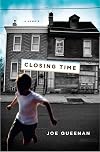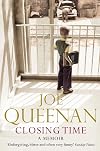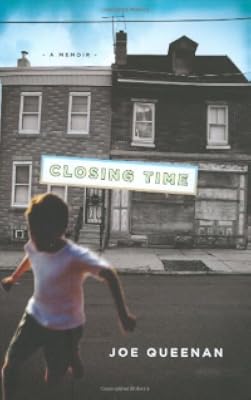
Closing Time: A Memoir
by Joe Queenan
On This Page
Description
Queenan's deeply funny and affecting memoir about his great escape from a childhood of poverty in a Philadelphia housing project in the early 1960s.Tags
Recommendations
Member Reviews
I used to be very amused by Queenan's articles in Movieline Magazine, in the days when it had an edge that set it apart from other entertainment publications. When it came to writing sentence after sentence of pointed but hilarious opinion, he had few equals. Under a new editor, Movieline became worthless, and I lost track of Queenan for quite a while. Recently, I decided to listen to this audiobook through Hoopla, which my library provides. So why, you may wonder, should anyone spend time listening to the autobiography of Joe Queenan? There are a number of answers to that. First, Queenan is a smart guy, and his observations on the people, places, and events in his life are always interesting and go deep beneath the surface. Second, show more while this is certainly a book about Queenan's life, it is more a book about his relationship with his alcoholic, abusive father, who could rarely hold a job for more than a few months at a time. Queenan's understanding of the good traits he inherited from his father, such as a love of learning and reading, will hit home with any of us whose relationship with our father was mixed. Without a father as a role model, Queenan turned to others, and his portrayal of the ex-Marine clothing store owner for whom he worked for many years, as well as a pharmacist turned gourmet cook, are fascinating. This book recreates a lost time and place (Philadelphia of the 1950s and 60s). As a result of his father's inability to hold a job, he grew up poor, at least until his mother started working at a hospital and rapidly was promoted to where she made more money than Queenan's father had ever brought in. Queenan's observations of the cycle of stupid decisions poor people make is very convincing.
This is also a funny book at times. Queenan's quest to become a Catholic Saint by dying at a young age doesn't quite work out, but his experiences with the church, its priests and nuns, and at a seminary in Clarks Summit, Pennsylvania are fascinating and amusing, while still maintaining the level of insight and seriousness that mark the book as a whole. There are very few throwaway lines here. If you listen to the audiobook, there is an excellent interview with Queenan at the end where he goes into the background of how he wrote the book.
Highly recommended. show less
This is also a funny book at times. Queenan's quest to become a Catholic Saint by dying at a young age doesn't quite work out, but his experiences with the church, its priests and nuns, and at a seminary in Clarks Summit, Pennsylvania are fascinating and amusing, while still maintaining the level of insight and seriousness that mark the book as a whole. There are very few throwaway lines here. If you listen to the audiobook, there is an excellent interview with Queenan at the end where he goes into the background of how he wrote the book.
Highly recommended. show less
Not unlike Queenan, I read my way into the middle class. I am familiar with a lot of the prejudices and knee-jerk attitudes he describes. I was much, much luckier than he, inasmuch as both my parents loved me and did their level best for me. Like him, I adore the English language in all its fearsome glory, and endeavor to use it in a manner befitting its incandescent variety.
Unlike Queenan, I'm not an unreconstructed, condescending prick.
This memoir was grueling. The horror that was Queenan's childhood is limned here in letters of fire. The reaction to that childhood is still happening, and it's uncomfortable to witness. There's enough backlash and bitterness to last several lifetimes here- and not without justification. His dad was a show more right bastard, make no mistake about it. Queenan's claims to have moved beyond his childhood ring hollow in the face of the evidence presented here, though. I think he's doing well to have merely survived. show less
Unlike Queenan, I'm not an unreconstructed, condescending prick.
This memoir was grueling. The horror that was Queenan's childhood is limned here in letters of fire. The reaction to that childhood is still happening, and it's uncomfortable to witness. There's enough backlash and bitterness to last several lifetimes here- and not without justification. His dad was a show more right bastard, make no mistake about it. Queenan's claims to have moved beyond his childhood ring hollow in the face of the evidence presented here, though. I think he's doing well to have merely survived. show less
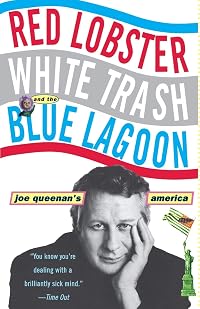
This memoir is the only thing of substance I read on vacation, but it was a doozy. Queenan who once made me laugh obnoxiously loud while reading Red Lobster, White Trash and the Blue Lagoon in an airport lounge waiting for a delayed plane here takes on his own painful childhood. Raised poor in Philadelphia by an abusive alcoholic father and only moderately interested mother, he examines how the Catholic church rescued his family, the pseudo-fathers he used to craft a picture of manhood upon which he could model himself, and the role education played in his eventual escape. Queenan's unflinching and often funny exploration of his life is well worth the read. The New York Times review points out that one's own relationship with their show more father may influence a reader's reception of this book so with that caution, consider this: Highly recommended. show less
At first I found Joe Queenan's memoir, CLOSING TIME, just a bit off-putting. Not because it had such an edgy undertone of anger and bitterness, which it does, and with good reason, but because of his writing style. Queenan's style seemed florid, overwrought, and maybe just a bit too, well, he seemed to be showing off how well-read and educated he was. 'Seemed' hell, he is showing it off. And it turns out he probably has good reason, considering how far he's come from his impoverished roots in the Philly housing projects. He credits the solid educational grounding he got in the Catholic school system from the nuns who taught him, as well as a couple somewhat questionable male role models. Desperately poor, mostly due to his father's show more alcoholism and inability to hold a job, Joe Queenan is indeed one of those success stories who quite literally pulled himself up by his own bootstraps. Or maybe better, by the tops of his ragged off-brand sneakers. He worked part-time jobs from the time he was eight years old, gaining some experience of the world and how it works in the process. He spent a year at a Maryknoll seminary, even though he quickly realized he had no religious vocation.
A couple hundred pages in, Queenan explains and defends his particular writing style, saying: "I had already decided I wanted to be a writer when I grew up, but I did not want to write like Ernest Hemingway, if only because everyone else did." No fear, Joe. Your writing will never be mistaken for Hemingway's. More perhaps like an angry Henry James, or maybe Flaubert.
I got used to Queenan's style as his story progressed. And the bitterness too, an emotion which finally, near the book's end, is tempered somewhat with a deeper understanding and sadness of what his father's hopeless life must have been like. But the anger, I think, has never quite left him. Having been ridiculed and made to feel unimportant and small throughout his childhood by his abusive father, he admits, "My dream was to make a living by ridiculing people." There's got to be at least a residual anger to make a living doing that, so ...
My feelings about Queenan as a person were mixed by the time I finished reading his story. Admittedly, he had a very hard early life. Education was his key to bettering things. He tells of how he hated his father, and yet, the hatred is softened once he has finally escaped those mean streets of northeast Philly. Watching his father grow old, alone and unloved was a part of his 'continuing education' of what it is to be flawed and human. I'm still not crazy about Queenan's style, but his story is, quite frankly, a pretty compelling one that kept me turning the pages. I admire the guy. show less
A couple hundred pages in, Queenan explains and defends his particular writing style, saying: "I had already decided I wanted to be a writer when I grew up, but I did not want to write like Ernest Hemingway, if only because everyone else did." No fear, Joe. Your writing will never be mistaken for Hemingway's. More perhaps like an angry Henry James, or maybe Flaubert.
I got used to Queenan's style as his story progressed. And the bitterness too, an emotion which finally, near the book's end, is tempered somewhat with a deeper understanding and sadness of what his father's hopeless life must have been like. But the anger, I think, has never quite left him. Having been ridiculed and made to feel unimportant and small throughout his childhood by his abusive father, he admits, "My dream was to make a living by ridiculing people." There's got to be at least a residual anger to make a living doing that, so ...
My feelings about Queenan as a person were mixed by the time I finished reading his story. Admittedly, he had a very hard early life. Education was his key to bettering things. He tells of how he hated his father, and yet, the hatred is softened once he has finally escaped those mean streets of northeast Philly. Watching his father grow old, alone and unloved was a part of his 'continuing education' of what it is to be flawed and human. I'm still not crazy about Queenan's style, but his story is, quite frankly, a pretty compelling one that kept me turning the pages. I admire the guy. show less
I have enjoyed all the Joe Queenan books I've read, particularly The Unkindest Cut: How a Hatchet-Man Critic Made His Own $7,000 Movie and Put It All on His Credit Card. He's a journalist and author, writing for the New York Times and The Guardian amongst others, where his acerbic wit and eloquent ranting holds no hostages. I'm not a fan of misery memoirs, but was happy to make an exception to read this one...
Queenan and his sisters grew up in Philadelphia with a violent alcoholic father and an uninterested depressive mother. Irish-Americans, they grew up in poverty having to live in the ghetto of a housing project for years. Queenan is clearly bitter about his drunkard father who couldn't hold down a regular job and subjected them to show more regular beatings. Queenan soon started to become creative about staying out of the house to avoid his pa - after-school jobs with father surrogates Len and Glen gave more than just a few dollars in his pocket. He also managed to escape for a whole year to the seminary, he really thought he had a calling, but that was a mistake. However he did realise that the best way out of poverty was to work hard at school, and luckily for us it worked. Once Glen took him to New York for a daytrip, it was love at first sight, and Joe had a real goal.
Queenan's trademark wit and bite can be found in this memoir, and there are passages of dazzling description that will keep you reading; but the book is rather long, and the highlights are sprinkled through like little nuggets of gold. He always speaks with candour and is never sentimental, but it is diluted by the sad but repetitive nature of his circumstances. Philadelphia too comes over as a dull city.
It's obvious by the end of the book that Queenan, who is nearing 60, is coming to terms with his childhood and wanted to get it off his chest. Those who already know his work will understand where his style comes from, others may find this memoir too long despite the lovely writing. show less
Queenan and his sisters grew up in Philadelphia with a violent alcoholic father and an uninterested depressive mother. Irish-Americans, they grew up in poverty having to live in the ghetto of a housing project for years. Queenan is clearly bitter about his drunkard father who couldn't hold down a regular job and subjected them to show more regular beatings. Queenan soon started to become creative about staying out of the house to avoid his pa - after-school jobs with father surrogates Len and Glen gave more than just a few dollars in his pocket. He also managed to escape for a whole year to the seminary, he really thought he had a calling, but that was a mistake. However he did realise that the best way out of poverty was to work hard at school, and luckily for us it worked. Once Glen took him to New York for a daytrip, it was love at first sight, and Joe had a real goal.
Queenan's trademark wit and bite can be found in this memoir, and there are passages of dazzling description that will keep you reading; but the book is rather long, and the highlights are sprinkled through like little nuggets of gold. He always speaks with candour and is never sentimental, but it is diluted by the sad but repetitive nature of his circumstances. Philadelphia too comes over as a dull city.
It's obvious by the end of the book that Queenan, who is nearing 60, is coming to terms with his childhood and wanted to get it off his chest. Those who already know his work will understand where his style comes from, others may find this memoir too long despite the lovely writing. show less
Joe Queenan brings a real wealth of writing talent to the task of this tale of his growing up in mid 20th century Philadelphia. Unfortunately, those talents seem wasted on this savagely bitter and mean spirited memoir. It required a considerable effort to bear with this arrogant cynic to the end of the book.
This is a review of the unabridged Audiobook version. Perhaps Queenan's humor was lost in the audiobook version. His autobiographical rendering of his youth in Philadephia was unremittingly bleak, dark and depressing. While I appreciated Queenan's beautifully wrought prose, I couldn't continue the book through to the end.
Members
- Recently Added By
Author Information

19+ Works 2,273 Members
Joe Queenan was born November 3, 1950. The author of five previous books, Joe Queenan is a contributing editor at GQ and writes a column, "Good Fences," for The New York Times. He lives in Tarrytown, New York. (Publisher Provided)
Awards and Honors
Common Knowledge
- Important places
- Philadelphia, Pennsylvania, USA; Pennsylvania, USA
Classifications
- Genres
- Biography & Memoir, Nonfiction, General Nonfiction, History
- DDC/MDS
- 974.811043092 — History & geography History of North America Northeastern United States (New England and Middle Atlantic states) Pennsylvania Southeast counties; Philadelphia and Chester group Philadelphia (co. and city)
- LCC
- CT275 .Q44 .A3 — Auxiliary Sciences of History Biography Biography National biography
- BISAC
Statistics
- Members
- 199
- Popularity
- 165,211
- Reviews
- 10
- Rating
- (3.66)
- Languages
- English
- Media
- Paper, Audiobook, Ebook
- ISBNs
- 13
- ASINs
- 5