
Daniel Menaker (1941–2020)
Author of The Treatment
About the Author
Daniel Menaker was born in 1941 in New York City. He earned a B.A. from Swarthmore College and an M.A. from Johns Hopkins University. Menaker has been an editor at Random House and has edited fiction and nonfiction at the New Yorker magazine for more than 20 years. His books include "Friends and show more Relations," a collection of short stories, and "The Treatment," a novel. (Bowker Author Biography) show less
Works by Daniel Menaker
Associated Works
Fierce Pajamas: An Anthology of Humor Writing from The New Yorker (2001) — Contributor — 786 copies, 5 reviews
The Good Book: Writers Reflect on Favorite Bible Passages (2015) — Contributor — 46 copies, 3 reviews
Tagged
Common Knowledge
- Birthdate
- 1941
- Date of death
- 2020-10-26
- Gender
- male
- Education
- Swarthmore College (BA 1963)
Johns Hopkins University (MA 1965) - Occupations
- editor
- Nationality
- USA
- Associated Place (for map)
- USA
Members
Reviews
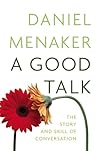
i'm still kind of shocked by how disappointing this book was. it is such a strange situation because it is a fascinating subject and i was so looking forward to reading about it. it is clear that the writer is extremely knowledgeable and he seems like a nice person who is genuinely interested in what makes conversations good. the problem is that the book is ultimately so poorly written that it doesn't do its subject matter or the writer's passion justice.
one of the most obvious and strange show more problems is that he chose to use a transcribed conversation to illustrate some points. but not only was this very, very long, taking up a significant portion of the text but the conversation itself wasn't particularly interesting to "listen" to. most bizarre of all- the conversation was between himself and another writer. he defended his decision to highlight one of his own conversations by pointing out that every other attempt at recording two random talkers failed. but i found it to be just inappropriate and thought he really should have kept trying so that he could more objectively analyze a conversation.
in addition to very regular name-dropping throughout the book he seems to try way too hard to be funny and both of these practices had the result of being quite distracting and made me feel like he was more concerned with trying to impress readers instead of just writing about his subject. i kept finding myself wishing he would just give the reader the interesting information and insight i knew he possessed. show less
one of the most obvious and strange show more problems is that he chose to use a transcribed conversation to illustrate some points. but not only was this very, very long, taking up a significant portion of the text but the conversation itself wasn't particularly interesting to "listen" to. most bizarre of all- the conversation was between himself and another writer. he defended his decision to highlight one of his own conversations by pointing out that every other attempt at recording two random talkers failed. but i found it to be just inappropriate and thought he really should have kept trying so that he could more objectively analyze a conversation.
in addition to very regular name-dropping throughout the book he seems to try way too hard to be funny and both of these practices had the result of being quite distracting and made me feel like he was more concerned with trying to impress readers instead of just writing about his subject. i kept finding myself wishing he would just give the reader the interesting information and insight i knew he possessed. show less
A Good Talk: The Story and Skill of Conversation by Daniel Menaker (Twelve $20, 230 pages)
I started reading this book one cold, sunny February afternoon in a coffee shop on Linglestown Road. At the handful of tables scattered around the cozy room, people were engaged in conversation, some casual, some earnest, each participating in an activity so commonplace as to be almost unworthy of note. It was the perfect setting in which to ponder a lighthearted and yet thoughtful exploration of the show more subject of talk.
In A Good Talk, Daniel Menaker, a novelist and former editor at Random House and The New Yorker, offers an eclectic look at the history, psychology and, most practically, the art of conversation, what he calls (with utmost respect) “aim-less social talk.” Distinguishing it from goal-oriented communication (think the dreaded business meeting), he asserts, “communicating with one another for no immediate reason has to be the most quintessentially and exclusively human of all our behaviors.” Menaker traces the roots of conversation to primate grooming behavior and from there it’s a whirlwind trip from the Socratic dialogue (a nightmarish memory for those of us who attended law school), through the Renaissance to London’s seventeenth century coffeehouses, to contemporary America where, he notes, our antipathy to idle talk is manifest in our “thing for people who talk little and accomplish much.”
But this book at its heart is a practical manual, not an arid academic tome. Relying on the extended transcript of a conversation with a female friend (playfully referring to the two of them as “Fred” and “Ginger”), Menaker exposes the dynamics of conversation to help anyone profitably apply these lessons with ease to an upcoming social encounter. There’s a chapter of FAQs (“Frequently Arising Quandaries”) that’s a how-to on a wide range of stumbling blocks to meaningful conversation, from changing the subject, to boredom, to insults, with some useful tips on electronic communications (slightly grudging ones since they don’t benefit from the richness of face-to-face interaction) and the highly-charged topic of dating talk.
Menaker candidly identifies what for him are the three vital components of good conversation: curiosity, humor and impudence. “If you don’t have a genuine interest in the world around you and in others,” he argues, “no matter how entertaining you are as a storyteller, you will in the long run be at best a performer, at worse a bore.” What he dubs the “Great Joke” --- “the unfairness of being given the powers of choice and consciousness but entirely foiled in our effort to understand the meaning of our simple existence”--- is for him the root of all conversational humor. For that reason, there is no more effective tool to enliven a good talk than a little self-deprecating humor, an attempt to convey the idea that we’re all in this boat together paddling as furiously as we can. Impudence, or “speaking up with what you want to say but are afraid might be taken amiss,” also has its place in the conversational arsenal. But because it’s easily misunderstood, it’s a seasoning best applied with great care.
Despite its inherent pitfalls, Menaker believes “every time people talk together in a social and mutually gratifying way, the world becomes a better place.” Indeed, he claims (citing neurochemical research), “satisfying, non-goal-driven conversation enhances our lives and makes us feel good.” That’s a function, in no small measure, of the recognition that good talking requires empathetic listening to enrich it and give it meaning.
All one has to do is scan the AM radio dial or channel surf the cable TV lineup to know we’re surrounded by plenty of talk, but precious little conversation. Daniel Menaker, who worries that “fewer and fewer people know the pleasures and benefits of true conversation,” offers this breezy if ultimately serious-minded book as a refreshing tonic for our babbling world. If it inspires us to start thinking about ways we can talk to instead of at each other he’ll have accomplished something of lasting value.
Copyright 2010 Harrisburg Magazine show less
I started reading this book one cold, sunny February afternoon in a coffee shop on Linglestown Road. At the handful of tables scattered around the cozy room, people were engaged in conversation, some casual, some earnest, each participating in an activity so commonplace as to be almost unworthy of note. It was the perfect setting in which to ponder a lighthearted and yet thoughtful exploration of the show more subject of talk.
In A Good Talk, Daniel Menaker, a novelist and former editor at Random House and The New Yorker, offers an eclectic look at the history, psychology and, most practically, the art of conversation, what he calls (with utmost respect) “aim-less social talk.” Distinguishing it from goal-oriented communication (think the dreaded business meeting), he asserts, “communicating with one another for no immediate reason has to be the most quintessentially and exclusively human of all our behaviors.” Menaker traces the roots of conversation to primate grooming behavior and from there it’s a whirlwind trip from the Socratic dialogue (a nightmarish memory for those of us who attended law school), through the Renaissance to London’s seventeenth century coffeehouses, to contemporary America where, he notes, our antipathy to idle talk is manifest in our “thing for people who talk little and accomplish much.”
But this book at its heart is a practical manual, not an arid academic tome. Relying on the extended transcript of a conversation with a female friend (playfully referring to the two of them as “Fred” and “Ginger”), Menaker exposes the dynamics of conversation to help anyone profitably apply these lessons with ease to an upcoming social encounter. There’s a chapter of FAQs (“Frequently Arising Quandaries”) that’s a how-to on a wide range of stumbling blocks to meaningful conversation, from changing the subject, to boredom, to insults, with some useful tips on electronic communications (slightly grudging ones since they don’t benefit from the richness of face-to-face interaction) and the highly-charged topic of dating talk.
Menaker candidly identifies what for him are the three vital components of good conversation: curiosity, humor and impudence. “If you don’t have a genuine interest in the world around you and in others,” he argues, “no matter how entertaining you are as a storyteller, you will in the long run be at best a performer, at worse a bore.” What he dubs the “Great Joke” --- “the unfairness of being given the powers of choice and consciousness but entirely foiled in our effort to understand the meaning of our simple existence”--- is for him the root of all conversational humor. For that reason, there is no more effective tool to enliven a good talk than a little self-deprecating humor, an attempt to convey the idea that we’re all in this boat together paddling as furiously as we can. Impudence, or “speaking up with what you want to say but are afraid might be taken amiss,” also has its place in the conversational arsenal. But because it’s easily misunderstood, it’s a seasoning best applied with great care.
Despite its inherent pitfalls, Menaker believes “every time people talk together in a social and mutually gratifying way, the world becomes a better place.” Indeed, he claims (citing neurochemical research), “satisfying, non-goal-driven conversation enhances our lives and makes us feel good.” That’s a function, in no small measure, of the recognition that good talking requires empathetic listening to enrich it and give it meaning.
All one has to do is scan the AM radio dial or channel surf the cable TV lineup to know we’re surrounded by plenty of talk, but precious little conversation. Daniel Menaker, who worries that “fewer and fewer people know the pleasures and benefits of true conversation,” offers this breezy if ultimately serious-minded book as a refreshing tonic for our babbling world. If it inspires us to start thinking about ways we can talk to instead of at each other he’ll have accomplished something of lasting value.
Copyright 2010 Harrisburg Magazine show less
Ah! A little book on the history and art of conversing. Coming from a journalist and writer I was expecting a light yet agreeable read, containing at least a few interesting titbits on the topic. Well, bad luck! The whole is a complete waste and, ironically for a book revolving all around the art of a good conversation, dull to the point of being soporific, shallow to the point of being vain and, after we put it down (having learnt nothing!) cannot but feel relieved as when having just show more gotten rid of a bore!
You want to know more about the history and art of conversing? Go pick articles here and there on the internet, and you will learn more about it all than in this poor and badly written summary. His conversation analysis brings nothing interesting -they are just talks between his friends upon which he disserts with a stupefying banality. Worst: he just uses a very few references to illustrate his arguments, an tiny handful of books he hasn't even bother to read!
The good introduction was promising. The bibliography (embracing literature, philosophy and psychology) is not too bad. The rest... Useless wind! Stay clear. show less
You want to know more about the history and art of conversing? Go pick articles here and there on the internet, and you will learn more about it all than in this poor and badly written summary. His conversation analysis brings nothing interesting -they are just talks between his friends upon which he disserts with a stupefying banality. Worst: he just uses a very few references to illustrate his arguments, an tiny handful of books he hasn't even bother to read!
The good introduction was promising. The bibliography (embracing literature, philosophy and psychology) is not too bad. The rest... Useless wind! Stay clear. show less
[Editor-in-chief William] Shawn always claims that The New Yorker does not and cannot, with integrity, try to attend to what a reader might want to read. We publish what we like, and hope that some people might want to read it too. [When a Table of Contents is finally added, the staff gasps:] “It’s none of the readers’ business what’s in the magazine.”
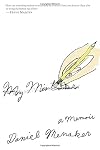
Daniel Menaker’s memoir begins in childhood with an intense sibling rivalry and a tragedy, and concludes in his seventies. There show more are some touching passages, particularly in childhood, but it’s the middle that’s most of the book and the most interesting -- inside stories from his decades of work at The New Yorker as a fact checker, then copy editor and Fiction Editor, largely under Shawn (who told Menaker to find another place to work and he finally did, 26 years later).
There are also bits about Tina Brown and a mention of Robert Gottlieb, and some about his early career teaching English at a top private school, his own writing, and his late career in book publishing at Random House and Harper Collins. There’s a fine passage about the value of a humanities education that’s too long to quote here; but if you can “search inside” or google part or all of his conclusion (“If you are lucky enough to be educated well in an ivory tower, it will help to prepare you to descend from that tower and deal with un-ivoried reality”), you'll get to the paragraph.
I think that some of us have more than one mother and many if not most of us, especially boys, have more than one father.
A continuing thread in the memoir is fathers -- his emotionally (and often physically) absent father, and the surrogate fathers he accumulates, one of whom is William Maxwell, a man I grew to like so much that I had to read the 1982 Paris Review interview with him. I also found Menaker quite likeable -- light, funny, quiet. He wrote what he liked and I enjoyed reading it.
(Review based on an advance reading copy provided by the publisher.) show less
Daniel Menaker’s memoir begins in childhood with an intense sibling rivalry and a tragedy, and concludes in his seventies. There show more are some touching passages, particularly in childhood, but it’s the middle that’s most of the book and the most interesting -- inside stories from his decades of work at The New Yorker as a fact checker, then copy editor and Fiction Editor, largely under Shawn (who told Menaker to find another place to work and he finally did, 26 years later).
There are also bits about Tina Brown and a mention of Robert Gottlieb, and some about his early career teaching English at a top private school, his own writing, and his late career in book publishing at Random House and Harper Collins. There’s a fine passage about the value of a humanities education that’s too long to quote here; but if you can “search inside” or google part or all of his conclusion (“If you are lucky enough to be educated well in an ivory tower, it will help to prepare you to descend from that tower and deal with un-ivoried reality”), you'll get to the paragraph.
I think that some of us have more than one mother and many if not most of us, especially boys, have more than one father.
A continuing thread in the memoir is fathers -- his emotionally (and often physically) absent father, and the surrogate fathers he accumulates, one of whom is William Maxwell, a man I grew to like so much that I had to read the 1982 Paris Review interview with him. I also found Menaker quite likeable -- light, funny, quiet. He wrote what he liked and I enjoyed reading it.
(Review based on an advance reading copy provided by the publisher.) show less
Awards


You May Also Like


Associated Authors
Statistics
- Works
- 9
- Also by
- 7
- Members
- 442
- Popularity
- #55,391
- Rating
- 3.4
- Reviews
- 14
- ISBNs
- 22
- Languages
- 2