
Frederick Reuss
Author of Horace Afoot
About the Author
Frederick Reuss lives in Washington, D.C. (Bowker Author Biography)
Works by Frederick Reuss
Tagged
Common Knowledge
- Gender
- male
- Nationality
- USA
- Places of residence
- Washington, D.C., USA
- Associated Place (for map)
- D.C., USA
Members
Reviews
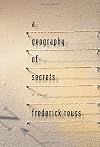
I was very much taken by this novel, A Geography of Secrets, although I had never heard of its author prior to this. More than just 'taken,' I was absolutely 'absorbed' upon entering this secret world that lies within the Washington beltway. I felt immediate sympathy - empathy even - for the character of Noel Leonard, a master 'technician' in a world of careerists and managers, high and low. An expert in his field, Noel is tortured by an intellect and a conscience sadly lacking in many of show more his superiors. And he has no one to confide in, no one with whom to share his moral dilemma. Because his work is shrouded in secrecy and layers of compartmentalization. He seems unable to unload, even to his priest, or to his wife, who is an agnostic. His own moral compass wavers badly when he is sent on a boondoggle junket to Switzerland, just to get him out of the way. In sheer desperation for simple human contact he links up with a prostitute there and tells her what he does, that he works for the U.S. President, that he is a murderer. But he gets no relief from this dangerous and highly illegal admission, succeeding only in making the call girl uncomfortable. His only solace is in golf, where he is a scratch player of considerable skill.
The parallel story is of the unnamed narrator who is a mapmaker by trade, who grew up in various countries as a foreign service brat. He is trying to learn more about his recently deceased father, whom he learns was much more than he appeared, and had also led a life shrouded in secrecy. Divorce, mistresses, abortions, illegitimate children, secret identities - it's all in here, as the stories of the two fifty-ish men parallel each other and even touch briefly at beginning and end. But there is no easy solution to be found here, in either story. The novel acknowledges all the messiness, confusion and questioning that constitutes a real life - or two real lives, in this case, and all the other lives that impinge on those two.
I've done some of this stuff. I know what it's like to work behind cipher lock doors in rooms without windows, so perhaps I can identify more easily than some with this story. But Reuss is a master storyteller, and his descriptions of doing highly classified work and dealing with all the crap that goes with it, and of the Washington area, with all of its recognizable landmarks and government buildings and agencies are simply dead-on, and the same is true of other locales here - in Switzerland, Germany, India.
Ah, what the hell. I know I'm not doing this book justice in this blathering manner, but it's just one damn good book, particularly if you've ever worked in Washington. show less
The parallel story is of the unnamed narrator who is a mapmaker by trade, who grew up in various countries as a foreign service brat. He is trying to learn more about his recently deceased father, whom he learns was much more than he appeared, and had also led a life shrouded in secrecy. Divorce, mistresses, abortions, illegitimate children, secret identities - it's all in here, as the stories of the two fifty-ish men parallel each other and even touch briefly at beginning and end. But there is no easy solution to be found here, in either story. The novel acknowledges all the messiness, confusion and questioning that constitutes a real life - or two real lives, in this case, and all the other lives that impinge on those two.
I've done some of this stuff. I know what it's like to work behind cipher lock doors in rooms without windows, so perhaps I can identify more easily than some with this story. But Reuss is a master storyteller, and his descriptions of doing highly classified work and dealing with all the crap that goes with it, and of the Washington area, with all of its recognizable landmarks and government buildings and agencies are simply dead-on, and the same is true of other locales here - in Switzerland, Germany, India.
Ah, what the hell. I know I'm not doing this book justice in this blathering manner, but it's just one damn good book, particularly if you've ever worked in Washington. show less
 This review was written for LibraryThing Early Reviewers.
Two men with different stories. But both trying to make sense of secrets in their lives. One in the dark past, the second erupting in the present. One family related, the second work related. For a long time it seems there is nothing to tie these stories together. I wondered half way through the book how their lives might weave together.
Finally came to the conclusion that the tie was their respective world views shaped heavily by their shared profession. As cartographers they both like to show more literally “map out” any problem they face in their minds until they can metaphorically wrap their arms around it and understand it on their terms. They do this quite well in the external world of concrete things and processes, but decidedly less well the world of people and emotion. As one character finally realizes:
“He knows his precise location as he crosses the fourteenth street bridge, where he is in relation to the [Washington DC] monuments, the city grid, traffic patterns, the federal bureaucracy, election cycles, wars in Afghanistan, Iraq, GWOT – all the big structures. It is reassuring to know his place [in the government] …he fits in just fine. It’s ordinary life he can’t connect to.”
Great psychological story and highly recommended for anyone who has worked in a job a bit too long and wonders what became of the person they once were; anyone who has recently lost a father and is trying to piece together what that means for their family; and for professional cartographers or those who insist on viewing all of the world through the lens of a map. show less
Finally came to the conclusion that the tie was their respective world views shaped heavily by their shared profession. As cartographers they both like to show more literally “map out” any problem they face in their minds until they can metaphorically wrap their arms around it and understand it on their terms. They do this quite well in the external world of concrete things and processes, but decidedly less well the world of people and emotion. As one character finally realizes:
“He knows his precise location as he crosses the fourteenth street bridge, where he is in relation to the [Washington DC] monuments, the city grid, traffic patterns, the federal bureaucracy, election cycles, wars in Afghanistan, Iraq, GWOT – all the big structures. It is reassuring to know his place [in the government] …he fits in just fine. It’s ordinary life he can’t connect to.”
Great psychological story and highly recommended for anyone who has worked in a job a bit too long and wonders what became of the person they once were; anyone who has recently lost a father and is trying to piece together what that means for their family; and for professional cartographers or those who insist on viewing all of the world through the lens of a map. show less
Life is all about secrets, the ones we keep from others and the ones we keep from ourselves. Written as separate but parallel stories, A Geography of Secrets explores these secrets and the damage they can do to an individual and to others. Both Noel and the unnamed narrator have family secrets that tear apart their serenity, forcing them to reevaluate everything they ever thought about their lives.
The novel's beauty lies in the synchronicity of the two stories. Both men spend their lives show more analyzing topography, which makes them uniquely observant to various aspects of life. Yet, each is left questioning his place in his own family after certain secrets make themselves known. However, the secrets themselves are not important, as the reactions to these secrets truly drive the novel.
Make no mistake, this is a story that is just as mental as it is physical, mirroring the external and internal aspects of secrets. The language is simple and evocative. Mr. Reuss doesn't hide behind the words but lets the psychology of the story unfold effortlessly. Through it all, the reader is drawn into each man's plight, drawing parallels between the two, and superimposing any conclusions drawn onto his or her own life.
Not for everyone, A Geography of Secrets is a simple but dramatic story. There are no chase scenes or suspenseful moments. Rather, the drama occurs quietly, as each man searches for answers and makes decisions that have momentous implications for others. For the right reader, Mr. Reuss' exploration of the power of secrets is one that will definitely leave its mark. show less
The novel's beauty lies in the synchronicity of the two stories. Both men spend their lives show more analyzing topography, which makes them uniquely observant to various aspects of life. Yet, each is left questioning his place in his own family after certain secrets make themselves known. However, the secrets themselves are not important, as the reactions to these secrets truly drive the novel.
Make no mistake, this is a story that is just as mental as it is physical, mirroring the external and internal aspects of secrets. The language is simple and evocative. Mr. Reuss doesn't hide behind the words but lets the psychology of the story unfold effortlessly. Through it all, the reader is drawn into each man's plight, drawing parallels between the two, and superimposing any conclusions drawn onto his or her own life.
Not for everyone, A Geography of Secrets is a simple but dramatic story. There are no chase scenes or suspenseful moments. Rather, the drama occurs quietly, as each man searches for answers and makes decisions that have momentous implications for others. For the right reader, Mr. Reuss' exploration of the power of secrets is one that will definitely leave its mark. show less
Noel Leonard is a Defense Intelligence Agency analyst whose career and personal life are in disarray. But not really in a compelling way. His soullessness is illustrated by a devotion to golf. His wife’s main personality trait is anger. He’s distraught over a mistake at work that results in a school being bombed. His method of dealing with it is to strike golf balls onto the George Washington Parkway during rush hour.
His story is juxtaposed with that of an unnamed narrator – the most show more sympathetic character in the story - who is trying to trace the history of his recently deceased father by seeking information about his probable CIA career. His interest and skill in cartography is hands-on and helps him cope with his father’s death. In contrast, Noel’s view of the world is filtered through satellite images and contributes to his disaffection.
The story is emotionally complex but at the same time seems somewhat lacking in emotion. In one of Noel’s more honest moments, “he wishes he were a more likable person.” As I did. show less
His story is juxtaposed with that of an unnamed narrator – the most show more sympathetic character in the story - who is trying to trace the history of his recently deceased father by seeking information about his probable CIA career. His interest and skill in cartography is hands-on and helps him cope with his father’s death. In contrast, Noel’s view of the world is filtered through satellite images and contributes to his disaffection.
The story is emotionally complex but at the same time seems somewhat lacking in emotion. In one of Noel’s more honest moments, “he wishes he were a more likable person.” As I did. show less
This review was written for LibraryThing Early Reviewers.Awards


You May Also Like


Statistics
- Works
- 6
- Members
- 332
- Popularity
- #71,552
- Rating
- 3.8
- Reviews
- 17
- ISBNs
- 16
- Languages
- 1
