
David Bajo
Author of The 351 Books of Irma Arcuri: A Novel
About the Author
Image credit: Photo Credit: Nancy Santos
Works by David Bajo
Tagged
Common Knowledge
- Birthdate
- 1960
- Gender
- male
- Education
- University of San Diego (BA)
University of Michigan (MA)
University of California, Irvine (MFA) - Occupations
- professor of English
- Organizations
- University of South Carolina
- Nationality
- USA
- Birthplace
- San Diego, California, USA
- Associated Place (for map)
- California, USA
Members
Reviews
On the California/Mexico border a newspaper is closing shop and three of their top reporters are given different assignments, that end up having eerie similarities. One involves a mysterious motel and a missing woman. This novel has a dream-like quality to it, involving a surveillance-minded society, where cameras document everything. There is also a connection to the “feminicide" in Ciudad, Juarez where scores of women have been murdered over the past 25-plus years. I should have loved show more this book. It's premise and style fit me perfectly but the trippy and unfocused, narrative kept me from fully locking in. It just missed the “mark”. show less
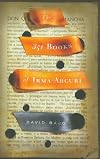
Bajo's novel is about mathematics, bookbinding, running, reading and lovemaking in a Borgesian, Cervantesian labryinth. It teases and intrigues, leading the reader on winding pathways of relationships with sensuous prose. Not for those who like their novels rational and straightfoward. I found it fascinating and seductive.
Well-written prose, but ... seems like the author is focused a lot on sex, and it gets very confusing which woman the main character is with, it all blurs together. Which is maybe what the author intended, but I just wasn't getting enough out of it to stick with it. Does remind me of Kundera, and also Richard Powers.

What we are to books, what books are to us—what they offer to us and what we take from them—is the theme that runs through David Bajo’s seductive and sometimes puzzling novel The 351 Books of Irma Arcuri. The 351 books of the title are hand-bound hardcovers that Irma, a writer and book conservationist, has bequeathed to her long-time friend and sometime lover, a mathematician named Philip Mazyrk. The first Philip hears about the inheritance is in an email from Irma’s mother. Irma, show more apparently, is gone.
Not dead. Just gone. Disappeared from life. “Can one do that? Leave her own life? How does one do that?” asks Philip’s most recent ex-wife, who knew and liked this woman who drifted in and out of Philip’s life like an errant comet on an unpredictable orbit. “She left me her books, B.” answers Philip. It’s as final a statement as either of them can imagine her making.
Naturally Philip resolves to find her.
The 351 Books of Irma Arcuri is the kind of biblio-mystery that invites comparisons to Carlos Ruiz Zafon’s Shadow of the Wind, or Arturo Perez-Reverte’s The Club Dumas. Plot, however, takes second place to descriptive power and sheer, breathless exultation in the magic of literature. It is not a mystery to be solved so much as an extended rumination on what it means to become lost in a book, and as such contains layer after layer of allusion and illusion, plots and subplot, metaphors that turn on themselves to become metaphors for something else. Don Quixote’s quest being the most glaringly obvious case, but there are implications and intimations throughout the story.
Because of this literary indulgence, the novel lacks a certain cohesiveness and focus (one can’t help wondering, for example, why no one ever takes a more prosaic approach to finding Irma—this is the age of the Internet, after all. It isn’t all that easy to fall off the grid) and there are some weak spots, one suspects, especially with regards to Philip’s mathematical approach to his search. For example, Philip often describes (very poetically) the equations he writes to discover any number of mysterious things, from how to find Irma to what might be bothering his saddened stepdaughter. But a mathematician would tell you that these are expressions, not equations. Expressions describe. Equations solve.
These are minor complaints, however, in a book that is rich in beautiful detail—especially in setting and in describing books. There are gorgeously-rendered descriptions of Philadelphia, Corsica, Mexico, Barcelona, Seville. But it is the books that get the most attention. The process of restoring and binding a book falls naturally into many parts of the story until the reader, like Irma, like Philip, can almost feel the texture of different linens and leathers, the rough edges of old paper, parchment and vellum, and smell the acrid scent of ink, tannic acid, and the dust that seems inherent in every old volume.
“Most of us,” Irma once told Philip, “can’t accept being the protagonist of our own lives. Whether we only watch TV or sports or read thousands of books, we’re all just trying to find another protagonist for our lives. One besides ourselves.” Philip doesn’t watch television, and until he was sent Irma’s book collection, he didn’t read much—at least in the way of fiction. But as he makes his way towards his disappeared lover, guided by Borges and Cervantes, he discovers that he has become the protagonist—if not of his own life, then of hers. full review here show less
Not dead. Just gone. Disappeared from life. “Can one do that? Leave her own life? How does one do that?” asks Philip’s most recent ex-wife, who knew and liked this woman who drifted in and out of Philip’s life like an errant comet on an unpredictable orbit. “She left me her books, B.” answers Philip. It’s as final a statement as either of them can imagine her making.
Naturally Philip resolves to find her.
The 351 Books of Irma Arcuri is the kind of biblio-mystery that invites comparisons to Carlos Ruiz Zafon’s Shadow of the Wind, or Arturo Perez-Reverte’s The Club Dumas. Plot, however, takes second place to descriptive power and sheer, breathless exultation in the magic of literature. It is not a mystery to be solved so much as an extended rumination on what it means to become lost in a book, and as such contains layer after layer of allusion and illusion, plots and subplot, metaphors that turn on themselves to become metaphors for something else. Don Quixote’s quest being the most glaringly obvious case, but there are implications and intimations throughout the story.
Because of this literary indulgence, the novel lacks a certain cohesiveness and focus (one can’t help wondering, for example, why no one ever takes a more prosaic approach to finding Irma—this is the age of the Internet, after all. It isn’t all that easy to fall off the grid) and there are some weak spots, one suspects, especially with regards to Philip’s mathematical approach to his search. For example, Philip often describes (very poetically) the equations he writes to discover any number of mysterious things, from how to find Irma to what might be bothering his saddened stepdaughter. But a mathematician would tell you that these are expressions, not equations. Expressions describe. Equations solve.
These are minor complaints, however, in a book that is rich in beautiful detail—especially in setting and in describing books. There are gorgeously-rendered descriptions of Philadelphia, Corsica, Mexico, Barcelona, Seville. But it is the books that get the most attention. The process of restoring and binding a book falls naturally into many parts of the story until the reader, like Irma, like Philip, can almost feel the texture of different linens and leathers, the rough edges of old paper, parchment and vellum, and smell the acrid scent of ink, tannic acid, and the dust that seems inherent in every old volume.
“Most of us,” Irma once told Philip, “can’t accept being the protagonist of our own lives. Whether we only watch TV or sports or read thousands of books, we’re all just trying to find another protagonist for our lives. One besides ourselves.” Philip doesn’t watch television, and until he was sent Irma’s book collection, he didn’t read much—at least in the way of fiction. But as he makes his way towards his disappeared lover, guided by Borges and Cervantes, he discovers that he has become the protagonist—if not of his own life, then of hers. full review here show less
Lists
You May Also Like


Statistics
- Works
- 3
- Members
- 220
- Popularity
- #101,714
- Rating
- 3.4
- Reviews
- 13
- ISBNs
- 11
- Languages
- 4