
Michael Gruber
Author of The Book of Air and Shadows
About the Author
Image credit:
www.vjbooks.com
Series
Works by Michael Gruber
Associated Works
Tagged
Common Knowledge
- Canonical name
- Gruber, Michael
- Birthdate
- 1940-10-01
- Gender
- male
- Education
- Columbia University (BA)
City College of New York (BA)
University of Miami (MA|Ph.D|1973) - Occupations
- novelist
ghostwriter - Organizations
- United States Army
United States Environmental Protection Agency - Nationality
- USA
- Birthplace
- New York, New York, USA
- Places of residence
- Brooklyn, New York, USA
Seattle, Washington, USA - Associated Place (for map)
- New York, USA
Members
Reviews
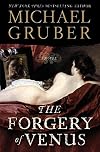
Chaz Wilmot is a talented artist, the son of a slightly less talented artist, and is obsessed with the idea of wasting his talent and thus doing exactly that. In addition to the paltry sums he brings in with commercial work he is a paid participant in the trial of a completely legal but somewhat psychotropic drug hoping to identify the roots of human creativity. With two ex-wives and three children to support -- one of whom is desperately ill -- he desperately needs money and when he's show more offered a huge sum to recreate a frescoed ceiling in Venice, the offer is just too good to refuse.
What follows is a finely crafted, intricately woven novel of psychological suspense that I found completely absorbing. While at certain stages I felt that I could have used an art history lesson to get full enjoyment out of the book -- and I'm sure that readers with more knowledge of art than I have will reap an extra dimension -- ultimately that was beside the point and I found myself thoroughly enjoying the ride I'd signed on for.
With the only other Michael Gruber novel I've read being The Book of Air and Shadows, I will definitely be checking out more of this author's backlist. show less
What follows is a finely crafted, intricately woven novel of psychological suspense that I found completely absorbing. While at certain stages I felt that I could have used an art history lesson to get full enjoyment out of the book -- and I'm sure that readers with more knowledge of art than I have will reap an extra dimension -- ultimately that was beside the point and I found myself thoroughly enjoying the ride I'd signed on for.
With the only other Michael Gruber novel I've read being The Book of Air and Shadows, I will definitely be checking out more of this author's backlist. show less
 This review was written for LibraryThing Early Reviewers.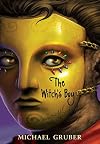
Fairy tales are usually for kids, but not this one. The Witch's Boy a dark story about what happens when humans explore all of their horrible human ways is part bildungsroman, part fable and part a commentary on human behavior. Or perhaps a better description is that the novel is a rich set of observations on the contradictory nature of human behavior. None of the characters are completely good as we normally see in fairy tales, but there's something human in all of them. Not all of the evil show more characters are truly bad, which is also a well known trope of this genre. That doesn't mean the novel is a bad mix of everything, it is a well crafted and satisfying story. We learn about an ugly boy who is found in the forest by a witch. We learn nothing about the boy's background and all we know is that even as a baby the boy is ugly as sin. No matter how ugly and revolting the boy is and no matter how much the old witch hates the outside world, she can not resist but take the boy in and nurture him. In this task she is assisted by a large bear, a smartass cat and a demon.
In rapid succession the boy, is adopted mother and everyone around them are flung through a rapid series of experiences that each teaches them about their roles in life and the harsh reality we all have to learn to cope with. Only at the very beginning do we think nothing is different from any other fairy tale. Lump however starts off as an innocent little boy, who through circumstances transforms into the ogre he thinks he looks like and after which everything ends unsuspectingly appropriately (although not happily ever after). The exact same can be said of all the other characters, they exist in what feels like a real world where everything makes perfect sense without the fairy tale perfection. Even though the world is fantastical and anything can happen, Michael Gruber instills his characters with such humanity that we can understand the bad choices they make when under the irresistible influence of magic or the impossible to cope with struggles of human existence.
Interwoven will all the magical bravura are numerous references to well known fairy tale stories. Famous characters from stories like Hansl and Gretl or Pinocchio make their appearance but in slightly different ways then we expect them to, which adds another layer of depth to the story another unexpected aspect for us to take in as readers. All this is in aide of an author who shows us that things don't always turn out the way we expect them to, but that those endings are perhaps more satisfying then if everything turned out perfectly. The story deals with loss, love, beauty and its repercussions, jealousy, power and the many disappointments we all deal with throughout our lifetimes. Quite a lofty goal to pack into a novel but Gruber pulls it off splendidly. If you're not afraid of a book that plays with established stereotypes and if you're willing to suspend your belief that good is always perfect and bad is always evil, then you will be highly satisfied with this read. show less
In rapid succession the boy, is adopted mother and everyone around them are flung through a rapid series of experiences that each teaches them about their roles in life and the harsh reality we all have to learn to cope with. Only at the very beginning do we think nothing is different from any other fairy tale. Lump however starts off as an innocent little boy, who through circumstances transforms into the ogre he thinks he looks like and after which everything ends unsuspectingly appropriately (although not happily ever after). The exact same can be said of all the other characters, they exist in what feels like a real world where everything makes perfect sense without the fairy tale perfection. Even though the world is fantastical and anything can happen, Michael Gruber instills his characters with such humanity that we can understand the bad choices they make when under the irresistible influence of magic or the impossible to cope with struggles of human existence.
Interwoven will all the magical bravura are numerous references to well known fairy tale stories. Famous characters from stories like Hansl and Gretl or Pinocchio make their appearance but in slightly different ways then we expect them to, which adds another layer of depth to the story another unexpected aspect for us to take in as readers. All this is in aide of an author who shows us that things don't always turn out the way we expect them to, but that those endings are perhaps more satisfying then if everything turned out perfectly. The story deals with loss, love, beauty and its repercussions, jealousy, power and the many disappointments we all deal with throughout our lifetimes. Quite a lofty goal to pack into a novel but Gruber pulls it off splendidly. If you're not afraid of a book that plays with established stereotypes and if you're willing to suspend your belief that good is always perfect and bad is always evil, then you will be highly satisfied with this read. show less
Brilliant in many respects, Gruber takes the reader on an unusual journey toggling back and forth from the present to the days of the famous Spanish artist, Velasquez. The catch is that the mind of the central character, Chaz Wilmot may or may not be how this journey is experienced. Extremely well researched, the characters engage at a deep level offering art history in parallel with the underworld of art forgery. With a lifelong appreciation for great art while lacking the knowledge of the show more masters, this story has inspired me to learn more about them! But it's the journey that will continually raise questions in your mind, the central theme being, What is real? This is a great story and unique in many respects. Highly recommend, whether art is of interest or not! show less
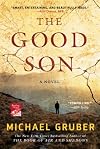
From the very beginning you cannot help but root for Theo. He is an ex-Delta soldier trying to be the sensitive tough guy while is mother is being held captive. But, he is only part of the story. Let's talk about the mother, Sonia Laghari, for a moment. She, along with eight other members of a symposium on peace, have been kidnapped by armed terrorists. Being a deeply religious Jungian psychologist, Sonia becomes the leader of the abducted group. Using her knowledge of the kidnapper's show more language and religion she uses her Jungian psychology to interpret their dreams if only to get in their heads. She wants to instill the premise that you can simultaneously hate the war but love the soldier. Despite her own life being in danger, she attempts to generate harmony to "protect" her fellow captives. A sort of reverse Stockholm syndrome. Meanwhile, in Washington there is a Vietnamese National Security translator listening in...The Good Son combines psychology, sociology, religion, and relationships into a thriller well worth the read. show less
Lists
Awards


You May Also Like


Associated Authors
Statistics
- Works
- 23
- Also by
- 1
- Members
- 5,431
- Popularity
- #4,584
- Rating
- 3.6
- Reviews
- 261
- ISBNs
- 162
- Languages
- 12
- Favorited
- 9

