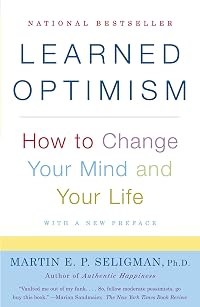
Learned Optimism: How to Change Your Mind and Your Life
by Martin E. P. Seligman
On This Page
Description
ARE YOU HOLDING YOURSELF BACK? Without knowing it, most of us impose limits on our achievement and our happiness by approaching life's problems and challenges with unnecessary pessimism. Now, Dr. Martin Seligman, a pioneer in cognitive psychology and motivational research, tells you how to identify your own self-defeating thought patterns -- and how to harness the powers of your conscious mind to break those patterns. The Science of Personal Control Based on years of rigorous research, show more Learned Optimism examines the importance of "explanatory style" -- the way in which we explain our problems and setbacks to ourselves -- and offers a series of exercises that will help you target unhealthy habits of pessimistic thinking and bring them under your control. More powerful and pragmatic than a simple program of positive thinking, Dr. Seligman's principles of reasoned, flexible optimism will help you: - Attain maximum personal achievement - Avoid feelings of helplessness and depression - Develop a hopeful, healthy outlook. show lessTags
Recommendations




Member Reviews
"What is crucial is what you think when you fail, using the power of 'non-negative thinking.' Changing the destructive things you say to yourself when you experience the setbacks that life deals all of us is the central skill of optimism." —this is my favorite quote from Seligman's Learned Optimism. And when I sum up the book for others I use a variation of this sentiment, saying something like, "When you experience failure or some form of life not going your way, what explanation do you give yourself? Not what you would say in front of others, but privately?" This is the foundation of your self-esteem, a way of knowing if you're more of an optimist or a pessimist.
Seligman's book reads like a textbook in parts which makes for some show more uneven reading, and at other times he shifts into memoir-mode, sharing events that shaped his career in psychology. Too much of this pulls the reader away from the core message. And that message, a powerful one that is described right in the title, is this: You need not be a passive observer to the events of your life. Most things that happen are out of your control, but your reaction to them can be very much in your control. And that's a skill to be learned and developed. show less
Seligman's book reads like a textbook in parts which makes for some show more uneven reading, and at other times he shifts into memoir-mode, sharing events that shaped his career in psychology. Too much of this pulls the reader away from the core message. And that message, a powerful one that is described right in the title, is this: You need not be a passive observer to the events of your life. Most things that happen are out of your control, but your reaction to them can be very much in your control. And that's a skill to be learned and developed. show less
I learned, in reading this book, that I am a pessimist. This came as news to me, since I'd always thought of myself as an optimist. But optimism - at least not as Seligman defines it - is not a soft-focus view of the world, where you believe that if you just do the right thing, everything will work out in due time. (That's magical thinking - something Seligman addresses without naming it. I learned an expensive lesson in thinking this way in grad school.) I come from a family of pessimists, so I wasn't even aware I thought this way. It's amazing how unchallenged thoughts can guide a person's life.
But this book hit so many points for me: the churning, negative thoughts that never let me alone, the failures that haunt me at four o'clock show more in the morning, the way I can blow minor issues completely out of proportion, the way I can make the fear of failure a self-fulfilling prophesy, the way I can give up or collapse internally when things go wrong. Oh, and the way I internalize criticism and make it permanent inside me, like a stone. Oh, I've done all these things, and more, which makes me realize I'm a dyed-in-the-wool pessimist. (I'm now wincing at the amount of time I spent on a barstool in my twenties, regaling my problems to friends and anyone else who would listen. But it's nice to finally put a name to the feeling.)
These things are universal. Every adult goes through them. I've had to learn the hard way that a big factor in deciding whether you fail or succeed is how you talk to yourself, especially when things go wrong. This is a good book to read if you're one of those people who frequently needs friends and relatives to "talk you down from the ledge." You can build the skill of thinking optimistically yourself, without putting that burden on other people - AND without discounting some of the very real benefits of pessimism.
In other words, Seligman doesn't define optimism as high self-esteem, or the power of positive thinking, or any nonsense. It's really just correcting a disordered way of thinking - all of the negative beliefs a person can hold without challenging them. If it came from you, it must be true, right? WRONG. So wrong. Say you want to write a novel. If writing a novel seems shrouded in mystery, if you have a deep pessimism that you can never hold back the curtain in writing it, you'll fulfill that prophesy. You'll get the same results as if you really didn't have the ability. Either you'll give up somewhere along the way, or you'll write a crappy book.
Optimism is endurance. That's all. This book can give you some tools for retraining. show less
But this book hit so many points for me: the churning, negative thoughts that never let me alone, the failures that haunt me at four o'clock show more in the morning, the way I can blow minor issues completely out of proportion, the way I can make the fear of failure a self-fulfilling prophesy, the way I can give up or collapse internally when things go wrong. Oh, and the way I internalize criticism and make it permanent inside me, like a stone. Oh, I've done all these things, and more, which makes me realize I'm a dyed-in-the-wool pessimist. (I'm now wincing at the amount of time I spent on a barstool in my twenties, regaling my problems to friends and anyone else who would listen. But it's nice to finally put a name to the feeling.)
These things are universal. Every adult goes through them. I've had to learn the hard way that a big factor in deciding whether you fail or succeed is how you talk to yourself, especially when things go wrong. This is a good book to read if you're one of those people who frequently needs friends and relatives to "talk you down from the ledge." You can build the skill of thinking optimistically yourself, without putting that burden on other people - AND without discounting some of the very real benefits of pessimism.
In other words, Seligman doesn't define optimism as high self-esteem, or the power of positive thinking, or any nonsense. It's really just correcting a disordered way of thinking - all of the negative beliefs a person can hold without challenging them. If it came from you, it must be true, right? WRONG. So wrong. Say you want to write a novel. If writing a novel seems shrouded in mystery, if you have a deep pessimism that you can never hold back the curtain in writing it, you'll fulfill that prophesy. You'll get the same results as if you really didn't have the ability. Either you'll give up somewhere along the way, or you'll write a crappy book.
Optimism is endurance. That's all. This book can give you some tools for retraining. show less
I've been fascinated with happiness in the last five years, so it seems obvious that this book, now considered a classic in the field, would be a book I should read.
And now that I have, I must say that I agree with the crown that has been placed upon this book's head; it's a worthy read for anyone interested in happiness.
I took away from it a paradoxical and disquieting idea: the happiest people are the most optimistic, but fail again and again to see the dark truths in life, while the unhappiest people are able to see and act on the grimmer life truths yet suffer deeply from the sadnesses that looking at reality brings.
What do you do with that?
Seligman encourages us to use optimism in most everyday situations, to keep us buoyed up, show more to face the daily difficulties of life, but to weigh in with realism in situations that could endanger our physical existences.
I have heard that Seligman has a new edition of this book (this is a library book, copyright 1991) which I probably need to seek out. I am also interested in reading his book entitled Flourish. show less
And now that I have, I must say that I agree with the crown that has been placed upon this book's head; it's a worthy read for anyone interested in happiness.
I took away from it a paradoxical and disquieting idea: the happiest people are the most optimistic, but fail again and again to see the dark truths in life, while the unhappiest people are able to see and act on the grimmer life truths yet suffer deeply from the sadnesses that looking at reality brings.
What do you do with that?
Seligman encourages us to use optimism in most everyday situations, to keep us buoyed up, show more to face the daily difficulties of life, but to weigh in with realism in situations that could endanger our physical existences.
I have heard that Seligman has a new edition of this book (this is a library book, copyright 1991) which I probably need to seek out. I am also interested in reading his book entitled Flourish. show less
Published in 1990, Learned Optimism warned of an epidemic increase in depressive mental illness. A quick Google search suggests that the epidemic continues to increase, at least in western industrialised cultures. Seligman provides a half-baked evolutionary explanation for this modern plague. Depressive mental illness, in those who suffer from the condition, correlates with pessimism. When human existence was nasty brutal and short, pessimism served us well. Pessimists, to give them their due, usually have a more secure hold on reality than optimists. Seligman speculates that our ancestors, who ‘survived the Pleistocene may have done so because they had the capacity to worry incessantly about the future’. Now it is different. The show more enormous expansion of human freedoms and choices in modern societies encourages a deleterious tendency to inward reflection and insecurity about our extended sense of self, the ‘maximal self’ in Seligman’s terminology. He argues that pessimism, when allied with a ‘ruminant’ style of thinking, can quickly lead to depressive mental illness. Women, who are far more likely to explore their feelings, are in consequence far more likely than men to suffer depression. This is a crude and brutal theorisation of depression and its origins but perhaps one should not expect more sophistication or nuance in discussion of a self help manual. Seligman provides a self diagnostic quiz to enable his readers to locate themselves on various scales of pessimism, optimism and depression.
Fortunately, Seligman avers, there are two cures for the debilitating scourge of pessimism and its depressive sequel. The first is the cultivation of habits of thought that Seligman calls ‘learned optimism’. Surveys suggest that optimists live longer, happier, healthier and more successful lives than pessimists. Learned Optimism provides drills and exercises to exorcise debilitating pessimism. It is quite possible that Seligman is correct in his prescription, though more recent research does not seem to support his hopes that optimism cures cancer.
Learned Optimism concludes with a more visionary alternative cure for epidemic depression. Reduce our endemic preoccupation with the maximal self, Seligman suggests and learn altruism instead. He calls it ‘moral jogging’. The triteness of the slogan grates, but it masks an inspiring programme of self transformation. Here are some of his prescriptions: give generously to charity, but make it personal. When asked by a homeless person for money, stop and talk to the supplicant. Then give generously and with discrimination, according to need. Set aside a fund of 5% of your taxable income, invite applications for benefits and interview the applicants, selecting those who are most deserving of your help. Give an evening a week to community activities. Visit and comfort those who are dying of AIDS. (Seligman is writing in the last decades of the 20th century, when AIDS was often a death sentence for young men.) Devote three hours a week to actively promoting, by letters, meetings or personal solicitation, necessary social reforms. Twelve hours a week, or thereabouts, spent in altruistic activity can be a cure for excessive self-absorption, pessimism and a preventive against sliding into depressive mental illness.
Seligman’s promotion of a more altruistic society should be remembered to his credit, in contrast to the repellent cruelty of his earlier experimental work, teaching ‘learned helplessness’ to caged dogs. show less
Fortunately, Seligman avers, there are two cures for the debilitating scourge of pessimism and its depressive sequel. The first is the cultivation of habits of thought that Seligman calls ‘learned optimism’. Surveys suggest that optimists live longer, happier, healthier and more successful lives than pessimists. Learned Optimism provides drills and exercises to exorcise debilitating pessimism. It is quite possible that Seligman is correct in his prescription, though more recent research does not seem to support his hopes that optimism cures cancer.
Learned Optimism concludes with a more visionary alternative cure for epidemic depression. Reduce our endemic preoccupation with the maximal self, Seligman suggests and learn altruism instead. He calls it ‘moral jogging’. The triteness of the slogan grates, but it masks an inspiring programme of self transformation. Here are some of his prescriptions: give generously to charity, but make it personal. When asked by a homeless person for money, stop and talk to the supplicant. Then give generously and with discrimination, according to need. Set aside a fund of 5% of your taxable income, invite applications for benefits and interview the applicants, selecting those who are most deserving of your help. Give an evening a week to community activities. Visit and comfort those who are dying of AIDS. (Seligman is writing in the last decades of the 20th century, when AIDS was often a death sentence for young men.) Devote three hours a week to actively promoting, by letters, meetings or personal solicitation, necessary social reforms. Twelve hours a week, or thereabouts, spent in altruistic activity can be a cure for excessive self-absorption, pessimism and a preventive against sliding into depressive mental illness.
Seligman’s promotion of a more altruistic society should be remembered to his credit, in contrast to the repellent cruelty of his earlier experimental work, teaching ‘learned helplessness’ to caged dogs. show less
I can appreciate a self-help book written by a scientist with the body of work to back it up. I liked learning about helping kids develop healthy ways of thinking about the world, especially when they are faced with trying circumstances early in life.
It's too late for me though, I'm far too in love with my own pessimism.
It's too late for me though, I'm far too in love with my own pessimism.
Learned Optimism is exactly what it sounds like. Dr. Seligman teaches you how to identify your explanatory style in positive or negative situations---how you explain them to yourself---and identifies three broad axes in terms of their perceived permanence, pervasiveness, and personalization.
I would quibble a bit with the quiz to test your own optimism (as I often do with these sorts of things), where one of the questions to test whether you personalize good events is whether you'd be more likely upon winning the lottery to tell yourself it was pure chance, or you picked the right numbers. Not taking credit for "picking the right numbers" doesn't make me a pessimist, it makes me a realist; it's the lottery, by definition it was pure show more chance!
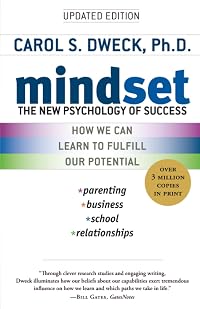
Leaving that aside, Seligman acknowledges that the personalization of one's explanations is less significant and useful than the pervasiveness and particularly the permanence, which amounts to what Carol Dweck calls Mindset in her book of the same name. And he shows you how to change your mindset across these three dimensions, developing what he calls "flexible optimism" so you can deploy it selectively as appropriate to the situation. For example, you want to be optimistic in most situations, especially those requiring you to call on deeper reserves and in which a pessimistic outlook can only harm your outcome, such as dealing with health problems. But in certain situations, such as those where the failure mode is particularly bad, it's helpful to adopt a pessimistic approach at least provisionally in order to ask what could go wrong and figure out how to prevent that (such as surgeons and pilots going through their pre-op or pre-flight checklists every time rather than just assuming that everything is probably going to be okay). This is very useful material.
http://www.amazon.com/review/R2P611EX5GJM4S show less
I would quibble a bit with the quiz to test your own optimism (as I often do with these sorts of things), where one of the questions to test whether you personalize good events is whether you'd be more likely upon winning the lottery to tell yourself it was pure chance, or you picked the right numbers. Not taking credit for "picking the right numbers" doesn't make me a pessimist, it makes me a realist; it's the lottery, by definition it was pure show more chance!
Leaving that aside, Seligman acknowledges that the personalization of one's explanations is less significant and useful than the pervasiveness and particularly the permanence, which amounts to what Carol Dweck calls Mindset in her book of the same name. And he shows you how to change your mindset across these three dimensions, developing what he calls "flexible optimism" so you can deploy it selectively as appropriate to the situation. For example, you want to be optimistic in most situations, especially those requiring you to call on deeper reserves and in which a pessimistic outlook can only harm your outcome, such as dealing with health problems. But in certain situations, such as those where the failure mode is particularly bad, it's helpful to adopt a pessimistic approach at least provisionally in order to ask what could go wrong and figure out how to prevent that (such as surgeons and pilots going through their pre-op or pre-flight checklists every time rather than just assuming that everything is probably going to be okay). This is very useful material.
http://www.amazon.com/review/R2P611EX5GJM4S show less
Be an optimist and you can outperform pessimists. More money, more success, better health; just blame others for your failures and perservere. Science proves it. A much better writer than Beck, Seligman is also more moral than Zimbardo, but Seligman is one of the reasons that we have institutional review boards. But then, what would you expect from a Phillies fan.
Members
- Recently Added By
Published Reviews
ThingScore 75
Learned Optimism is an important work in the self-help field because it provides a scientific foundation for many claims. The book is not simply about optimism but about the validity of personal change and the dynamic nature of the human condition.
added by mikeg2
Lists

Books Read in 2013
1,630 works; 51 members

Men's healing resources
751 works; 1 member
Author Information

37+ Works 5,679 Members
Martin e.p. Seligman, Ph.D., the Zellerbach Family Professor of Psychology at the University of Pennsylvania, works on positive psychology, learned helplessness, depression, ethnopolitical conflict, and optimism. Dr. Seligman's work has been supported by the National Institute of Mental Health, the National Science Foundation, the Guggenheim show more Foundation, the Mellon Foundation, and the MacArthur Foundation. show less
Work Relationships
Common Knowledge
- Canonical title
- Learned Optimism: How to Change Your Mind and Your Life
- Original title
- Learned Optimism
- Original publication date
- 1990
- Epigraph
- yes is a world
& in this world of
yes live
(skilfully curled)
all worlds
- e. e cummings, "love is a place", No Thanks (1935) - Dedication
- This book is dedicated with optimism about our future to my newborn, Lara Catrina Seligman
- First words
- The father is looking down into the crib at his sleeping newborn daughter, just home from the hospital.
- Quotations
- As you took the test you probably realized you or someone you love suffers recurrently from this all-too-common malady. It is by no means surprising that almost everyone, even if he is not depressed, knows someone who is, for... (show all) the United States is experiencing an unparalleled epidemic of depression. Dr. Gerald Klerman, when he was the director of the U.S. government’s Alcohol, Drug Abuse and Mental Health Agency, coined the apt term “The Age of Melancholy” to describe our era.
In the late 1970s, Klerman sponsored two major studies of the rate of mental illness in America and the findings were startling. The first, called the ECA (epidemiological catchment area) Study, was designed to find out how much mental illness, of every kind there is in the United States. Researchers visited and interviewed 9,500 people who were randomly picked to be a cross section of adult Americans. They were all given the same diagnostic interview that a troubled patient who walks into a knowledgeable psychologist’s or psychiatrist’s office would get.
Because such an unusually large number or adults of different ages were interviewed, and asked if and when they had experienced major symptoms, the study gave an unprecedented picture of mental illness over many years and made it possible to trace the changes that had taken place over the course of the twentieth century. One of the most striking changes was in the so-called lifetime prevalence of depression—that is, in the percentage of the population that has been depressed at least once in their lifetime. (Obviously, the older you are the more chance you have had to get any given disorder. The lifetime prevalence of broken legs, for instance, goes up with age, since the older you are, the more opportunities you have had to break a leg.)
What everyone who was interested in depression expected was that the earlier in the century a person was born, the higher would be the person’s lifetime prevalence of depression—that is, the more episodes of depression he would have had. If you’d been born in 1920, you’d have had more chances to suffer depression than if you’d been born in 1960. Before they saw the findings, medical statisticians would have stated that if you were twenty-five years old at the time you were interviewed for the study—if, that is, you were born around 1955—there was about a 6 percent chance you’d had at least one instance of severe depression, and if you were between twenty-five and forty-four years old, your risk of acute depression would have climbed—say, to about 9 percent—as any sensible cumulative statistic should.
When the statisticians looked at the findings, they saw something very odd. The people born around 1925—who, since they were older, had had more chance to get the disorder—hadn’t suffered much depression at all. Not 9 percent but only 4 percent of them had had an episode. And when the statisticians looked at the findings for people born even earlier—before World War I—they found something even more astounding. Again, the lifetime prevalence had not climbed, as one would have thought; it nosedived to a mere 1 percent.
These findings were probably not artifacts of forgetting or reporting biases. So this suggests that people born in the middle third of the century are ten times likelier to suffer depression than people born in the first third. One study, however—even one done as well as the ECA Study—does not entitle scientists to shout “Epidemic.” Fortunately, the National Institute of Mental Health had done another study, called the Relatives Study, at the same time. It was similar to the ECA Study in design, and it too covered a considerable number of people. This time the people weren’t randomly selected; they were chosen because they had close relatives who had been hospitalized for severe depression. The questioners started with 523 people who had already been severely depressed. Almost all the readily available first-degree relatives of these people—a total of 2,289 fathers, mothers, brothers, sisters, sons, and daughters—received an identical diagnostic interview. The aim was to find out if these relatives had ever been seriously depressed too, to see if relatives of seriously depressed people are at greater risk of depression than the population at large. Knowing this would help untangle the genetic from the environmental contribution to depression.
Again, as in the ECA Study, the findings turned expectations upside down. They showed a greater than tenfold increase in depression over the course of the century.
Consider just the women. Those studied who had been born during the Korean War period (which means they were about thirty years old at the time of the ECA Study) were ten times likelier to have had an episode of depression than women born around World War I were, even though the older women (in their seventies at the time of the study) had had much more opportunity to become depressed.
Back when the women of the World War I generation were thirty (the age the Korean War women now were), only 3 percent of them had had a severe depression. Contrast this with the fate of the women of the Korean War period: By the time they were thirty, 60 percent of them had been severely depressed—a twentyfold difference.
The statistics on the males in the study showed the same surprising reversal. Though the men suffered only about half as much depression as the women …, the percentage of men who had been depressed displayed the same strong increase over the course of the century.
Not only is severe depression much more common now; it also attacks its victims much younger. If you were born in the 1930s and later had a depressed relative, your own first depression, if you had one, would likely strike between the ages of thirty and thirty-five. If you were born in 1956, your first depression would probably strike when you were between twenty and twenty-five—ten years sooner. Since severe depression recurs in about half of those who have had it once, the extra ten years of vulnerability to depression add up to an ocean of tears.
And there may be other oceans, for these studies are concerned only with severe depression. Milder depression, which so many of us have experienced, may show just the same trend: There may be a great deal more of it than there used to be. Americans, on average, may be more depressed, and at a younger age, than they have ever been: unprecedented psychological misery in a nation with unprecedented prosperity and material well-being.
In any case, there is more than enough to warrant shouting “Epidemic.” - Last words
- (Click to show. Warning: May contain spoilers.)The benefits of this kind of optimism are, I believe, without limit.
- Canonical DDC/MDS
- 155.232; 155
Classifications
Statistics
- Members
- 1,978
- Popularity
- 10,723
- Reviews
- 22
- Rating
- (3.76)
- Languages
- 10 — Dutch, English, Finnish, French, German, Italian, Russian, Croatian, Spanish, Portuguese (Portugal)
- Media
- Paper, Audiobook, Ebook
- ISBNs
- 38
- ASINs
- 15