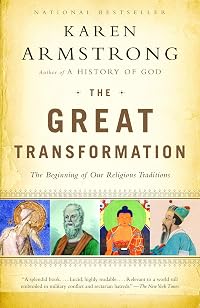
The Great Transformation: The Beginning of Our Religious Traditions
by Karen Armstrong
On This Page
Description
In the ninth century BCE, the peoples of four distinct regions of the civilized world created the religious and philosophical traditions that have continued to nourish humanity to the present day: Confucianism and Daoism in China, Hinduism and Buddhism in India, monotheism in Israel, and philosophical rationalism in Greece. Later generations further developed these initial insights, but we have never grown beyond them. Now, Karen Armstrong reveals how the sages of this pivotal "Axial Age" show more can speak clearly and helpfully to the violence and desperation that we experience in our own times. The Axial Age faiths began in recoil from the unprecedented violence of their time. There was a remarkable consensus in their call for an abandonment of selfishness and a spirituality of compassion. The traditions of the Axial Age were not about dogma--all insisted on the primacy of compassion even in the midst of suffering.--From publisher description. show lessTags
Recommendations




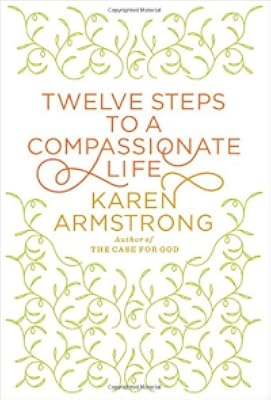

Member Recommendations
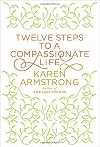
tajar The Great Transformation can be a lot to get through. Two of my family members have confessed it was too much for them. So...for a way in to Karen Armstrong's ideas, I definitely recommend Twelve Steps to a Compassionate Life. It's much more of a practical guide then a historical consideration.
However, if you are able to stick it out with Transformation, I still recommend it because it's a lovely guide and shows how the author's thinking has evolved.
Member Reviews
The core of this book is a solid account of the 'spiritual' traditions of four great civilisations (the Hellenistic-Pagan; the Judaean; the South Asian; and the Chinese) during the thousand or so years before the end of the third century BC. As far as it goes, it is an excellent and coherent narrative.
But I have my doubts. The story sometimes seems shoe-horned not only into the contention that all four cultures saw a first axial age that defined Old World culture until a second 'axial age' in the early modern era but it seems to be designed to be a rather passive-aggressive polemic for religion.
Although the range of reading is extensive, the transmission of specialist research impressive and the insights to be had considerable (until show more the very last chapters when Armstrong sometimes just tells a story most educated people already know), some claims for the early period seem excessive.
There are occasions when she appears to lack imagination about the claims of her sources. Is it really so that the very ancient Chinese conducted war in such stately fashion? Perhaps but perhaps the story is derived from later literary tropes. She takes texts on trust sometimes.
But the book disappoints because one soon becomes suspicious of her ideological motivation. The first and last chapter spin a yarn about religiosity that I found irritating and even misleading insofar as an empathic sentimentality was linked without warrant to her academic findings.
I found this shoe-horning of history into a 'sell' for religion in an age of violence (the book was written five years after 9/11) on the edge of objectionable as if somehow the essentialism of religion was not in itself part of the problem of all times. Complexity went out the window.
Still, if you can get her spirituality 'sell' (what the hell is this thing called 'spirituality' when it is not ideology or sentiment?) out of the way, her narrative flows, she is readable and one gets a sense of how one idea builds on its predecessors and why some particular ideas take root.
As history it is mostly very worthwhile but as proselytising for empathy and idealistic sentiment, it is in cloud-cuckoo land. There is some very good analysis of the social and political conditions in which ideas take root but very little critique of the nexus between material reality and 'religion'.
This intellectual weakness frustrates when the book is taken as a whole. It stays in the library as a ready reference on some key ideas and thinkers, with some sound general history thrown in, but it cannot be regarded as a first class text because its final analysis is overwhelmed with apologia.
The fashion for 'spirituality' is one of the problematics of current Western culture. The main theme of the sentimentalists is that if only we would listen to the great teachers and become empaths or submit to something outside ourselves, the violence would cease. Well, perhaps!
In fact, the violence and terror won't cease because universal empathy is a human impossibility. We are who we are, complex creatures. If someone has an idea you can be sure that the idea will be used as a tool or a weapon to gain advantage. Yes, this is what we are.
Her book-ending chapters presents a world of shoulds and oughts that defies reality and creates a vision that is always going to be more fiction than fact. Exhortation may influence some people to be better persons but as many or more will and must ignore the message.
If anything an excess of empathy, when faced by the standard alleged sociopathy of social systems, simply neuters the 'good' and sends them into defensive postures, private life, clerisy or the monastery, leaving everyone else as prey while the faithful protect themselves with 'sacred space'.
If humanity is to be liberated in terms of both private freedoms and the avoidance of oppressive harms, it is a moot point whether a passive intellectual and 'spiritual' approach will offer anything more than this defensive protection for the few (often at the expense of the many).
I have no problem with people believing in nonsense or even coming together consensually in societies that believe in nonsense but the idea that 'spirituality' will do anything other than abandon the mass of the people to the wolves is increasingly absurd.
'Spirituality' (I am still waiting for a non-nonsensical definition beyond mere sentiment) may be regarded as any belief system that eases the suffering and neuroses of life. There is nothing wrong with that - unless we think it reflects anything other than magical thinking.
Out of spirituality comes religion which is little more than the imposition of social order on the crooked timber of humanity, a process of containing and corralling the human 'spirit' (actually the human being) in despair at any other form of social organisation possibly 'being good'.
This book, for all its descriptive and narrative value, thus becomes a false friend to a species that needs to stop evading and avoiding material reality and the actual structures of power, stop trying to find bolt holes for itself and start creating practical approaches to solving problems.
In essence, there are only two problems here ... how to ensure human autonomy within an otherwise functional social system and how to ensure that one person does not do harm to another person. The great faiths partially solve the second but usually at the expense of the first.
They are only a partial solution because religious and 'spiritual' tendencies to treat personal liberation as liberation from the world will often result in the accidental de-humanisation of humanity, running away from materiality by (for example) 'abandoning the ego'.
The religious obsession with abandoning the ego is cowardice. The real task is to embrace the ego and put it to work as a lifetime project of self improvement and the social project of equalising the value of all egos viz. a society where you can 'do what thou wilt an harm no-one'.
There are arguments, of course, for mystery and ritual - like the Greek tragedies or Chinese li - as undogmatic artistic and magical endeavours that are not trying to make too many claims.
The poetry, drama, art, ritual and magic in the performance art that is 'religion' is not a bad thing but it is only valuable when it allows persons to appreciate the liminalities and absences in the world. Subsequently building a system out of such things destroys that very purpose.
One final world of praise for the book, however. It is very well served with maps, charts and plans - 25 in all. These are invaluable in comprehending the narrative. Despite the irritations, the book still remains recommended for anyone wanting a basic overview of ancient intellectual culture. show less
But I have my doubts. The story sometimes seems shoe-horned not only into the contention that all four cultures saw a first axial age that defined Old World culture until a second 'axial age' in the early modern era but it seems to be designed to be a rather passive-aggressive polemic for religion.
Although the range of reading is extensive, the transmission of specialist research impressive and the insights to be had considerable (until show more the very last chapters when Armstrong sometimes just tells a story most educated people already know), some claims for the early period seem excessive.
There are occasions when she appears to lack imagination about the claims of her sources. Is it really so that the very ancient Chinese conducted war in such stately fashion? Perhaps but perhaps the story is derived from later literary tropes. She takes texts on trust sometimes.
But the book disappoints because one soon becomes suspicious of her ideological motivation. The first and last chapter spin a yarn about religiosity that I found irritating and even misleading insofar as an empathic sentimentality was linked without warrant to her academic findings.
I found this shoe-horning of history into a 'sell' for religion in an age of violence (the book was written five years after 9/11) on the edge of objectionable as if somehow the essentialism of religion was not in itself part of the problem of all times. Complexity went out the window.
Still, if you can get her spirituality 'sell' (what the hell is this thing called 'spirituality' when it is not ideology or sentiment?) out of the way, her narrative flows, she is readable and one gets a sense of how one idea builds on its predecessors and why some particular ideas take root.
As history it is mostly very worthwhile but as proselytising for empathy and idealistic sentiment, it is in cloud-cuckoo land. There is some very good analysis of the social and political conditions in which ideas take root but very little critique of the nexus between material reality and 'religion'.
This intellectual weakness frustrates when the book is taken as a whole. It stays in the library as a ready reference on some key ideas and thinkers, with some sound general history thrown in, but it cannot be regarded as a first class text because its final analysis is overwhelmed with apologia.
The fashion for 'spirituality' is one of the problematics of current Western culture. The main theme of the sentimentalists is that if only we would listen to the great teachers and become empaths or submit to something outside ourselves, the violence would cease. Well, perhaps!
In fact, the violence and terror won't cease because universal empathy is a human impossibility. We are who we are, complex creatures. If someone has an idea you can be sure that the idea will be used as a tool or a weapon to gain advantage. Yes, this is what we are.
Her book-ending chapters presents a world of shoulds and oughts that defies reality and creates a vision that is always going to be more fiction than fact. Exhortation may influence some people to be better persons but as many or more will and must ignore the message.
If anything an excess of empathy, when faced by the standard alleged sociopathy of social systems, simply neuters the 'good' and sends them into defensive postures, private life, clerisy or the monastery, leaving everyone else as prey while the faithful protect themselves with 'sacred space'.
If humanity is to be liberated in terms of both private freedoms and the avoidance of oppressive harms, it is a moot point whether a passive intellectual and 'spiritual' approach will offer anything more than this defensive protection for the few (often at the expense of the many).
I have no problem with people believing in nonsense or even coming together consensually in societies that believe in nonsense but the idea that 'spirituality' will do anything other than abandon the mass of the people to the wolves is increasingly absurd.
'Spirituality' (I am still waiting for a non-nonsensical definition beyond mere sentiment) may be regarded as any belief system that eases the suffering and neuroses of life. There is nothing wrong with that - unless we think it reflects anything other than magical thinking.
Out of spirituality comes religion which is little more than the imposition of social order on the crooked timber of humanity, a process of containing and corralling the human 'spirit' (actually the human being) in despair at any other form of social organisation possibly 'being good'.
This book, for all its descriptive and narrative value, thus becomes a false friend to a species that needs to stop evading and avoiding material reality and the actual structures of power, stop trying to find bolt holes for itself and start creating practical approaches to solving problems.
In essence, there are only two problems here ... how to ensure human autonomy within an otherwise functional social system and how to ensure that one person does not do harm to another person. The great faiths partially solve the second but usually at the expense of the first.
They are only a partial solution because religious and 'spiritual' tendencies to treat personal liberation as liberation from the world will often result in the accidental de-humanisation of humanity, running away from materiality by (for example) 'abandoning the ego'.
The religious obsession with abandoning the ego is cowardice. The real task is to embrace the ego and put it to work as a lifetime project of self improvement and the social project of equalising the value of all egos viz. a society where you can 'do what thou wilt an harm no-one'.
There are arguments, of course, for mystery and ritual - like the Greek tragedies or Chinese li - as undogmatic artistic and magical endeavours that are not trying to make too many claims.
The poetry, drama, art, ritual and magic in the performance art that is 'religion' is not a bad thing but it is only valuable when it allows persons to appreciate the liminalities and absences in the world. Subsequently building a system out of such things destroys that very purpose.
One final world of praise for the book, however. It is very well served with maps, charts and plans - 25 in all. These are invaluable in comprehending the narrative. Despite the irritations, the book still remains recommended for anyone wanting a basic overview of ancient intellectual culture. show less
As a critical and theologically literate reader, I can't imagine taking Karen Armstrong seriously. This book is polemic pretending to be history, and as such it falls somewhere between "boring" and "dangerously wrong".
The short form: Armstrong argues for the historical universality of politically correct humanism, but none of her approaches stand up to scrutiny. Her historical evidence is cherry picked. Her arguments regarding similarity of religious themes are little more than religious terms applied out-of-context to other traditions. She makes extensive use of specious hidden linguistic presuppositions. It's not even logically fallacious -- it's logically non-existent. Just, ick.
The long form: I find it almost impossible to believe show more that all the "Axial" religions (Daoism, Confucianism, Hinduism, Buddhism, Judaism, Christianity, Islam, Zoroastrianism, and Greek philosophical rationalism) were as concerned with individually knowing God and being empathetic as Armstrong purports. Although all these teachers might have embraced the value of empathy, they did not all, in historical fact, talk as much about empathy as this book would leave you thinking they did. This is especially true when she implies that Israelite prophets were concerned with empathy; Old Testament monotheism is extremely non-empathetic to non-Jews.
Even if we admit similarities between these Axial movements, Armstrong's argument for their similarity is based almost exclusively in using words from one tradition in the context of discussing another tradition. However, misusing words out of context is not an argument. Although I could use words commonly found in badly written pornography when discussing death (penetrate, suck, hole, ...), there are still extremely limited substantive similarities between sex and death.
Armstrong's language throughout the book betrays her inability to extricate the historical context of these religions from the themes that people today read into them. An example sentence: "By the time the temple had been destroyed, some of the Pharisees already understood that they did not need a temple to worship God." The use of "understand" here presupposes that that temples are objectively unnecessary for worshipping God, a presupposition that is blatantly unwarranted. This and many similar statements shouldn't pass a good religious scholar, and there is no excuse for their presence in a book that maintains it is describing historical fact.
Armstrong seems to be seeking and extricating her own agenda from a variety of traditions, a phenomenon that truly is rife in the history of religion (consider the extensive scriptural support of both slave owners and abolitionists). Her (lack of) argument leads so perfectly into what we want to believe about religion -- that our religious forefathers were, on fundamental issues, perfectly aligned with our current ideal of empathy, and they were objectively correct in their beliefs -- that it seems extremely likely that her argument is contrived. Although apologetics for politically correct humanism is almost universally appealing, filtering facts and playing word games instead of giving substantive arguments should garner only disapprobation, not respect and widespread lay interest.
In short, I don't trust Armstrong. This is apologism deliberately and misleadingly cloaked as objective history. I can only conclude she is popularizing her own name and her ideals at the expense of the integrity of religious studies as a discipline. Many thumbs down. show less
The short form: Armstrong argues for the historical universality of politically correct humanism, but none of her approaches stand up to scrutiny. Her historical evidence is cherry picked. Her arguments regarding similarity of religious themes are little more than religious terms applied out-of-context to other traditions. She makes extensive use of specious hidden linguistic presuppositions. It's not even logically fallacious -- it's logically non-existent. Just, ick.
The long form: I find it almost impossible to believe show more that all the "Axial" religions (Daoism, Confucianism, Hinduism, Buddhism, Judaism, Christianity, Islam, Zoroastrianism, and Greek philosophical rationalism) were as concerned with individually knowing God and being empathetic as Armstrong purports. Although all these teachers might have embraced the value of empathy, they did not all, in historical fact, talk as much about empathy as this book would leave you thinking they did. This is especially true when she implies that Israelite prophets were concerned with empathy; Old Testament monotheism is extremely non-empathetic to non-Jews.
Even if we admit similarities between these Axial movements, Armstrong's argument for their similarity is based almost exclusively in using words from one tradition in the context of discussing another tradition. However, misusing words out of context is not an argument. Although I could use words commonly found in badly written pornography when discussing death (penetrate, suck, hole, ...), there are still extremely limited substantive similarities between sex and death.
Armstrong's language throughout the book betrays her inability to extricate the historical context of these religions from the themes that people today read into them. An example sentence: "By the time the temple had been destroyed, some of the Pharisees already understood that they did not need a temple to worship God." The use of "understand" here presupposes that that temples are objectively unnecessary for worshipping God, a presupposition that is blatantly unwarranted. This and many similar statements shouldn't pass a good religious scholar, and there is no excuse for their presence in a book that maintains it is describing historical fact.
Armstrong seems to be seeking and extricating her own agenda from a variety of traditions, a phenomenon that truly is rife in the history of religion (consider the extensive scriptural support of both slave owners and abolitionists). Her (lack of) argument leads so perfectly into what we want to believe about religion -- that our religious forefathers were, on fundamental issues, perfectly aligned with our current ideal of empathy, and they were objectively correct in their beliefs -- that it seems extremely likely that her argument is contrived. Although apologetics for politically correct humanism is almost universally appealing, filtering facts and playing word games instead of giving substantive arguments should garner only disapprobation, not respect and widespread lay interest.
In short, I don't trust Armstrong. This is apologism deliberately and misleadingly cloaked as objective history. I can only conclude she is popularizing her own name and her ideals at the expense of the integrity of religious studies as a discipline. Many thumbs down. show less
Ten major modern religious went through their most critical early developments during the Axial Age, 900 to 200 BCE. These include Hinduism, biblical Judaism, Buddhism, Confucianism, Daoism and ancient Greek religions. This period also saw the development of the ancient Greek philosophies. Armstrong chronicles their somewhat parallel development, 100 years per chapter. There are tons of details on the religious philosophical development, and lots of sources.
Armstrong stated purpose is that the ideas that went into developing these religions are useful for us today. She argues that few of us today find satisfaction in the existent religions, yet we seem to still have a need for religion. So, perhaps the ideas here can help lead us, as a show more society, to find a way to fill that need. However, this thesis isn't really developed.
What this really amounts to is an introduction into a broad range of maybe difficult and complicated religious philosophies. It is fascinating in places, such a how the (old) bible's development is chronicled, and how the four major pieces, each of different authorship and time periods, were combined together.
However, it's difficult to follow. I am frustrated with myself with how little of this book stuck. There is a lot historical and philosophical information here that was completely new to me - especially on the Indian religions and the ancient Chinese philosophies. So, there was a lot gain. But, if you asked me, after having read this, what the difference was between Confucianism, Daoism and Legalism, and what roll Laozi plays in it I don't feel like I could give a coherent answer.
I also had a lot of trouble with the language. Sentences like this threw me:
"Bhakti encouraged the worshiper to acknowledge his helplessness and need, and this experience of his own vulnerability made it possible to empathize with others. This new spirituality was, therefore, deeply in tune with the axial age"
I had to read this sentence three or four times before it made sense. It's not even that complicated a sentence or concept. Maybe I just have a very limited comprehension level, but they way it's worded throws me.
On balance I can praise the book for the immense amount of details. I think it was nice that she spent a lot of time on each concept. I thought the sort of timeslice views were interesting, although it caused some awkward breaks and juxtapositions. In general, as we look farther back in time, we tend to foreshorten the timescale. In this book, we don't do that. Each 100 years has equal weight.
I would criticize it for not spending enough time discussing the overall themes. I think each chapter could have used an summary to, among other things, place the developments within the Axial Age flow.
I guess I would conclude by saying this book opened my eyes to a lot of new ideas, but it also crossed them quite a bit. show less
Armstrong stated purpose is that the ideas that went into developing these religions are useful for us today. She argues that few of us today find satisfaction in the existent religions, yet we seem to still have a need for religion. So, perhaps the ideas here can help lead us, as a show more society, to find a way to fill that need. However, this thesis isn't really developed.
What this really amounts to is an introduction into a broad range of maybe difficult and complicated religious philosophies. It is fascinating in places, such a how the (old) bible's development is chronicled, and how the four major pieces, each of different authorship and time periods, were combined together.
However, it's difficult to follow. I am frustrated with myself with how little of this book stuck. There is a lot historical and philosophical information here that was completely new to me - especially on the Indian religions and the ancient Chinese philosophies. So, there was a lot gain. But, if you asked me, after having read this, what the difference was between Confucianism, Daoism and Legalism, and what roll Laozi plays in it I don't feel like I could give a coherent answer.
I also had a lot of trouble with the language. Sentences like this threw me:
"Bhakti encouraged the worshiper to acknowledge his helplessness and need, and this experience of his own vulnerability made it possible to empathize with others. This new spirituality was, therefore, deeply in tune with the axial age"
I had to read this sentence three or four times before it made sense. It's not even that complicated a sentence or concept. Maybe I just have a very limited comprehension level, but they way it's worded throws me.
On balance I can praise the book for the immense amount of details. I think it was nice that she spent a lot of time on each concept. I thought the sort of timeslice views were interesting, although it caused some awkward breaks and juxtapositions. In general, as we look farther back in time, we tend to foreshorten the timescale. In this book, we don't do that. Each 100 years has equal weight.
I would criticize it for not spending enough time discussing the overall themes. I think each chapter could have used an summary to, among other things, place the developments within the Axial Age flow.
I guess I would conclude by saying this book opened my eyes to a lot of new ideas, but it also crossed them quite a bit. show less
Karen Armstrong takes great mountains, virtual Everests, of wretched scholarly prose and turns them into something highly readable. She is a first-rate disseminator and popularizer of the history of religion. The Great Transformation reviews the history of what Karl Jaspers famously termed the "Axial Age." During this period, roughly 900-200 B.C.E., the foundations for all of our present religious traditions were laid down: Hinduism, Confucianism, Buddhism, Jainism, Judaism, the other monotheisms, etc. For example, she follows the Aryans from the Caucasus onto the Gangetic Plain and unfolds the story of proto-Hindu culture there. Similarly, she writes of the pre-Biblical development of what would become Judaism, and so on for all the show more relevant faiths. These are stories I have never come across elsewhere. Leave it to Armstrong to see this gap in common knowledge of religious history and seek to fill it. What she has undertaken here is of enormous scope. To write the proto-history and then the history of all the Axial faiths is not just ambitious, it is an effort that astonishes the reader as he watches it unfold. I recommend all Armstrong's books but especially this one, The Case for God (also reviewed here) and A History of God. What marks her prose is tremendous empathy. Her portraits of the various Axial Age peoples are stunning in their range and complexity. It is a very dense book, but loaded with fascinating information for the patient reader. Armstrong believes that there is much to be learned from our religious history. Properly understood it is both a cautionary tale and an indication of how very much we need spirituality in our lives. To paraphrase Jean-Paul Sartre, without it we are left with a great "God-shaped hole" in our lives. Christopher Hitchens (R.I.P.) and Richard Dawkins want us to chuck it. I disagree. This is an integral part of our evolution as a species and we have much to learn from it. (Note: The other writer of excellence in this field I'm familiar with is Elaine Pagels. She, too, has a number of wonderful books but it is her Gnostic Gospels (also reviewed here) that is her summa.) Highly recommended! show less
Caveat that I don't know enough about any of these religions to make any assertions about whether Armstrong is totally right or totally wrong about any of her assertions.
That said, I really enjoyed this one. I am becoming more and more interested in the historical underpinnings of Christianity and this book served as a great complement to some of that reading by illuminating how certain concepts like ascetism, selflessness and pacifism grew in different yet similar ways in different religious traditions. I do think this struggles from the typical affliction of a survey work where time periods are stretched/compressed in order to make a particular framing device work, but ultimately I learned enough to forgive it.
That said, I really enjoyed this one. I am becoming more and more interested in the historical underpinnings of Christianity and this book served as a great complement to some of that reading by illuminating how certain concepts like ascetism, selflessness and pacifism grew in different yet similar ways in different religious traditions. I do think this struggles from the typical affliction of a survey work where time periods are stretched/compressed in order to make a particular framing device work, but ultimately I learned enough to forgive it.
This book represents a major accomplishment in the synthesis of all of the major world religious traditions, and shows the context of their development during the key "Axial Age" of 800 - 200 BCE.
You finish the book with a deep understanding of the religious & philosophical development of Greece, China, India, and the Middle East, which together gave birth to western civilization.
A must read.
Or a must listen: the unabridged (22 hour) audiobook read by the author is a great way to spend a month's worth of commuting. Armstrong's narration adds much understanding to what was originally an oral tradition.
You finish the book with a deep understanding of the religious & philosophical development of Greece, China, India, and the Middle East, which together gave birth to western civilization.
A must read.
Or a must listen: the unabridged (22 hour) audiobook read by the author is a great way to spend a month's worth of commuting. Armstrong's narration adds much understanding to what was originally an oral tradition.
Comparative religion in doomed to fail, because religious ideas take their meaning from the systems they inhabit. With regard to the Hebrew Bible, Armstrong first follows the Chronicler, then the Deuteronomistic Historian, then Second Isaiah, then Jeremiah without admitting that she is “limping along between two” or three opinions. Finally, the assertion that the only or best significance of religion is for the purpose of interior spirituality is offensive and irritating. Doubtless much evil was and continues to be done in the name of religion, but abusus non tollit usum.
Members
- Recently Added By
Published Reviews
ThingScore 75
added by Shortride
In our own time of "great fear and pain,"Armstrong proposes that we look to the Axial sages for "two important pieces of advice," both of which turn out to be quite uncontroversial: We should practice self-criticism (amen), and we should "take practical, effective action" against excessively aggressive tendencies in our own traditions (amen again). But after 400 pages of historical argument, show more the banality of such declarations is staggering. show less
added by jlelliott
Lists

Ideas for "Science, Religion, and History" group reads
29 works; 9 members

Faithful to Atheist: Books on your Journey
14 works; 5 members

Mike's Theology Books
74 works; 2 members

Big History
72 works; 1 member

It Just Wasn't Worth the Effort
21 works; 8 members
Talk Discussions
Past Discussions
The Great Transformation Group Read in 75 Books Challenge for 2013 (May 2013)
Author Information

57+ Works 36,352 Members
Karen Armstrong is one of the foremost commentators on religious affairs in both Britain and the United States. She spent seven years as a Roman Catholic nun and received a degree at Oxford University. (Publisher Provided)
Some Editions
Awards and Honors
Distinctions
Common Knowledge
- Canonical title*
- Världsreligionernas födelse
- Original title
- The Great Transformation: The Beginning of Our Religious Traditions
- Original publication date
- 2006
- People/Characters
- Ahab, King of Israel; Amos; Elijah the Prophet; Homer; Hosea; Jezebel (show all 7); Zoroaster
- Important places
- India; China; Greece; Israel
- First words
- Perhaps every generation believes that it has reached a turning point of history, but our problems seem particularly intractable and our future increasingly uncertain. (Introduction)
The first people to attempt an Axial Age spirituality were pastoralists living of the steppes of southern Russia, who called themselves the Aryans. - Last words
- (Click to show. Warning: May contain spoilers.)If religion is to bring light to our broken world, we need, as Mencius suggested, to go in search of the lost heart, the spirit of compassion that lies at the core of all our traditions.
*Some information comes from Common Knowledge in other languages. Click "Edit" for more information.
Classifications
- Genres
- Religion & Spirituality, History, Nonfiction, Philosophy, General Nonfiction
- DDC/MDS
- 200.9 — Religion Religion Religion History, geographic treatment, biography
- LCC
- BL430 .A76 — Philosophy, Psychology and Religion Religions. Mythology. Rationalism Religions. Mythology. Rationalism Religious doctrines (General) Origins of religion
- BISAC
Statistics
- Members
- 2,255
- Popularity
- 8,957
- Reviews
- 38
- Rating
- (3.85)
- Languages
- 8 — Dutch, English, French, German, Portuguese, Russian, Spanish, Swedish
- Media
- Paper, Audiobook, Ebook
- ISBNs
- 35
- UPCs
- 1
- ASINs
- 6