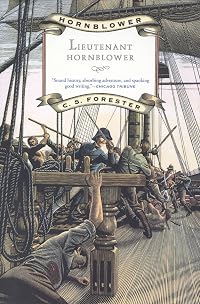
Lieutenant Hornblower
by C. S. Forester
Horatio Hornblower (2), Horatio Hornblower: Chronological Order (2)
On This Page
Description
In this gripping tale of turmoil and triumph on the high seas, Horatio Hornblower emerges from his apprenticeship as midshipman to face new responsibilities thrust upon him by the fortunes of war between Napoleon and Spain. Enduring near-mutiny, bloody hand-to-hand combat with Spanish seamen, deck-splintering sea battles, and the violence and horror of life on the fighting ships of the Napoleonic Wars, the young lieutenant distinguishes himself in his first independent command. He also faces show more an adventure unique in his experience: Maria. show lessTags
Recommendations



















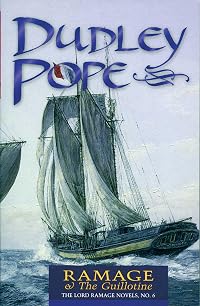
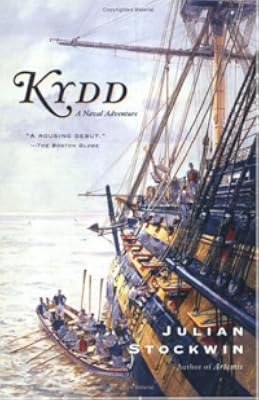


Member Recommendations

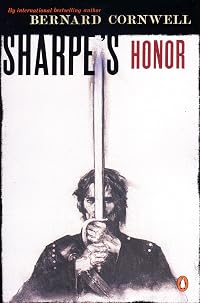
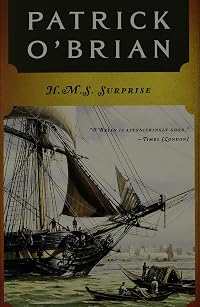
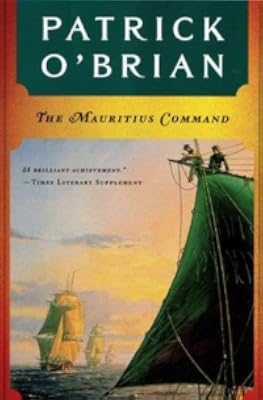
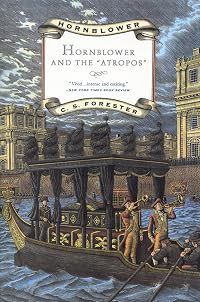
Stepn Another period thriller with a similar viewpoint.
Member Reviews
Though I've read this before, my original read of it predates the point in my life where I started putting reviews on LibraryThing, so I don't have a specific sense of what I actually thought. My suspicion is, though, that the book reads better in publication order than in chronological. In term of chronology, it's odd that the first Hornblower novel is not a novel, and then the second is not told from the perspective of Hornblower; the first proper Hornblower novel is actually the third! But reading in publication order, this is the seventh Hornblower book, and so telling the story from the point of view of Lieutenant Bush provides a nice change of pace and prevents the series (just as the jump backward did) from beginning show more stagnant.
Bush is great, a straightforward, unpretentious officer, not a witty thinker, but a great seaman and a great judge of character. It does create some continuity errors to have him serving with Hornblower so early in both men's careers (Bush was clearly not used to Hornblower when posted as his first lieutenant some five years after this in Beat to Quarters), but I liked Bush, and it's neat to see what Hornblower looks like from outside his own head. Hornblower in Mr. Midshipman was a pretty ordinary guy if somewhat tightly wound, but here we see the beginning of the kind-of-neurotic Captain Hornblower of the earlier novels. It's a good plot for an outside perspective, too, since there's a significant mutiny component, and Forester uses the shift in perspective to create some ambiguity about Hornblower's actions.
This is one of my favorite Hornblower novels. You might view the long bit at the end regarding Hornblower's card-playing as extraneous, but if you do, you've misjudged the plot. The plot isn't the adventures of HMS Renown; the plot is these two men becoming life-long friends in an entirely understated way. It's gloriously reserved but utterly true, one of the best friendships in literature. Even if before this book it didn't exist in books set later!
(Side note: David Warner is such good casting as Captain Sawyer in the tv adaptation that ten-plus years after I last saw that episode, I could still imagine him saying all of Sawyer's lines as I read the book! The literary Hornblower is not quite Ioan Gruffudd, and the literary Bush not quite Paul McGann, so I never imagine those actors reading the lines, but David Warner is the character as written.) show less
Bush is great, a straightforward, unpretentious officer, not a witty thinker, but a great seaman and a great judge of character. It does create some continuity errors to have him serving with Hornblower so early in both men's careers (Bush was clearly not used to Hornblower when posted as his first lieutenant some five years after this in Beat to Quarters), but I liked Bush, and it's neat to see what Hornblower looks like from outside his own head. Hornblower in Mr. Midshipman was a pretty ordinary guy if somewhat tightly wound, but here we see the beginning of the kind-of-neurotic Captain Hornblower of the earlier novels. It's a good plot for an outside perspective, too, since there's a significant mutiny component, and Forester uses the shift in perspective to create some ambiguity about Hornblower's actions.
This is one of my favorite Hornblower novels. You might view the long bit at the end regarding Hornblower's card-playing as extraneous, but if you do, you've misjudged the plot. The plot isn't the adventures of HMS Renown; the plot is these two men becoming life-long friends in an entirely understated way. It's gloriously reserved but utterly true, one of the best friendships in literature. Even if before this book it didn't exist in books set later!
(Side note: David Warner is such good casting as Captain Sawyer in the tv adaptation that ten-plus years after I last saw that episode, I could still imagine him saying all of Sawyer's lines as I read the book! The literary Hornblower is not quite Ioan Gruffudd, and the literary Bush not quite Paul McGann, so I never imagine those actors reading the lines, but David Warner is the character as written.) show less
I listened to the audiobook and I cannot praise Christian Rodska too highly as a narrator. He brings the scene vividly to life, clear voices for each different character (including the women), an ease with naval terminology and a story-telling ability that never oversteps the boundary into melodrama.
This book is written from the viewpoint of Lieutenant Bush, which is a good authorial choice as there is a an event which takes place relatively early on in the book and Hornblower knows what happened and Bush does not. This means the reader does not know either and has to try and make his/her own deductions as to what happened.
The books starts in an area familiar from the TV series, with the increasing insanity of Captain Sawyer and the show more effect of his paranoia on the crew of the Resolution.
But the book goes further, because it shows the crippling effect of Sawyer's remaining presence as a lunatic invalid even after he has been removed from command.
The five lieutenants are often paralysed by indecision, trying to predict how their actions will be viewed by a future court of enquiry. Should the Sawyer's sealed orders be opened or not? They could be wrong in either direction depending on how events pan out.
in the case of the first lieutenant, it impacts on his command decisions as well. He's not thinking things through in detail, just going for simple safe options - in the Navy you can rarely be judged wrong if you attack.
Bush, the 4th lieutenant is a very good seaman, but he doesn't think outside the box. He undergoes a gradual shift throughout the book in his attitude to Hornblower, the 5th lieutenant, moving from initial mistrust to respect and a real friendship.
The story isn't just about naval battles. The writer includes a land battle - with fascinating historical details about the use of heated shot as a weapon; vicious tactical negotiation of a Spanish surrender (Hornblower manages to push them into terms that are far more painful for the Spanish than initially proposed); a glance at slave rebellions on Haiti; life on half pay when there is no war (and the Catch 22 of a promotion at the wrong time...), and the benefits of being a good whist player.
If you like naval/military history in the Napoleonic era, then definitely a recommended read/listen. show less
This book is written from the viewpoint of Lieutenant Bush, which is a good authorial choice as there is a an event which takes place relatively early on in the book and Hornblower knows what happened and Bush does not. This means the reader does not know either and has to try and make his/her own deductions as to what happened.
The books starts in an area familiar from the TV series, with the increasing insanity of Captain Sawyer and the show more effect of his paranoia on the crew of the Resolution.
But the book goes further, because it shows the crippling effect of Sawyer's remaining presence as a lunatic invalid even after he has been removed from command.
The five lieutenants are often paralysed by indecision, trying to predict how their actions will be viewed by a future court of enquiry. Should the Sawyer's sealed orders be opened or not? They could be wrong in either direction depending on how events pan out.
in the case of the first lieutenant, it impacts on his command decisions as well. He's not thinking things through in detail, just going for simple safe options - in the Navy you can rarely be judged wrong if you attack.
Bush, the 4th lieutenant is a very good seaman, but he doesn't think outside the box. He undergoes a gradual shift throughout the book in his attitude to Hornblower, the 5th lieutenant, moving from initial mistrust to respect and a real friendship.
The story isn't just about naval battles. The writer includes a land battle - with fascinating historical details about the use of heated shot as a weapon; vicious tactical negotiation of a Spanish surrender (Hornblower manages to push them into terms that are far more painful for the Spanish than initially proposed); a glance at slave rebellions on Haiti; life on half pay when there is no war (and the Catch 22 of a promotion at the wrong time...), and the benefits of being a good whist player.
If you like naval/military history in the Napoleonic era, then definitely a recommended read/listen. show less
In a series of books purportedly about Horatio Hornblower, it is surprising to read one in which Hornblower is not the central character, except in an indirect way. C.S. Forester spins this yarn through the eyes of another lieutenant who serves with him on the same ship but is senior to him according to date of commission. This is a clever approach because it allows the reader to see Hornblower's sometimes enigmatic character through the eyes of a colleague. So instead of an omniscient narrator, we see all the action filtered through the point of view of one who is not the hero of the story. As a consequence, Hornblower's heroism, ingenuity and fast thinking are elevated by witness of this colleague who is obviously less talented yet show more great-hearted enough to acknowledge and appreciate Hornblower's qualities.
Lieutenant Hornblower is another great sea adventure that takes place mostly underway to the West Indies — Santo Domingo (now the Dominican Republic) in particular, where, under command of an insane captain who suffers a debilitating accident and is thankfully confined to his quarters for the duration leaving the ship in command of the rather dull-witted first lieutenant, they suffer at first a defeat, but swiftly followed by a resounding victory which was thanks almost entirely to Lt. Hornblower. Read the book to see what happens next! show less
Lieutenant Hornblower is another great sea adventure that takes place mostly underway to the West Indies — Santo Domingo (now the Dominican Republic) in particular, where, under command of an insane captain who suffers a debilitating accident and is thankfully confined to his quarters for the duration leaving the ship in command of the rather dull-witted first lieutenant, they suffer at first a defeat, but swiftly followed by a resounding victory which was thanks almost entirely to Lt. Hornblower. Read the book to see what happens next! show less
It's a long time since I read these Hornblower stories from early in his naval career - when I was a teenager. I've read some but not all of the later ones in the series. So I wondered if I would find C S Forester more childish than O'Brian: not a bit of it!
In fact while O'Brian can be heavy going in parts of his novels this is definitely not the case for Lieutenant Hornblower that I have just read. This book is unusual in that it is written from the pov of Lt Bush who was usually subordinate to Hornblower but here starts as a more senior lieutenant on a large (740 crew!) ship of the line.
I won't go into the plot which is quite a page turner. The key to this novel is the developing friendship of the two men and the describing of their show more quite different but complementary characters.
Bush is the more experienced practical seaman who takes raising a heavy cannon up a steep cliff in his stride -one suspects Hornblower would have struggled with this technical task. On the other hand, Hornblower has learned how to handle senior ranks diplomatically and is quick to recognise tactical opportunities and devise effective plans of action. Bush has no sympathy for the enemy (Spanish "dagoes") whereas Hornblower speaks Spanish and is pained when a Spanish ship explodes under British fire.
Hornblower leapfrogs Bush to get his first command as a commander (not captain) at the end of the book but Bush is in no way upset or jealous.
Forester's descriptions of a sailing ship at sea can be quite lyrical e.g.
"It was Sunday morning. The Renown had caught the north-east trades and was plunging across the Atlantic at her best speed, with studding sails set on both sides, the roaring trades driving her along with a steady pitch and heave, her bluff bows now and then rising a smother of spray that supported momentary rainbows. The rigging was piping loud and clear, the treble and the tenor to the baritone and bass of the noises of the ship's fabric as she pitched – a symphony of the sea.." show less
In fact while O'Brian can be heavy going in parts of his novels this is definitely not the case for Lieutenant Hornblower that I have just read. This book is unusual in that it is written from the pov of Lt Bush who was usually subordinate to Hornblower but here starts as a more senior lieutenant on a large (740 crew!) ship of the line.
I won't go into the plot which is quite a page turner. The key to this novel is the developing friendship of the two men and the describing of their show more quite different but complementary characters.
Bush is the more experienced practical seaman who takes raising a heavy cannon up a steep cliff in his stride -one suspects Hornblower would have struggled with this technical task. On the other hand, Hornblower has learned how to handle senior ranks diplomatically and is quick to recognise tactical opportunities and devise effective plans of action. Bush has no sympathy for the enemy (Spanish "dagoes") whereas Hornblower speaks Spanish and is pained when a Spanish ship explodes under British fire.
Hornblower leapfrogs Bush to get his first command as a commander (not captain) at the end of the book but Bush is in no way upset or jealous.
Forester's descriptions of a sailing ship at sea can be quite lyrical e.g.
"It was Sunday morning. The Renown had caught the north-east trades and was plunging across the Atlantic at her best speed, with studding sails set on both sides, the roaring trades driving her along with a steady pitch and heave, her bluff bows now and then rising a smother of spray that supported momentary rainbows. The rigging was piping loud and clear, the treble and the tenor to the baritone and bass of the noises of the ship's fabric as she pitched – a symphony of the sea.." show less
Horatio Hornblower is starting his first commissioned post on the HMS Renown. Here he becomes friends with Lt. Bush and they have to deal with the insanity of Capt. Sawyer.
The book goes through a mutiny and lots of concerns over where this may lead and leaving five lieutenants in charge of the ship.
They go through sea and land battles, they have to deal with a fort protecting a harbor. Hornblower excels in almost every area where he is able to help.
The book has a strong naval vocabulary. I kept going to a nautical dictionary, but it isn’t necessary to understand everything to follow the story. My one complaint is that Hornblower seem a bit too competent, bordering on being a superhero. But the story is enjoyable and well-told.
The book goes through a mutiny and lots of concerns over where this may lead and leaving five lieutenants in charge of the ship.
They go through sea and land battles, they have to deal with a fort protecting a harbor. Hornblower excels in almost every area where he is able to help.
The book has a strong naval vocabulary. I kept going to a nautical dictionary, but it isn’t necessary to understand everything to follow the story. My one complaint is that Hornblower seem a bit too competent, bordering on being a superhero. But the story is enjoyable and well-told.
Definitely one of the classics of this genre of historical adventure writing. It's a quick book to read - 300 pages long in my paperback copy, but it feels much shorter because Forrester's pace simply zips along. Hornblower is a lot more of a repressed prat than he is in the movie miniseries, but I was expecting that from what I'd been told. It has to be said, however, that it is one of the most homoerotic novels I have ever read, and that Bush is so obviously in love with Horatio that I wonder to god how no one ever picked up on it. *boggles a little* I don't think it's a patch on O' Brian, but still a classic and definitely worth the read.
I loved listening to this book so much. It's hard to explain why I loved it, maybe it's the way it was written (about Hornblower, but also about Bush, who will always be Paul McGann in my head), but I think it's really the relationship between Bush and Hornblower -- and, really, Hornblower's relationships with everyone. There's just something totally endearing about this book. I like the story, the trials Hornblower and Bush have to live through. I love (LOVE) Bush's insights and how he spends forever staring at and observing Hornblower and then at the end the just know each other so well and then Bush totally freaks out about Hornblower and Maria and I am like, it all makes sense now. And I just loved it. I will listen to more of show more these, because it's just so much fun. show less
Members
- Recently Added By
Lists

Best Historical Fiction
620 works; 257 members

Top Five Books of 2013
1,562 works; 721 members

Favourite Books
1,819 works; 316 members

Top Five Books of 2022
736 works; 272 members

Best Sea Stories
33 works; 5 members

Huxley's Reading Log 2018
37 works; 1 member

Books We Love to Reread
688 works; 296 members
Author Information

Born Cecil Louis Troughton Smith on August 27, 1899, in Cairo, Egypt, where his father was a government official, C. S. Forester grew up mainly in England. He was educated at Dulwich College, studying medicine briefly before decidint to become a writer. Forester moved to the United States before the start of World War II, and lived in Berkeley, show more California, until his death in 1966. Although Forester was a journalist, a novelist and a Hollywood scriptwriter, he is probably best known for his historical fiction, particularly the series of novels that feature Horatio Hornblower. The eleven-book series begins with Mr. Midshipmen Hornblower, in which the seventeen-year old Hornblower joins the British navy in 1793, just as the Napoleonic Wars are about to begin. Hornblower's continuing adventures, as well as his advancement to the highest ranks of the navy, are chronicled in further books, including Beat to Quarters, Flying Colours, Commodore Hornblower, Lord Hornblower, The Happy Return, and A Ship of the Line, for which Forester recived the James Tait Black Memorial Prize in 1939. Several of Forester's novels were made into films, most notably Payment Deferred (his first novel published in 1926), Eagle Squadron, The Commandos (the movie title was The Commandos Strike at Dawn), Captain Horatio Hornblower, Sink the Bismarck!, and The African Queen, starring Katharine Hepburn and Humphrey Bogart. Forester's nonfiction includes The Age of Fighting Sail: The Story of the Naval War of 1812, as well as biographies of Lord Nelson, Napoleon, Josephine, and King Louis XIV. He also wrote an autobiography, Long Before Forty. (Bowker Author Biography) show less
Some Editions
Awards and Honors
Distinctions
Series


Work Relationships
Is contained in
Mr. Midshipman Hornblower / Lieutenant Hornblower / Hornblower and the Hotspur / Hornblower and the Crisis by C. S. Forester
Mr. Midshipman Hornblower / Lieutenant Hornblower / Hornblower and the Hotspur / Hornblower and the Atropos / Beat to Quarters by Cecil Scott Forester
Lieutenant Hornblower / Admiral Hornblower in the West Indies / A Ship of the Line by C. S. Forester
Mr. Midshipman Hornblower / Lieutenant Hornblower / Hornblower and the Atropos / The Happy Return by Cecil Scott Forester
Mr. Midshipman Hornblower / Lieutenant Hornblower / Hornblower and the Hotspur / Hornblower During the Crisis / Hornblower and the Atropos / Beat to Quarters / A Ship of the Line by C. S. Forester
Has the adaptation
Is abridged in
Has as a student's study guide
Common Knowledge
- Canonical title
- Lieutenant Hornblower
- Original title
- Lieutenant Hornblower
- Original publication date
- 1951
- People/Characters
- Horatio Hornblower (Lieutenant); William Bush (Lieutenant); James Sawyer; Buckland; Roberts; Smith (show all 7); Maria Mason
- Important places
- Caribbean Sea; Dominican Republic; Samaná Bay, Dominican Republic
- Related movies
- Hornblower: Mutiny (2001 | IMDb); Horatio Hornblower: Retribution (2001 | IMDb)
- Epigraph
- [None]
- Dedication
- [None]
- First words
- Lieutenant William Bush came on board H.M.S. Renown as she lay at anchor in the Hamoaze and reported himself to the officer of the watch, who was a tall and rather gangling individual with hollow cheeks and a melancholy cast ... (show all)of countenance, whose uniform looked as if it had been put on in the dark and not readjusted since.
- Last words
- (Click to show. Warning: May contain spoilers.)And already there was something a little proprietorial about the adoration, and perhaps there was something wistful about the kindness.
- Original language
- English
Classifications
Statistics
- Members
- 2,644
- Popularity
- 7,077
- Reviews
- 49
- Rating
- (4.08)
- Languages
- 10 — Dutch, English, Finnish, French, German, Italian, Norwegian (Bokmål), Portuguese, Spanish, Swedish
- Media
- Paper, Audiobook, Ebook
- ISBNs
- 63
- UPCs
- 1
- ASINs
- 59