My Fellow Skin
by Erwin Mortier
On This Page
Description
As Anton grows up each tentative step on the path to adulthood brings knowledge, understanding and responsibility. Through the eyes of this impressionable and observant young boy, we witness the loss of innocence as he comes to terms with time's passing and inevitable death. He finds solace in his friendship with Willem and believes he has found a way to deal with his increasingly uneasy relationship with life. But this bond with Willem introduces a new emotional hurdle for Anton, an show more awakening love that gives him his own identity and envelops him like a skin. The subtlety with which Mortier describes a young man's experiences and feelings makes this an extraordinarily touching tale. But far from being a desolate novel, My Fellow Skin is a tender story of love, innocence and protection, and of painful loneliness when things fall apart. show lessTags
Recommendations













Member Reviews
Mijn tweede huid is the second novel of Erwin Mortier. Like his first, very short novel, or novella, Marcel, and several of his subsequent novels, Mijn tweede huid is about his youth and his family. It is a coming of age novel, but the sentiment is very suppressed and understated. Like with some of Mortier's other works, it seems as if his focus is on life in the village in that era, or, as in some of his other books, on the mother, or on the family. Although homosexuality is a motive in the novel, it is not the maoin focus, and is subdued. It is almost as if Mortier is trying to avoid writing about sexuality. By putting the focus on traditional life in Belgium, village life, family life, or particular family members, notably the show more mother, his work falls into a clear Belgian style of writing, closely related to the work of Eric de Kuyper.
It seems as if Erwin Mortier remains shy to give homosexuality a more central place in his work. Mortier could easily be like the French author Philippe Besson, as is shown by Morrier's novel De spiegelingen.
Many of Erwin Mortier's works have been translated into English. show less
It seems as if Erwin Mortier remains shy to give homosexuality a more central place in his work. Mortier could easily be like the French author Philippe Besson, as is shown by Morrier's novel De spiegelingen.
Many of Erwin Mortier's works have been translated into English. show less
A very nice book, little details that describe very precise the atmosphere, the fine differences between social classes and the effects of these differences on children and the way they grow up and find their way in live, or to the contrary , do not find their way in live.
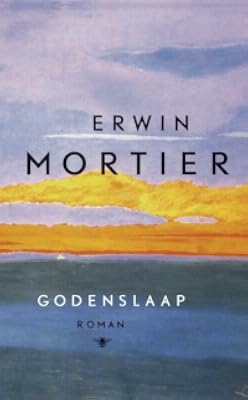
Mortier is for the moment (jan. 2009) very "hot" here in Flanders with his new book [Godenslaap], but this was for me the first book i read from this author and it is a hit.
The story is on a little boy, Anton, who grows up on a farm where multiple generations of his family have always lived together but an end is coming to this situation with the new industrialisation era that ends the agricultural tradition in the family.
The boy is confronted with all kind of social show more changes, grows up, goes to school, meets other young boys and is ocnfronted with all kind of social and emotional differences.
It is especially the way the author describes the emotional loneliness that is so precise and so precious, some words did remind me of my childhood where, after the death of my mother, i had these same feelings of loneliness.
On the other hand it strikes me that for a lot of modern dutch authors apparently all tormented characters need to be gay, as if this i an evident combination.
Nevertheless my conclusion is that this is a very nice book, full of great but subtle descriptions off everyday family relations and childhood feelings. Very nice indeed. show less
Mortier is for the moment (jan. 2009) very "hot" here in Flanders with his new book [Godenslaap], but this was for me the first book i read from this author and it is a hit.
The story is on a little boy, Anton, who grows up on a farm where multiple generations of his family have always lived together but an end is coming to this situation with the new industrialisation era that ends the agricultural tradition in the family.
The boy is confronted with all kind of social show more changes, grows up, goes to school, meets other young boys and is ocnfronted with all kind of social and emotional differences.
It is especially the way the author describes the emotional loneliness that is so precise and so precious, some words did remind me of my childhood where, after the death of my mother, i had these same feelings of loneliness.
On the other hand it strikes me that for a lot of modern dutch authors apparently all tormented characters need to be gay, as if this i an evident combination.
Nevertheless my conclusion is that this is a very nice book, full of great but subtle descriptions off everyday family relations and childhood feelings. Very nice indeed. show less
Ik dacht verkeerdelijk dat dit een recent werk van Mortier was, maar het blijkt pas zijn 2de worp (gepubliceerd in 2000), na zijn debuut Marcel. En dat is er ook aan te merken. De thematiek – een coming of age-verhaal – is nauw verwant met het debuut, en de omgeving waarin het zich afspeelt – het Vlaamse platteland in de jaren 1970 ook. Mortier is duidelijk ook nog altijd zijn stijl aan het zoeken: hij experimenteert met de voor hem zo typische woordkunst en dat is nu eens erg geslaagd, dan weer enorm banaal of gewoon te gezocht. Nieuw is de zinnelijkheids-thematiek, een aankondiging van de focus op de worsteling met de homoseksuele geaardheid die in Mortier 's latere werk centraal zal komen te staan. Het verhaal eindigt op een show more bijzonder knullige manier. Dus wat mij betreft, niet erg geslaagd. show less
Jul 13, 2019Dutch
Anton groeit op in een huis met ongetrouwde tantes en een ongetrouwde oom, en zijn ouders. Later komt een neef die iets ouder is, bij hen wonen omdat zijn moeder opgenomen moet worden. Vlak daarna gaan ze naar de middelbare school. Anton en zijn neef hebben weinig gemeen. Op school komt hij in de klas met Willem die is blijven zitten. Willem heeft een streepje voor bij de paters/leraren, omdat zijn vader architect is en wel eens een schenking doet. Anton en Willem krijgen een verhouding, al wordt dat niet met zoveel woorden aangegeven en hangen ze het niet aan de grote klok. Aan het eind van de vakantie zullen ze gaan studeren en er zijn al kamers gehuurd in dezelfde stad. Dan komt Willem om bij een verkeersongeval en Anton is weer alleen.
May 27, 2017Dutch
Een coming-to-age roman van een jongen in vlaanderen.
Een nogal gewone doordeweekse roman, van (weer een) jongetje dat opgroeit in een vlaams gezin.
Matig.
Een nogal gewone doordeweekse roman, van (weer een) jongetje dat opgroeit in een vlaams gezin.
Matig.
Nov 30, 2009Dutch
aangrijpend
Aug 11, 2011Dutch
Uitgeverij De Bezige Bij Amsterdam/DeMorgen
Dec 30, 2009Dutch
Members
- Recently Added By
Author Information

37+ Works 1,683 Members
Erwin Mortier was born on November 28, 1965. He is a Dutch-language Belgian author. He became city poet in Ghent in 2005. He wrote as a columnist for newspapers like De Morgen. He also wrote several novels including Marcel, My Fellow Skin, Shutter Speed, and While the Gods Were Sleeping. In 2002 he won the C. Buddingh' prize for his debut in show more poetry, and in 2009 the AKO Literatuurprijs for While the Gods Were Sleeping. He also made the shortlist for the Independent Foreign Fiction Prize 2015 with this same title. (Bowker Author Biography) show less
Awards and Honors
Series
Belongs to Publisher Series
Harvill (304)
Work Relationships
Has as a student's study guide
Common Knowledge
- Canonical title
- My Fellow Skin
- Original title
- Mijn tweede huid
- Original publication date
- 2000
- People/Characters*
- Anton
- First words*
- Het was in de tijd voor ik echt kon spreken.
- Last words*
- (Click to show. Warning: May contain spoilers.)Ik keek toe hoe ze ingelijst kleiner werden, hoe de kruin van de beuk boven de stallen leek uit te groeien, en tenslotte, voor ik de snelweg opreed, alles verdween.
(Click to show. Warning: May contain spoilers.)Ik keek toe hoe ze ingelijst kleiner werden, hoe de kruin van de beuk boven de stallen leek uit te groeien, en ten slotte voor ik de snelweg opreed, alles verdween.
*Some information comes from Common Knowledge in other languages. Click "Edit" for more information.
Classifications
- Genres
- General Fiction, Fiction and Literature
- DDC/MDS
- 839.3137 — Literature & rhetoric German & related literatures Other Germanic literatures Netherlandish literatures Dutch Dutch fiction 21st Century
- LCC
- PT6466.23 .O676 .M55 — Language and Literature German, Dutch and Scandinavian literatures Flemish literature since 1830 Individual authors or works
- BISAC
Statistics
- Members
- 169
- Popularity
- 193,222
- Reviews
- 7
- Rating
- (3.41)
- Languages
- Dutch, English, French, German
- Media
- Paper, Ebook
- ISBNs
- 12
- ASINs
- 1