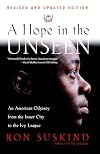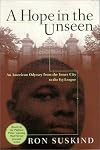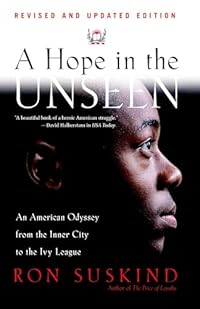
A Hope in the Unseen: An American Odyssey from the Inner City to the Ivy League
by Ron Suskind
On This Page
Description
Follows gifted African-American student Cedric Jennings from his crime-infested high school in Washington D.C. to his junior year at Brown University, discussing the problems he encountered along the road out of the ghetto.Tags
Recommendations












Member Reviews
A Hope in the Unseen (penned by Ron Suskind) follows the life of Cedric Jennings, an African American teenager. He attends Ballou Senior High in Washington D.C. - one of the most dangerous and crime-ridden areas in D.C. - and lives in a topsy turvy ghetto world where things like decent grades and making the honor roll are frowned upon his by peers. As if things couldn’t get more depressing, the audience learns Cedric lives alone with his mother, and the two of them regularly work hard to stave off living in poverty. Instead of submitting to the mentality that is cast over at Ballou (that any academic aspirations one might have are worthless and unworthy of pursing), Cedric unapologetically refuses to give up his dreams of attending an show more Ivy League school. Not only is he driven to succeed and graduate, his mother wholeheartedly believes he can do it and does whatever is in her power to help him realize his dreams. In his junior year of high school, Cedric is able to attend a college summer program at M.I.T. (a program called Minority Introduction to Engineering and Science). Unsurprisingly, at least to the reader, Cedric struggles with the workload as opposed to his other peers, who come from better schools and are middle class. His ghetto background sets him apart though he manages to make friends. A the end of the program, despite how much progress he’s made, Cedric is told by a professor that he wouldn’t be welcome at M.I.T. as a college student. Cedric returns to Ballou at the end of the summer disenchanted and discomforted by his prospects, but simultaneously comforted at not being set apart socially by his peers.
When he finds that one Ivy League college is much more accommodating of minority students like himself, Cedric seems to find renewed hope and a reason why he should keep working towards his dreams. As his senior year winds down, Cedric is able to receive several financial aid scholarships which allow him to attend the college of his choice. Not all of his college-bound peers share the same result, however. Though some of them are accepted to college, there is no way they can afford the tuition on their own, and others cannot go at all, which creates friction and resentment between Cedric and his classmates. Despite that, he is determined to go and to succeed at college no matter what obstacles he may face.
What stood out to me in this book is how much grit and an almost superhuman work ethic Cedric had. It would have been ridiculously easy for him to stop giving caring about academics a long time ago. He’s a poor, inner-city, minority teenager. He doesn’t have access to decent education, and has a father he doesn’t know in jail and on drugs. On top of the obstacles Cedric already faces, he lives in an area where crime is high and gangs are everywhere.There is every reason for Cedric to give up on his future. Almost none of his peers cared about their education, and if they did, they didn’t try to move heaven and hell to get out - mainly because of this impossible situation they were born into. Every possible obstacle Cedric could face, he had to. He couldn’t quite completely exist in either world he was experiencing (educated middle class and poor ghetto background). Instead of bending to peer pressure and allowing himself to fade into obscurity and not make something of his life, he chose - with the help of his mother, his faith, and some dedicated high school teachers - to aim high and to keep clawing his ways out of a poor neighborhood towards a better future.
Cedric’s mother, Barbara was reckless and immature before giving birth to him. She had a tendency towards liquor and bad relationships. Barbra wasn’t the most educated person out there- and it would have been easy for her to believe that her child would face a similar fate to the one she’d been dealing with. However, instead of slipping into that belief, and helping to set him up for failure and disappointment, Barbra does the complete opposite. She keeps him on a tight leash. Before, she had been all over the place; now, she was committed to bending over backwards to make something of her own life and make sure that her son didn’t stay in poverty.
It was moving to read about how committed Barbara is to Cedric through this period of their life, and how much she’d done for him beforehand. It was clear that she was determined to help Cedric. She was an incredible role model for him and helped him mature enough to be able to handle different challenges he would face before Cedric would move out and have to grow up and mature on his own.
After being told by Ballou’s principle that Cedric was “too proud for his own good”, Suskind decided to investigate that claim in 1994. He published two articles about Cedric, but eventually used those as references when working to write an entire novel about the reality of the Jennings family.
Now, I’m not one to really explicitly comment on someone’s race, but I do think this is worth mentioning. Ron Suskind is a white, male journalist who is middle class. As a result, he enjoys a lot of privilege that Cedric and other African American teenagers that he (Suskind) comes into contact with don’t. While writing A Hope in the Unseen it would have been incredibly easy to treat the Jennings and other black people as if they were merely dramatized characters or specimens to be discussed and observed from a literary standpoint. Suskind could have easily dominated the story even though he was just an observer for years on end to document the journey Cedric is on.
What is notable and commendable about this novel is that Suskind is very much absent from the story. He is able to use his mastery of storytelling to get into the heads of everybody Cedric comes into contact with (including Cedric himself). Instead of being overtly present throughout the story and offering direct or indirect commentary, you don’t see Suskind at all throughout the novel. It’s as if he got the story secondhand in detail. Though he spent several years with the Jennings family, he is excellent at removing himself from the story that unfolds. Suskind allows the people he writes about to exist as complicated, complex people who the reader often ends up developing a strong attachment or other fierce emotions towards.
There were parts of the novel that made me smile, like when Cedric was discussing music with his peers in a summer program or when he was in college. He would relate his own music taste with new friends, and play it on cassette tapes or talk about hip hop/rap artists they should check out. Suskind effortlessly related it to the reader, and this distinct transition is lost the first time around. Suskind makes the interactions Cedric has with peers and adults seem relatable or, at the very least, understandable - an entirely new world is accessible and explained without it feeling overwhelming or listlessly dragging on with no plot.
Although this was written roughly twenty years ago (Cedric attends high school and college in the 1990’s) it still offers a lot of insight into low-income, high crime areas and how difficult it is to fight and beat the odds when next to nobody is willing to help you. show less
When he finds that one Ivy League college is much more accommodating of minority students like himself, Cedric seems to find renewed hope and a reason why he should keep working towards his dreams. As his senior year winds down, Cedric is able to receive several financial aid scholarships which allow him to attend the college of his choice. Not all of his college-bound peers share the same result, however. Though some of them are accepted to college, there is no way they can afford the tuition on their own, and others cannot go at all, which creates friction and resentment between Cedric and his classmates. Despite that, he is determined to go and to succeed at college no matter what obstacles he may face.
What stood out to me in this book is how much grit and an almost superhuman work ethic Cedric had. It would have been ridiculously easy for him to stop giving caring about academics a long time ago. He’s a poor, inner-city, minority teenager. He doesn’t have access to decent education, and has a father he doesn’t know in jail and on drugs. On top of the obstacles Cedric already faces, he lives in an area where crime is high and gangs are everywhere.There is every reason for Cedric to give up on his future. Almost none of his peers cared about their education, and if they did, they didn’t try to move heaven and hell to get out - mainly because of this impossible situation they were born into. Every possible obstacle Cedric could face, he had to. He couldn’t quite completely exist in either world he was experiencing (educated middle class and poor ghetto background). Instead of bending to peer pressure and allowing himself to fade into obscurity and not make something of his life, he chose - with the help of his mother, his faith, and some dedicated high school teachers - to aim high and to keep clawing his ways out of a poor neighborhood towards a better future.
Cedric’s mother, Barbara was reckless and immature before giving birth to him. She had a tendency towards liquor and bad relationships. Barbra wasn’t the most educated person out there- and it would have been easy for her to believe that her child would face a similar fate to the one she’d been dealing with. However, instead of slipping into that belief, and helping to set him up for failure and disappointment, Barbra does the complete opposite. She keeps him on a tight leash. Before, she had been all over the place; now, she was committed to bending over backwards to make something of her own life and make sure that her son didn’t stay in poverty.
It was moving to read about how committed Barbara is to Cedric through this period of their life, and how much she’d done for him beforehand. It was clear that she was determined to help Cedric. She was an incredible role model for him and helped him mature enough to be able to handle different challenges he would face before Cedric would move out and have to grow up and mature on his own.
After being told by Ballou’s principle that Cedric was “too proud for his own good”, Suskind decided to investigate that claim in 1994. He published two articles about Cedric, but eventually used those as references when working to write an entire novel about the reality of the Jennings family.
Now, I’m not one to really explicitly comment on someone’s race, but I do think this is worth mentioning. Ron Suskind is a white, male journalist who is middle class. As a result, he enjoys a lot of privilege that Cedric and other African American teenagers that he (Suskind) comes into contact with don’t. While writing A Hope in the Unseen it would have been incredibly easy to treat the Jennings and other black people as if they were merely dramatized characters or specimens to be discussed and observed from a literary standpoint. Suskind could have easily dominated the story even though he was just an observer for years on end to document the journey Cedric is on.
What is notable and commendable about this novel is that Suskind is very much absent from the story. He is able to use his mastery of storytelling to get into the heads of everybody Cedric comes into contact with (including Cedric himself). Instead of being overtly present throughout the story and offering direct or indirect commentary, you don’t see Suskind at all throughout the novel. It’s as if he got the story secondhand in detail. Though he spent several years with the Jennings family, he is excellent at removing himself from the story that unfolds. Suskind allows the people he writes about to exist as complicated, complex people who the reader often ends up developing a strong attachment or other fierce emotions towards.
There were parts of the novel that made me smile, like when Cedric was discussing music with his peers in a summer program or when he was in college. He would relate his own music taste with new friends, and play it on cassette tapes or talk about hip hop/rap artists they should check out. Suskind effortlessly related it to the reader, and this distinct transition is lost the first time around. Suskind makes the interactions Cedric has with peers and adults seem relatable or, at the very least, understandable - an entirely new world is accessible and explained without it feeling overwhelming or listlessly dragging on with no plot.
Although this was written roughly twenty years ago (Cedric attends high school and college in the 1990’s) it still offers a lot of insight into low-income, high crime areas and how difficult it is to fight and beat the odds when next to nobody is willing to help you. show less
A Hope in the Unseen is an amazingly well-written, true story of an impoverished, but determined young man. The author, Ron Suskind was a journalist for The Wallstreet Journal in 1994 when he met Cedric Jennings, a black kid in “the most troubled and violent school in the blighted southeast corner of Washington D.C.” What started out as desire to write a newspaper article on a student who was overcoming unbelievable odds, turned into a two year project, as Suskind follows Cedric as he graduates high school and embarks on a degree from an Ivy League school.
Cedric struggles against a myriad of problems that make innocent children grow-up way too fast. No environment in Cedric’s life is safe from danger or hostility being raised by show more a single mom, his father is in prison with his neighborhood overrun by gangs, drugs and violence. His living conditions are unstable; sometimes he is faced with trying to complete his homework in an apartment without heat and sometimes they do not even have an apartment. Cedric’s high school is cut throat complete with metal detectors, security guards, nonexistent textbooks, outdated supplies and unenthusiastic educators. At Frank W. Ballou High School, Cedric’s 4.02 grade point average leaves him a target among his classmates and teachers. His principle feels he is “too proud for his own good” and his fellow classmates despise his successes. Day in and day out, Cedric experiences painful isolation because of his fierce determination to succeed, his “headstrong, introspective and self-directed personality” and thick emotional armor he wears as a shield. Cedric is not unlike many of his fellow classmates in their commitment to survival, but his choices are determined by a strict moral compass, rooted in Christian faith that points him in the direction of college as his way out of his dysfunctional life.
Cedric is blessedly protected and guided by a few key adults in his life, especially his pious and self-sacrificing mother, Barbara. She knows to keep Cedric tethered to a short leash built on “strong physical discipline and tight scheduling”, and she makes sure Cedric is always either at home, school or at church. Struggling against her own impoverished and abusive background, Barbara raises Cedric in their church, believing emphatically in moral orderliness and strict guidelines between right and wrong, which she passes on to Cedric. Another one of Cedric’s most influential allies is a teacher from his high school, Mr. Clarence Taylor, whose individual attention and mentoring help guide Cedric towards his ultimate goal of a prestigious, college education.
Cedric’s acceptance into Brown University, is just the beginning of his very arduous journey. Cedric’s odyssey to Providence, Rhode Island is full of emotional upheavals and self-induced isolations. Cedric lacks an unbelievable amount of both social and scholarly skills, leaving him bursting at the seams. Cedric is so far behind his fellow classmates, that passing his classes requires an unimaginable amount of work. Cedric also faces an impossible struggle when trying to bridge the collective gap at Brown between race and prosperity. Cedric is a confused young man with every odd set against him and Suskind succeeds in taking his readers along through Cedric’s very real growing-pains.
What makes Suskind’s writing so enrapturing is the portrayal of Cedric’s authentic experience. Suskind’s journalistic writing style allows him to unobtrusively observe Cedric and the diverse population of people in Cedric’s life. Unlike other popular fictional books on race, like Running the Rift, this book reads like a novel, but is entrenched in a factual portrayal of real people in a community’s experience fraught with despair and endurance. Suskind checks and re-checks his understanding of events as only a Pulitzer Prize-winning journalist can do. Suskind tirelessly interviews and observes Cedric, and his associates to make sure his portrayal of Cedric’s life is accurate. At the end of their campaign, Suskind hands Cedric the manuscript and a red marker, allowing him to correct or omit any untrue portrayals of his story.
This book fails to sugar-coat how very real and exquisitely unfair our country remains in dealing with racial and educational issues. Cedric’s struggle is far more difficult because of the inequality written into American laws pertaining to educational funding. It is exceedingly unfair and unjust to allow poor children in America to receive a sub-par education in comparison to their rich counterparts. Being a brilliant journalist, Suskind is able to highlight these very real issues while delicately portraying one young man’s personal journey of hope in a biased world. “The basic appeal of Cedric’s story was never rooted in his exceptionalism”, it is set by his very real appeal as a relatable, bungling, moody, young man who struggles with the consequences of his choices. Cedric’s unwavering dedication to his faith, family and studies sets him apart from his associates and makes this book, a fantastical read. show less
Cedric struggles against a myriad of problems that make innocent children grow-up way too fast. No environment in Cedric’s life is safe from danger or hostility being raised by show more a single mom, his father is in prison with his neighborhood overrun by gangs, drugs and violence. His living conditions are unstable; sometimes he is faced with trying to complete his homework in an apartment without heat and sometimes they do not even have an apartment. Cedric’s high school is cut throat complete with metal detectors, security guards, nonexistent textbooks, outdated supplies and unenthusiastic educators. At Frank W. Ballou High School, Cedric’s 4.02 grade point average leaves him a target among his classmates and teachers. His principle feels he is “too proud for his own good” and his fellow classmates despise his successes. Day in and day out, Cedric experiences painful isolation because of his fierce determination to succeed, his “headstrong, introspective and self-directed personality” and thick emotional armor he wears as a shield. Cedric is not unlike many of his fellow classmates in their commitment to survival, but his choices are determined by a strict moral compass, rooted in Christian faith that points him in the direction of college as his way out of his dysfunctional life.
Cedric is blessedly protected and guided by a few key adults in his life, especially his pious and self-sacrificing mother, Barbara. She knows to keep Cedric tethered to a short leash built on “strong physical discipline and tight scheduling”, and she makes sure Cedric is always either at home, school or at church. Struggling against her own impoverished and abusive background, Barbara raises Cedric in their church, believing emphatically in moral orderliness and strict guidelines between right and wrong, which she passes on to Cedric. Another one of Cedric’s most influential allies is a teacher from his high school, Mr. Clarence Taylor, whose individual attention and mentoring help guide Cedric towards his ultimate goal of a prestigious, college education.
Cedric’s acceptance into Brown University, is just the beginning of his very arduous journey. Cedric’s odyssey to Providence, Rhode Island is full of emotional upheavals and self-induced isolations. Cedric lacks an unbelievable amount of both social and scholarly skills, leaving him bursting at the seams. Cedric is so far behind his fellow classmates, that passing his classes requires an unimaginable amount of work. Cedric also faces an impossible struggle when trying to bridge the collective gap at Brown between race and prosperity. Cedric is a confused young man with every odd set against him and Suskind succeeds in taking his readers along through Cedric’s very real growing-pains.
What makes Suskind’s writing so enrapturing is the portrayal of Cedric’s authentic experience. Suskind’s journalistic writing style allows him to unobtrusively observe Cedric and the diverse population of people in Cedric’s life. Unlike other popular fictional books on race, like Running the Rift, this book reads like a novel, but is entrenched in a factual portrayal of real people in a community’s experience fraught with despair and endurance. Suskind checks and re-checks his understanding of events as only a Pulitzer Prize-winning journalist can do. Suskind tirelessly interviews and observes Cedric, and his associates to make sure his portrayal of Cedric’s life is accurate. At the end of their campaign, Suskind hands Cedric the manuscript and a red marker, allowing him to correct or omit any untrue portrayals of his story.
This book fails to sugar-coat how very real and exquisitely unfair our country remains in dealing with racial and educational issues. Cedric’s struggle is far more difficult because of the inequality written into American laws pertaining to educational funding. It is exceedingly unfair and unjust to allow poor children in America to receive a sub-par education in comparison to their rich counterparts. Being a brilliant journalist, Suskind is able to highlight these very real issues while delicately portraying one young man’s personal journey of hope in a biased world. “The basic appeal of Cedric’s story was never rooted in his exceptionalism”, it is set by his very real appeal as a relatable, bungling, moody, young man who struggles with the consequences of his choices. Cedric’s unwavering dedication to his faith, family and studies sets him apart from his associates and makes this book, a fantastical read. show less
What is most impressive about A Hope in the Unseen is Suskind's ability to turn hard journalism into a compelling narrative that reads like fiction but is faithful to the truths of his subjects' lives. I am a high school teacher who sees students who struggle with the same issues of race and class and what it means to try to break out of the rigid and defeating expectations set by the community and society. It is Cedric's strength of character and refusal to cede his morals to those around him which makes him a role model for our age.
A Hope in the Unseen is a brutally honest, well written, and incredibly eye opening work that deals with issues of race, inequality, education, overcoming odds that are against you and what it takes to succeed. Author Ron Suskind follows the real life, moving journey of Cedric Jennings. He is a young high school boy in inner city DC that has the brains and the drive to take him far in his academic career and his life, but his journey to try to succeed is harder than most. During his high school years, he dreams of going to a well acclaimed college, and making it out of his impoverished and low achieving area. There is such a surprising contrast, which is represented on the front cover saying, “An American odyssey from inner city to show more the ivy league”. This idea is a major reason a lot of people are interested in the book in the first place. When you think of students that would attend an Ivy League school, Cedric does not fit the image. Cedric is an inner city boy with an absent father that is in jail and a mother who can’t pay the bills, coming from a place many would refer to as the ghetto. He is at a school that accepts the fact that most of their students are not going to succeed in life, and he is the odd one out. Others at his high school resent him and physically, verbally, and emotionally abuse him for trying to be someone that they could never dream to be. None of this stops him, and neither does struggling at an MIT summer program and being told he would never be accepted into their program. Through his mother, Barbara Jennings’ support, as well as a few teachers, and his own motivation, he is able to get accepted into Brown University, an acclaimed Ivy League School as well as receive numerous scholarships to make this a feasible option for him. The rest of the novel follows his journey as he moves to Brown and begins to realize what an outsider he really is, and how hard the rigor of the coursework is at this caliber of a school. He struggles socially, academically, and emotionally through this transition. Academically you watch him grow through experience, his teachers, and most notably his tutor who showed him how to let his past make his academics stronger and not weaken them. Socially he learns to let people that are different from himself help him grow, and that letting people in isn't necessarily a bad thing. He also finds that he can incorporate the worlds of blacks and non-blacks at Brown, and that maybe they aren't as separated as he thought they were. As Suskind puts it, “…he said something about having spent his whole life among blacks and wanting to see if there is a place for him among non-blacks”. He so badly wants to reject where he came from and the whole culture that he came from that it takes him time to realize that maybe he doesn't have to. As he begins to acclimate and grow into his new life at Brown, he also begins to struggle emotionally. He describes this as “he had been feeling guilty for months now about not belonging in the southeast anymore, about leaving everyone behind”. Suskind does an incredible job showing how he works through these conflicts that he faces, and how he grows and learns from them. Through showing his raw journey without glamorizing it, the reader is able to truly begin to understand Cedric and learn from his amazing transformation.
Coming into reading this book, I expected it to be a story about overcoming the odds and a social commentary on the injustices and inequality in America through social class, race, and in our school systems. Although these topics were discussed and definitely held a prominent role, as they should, A Hope in the Unseen is so much more than that. In this raw account of the ups and downs and all the factors that played a role in Cedric's journey made it so much more than a stereotypical, seemingly perfect success story. I understand more of what it is actually like to be facing these issues. I am also more understanding of him because Suskind shows reasoning and explanation behind almost all of his decisions. Seeing that my story is so different from his, it is important that not only I hear his story but have a better understanding, so that it can influence the way I think about these issues, and Ron Suskind did an amazing job conquering this feat.
Being a freshman college student myself, I was surprised by not only how much I could relate to Cedric but also how much his story has influenced the way I’m thinking about my own. I come from a suburban upbringing and a school that pushed its students to their full potential, and expected all of its students to go to well acclaimed colleges. Although my background isn't even remotely similar to Cedric’s, I've still gained an appreciation for where I've come from, the good and the bad, and how much it has grown me as a person and lead me to where I am today. A Hope in the Unseen has not only changed my perspective on my own life, but also given me insight on the lives and struggles of others, which made the book truly an insightful read.
Author Ron Suskind used his highly observant and incredible insight he was able to get from not only Cedric but others that were a vital part in his story to paint a picture of what Cedric’s life was really like. Another book that relates a lot to how Suskind accomplished this is The Dirty Life, it explores author Kristen Kimball’s transition from being a city girl to following her dreams out to the country to be a farmer. Just like Kimball did in her memoir, Suskind uses his insight to truly paint the picture of what the transition was really like and how it affected the main character. Suskind mentions that “It is [his] hope that this book will similarly confuse dug-in racial expectations and, in some small way, help weave the black experience and the white experience… into a shared national narrative”. I think in some small way he did just that, by not forcing some opinion on the social issues in the book but through letting the story speak for itself. Cedric’s story helps us understand the impacts these issues have on people in America today, but also gives perspective on what that truly means. Through allowing readers to understand and maybe even relate to Cedric who is so different from many of the readers themselves, Suskind's goal was accomplished in the sense of being a small step towards the big picture goal. I truly enjoyed being taken on Cedric's journey, and opening my eyes to these issues I hadn't understood before. Therefore, I would recommend this book to college students because of the ways they can relate to Cedric, but also to anyone that enjoys broadening their horizons through literature and others experiences. show less
Coming into reading this book, I expected it to be a story about overcoming the odds and a social commentary on the injustices and inequality in America through social class, race, and in our school systems. Although these topics were discussed and definitely held a prominent role, as they should, A Hope in the Unseen is so much more than that. In this raw account of the ups and downs and all the factors that played a role in Cedric's journey made it so much more than a stereotypical, seemingly perfect success story. I understand more of what it is actually like to be facing these issues. I am also more understanding of him because Suskind shows reasoning and explanation behind almost all of his decisions. Seeing that my story is so different from his, it is important that not only I hear his story but have a better understanding, so that it can influence the way I think about these issues, and Ron Suskind did an amazing job conquering this feat.
Being a freshman college student myself, I was surprised by not only how much I could relate to Cedric but also how much his story has influenced the way I’m thinking about my own. I come from a suburban upbringing and a school that pushed its students to their full potential, and expected all of its students to go to well acclaimed colleges. Although my background isn't even remotely similar to Cedric’s, I've still gained an appreciation for where I've come from, the good and the bad, and how much it has grown me as a person and lead me to where I am today. A Hope in the Unseen has not only changed my perspective on my own life, but also given me insight on the lives and struggles of others, which made the book truly an insightful read.
Author Ron Suskind used his highly observant and incredible insight he was able to get from not only Cedric but others that were a vital part in his story to paint a picture of what Cedric’s life was really like. Another book that relates a lot to how Suskind accomplished this is The Dirty Life, it explores author Kristen Kimball’s transition from being a city girl to following her dreams out to the country to be a farmer. Just like Kimball did in her memoir, Suskind uses his insight to truly paint the picture of what the transition was really like and how it affected the main character. Suskind mentions that “It is [his] hope that this book will similarly confuse dug-in racial expectations and, in some small way, help weave the black experience and the white experience… into a shared national narrative”. I think in some small way he did just that, by not forcing some opinion on the social issues in the book but through letting the story speak for itself. Cedric’s story helps us understand the impacts these issues have on people in America today, but also gives perspective on what that truly means. Through allowing readers to understand and maybe even relate to Cedric who is so different from many of the readers themselves, Suskind's goal was accomplished in the sense of being a small step towards the big picture goal. I truly enjoyed being taken on Cedric's journey, and opening my eyes to these issues I hadn't understood before. Therefore, I would recommend this book to college students because of the ways they can relate to Cedric, but also to anyone that enjoys broadening their horizons through literature and others experiences. show less
The American Dream is often romanticized, but the modern reality of a rags to riches story is often a mystery. With his book, A Hope in the Unseen, Ron Suskind offers a real life narrative of this kind of story through the life of Cedric Jennings, a young black man who struggles to make it from an inner city high school to the Ivy League. Cedric has to battle constantly against his environment, as he lives in a dangerous neighborhood fraught with violence and danger, which he is not safe from even in his school. He has to live with the struggle of poverty, as does his single mother, who works tirelessly for her and her son to be able to have enough to make it.
This book explores a plethora of aspects about what it takes to get success show more from a place where very few find it. In Cedric’s almost all-black inner city high school, Ballou, there are not nearly as many opportunities for success as there are in other, more well off schools; the school does not have very many resources, as one might expect. For the most part, the teachers and administration of the school do not really expect the students to be successful, and this has a very adverse effect on the students like Cedric who actually want to succeed. But the book also explores certain ideas that we often do not think of when thinking of racial and social division. Most of the time, the idea of racial division brings to mind the image of a person of color being mistreated or denied opportunities because of their race. However, there is another condition that plays a part in racial and social divides that I think this book explores very well. For Cedric, this condition does not come from an outside oppressor group, but rather from the students around him. They have this idea that any attempt at success, or good grades, or goals of going to a good college make a person a “whitey,” or makes them not black enough to respect. Because of this, Cedric is stigmatized by his peers, and ridiculed for how well he is doing and where he wants to go in life.
The book also shows how almost every other part of Cedric’s environment is also a malefactor to his pursuits. He and his mother live in poverty, and they both have to struggle with not having enough money to pay bills and get enough to eat. They also live in a dangerous part of the city; hearing gunshots outside is a common occurrence to them, and violence happens even in Cedric’s high school. It does not help that he and his mother only really have each other to help them make it, as Cedric’s father is in jail.
This book also does a good job of showing the internal struggles that Cedric and many other people in his situation have to deal with. Cedric’s father has been in jail for most of Cedric’s life, and even though Cedric has looked for some measure of recognition or affection from his father, it never comes. This puts pressure on him to succeed, because he feels a need to prove something to his father. He receives similar pressure from other sources as well; the students at Ballou are constantly trying try to drag him down, causing him to feel an anger towards them and a need to prove them wrong when they tell him that he doesn’t have it in him to succeed. Cedric’s upbringing also has a big effect on the fights he has to go through internally. Growing up in a dangerous environment has, as the book says, caused him to have somewhat of “a hardened exterior masking deep insecurities.” He gives off as tough of an outward attitude as he can, but inside he struggles with doubting himself, asking if he really deserves to have his dreams fulfilled, and wrestling with a terrible fear of failure.
Reading this book, you can see a lot of development in the people in it, especially Cedric as he goes through his life, faces obstacles, and finds out who he really is. You can see sides of people that you might not usually consider; certain aspects of their past, what they are thinking, and what it is that makes them who they are. While I wouldn’t call most of the people in this book likeable characters, the book does an excellent job of showing the deeper parts of people and portraying them as the complex individuals that they actually are. It shows people who are flawed, some extremely so, and makes you understand why they are that way and actually makes you appreciate them for the flaws that they have.
Suskind’s writing is very engaging, and does a very good job of portraying the people in the story. He interacted with Cedric and the people around him for a great deal of Cedric’s life in order to write the book, but Suskind does an excellent job of completely removing himself from the picture and solely focusing on the characters. It is amazing how he is able to get into each person’s head and explain them so well, all the while making it into a third-person omniscient point of view.
Overall, I really enjoyed this book. It gave insight into another perspective of the world, and also explored a lot of issues and ideas that are key to understanding different parts of society and how to further unify them. show less
This book explores a plethora of aspects about what it takes to get success show more from a place where very few find it. In Cedric’s almost all-black inner city high school, Ballou, there are not nearly as many opportunities for success as there are in other, more well off schools; the school does not have very many resources, as one might expect. For the most part, the teachers and administration of the school do not really expect the students to be successful, and this has a very adverse effect on the students like Cedric who actually want to succeed. But the book also explores certain ideas that we often do not think of when thinking of racial and social division. Most of the time, the idea of racial division brings to mind the image of a person of color being mistreated or denied opportunities because of their race. However, there is another condition that plays a part in racial and social divides that I think this book explores very well. For Cedric, this condition does not come from an outside oppressor group, but rather from the students around him. They have this idea that any attempt at success, or good grades, or goals of going to a good college make a person a “whitey,” or makes them not black enough to respect. Because of this, Cedric is stigmatized by his peers, and ridiculed for how well he is doing and where he wants to go in life.
The book also shows how almost every other part of Cedric’s environment is also a malefactor to his pursuits. He and his mother live in poverty, and they both have to struggle with not having enough money to pay bills and get enough to eat. They also live in a dangerous part of the city; hearing gunshots outside is a common occurrence to them, and violence happens even in Cedric’s high school. It does not help that he and his mother only really have each other to help them make it, as Cedric’s father is in jail.
This book also does a good job of showing the internal struggles that Cedric and many other people in his situation have to deal with. Cedric’s father has been in jail for most of Cedric’s life, and even though Cedric has looked for some measure of recognition or affection from his father, it never comes. This puts pressure on him to succeed, because he feels a need to prove something to his father. He receives similar pressure from other sources as well; the students at Ballou are constantly trying try to drag him down, causing him to feel an anger towards them and a need to prove them wrong when they tell him that he doesn’t have it in him to succeed. Cedric’s upbringing also has a big effect on the fights he has to go through internally. Growing up in a dangerous environment has, as the book says, caused him to have somewhat of “a hardened exterior masking deep insecurities.” He gives off as tough of an outward attitude as he can, but inside he struggles with doubting himself, asking if he really deserves to have his dreams fulfilled, and wrestling with a terrible fear of failure.
Reading this book, you can see a lot of development in the people in it, especially Cedric as he goes through his life, faces obstacles, and finds out who he really is. You can see sides of people that you might not usually consider; certain aspects of their past, what they are thinking, and what it is that makes them who they are. While I wouldn’t call most of the people in this book likeable characters, the book does an excellent job of showing the deeper parts of people and portraying them as the complex individuals that they actually are. It shows people who are flawed, some extremely so, and makes you understand why they are that way and actually makes you appreciate them for the flaws that they have.
Suskind’s writing is very engaging, and does a very good job of portraying the people in the story. He interacted with Cedric and the people around him for a great deal of Cedric’s life in order to write the book, but Suskind does an excellent job of completely removing himself from the picture and solely focusing on the characters. It is amazing how he is able to get into each person’s head and explain them so well, all the while making it into a third-person omniscient point of view.
Overall, I really enjoyed this book. It gave insight into another perspective of the world, and also explored a lot of issues and ideas that are key to understanding different parts of society and how to further unify them. show less
I gave this story 3 stars because the story is compelling and moving. I didn't give it more, however, because I'm not a fan of the writing. The story of the challenges that a poor, inner city boy has in achieving miraculous success in his education is eye-opening, sometimes sad, and inspiring. My main problem with the writing is the heavy reliance on the "inner thoughts" of the individuals discussed in the book. The Author's Note at the end of the book explains Suskind's methods in this regard, but I still felt that the constant first-person explanations of individuals' inner-most thoughts was overdone and left me constantly wondering if what Suskind asserts was really what the individuals actually thought at the time. Nevertheless, the show more book was definitely worth the time to read. show less
Cedric Jennings conquered it all. He started as close to the bottom as he could get, and
through sheer determination, he crawled out. Cedric was a success, a true hero, but his book did not truly capture who he had to have been.
A Hope in the Unseen is the true story of author Ron Suskind following the life of a teenage boy who was destined for more than what he was handed. This boy, Cedric Jennings, faced enough hurdles to make even the greatest track star fall. Poverty, racism, an absent father and a brainwashed mother, all fell on his plate. His school was deplorable, with nearly a fifty percent dropout/transfer rate. The students were bribed to get straight A’s—by the teachers. The teachers, for the most part, had given up. The show more thugs that ran the halls simply weren’t worth the effort when there was a drug dealer on nearly every corner of the neighborhood. Still, Cedric persisted, pushing himself to get into college, to get out of the downward spiral in his future. With all of his efforts and all of his studies, Cedric managed to get into Brown University. There, he faced different setbacks. His writing wasn’t academic enough, his roommate wasn’t nice enough, he wasn’t white enough, his teachers hadn’t prepared him enough. Still, he managed to overcome his new situation just as he had his last. In a fit of inconspicuous glory, he defeated his setbacks and took charge of his life. His past no longer defines him any more than your breakfast defines how much studying you will get done after dinner. His story truly was inspiring, but Suskind did not do a good enough job at capturing it. Ron Suskind is a fantastic journalist, but I don’t think he made a fantastic author. All of his characters have depth. Not a single character is just a bad guy or just a good guy. He got every side of the story he could without steering the focus away from Cedric, and I’m not sure how he did it. Cedric is the most dynamic character, as he should be, but his mother also plays a huge roll. The book manages to talk about her life as it runs parallel to her son’s, and finds ways to relate the two. Cedric Gilliam, Cedric’s father, also makes several appearances. It makes him more than just the absent father in the struggling boy’s life. Suskind flourishes in his ways of avoiding stereotypes. Even the money guzzling bishop is shown to not be entirely evil. In that way, Suskind seems very similar to Cedric: he wants to see the good and the bad in everything.
But see, there lies the problem. Suskind needed a role in the book, and he made absolutely sure he didn’t have one. He wanted to be a simple observer, though it was clear toward the end that he was anything but. After spending so much time around these people, he must have gotten attached. The emotion in the story between the characters is lacking, and that’s because Suskind left out the most important connection there is: the connection between writer and characters. I feel as if the writing of the book left so much to be desired. He should have done more of what Mark Salzman did in True Notebooks: the focus, instead of being on Mark, is still on the boys Mark is teaching, despite Mark being in the story himself. Suskind, however, decided against this inspired tactic. Cedric’s story was inspirational, the perfect thing to teach kids that are about to leave high school or just entering college. As for a book to read for pleasure, it fell short. When we look for a good book, we look for a book that has everything. Most of the time, the writer is either a first person narrator or so wrapped up in the story that they practically could be. We don’t think about how important the role of the author is in the story until it’s gone—and in this book, it was gone. A Hope in the Unseen is a wonderful, inspiring, completely true account of a young man’s struggle out of the crappy hand he’d been given. It just isn’t worth reading.
My recommendation for this book depends on its intended purpose. If being looked at to teach a group of students about diversity and overcoming struggles, I would highly recommend it. It shows the definite results of a boy that never gave up, and serves as a beacon to children teetering on the edge to just keep going. That things will, in every cliché way imaginable, get better. As Suskind writes at the end of the book, “More than anything else, mustering that faith on cue, is what separated him from his peers, and distinguishes him from so many people in these literal, sophisticated times.” This is something all kids should learn in a way beyond teachers saying, “Work harder so you can have a good life”. However, if I was asked to recommend this book to my friends or my mother, I wouldn’t. In the huge tapestry of woven stories contained in this book, there simply isn’t enough. Not enough connection, not enough of the right kind of emotion. Instead of leaving me satisfied, it left me bored and wanting more of what I couldn’t have. There’s such a careful balance that needs to be followed in books like this, where the narrator doesn’t want to spoil the story by inserting himself. Suskind, while being a great reporter and picking a great story to follow, just couldn’t find that balance. It’s my biggest critique of the book, and really the only major thing I found wrong with it. It was disappointing how he took such a great concept and fell short by one little flaw that managed to put a dent in the whole book. If factual, journalistic sounding books are your go-to, this book is for you. If you love the feeling of being immersed in a story, skip this one and start looking for another. show less
through sheer determination, he crawled out. Cedric was a success, a true hero, but his book did not truly capture who he had to have been.
A Hope in the Unseen is the true story of author Ron Suskind following the life of a teenage boy who was destined for more than what he was handed. This boy, Cedric Jennings, faced enough hurdles to make even the greatest track star fall. Poverty, racism, an absent father and a brainwashed mother, all fell on his plate. His school was deplorable, with nearly a fifty percent dropout/transfer rate. The students were bribed to get straight A’s—by the teachers. The teachers, for the most part, had given up. The show more thugs that ran the halls simply weren’t worth the effort when there was a drug dealer on nearly every corner of the neighborhood. Still, Cedric persisted, pushing himself to get into college, to get out of the downward spiral in his future. With all of his efforts and all of his studies, Cedric managed to get into Brown University. There, he faced different setbacks. His writing wasn’t academic enough, his roommate wasn’t nice enough, he wasn’t white enough, his teachers hadn’t prepared him enough. Still, he managed to overcome his new situation just as he had his last. In a fit of inconspicuous glory, he defeated his setbacks and took charge of his life. His past no longer defines him any more than your breakfast defines how much studying you will get done after dinner. His story truly was inspiring, but Suskind did not do a good enough job at capturing it. Ron Suskind is a fantastic journalist, but I don’t think he made a fantastic author. All of his characters have depth. Not a single character is just a bad guy or just a good guy. He got every side of the story he could without steering the focus away from Cedric, and I’m not sure how he did it. Cedric is the most dynamic character, as he should be, but his mother also plays a huge roll. The book manages to talk about her life as it runs parallel to her son’s, and finds ways to relate the two. Cedric Gilliam, Cedric’s father, also makes several appearances. It makes him more than just the absent father in the struggling boy’s life. Suskind flourishes in his ways of avoiding stereotypes. Even the money guzzling bishop is shown to not be entirely evil. In that way, Suskind seems very similar to Cedric: he wants to see the good and the bad in everything.
But see, there lies the problem. Suskind needed a role in the book, and he made absolutely sure he didn’t have one. He wanted to be a simple observer, though it was clear toward the end that he was anything but. After spending so much time around these people, he must have gotten attached. The emotion in the story between the characters is lacking, and that’s because Suskind left out the most important connection there is: the connection between writer and characters. I feel as if the writing of the book left so much to be desired. He should have done more of what Mark Salzman did in True Notebooks: the focus, instead of being on Mark, is still on the boys Mark is teaching, despite Mark being in the story himself. Suskind, however, decided against this inspired tactic. Cedric’s story was inspirational, the perfect thing to teach kids that are about to leave high school or just entering college. As for a book to read for pleasure, it fell short. When we look for a good book, we look for a book that has everything. Most of the time, the writer is either a first person narrator or so wrapped up in the story that they practically could be. We don’t think about how important the role of the author is in the story until it’s gone—and in this book, it was gone. A Hope in the Unseen is a wonderful, inspiring, completely true account of a young man’s struggle out of the crappy hand he’d been given. It just isn’t worth reading.
My recommendation for this book depends on its intended purpose. If being looked at to teach a group of students about diversity and overcoming struggles, I would highly recommend it. It shows the definite results of a boy that never gave up, and serves as a beacon to children teetering on the edge to just keep going. That things will, in every cliché way imaginable, get better. As Suskind writes at the end of the book, “More than anything else, mustering that faith on cue, is what separated him from his peers, and distinguishes him from so many people in these literal, sophisticated times.” This is something all kids should learn in a way beyond teachers saying, “Work harder so you can have a good life”. However, if I was asked to recommend this book to my friends or my mother, I wouldn’t. In the huge tapestry of woven stories contained in this book, there simply isn’t enough. Not enough connection, not enough of the right kind of emotion. Instead of leaving me satisfied, it left me bored and wanting more of what I couldn’t have. There’s such a careful balance that needs to be followed in books like this, where the narrator doesn’t want to spoil the story by inserting himself. Suskind, while being a great reporter and picking a great story to follow, just couldn’t find that balance. It’s my biggest critique of the book, and really the only major thing I found wrong with it. It was disappointing how he took such a great concept and fell short by one little flaw that managed to put a dent in the whole book. If factual, journalistic sounding books are your go-to, this book is for you. If you love the feeling of being immersed in a story, skip this one and start looking for another. show less
Members
- Recently Added By
Lists

Summer Reading
31 works; 2 members
Author Information

7+ Works 3,752 Members
Ron Suskind is the author of The Way of the World, The One Percent Doctrine, The Price of Loyalty, and A Hope in the Unseen. From 1993 to 2000 he was the senior national affairs writer for The Wall Street Journal, where he won a Pulitzer Prize. He lives in Washington, D.C.
Awards and Honors
Work Relationships
Common Knowledge
- Original publication date
- 1998
- People/Characters
- Cedric Jennings; Barbara Jennings; Bishop C. L. Long; Clarence Taylor; Cedric Gilliam; Zayd Dohrn (show all 10); Phillip Atkins; LaTisha Williams; Donald Korb; Helaine Schupack
- Important places
- Washington, D.C., USA; Brown University
- Epigraph
- I am part of all that I have met / Yet all experience is an arch where-thro' / Gleams the untravell'd world, whose margin fades / Forever and forever when I move. --from Ulysses, Alfred, Lord Tennyson.
- First words
- A hip-hop tune bursts forth from the six-foot-high amplifiers, prompting the shoulder-snug slopes of black teenagers to sway and pivot in their bleacher sears. It takes only a second or two for some eight hundred students to... (show all) lock onto the backbeat, and the gmnasium starts to thump with a jaunt enthusiasm.
- Quotations
- "Hebrews 11:1," says Mr. Taylor. "The substance of faith is a hope in the unseen."
"NO. Wrong--you messed it!" Cedric laughs. "It goes 'Faith, the substance of things hoped for, the evidence of things not seen." Man, Mr... (show all). Taylor, you always getting 'em wrong."
... Then he turns the botched line over in his head and hears his giggle echo through the empty hallway. A hope in the unseen. Sort of a pocket-sized version of the orginal, and not really a religious phrase he decides, but one you can definitely take with you. [pp.49-50, Broadway Books, 2005] - Last words
- (Click to show. Warning: May contain spoilers.)All of which left one young man, still searching for the elusice unseen--a place, he now says, "where I won't live in two worlds, but one" --feeling a surge of very reasonable faith.
- Blurbers
- Yardley, Jonathan; Kirn, Walter
Classifications
- Genres
- Nonfiction, Biography & Memoir, General Nonfiction
- DDC/MDS
- 371.8092 — Society, Government, and Culture Education Schools and their activities; special education Culture Studies
- LCC
- LC2803 .W3 .S87 — Education Special aspects of education Special aspects of education Education of special classes of persons Blacks. African Americans
- BISAC
Statistics
- Members
- 848
- Popularity
- 32,004
- Reviews
- 43
- Rating
- (3.75)
- Languages
- English
- Media
- Paper, Audiobook, Ebook
- ISBNs
- 12
- ASINs
- 10