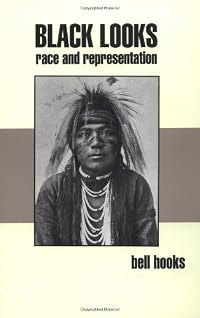
Black Looks: Race and Representation
by bell hooks
On This Page
Description
"In the critical essays collected in Black Looks, bell hooks interrogates old narratives and argues for alternative ways to look at blackness, black subjectivity, and whiteness. Her focus is on spectatorship--in particular, the way blackness and black people are experienced in literature, music, television, and especially film--and her aim is to create a radical intervention into the way we talk about race and representation. As she describes: 'The essays in Black Looks are meant to show more challenge and unsettle, to disrupt and subvert.' As students, scholars, activists, intellectuals, and any other readers who have engaged with the book since its original release in 1992 can attest, that's exactly what these pieces do"-- show lessTags
Recommendations







Member Reviews
The very brilliance of Black Looks probably limits to academia its accessibility. Hooks challenges common understandings of racism by pointing out that prejudicial feelings are different from systems of domination, the latter affording the power to control the lives and well-being of others. She interrogates gender roles in depth. Sexism and misogyny, she suggests, provide male privilege and power in a world in which both are routinely denied to the black man. (White men, also denied more traditional role fulfillment from the capitalist relationship of ownership and labor, nevertheless have other methods of establishing manhood, including dominance over other races of men.) Moreover, many of the destructive habits of black men are also show more undertaken to confer “manhood,” even though they only contribute to their further downward spiral. The relationship between the sexes is further undermined by the representation of beauty as blondeness. The femininity “most sought after, most adored” is seen as “the exclusive property of white womanhood.” Young black girls grow up with a negative self-image, adding to their sense as adults of being unattractive, devalued, and objectified. More broadly, Hooks explores the historical association of whiteness with light and goodness, and blackness with darkness and danger. (She observes, however, that in the black imagination, whiteness is associated with terror.) She cites Patricia Williams’ observation that whites have no idea how it is not to have to live “so completely impervious to one’s own impact on others” – it is, she laments, “a fragile privilege.” Finally, Hooks argues that “the eagerness” with which contemporary society – both blacks and whites – believe that racism no longer exists masks reality and allows for a perpetuation of racism and the “profound psychological impact” of its legacy. Can whites, as Gayatri Spivak has proposed, “dehegemonize their position and themselves learn how to occupy the subject position of the other?" Hooks calls on us to examine critically “the association of whiteness as terror in the black imagination,” and by deconstructing it, help to break its hold. We owe it to ourselves as human beings. (JAF) show less
Any bell hooks book is worth a read. In this collection of 12 essays hooks takes on popular music, advertising, literature, television, historical narrative, and film in an exploration of race, representation, and resistance. Should be required reading for the planet. Her perspective is fresh and stimulating and definitely against the grain.
Any bell hooks book is worth a read. In this collection of 12 essays hooks takes on popular music, advertising, literature, television, historical narrative, and film in an exploration of race, representation, and resistance. Should be required reading for the planet. Her perspective is fresh and stimulating and definitely against the grain.
Any bell hooks book is worth a read. In this collection of 12 essays hooks takes on popular music, advertising, literature, television, historical narrative, and film in an exploration of race, representation, and resistance. Should be required reading for the planet. Her perspective is fresh and stimulating and definitely against the grain.
Just about anything by hooks is enlightening.
Black Looks : Race and Representation by Bell Hooks (1992)
Ratings
Members
- Recently Added By
Lists

South End Press Favorites
26 works; 2 members
Author Information

84+ Works 22,891 Members
A cultural critic, an intellectual, and a feminist writer, bell hooks best known for classic books including Ain't I a Woman, Bone Black, All About Love, Rock My Soul, Belonging, We Real Cool, Where We Stand, Teaching to Transgress, Teaching Community, Outlaw Culture, and Reel to Real, hooks is Distinguished Professor in Residence in Appalachian show more Studies at Berea College, and resides in her home state of Kentucky. show less
Some Editions
Common Knowledge
- Original publication date
- 1992
Classifications
- Genres
- Nonfiction, Sexuality and Gender Studies, General Nonfiction, Literature Studies and Criticism
- DDC/MDS
- 305.48896073 — Social sciences Social sciences, sociology & anthropology Groups of people Women Specific groups of women Indigenous women African American women
- LCC
- E185.86 .H734 — History of the United States United States Elements in the population Afro-Americans Status and development since emancipation
- BISAC
Statistics
- Members
- 651
- Popularity
- 44,157
- Reviews
- 6
- Rating
- (4.29)
- Languages
- English, German, Portuguese
- Media
- Paper, Audiobook, Ebook
- ISBNs
- 16
- ASINs
- 9