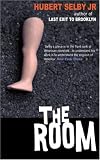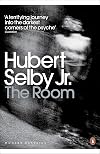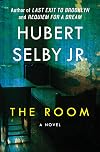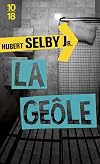
The Room
by Hubert Selby Jr.
On This Page
Description
"A terrifying journey into the darkest corners of the psyche" by the author of Requiem for a Dream and Last Exit to Brooklyn (The Guardian). A small-time criminal sits alone in his cell, his mind reeling with sadistic thoughts of retribution against the police and, eventually, all those he believes have failed him throughout his life. A deeply disturbing exploration of a character the Guardian described as "a genuinely frightening American Psycho," Hubert Selby Jr.'s second novel is made all show more the more chilling by the narrator's brief flashes of humanity. The Room is a tale so terrifying the author himself couldn't read it for decades after writing it. Called "brutal" by the New York Times when it was first published, it is a dark masterpiece about a man who may be temporarily trapped in jail, but whose true prison is his own anger, as he is enslaved by out-of-control passions and sickening fantasies of revenge. This ebook features an illustrated biography of Hubert Selby Jr. including rare photos from the author's estate. show lessTags
Recommendations



















Member Reviews
Samuel Beckett having a very bad day: that's what Selby's second novel The Room amounts to. While there was always the sense of some larger force at work--something at least faintly mystical--even in Beckett's most self-indulgent moments, the only thing you get here is an insoluble lump of therapeutic writing. Beckett had a recognizable style; you could, with some effort, fall into the rhythm of his prose. He asked a lot of the reader but did not demand the impossible. In The Room, Selby seems bent on tormenting the reader. That may not have been what he set out to do, but his dull, pedestrian prose ensures that it is the end result. I have no objection to the content of the book, but if you're going to write a "novel" that consists of show more a single character ranting for nearly three hundred pages, you'd better make sure that he rants in an interesting, engaging way. Selby failed to do that.
Which is not to say that he was a bad writer, at least not all the time. Witness his short story "Double Feature," for example: it's evocative and believable, and the characters are sympathetic despite being a couple of self-sabotaging bozos. Altogether a lovely little piece of writing that doesn't have to belabor its point. The Room, however, is a headache from start to finish, and its lone character is an unsympathetic asshole. This simply wasn't an effective way to draw attention to the very real problems of police brutality and unjust incarceration. (It would be too easy to assign a one-star rating here, so I won't. Presumably, Selby had a vision for this thing; he just didn't fulfill it.) show less
Which is not to say that he was a bad writer, at least not all the time. Witness his short story "Double Feature," for example: it's evocative and believable, and the characters are sympathetic despite being a couple of self-sabotaging bozos. Altogether a lovely little piece of writing that doesn't have to belabor its point. The Room, however, is a headache from start to finish, and its lone character is an unsympathetic asshole. This simply wasn't an effective way to draw attention to the very real problems of police brutality and unjust incarceration. (It would be too easy to assign a one-star rating here, so I won't. Presumably, Selby had a vision for this thing; he just didn't fulfill it.) show less
The great thing about Selby is his uncanny ability to express the internal dialogue most people have with themselves, especially when they’re sad, lonely and generally just fed up with life. His style gets a real workout here, the story of a small-time crook in his remand cell and the evil fantasies he cooks up in his head that give him the power over his life that he craves. It’s brutal and ugly and by no means for everyone. I’d still rate The Demon as his best and most intense work, but I wasn’t disappointed.
(2026) I felt a good chunk of the book was a spinning wheel on a computer. There was so much that went on and on without pushing the story forward. The whole ending of the “sickness” basically ruined everything that was established. I thought it was a poor ending. Selby’s writing style didn’t bother me in “Requiem for a Dream” but I found it harder to follow in this work. I liked the concept of the story, as well as some of the characters memories or delusions, but was disappointed overall.
I picked up The Room (as well as The Demon) by Hubert Selby Jr. recently after watching Darren Aronofsky's movie The Fountain. Aronofsky also directed Requiem for a Dream based on Selby's book of the same name. While that movie is a painful film to watch in many respects, I love it. I was interested in reading more by Selby to see if he takes a similar approach in his books. He does.
The Room is a stream of consciousness story of the delusions and fantasies that an unnamed prisoner has in his cell ("the room"). He's a violent and sadistic person so his fantasies are sick stuff and described in graphic detail. While I've never watched one, I imagine this book to be roughly the equivalent of a snuff film in print. It takes a special kind show more of person to write these stories and it takes a special kind of person to make this their favorite reading subject.
Periodically, I like books that take me out of my comfort zone. This one certainly did it. I had read another review on this book prior to beginning it where someone said that they almost put the book down due to it's intensity. I must admit, it crossed my mind a couple of times too. But, that's precisely what I was looking for.
While I occasionally found the book to be a bit over-the-top (the dog thing got a bit goofy after a while), Selby is a force to be reckoned with. I gave the book three stars because the material is not something that I would deem a classic or even close to being one. He also pursued a couple of the fantasies (again, the dog one) for too long and they became unbelievable. In the end, I felt 3* was about right although I tetered on 3.5*. In the end, it's good but not great.
As mentioned above, I also bought The Demon and I will read it sometime in the not-too-distant future. Although, I hesitate to say that I'm looking forward to it. I've not read nor seen the movie for Last Exit to Brooklyn either so I will do that soon also.
Long and short - if you liked American Psycho (which I did) or if you like Hostel, Saw, or some of those other intensely graphic horror flicks (no interest in them here), you'll like this book. If you want to read something that will make you wince and squirm, this will do it. If you prefer to keep your reading relatively mainstream, DO NOT READ THIS. In other words, "Reader Discretion is STRONGLY Advised".
*****SPOILERS*****
As mentioned above, Selby's protagonist is an unnamed prisoner who slips into and out of fantasies and delusions in his cell . It takes some time before you know why he's been locked up but in one of his repeating fantasies, he is defending himself in court against the two officers who arrested him. It gets into some of the events of the arrest during that "trial." Apparently, he was arrested on suspicion of breaking and entering into retail establishments. Whether or not he was actually guilty is never resolved but with this sick bastard, you assume he's done worse.
The story focuses mostly on three core fantasies/delusions. One of these revolves around the dismissal of his case. In this fantasy, he is dismantling not only the case against him but also the arresting officers. He works with attorneys and the press to bring the much broader issue of authoritarian abuses into the public domain and he is the crusader for change. Everyone (including Congress) views him as a hero and the arresting officers as demons. In a few iterations of this fantasy, he also defends himself in court and easily dismantles all of the testimony of the officers while getting them to perjure themselves.
Another fantasy is one of the arresting officers and their raping of a female motorist. This portion was particularly tough reading. At one point in the story, the description of this event was brought into the delusion of his trial and his testimony before Congress as described above.
The third fantasy was based on his revenge against the officers. In this series of delusions, he tortures the two officers into behaving like dogs. He makes them walk (on all fours), breathe/sound (panting, howling, and barking), mate (sniffing, licking, etc.), and behave like dogs. Keep in mind that these are
two male officers "becoming" two male dogs. In his attempts to "train" them (i.e. force them into these behaviors), he attaches wires to their balls and tugs on them when necessary. He also uses a cattle prod on them (externally and internally) when necessary to make his point. Again, this is brutal stuff. However, he carried this sub-plot on a bit too long and I began to question it. I mean, if these things were happening to me, I'd honestly rather die. I had to remind myself that this was all within his mind. So, much like movies, sometimes you have to suspend belief.
Between these sub-plots, our protagonist would occasionally be awakened by his cell door opening for meals or by his own sickness. You were reminded periodically that these were all mental episodes. In the end, you learn that he is sick and has not been eating. In fact, he's close to starvation. The book closes with a guard opening his cell door and saying that it's "court time."
*****END OF SPOILERS***** show less
The Room is a stream of consciousness story of the delusions and fantasies that an unnamed prisoner has in his cell ("the room"). He's a violent and sadistic person so his fantasies are sick stuff and described in graphic detail. While I've never watched one, I imagine this book to be roughly the equivalent of a snuff film in print. It takes a special kind show more of person to write these stories and it takes a special kind of person to make this their favorite reading subject.
Periodically, I like books that take me out of my comfort zone. This one certainly did it. I had read another review on this book prior to beginning it where someone said that they almost put the book down due to it's intensity. I must admit, it crossed my mind a couple of times too. But, that's precisely what I was looking for.
While I occasionally found the book to be a bit over-the-top (the dog thing got a bit goofy after a while), Selby is a force to be reckoned with. I gave the book three stars because the material is not something that I would deem a classic or even close to being one. He also pursued a couple of the fantasies (again, the dog one) for too long and they became unbelievable. In the end, I felt 3* was about right although I tetered on 3.5*. In the end, it's good but not great.
As mentioned above, I also bought The Demon and I will read it sometime in the not-too-distant future. Although, I hesitate to say that I'm looking forward to it. I've not read nor seen the movie for Last Exit to Brooklyn either so I will do that soon also.
Long and short - if you liked American Psycho (which I did) or if you like Hostel, Saw, or some of those other intensely graphic horror flicks (no interest in them here), you'll like this book. If you want to read something that will make you wince and squirm, this will do it. If you prefer to keep your reading relatively mainstream, DO NOT READ THIS. In other words, "Reader Discretion is STRONGLY Advised".
*****SPOILERS*****
As mentioned above, Selby's protagonist is an unnamed prisoner who slips into and out of fantasies and delusions in his cell . It takes some time before you know why he's been locked up but in one of his repeating fantasies, he is defending himself in court against the two officers who arrested him. It gets into some of the events of the arrest during that "trial." Apparently, he was arrested on suspicion of breaking and entering into retail establishments. Whether or not he was actually guilty is never resolved but with this sick bastard, you assume he's done worse.
The story focuses mostly on three core fantasies/delusions. One of these revolves around the dismissal of his case. In this fantasy, he is dismantling not only the case against him but also the arresting officers. He works with attorneys and the press to bring the much broader issue of authoritarian abuses into the public domain and he is the crusader for change. Everyone (including Congress) views him as a hero and the arresting officers as demons. In a few iterations of this fantasy, he also defends himself in court and easily dismantles all of the testimony of the officers while getting them to perjure themselves.
Another fantasy is one of the arresting officers and their raping of a female motorist. This portion was particularly tough reading. At one point in the story, the description of this event was brought into the delusion of his trial and his testimony before Congress as described above.
The third fantasy was based on his revenge against the officers. In this series of delusions, he tortures the two officers into behaving like dogs. He makes them walk (on all fours), breathe/sound (panting, howling, and barking), mate (sniffing, licking, etc.), and behave like dogs. Keep in mind that these are
two male officers "becoming" two male dogs. In his attempts to "train" them (i.e. force them into these behaviors), he attaches wires to their balls and tugs on them when necessary. He also uses a cattle prod on them (externally and internally) when necessary to make his point. Again, this is brutal stuff. However, he carried this sub-plot on a bit too long and I began to question it. I mean, if these things were happening to me, I'd honestly rather die. I had to remind myself that this was all within his mind. So, much like movies, sometimes you have to suspend belief.
Between these sub-plots, our protagonist would occasionally be awakened by his cell door opening for meals or by his own sickness. You were reminded periodically that these were all mental episodes. In the end, you learn that he is sick and has not been eating. In fact, he's close to starvation. The book closes with a guard opening his cell door and saying that it's "court time."
*****END OF SPOILERS***** show less
Not that impressed. I know he is highly acclaimed and feel perhaps I should read something else of his to see if it's just me. A lot of people marked this as horrific or shockingly disturbing, and I suppose it probably was at time of release. I won’t recommend it to anyone with a weak stomach (involves some descriptive torture - some physical, some sexual, mostly psychological) but it was fairly tame compared to a lot of stuff that’s out there. The surrounding narrative was presented in an interesting format, portraying the main character’s growing (and extremely repetitive) stream-of-consciousness obsession with revenge and narcissism as well as his descent into oppressive madness. Nothing was all that impressive to me and it show more took me a while to finish, because I was sort of bored with it and distracted by other reading. Overall, neither recommend nor decline to recommend, decide for yourself! show less
maybe its just me and my obsession with dark and twisted media, but this book did not live up to its rep. It was also poorly written (perhaps intentionally, but painful nonetheless)
If you want dark and twisted there are so many great works to turn to; don't waste your time with this one
If you want dark and twisted there are so many great works to turn to; don't waste your time with this one
maybe its just me and my obsession with dark and twisted media, but this book did not live up to its rep. It was also poorly written (perhaps intentionally, but painful nonetheless)
If you want dark and twisted there are so many great works to turn to; don't waste your time with this one
If you want dark and twisted there are so many great works to turn to; don't waste your time with this one
Members
- Recently Added By
Lists

Most Disturbing Books
124 works; 27 members

Biggest Disappointments
606 works; 163 members
Author Information

30+ Works 7,714 Members
Series
Belongs to Publisher Series
Literaire reuzenpocket (437)
Work Relationships
Is contained in
Common Knowledge
- Canonical title
- The Room
- Original title
- The Room
- Original publication date
- 1971
- Epigraph
- Defense counsel touched the defendants hand before slowly rising and facing the jury. He hesitated only a second before speaking. I do not ask for justice for the defendant, but mercy.
- Dedication
- This book is dedicataed with love, to the thousands who remain nameless, and know.
- First words
- He was conscious of the dark stillness in the corridor.
Classifications
Statistics
- Members
- 493
- Popularity
- 61,196
- Reviews
- 7
- Rating
- (3.52)
- Languages
- 6 — Dutch, English, Finnish, French, German, Spanish
- Media
- Paper, Ebook
- ISBNs
- 17
- ASINs
- 10