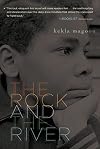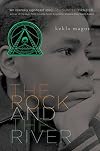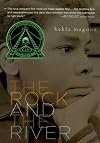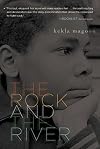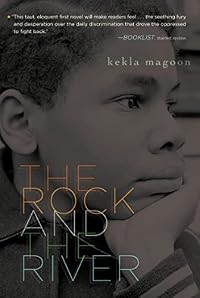
The Rock and the River
by Kekla Magoon
On This Page
Description
In 1968 Chicago, fourteen-year-old Sam Childs is caught in a conflict between his father's nonviolent approach to seeking civil rights for African Americans and his older brother, who has joined the Black Panther Party.Tags
Recommendations
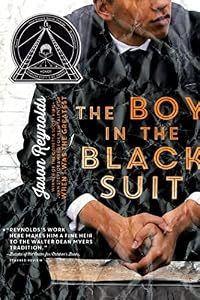
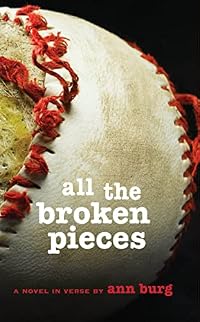
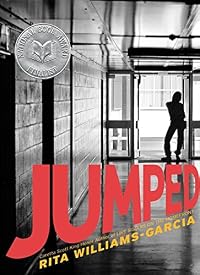
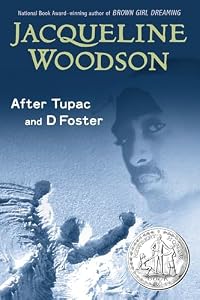
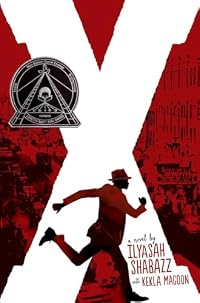
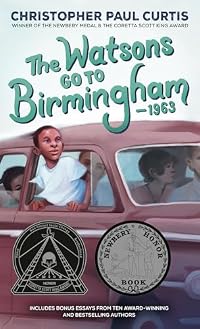

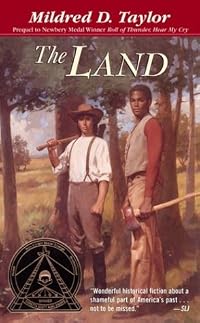
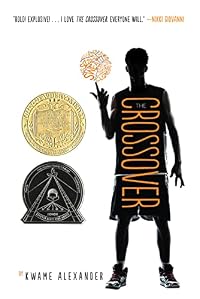
Member Recommendations
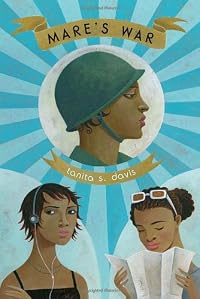
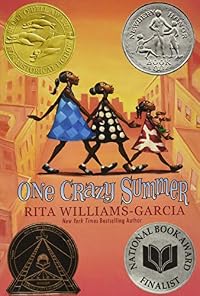
BookshelfMonstrosity Although The Rock and the River has a more serious tone, both of these historical novels show the emotionally intense struggle for civil rights--particularly the split in families--between those siding with the Black Panthers and those promoting nonviolence.
Member Reviews
More of a teaching tool than a great novel, I think. It had plenty of the ingredients for an outstanding read, but didn't come together for me.
If you want to learn about the Civil Rights Movement in 1968 from the perspective of a 13-year-old boy whose father is a peaceful leader alongside MLK, and whose older brother is joining the Black Panther Party, this book succeeds. But if you're looking to read a really great story, not so much. I learned a lot from reading it, but I can't say I enjoyed it very much.
The language of book is elegant and thoughtful (though, in my copy, chapter 12 started with a typo: a big W instead of a T, turning "the" into "whe"). But the plot relentlessly hits you with terrible injustice after terrible show more injustice. The main character, Sam, is constantly hurt, confused, angry, scared--so much so, it's hard to connect with him. He never knows what to think or what to do. Some people may not be bothered by that because it's realistic. But I like my main characters to have a stronger perspective, so they don't just get blown around like a leaf in the wind through the entire book.
The other main characters in this book (Sam's father Roland, his brother Stick, Sam's girlfriend Maxie, his friend Bucky, his mother, and Stick's Black Panther friends) are all good and well-intentioned people caught in a seemingly hopeless battle for equality. The story's villains (racist white people, usually cops) are all exceedingly evil and one-dimensional. It's easy to hate the bad guys, but hard to choose which good guys you want to follow. The non-violent MLKers who organize demonstrations or the gun-carrying Panthers who provide breakfast and free clinics for black communities? I wasn't drawn into this MLK vs. Panther conflict because they both seemed like good options. It would be interesting fodder for debate among students, though.
There's a lot of violence in this book, almost all of it senseless and horrifying. So this is definitely something to recommend to mature readers, probably 7th grade and up. show less
If you want to learn about the Civil Rights Movement in 1968 from the perspective of a 13-year-old boy whose father is a peaceful leader alongside MLK, and whose older brother is joining the Black Panther Party, this book succeeds. But if you're looking to read a really great story, not so much. I learned a lot from reading it, but I can't say I enjoyed it very much.
The language of book is elegant and thoughtful (though, in my copy, chapter 12 started with a typo: a big W instead of a T, turning "the" into "whe"). But the plot relentlessly hits you with terrible injustice after terrible show more injustice. The main character, Sam, is constantly hurt, confused, angry, scared--so much so, it's hard to connect with him. He never knows what to think or what to do. Some people may not be bothered by that because it's realistic. But I like my main characters to have a stronger perspective, so they don't just get blown around like a leaf in the wind through the entire book.
The other main characters in this book (Sam's father Roland, his brother Stick, Sam's girlfriend Maxie, his friend Bucky, his mother, and Stick's Black Panther friends) are all good and well-intentioned people caught in a seemingly hopeless battle for equality. The story's villains (racist white people, usually cops) are all exceedingly evil and one-dimensional. It's easy to hate the bad guys, but hard to choose which good guys you want to follow. The non-violent MLKers who organize demonstrations or the gun-carrying Panthers who provide breakfast and free clinics for black communities? I wasn't drawn into this MLK vs. Panther conflict because they both seemed like good options. It would be interesting fodder for debate among students, though.
There's a lot of violence in this book, almost all of it senseless and horrifying. So this is definitely something to recommend to mature readers, probably 7th grade and up. show less
In this absorbing coming of age story, you will learn along the way something about why this country has had a vested interest in deifying the memory of Martin Luther King, Jr. and in vilifying the reputation of his activist rivals for power in the black community.
In the late 1960’s, Dr. King was battling the more militant elements among the black leadership over the direction that the fight for civil liberties would take. (This was not a new conflict; Booker T. Washington and W.E.B. Dubois also went head-to-head on this issue.) Groups like The Black Panthers saw the non-violent, “gradualism” approach of Dr. King as too slow and too tolerant of abuses against black citizens. As Paul Robeson observed years before: “[I]n no other show more area of our society are lawbreakers granted an indefinite time to comply with the provisions of the law.” Magoon explains the philosophy of The Panthers, on whom this book focuses, in her afterword:
"The Panthers rejected ‘passive resistance’ in favor of self-defense and self-determination. The believed it was up to black communities to demand equality, defend their rights, and look out for their own needs. [To this end they] initiated landmark community organizing efforts to bring much-needed services into black neighborhoods. Their programs included free neighborhood health clinics, drug-awareness education, GED classes, clothing supply, tutoring, legal aid and referrals, free dental care, free ambulances, bussing families to visit loved ones in prison, and free breakfast programs for school-age children.”
In Magoon’s story set in Chicago in 1968, thirteen-year-old Sam and his seventeen-year old brother “Stick” are compelled to confront the difference between these two philosophies of the black civil rights movement, and to make a choice. Their father, Roland Childs, is a well-known (fictional) colleague of Dr. King’s and an important figure in his own right in the non-violence movement. But the impatience and optimism of youth are powerful catalysts. Stick begins to sneak out of the house to attend meetings of the Black Panthers, in direct violation of their father’s wishes.
Sam, younger and more trapped by the tug between parental worship and rebellion, not to mention the pull between love for his father and love for his brother, can’t decide what to do. He is also influenced by his sweet and smart girlfriend, Maxie, who is drawn to the Black Panthers. Faced with Sam's vacillation, Stick tells him:
"'Well, you can’t be the rock and the river, Sam.
‘The rock is high ground,’ Stick explained to Sam. ‘Solid. Immovable.’ ‘The river is motion, turmoil, rage. As the river flows, it wonders what it would be like to be so still, to take a breath, to rest. But the rock will always wonder what lies around the bend in the stream.’
‘I want to be both,’ [Sam] whispered.”
In the midst of the boys own political growth and turmoil, Dr. King’s assassination takes place, and Chicago erupts in riots. His death makes a profound impression on Sam:
"Dr. King’s speeches and his life were all about peace and brotherhood, about finding justice. And we listened. Yet, all we had learned was that when you stand up, you get shot down.”
The Panthers carried guns to protect themselves, but their purpose was deterrence, and in fact, in those years, blacks needed deterrence from the violence of the police. Ultimately their goal was changing hearts and minds, not killing. As Sam’s father (who, inexplicably to Sam, cooperated sub rosa with the Panthers) pointed out, “People are more afraid of ideas than of guns.”
Nevertheless, the story ends with guns and ends tragically, as it unfortunately did with dismaying frequency back in those years. And because I am part of a family with educators, I hear - also with dismaying frequency - “why teach that history to today’s blacks? It will only stir them up and make them angry.” And so it is not often taught. And the memory of Martin Luther King, Jr.’s call for nonviolence is hyped and praised and honored with a special holiday.
The author states in an interview she gave to Zetta Elliott that she wanted to write this book because in school she only learned about the champions of non-violent protest. She never heard about all the social programs of the Black Panthers, nor about the effect that the threat of more direct action had on the government's desire to appease Dr. King and elevate his reputation to the detriment of his rivals. With this book, she aims to contribute to a more balanced presentation of the history of the movement.
Evaluation: This book won the American Library Association's Coretta Scott King/John Steptoe Award for New Talent, was nominated for an NAACP Image Award, and has been named a 2010 ALA Notable Book for Children and a YALSA 2010 Best Books for Young Adults. It is an excellent way to find out more about relatively recent American history in a gripping format that provides a fair look at both sides of the question of civil rights strategy. I believe it is a must-read for those born after the events described in this book. show less
In the late 1960’s, Dr. King was battling the more militant elements among the black leadership over the direction that the fight for civil liberties would take. (This was not a new conflict; Booker T. Washington and W.E.B. Dubois also went head-to-head on this issue.) Groups like The Black Panthers saw the non-violent, “gradualism” approach of Dr. King as too slow and too tolerant of abuses against black citizens. As Paul Robeson observed years before: “[I]n no other show more area of our society are lawbreakers granted an indefinite time to comply with the provisions of the law.” Magoon explains the philosophy of The Panthers, on whom this book focuses, in her afterword:
"The Panthers rejected ‘passive resistance’ in favor of self-defense and self-determination. The believed it was up to black communities to demand equality, defend their rights, and look out for their own needs. [To this end they] initiated landmark community organizing efforts to bring much-needed services into black neighborhoods. Their programs included free neighborhood health clinics, drug-awareness education, GED classes, clothing supply, tutoring, legal aid and referrals, free dental care, free ambulances, bussing families to visit loved ones in prison, and free breakfast programs for school-age children.”
In Magoon’s story set in Chicago in 1968, thirteen-year-old Sam and his seventeen-year old brother “Stick” are compelled to confront the difference between these two philosophies of the black civil rights movement, and to make a choice. Their father, Roland Childs, is a well-known (fictional) colleague of Dr. King’s and an important figure in his own right in the non-violence movement. But the impatience and optimism of youth are powerful catalysts. Stick begins to sneak out of the house to attend meetings of the Black Panthers, in direct violation of their father’s wishes.
Sam, younger and more trapped by the tug between parental worship and rebellion, not to mention the pull between love for his father and love for his brother, can’t decide what to do. He is also influenced by his sweet and smart girlfriend, Maxie, who is drawn to the Black Panthers. Faced with Sam's vacillation, Stick tells him:
"'Well, you can’t be the rock and the river, Sam.
‘The rock is high ground,’ Stick explained to Sam. ‘Solid. Immovable.’ ‘The river is motion, turmoil, rage. As the river flows, it wonders what it would be like to be so still, to take a breath, to rest. But the rock will always wonder what lies around the bend in the stream.’
‘I want to be both,’ [Sam] whispered.”
In the midst of the boys own political growth and turmoil, Dr. King’s assassination takes place, and Chicago erupts in riots. His death makes a profound impression on Sam:
"Dr. King’s speeches and his life were all about peace and brotherhood, about finding justice. And we listened. Yet, all we had learned was that when you stand up, you get shot down.”
The Panthers carried guns to protect themselves, but their purpose was deterrence, and in fact, in those years, blacks needed deterrence from the violence of the police. Ultimately their goal was changing hearts and minds, not killing. As Sam’s father (who, inexplicably to Sam, cooperated sub rosa with the Panthers) pointed out, “People are more afraid of ideas than of guns.”
Nevertheless, the story ends with guns and ends tragically, as it unfortunately did with dismaying frequency back in those years. And because I am part of a family with educators, I hear - also with dismaying frequency - “why teach that history to today’s blacks? It will only stir them up and make them angry.” And so it is not often taught. And the memory of Martin Luther King, Jr.’s call for nonviolence is hyped and praised and honored with a special holiday.
The author states in an interview she gave to Zetta Elliott that she wanted to write this book because in school she only learned about the champions of non-violent protest. She never heard about all the social programs of the Black Panthers, nor about the effect that the threat of more direct action had on the government's desire to appease Dr. King and elevate his reputation to the detriment of his rivals. With this book, she aims to contribute to a more balanced presentation of the history of the movement.
Evaluation: This book won the American Library Association's Coretta Scott King/John Steptoe Award for New Talent, was nominated for an NAACP Image Award, and has been named a 2010 ALA Notable Book for Children and a YALSA 2010 Best Books for Young Adults. It is an excellent way to find out more about relatively recent American history in a gripping format that provides a fair look at both sides of the question of civil rights strategy. I believe it is a must-read for those born after the events described in this book. show less
It's the 'hood in Chicago during one of the most tumultuous years in race relations, 1968. Roland Childs is a disciple and friend of Martin Luther King, while his two boys struggle with the slow progress of non-violence. Older brother Stick joins the Black Panther Party, while younger brother Sam struggles with which group he wants to join. Peaceful protests turn violent, and a close friend of the boys is jailed because of his skin color. While Magoon did reasonably well with the family strife and friendships as well as framing the different approaches to protest, the book did not do well capturing the atmosphere of despair on the ghettos, which resulted in the Black Power movement.
Sam is an African American boy who comes of age in 1960’s Chicago. He is torn between the peaceful civil rights protests of his father and the Black Panther action of his older brother. This book is heartbreaking and uplifting at the same time. Well written books about racism generally piss me off, and this book had my emotions thoroughly engaged. The performance on the audiobook was also fantastic—the reader emotionally charged his voice at just the right levels at just the right times. I would recommend this book for older teens, but it should be screened before given to younger people. There is some realistic violence.
Magoon, Kekla (2009). The Rock and the River. NY: Simon & Schuster, 304 pp. ISBN 978-1-4169-7582-3 (Hardcover). $15.99.
I remember the first time I really heard, really listened to Malcom X speak. Of course back in the late sixties and early seventies my white racist family and many of my racist friends never really listened to someone like Malcom X--we made assumptions and we reacted. Really listening to a genius like Malcom X, who was years ahead of his time, is both entertaining and enlightening at the same time. The Rock and the River is a book that finally portrays the social and political climate that produced the growing dissatisfaction of blacks to the peaceful methods of Martin Luther King without demonizing the people or show more suggesting that they were out of control hotheads.
In the late sixties and early seventies the United States saw the rise of the Black Panther Party in Chicago. In my neighborhood, the Black Panther Party was imbued with a certain amount of awe mixed with terror. We saw Blacks on the street and we locked our car doors. We took an exceptionally long time to really look at a Black like Huey Newton and really try to understand what he is saying and why he is saying it. We never really learned to understand that the police officers we see as peace keepers can be instruments of racial abuse. We have faith in a system of justice that always treats us fairly and we never investigate whether or not our justice deals with everyone equally. We pretend to be in favor of Civil Rights but only as long as really nice negroes like Martin Luther King are leading things and not angry trouble makers like Bobby Seale or Malcom X or Huey Newton.
Magoon’s book is an excellent fictional depiction that captures the fierce debate within the black community about how to end the systematic degradation and humiliation of black people in America. What I like about this book is that it gives readers, even old white readers like me, an insight into the human cost of protesting. Whether one supports Martin Luther King or the Black Panther Party, one still pays a very real price. Despite what my childhood neighbors would have us believe, the Black Panther Party establishes health clinics, works to educate black people, insures that white police officers do not harass black citizens, and more. This book is excellent because it does not present superheroes; the characters are motivated to make the world better. They fiercely disagree because they care deeply about improving their world. They are human. They learn and they change, just like we all do.
While the bulk of this “review” is focused on my own personal reflections about black revolutionaries, readers should understand exactly why these reflections denote a book that everyone should buy and read. The Rock and the River will make you think. It will make you think regardless of your racial or social background.
Readers should also understand that Magoon has created exceptional characters. Roland Childs is so believable that readers will be looking him up online to discover just exactly his connection with Martin Luther King. Sam and his brother Stick (Stephen) are very different and very real brothers. Their reactions to their rigid father’s speeches are honest and provide readers with some sense of what it must have been like for King’s children and King’s inner circle of friends. Maxie, the girl Sam likes, introduces both the romantic, coming of age element to the story and also highlights differences within the black community related to class (as does Bucky).
The language of the book includes sentences that soar. The details of the story are the very best history lesson. We have adventure. We have romance. We have very typical teen reactions. We have tragedy. We have hope. We have truth. We have, finally, a story that has been missing from the young adult literature canon for far too long. Buy this book. Read this book. Share this book with others. You will not be sorry. show less
I remember the first time I really heard, really listened to Malcom X speak. Of course back in the late sixties and early seventies my white racist family and many of my racist friends never really listened to someone like Malcom X--we made assumptions and we reacted. Really listening to a genius like Malcom X, who was years ahead of his time, is both entertaining and enlightening at the same time. The Rock and the River is a book that finally portrays the social and political climate that produced the growing dissatisfaction of blacks to the peaceful methods of Martin Luther King without demonizing the people or show more suggesting that they were out of control hotheads.
In the late sixties and early seventies the United States saw the rise of the Black Panther Party in Chicago. In my neighborhood, the Black Panther Party was imbued with a certain amount of awe mixed with terror. We saw Blacks on the street and we locked our car doors. We took an exceptionally long time to really look at a Black like Huey Newton and really try to understand what he is saying and why he is saying it. We never really learned to understand that the police officers we see as peace keepers can be instruments of racial abuse. We have faith in a system of justice that always treats us fairly and we never investigate whether or not our justice deals with everyone equally. We pretend to be in favor of Civil Rights but only as long as really nice negroes like Martin Luther King are leading things and not angry trouble makers like Bobby Seale or Malcom X or Huey Newton.
Magoon’s book is an excellent fictional depiction that captures the fierce debate within the black community about how to end the systematic degradation and humiliation of black people in America. What I like about this book is that it gives readers, even old white readers like me, an insight into the human cost of protesting. Whether one supports Martin Luther King or the Black Panther Party, one still pays a very real price. Despite what my childhood neighbors would have us believe, the Black Panther Party establishes health clinics, works to educate black people, insures that white police officers do not harass black citizens, and more. This book is excellent because it does not present superheroes; the characters are motivated to make the world better. They fiercely disagree because they care deeply about improving their world. They are human. They learn and they change, just like we all do.
While the bulk of this “review” is focused on my own personal reflections about black revolutionaries, readers should understand exactly why these reflections denote a book that everyone should buy and read. The Rock and the River will make you think. It will make you think regardless of your racial or social background.
Readers should also understand that Magoon has created exceptional characters. Roland Childs is so believable that readers will be looking him up online to discover just exactly his connection with Martin Luther King. Sam and his brother Stick (Stephen) are very different and very real brothers. Their reactions to their rigid father’s speeches are honest and provide readers with some sense of what it must have been like for King’s children and King’s inner circle of friends. Maxie, the girl Sam likes, introduces both the romantic, coming of age element to the story and also highlights differences within the black community related to class (as does Bucky).
The language of the book includes sentences that soar. The details of the story are the very best history lesson. We have adventure. We have romance. We have very typical teen reactions. We have tragedy. We have hope. We have truth. We have, finally, a story that has been missing from the young adult literature canon for far too long. Buy this book. Read this book. Share this book with others. You will not be sorry. show less
After reading One Crazy Summer, I was intrigued by there being another novel about the Black Panther Party for tweens/teens. This one though assumes that the reader is already in the know (and interested) in the civil rights struggle and some of the questions about violence/non-violence that arose in the struggle for civil rights/Black Liberation. I can see this as being an awesome book to assign in junior high to get the topic introduced and to get students thinking about these issues (much like how Roll of THunder, Hear My Cry was assigned to me in 5th or 6th grade English class and opened my eyes to sharecropping and segregation). But I"m not sure how attractive it would be to the average tween/early teen library/bookstore browser. show more (I would love to be wrong on this.) show less
Set in 1968 during the height of the Civil Rights Movement, Sam and Stick, children of Civil Rights Activist, Roland Childs, are starting to question his father's call for passivie activism to attain Civil Rights. Stick is starting to lean toward the more aggressive style of the Black Panthers, while Sam finds himself quite stuck in the middle. When a close family friend, Bucky, is beaten and arrested by white police officers for no apparent reason (Sam was a witness) and his father's close friend and mentor, Martin Luther King is assassinated, Stick makes it known to his father where he stands and joins the Black Panthers. This leaves Sam feeling sad and confused. He digs in to help his father with a demonstration to be held on Bucky's show more behalf, but during the course of the demonstration a couple of things happen that lead Sam to begin questioning his father and his methods. Great story. Very emotional and though many reviews put it as appropriate for middle school, I think many would have trouble with the violence and emotions. I would recommend it for 8th grade and up. show less
Members
- Recently Added By
Author Information

35+ Works 4,150 Members
Kekla Magoon is a writer, editor, speaker, and educator. She is the author of Camo Girl, 37 Things I Love (in No Particular Order), How It Went Down, and numerous non-fiction titles for the education market. Her book, The Rock and the River, won the Coretta Scott King/John Steptoe Award. She also leads writing workshops for youth and adults and is show more the co-editor of YA and Children's Literature for Hunger Mountain, the arts journal of Vermont College. (Bowker Author Biography) show less
Some Editions
Awards and Honors
Awards
Distinctions
Common Knowledge
- People/Characters
- Steven "Stick" Childs; Sam Childs; Roland Childs; Marjorie Childs; Maxie Brown; Raheem Brown (show all 7); Bucky Willis
- Important places
- Chicago, Illinois, USA
- First words
- I tried to pretend I was somewhere else.
- Last words
- (Click to show. Warning: May contain spoilers.)I was the river. I was the one who would turn the corner and see what tomorrow held in store.
Classifications
- Genres
- Tween, Kids, Fiction and Literature, Historical Fiction, Teen, Young Adult
- DDC/MDS
- 813.54 — Literature & rhetoric American literature in English American fiction in English 1900-1999 1945-1999
- LCC
- PZ7 .M2739 .R — Language and Literature Fiction and juvenile belles lettres Fiction and juvenile belles lettres Juvenile belles lettres
- BISAC
Statistics
- Members
- 578
- Popularity
- 50,709
- Reviews
- 29
- Rating
- (4.02)
- Languages
- English
- Media
- Paper, Audiobook, Ebook
- ISBNs
- 14
- ASINs
- 4