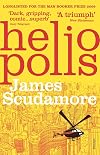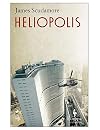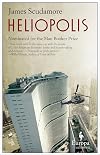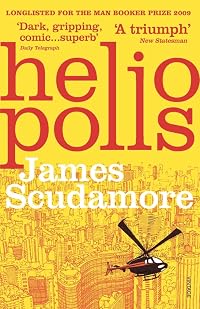
Heliopolis
by James Scudamore
On This Page
Description
"Born in one of Sa?o Paulo's teeming 'favelas', Ludo makes a remarkable journey from one side of the city's impermeable social divide to the other. Rescued and raised by the plutocrat Ze? Generoso, Ludo has spent his young life in the gated, guarded community of the super rich, shuffling from country estate to city in the family helicopter. Now, after a failed stint at an illustrious business school in America, Ludo has returned to Sa?o Paulo, where he works at a vacuous communications show more company that is busily marketing a new chain of MaxiBudget supermarkets to the city's poorest residents. Ludo is thus forced to promote his adopted lifestyle to the slums from which he emerged and navigate his own uncomfortable place in a cavernous class divide. To make matters vastly more complicated, he has developed an obsessive, adulterous love for his adoptive sister, whose husband is his only friend."--Front flap. show lessTags
Recommendations































Member Reviews
The setting for this novel is 21st century São Paulo, a dual city defined by its massive skyscrapers and squalid favelas (shanty towns), personal helicopters overhead and horribly congested roads below, wealthy white and poor (mostly) black citizens, and its tightly packed center city surrounded by heavily guarded neighborhoods with European styled mansions and heliports for the country's elite.
Ludo is a boy who was born to a single mother in a favela, where the only opportunities available to escape soul crushing poverty are in the illegal drug trade or prostitution. He and his mother are discovered by a wealthy businessman, Zé Generoso, who controls his family, employees and associates with a ready smile and an iron will, and his show more philanthropic but detached wife Rebecca. The couple bring Ludo and his mother to their suburban mansion, which serves as their weekend getaway. Ludo is befriended by their beautiful daughter Melissa, and is provided with every opportunity to succeed by Zé, who recognizes his drive and intelligence. He "works" for one of his father's friends in a marketing firm during the day, spending much of his time sleeping off hangovers or thinking about Melissa, who shares her bed with him when her idealistic but neglectful husband is out of town. Despite his success Ludo is restless and unsatisfied, as he repeatedly takes personal and professional risks that threaten to unravel his playboy lifestyle — or endanger his life.
Heliopolis was a far better read than I originally expected it to be. It is taut and fast paced, but also lush and well written, with excellent portrayals of the poverty of lives in the favelas and in the exclusive neighborhoods and skyscrapers, and there are enough twists and turns to keep the reader fully engaged. It deserves its place amongst this year's Booker Prize longlisted novels, and is highly recommended. show less
Ludo is a boy who was born to a single mother in a favela, where the only opportunities available to escape soul crushing poverty are in the illegal drug trade or prostitution. He and his mother are discovered by a wealthy businessman, Zé Generoso, who controls his family, employees and associates with a ready smile and an iron will, and his show more philanthropic but detached wife Rebecca. The couple bring Ludo and his mother to their suburban mansion, which serves as their weekend getaway. Ludo is befriended by their beautiful daughter Melissa, and is provided with every opportunity to succeed by Zé, who recognizes his drive and intelligence. He "works" for one of his father's friends in a marketing firm during the day, spending much of his time sleeping off hangovers or thinking about Melissa, who shares her bed with him when her idealistic but neglectful husband is out of town. Despite his success Ludo is restless and unsatisfied, as he repeatedly takes personal and professional risks that threaten to unravel his playboy lifestyle — or endanger his life.
Heliopolis was a far better read than I originally expected it to be. It is taut and fast paced, but also lush and well written, with excellent portrayals of the poverty of lives in the favelas and in the exclusive neighborhoods and skyscrapers, and there are enough twists and turns to keep the reader fully engaged. It deserves its place amongst this year's Booker Prize longlisted novels, and is highly recommended. show less
The novel opens in the present time with Ludo, an advertising executive in São Paulo, Brazil. As the novel moves back and forth from present to past, we learn that Ludo was born to a single mother in the favela of Heliopolis in the city of São Paulo. While still an infant, his mother had the fortune to be asked to cook for the rich Carnicelli family, Zé, Rebecca, and their daughter, Melissa, at their country estate. This is where Ludo was raised and befriended every weekend by Melissa.
When he was fourteen years old, Ludo was given an opportunity that he could not refuse. The Carnicellis invited him to live with them at their home in the city where he would be exposed to all of the power, prestige and education their money could buy. show more While Ludo greatly appreciated the offer, he felt forlorn. He enjoyed his life on the farm with his mother, but not accepting the proposal was out of the question. He felt pressure both from the Carnicelli family and from his mother.
Ludo’s waffling between what he actually feels and how he thinks he should feel based on others’ reactions is a main theme throughout the book. He is a consummate pleaser and feels causing any displeasure, even at his own detriment, is a shortcoming. Even as he grows older and Melissa and Ludo begin a sexual relationship, it begins in response to her loneliness at her husband’s absence.
Scudamore’s writing is exceptional and his portrayal of São Paulo is gripping. Having visited the city, it was fascinating to read about it in this way. More than just the traffic and congestion, Scudamore provides a view into the striking contrast of rich and poor that defines this population. Using Ludo as a base of neither rich nor poor, we can compare the other characters to him and see how drastically differently they live. Ludo also serves as a starting point when considering how the rich and poor view themselves and each other. His ambiguity about his own beginnings and where he ended up proves to highlight the certainty of how the rich and poor feel about their own beginnings and endings. show less
When he was fourteen years old, Ludo was given an opportunity that he could not refuse. The Carnicellis invited him to live with them at their home in the city where he would be exposed to all of the power, prestige and education their money could buy. show more While Ludo greatly appreciated the offer, he felt forlorn. He enjoyed his life on the farm with his mother, but not accepting the proposal was out of the question. He felt pressure both from the Carnicelli family and from his mother.
Ludo’s waffling between what he actually feels and how he thinks he should feel based on others’ reactions is a main theme throughout the book. He is a consummate pleaser and feels causing any displeasure, even at his own detriment, is a shortcoming. Even as he grows older and Melissa and Ludo begin a sexual relationship, it begins in response to her loneliness at her husband’s absence.
Scudamore’s writing is exceptional and his portrayal of São Paulo is gripping. Having visited the city, it was fascinating to read about it in this way. More than just the traffic and congestion, Scudamore provides a view into the striking contrast of rich and poor that defines this population. Using Ludo as a base of neither rich nor poor, we can compare the other characters to him and see how drastically differently they live. Ludo also serves as a starting point when considering how the rich and poor view themselves and each other. His ambiguity about his own beginnings and where he ended up proves to highlight the certainty of how the rich and poor feel about their own beginnings and endings. show less
Set in modern-day Sao Paulo, Brazil, Heliopolis is the story of Ludo Dos Santos, the son of a woman who serves as a cook to a wealthy family, the Carnicellis. The Carnicellis own a farm which they use for weekend getaways and other family functions, as well as business dealings. It is there that Ludo lives. He was actually born into a 'favela' (a kind of shantytown area for squatters in the city)with no father at hand, Ludo and his mother became the pet project of Rebecca Carnicelli, who's out to save the world. On the farm, Ludo gets to see the Carnicelli's daughter Melissa, and they grow up very close. At some point, Rebecca and her husband, Ze, decide to adopt Ludo and take him into the city, where he lives in a walled compound with show more its own security force. As the novel opens, Ludo is now in his late 20s, works for an ad agency and is lust with his adoptive sister Melissa, who is now married. Heliopolis examines, from Ludo's point of view, the personal feelings of alienation in both the rich and poor worlds of the city, as he is a part of both, struggling with his own sense of identity. It also takes a look at inherent tensions of both groups on their own.
This is a novel rich in sights, sounds, and smells and one which is very well written. The character of Ludo is very well drawn (although I must confess that not many of the others really stand out except for the cleaning lady), the plot development is good and the story moves along well with no stalls.
The book is quite good and I can definitely recommend it. Scudamore is a writer I will definitely read more from -- his descriptive abilities and his portrayal of the contrast between rich and poor are the highlights of his writing. show less
This is a novel rich in sights, sounds, and smells and one which is very well written. The character of Ludo is very well drawn (although I must confess that not many of the others really stand out except for the cleaning lady), the plot development is good and the story moves along well with no stalls.
The book is quite good and I can definitely recommend it. Scudamore is a writer I will definitely read more from -- his descriptive abilities and his portrayal of the contrast between rich and poor are the highlights of his writing. show less
One of the quotes on the back of James Scudamore's Heliopolis compares it to Great Expectations, which is usually a good reason to go back and actually read Great Expectations instead of the particular book in question.
Heliopolis didn't just fall short of Great Expectations, it also fell short of the rave review in the Washington Post that drew me to it in the first place.
The novel is reasonably good but doesn't come close to great and can be flawed and clunky at times. It is a black comedy tinged with bits of melodrama and thriller that tells the story of Ludo dos Santos who was adopted into the family of a wealthy supermarket magnate who travels everywhere by helicopter. Ludo is having an affair with his adopted sister, working in an show more absurd advertising agency that is promoting his adopted father's new "budget" supermarket chain for the favelas, and going through a sometimes reckless exploration of these favelas.
The novel alternates between a few compressed, eventful days in the present and extensive flashbacks to the past, as well as between comedy and tragedy.
It is hard to say what was so disappointing, but the alternations never seemed to work and the disjointed jumble of genres and actions didn't make psychological sense and made the book a little less appealing.
I would, however, read Scudamore's next novel... but in the meantime will re-read Great Expectations. show less
Heliopolis didn't just fall short of Great Expectations, it also fell short of the rave review in the Washington Post that drew me to it in the first place.
The novel is reasonably good but doesn't come close to great and can be flawed and clunky at times. It is a black comedy tinged with bits of melodrama and thriller that tells the story of Ludo dos Santos who was adopted into the family of a wealthy supermarket magnate who travels everywhere by helicopter. Ludo is having an affair with his adopted sister, working in an show more absurd advertising agency that is promoting his adopted father's new "budget" supermarket chain for the favelas, and going through a sometimes reckless exploration of these favelas.
The novel alternates between a few compressed, eventful days in the present and extensive flashbacks to the past, as well as between comedy and tragedy.
It is hard to say what was so disappointing, but the alternations never seemed to work and the disjointed jumble of genres and actions didn't make psychological sense and made the book a little less appealing.
I would, however, read Scudamore's next novel... but in the meantime will re-read Great Expectations. show less
Although I devoured this in a 24 hour holiday frenzy, the plot has several flaws ranging from unbelieveable coincidences to crude conveniences. The author's intentions are also too bold, trying to commentate on memory, Brazilian modernisation, wealth disparity, community, family, hope and hopelessness.
Yet it would be wrong to assume I didn't enjoy it. It was a fun and alluring holiday read and my appetite was whet after visiting Brazil and briefly touring some of Rio's favelas in 2009.
Yet it would be wrong to assume I didn't enjoy it. It was a fun and alluring holiday read and my appetite was whet after visiting Brazil and briefly touring some of Rio's favelas in 2009.
One of the quotes on the back of James Scudamore's Heliopolis compares it to Great Expectations, which is usually a good reason to go back and actually read Great Expectations instead of the particular book in question.
Heliopolis didn't just fall short of Great Expectations, it also fell short of the rave review in the Washington Post that drew me to it in the first place.
The novel is reasonably good but doesn't come close to great and can be flawed and clunky at times. It is a black comedy tinged with bits of melodrama and thriller that tells the story of Ludo dos Santos who was adopted into the family of a wealthy supermarket magnate who travels everywhere by helicopter. Ludo is having an affair with his adopted sister, working in an show more absurd advertising agency that is promoting his adopted father's new "budget" supermarket chain for the favelas, and going through a sometimes reckless exploration of these favelas.
The novel alternates between a few compressed, eventful days in the present and extensive flashbacks to the past, as well as between comedy and tragedy.
It is hard to say what was so disappointing, but the alternations never seemed to work and the disjointed jumble of genres and actions didn't make psychological sense and made the book a little less appealing.
I would, however, read Scudamore's next novel... but in the meantime will re-read Great Expectations. show less
Heliopolis didn't just fall short of Great Expectations, it also fell short of the rave review in the Washington Post that drew me to it in the first place.
The novel is reasonably good but doesn't come close to great and can be flawed and clunky at times. It is a black comedy tinged with bits of melodrama and thriller that tells the story of Ludo dos Santos who was adopted into the family of a wealthy supermarket magnate who travels everywhere by helicopter. Ludo is having an affair with his adopted sister, working in an show more absurd advertising agency that is promoting his adopted father's new "budget" supermarket chain for the favelas, and going through a sometimes reckless exploration of these favelas.
The novel alternates between a few compressed, eventful days in the present and extensive flashbacks to the past, as well as between comedy and tragedy.
It is hard to say what was so disappointing, but the alternations never seemed to work and the disjointed jumble of genres and actions didn't make psychological sense and made the book a little less appealing.
I would, however, read Scudamore's next novel... but in the meantime will re-read Great Expectations. show less
Excellent book. Thoughtfully crafted post-modern plotting. Cool characters and settings. Excellent use of misdirection to create surprising plot twists. Important social context.
Members
- Recently Added By
Published Reviews
ThingScore 88
This may sound harsh, but the talent manifest in the descriptive writing, in the deft characterisations, in the cool-handed plotting, suggests an author capable of deploying his skills to a greater purpose. And there's a further question: however well it's portrayed, how reliable is this version of Brazil? Of course, there's no such thing as a reliable fictional (or non-fictional) version of show more anything; yet there is such a thing as a palpable depth of authenticity. Scudamore's international upbringing included time in Brazil, and the strongest passages of the book are those capturing the kind of sensory delights on the farm and in the city that would have impressed themselves on a child's mind. You can sense movies such as City of God, Central Station and Black Orpheus hovering in the background; yet, unlike them, the book in the end gives a sense of shuttling just above the city's surface like one of those glinting helicopters: not as weighty as it might be, but beautiful to watch. show less
added by kidzdoc
Heliopolis – broadly, “City of the Sun” – is a brightly ironic title for a dark, gripping, often comic novel concerning appetite, urban poverty and identity. Heliopolis is a slum district in the mega-city of São Paulo.
In James Scudamore’s vision, this mega-city is reminiscent of Fritz Lang’s 1926 film Metropolis: the rich live high above the ground in luxury skyscrapers, their show more aircraft buzzing around the skyline, while the poor are huddled in the filthy dark below. show less
In James Scudamore’s vision, this mega-city is reminiscent of Fritz Lang’s 1926 film Metropolis: the rich live high above the ground in luxury skyscrapers, their show more aircraft buzzing around the skyline, while the poor are huddled in the filthy dark below. show less
added by kidzdoc
Lists

Booker Prize
491 works; 62 members

Man Booker Prize Longlist 2009
13 works; 2 members
Author Information
5 Works 349 Members
Awards and Honors
Awards
Common Knowledge
- Canonical title
- Heliopolis
- Original publication date
- 2009-01-01
- Important places
- São Paolo, São Paolo, Brasil
- Epigraph
- 'Rio is a beauty. But São Paulo — São Paulo is a city.'
— Marlene Dietrich - Dedication
- To Rose
- First words
- It's early, not yet seven a.m., and once again I'm waking up beside my adoptive sister.
This has got to stop. She's a married woman. - Last words
- (Click to show. Warning: May contain spoilers.)There's plenty to think about. But for now, there are simple pleasures to enjoy. My beer. These plants. A grilled bird, sticky in my fingers. The hot, sweet air, full of fumes and hope. The beauty of this vast city at night, and all the possibility it contains.
Classifications
Statistics
- Members
- 214
- Popularity
- 152,784
- Reviews
- 10
- Rating
- (3.50)
- Languages
- English, French, Portuguese
- Media
- Paper, Ebook
- ISBNs
- 11
- ASINs
- 3