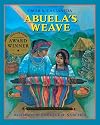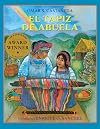
Abuela's Weave
by Omar S. Castañeda
On This Page
Description
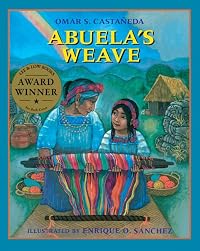
A young Guatemalan girl and her grandmother grow closer as they weave some special creations and then make a trip to the market in hopes of selling them.Tags
Recommendations




















Member Recommendations

Member Reviews
In this story set in Guatemala, Esperanza and her grandmother still weave their wares by hand while most families have switched to commercial made fabrics. Esperanza and her grandma are working on a special project for the upcoming fiesta market. When they go to the village, though, Abuela wraps herself up in a black cloak and walks far behind Esperanza - the year before, people had been wary of her birthmark, and she doesn't want to scare away sales. Esperanza is on her own.
Frightened and overwhelmed by all the factory made goods, she is sure no one will even notice her. But when she hangs their special project - a beautiful tapestry depicting the history of Guatemala - the villagers do notice, and flock around her. Soon, all her goods show more are sold, with promises made to bring more next weekend.
Two aspects of this picture book are striking. One is the use of beautiful illustrations. The varied colors of every picture reflect the vivid tapestries, and in every drawing are Guatemalan inspired symbols that are worked in to the page in various ways. The second thing that captivated me was the subtle message of the story. Abuela hides herself from the world because of her stigma, her birthmark that some call witch craft, and this separates her from her family. At the end of this tale, as the people warm up to Esperanza, Abuela quietly rejoins her granddaughter and removes her cloak. Though the author does not mention this in the text, the story itself and the drawings indicate that people are learning to look beneath the surface and accept Abuela, just as they are accepting these exquisitely made tapestries. A lovely message in a lovely story. show less
Frightened and overwhelmed by all the factory made goods, she is sure no one will even notice her. But when she hangs their special project - a beautiful tapestry depicting the history of Guatemala - the villagers do notice, and flock around her. Soon, all her goods show more are sold, with promises made to bring more next weekend.
Two aspects of this picture book are striking. One is the use of beautiful illustrations. The varied colors of every picture reflect the vivid tapestries, and in every drawing are Guatemalan inspired symbols that are worked in to the page in various ways. The second thing that captivated me was the subtle message of the story. Abuela hides herself from the world because of her stigma, her birthmark that some call witch craft, and this separates her from her family. At the end of this tale, as the people warm up to Esperanza, Abuela quietly rejoins her granddaughter and removes her cloak. Though the author does not mention this in the text, the story itself and the drawings indicate that people are learning to look beneath the surface and accept Abuela, just as they are accepting these exquisitely made tapestries. A lovely message in a lovely story. show less
This touching story of personal growth and family pride is illustrated with authentic Guatemalan scenery that gives life to the country's radiant landscape and bustling city streets.
Esperanza's Abuela, her grandmother, is unmatched in her skill in weaving traditional Mayan tapestries. She has shared her gift with her granddaughter, and now they plan to sell their goods at the market. However, the birthmark on Abuela's face may scare customers away. So Esperanza must cope with the city streets and find buyers alone.
Esperanza's Abuela, her grandmother, is unmatched in her skill in weaving traditional Mayan tapestries. She has shared her gift with her granddaughter, and now they plan to sell their goods at the market. However, the birthmark on Abuela's face may scare customers away. So Esperanza must cope with the city streets and find buyers alone.
Esperanza's Abuela, her grandmother, is unmatched in her skill in weaving traditional Mayan tapestries. She has shared her gift with her granddaughter, and now they plan to sell their goods at the market. However, the birthmark on Abuela's face may scare customers away. So Esperanza must cope with the city streets and find buyers alone. This is a touching story of personal growth and family pride is illustrated with authentic Guatemalan scenery that gives life to the country's radiant landscape and bustling city streets. I liked this book because the author did a good job of properly representing the culture and its many colors (because he grew up there). The big idea of this book is to teach students about modern Mayan culture in show more Guatemala which I believe the other did well. show less
I enjoyed Abuela’s Weave by Omar Castaneda. This story sends a lovely message that hard work pays off; this book also demonstrates the importance of family and community. Esperanza and her grandmother worked all day every day on their weavings for months. They feared machine made goods would affect their business, but they sold everything. The two women had a very strong connection that everyone longs for.
This book was fun to read for many reasons. One thing I really enjoyed was reading about Esperanza’s culture in Guatemala. The author did a good job incorporating some Spanish terms into the book for English readers. For example, I learned huipiles are woven blouses worn commonly by women in central America. The story also taught show more me about the famous street markets that take place in Parque Central. Hundreds of people take a bus into the city to these markets to buy or sell goods. The illustrations of happy people at the market showed me a strong sense of community that exists.
I really enjoy the layout of the book too. The text boxes are bordered with gorgeous patterns like those of the weaves. The colors and designs are so beautiful that they make me want to buy one of Esperanza and her grandmother’s weaves myself. The book would be interesting for children of all cultures to read. show less
This book was fun to read for many reasons. One thing I really enjoyed was reading about Esperanza’s culture in Guatemala. The author did a good job incorporating some Spanish terms into the book for English readers. For example, I learned huipiles are woven blouses worn commonly by women in central America. The story also taught show more me about the famous street markets that take place in Parque Central. Hundreds of people take a bus into the city to these markets to buy or sell goods. The illustrations of happy people at the market showed me a strong sense of community that exists.
I really enjoy the layout of the book too. The text boxes are bordered with gorgeous patterns like those of the weaves. The colors and designs are so beautiful that they make me want to buy one of Esperanza and her grandmother’s weaves myself. The book would be interesting for children of all cultures to read. show less
This was a sweet story about a Guatemalan grandma teaching her granddaughter to weave for the purpose of selling wares at the market. The pictures were very folk-tale like and Spanish folk art looking. It was a too long for young readers.
This book is about a young girl named Esperanza and her Abuela. They are weaving blankets for a festival and the big idea of the story is patience is virtue. I liked this book because of the descriptive language. The author wrote the story in English but weaved in some Spanish words as well. For example, "Esperanza, however, wore her favorite huipil: it was a white blouse with red, blue, and green threads in a rectangular collar." I also really liked the characters. I felt as though they were well developed and believable. The plot was also really organized and well paced.
What a lovely story about grandma and Esperanza! This book reminded me of living with my grandma. She lived in the country where there are few TV in the village. I did a lot of things with her. I love the way Esperanza care for her grandma that she has a mark on her face and not being comfortable being out there where a lot of people. This book continually teaches me about how to overcome fears and worries. I like the ending when their work was recognized.
I will read this book with the Pre K- Kindergarten
Source: FP ELC Reading Book Collection (Teaching Strategies Gold)
I will read this book with the Pre K- Kindergarten
Source: FP ELC Reading Book Collection (Teaching Strategies Gold)
Members
- Recently Added By
Lists

FAB Pilot Books
15 works; 2 members

A Child's Book Tour of Central America ::: Costa Rica, Guatemala, Panama
39 works; 2 members
Author Information

9+ Works 960 Members
All Editions
Some Editions
Awards and Honors
Common Knowledge
Classifications
Statistics
- Members
- 848
- Popularity
- 32,280
- Reviews
- 30
- Rating
- (3.89)
- Languages
- English, Spanish
- Media
- Paper
- ISBNs
- 14
- ASINs
- 2