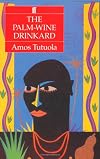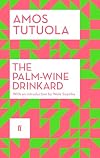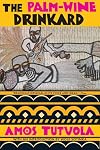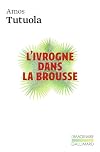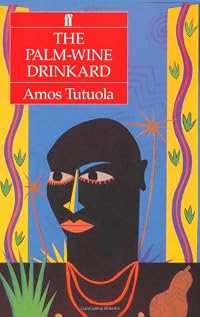
The Palm-Wine Drinkard and his Dead Palm-Wine Tapster in the Deads' Town
by Amos Tutuola
On This Page
Description
Amos Tutuola's masterful first novel of a nightmarish quest into the land of the dead, now available in a standalone volume with an introduction by Wole SoyinkaWidely considered to be his masterpiece, Amos Tutuola's debut novel The Palm-Wine Drinkard was first published in 1952. Named one of TIME's "100 Best Fantasy Books of All Time" and introduced here by Wole Soyinka, the novel tells the phantasmagorical story of a wealthy alcoholic who drinks 225 kegs of palm wine a day. When the man's show more personal tapster dies and leaves him without any remaining supply of alcohol, the man desperately follows the tapster into the nightmarish Dead's Town. Drawing on Yoruba folklore and narrated with a unique voice that mixes West African oral traditions with the Colonial British English that Tutuola learned at school, The Palm-Wine Drinkard is a seminal work of African literature from one of Nigeria's most influential writers and an important part of the global literary canon. show lessTags
Recommendations




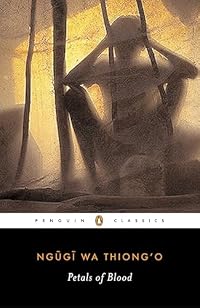
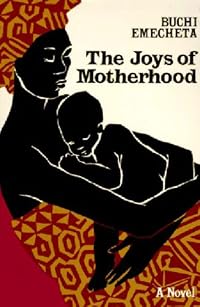

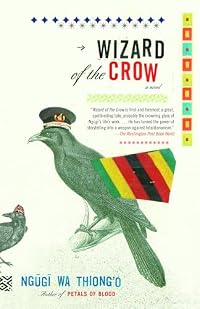
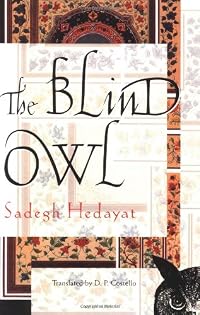



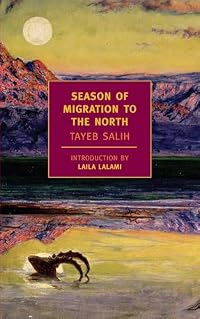
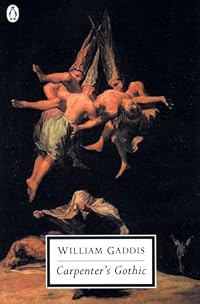
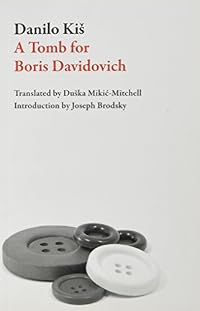
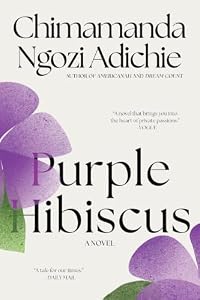


Member Recommendations
Member Reviews
This is such a *fun* book, and totally unlike anything else I've ever read. The folk tale origins are pretty recognisable but even then it's told in a style that's very unlike how you'd expect folk tales to be told, at least in English. The style is very matter of fact about absolutely everything. It's funny reading 2 paragraph about how he and his wife organised a ferry service using magic with exact details of the money they made and how they needed it for buying food (when of course there's no mention of them needing food on their wide ranging travels otherwise)... and then 2 pages later they just lose it all having used it for nothing. The disconnect between the matter of fact fantasy and the out of place real life details, show more particularly those connected to British colonial administration, makes the latter seem absurd and unreal in a way the strange supernatural isn't. It's incredibly hard to convey what's so magical about the experience of reading it because so much of it is bound up in the way it uses the language and how masterful the author's command of it is even though it's deceptively simple. The "plot" is absurd, everything that happens is absurd, and it's beautiful. Special shout out to the image of meeting hundreds of dead babies on the road who beat you with sticks. show less
This is a story about an alcoholic. His palm-wine tapster dies and he (the palm-wine drinkard) goes on a quest through the land of the dead to bring him (the palm-wine tapster) back because he (the palm-wine drinkard) really needs a drink.
The novel is a series of episodes drawn from Yoruba folk tales that are sometimes amazing, sometimes funny and sometimes horrific. There’s an internal logic to the book, but it’s the logic of fairy tales, children and nightmares. Tutuola never lets this logic slip and it forces your mind to imagine the most impossible things.
“...I myself had changed into a flat pebble and was throwing myself along the way...”
The first thing you’ll notice about the book is that it’s written very strangely. show more At first I took it that the narrator was drunk or really needed a drink, but there’s more going on than that. There’s something about the way he describes actions that’s a bit wonky. It’s as if the way the characters interact with their environment is different in this world than it is in ours. Very atmospheric.
And he will repeat the subject of a sentence by noun rather than switching to “it” etc. It’s just like children do when they tell you a story, repeating clauses because they’re too young to understand that what’s hard for them isn’t hard for you. Many things happen to the narrator, many of them extremely unpleasant, and he is often far from in control, but you realise early on that the narrator may be far more that he initially seems to be, and that he is far more comfortable and powerful in the land of the dead than you the reader are. I got the sense that the narrator speaks like that because in this scenario I am the child. Rather disconcerting.
An intense, unique and sometimes uncomfortable read that my eyes were constantly drawn back to. show less
The novel is a series of episodes drawn from Yoruba folk tales that are sometimes amazing, sometimes funny and sometimes horrific. There’s an internal logic to the book, but it’s the logic of fairy tales, children and nightmares. Tutuola never lets this logic slip and it forces your mind to imagine the most impossible things.
“...I myself had changed into a flat pebble and was throwing myself along the way...”
The first thing you’ll notice about the book is that it’s written very strangely. show more At first I took it that the narrator was drunk or really needed a drink, but there’s more going on than that. There’s something about the way he describes actions that’s a bit wonky. It’s as if the way the characters interact with their environment is different in this world than it is in ours. Very atmospheric.
And he will repeat the subject of a sentence by noun rather than switching to “it” etc. It’s just like children do when they tell you a story, repeating clauses because they’re too young to understand that what’s hard for them isn’t hard for you. Many things happen to the narrator, many of them extremely unpleasant, and he is often far from in control, but you realise early on that the narrator may be far more that he initially seems to be, and that he is far more comfortable and powerful in the land of the dead than you the reader are. I got the sense that the narrator speaks like that because in this scenario I am the child. Rather disconcerting.
An intense, unique and sometimes uncomfortable read that my eyes were constantly drawn back to. show less
I'm not going to write a full review here, as it's a long time since I read the work.
At first reading I found it frustrating and difficult to get into - but it's a short book and re-reading it since has paid off.
Even decades later, I find it still echoing in my mind - for good reasons.
I can think of no comparators that would do it justice except for that eccentric genius and mischievous raconteur Brian O'Nolan (otherwise published as Flann O'Brien / Myles na gCopaleen).
Tutuola takes the organic playfulness and inventiveness of 'pidgin' english and brews it into something else, as crazy and inventive as the wildest Shakespearean or Monty Pythonesque riff.
He takes narrative content and traditions of the Yoruba storyteller and distills show more and rebrews them; the shaggy dog story turns into a pack of wild dogs with teeth and the narrative jumps as wildly as the ramblings of a mad dipsomaniac in the clink for 'drunk and disorderly'.
He shifts the conventions of traditional Western storytelling, but in making the narrator a shapeshifter with an unfettered imagination he reminded me of the ancient story/belief/poetic traditions in celtic literature (also derived from a long and, until comparatively recently, completely oral tradition).
Solely on the basis of the Drinkard's ramblings, you might not put Tutuola up there with Joyce, but you certainly might want too compare sections of his free-flowing and intoxicated/intoxicating prose with that venerated author's work.
But please note that my comments are not meant to reduce Tutuola's work to a shadow cast by the tradition of another culture or even his own - he is 'sui generis', his own unique genius. These notes are simply made on the basis of my own narrow cultural perspective restricting my view of his background and other work in an attempt to entice you into his surreal world. There is perhaps something both very ancient and daringly modern mixed together - the trickster's tales set in a fairground hall of mirrors.
If you can get your hands on this small work and put aside all your expectations, letting yourself get used to the shock of the very unusual, then you also may get a taste for this palm-wine brew and at very least you'll have discovered a new way of writing.
[This book was included in the syllabus for my 1978-9 degree optional module - 'Literature of the Commonwealth'; LoC was the only course in the English Department that was offered in Welsh. I found many harmonies and the same post-colonial aspirations in the authors - from Atwood to Walcott - as in our own cultural perspective i.e. Wales as England's first (and possibly last?) colony.
I enjoyed the course immensely, in fact best of all my degree modules, especially as I was the sole student that year and enjoyed one to one seminars with the brilliant Ned Thomas, who generously gave me a first!] show less
At first reading I found it frustrating and difficult to get into - but it's a short book and re-reading it since has paid off.
Even decades later, I find it still echoing in my mind - for good reasons.
I can think of no comparators that would do it justice except for that eccentric genius and mischievous raconteur Brian O'Nolan (otherwise published as Flann O'Brien / Myles na gCopaleen).
Tutuola takes the organic playfulness and inventiveness of 'pidgin' english and brews it into something else, as crazy and inventive as the wildest Shakespearean or Monty Pythonesque riff.
He takes narrative content and traditions of the Yoruba storyteller and distills show more and rebrews them; the shaggy dog story turns into a pack of wild dogs with teeth and the narrative jumps as wildly as the ramblings of a mad dipsomaniac in the clink for 'drunk and disorderly'.
He shifts the conventions of traditional Western storytelling, but in making the narrator a shapeshifter with an unfettered imagination he reminded me of the ancient story/belief/poetic traditions in celtic literature (also derived from a long and, until comparatively recently, completely oral tradition).
Solely on the basis of the Drinkard's ramblings, you might not put Tutuola up there with Joyce, but you certainly might want too compare sections of his free-flowing and intoxicated/intoxicating prose with that venerated author's work.
But please note that my comments are not meant to reduce Tutuola's work to a shadow cast by the tradition of another culture or even his own - he is 'sui generis', his own unique genius. These notes are simply made on the basis of my own narrow cultural perspective restricting my view of his background and other work in an attempt to entice you into his surreal world. There is perhaps something both very ancient and daringly modern mixed together - the trickster's tales set in a fairground hall of mirrors.
If you can get your hands on this small work and put aside all your expectations, letting yourself get used to the shock of the very unusual, then you also may get a taste for this palm-wine brew and at very least you'll have discovered a new way of writing.
[This book was included in the syllabus for my 1978-9 degree optional module - 'Literature of the Commonwealth'; LoC was the only course in the English Department that was offered in Welsh. I found many harmonies and the same post-colonial aspirations in the authors - from Atwood to Walcott - as in our own cultural perspective i.e. Wales as England's first (and possibly last?) colony.
I enjoyed the course immensely, in fact best of all my degree modules, especially as I was the sole student that year and enjoyed one to one seminars with the brilliant Ned Thomas, who generously gave me a first!] show less
In some times and places, madmen were viewed with a sort of wary deference. Were they simply insane, or touched by the hand of God? You couldn't be sure. That same sort of holy madness - chilling and funny by turns - infuses every page of this story. What part is myth and what part is novel? You can't really tell where one ends and the other begins. To pick up this book is to find yourself unexpectedly wrenched from the world and deposited into a dangerous wonderland that almost, but not quite, makes sense. I wish I'd known years ago how strange and great this book is. I already look forward to many re-readings.
"I cut a tree and carved it into a paddle, then I gave it to my wife and I told her to enter the river with me; when we entered the river, I commanded one juju which was given me by a kind spirit who was a friend of mine and at once the juju changed me to a big canoe. Then my wife went inside the canoe with the paddle and paddling it, she used the canoe as 'ferry' to carry passengers across the river, the fare for adults was 3d (three pence) and half fare for children." "When we traveled for two and half days, we reached the Deads' road from which dead babies drove us, and when we reached there, we could not travel on it because of fearful dead babies, etc. which were still on it."
Amos Tutuola begins the transcription of African oral show more literature with a sprawling and entirely unpredictable account of the Father of All Gods traveling for more than a decade--mostly in the company of a wife that he picks up along the way--in search of his prodigiously skillful (and lamentably deceased) palm-wine tapster. The passages above should give some idea of the strange, confident and somehow abridged use of grammar, along with the narrator's focused refusal to provide ancillary details or supporting facts while describing outlandish events that seem to beg for more attention. How do you devote just three sentences out of 130 pages to the time that you transformed yourself into a canoe in order for your wife to make lunch money by using you as a passenger vehicle?
"The Palm-Wine Drinkard" reads like a compendium of folklore. It is unified by the mission of the protagonist; but many of the episodes are so symbolically and moralistically complete that they seem borrowed from oral traditions where they might normally stand alone. Unless you regularly consume fairy tales or ancient folklore, Tutuola's effort should prove a refreshing and memorable experience. Do not expect great attention to structure or particularly satisfying resolution; come along for the ride. show less
Amos Tutuola begins the transcription of African oral show more literature with a sprawling and entirely unpredictable account of the Father of All Gods traveling for more than a decade--mostly in the company of a wife that he picks up along the way--in search of his prodigiously skillful (and lamentably deceased) palm-wine tapster. The passages above should give some idea of the strange, confident and somehow abridged use of grammar, along with the narrator's focused refusal to provide ancillary details or supporting facts while describing outlandish events that seem to beg for more attention. How do you devote just three sentences out of 130 pages to the time that you transformed yourself into a canoe in order for your wife to make lunch money by using you as a passenger vehicle?
"The Palm-Wine Drinkard" reads like a compendium of folklore. It is unified by the mission of the protagonist; but many of the episodes are so symbolically and moralistically complete that they seem borrowed from oral traditions where they might normally stand alone. Unless you regularly consume fairy tales or ancient folklore, Tutuola's effort should prove a refreshing and memorable experience. Do not expect great attention to structure or particularly satisfying resolution; come along for the ride. show less
This was a book that has been high on my TBR for years now. I have three Tutuolas in my TBR, but this is undoubtedly his most famous, so I thought that I would start here. The Palm-Wine Drinkard is a sort of fairy story about a man who drinks palm wine (to the tune of 150 kegs per day) until his tapster (i.e. the man who extracts the wine from the palm) dies. The narrative is concerned with his search for the tapster, and the Deads' Town in which he now resides.
I have read the book described as 'Magical Realism' but, to be honest, the phrase probably gives too much emphasis to the level of realism. Magical events occur without rhyme or reason, as the Drinkard overcomes obstacles by transforming himself into a variety of animals. He show more sells both his fear and his death for cash, making him fearless and immortal. There is little apparent limit or coherence to the Drinkard's magical powers, nor is there much coherence to the obstacles which confront him. The result is a sprawling, aimless narrative of events, creatures and ideas that stand between him and his tapster. If there was allegorical significance to the events it was lost on me, and if there was an underlying message it went way over my head.
This is usually a recipe for disaster for me when it comes to reading. However, there was something beguiling about The Palm-Wine Drinkard. It is written in a mock pidgin English that gave added to the flavour of unreality, and eventually the tone drew me in. The reason I initially compared it to a fairy tale is that it requires the same sort of suspension of reality (who asks why Goldilocks was wandering past the three bears' house, she just was). I can't say I loved it, and at 125 pages I wouldn't have wanted it to be any longer, but The Palm-Wine Drinkard is certainly unique. Perhaps the true test is to say that I haven't rushed to the other two Tutuolas in my TBR just yet, but neither am I dreading them. A very, very unusual book, and probably worth a look just for that.
flag abuse show less
I have read the book described as 'Magical Realism' but, to be honest, the phrase probably gives too much emphasis to the level of realism. Magical events occur without rhyme or reason, as the Drinkard overcomes obstacles by transforming himself into a variety of animals. He show more sells both his fear and his death for cash, making him fearless and immortal. There is little apparent limit or coherence to the Drinkard's magical powers, nor is there much coherence to the obstacles which confront him. The result is a sprawling, aimless narrative of events, creatures and ideas that stand between him and his tapster. If there was allegorical significance to the events it was lost on me, and if there was an underlying message it went way over my head.
This is usually a recipe for disaster for me when it comes to reading. However, there was something beguiling about The Palm-Wine Drinkard. It is written in a mock pidgin English that gave added to the flavour of unreality, and eventually the tone drew me in. The reason I initially compared it to a fairy tale is that it requires the same sort of suspension of reality (who asks why Goldilocks was wandering past the three bears' house, she just was). I can't say I loved it, and at 125 pages I wouldn't have wanted it to be any longer, but The Palm-Wine Drinkard is certainly unique. Perhaps the true test is to say that I haven't rushed to the other two Tutuolas in my TBR just yet, but neither am I dreading them. A very, very unusual book, and probably worth a look just for that.
flag abuse show less
In a recent NY Times Book Review article, Nigerian writer Chigozie Obioma told a story about how when he was frequently ill as a child, his father would tell him wild stories. Puzzled as to why this stopped, he asked his father for an explanation, who explained that Chigozie was now old enough to read on his own, handing him The Palm-Wine Drinkard. It turns out his father had no imagination whatsoever and the stories were all from this book by Amos Tutuola.
The protagonist is a drunk, having started early at age 10. His father hires a tapster, who falls out of a tree and dies, at which point, the drunk decides to find him no matter what. The reader is then carried into the African bush on a psychedelic, magical mystery tour of numerous show more West African folk tales. Weird, compelling, gruesome, fantastic, alternating dark and light, magical realism. show less
The protagonist is a drunk, having started early at age 10. His father hires a tapster, who falls out of a tree and dies, at which point, the drunk decides to find him no matter what. The reader is then carried into the African bush on a psychedelic, magical mystery tour of numerous show more West African folk tales. Weird, compelling, gruesome, fantastic, alternating dark and light, magical realism. show less
Members
- Recently Added By
Lists

Best African Books
126 works; 46 members

Classics you know you should have read but probably haven't
421 works; 407 members

Harold Bloom - The Western Canon: D. The Chaotic Age
833 works; 24 members

TML 200 Best Books 1950-1999
202 works; 10 members

The 100 Best Fantasy Books of All Time
100 works; 15 members

Speculative Fiction from around the World
610 works; 17 members

LIBROS DE CIENCIA FICCIÓN Y FANTASIA
60 works; 1 member

Myth (Reuse and Retelling)
188 works; 23 members

Books Read in 2019
4,052 works; 108 members

Big Jubilee List
70 works; 3 members

Philip Ward's Lifetime Reading Plan
592 works; 22 members

The Modern Library (The Two Hundred Best Novels....
202 works; 1 member
Author Information

20+ Works 1,832 Members
Amos Tutuola was born in Abeokuta, Nigeria. He received his elementary education at a Salvation Army school and has lived mostly at Ibadan, where he was for a long time a messenger. His highly controversial reputation as a writer is based on his unique style, a type of pidgin English. Tutuola's most popular work so far is his romance, The show more Palm-Wine Drinkard (1952), an extremely imaginative tall tale drawn from Yoruba legends and myths about a journey into the land of the dead. Despite the controversy surrounding Tutuola's "wrong" use of English, his historical significance as a writer cannot be disputed. Among the first black African writers to be published and win some degree of international recognition, he was also the first writer to see the possibilities of translating African mythology into English in an imaginative way. For all the controversy, Tutuola is highly popular and his books have been translated into many languages. (Bowker Author Biography) show less
Some Editions
Awards and Honors
Notable Lists
Series
Belongs to Publisher Series
Work Relationships
Is contained in
Contains
Common Knowledge
- Canonical title
- The Palm-Wine Drinkard and his Dead Palm-Wine Tapster in the Deads' Town
- Alternate titles
- The Palm-Wine Drinkard
- Original publication date
- 1952
- People/Characters
- Palm-Wine Drinkard; Dead Palm-Wine Tapster
- Important places
- Nigeria; Bush of Ghosts; Dead's Town, Bush of Ghosts
- First words
- I was a palm-wine drinkard since I was a boy of ten years of age. I had no other work more than to drink palm-wine in my life. In those days we did not know other money, except COWRIES, so that everything was very cheap, and ... (show all)my father was the richest man in our town.
- Last words
- (Click to show. Warning: May contain spoilers.)But when for three months the rain had been falling regularly, there was no famine again.
- Canonical DDC/MDS
- 823.914
Classifications
- Genres
- General Fiction, Fiction and Literature, Fantasy
- DDC/MDS
- 823.914 — Literature & rhetoric English & Old English literatures English fiction 1900- 1901-1999 1945-1999
- LCC
- PZ4 .T968 — Language and Literature Fiction and juvenile belles lettres Fiction and juvenile belles lettres Fiction in English
- BISAC
Statistics
- Members
- 584
- Popularity
- 50,124
- Reviews
- 18
- Rating
- (3.54)
- Languages
- 12 — Catalan, English, Estonian, Finnish, French, German, Italian, Japanese, Norwegian (Nynorsk), Portuguese, Spanish, Swedish
- Media
- Paper, Ebook
- ISBNs
- 24
- ASINs
- 16