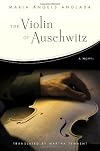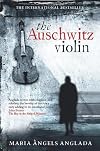
The Auschwitz Violin
by Maria Angels Anglada
On This Page
Description
Fiction. Literature. Historical Fiction. HTML:An international sensation now available in English for the first time, The Violin of Auschwitz is the unforgettable story of one man’s refusal to surrender his dignity in the face of history’s greatest atrocity.In the winter of 1991, at a concert in Krakow, an older woman with a marvelously pitched violin meets a fellow musician who is instantly captivated by her instrument. When he asks her how she obtained it, she reveals the show more remarkable story behind its origin. . . .
Imprisoned at Auschwitz, the notorious concentration camp, Daniel feels his humanity slipping away. Treasured memories of the young woman he loved and the prayers that once lingered on his lips become hazier with each passing day. Then a visit from a mysterious stranger changes everything, as Daniel’s former identity as a crafter of fine violins is revealed to all. The camp’s two most dangerous men use this information to make a cruel wager: If Daniel can build a successful violin within a certain number of days, the Kommandant wins a case of the finest burgundy. If not, the camp doctor, a torturer, gets hold of Daniel. And so, battling exhaustion, Daniel tries to recapture his lost art, knowing all too well the likely cost of failure.
Written with lyrical simplicity and haunting beauty—and interspersed with chilling, actual Nazi documentation—The Violin of Auschwitz is more than just a novel: It is a testament to the strength of the human spirit and the power of beauty, art, and hope to triumph over the darkest adversity. show less
Tags
Recommendations



























Member Recommendations
meggyweg The story of one of the real members of the Auschwitz Orchestra.
11
Member Reviews
The Auschwitz Violin by Maria Angels Anglada
I was very moved by this novella about a Jewish concentration camp prisoner, Daniel, who was a luthier (violin maker) by profession. Imprisoned at the Dreiflusselager (Three Rivers Camp, a sub-camp of Auschwitz) he spends his days working in the cabinetmaking shop and trying desperately to hang on to hope, meaning and his life. Never knowing when the whim of a guard or commandant will merit him a blow, a whipping, a time spent in solitary he moves anxiously through each day trying to maintain a sense of who he is as a man. Weakened by starvation, it is his memories that keep him going…memories of the beauty of the world, of the woman he loves, of the blue eyes of his treasured niece. But show more over time he finds even these memories fading and he struggles to hold on. When circumstances result in his revealing of his violin-making craft he is ordered to make a violin for the Camp Commander or risk being at the mercy of the camp doctor.
Interspersed with Daniel’s thoughts are the actions of horrendous characters, the guards the notorious camp doctor as well as actions of the humanity of his fellow prisoners and some sympathetic guards. Introducing each chapter is authentic documentation from Nazi camp records that validate the horror of the experience.
Told beautifully and humanely by the author I was moved by the emotion portrayed. Slow, languid descriptions of the memories, the actual task of crafting the instrument reminded me that this was more than a genocide account but a glimpse into the human soul. It is more than a story about a man, a violin, the concentration camps. It is a tribute to the human spirit, the power of beauty and art to sustain the human soul and the dignity that can be evidenced in the most horrid circumstances. show less
I was very moved by this novella about a Jewish concentration camp prisoner, Daniel, who was a luthier (violin maker) by profession. Imprisoned at the Dreiflusselager (Three Rivers Camp, a sub-camp of Auschwitz) he spends his days working in the cabinetmaking shop and trying desperately to hang on to hope, meaning and his life. Never knowing when the whim of a guard or commandant will merit him a blow, a whipping, a time spent in solitary he moves anxiously through each day trying to maintain a sense of who he is as a man. Weakened by starvation, it is his memories that keep him going…memories of the beauty of the world, of the woman he loves, of the blue eyes of his treasured niece. But show more over time he finds even these memories fading and he struggles to hold on. When circumstances result in his revealing of his violin-making craft he is ordered to make a violin for the Camp Commander or risk being at the mercy of the camp doctor.
Interspersed with Daniel’s thoughts are the actions of horrendous characters, the guards the notorious camp doctor as well as actions of the humanity of his fellow prisoners and some sympathetic guards. Introducing each chapter is authentic documentation from Nazi camp records that validate the horror of the experience.
Told beautifully and humanely by the author I was moved by the emotion portrayed. Slow, languid descriptions of the memories, the actual task of crafting the instrument reminded me that this was more than a genocide account but a glimpse into the human soul. It is more than a story about a man, a violin, the concentration camps. It is a tribute to the human spirit, the power of beauty and art to sustain the human soul and the dignity that can be evidenced in the most horrid circumstances. show less
 This review was written for LibraryThing Early Reviewers.
A gem of a life-affirming novella about a Jewish man who manages to survive in Auschwitz by building a violin for a musical instrument-appreciating camp commandant. The care and passion he devotes to his task illustrates the maxim that having a purpose in life can be the key to surviving in the most extreme of difficult circumstances. It also demonstrates the power of beauty and art to triumph silently over a warped and extreme ideology. Wonderful stuff.
This little novel tells a deeply moving story of survival and hope in the face of hatred and ugliness. Daniel is a young man who has been ripped from his life as a violin-maker, and the arms of his fiancee, and placed at Auschwitz. Those who are imprisoned nickname the camp "Hell." Daniel does woodworking until he fixes a violin for one of the prisoners, who plays for the commander. This catches the commander's attention and he orders Daniel to craft a violin.
The process of returning to his beloved art also takes Daniel, for short periods, back to his old life. It gives him a reason to live in a world where death may have seemed a kinder option. Daniel's moments of beauty and joy with his violin are juxtaposed against the horrors of the show more camp: beatings, torture, starvation, degradation. It is an intense book that I had to set down at times. The effect of the Holocaust on the survivors, both at the time it occurred and fifty years later, was explored with heartbreaking insightfulness.
How would you survive in a place where they had taken your family, freedom, home, your trade? Would you give up and, if you didn't, how would you find the will to get through? These are some of the many questions that came to me as I read this thought-provoking book. This is a story of survival, of the bonds of friendship which last a lifetime, of the triumph of creativity and beauty in a dark and depraved world. This little book takes you to the depths of hell, but also shows you the height of human potential. show less
The process of returning to his beloved art also takes Daniel, for short periods, back to his old life. It gives him a reason to live in a world where death may have seemed a kinder option. Daniel's moments of beauty and joy with his violin are juxtaposed against the horrors of the show more camp: beatings, torture, starvation, degradation. It is an intense book that I had to set down at times. The effect of the Holocaust on the survivors, both at the time it occurred and fifty years later, was explored with heartbreaking insightfulness.
How would you survive in a place where they had taken your family, freedom, home, your trade? Would you give up and, if you didn't, how would you find the will to get through? These are some of the many questions that came to me as I read this thought-provoking book. This is a story of survival, of the bonds of friendship which last a lifetime, of the triumph of creativity and beauty in a dark and depraved world. This little book takes you to the depths of hell, but also shows you the height of human potential. show less
A sparse, totally riveting novella, it required two contemplative readings for me to thoroughly absorb and remember. Each minute chapter commenced with genuine excerpts from remaining enduring documents that bore unequivocal testament to the brutality which existed within the environs of Auschwitz.
Upon compulsory detention in one of the sub camps of the infamous Auschwitz concentration camp, Daniel, the unwilling protagonist dangerously hazards the possibility of immediate extermination by offering an unbidden explanation to a less than bravado violinist’s solo performance before the Commandant and his guests, “It’s not his fault, sir. The violin has a crack on the top plate. I can fix it.”
So cabinetmaker/factory worker Daniel show more not only repairs the violin’s cracked plate, but also is ordered to craft a new violin, one to add to the Commandant’s collection. Daniel, an authentic “luthier,” now has resolute motivation to rise each bleak morning, and without doubt, still a “sub-human” inmate in a dissolute environment, he quietly believes he has a smidgen of hope.
As we apprehensively follow Daniel’s daily progress, the overwhelming fear of imminent torture or death which can be visited upon each and every camp inmate is painfully described, and remains imbedded in the mind long after the violin is completed, and this little piece of history has been revealed to us. show less
Upon compulsory detention in one of the sub camps of the infamous Auschwitz concentration camp, Daniel, the unwilling protagonist dangerously hazards the possibility of immediate extermination by offering an unbidden explanation to a less than bravado violinist’s solo performance before the Commandant and his guests, “It’s not his fault, sir. The violin has a crack on the top plate. I can fix it.”
So cabinetmaker/factory worker Daniel show more not only repairs the violin’s cracked plate, but also is ordered to craft a new violin, one to add to the Commandant’s collection. Daniel, an authentic “luthier,” now has resolute motivation to rise each bleak morning, and without doubt, still a “sub-human” inmate in a dissolute environment, he quietly believes he has a smidgen of hope.
As we apprehensively follow Daniel’s daily progress, the overwhelming fear of imminent torture or death which can be visited upon each and every camp inmate is painfully described, and remains imbedded in the mind long after the violin is completed, and this little piece of history has been revealed to us. show less
This review was written for LibraryThing Early Reviewers.Although this is not a long novel it packs a punch.It is beautifully written and lovingly crafted much like the violin at the center of this novel. Daniel creates this violin while in Auschwitz at the command of the local commandant who has bet him against a case of wine with a sadistic Nazi doctor. This doctor Rascher is a real person who conducted horrible experiments on concentration camp prisoners.
This novel, in such a short time, gives a reader great incite into the horrible hunger, cold and fear these people had to deal with daily as they struggled to remain alive in Auschwitz.
This novel, in such a short time, gives a reader great incite into the horrible hunger, cold and fear these people had to deal with daily as they struggled to remain alive in Auschwitz.
Translated from original Catalan by Martha Tennent
2.5**
From the book jacket: In the winter of 1991, at a concert in Krakow, an older woman with a marvelously pitched violin meets a fellow musician who is instantly captivated by her instrument. When he asks her how she obtained it, she reveals the remarkable story behind its origin…
My Reactions
I really wanted to like this book … no … I wanted to love this book. But it missed the mark for me. I think that is because it felt unfinished.
The basic story line is engaging and what kept me reading, but there were huge gaps that left me hungry for more detail. Anglada began with a date in 1991, so we know where we are at when the violin first makes an appearance. And the next chapter show more begins Daniel’s story (the luthier who crafted the violin) as he struggles to survive in the concentration camp. In bits and pieces we learn of the conditions, the sadistic doctor, the capricious whims of the commandant, the deprivations, the dreams and nightmares, and the fragile friendships formed. But suddenly Daniel is crafting a violin and we don’t know why. Or how he got the tools and materials. I actually went back to the previous chapter and re-read, thinking I must have dozed off and accidently skipped ahead. But I hadn’t.
Eventually we are able to piece together the story, but not until there are a few more abrupt changes in time frame that not only were disorienting, but made me feel that parts of the story were left out. In summary, while the storyline played the reader’s heartstrings like a violin virtuoso, I felt that the book was unfinished. show less
2.5**
From the book jacket: In the winter of 1991, at a concert in Krakow, an older woman with a marvelously pitched violin meets a fellow musician who is instantly captivated by her instrument. When he asks her how she obtained it, she reveals the remarkable story behind its origin…
My Reactions
I really wanted to like this book … no … I wanted to love this book. But it missed the mark for me. I think that is because it felt unfinished.
The basic story line is engaging and what kept me reading, but there were huge gaps that left me hungry for more detail. Anglada began with a date in 1991, so we know where we are at when the violin first makes an appearance. And the next chapter show more begins Daniel’s story (the luthier who crafted the violin) as he struggles to survive in the concentration camp. In bits and pieces we learn of the conditions, the sadistic doctor, the capricious whims of the commandant, the deprivations, the dreams and nightmares, and the fragile friendships formed. But suddenly Daniel is crafting a violin and we don’t know why. Or how he got the tools and materials. I actually went back to the previous chapter and re-read, thinking I must have dozed off and accidently skipped ahead. But I hadn’t.
Eventually we are able to piece together the story, but not until there are a few more abrupt changes in time frame that not only were disorienting, but made me feel that parts of the story were left out. In summary, while the storyline played the reader’s heartstrings like a violin virtuoso, I felt that the book was unfinished. show less
This is a well written novella about the holocaust. It could easily be read in one night. The writing is clear, concise, and simple. It is a very emotional read.
I will promote it to Year 11-13 students. They could read it for wide reading and use this book for theme studies.
A gem of a book about a Jewish man who manages to survive in Auschwitz by building a violin for a musical instrument-appreciating camp commandant. The care and passion he devotes to his task illustrates the maxim that having a purpose in life can be the key to surviving in the most extreme of difficult circumstances. It also demonstrates the power of beauty and art to triumph silently over a warped and extreme ideology.
I will promote it to Year 11-13 students. They could read it for wide reading and use this book for theme studies.
A gem of a book about a Jewish man who manages to survive in Auschwitz by building a violin for a musical instrument-appreciating camp commandant. The care and passion he devotes to his task illustrates the maxim that having a purpose in life can be the key to surviving in the most extreme of difficult circumstances. It also demonstrates the power of beauty and art to triumph silently over a warped and extreme ideology.
Members
- Recently Added By
Lists

Books Read in 2015
3,299 works; 129 members

Llibres que he llegit el 2008
33 works; 1 member
Author Information

62+ Works 1,120 Members

Maria Àngels Anglada has a Legacy Library. Legacy libraries are the personal libraries of famous readers, entered by LibraryThing members from the Legacy Libraries group.
Some Editions
Awards and Honors
Common Knowledge
- Canonical title
- The Auschwitz Violin
- Original title
- El violí d'Auschwitz
- Alternate titles
- The Violin of Auschwitz
- Original publication date
- 1994
- People/Characters
- Daniel Krakowensis; Bronislaw; Regina; Freund; Commander Saukel; Dr. Rascher
- Important places
- Auschwitz concentration camp, Oświęcim, Lesser Poland, Poland
- Important events
- World War II (1939 | 1945); Holocaust
- Dedication
- To the victims
In memoriam - First words
- I always have trouble falling asleep after I perform at a concert.
Guard Duty, Ghetto 6
Litzmannstadt, December 1, 1941
Incident: use of firearm
On December 1, 1941, I was on duty at guard post 4 on Hohensteinerstrasse from 1400 hrs. until 1600 hrs. - Last words
- (Click to show. Warning: May contain spoilers.)Yet, in the end, a song lives.
- Blurbers*
- Rosnay, Tatiana de
- Original language
- Catalan
*Some information comes from Common Knowledge in other languages. Click "Edit" for more information.
Classifications
- Genres
- Fiction and Literature, General Fiction, Historical Fiction
- DDC/MDS
- 849.9354 — Literature & rhetoric French Literature Occitan, Catalan, Franco-Provençal literatures Catalan literature Fiction 1900-1945 1945-2000
- LCC
- PC3942.1 .N45 .V5613 — Language and Literature Romanic languages Romance Catalan
- BISAC
Statistics
- Members
- 685
- Popularity
- 41,638
- Reviews
- 52
- Rating
- (3.57)
- Languages
- 14 — Catalan, Dutch, English, Finnish, French, German, Galician, Greek, Italian, Polish, Portuguese, Romanian, Spanish, Swedish
- Media
- Paper, Audiobook, Ebook
- ISBNs
- 52
- ASINs
- 6