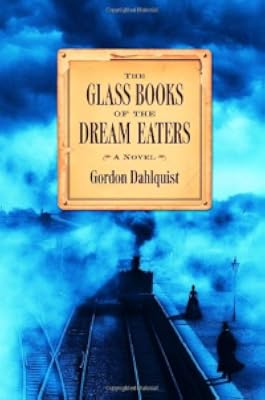
On This Page
Description
It begins with a simple note: Roger Bascombe wishes to inform Celeste Temple that their engagement is forthwith terminated. But Celeste, for all her lack of worldly experience, is determined to find out why her fiancé should have thrown her over so cruelly. Adopting a disguise, she follows her erstwhile lover to the forbidding Harschmort manor, where she discovers a world--by turns seductive and shocking--she could never have imagined, and a conspiracy so terrifying as to be almost beyond show more belief.--From publisher description. show lessTags
Recommendations
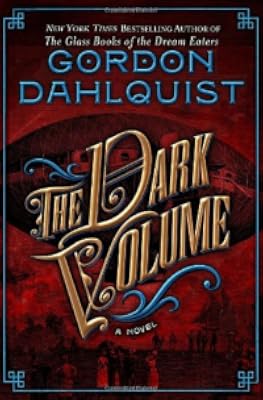
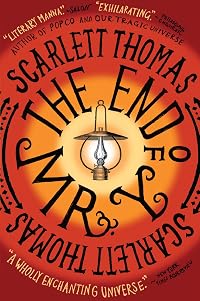
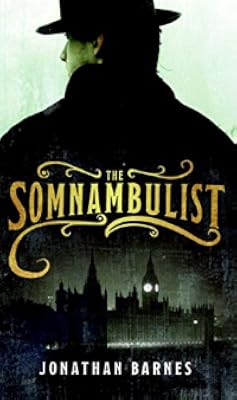

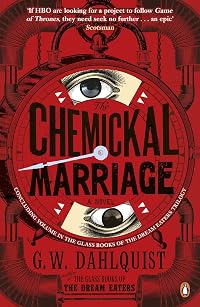
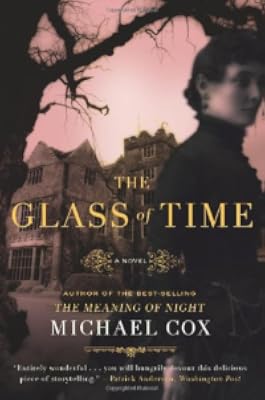

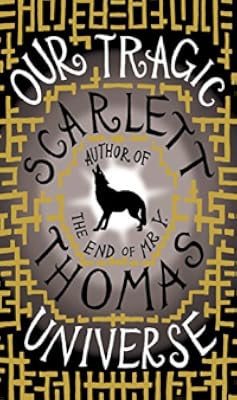
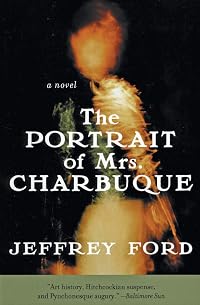
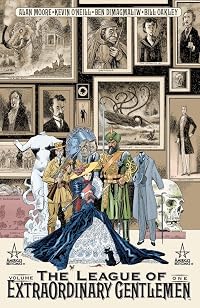
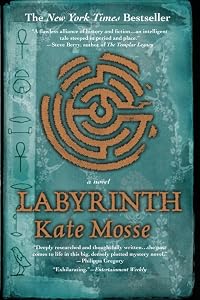
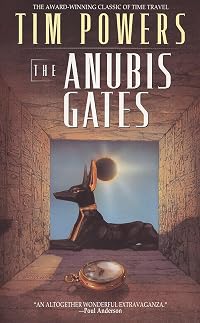
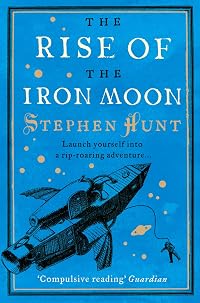

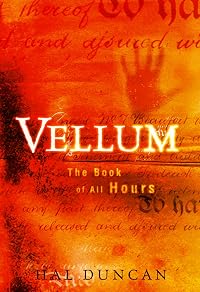



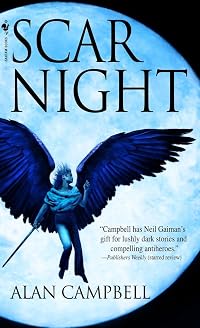
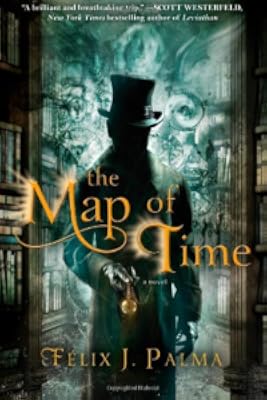
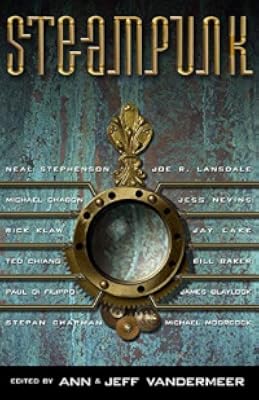
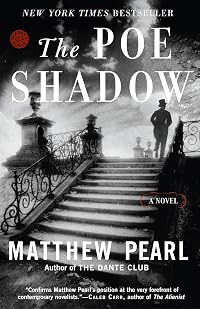

Member Recommendations
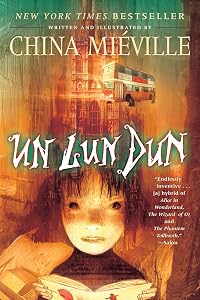
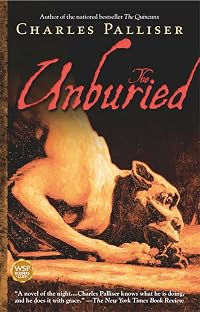
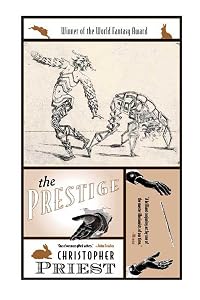
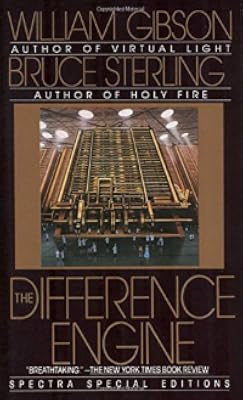
freddlerabbit These two books have, in my opinion, quite similar writing styles and concepts - the plots are not at all similar, however (Glass Books has no time travel)
LongDogMom Similar style and writing
Member Reviews
OK, I like steampunk-y anachronistic murder mysteries with a supernatural leaning as much as the next guy (actually, probably quite a bit more, much to my boyfriend's derision), but come ON! There is no metaphor in the title here - they are ACTUAL glass books and people ACTUALLY eat dreams. The rest is a blur of silly costume parties and masqued balls where SOMETHING SINISTER IS GOING ON, usually involving half-clad ladies in a narcotic daze being subjected to the exploitative slaverings of outwardly respectable gentlemen. If you found the orgy scene in Eyes Wide Shut to be profound and philosophical, perhaps you are of a mind that can find some deeper meaning here. If not, and if it all just seems pretentious, empty-headed nonsense show more that far overreaches itself, come sit by me. show less
The characters are interesting and multi-faceted, the plot complex and engaging. But I don't need to have every agonizing detail of every step and every thought every possible character takes explained to me in stilted victorian prose. 1/3 of the length, or less plodding description and more substantial plot, and this would have been stellar.
in case you had not noticed, Harschmort is a house of masks and mirrors and lies, of unscrupulous, brutal advantage. We cannot afford illusion - about ourselves least of all, for this is what our enemies exploit most of all. I have seen notorious things, I promise you, and notorious things have been done to me.
A steampunk adventure in which three disparate people (a hired killer, a jilted woman, and a doctor whose job is to keep a dissolute prince out of trouble) come together to investigate a secret cabal. It was rather long and could easily have been edited to a more manageable length. In my opinion the reader doesn't really need to have the same time period covered in tortuous detail not once but three times (from the point of view show more of each of the protagonists). And just how many times did the baddies leave someone to kill one of the protagonists and assume they were dead, only to have them escape and pop up just as the baddies are gloating over their death? More times than your average James Bond movie, I reckon!
But I still enjoyed it, even though it took me well over a fortnight to slog my way through it. show less
A steampunk adventure in which three disparate people (a hired killer, a jilted woman, and a doctor whose job is to keep a dissolute prince out of trouble) come together to investigate a secret cabal. It was rather long and could easily have been edited to a more manageable length. In my opinion the reader doesn't really need to have the same time period covered in tortuous detail not once but three times (from the point of view show more of each of the protagonists). And just how many times did the baddies leave someone to kill one of the protagonists and assume they were dead, only to have them escape and pop up just as the baddies are gloating over their death? More times than your average James Bond movie, I reckon!
But I still enjoyed it, even though it took me well over a fortnight to slog my way through it. show less
I dislike most genre fiction as it too often ends up formulaic and bound primarily by the markers of genre instead of seeking first to be a good example of the written word. Happily Glass Books is one of the exceptions. It's certainly a steampunk novel with it's attendant zany technological whimsy but it is foremost a exciting and well written adventure story. Sure, there's a dirigible, but it isn't there to distract the reader from a host of other literary flaws. The plot is twisting and engaging, and the characters, while in Victorian style are all clearly heroes or villains, are well developed and unique, each drawing empathy, admiration, and ire in their own ways. Overall, the book was a little long, but lots of fun. It felt like show more reading [b:The Three Musketeers|7190|The Three Musketeers|Alexandre Dumas|http://photo.goodreads.com/books/1165607715s/7190.jpg|1263212] again. show less
The Glass Books of the Dream Eaters is a Victorian-esque penny-dreadful all the way. Our main characters are Miss Temple, an independently wealthy young woman just jilted and looking for adventure; Cardinal Chang, the neither religious nor Chinese thug-for-hire opium addict representing the seedier side of the city; and Doctor Svenson, an acclaimed doctor-turned-diplomat with the thankless job of keeping an eye on a dissolute Germanic prince before his upcoming nuptials to a leading industrialist's daughter. These three unlikely allies stumble across each other as they investigate a mysterious cabal, bent on using an alchemical 'process' to control the minds and actions of those less fortunate - and how else would such domination be show more shown in a Victorian-era penny-dreadful but sex?
The entire novel is a series of breaking and enterings, abductions, fist- and knifefights, narrow escapes and various conspirators on both sides inexplicably allowing their nemeses to live rather than simply shooting or stabbing them and having done with it. And that very implausibility is a part of the novel's charm. All told, I think this probably works better in the serial format in which it was originally published. As it is, the chapters seem too long, the episodes quite similar, and the actual explanations as to what is going on during the 'process' too sketchy. And each of them ends on a doozy of a cliff-hanger, which made it difficult to find a good breaking-off point at night or on the tube...
Despite these faults, Dahlquist certainly knows how to keep the pages turning, and more importantly, I really came to care about the characters (though less so for Miss Temple as she seemed to require an awful lot of rescuing). I wanted them to miraculously escape, thwart the cabal, and live happily ever after, and I was willing to put up with a lot of James Bond plot-twists to get there. And given the cliffhanger of an ending, I'm also going to be picking up the next book in the series to see how Cardinal Chang and co. are faring... show less
The entire novel is a series of breaking and enterings, abductions, fist- and knifefights, narrow escapes and various conspirators on both sides inexplicably allowing their nemeses to live rather than simply shooting or stabbing them and having done with it. And that very implausibility is a part of the novel's charm. All told, I think this probably works better in the serial format in which it was originally published. As it is, the chapters seem too long, the episodes quite similar, and the actual explanations as to what is going on during the 'process' too sketchy. And each of them ends on a doozy of a cliff-hanger, which made it difficult to find a good breaking-off point at night or on the tube...
Despite these faults, Dahlquist certainly knows how to keep the pages turning, and more importantly, I really came to care about the characters (though less so for Miss Temple as she seemed to require an awful lot of rescuing). I wanted them to miraculously escape, thwart the cabal, and live happily ever after, and I was willing to put up with a lot of James Bond plot-twists to get there. And given the cliffhanger of an ending, I'm also going to be picking up the next book in the series to see how Cardinal Chang and co. are faring... show less
The Glass Books of the Dream Eaters contains, amongst other things,:
the most wonderfully described tea-break, bags of mortal peril, an incredible amount of lip-licking, some sensual neck-lines, a solid dose of Victorian erotica, guns, daggers, big sticks, the loss of virtue, some very shady characters, a spot of running around in the dark, humour, intrigue, acumen and guile, a band of fearsome meglomaniacs, an unlikely trio of just and richeous heroes, and one of the best, most involved and consuming stories I've read in a long, long time.
the most wonderfully described tea-break, bags of mortal peril, an incredible amount of lip-licking, some sensual neck-lines, a solid dose of Victorian erotica, guns, daggers, big sticks, the loss of virtue, some very shady characters, a spot of running around in the dark, humour, intrigue, acumen and guile, a band of fearsome meglomaniacs, an unlikely trio of just and richeous heroes, and one of the best, most involved and consuming stories I've read in a long, long time.
I loved this book! It's different and new and strange and totally utterly addictive.
I started reading it not knowing anything about it, so at first I was a bit wary of the victorian age* placing and the type of language, because that's not normally what I go for, but soon I was caught and just couldn't stop. The 750 pages flew past, and most times I had to make myself stop reading, or I knew it would be really hard to wake up in the morning... I don't know how this ended up on my wishlist/to read (newspaper or magazine mention? goodreads rec? friend mention?), but whatever it was, thanks! I got this from the library, but I'll rush off to buy it, and the next volume, for keeps!
* similar, rather, because the setting is in a different show more world and different timing to our own reality :) show less
I started reading it not knowing anything about it, so at first I was a bit wary of the victorian age* placing and the type of language, because that's not normally what I go for, but soon I was caught and just couldn't stop. The 750 pages flew past, and most times I had to make myself stop reading, or I knew it would be really hard to wake up in the morning... I don't know how this ended up on my wishlist/to read (newspaper or magazine mention? goodreads rec? friend mention?), but whatever it was, thanks! I got this from the library, but I'll rush off to buy it, and the next volume, for keeps!
* similar, rather, because the setting is in a different show more world and different timing to our own reality :) show less
Members
- Recently Added By
Published Reviews
ThingScore 63
The Glass Books... is a piece of steampunk, a strand of Industrial Revolution sci-fi with a hardcore following in genre fiction and anime - as well as, it should be said, more than a whiff of Games Workshop about it. The classic texts are probably William Gibson and Bruce Sterling's The Difference Engine and, more recently, Alan Moore's immensely jolly League of Extraordinary Gentlemen comics, show more and this novel is nakedly indebted to both titles. Fans of Moore, particularly, will find themselves subconsciously ticking boxes as Dahlquist's narrative progresses: mysterious character who wears "smoked-glass spectacles" all the time - yes; sinister operations undertaken by chaps in diving-bell helmets and leather gauntlets - yes; airships - yes; lots of airships - yes. The plot goes something like this: a cabal of sinister aristos has discovered a substance that allows them to download human personalities and experiences into blue glass, a process that has the side-effect of making the subject entirely biddable to their demands. Ranged against them is a trio of accidental adventurers: a capable ingenue, a lovelorn mercenary and a strait-laced doctor, each of whom has his or her own reasons for wanting to topple the conspiracy. show less
added by simon_carr
Reading this book - and it is a page-turner - you become immersed, befogged, almost as if you had indeed been looking at one of the glass books. More than sex, what you're drugged by is fighting and pursuits: I've never seen violent physical action sustained over such a span in a novel. This intoxication is of a piece with the erotic thralldom the book projects, and it can become similarly show more cartoon-like: "The blow caught Starck squarely on the ear with a sickening, pumpkin-thwacking thud, dropping him like a stone." show less
added by simon_carr
Lists

Gaslamp Fantasy
87 works; 15 members

The Hermenautic Bookshelf
111 works; 7 members

Unread books
1,063 works; 87 members
Author Information

20 Works 3,017 Members
Some Editions
Awards and Honors
Awards
Distinctions
Series

Work Relationships
Contains
Common Knowledge
- Canonical title
- The Glass Books of the Dream Eaters
- Original title
- The Glass Books of the Dream Eaters
- Alternate titles*
- The Dream Eaters; The Dream Eaters [Books 1 & 2]
- Original publication date
- 2006-08-01
- People/Characters
- Celeste Temple; Cardinal Chang; Abelard Svenson
- Important places
- London, England, UK
- First words
- From her arrival at the docks to the appearance of Roger's letter, written on crisp Ministry paper and signed with his full name, on her maid's silver tray at breakfast, three months had passed.
- Quotations
- Miss Temple was twenty-five, old to be unmarried, but as she had spent some time disappointing available suitors on her island before being sent across the sea to sophisticated society, this was not necessarily held against h... (show all)er.
- Last words
- (Click to show. Warning: May contain spoilers.)She felt like she was swimming home.
- Blurbers
- Gabaldon, Diana
- Original language
- English
- Canonical DDC/MDS
- 813.087627
*Some information comes from Common Knowledge in other languages. Click "Edit" for more information.
Classifications
- Genres
- Fiction and Literature, Fantasy, Historical Fiction, Mystery
- DDC/MDS
- 813.087627 — Literature & rhetoric American literature in English American fiction in English By type Genre fiction Adventure fiction Speculative fiction Science fiction Steampunk
- LCC
- PS3604 .A345 .G58 — Language and Literature American literature
- BISAC
Statistics
- Members
- 1,597
- Popularity
- 14,231
- Reviews
- 71
- Rating
- (3.42)
- Languages
- 10 — Dutch, English, French, German, Hungarian, Italian, Norwegian (Bokmål), Portuguese, Spanish, Swedish
- Media
- Paper, Audiobook, Ebook
- ISBNs
- 30
- UPCs
- 1
- ASINs
- 9