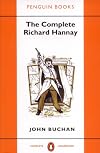
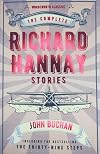
The Complete Richard Hannay Stories (Wordsworth Classics)
by John Buchan
Richard Hannay (Collections and Selections — Omnibus 1-5)
On This Page
Description
Major General Sir Richard Hannay is the fictional secret agent created by writer and diplomat John Buchan, who was himself an Intelligence officer during the First World War. The strong and silent type, combining the dour temperament of the Scot with the stiff upper lip of the Englishman, Hannay is pre-eminent among early spy-thriller heroes. Caught up in the first of these five gripping adventures just before the outbreak of war in 1914, he manages to thwart the enemy's evil plan and solve show more the mystery of the 'thirty-nine steps'. In Greenmantle, he undertakes a vital mission to prevent jihad in the Islamic Near East. Mr Standfast, set in the decisive months of 1917-18, is the novel in which Hannay, after a life lived 'wholly among men', finally falls in love; later, in The Three Hostages, he finds himself unravelling a kidnapping mystery with his wife's help. In the last adventure, The Island of Sheep, he is called upon to honour an old oath. A shrewd judge of men, he never dehumanises his enemy, and despite sharing some of the racial prejudices of his day, Richard Hannay is a worthy prototype hero of espionage fiction. Stories include: 'The Thirty-nine Steps' 'Greenmantle' 'Mr Standfast' 'The Three Hostages' 'The Island of Sheep' AUTHOR: John Buchan (1875-1940) was a Scottish writer of both fiction and non-fiction work. His most enduring work is 'The Thirty-Nine Steps', a ripping yarn featuring Richard Hannay, who went on to appear in a further four novels. show lessTags
Recommendations

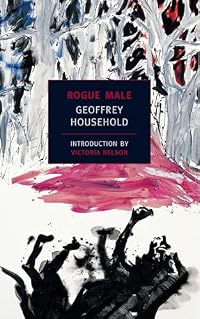


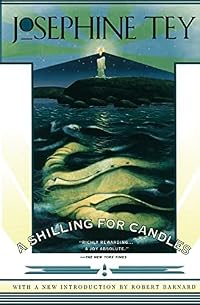


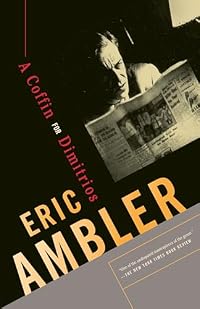


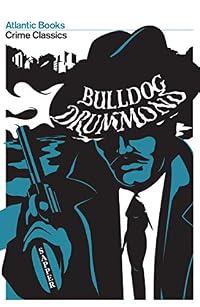


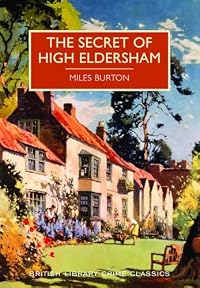
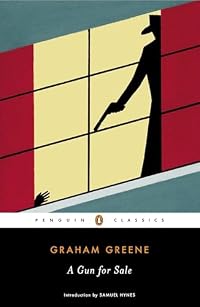


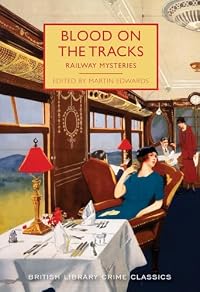
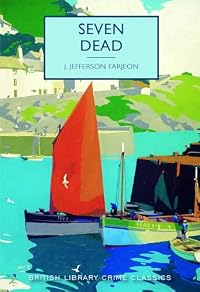
Member Recommendations
simon_carr Drummond owes a lot to Buchan's Richard Hannay, if you like one I'll wager you'll like t'other.
Member Reviews
I rushed through this omnibus edition, which contains five Richard Hannay stories. As adventure stories, they keep you in suspense so you read on. But as a character Richard Hannay is an infuriatingly privileged, lucky, rich and capable as well as hardworking, intelligent and resourceful. Particularly in the early stories, the casual mentions of "white man" lifestyle and characteristics for something that applied to a small set of privileged men who had enormously benefit from the material resources of the colonised parts of the British empire felt very jarring.
The Thirty-Nine Steps (*****)
This is Buchan’s most popular and well-known book. Actually, this is more of a novella, being barely 100 pages long, and has a simple structure: essentially, one long chase punctuated by a series of scrapes with no discernible escape from which our hero does escape, each time increasing his understanding of his predicament and guiding him to the next step of his plan.
Our hero is Richard Hannay, a South African mining engineer on holiday in Britain. He is implicated in the murder of a spy, which he did not commit, and is on the run, chased by the police and by foreign agents out to silence him before he can ruin their plans for a terrorist attack on home soil.
This story has been filmed many times for the show more cinema and TV, most successfully by Alfred Hitchcock, and one can see why. The story moves on at a tremendous pace with hardly a pause for thought and with plenty of action on every page. The writing is very visual; we get descriptions of the countryside, what people are wearing, what they are eating and what they are doing. This is exciting, plausible and tense with a human, but seemingly invincible, hero.
Greenmantle. (*****)
Buchan’s follow-up to ‘The Thirty-Nine Steps’ and the first true novel in the series. Published in 1916 and very much a product of the First World War this novel follows Richard Hannay and a small group of associates as they work their way across war-torn Europe to the Middle East in an attempt to identify and stop the Germans inciting a religious uprising in Islam by producing a foreseen holy man working under their control.
There are clearly some prejudices and perspectives that are clearly of their time, but generally Buchan is greatly respectful of the enemies and peoples he describes. He sees the Germans as a proud nation under the control of a militaristic and belligerent leadership; similarly, he is never anything but respectful of the Muslim Turks and their religion.
Another shock - we have our first substantial female character in the form of the evil Hilda Von Einem. From the way she is depicted it is clear that Hannay and his friends no more understand women than they would a Martian.
Excellent nature writing, powerful action, sympathetically drawn characters and more derring and do than you could wish for.
Mr Standfast (*****)
Published in 1919, this book has a very different feel to the earlier pair of Hannay novels. There is still much derring to be done, scrapes to be got into and out of quite preposterously, and convoluted MacGuffins to be lost and found. But, there is an overarching seriousness and sorrow to the writing.
The story is wound up three-quarters of the way through and the last part of the book consists mainly in describing warfare at the battle front. Of course, in keeping with the times and mores, this description is given from the officer class perspective and has a certain victorious tone to it. But, it is clear that brave men did brave things and often for no net gain and at the cost of their lives and Buchan does not shy away from this.
The title is drawn from a character in John Bunyan’s ‘Pilgrim’s Progress’ and this book plays a subtle but constant role throughout. Time and again characters are drawn to Bunyan for comfort and strength.
I found this book profoundly moving.
The Three Hostages (***)
This is the first Hannay novel set in peace time and sees a switch away from a James Bond spy persona towards a more Simon Templar gentleman adventurer, although one with a wife and family. Hannay is married to Mary, who we met in Mr Standfast, and has a toddler son called Peter John, all living on an estate in the country. Hannay is asked to help in the recovery of three youngsters who have been kidnapped and will be used in some massive plot, possibly to start another world war. Initially he focuses on a rescue, but then becomes fixated on identifying and then uncovering the mastermind behind the whole global plot.
This is a good story with plenty of suspense and action. We see more of the seamier side of life and the criminal underworld. There are a number of weaknesses that set this book apart. The villain is poorly drawn and the nature of his plot and his motivation for doing it are never laid out. Further, a number of key plot points are undertaken by other characters off stage, leaving Hannay to report on them second hand and without them driving his own actions.
As always, the nature writing is very good and this lends the climax both excitement and verisimilitude. show less
This is Buchan’s most popular and well-known book. Actually, this is more of a novella, being barely 100 pages long, and has a simple structure: essentially, one long chase punctuated by a series of scrapes with no discernible escape from which our hero does escape, each time increasing his understanding of his predicament and guiding him to the next step of his plan.
Our hero is Richard Hannay, a South African mining engineer on holiday in Britain. He is implicated in the murder of a spy, which he did not commit, and is on the run, chased by the police and by foreign agents out to silence him before he can ruin their plans for a terrorist attack on home soil.
This story has been filmed many times for the show more cinema and TV, most successfully by Alfred Hitchcock, and one can see why. The story moves on at a tremendous pace with hardly a pause for thought and with plenty of action on every page. The writing is very visual; we get descriptions of the countryside, what people are wearing, what they are eating and what they are doing. This is exciting, plausible and tense with a human, but seemingly invincible, hero.
Greenmantle. (*****)
Buchan’s follow-up to ‘The Thirty-Nine Steps’ and the first true novel in the series. Published in 1916 and very much a product of the First World War this novel follows Richard Hannay and a small group of associates as they work their way across war-torn Europe to the Middle East in an attempt to identify and stop the Germans inciting a religious uprising in Islam by producing a foreseen holy man working under their control.
There are clearly some prejudices and perspectives that are clearly of their time, but generally Buchan is greatly respectful of the enemies and peoples he describes. He sees the Germans as a proud nation under the control of a militaristic and belligerent leadership; similarly, he is never anything but respectful of the Muslim Turks and their religion.
Another shock - we have our first substantial female character in the form of the evil Hilda Von Einem. From the way she is depicted it is clear that Hannay and his friends no more understand women than they would a Martian.
Excellent nature writing, powerful action, sympathetically drawn characters and more derring and do than you could wish for.
Mr Standfast (*****)
Published in 1919, this book has a very different feel to the earlier pair of Hannay novels. There is still much derring to be done, scrapes to be got into and out of quite preposterously, and convoluted MacGuffins to be lost and found. But, there is an overarching seriousness and sorrow to the writing.
The story is wound up three-quarters of the way through and the last part of the book consists mainly in describing warfare at the battle front. Of course, in keeping with the times and mores, this description is given from the officer class perspective and has a certain victorious tone to it. But, it is clear that brave men did brave things and often for no net gain and at the cost of their lives and Buchan does not shy away from this.
The title is drawn from a character in John Bunyan’s ‘Pilgrim’s Progress’ and this book plays a subtle but constant role throughout. Time and again characters are drawn to Bunyan for comfort and strength.
I found this book profoundly moving.
The Three Hostages (***)
This is the first Hannay novel set in peace time and sees a switch away from a James Bond spy persona towards a more Simon Templar gentleman adventurer, although one with a wife and family. Hannay is married to Mary, who we met in Mr Standfast, and has a toddler son called Peter John, all living on an estate in the country. Hannay is asked to help in the recovery of three youngsters who have been kidnapped and will be used in some massive plot, possibly to start another world war. Initially he focuses on a rescue, but then becomes fixated on identifying and then uncovering the mastermind behind the whole global plot.
This is a good story with plenty of suspense and action. We see more of the seamier side of life and the criminal underworld. There are a number of weaknesses that set this book apart. The villain is poorly drawn and the nature of his plot and his motivation for doing it are never laid out. Further, a number of key plot points are undertaken by other characters off stage, leaving Hannay to report on them second hand and without them driving his own actions.
As always, the nature writing is very good and this lends the climax both excitement and verisimilitude. show less
Recently finished the final novel in the series (The Island of Sheep) and the short piece The Power-House. I had read The Thirty-Nine Steps and Greenmantle as a boy; and the other two after I purchased this set. They are all fun reads - fast-moving, no sex or graphic violence, and too many coincidences. But there is surprisingly more of interest in them. Yesterday, there was a report of the slaughter of whales & dolphins in the Faroe Islands; what appears to be a periodic event, as described in The Island of Sheep. And the discussion of intellect and will in The Power-House was touched on in a recent book I read on the idea of Europe. So light a fire, pour a scotch and let the adventures begin.
Classic Boys Own adventure stories set at the time of the first world war. The actul adventires are fairly pedestrian, but short so they don't drag. However the commentary on what was the normal life of people at that time makes them still interesting.
The five stories increase in length form the quite short 39 steps, which introduces us to Richard Hanney rousting German spies from settled english communities before the start of the First war. Through to the Island of Sheep which is significantly longer, and Richard has married and aged, but when confrotned with an outrageous piece of exhortion he stands by his friends. Buchan obviously travelled widely in the scottish highlands and loved his time there for many of the stories contain show more vivid descriptions of life in the Islands.
The downside to these stories is a remarkable reliance on co-incidence. There is always a friendly and helpful cottager willing to stand firm in the name of a good cause, an either or choice that goes the right way etc etc. At least the bad guys do so some sense of proportion and skill. Overall slow but readable. show less
The five stories increase in length form the quite short 39 steps, which introduces us to Richard Hanney rousting German spies from settled english communities before the start of the First war. Through to the Island of Sheep which is significantly longer, and Richard has married and aged, but when confrotned with an outrageous piece of exhortion he stands by his friends. Buchan obviously travelled widely in the scottish highlands and loved his time there for many of the stories contain show more vivid descriptions of life in the Islands.
The downside to these stories is a remarkable reliance on co-incidence. There is always a friendly and helpful cottager willing to stand firm in the name of a good cause, an either or choice that goes the right way etc etc. At least the bad guys do so some sense of proportion and skill. Overall slow but readable. show less
I've finished the first book in this volume, The Thirty-Nine Steps, so my rating is currently based on that one novel.
Well written and easy to read. The first person narrative gets you into Hannay's adventures very quickly. Cracking stuff!
Well written and easy to read. The first person narrative gets you into Hannay's adventures very quickly. Cracking stuff!
"The Thirty-Nine Steps","Greenmantle","Mr Standfast","The Three Hostages","The Island of Sheep"
Ratings
Members
- Recently Added By
Lists

Slightly Foxed 2
20 works; 1 member
Author Information

280+ Works 17,557 Members
John Buchan was born in Perth on 26th August, 1875. Educated at Glasgow University and Brasenose College, Oxford, in 1898 Buchan won the Newdigate Prize for poetry. Although trained as a lawyer, Buchan became private secretary to Lord Alfred Milner, high commissioner for South Africa. In 1903 he returned to England where he became a director of show more the publishing company, Thomas Nelson & Sons. In 1910 Buchan had his first novel, Prester John, published. In July 1914, Blackwood's Magazine began serializing Buchan's The Thirty-Nine Steps. With Britain on the verge of war, the nation was obsessed with German spy fever and its subject matter made it an immediate success. When it was published in book form, it sold over 25,000 copies in three months. Charles Masterman, the journalist, was appointed head of the government's War Propaganda Bureau. Masterman recruited Buchan and asked him to organise the publication of a history of the war in the form of a monthly magazine. Published by his own company, the first installment of the Nelson's History of the War appeared in February, 1915. A further twenty-three appeared at regular intervals throughout the war. In the spring of 1915, Buchan agreed to become one of the five journalists attached to the British Army. He was given responsibility for providing articles for The Times and the Daily News. In June 1916, Buchan was recruited by the British Army to draft communiqués for Sir Douglas Haig and other members of the General Headquarters Staff. Given the rank of Second Lieutenant in the Intelligence Corps, Buchan was also provided with the documents needed to write the Nelson's History of the War. Buchan's History of the War provided the public with a completely false impression of what was going on the Western Front. Buchan also wrote a series of propoganda pamphlets published by Oxford University Press. In February, 1917, the government established a Department of Information. Given the rank Lieutenant Colonel, Buchan was put in charge on the department on an annual salary of £1,000 a year. After the war Buchan continued to write adventures stories such as Huntingtower, The Three Hostages, and Witch Wood (1927). He also became involved in politics and in 1927 was elected Conservative MP for the Scottish Universities. Buchan held the seat until granted the title Baron Tweedsmuir in 1935. Buchan was president of the Scottish History Society from 1929 to 1932, and wrote biographies of Montrose and Sir Walter Scott. Buchan also served as governor-general of Canada from 1935 to 1937 and chancellor of Edinburgh University from 1937 to 1940. John Buchan died on 12th February, 1940. (Bowker Author Biography) show less
Series

Belongs to Publisher Series
Work Relationships
Common Knowledge
- Original publication date
- 1915 (The Thirty-Nine Steps) (The Thirty-Nine Steps); 1916 (Greenmantle) (Greenmantle); 1919 (Mr Standfast) (Mr Standfast); 1924 (The Three Hostages) (The Three Hostages); 1936 (The Island of Sheep) (The Island of Sheep)
- People/Characters
- Richard Hannay; Sandy, Lord Clanroyden; Peter Pinar; John S. Blenkiron; Mary; Peter John
- Important places
- London, England, UK; Scotland, UK
- Important events
- World War I
Classifications
Statistics
- Members
- 412
- Popularity
- 75,330
- Reviews
- 6
- Rating
- (4.24)
- Languages
- English, French
- Media
- Paper, Audiobook, Ebook
- ISBNs
- 7
- ASINs
- 16