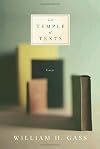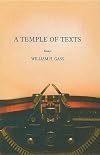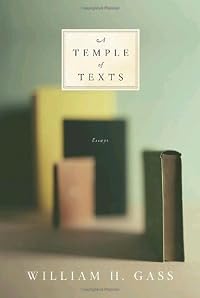
A Temple of Texts
by William H. Gass
On This Page
Description
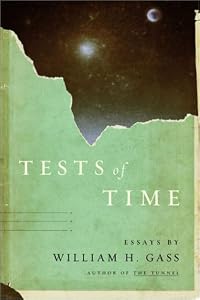
A collection of essays by award-winning author William Gass that explore the nature and value of writing and the books that arise from a deep commitment to the word.Tags
Recommendations










Member Reviews
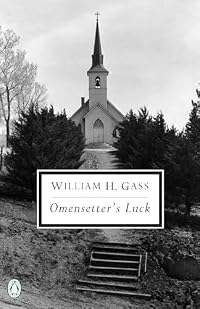
My first experience of Gass was his introduction to Gaddis' The Recognitions, back when I just liked buying and reading immensely long books which were proclaimed under-rated masterpieces or had been discussed in David Foster Wallace's essay on pomo fiction (I can't remember which camp Gaddis fell into). I was charmed, and found a copy of Omensetter's Luck. I can remember literally nothing about it. The Recognitions is my favorite novel. I decided to give Gass another chance.
And for the first quarter of this book I was not only charmed, but thrilled. Gass defends literature as more or less what makes life worth living, despite the fact that it's not necessarily morally edifying. "If you do not admire the writings of Thomas Hobbes," he show more argues, "it is not Hobbes whose ghost now has to feel uneasy." Excellent.
This leads into a group of essays in chronological order: a funny review of 'The Book of Prefaces' (early in the series, I guess, because it includes Chaucer), then praise of Erasmus, 1001 Nights, Rabelais and Burton. I approve of these authors, although not for the same reasons that Gass approves of them. At this point of my reading, I was very, very happy.
The next more or less chronologically ordered essay is on Gertrude Stein. Now Gass mentions 17th century authors often and with approbation, so it's not as if he doesn't read anything written before Rilke. But he certainly appears to have read nothing with any great seriousness written between Burton and Rilke, other than, perversely, Dickens (I'm overstating for effect; I know he's read a lot). This irritates me, because I love the 18th century, and think that people who really love literature should love the 18th century.
Then I noticed that Gass has very little to actually *say* about anyone. His essays on Gaddis are about how nobody likes him enough and how they once went to Russia together. When he really wants to praise someone, he'll quote a paragraph, then point out how many sounds the words in that paragraph have in common. You can do that with this paragraph. It is not enjoyable, nor enlightening, nor a good way to judge prose. Once he starts doing it with Dickens, you know you're in trouble.
Gass' formalism isn't something to be thrown away without thought. It's great that he pays attention to prose rather than, as with James Wood and his ilk, 'character' and vague liberal platitudes. But it's hard to see what, if any, criteria he has for his very strong formal judgements. If you ignore the formalism, though, the criteria become very clear. You're good if you're a friend of William Gass, and/or have excruciatingly dull anti-clerical sentiments, and/or were read by Gass when he was young (at least two authors receive the highest Gassian praise--he read them twice, back to back, even though the first time he didn't really get it, but the second time he read it straight through without stopping).
If you should believe in something, anything, other than James Wood's vague liberal platitudes, and are not a friend of William Gass, you're basically a nazi and should be denied access to any scrivening implements whatsoever; no computers, no pens, no chisels. That's because we're alone in the universe which is a cruel and dark place that doesn't matter anyway and fashionable nihilism fashionable nihilism fashionable nihilism.
How anyone who can write so well, has achieved such genuine (i.e., artistic) success, and has known people who have, I dare say, achieved even greater success, can really think what Gass seems to think is beyond me.
On the upside, he's convinced me to give Elkin and Coover a chance, so if they turn out to be good, I will have used my time reading this book very well. show less
And for the first quarter of this book I was not only charmed, but thrilled. Gass defends literature as more or less what makes life worth living, despite the fact that it's not necessarily morally edifying. "If you do not admire the writings of Thomas Hobbes," he show more argues, "it is not Hobbes whose ghost now has to feel uneasy." Excellent.
This leads into a group of essays in chronological order: a funny review of 'The Book of Prefaces' (early in the series, I guess, because it includes Chaucer), then praise of Erasmus, 1001 Nights, Rabelais and Burton. I approve of these authors, although not for the same reasons that Gass approves of them. At this point of my reading, I was very, very happy.
The next more or less chronologically ordered essay is on Gertrude Stein. Now Gass mentions 17th century authors often and with approbation, so it's not as if he doesn't read anything written before Rilke. But he certainly appears to have read nothing with any great seriousness written between Burton and Rilke, other than, perversely, Dickens (I'm overstating for effect; I know he's read a lot). This irritates me, because I love the 18th century, and think that people who really love literature should love the 18th century.
Then I noticed that Gass has very little to actually *say* about anyone. His essays on Gaddis are about how nobody likes him enough and how they once went to Russia together. When he really wants to praise someone, he'll quote a paragraph, then point out how many sounds the words in that paragraph have in common. You can do that with this paragraph. It is not enjoyable, nor enlightening, nor a good way to judge prose. Once he starts doing it with Dickens, you know you're in trouble.
Gass' formalism isn't something to be thrown away without thought. It's great that he pays attention to prose rather than, as with James Wood and his ilk, 'character' and vague liberal platitudes. But it's hard to see what, if any, criteria he has for his very strong formal judgements. If you ignore the formalism, though, the criteria become very clear. You're good if you're a friend of William Gass, and/or have excruciatingly dull anti-clerical sentiments, and/or were read by Gass when he was young (at least two authors receive the highest Gassian praise--he read them twice, back to back, even though the first time he didn't really get it, but the second time he read it straight through without stopping).
If you should believe in something, anything, other than James Wood's vague liberal platitudes, and are not a friend of William Gass, you're basically a nazi and should be denied access to any scrivening implements whatsoever; no computers, no pens, no chisels. That's because we're alone in the universe which is a cruel and dark place that doesn't matter anyway and fashionable nihilism fashionable nihilism fashionable nihilism.
How anyone who can write so well, has achieved such genuine (i.e., artistic) success, and has known people who have, I dare say, achieved even greater success, can really think what Gass seems to think is beyond me.
On the upside, he's convinced me to give Elkin and Coover a chance, so if they turn out to be good, I will have used my time reading this book very well. show less
A collection of critical essays authored by the unwavering William Gass. The essays examine the writers and publications that influenced his growth. This reading list would serve as a solid starting point for anyone who enjoys reading.
Ratings
Members
- Recently Added By
Author Information

46+ Works 6,854 Members
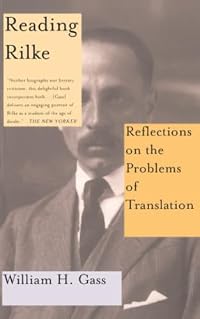
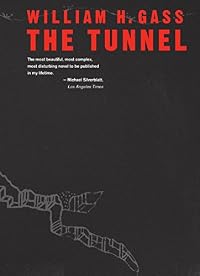
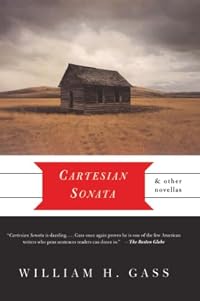
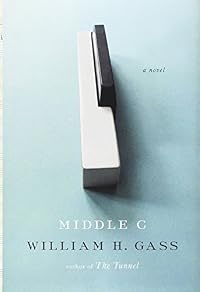
William Howard Gass was born in Fargo, North Dakota on July 30, 1924. During World War II, he served as an ensign in the Navy. He received an A.B. in philosophy from Kenyon College in 1947 and a PhD in philosophy from Cornell University in 1954. He taught at several universities including The College of Wooster, Purdue University, and Washington show more University in St. Louis. He wrote novels, collections of short stories and novellas, and collections of criticism. His novels included Omensetter's Luck, Middle C, and The Tunnel, which received the American Book Award. His other works of fiction included In the Heart of the Heart of the Country, Willie Master's Lonesome Wife, Cartesian Sonata and Other Novellas, and Eyes: Novellas and Stories. His collections of criticism included Tests of Time; A Temple of Texts, which won the 2007 Truman Capote Award for Literary Criticism; and Habitations of the Word and Finding a Form, which both won the National Book Critics Circle Award for Criticism. His essay collections included Fiction and the Figures of Life, The World Within the Word, and Reading Rilke. He died from congestive heart failure on December 6, 2017 at the age of 93. (Bowker Author Biography) show less
Awards and Honors
Distinctions
Classifications
Statistics
- Members
- 285
- Popularity
- 112,622
- Reviews
- 3
- Rating
- (4.11)
- Languages
- English
- Media
- Paper, Ebook
- ISBNs
- 3
- ASINs
- 4