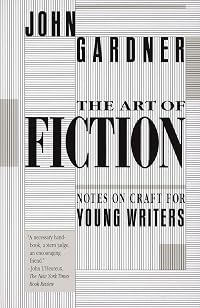
The Art of Fiction: Illustrated from Classic and Modern Texts
by David Lodge
On This Page
Description
Discusses the art of fiction under a wide range of topics, each illustrated by a short passage taken from classic and modern fiction.Tags
Recommendations







Member Reviews
Divertido e interessante conjunto de artigos publicados originalmente em jornal cobrindo aspectos da arte literaria. O autor que é escritor e crítico de literatura cobre em 50 capítulos temas relacionados a criação literária, desde a análise do título da obra até como se termina. Sempre iniciando com um texto que exemplifica o que será comentado, o autor então discorre sobre o tema. É importante notar que não se trata de um manual de estilo, nem um manual de como fazer isso ou aquilo. A ideia é refletir sobre cada tema, trazer algum pano de fundo sobre o uso, a época que começou a ser usado, e comparar com outras alternativas. O primeiro capítulo é sobre o começo, depois seguem capítulos sobre o suspense, o ponto de show more vista, o nome dos personagens, o fluxo de consciência, a ambientação, a surpresa, o leitor no texto, o romance experimental e por aí afora. Já me vi voltando e lendo um ou outro capítulo (deveria dizer artigo?) novamente por conta de algo que lembrei ou que vi em alguma outra leitura. Para quem escreve pode virar um livro de cabeceira. Mas que fique claro que ele traz mais perguntas e reflexões do que respostas. show less
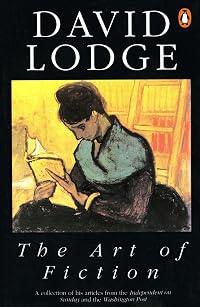
The cover of this collection of essays features a striking image by Van Gogh of a woman reading a novel. Her surroundings are strongly lit by a bright light, while she herself, her face especially, is in shadow (you can still see the anxiety in her face); the only blemish for me is the clumsily rendered fingers of her left hand.
In a way this perfectly captures the impact of this non-fiction study: a lot of light is thrown on how British and American writers achieve the effects that are found in their works, but we are mainly in the dark as to how ordinary readers themselves may react. (The critics however lapped it up, if the cover quotes are typical.) All that we can be sure of is what the essayist thinks of the extracts he discusses: show more it is up to each reader to make up their minds whether that works for them individually.
Some of these pieces were written for the Independent on Sunday as early as 1991, and my worry was that after much ink has flowed from pens and printers over the intervening quarter-century some of his observations might be a little dated. Not a bit of it. Fifty pieces cover the lifetime of the English novel, from Laurence Sterne to Fay Weldon, Jane Austen to Anthony Burgess, Thomas Carlyle to Milan Kundera; fifty article-length discussions revolve around topics as various as Suspense and Interior Monologue, Teenage Skaz and Magic Realism, the Unreliable Narrator and the Non-Fiction Novel, the Epistolary Novel and the Telephone.
Lodge’s approach is to quote a passage or two from one or more books, each of which is designed to illustrate the technique he’s introducing, before going on to analyse and comment on how each extract works. Along the way he slips in specific literary terms like synecdoche or metafiction, defamiliarization or aporia, all without losing the novice reader because he shows those terms working in context. Whether it’s how to structure a novel (Chapters or Narrative Structure), or genre (Suspense, Imagining the Future, Allegory, Surrealism), or style (Showing and Telling, Point of View, Irony), Lodge is always knowledgeable, discursive and entertaining.
I enjoyed this book about novels immensely, often reading two or three sections at a time without a sense of overload. Fittingly the first topic is Beginning and the last — for which I felt a pang of regret that all was nearly over — is Ending; Austen is the principal author bookending the collection. Penguin continued to publish this as recently as 2011 so clearly felt that The Art of Fiction was still relevant twenty years later.
You won’t feel embarrassed caught reading this, not perhaps like Van Gogh’s young female reader. As Vincent himself writes in a little note accompanying a sketch of his 1888 painting, “in her hand she holds a yellow book”. In the late 19th century illicit French novels sported yellow covers, a fact that led to a famous British magazine saucily calling itself The Yellow Book from 1894 to 1897, even though its contents dealt with high art and literature. Still, it did achieve a posthumous kind of notoriety from the fact that both Oscar Wilde and Aubrey Beardsley contributed to it.
http://wp.me/s2oNj1-fiction show less
In a way this perfectly captures the impact of this non-fiction study: a lot of light is thrown on how British and American writers achieve the effects that are found in their works, but we are mainly in the dark as to how ordinary readers themselves may react. (The critics however lapped it up, if the cover quotes are typical.) All that we can be sure of is what the essayist thinks of the extracts he discusses: show more it is up to each reader to make up their minds whether that works for them individually.
Some of these pieces were written for the Independent on Sunday as early as 1991, and my worry was that after much ink has flowed from pens and printers over the intervening quarter-century some of his observations might be a little dated. Not a bit of it. Fifty pieces cover the lifetime of the English novel, from Laurence Sterne to Fay Weldon, Jane Austen to Anthony Burgess, Thomas Carlyle to Milan Kundera; fifty article-length discussions revolve around topics as various as Suspense and Interior Monologue, Teenage Skaz and Magic Realism, the Unreliable Narrator and the Non-Fiction Novel, the Epistolary Novel and the Telephone.
Lodge’s approach is to quote a passage or two from one or more books, each of which is designed to illustrate the technique he’s introducing, before going on to analyse and comment on how each extract works. Along the way he slips in specific literary terms like synecdoche or metafiction, defamiliarization or aporia, all without losing the novice reader because he shows those terms working in context. Whether it’s how to structure a novel (Chapters or Narrative Structure), or genre (Suspense, Imagining the Future, Allegory, Surrealism), or style (Showing and Telling, Point of View, Irony), Lodge is always knowledgeable, discursive and entertaining.
I enjoyed this book about novels immensely, often reading two or three sections at a time without a sense of overload. Fittingly the first topic is Beginning and the last — for which I felt a pang of regret that all was nearly over — is Ending; Austen is the principal author bookending the collection. Penguin continued to publish this as recently as 2011 so clearly felt that The Art of Fiction was still relevant twenty years later.
You won’t feel embarrassed caught reading this, not perhaps like Van Gogh’s young female reader. As Vincent himself writes in a little note accompanying a sketch of his 1888 painting, “in her hand she holds a yellow book”. In the late 19th century illicit French novels sported yellow covers, a fact that led to a famous British magazine saucily calling itself The Yellow Book from 1894 to 1897, even though its contents dealt with high art and literature. Still, it did achieve a posthumous kind of notoriety from the fact that both Oscar Wilde and Aubrey Beardsley contributed to it.
http://wp.me/s2oNj1-fiction show less
I love books about books; there's always something new to learn, some new technical word that I didn't know or fully understand, and new ways of seeing how books work, what separates classics from the run of the mill.
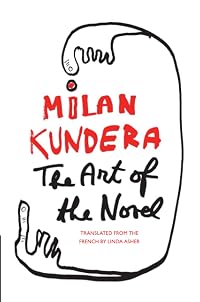
This is a great book about books, though it does have one flaw - that of the author himself. I read Kundera's The Art of the Novel, in which Kundera described how he had arranged his books thematically as well as structurally, but he did this with a modesty that became his writing well. Lodge does not have such apparent modesty, and draws examples of good writing from his own works as easily as from Joyce. I haven't read his other books, so I cannot tell their exact literary worth, but I would have preferred him to seek show more further than the tip of his own pen for inspirational material. show less
This is a great book about books, though it does have one flaw - that of the author himself. I read Kundera's The Art of the Novel, in which Kundera described how he had arranged his books thematically as well as structurally, but he did this with a modesty that became his writing well. Lodge does not have such apparent modesty, and draws examples of good writing from his own works as easily as from Joyce. I haven't read his other books, so I cannot tell their exact literary worth, but I would have preferred him to seek show more further than the tip of his own pen for inspirational material. show less
A great selection of short essays on various aspects of writing (beginnings, magical realism, metafiction, etc.), well-illustrated by citations from specific works. Lodge picks a work and uses it as a whole to demonstrate his points. Necessarily lacking in depth, this work is a good beginner's guide to well-done fiction.
An important - and delicious-to-read - guide to fiction. David Lodge uses interesting and significant examples from classic and modern fiction in English to show the reader the essencial aspects of the theory of literature. Both readers and would-be writers will find it useful.
I found this book very helpful in considering the issues I've been struggling with while revising my drafts (nonfiction as well as fiction) and will surely return to it many times. Each chapter is a stand alone examination of a different aspect of fiction writing, so the book doesn't necessarily need to be read cover to cover. Since I haven't read many of the texts Lodge references, I found the excerpts difficult to understand at first, but Lodge explains them well through sophisticated literary and rhetorical analysis.
British novelist Lodge ( Paradise News ) retired in 1987 from Birmingham University's English faculty and swore off academic prose, but in 1991 he consented to contribute a series of columns "of interest to a more general reading public" to the Independent Newspaper. Each of these 50 essays begins with a brief fiction passage, addressed and interpreted topically by Lodge, who discusses point of view, the unreliable narrator, "the uncanny," "weather" and other aspects of writing. For example, in Chapter 19, "Repetition," he observes that while Hemingway is famous for the "charged simplicity" of his reiterated words or phrases, repetition brings a special flavour to the work of writers as various as Dickens, Lawrence and Martin Amis--and show more he proves it. The selections are varied, although perhaps slanted to favor gentility (Austen and Nabokov, not Meredith or Dreiser), and tend to verify the opinion that "the novel has always been centrally concerned with erotic attraction and desire." show less
Members
- Recently Added By
Lists

Rory Gilmore Book Club
193 works; 5 members
Author Information

55+ Works 19,256 Members
Some Editions
Series
Belongs to Publisher Series
Diana Taschenbuch (0009)
Work Relationships
Contains
Common Knowledge
- Canonical title
- The Art of Fiction; The Art of Fiction: Illustrated from Classic and Modern Texts
- Original title
- The Art of Fiction
- Original publication date
- 1992
- Dedication
- To John Blackwell
"genius among editors" (The Writing Game Act Two Scene Two) - First words
- (Preface): For twelve months between 1990 and 1991, the poet James Fenton contributed a weekly column to the book pages of The Independent and Sunday entitled "Ars Poetica", the title of a famous treatise on po... (show all)etry by the Roman powet Horace.
When does a novel begin? - Last words
- (Click to show. Warning: May contain spoilers.)A novel is Gestalt, a German word for which there is no exact English equivalent, defined in my dictionary as "a perceptual pattern or structure possessing qualities as a whole that cannot be described merely as a sum of its parts."
- Blurbers
- Andrews, Nigel; Robson, David; Byatt, A. S.
Classifications
Statistics
- Members
- 1,364
- Popularity
- 17,588
- Reviews
- 17
- Rating
- (3.81)
- Languages
- 10 — Catalan, Chinese, English, French, German, Italian, Farsi/Persian, Portuguese, Spanish, Turkish
- Media
- Paper, Ebook
- ISBNs
- 25
- ASINs
- 10