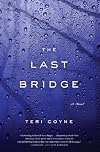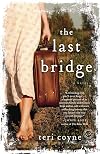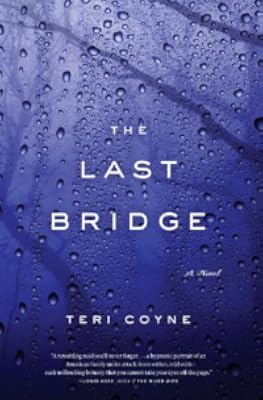
The Last Bridge
by Teri Coyne 
On This Page
Description
BONUS: This edition contains a The Last Bridge discussion guide. For ten years, Alexandra “Cat” Rucker has been on the run from her past. But a sudden call from an old neighbor forces Cat to return to her Ohio hometown—and to the family she never intended to see again. Cat’s mother is dead, and she’s left a disturbing and confusing suicide note that reads: Cat, He isn’t who you think he is. Mom xxxooo Seeking to unravel the mystery of her mother’s death, Cat must confront her show more past to discover who “he” might be: Her tyrannical father, now in a coma after suffering a stroke? Her brother, Jared, named after her mother’s true love (who is also her father’s best friend)? Or Addison Watkins, Cat’s first and only love? Taut, gripping, and edgy, The Last Bridge is an intense tale of family secrets, darkest impulses, and deep-seated love. show lessTags
Recommendations
















Member Recommendations

Member Reviews
Trigger Warnings: Incest/Abuse/Alcoholism/Suicide
It's a story that should have a big black warning sign right on the front cover. Before we get to the third- of- the-way point in the story we are met by a young woman engrossed in her alcoholic life. She has been called home when her abusive father suffers a massive stroke, (and you can almost hear the cheering at that occurrence), and her mother kills herself. Why she didn't kill her husband a long time ago was beyond my understanding, but that would have made the story much shorter, but a great deal happier. Can you say dysfunctional??? Alexandra, (Cat), has only one real friend, and his name is "Jack Daniels" and he lives i a glass bottle. Cat is in her late 20s and has not been back show more to her hometown of Wilton, Ohio in ten years. She's supported herself by working as a stripper and a cocktail waitress, while living in seedy, run-down motels. When Cat arrives at the family farmhouse, she is told that her mother has shot herself in the kitchen...but hey, she was neat and tidy about it. She considerately covered the walls with plastic, placed her suicide note in a Ziploc bag and addressed it to Cat, with the message, “He isn’t who you think he is.” Both me and Cat assumed that the “he” is her now-comatose father. The rest of this family, and myself use that term loosely. Now we have new arrivals.... a younger sister, Wendy and an older brother Jared...but only Wendy asks about dear old Dad. You find this completely understandable if you have arrived this far in the story. We now learn about the summer that Cat turned 17 and what followed up to the present time. Wendy was her father's "Princess". He saved tom-boy, over-weight, Cat to take out of his hostilities and aggressions on... molesting her almost in plain sight while her mother retreated.... probably glad that it wasn't her this time. Now we are privileged to the inevitable deathbed confrontation with this "saint of fatherhood", along with Cat's drifts in and out of sobriety, and her refusal to recall the ultimate violation that finally drove her from home. Her alcoholic daze and denial provided, in her mind, the justification for the withholding several crucial revelations. Though the topic and the life that these characters were forced to live is beyond horrendous you have to ask yourself wouldn’t any normal woman/wife/girlfriend, seek help after any man chops off her fingertip, while forcing her children to watch? Would an entire town stand by while a man, especially a father drags his daughter out of an Elks Club dance by her hair? For any reader that lives a "normal", violence free life, belief is on the "back-burner" here, or sometimes even completely absent. By the half-way point you have to keep reminding yourself that it's "only a story" to keep your disbelief active, but at the end we have to remember that for countless people this is not a tale of fiction that goes away when the last word is read and the book is closed...it's every minute, every hour of their everyday lives. Another reviewer summed the heart of this story up with the statement that "Teri Coyne's story wrings new insights from what a lot of people may think are merely the overexploited topics of incest and domestic violence...but it's NOT. It's the story of the everyday life of countless women, children, and even men". The 3-star rating? Not in any way a reflection of this author's writing skills...but I don't believe anyone can honestly say they "enjoyed" this story. show less
It's a story that should have a big black warning sign right on the front cover. Before we get to the third- of- the-way point in the story we are met by a young woman engrossed in her alcoholic life. She has been called home when her abusive father suffers a massive stroke, (and you can almost hear the cheering at that occurrence), and her mother kills herself. Why she didn't kill her husband a long time ago was beyond my understanding, but that would have made the story much shorter, but a great deal happier. Can you say dysfunctional??? Alexandra, (Cat), has only one real friend, and his name is "Jack Daniels" and he lives i a glass bottle. Cat is in her late 20s and has not been back show more to her hometown of Wilton, Ohio in ten years. She's supported herself by working as a stripper and a cocktail waitress, while living in seedy, run-down motels. When Cat arrives at the family farmhouse, she is told that her mother has shot herself in the kitchen...but hey, she was neat and tidy about it. She considerately covered the walls with plastic, placed her suicide note in a Ziploc bag and addressed it to Cat, with the message, “He isn’t who you think he is.” Both me and Cat assumed that the “he” is her now-comatose father. The rest of this family, and myself use that term loosely. Now we have new arrivals.... a younger sister, Wendy and an older brother Jared...but only Wendy asks about dear old Dad. You find this completely understandable if you have arrived this far in the story. We now learn about the summer that Cat turned 17 and what followed up to the present time. Wendy was her father's "Princess". He saved tom-boy, over-weight, Cat to take out of his hostilities and aggressions on... molesting her almost in plain sight while her mother retreated.... probably glad that it wasn't her this time. Now we are privileged to the inevitable deathbed confrontation with this "saint of fatherhood", along with Cat's drifts in and out of sobriety, and her refusal to recall the ultimate violation that finally drove her from home. Her alcoholic daze and denial provided, in her mind, the justification for the withholding several crucial revelations. Though the topic and the life that these characters were forced to live is beyond horrendous you have to ask yourself wouldn’t any normal woman/wife/girlfriend, seek help after any man chops off her fingertip, while forcing her children to watch? Would an entire town stand by while a man, especially a father drags his daughter out of an Elks Club dance by her hair? For any reader that lives a "normal", violence free life, belief is on the "back-burner" here, or sometimes even completely absent. By the half-way point you have to keep reminding yourself that it's "only a story" to keep your disbelief active, but at the end we have to remember that for countless people this is not a tale of fiction that goes away when the last word is read and the book is closed...it's every minute, every hour of their everyday lives. Another reviewer summed the heart of this story up with the statement that "Teri Coyne's story wrings new insights from what a lot of people may think are merely the overexploited topics of incest and domestic violence...but it's NOT. It's the story of the everyday life of countless women, children, and even men". The 3-star rating? Not in any way a reflection of this author's writing skills...but I don't believe anyone can honestly say they "enjoyed" this story. show less
The Last Bridge is Teri Coyne’s first novel. I was thrilled to read a novel that grabbed me from the first sentence and wouldn’t let me go until I turned the last page, with tears streaming down my face. When I read the author’s note and discovered that the book is the author’s first novel, I was astounded.
Alex “Cat” Rucker is going home to Wilton - the last place on earth she wants to be. She has been running from Wilton for the last ten years, and only her mother’s suicide would draw her home. When she arrives, she is greeted by her mother’s suicide note, which simply reads,
“Cat,
He isn’t who you think he is.
Mom xxxooo”
Who does she mean? Which he? Her father, who is in a coma in the hospital? Her brother, Jared? show more Her past love, Addison?
Cat is in no condition to deal with her mother’s funeral or business arrangments, let alone search out the meaning of this mysterious note. She has spent the last ten years drinking her way to the bottom of endless bottles, numbing the pain she feels over her abusive childhood. Is there even a point in trying to move past the pain? Is it even possible?
Teri Coyne has written in Cat a brittle character, one so full of rage and self-pity and self-condemnation, that it would normally be impossible to relate with her. But as Ms. Coyne unravels Cat’s story, alternating each chapter set in the present with a chapter set in the past, slowly revealing the extent of the abuse Cat suffered at the hands of her monstrous father, you begin to understand the very real reasons why Cat has become the person she is.
This book is not an easy read. The horrific things that humans are capable of doing to each other - even to their own children - never fail to break my heart. I couldn’t stop reading, though, because I wanted to believe that it wasn’t too late for Cat, that there was still a way for her to find a measure of healing and sanity.
Even as Cat’s journey demonstrates that there is always hope, Ms. Coyne doesn’t sugar-coat the reality of the path victims of abuse must walk in order to live as functional adults. As I closed the book, it was with a sense of hope for Cat’s future and the future of her family.
5 out of 5 stars show less
Alex “Cat” Rucker is going home to Wilton - the last place on earth she wants to be. She has been running from Wilton for the last ten years, and only her mother’s suicide would draw her home. When she arrives, she is greeted by her mother’s suicide note, which simply reads,
“Cat,
He isn’t who you think he is.
Mom xxxooo”
Who does she mean? Which he? Her father, who is in a coma in the hospital? Her brother, Jared? show more Her past love, Addison?
Cat is in no condition to deal with her mother’s funeral or business arrangments, let alone search out the meaning of this mysterious note. She has spent the last ten years drinking her way to the bottom of endless bottles, numbing the pain she feels over her abusive childhood. Is there even a point in trying to move past the pain? Is it even possible?
Teri Coyne has written in Cat a brittle character, one so full of rage and self-pity and self-condemnation, that it would normally be impossible to relate with her. But as Ms. Coyne unravels Cat’s story, alternating each chapter set in the present with a chapter set in the past, slowly revealing the extent of the abuse Cat suffered at the hands of her monstrous father, you begin to understand the very real reasons why Cat has become the person she is.
This book is not an easy read. The horrific things that humans are capable of doing to each other - even to their own children - never fail to break my heart. I couldn’t stop reading, though, because I wanted to believe that it wasn’t too late for Cat, that there was still a way for her to find a measure of healing and sanity.
Even as Cat’s journey demonstrates that there is always hope, Ms. Coyne doesn’t sugar-coat the reality of the path victims of abuse must walk in order to live as functional adults. As I closed the book, it was with a sense of hope for Cat’s future and the future of her family.
5 out of 5 stars show less
 This review was written for LibraryThing Early Reviewers.
After ten years of running from her past, Alex "Cat" Rucker returns to her Ohio hometown to deal with the aftermath of her mother's suicide. In a cryptic suicide note, Cat's mother says only "He isn't who you think he is..." leading Cat on a tumultuous path to wonder who her mother was referring to. Is it Cat's abusive father? Jared, the brother Cat's grown distant from? Andrew, the overly friendly county coroner? Or perhaps Addison, Cat's first love? With questions and suspicions driving Cat towards her usual solace at the bottom of a bottle, the story unfolds in present and in the memories of Cat's childhood creating a captivating work.
I'm always a bit hesitant to read stories that deal with themes of alcoholism, broken homes or child show more abuse, but Teri Coyne weaves a powerful and engrossing story in The Last Bridge. The subject matter was difficult to face but the story is not without a ray of light. Coyne shows that choices are ultimately the definition of character and Cat's journey is one that will stay with the reader even after the book is read. show less
I'm always a bit hesitant to read stories that deal with themes of alcoholism, broken homes or child show more abuse, but Teri Coyne weaves a powerful and engrossing story in The Last Bridge. The subject matter was difficult to face but the story is not without a ray of light. Coyne shows that choices are ultimately the definition of character and Cat's journey is one that will stay with the reader even after the book is read. show less
I was expecting a mystery, which it was, but got as well something that was more akin to a horror story. The narrator, Alex, returns home after a ten year physical and emotional absence. Her father has had a massive stroke and her mother has just committed suicide. It is her mother’s rather odd suicide note that provides the initial mystery. It is her father who provides the horror. The action moves alternately from current day to back when Alex was a teenager, just before she left home. She expects to never return but her mother’s death forces her to confront her past. This is a grim book but it is occasionally laced with some rather dark, cutting humor that fits well with the overall story. All in all, this is a well-written, show more compulsive page-turner about a highly dysfunctional family and if you don’t mind reading about the horrors that may entail, you’ll absolutely enjoy this book. I received The Last Bridge through Library Things Early Reviewer program and thank them and the publisher for sharing it with me. show less
This review was written for LibraryThing Early Reviewers.Alex fled her abusive home years ago. Now she nurses her pain with bourbon and denial. She returns home after her father's hospitalization and her mother's suicide. Her mother has left a note for Alex: "He's not who you think he is."
Who is she referring to? There are plenty of men to choose from. Is it her father, who has sexually and physically abused her? Her brother? Her former lover, who has suddenly reappeared? Alex doesn’t want to deal with any of this. She avoids her brother and sister and numbs herself once more with alcohol.
Coyne interweaves the past and present, showing what has happened that lead up to her flight and what is happening as the children bury their mother, clean up the farmhouse and deal with their mutual show more feeling that they are more strangers than siblings. The two storylines finally connect and point toward an uplifting and hopeful resolution.
The book is dark and not for the faint of heart. At times, it’s hard to like Alex, who seems her own enemy, though not worse than her father or the alcohol she numbs herself with. But as the novel progresses, I understood her and developed sympathy for her. I wanted her to throw out the bottle, get help and find out the truth about the question that has tormented her for years.
There were several bewildering elements of the novel.
First, the family tree itself is bewildering. I kept trying to figure out if Addison could possibly be Alex's mother's child, given the complexity of the parents' relationships, and which Jared was which. I had difficulty understanding why the mother's-illegitimate-son plotline was even in the story. It made the already confusing web of family relationships a little more confusing and I didn't think that it added much, if anything, to the novel.
Second, two trivial things that the editor really should have picked up on. Having three characters whose names start with the same letter is confusing: Alex the narrator, Alex her son, and Addison the possible father of her child. At the very least, why not have other characters call Alex the narrator by her nickname, Cat? And two Jareds? Please, this is too confusing!
The dual timeline was a great idea: we get to see what happens after the mother's suicide and what lead up to the fateful night that forced Alex to leave home. But at points I had difficulty figuring out whether the events were happening in the past or present. It would have made sense to add chapter headers telling when the events in the chapters happened; Jodi Picoult did this in The Pact and Nineteen Minutes, and it added clarity to the timelines. A simple "then" and "now" indicator would have helped. I'm not sure why an editor didn't suggest this, unless the reader is meant to be slightly confused because Alex herself confuses the past and present, with all the abuse and fear and addiction rolling together.
Third, the ending is abrupt. I was relieved that Alex got treatment and became a healthier person. I just wish there had been more development at this point. (I'll add, though, that I really liked seeing a nun portrayed in a positive light; not only does she nurse her through the difficulties of alcohol poisoning and detox, she also gives a Bible to her, saying this helped her after a similar experience. It's not often in literature that religion helps rather than harms, so that was refreshing.)
Having said all that, you might think that I disliked the book. Au contraire. I read—no, devoured—it in one afternoon, mesmerized by Coyne's story. I didn't want to put it down. That doesn't happen very often for me. I wanted to know what happened to Alex and I wanted to know what her mother's suicide note meant. He isn't who you think he is.
But it wasn't just the fast-paced plot that made me keep reading. While I read, I thought of all the truth contained in this story, how realistic the family dynamics are in these circumstances, how I know of other families that have lived this story.
It's a heartbreaking look at how abuse destroys a family. No one here can trust another family member. No one besides her brother even bothers to protect Alex, and even he can't protect her from the worst. Everyone else turns a blind eye: her mother and sister, one caught up in her abusive, co-dependent relationship and the other self-centered and spoiled, pretend not to see the obvious; teachers ignore the bruises and cuts of the children; Addison apparently doesn't realize that Alex is being abused or is too immature to act responsibly and get her help.
It's the syndrome that I've seen in news stories about battered women, abused children or victims murdered by a loved one. "I heard a rumor that he beat her, but it wasn't my business. . . . I guess I should have realized when she had that black eye. . . . I didn't know what to do. . . . So I did nothing."
If there's one thing to take away from the book, it's that we all know an Alex. Maybe we're even Alex ourselves. For the latter, Coyne offers hope. For the rest of us, Coyne kicks us hard, letting us know in no uncertain terms to wake up and see the Alex's all around us. And don't just see. Do something. show less
Who is she referring to? There are plenty of men to choose from. Is it her father, who has sexually and physically abused her? Her brother? Her former lover, who has suddenly reappeared? Alex doesn’t want to deal with any of this. She avoids her brother and sister and numbs herself once more with alcohol.
Coyne interweaves the past and present, showing what has happened that lead up to her flight and what is happening as the children bury their mother, clean up the farmhouse and deal with their mutual show more feeling that they are more strangers than siblings. The two storylines finally connect and point toward an uplifting and hopeful resolution.
The book is dark and not for the faint of heart. At times, it’s hard to like Alex, who seems her own enemy, though not worse than her father or the alcohol she numbs herself with. But as the novel progresses, I understood her and developed sympathy for her. I wanted her to throw out the bottle, get help and find out the truth about the question that has tormented her for years.
There were several bewildering elements of the novel.
First, the family tree itself is bewildering. I kept trying to figure out if Addison could possibly be Alex's mother's child, given the complexity of the parents' relationships, and which Jared was which. I had difficulty understanding why the mother's-illegitimate-son plotline was even in the story. It made the already confusing web of family relationships a little more confusing and I didn't think that it added much, if anything, to the novel.
Second, two trivial things that the editor really should have picked up on. Having three characters whose names start with the same letter is confusing: Alex the narrator, Alex her son, and Addison the possible father of her child. At the very least, why not have other characters call Alex the narrator by her nickname, Cat? And two Jareds? Please, this is too confusing!
The dual timeline was a great idea: we get to see what happens after the mother's suicide and what lead up to the fateful night that forced Alex to leave home. But at points I had difficulty figuring out whether the events were happening in the past or present. It would have made sense to add chapter headers telling when the events in the chapters happened; Jodi Picoult did this in The Pact and Nineteen Minutes, and it added clarity to the timelines. A simple "then" and "now" indicator would have helped. I'm not sure why an editor didn't suggest this, unless the reader is meant to be slightly confused because Alex herself confuses the past and present, with all the abuse and fear and addiction rolling together.
Third, the ending is abrupt. I was relieved that Alex got treatment and became a healthier person. I just wish there had been more development at this point. (I'll add, though, that I really liked seeing a nun portrayed in a positive light; not only does she nurse her through the difficulties of alcohol poisoning and detox, she also gives a Bible to her, saying this helped her after a similar experience. It's not often in literature that religion helps rather than harms, so that was refreshing.)
Having said all that, you might think that I disliked the book. Au contraire. I read—no, devoured—it in one afternoon, mesmerized by Coyne's story. I didn't want to put it down. That doesn't happen very often for me. I wanted to know what happened to Alex and I wanted to know what her mother's suicide note meant. He isn't who you think he is.
But it wasn't just the fast-paced plot that made me keep reading. While I read, I thought of all the truth contained in this story, how realistic the family dynamics are in these circumstances, how I know of other families that have lived this story.
It's a heartbreaking look at how abuse destroys a family. No one here can trust another family member. No one besides her brother even bothers to protect Alex, and even he can't protect her from the worst. Everyone else turns a blind eye: her mother and sister, one caught up in her abusive, co-dependent relationship and the other self-centered and spoiled, pretend not to see the obvious; teachers ignore the bruises and cuts of the children; Addison apparently doesn't realize that Alex is being abused or is too immature to act responsibly and get her help.
It's the syndrome that I've seen in news stories about battered women, abused children or victims murdered by a loved one. "I heard a rumor that he beat her, but it wasn't my business. . . . I guess I should have realized when she had that black eye. . . . I didn't know what to do. . . . So I did nothing."
If there's one thing to take away from the book, it's that we all know an Alex. Maybe we're even Alex ourselves. For the latter, Coyne offers hope. For the rest of us, Coyne kicks us hard, letting us know in no uncertain terms to wake up and see the Alex's all around us. And don't just see. Do something. show less
A young woman returns home for the first time in 10 years when her mother commits suicide. The novel alternates chapters that tell the history of physical and sexual abuse she suffered at the hands of her father.
This was a difficult and emotional read, which for me means the author succeeded in establishing empathy with Alex. The story carried me along and there were no spots where the story dragged. The secondary characters very well drawn, sympathetic but with enough flaws to make them realistic. The only problem I had with the book was the note the mother left for Alex, "He isn't who you think he is." The meaning of the note is never fully resolved, and it ended up feeling like a cheap hook to me. The novel was good enough it didn't show more need it. show less
This was a difficult and emotional read, which for me means the author succeeded in establishing empathy with Alex. The story carried me along and there were no spots where the story dragged. The secondary characters very well drawn, sympathetic but with enough flaws to make them realistic. The only problem I had with the book was the note the mother left for Alex, "He isn't who you think he is." The meaning of the note is never fully resolved, and it ended up feeling like a cheap hook to me. The novel was good enough it didn't show more need it. show less
"Life just happened to my mother...She lived in suspended animation, waiting for something better. Killing herself was the only real choice she ever made."
It's been a decade since Alex, affectionately known as Cat, has returned to the Rucker farm. Wounded by the emotional and physical damage dealt to her in childhood, and carrying baggage of her own creation, Cat is disintegrating into a pool of destructive vices. Now her mother is gone and her father won't live much longer. Can she find the courage to heal the relationships she needs the most?
I received this book through LT's Early Reviewer program. Last night while my husband prepared dinner, I thought I would read the first chapter. Three hours later I closed the back cover.
Coyne show more excels at capturing the heightened emotions often present around dysfunctional families: the hate, the shame and yes, the love. Being from a dysfunctional family myself, parts of this book were painful for me to read but at the same time that made it easier for me to identify with these characters and embrace them.
The marketers of this novel have made comparisons to Jodi Picoult's work and several reviews have picked up on that. I have read every Picoult novel and while both women are adept at writing family dramas, each has their own voice and style. I personally believe this novel to be better than Picoult's last few offerings and I am very excited to see what Ms. Coyne does next. show less
It's been a decade since Alex, affectionately known as Cat, has returned to the Rucker farm. Wounded by the emotional and physical damage dealt to her in childhood, and carrying baggage of her own creation, Cat is disintegrating into a pool of destructive vices. Now her mother is gone and her father won't live much longer. Can she find the courage to heal the relationships she needs the most?
I received this book through LT's Early Reviewer program. Last night while my husband prepared dinner, I thought I would read the first chapter. Three hours later I closed the back cover.
Coyne show more excels at capturing the heightened emotions often present around dysfunctional families: the hate, the shame and yes, the love. Being from a dysfunctional family myself, parts of this book were painful for me to read but at the same time that made it easier for me to identify with these characters and embrace them.
The marketers of this novel have made comparisons to Jodi Picoult's work and several reviews have picked up on that. I have read every Picoult novel and while both women are adept at writing family dramas, each has their own voice and style. I personally believe this novel to be better than Picoult's last few offerings and I am very excited to see what Ms. Coyne does next. show less
This review was written for LibraryThing Early Reviewers.Members
- Recently Added By
Author Information

1 Work 265 Members
Teri Coyne is a LibraryThing Author, an author who lists their personal library on LibraryThing.
Common Knowledge
- Canonical title
- The Last Bridge
- Original publication date
- 2009-07-28
- People/Characters
- Alex Rucker; Jared Rucker; Wendy Rucker; Addison
- Important places
- Wilton, Ohio, USA
- Epigraph
- "What would happen if one woman told the truth about her life? The world would split open." - Muriel Rukeyser
- Dedication
- for my father
- First words
- Two days after my father had a massive stroke my mother shot herself in the head.
- Last words
- (Click to show. Warning: May contain spoilers.)"I can't. It's your story now."
Classifications
Statistics
- Members
- 265
- Popularity
- 122,390
- Reviews
- 97
- Rating
- (3.75)
- Languages
- English
- Media
- Paper, Ebook
- ISBNs
- 3
- ASINs
- 1