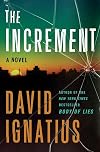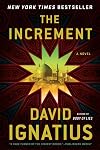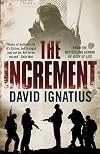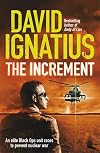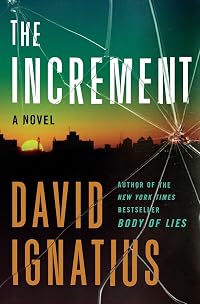
The Increment
by David Ignatius
On This Page
Description
From a hidden enclave in the maze of Tehran, an Iranian scientist who calls himself "Dr. Ali" sends an encrypted message to the CIA. It falls to Harry Pappas to decide if it's for real. Dr. Ali sends more secrets of the Iranian bomb program to the agency, then panics. He's being followed, but he doesn't know who's onto him, and neither does Pappas. The White House is no help---they're looking for a pretext to attack Tehran.To get his agent out, Pappas turns to a secret British spy team show more known as "The Increment," whose operatives carry the modern version of the double-O "license to kill." But the real story here is infinitely more complicated than he understands, and to get to the bottom of it he must betray his own country.
The Increment is The Spy Who Came in from the Cold set in Iran, with a dose of Graham Greene's The Human Factor to highlight the subtleties of betrayal.
. show less
Tags
Recommendations















Member Reviews
David Ignatius creates and builds upon an engagingly textured environment of spies and third world nuclear threat to create a realistic and fun espionage thriller. While I'd give Ignatius' effort three starts for the intricacies of the fiction as literature, I'd move it to a solid four stars for the well-woven and well-paced plot.
The story revolves around a young Iranian scientist who sends the CIA a subtly coded message exposing Iran's efforts in developing nuclear weapons. His mode of communication is the "contact us" link available on the CIA's public website. Ignatius writes, "...occasionally the strange people who sent anonymous messages to the CIA were for real. They knew secrets; they were angry at their government, or the show more security service, or maybe just at the boss down the hall." In this case, the message was very real, and this communication becomes the launching point for Ignatius' tautly written novel.
The story bounces between CIA headquarters outside of Washington, D.C., Iran, London and other points in the Middles East. It's in London where we learn the meaning behind the novel's title. The Increment is the informal and off-the-books British force that's pulled into only the highest of security missions, and the only forces that truly have James Bond's legendary 'license to kill'.
The plot hums along, and the characters, while sometimes clichéd, are believable. The main threads of the story follow an aging America CIA agent in charge of operations in Iran. He's grizzled and jaded, and the most morally consistent and clear of all characters in the story. An old friend and colleague is a senior officer in the British spy agency who's brought in to help with the operation as it moves to Tehran. The Iranian scientist is sincere and sad. While not terrifically deep, Ignatius crafts this character strongly enough that the reader will actually care and root for his success and safety. Few characters are exclusively what they seem. They're a little good, and a little bad. Characteristics lean towards one side or the other based on whose side they appear to support. But as the plot develops, it becomes clear that some larger chess pieces are orbiting around the primary characters.
I don't read particularly quickly, but this story I knocked off in only 3 days. At times "The Increment" is more mystery than adventure, and the thrill is in the creation, build up and execution of Ignatius' well though-through plan. He smoothly slams home a twisty, curvy conclusion that I wasn't expecting. All in all this was a satisfying read for what it is: a fun thriller with a very old-school spy vibe. I definitely recommend this read. show less
The story revolves around a young Iranian scientist who sends the CIA a subtly coded message exposing Iran's efforts in developing nuclear weapons. His mode of communication is the "contact us" link available on the CIA's public website. Ignatius writes, "...occasionally the strange people who sent anonymous messages to the CIA were for real. They knew secrets; they were angry at their government, or the show more security service, or maybe just at the boss down the hall." In this case, the message was very real, and this communication becomes the launching point for Ignatius' tautly written novel.
The story bounces between CIA headquarters outside of Washington, D.C., Iran, London and other points in the Middles East. It's in London where we learn the meaning behind the novel's title. The Increment is the informal and off-the-books British force that's pulled into only the highest of security missions, and the only forces that truly have James Bond's legendary 'license to kill'.
The plot hums along, and the characters, while sometimes clichéd, are believable. The main threads of the story follow an aging America CIA agent in charge of operations in Iran. He's grizzled and jaded, and the most morally consistent and clear of all characters in the story. An old friend and colleague is a senior officer in the British spy agency who's brought in to help with the operation as it moves to Tehran. The Iranian scientist is sincere and sad. While not terrifically deep, Ignatius crafts this character strongly enough that the reader will actually care and root for his success and safety. Few characters are exclusively what they seem. They're a little good, and a little bad. Characteristics lean towards one side or the other based on whose side they appear to support. But as the plot develops, it becomes clear that some larger chess pieces are orbiting around the primary characters.
I don't read particularly quickly, but this story I knocked off in only 3 days. At times "The Increment" is more mystery than adventure, and the thrill is in the creation, build up and execution of Ignatius' well though-through plan. He smoothly slams home a twisty, curvy conclusion that I wasn't expecting. All in all this was a satisfying read for what it is: a fun thriller with a very old-school spy vibe. I definitely recommend this read. show less
Iran. Mention that country to most Americans and the word that comes to their minds is “nuclear.” The new international thriller by David Ignatius takes that fear and spins it into a fascinating novel – one that at times seems more probable than impossible.
At the heart of the book is CIA man extraordinaire Harry Pappas (Ignatius readers will remember him from BODY OF LIES). This time Harry is playing the spy game with a broken heart having lost his only son in the current Iraq War. It sets the stage in unique ways as he attempts to discern the validity of an encrypted message from an Iranian nuclear scientist who is willing to share the country’s bomb secrets in return for safe harbor.
With help from the British (and the show more “Increment” a special SAS team) Harry must decide if and how the young scientist can be retrieved from Iran.
The author takes a sideswipe at American politicians eager to believe anything about Iran’s nuclear capability and thus use the country for target practice. Seems trigger happy politicos really exist in D.C. - shoot now and ask questions later mentality. Ignatius builds a novel about finding truth in a maze and where the answers lead to more puzzles. He walks a fine line between his novel and the news.
It is rare to find humanity in a spy thriller but Ignatius captures Harry’s heart, which gives the reader one more reason to keep turning the pages and reach the stunning conclusion. show less
At the heart of the book is CIA man extraordinaire Harry Pappas (Ignatius readers will remember him from BODY OF LIES). This time Harry is playing the spy game with a broken heart having lost his only son in the current Iraq War. It sets the stage in unique ways as he attempts to discern the validity of an encrypted message from an Iranian nuclear scientist who is willing to share the country’s bomb secrets in return for safe harbor.
With help from the British (and the show more “Increment” a special SAS team) Harry must decide if and how the young scientist can be retrieved from Iran.
The author takes a sideswipe at American politicians eager to believe anything about Iran’s nuclear capability and thus use the country for target practice. Seems trigger happy politicos really exist in D.C. - shoot now and ask questions later mentality. Ignatius builds a novel about finding truth in a maze and where the answers lead to more puzzles. He walks a fine line between his novel and the news.
It is rare to find humanity in a spy thriller but Ignatius captures Harry’s heart, which gives the reader one more reason to keep turning the pages and reach the stunning conclusion. show less
 This review was written for LibraryThing Early Reviewers.
Read this novel and weep - is the sentence that I would use to describe this novel. It is about how things can go wrong and will, and then what needs to be done to fix it. Or not.
I have heard much about this book and had owned a copy of it since 2012. Somehow I kept putting it on the back-burner. If you have done the same thing, or like to read spy novel thrillers, my advice is move this book up on your reading list. It is a great spy novel and follows in the tradition of the masters of the genre such as Len Deighton and John Le Carre. The story is fairly standard but the heroes are full of flaws. How each of them handles their own shortcomings is part of the story. In that respect it reminded me of "Tinker, Tailor, Soldier, Spy." It show more does take half of the novel to set the story up but from then on it moves rapidly. I have heard rumors that this book is on several U.S. governmental agency reading lists but I doubt the veracity of those reports. However, the author spares no intelligence agency for its shortsighted fawning political proclivities and his admonitions to do better in the future. In that sense this title is almost non-fiction. show less
I have heard much about this book and had owned a copy of it since 2012. Somehow I kept putting it on the back-burner. If you have done the same thing, or like to read spy novel thrillers, my advice is move this book up on your reading list. It is a great spy novel and follows in the tradition of the masters of the genre such as Len Deighton and John Le Carre. The story is fairly standard but the heroes are full of flaws. How each of them handles their own shortcomings is part of the story. In that respect it reminded me of "Tinker, Tailor, Soldier, Spy." It show more does take half of the novel to set the story up but from then on it moves rapidly. I have heard rumors that this book is on several U.S. governmental agency reading lists but I doubt the veracity of those reports. However, the author spares no intelligence agency for its shortsighted fawning political proclivities and his admonitions to do better in the future. In that sense this title is almost non-fiction. show less
WAPO foreign affairs columnist David Ignatius has turned out an anti-war spy thriller for liberals – and anyone else who likes heart-pounding adventure with a side of smarts. An Iranian nuclear scientist does a virtual walk-in and reports Iran is working on the nuclear trigger. Career CIA officer Harry Pappas soon is in a race against White House war fever to find out what this “Dr. Ali” is really saying. The Iranians are trying to build the bomb, but progress is oddly evasive.
Suffering deep guilt for not having warned off his now dead Marine son about the stupidity of the Iraq effort, Pappas uses a back-channel to hook up with the Brits for access to their agents inside Iran. Or rather he hooks up with a particular Brit who show more Pappas worked with in the past. Pappas soon finds himself in the inevitable hall of mirrors where the question of who is doing what for whom always has two or three plausible answers.
The Brits mobilize a special unit called The Increment to arrange a face-to-face meeting with Dr. Ali – by penetrating Iran with a 3-person team. The members of the Increment have the ‘00’ license-to-kill and they need it. Besides Iranian security, they are also up against an opponent who lives and kills in the shadows.
Ignatius also plays out a large part of the book inside Iran, which is interesting in its own right due to the relative lack of information in the US about life in Iran. However, the motivations of the Iranian scientist could be more fully and plausibly developed.
Ignatius strains credulity at times, but one suspects he intends to do so. The Increment backmatter touts echoes of Graham Greene and John Le Carre`, I would add Ian Fleming to that list. A satisfying read for fans of the spy thriller genre. show less
Suffering deep guilt for not having warned off his now dead Marine son about the stupidity of the Iraq effort, Pappas uses a back-channel to hook up with the Brits for access to their agents inside Iran. Or rather he hooks up with a particular Brit who show more Pappas worked with in the past. Pappas soon finds himself in the inevitable hall of mirrors where the question of who is doing what for whom always has two or three plausible answers.
The Brits mobilize a special unit called The Increment to arrange a face-to-face meeting with Dr. Ali – by penetrating Iran with a 3-person team. The members of the Increment have the ‘00’ license-to-kill and they need it. Besides Iranian security, they are also up against an opponent who lives and kills in the shadows.
Ignatius also plays out a large part of the book inside Iran, which is interesting in its own right due to the relative lack of information in the US about life in Iran. However, the motivations of the Iranian scientist could be more fully and plausibly developed.
Ignatius strains credulity at times, but one suspects he intends to do so. The Increment backmatter touts echoes of Graham Greene and John Le Carre`, I would add Ian Fleming to that list. A satisfying read for fans of the spy thriller genre. show less
This review was written for LibraryThing Early Reviewers.I was hoping, given how incredibly well-informed David Ignatius is about the Middle East and US Intelligence, and the verisimilitude of his first novel, Body of Lies, that The Increment would teach me something about Iran that I wouldn't learn from news reports or political speeches.
So I was sad to read the first paragraph of the aknowledgements: "The real Iran will intrigue us for decades, but this novel is about an imaginary country. It is a work of fiction... People who look for real intelligence operations in this invented story will only deceive themselves."
That, fortunately, is the only real disappointment of the book. it's a fast, fun read, and real or not, the Tehran he paints is easy and entertaining to imagine.
The British show more SIS play a heavy role in this book, and the character of Adrain Winkler calls to mind a lot of the well-tailored grownup schoolboys George Smiley had to tolerate in Le Carré's novels. The Iranian scientist who drives the plot is very likeable and interesting. It's funny how familiar the dangers he faces and his reasons for betraying his country will seem to readers of Cold War spy novels. "That was his protection - to be ordinary. Deceit was a habit; you put it on and took it off like a suit of clothes. ...But what was normal? Was it to be afraid or unafraid? Was it to remember things or forget them?" That is a freakin' awesome line.
Because I have an Advanced Reader's Copy given to me by the wonderful people at W. W. Norton as part of LT's Early Reviewers program, my copy has a note on the back that the movie rights have already been sold to Disney and Jerry Bruckheimer. Seems like odd subject matter for Disney. But you can tell that Ignatius had sold the rights to Disney by Chapter 21, because that is the beginning of an irritating sequence where CIA agent Harry Pappas is meeting the "The Increment" operatives for the first time. It's written like a corny movie cliche where the agents are all hiding in plain sight before they reveal themselves to Pappas - the first operative is met fixing his sport bike before revealing he's a multi-lingual Pakistani who also is a trained assassin, the second is an Arab soccer player by day, and the third, well, you'll see.
The annoying hey-Mr-Bruckheimer-I-can-write-the-screenplay-too! sequence does however, include my favorite passage from the book: "It wasn't James Bond in a tuxedo drinking a martini, or some upper-class twit driving an Aston Martin and saying 'sorry, old boy' as he shot his adversary with a bespoke pistol. Instead if was these righteous Paki[stani]s and Arabs, ready to kick ass for Queen and country - blowing people up while they listened to Bob Marley on the iPod. C and Q and Miss Moneypenny and the rest of the doting, end-of-empire gang were gone. The Increment was Sex Pistols, Prince Nassim and Hanif Kureishi all rolled into one. It was New Britain, with a vengeance."
Uh, if anyone from W. W. Norton reads this, you do know that "Pakis" is a dirty racial slur, right? Doesn't really belong in a paragraph like that. Page 193. show less
So I was sad to read the first paragraph of the aknowledgements: "The real Iran will intrigue us for decades, but this novel is about an imaginary country. It is a work of fiction... People who look for real intelligence operations in this invented story will only deceive themselves."
That, fortunately, is the only real disappointment of the book. it's a fast, fun read, and real or not, the Tehran he paints is easy and entertaining to imagine.
The British show more SIS play a heavy role in this book, and the character of Adrain Winkler calls to mind a lot of the well-tailored grownup schoolboys George Smiley had to tolerate in Le Carré's novels. The Iranian scientist who drives the plot is very likeable and interesting. It's funny how familiar the dangers he faces and his reasons for betraying his country will seem to readers of Cold War spy novels. "That was his protection - to be ordinary. Deceit was a habit; you put it on and took it off like a suit of clothes. ...But what was normal? Was it to be afraid or unafraid? Was it to remember things or forget them?" That is a freakin' awesome line.
Because I have an Advanced Reader's Copy given to me by the wonderful people at W. W. Norton as part of LT's Early Reviewers program, my copy has a note on the back that the movie rights have already been sold to Disney and Jerry Bruckheimer. Seems like odd subject matter for Disney. But you can tell that Ignatius had sold the rights to Disney by Chapter 21, because that is the beginning of an irritating sequence where CIA agent Harry Pappas is meeting the "The Increment" operatives for the first time. It's written like a corny movie cliche where the agents are all hiding in plain sight before they reveal themselves to Pappas - the first operative is met fixing his sport bike before revealing he's a multi-lingual Pakistani who also is a trained assassin, the second is an Arab soccer player by day, and the third, well, you'll see.
The annoying hey-Mr-Bruckheimer-I-can-write-the-screenplay-too! sequence does however, include my favorite passage from the book: "It wasn't James Bond in a tuxedo drinking a martini, or some upper-class twit driving an Aston Martin and saying 'sorry, old boy' as he shot his adversary with a bespoke pistol. Instead if was these righteous Paki[stani]s and Arabs, ready to kick ass for Queen and country - blowing people up while they listened to Bob Marley on the iPod. C and Q and Miss Moneypenny and the rest of the doting, end-of-empire gang were gone. The Increment was Sex Pistols, Prince Nassim and Hanif Kureishi all rolled into one. It was New Britain, with a vengeance."
Uh, if anyone from W. W. Norton reads this, you do know that "Pakis" is a dirty racial slur, right? Doesn't really belong in a paragraph like that. Page 193. show less
This review was written for LibraryThing Early Reviewers.A good read, and good insights into how the world of the CIA and international politics really works. But the real story here is the characters, and how they react when faced with decisions, dilemmas. Ignatius usually has one main character who is trying to be moral and do the right thing, and it's fascinating to watch how things unravel and how that character navigates. And there's usually a character who has good intentions but got caught up in a slightly cheaper game -- money or power, whatever -- and watching that character unravel is just as fascinating. My favorite Ignatius book is The Bank of Fear, but this was a close second.
From Tehran an Iranian nuclear scientist boldly e-mails the USA’s Central Intelligence Agency. This simple act draws the attention of longtime CIA analyst, Harry Pappas, who wants to maintain contact with his ‘virtual walk-in’ whom he names ‘Dr. Ali’ while at the same time shielding his ‘VW’ from both Iranian counter intelligence and other US government intelligence bureaucrats. At issue is Iranian pursuit of nuclear weaponry and America’s vacillating war vs. anti-war policies. Pappas solicits the help of the UK’s Adrian Winkler, Secret Intelligence Service (in James Bond’s day, MI-6) analyst, and friend from yesteryear when both were case officers in Moscow and later as respective chiefs of station in Iraq. Knowing show more the criticality of protecting Dr. Ali from discovery and understanding Pappas’ plea for intelligence ‘assets’ in Tehran, Winkler reveals the existence of an SIS ad hoc ‘black operations’ unit derived from the Special Air Service, the UK version of the USA’s Army Special Forces, which is called ‘The Increment’, which unit can be utilized to extract ‘Dr. Ali’ from Iran. The twists and turns of this spy novel call to mind the intricacies of the early novels of John le Carre (The Spy Who Came In From The Cold) and Ian Fleming (Casino Royale)but with more alignment with today’s current affairs involving Iran, Israel, Russia, and other states. David Ignatius, journalist with the Washington Post, whose sphere of interest and expertise is the Middle East and America’s intelligence community, has imagined fiction to be on par with whatever is the truth of today’s political power displays between Iran and the West. The Increment is a ‘page turner’ that will lead to inevitable scanning of the news on CNN and FNC as well as Internet blogs and even Foreign Affairs magazine. It is that compelling of a novel. show less
This review was written for LibraryThing Early Reviewers.Members
- Recently Added By
Author Information

19 Works 3,205 Members
David Ignatius was born in Cambridge, Massachusetts on May 26, 1950. He received a B.A. from Harvard University in 1963 and a diploma in economics from Kings College, Cambridge, England, in 1975. He has worked as a reporter for the Wall Street Journal, the New York Times Magazine, and the Washington Post, where he is an associate editor. In 1985, show more he received the Edward Weintal Prize for diplomatic reporting from the Institute for the Study of Diplomacy. He is the author of several novels including Agents of Innocence, Siro, The Bank of Fear, A Firing Offense, Body of Lies, The Increment, and The Director. (Bowker Author Biography) show less
Common Knowledge
- Canonical title
- The Increment
- Original publication date
- 2009-05-18
- Epigraph
- I will rise, in slow increments.
I will make my face beautiful
like a mirror held to the rainbow.
I will scatter blue petals in the wind,
let my silk scarf flutter in abandon...
I will find myself suddenly... (show all) in full bloom
and you doomed to rot.
-- SIMIN BEHBAHANIi,
"O Box Within Box," from
A Cup of Sin: Selected Poems
The Increment was (and is) a selected unit of SAS soldiers... allocated for use by SIS, the British equivalent of the CIA. MI6 undercover intelligence officers do not and never have had the fabled "license to kill" of Jame... (show all)s Bond mythology. But when such jobs are required, it is the Increment whose rules of engagement may permit the lethal use of firearms.
--THE CENTER FOR PUBLIC INTEGRITY - Dedication
- For Jonathan Schiller
and
Dr. Richard Waldhorn - First words
- Imagine a gaudy boulevard descending a hill, like a swath of icing dripping down the inside of a coarse earthen bowl.
- Original language
- English
Classifications
Statistics
- Members
- 434
- Popularity
- 70,800
- Reviews
- 30
- Rating
- (3.71)
- Languages
- 5 — Dutch, English, French, German, Italian
- Media
- Paper, Audiobook, Ebook
- ISBNs
- 22
- ASINs
- 5