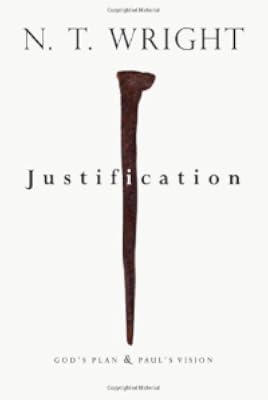
Justification: God's Plan & Paul's Vision
by N. T. Wright
On This Page
Description
Here in one place Wright now offers a comprehensive account and defense of his perspective on this crucial doctrine. He provides a sweeping overview of the central points in the debate before launching into a thorough explanation of the key texts in Paul's writings. While fully cognizant of tradition and controversy, the final authority for his conclusions is the letters of Paul themselves. Along the way Wright responds to critics, such as John Piper, who have challenged what has come to be show more called the New Perspective. --from publisher description show lessTags
Recommendations



Member Reviews
Reading N.T. Wright is sort of like reading E.B. White if E.B. White wrote theology. And who else could include 7 different punctuation marks in one sentence and still have the sentence make sense? Beyond the love that I have for Wright's writing ability, he does a wonderful job of laying out his argument for his view of justification in both Galatians and Romans, with a side jaunt through a few other books. While some may not agree with everything he says, one would be hard pressed to disagree with his desire to see biblical cohesion and the exaltation of Christ.
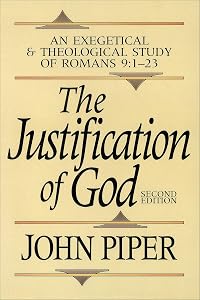
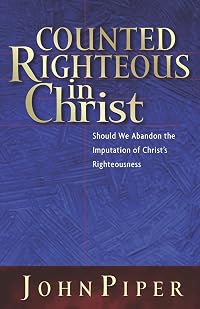
Beyond that, Wright gives much food for thought including a demand that believers re-read Piper and others to make sure they have adequately described his teaching. Wright show more does not pull any punches on how he feels he has been unfairly maligned by Piper and others, including Carson's oft quoted blurb on the jacket of Piper's book.
While Wright may not go far enough in attributing imputation to the concept of justification, he does not deny the sufficiency of Christ's death and resurrection for justification of the believer. show less
Beyond that, Wright gives much food for thought including a demand that believers re-read Piper and others to make sure they have adequately described his teaching. Wright show more does not pull any punches on how he feels he has been unfairly maligned by Piper and others, including Carson's oft quoted blurb on the jacket of Piper's book.
While Wright may not go far enough in attributing imputation to the concept of justification, he does not deny the sufficiency of Christ's death and resurrection for justification of the believer. show less
This book was an advance treat. I've already read and thoroughly enjoyed the first three books in Wright's Christian Origins and the Question of God series:
1. The New Testament and the People of God
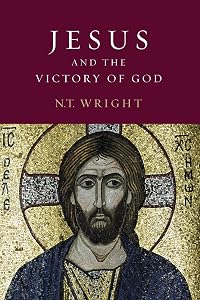
2. Jesus and the Victory of God
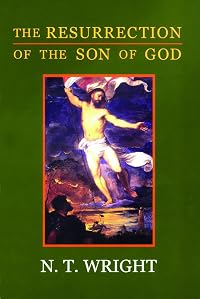
3. The Resurrection of the Son of God
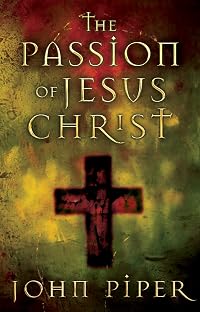
The proposed fourth book deals primarily with Paul. While waiting for it to be written, this gem arrived. Thank you to Dr. Piper for necessitating Wright's interim volume. (In case you are unaware, Justification is Wright's answer to Piper's The Future of Justification: A Response to N. T. Wright.)
Along with Sanders and Dunn, Wright forms the trinity of lead thinkers on the New Perspective on Paul. Interestingly, though, Wright doesn't ask everyone to board the New show more Perspective bandwagon—instead he calls for a synthesis of views that puts everything in its proper perspective.
For Wright, the old view of justification had a lot of valuable components, but missed the main point of the story: God's plan to rescue the world through Israel. Traditional justification proponents largely treat talk of covenant in Genesis 15 and Deuteronomy 30 in Paul as illustrative. Wright reads them as essential to the argument.
In Justification, Wright pleads with his detractors to join the heliocentric revolution: If you see God's plan to rescue the world through Israel (i.e. covenant) as the sun then every other theme falls into place. All the puzzle pieces can be accounted for. Long arguments make logical sense.
Wright's tone is sharp at points, and the commanding metaphor of the earth revolving around the sun is almost insulting. However, with something this fundamental at stake along with a published critique by Piper, it was time for action.
This is Wright at his best. Read it. show less
1. The New Testament and the People of God
2. Jesus and the Victory of God
3. The Resurrection of the Son of God
The proposed fourth book deals primarily with Paul. While waiting for it to be written, this gem arrived. Thank you to Dr. Piper for necessitating Wright's interim volume. (In case you are unaware, Justification is Wright's answer to Piper's The Future of Justification: A Response to N. T. Wright.)
Along with Sanders and Dunn, Wright forms the trinity of lead thinkers on the New Perspective on Paul. Interestingly, though, Wright doesn't ask everyone to board the New show more Perspective bandwagon—instead he calls for a synthesis of views that puts everything in its proper perspective.
For Wright, the old view of justification had a lot of valuable components, but missed the main point of the story: God's plan to rescue the world through Israel. Traditional justification proponents largely treat talk of covenant in Genesis 15 and Deuteronomy 30 in Paul as illustrative. Wright reads them as essential to the argument.
In Justification, Wright pleads with his detractors to join the heliocentric revolution: If you see God's plan to rescue the world through Israel (i.e. covenant) as the sun then every other theme falls into place. All the puzzle pieces can be accounted for. Long arguments make logical sense.
Wright's tone is sharp at points, and the commanding metaphor of the earth revolving around the sun is almost insulting. However, with something this fundamental at stake along with a published critique by Piper, it was time for action.
This is Wright at his best. Read it. show less
Reading N.T. Wright is sort of like reading E.B. White if E.B. White wrote theology. And who else could include 7 different punctuation marks in one sentence and still have the sentence make sense? Beyond the love that I have for Wright's writing ability, he does a wonderful job of laying out his argument for his view of justification in both Galatians and Romans, with a side jaunt through a few other books. While some may not agree with everything he says, one would be hard pressed to disagree with his desire to see biblical cohesion and the exaltation of Christ.
Beyond that, Wright gives much food for thought including a demand that believers re-read Piper and others to make sure they have adequately described his teaching. Wright show more does not pull any punches on how he feels he has been unfairly maligned by Piper and others, including Carson's oft quoted blurb on the jacket of Piper's book.
While Wright may not go far enough in attributing imputation to the concept of justification, he does not deny the sufficiency of Christ's death and resurrection for justification of the believer. show less
Beyond that, Wright gives much food for thought including a demand that believers re-read Piper and others to make sure they have adequately described his teaching. Wright show more does not pull any punches on how he feels he has been unfairly maligned by Piper and others, including Carson's oft quoted blurb on the jacket of Piper's book.
While Wright may not go far enough in attributing imputation to the concept of justification, he does not deny the sufficiency of Christ's death and resurrection for justification of the believer. show less
N. T. Wright's response to John Piper's critique (The Future of Justification) is his most thorough book on Paul yet. It is, in many ways, a masterful unpacking of Paul's thought. Wright shows how Paul's theology of justification is grounded in God's covenant with Abraham and plan to bring redemption to the world through Israel, and ultimately through Jesus. He explores how justification is informed by Jewish law-court imagery, eschatology, and Christology. Wright's unpacking of the narrative substructure to Paul's thought is, at times, brilliant. And after reading this book, I think that Wright and Piper are actually much closer in their thinking than either one of them may think.
However, confusion and misunderstanding continues, and show more this due not least of all, to Wright himself. It's unfortunate that he sometimes caricatures positions that he rejects out of hand and misconstrues the thought and theology of his opponents. (Can anyone who knows John Piper seriously believe that there is no place for the Holy Spirit in his theology?!) Wright's reasons for rejecting imputation are not fully convincing. I still suspect that he takes some wrong steps in his exegesis at some crucial points. And his articulation of how justification by faith in the present relates to future judgment according to works is still a little fuzzy and subject to misunderstanding.
With that said, I think Wright's unpacking of the believer's union with Christ comes fairly close to achieving what imputation achieves for Piper and traditional Reformed theology. Not all his critics agree, but Wright should at least be carefully read and listened to before stones are cast.
I've heard Don Carson say before that Wright's problem is in backgrounding what should be in the foreground and foregrounding what should be in the background. I think I understand that critique. But after reading both Wright and Piper (and Waters, and Westerholm, and Carson, and Moo!) I am wanting to see a synthesis of the different insights and strengths these pastors and scholars bring to the table.
I recommend this book to those who are following the conversation on the New Perspective on Paul. If you've read Piper, definitely read Wright. But in my opinion, it would be better to read neither than to read only one side of the argument. 3 1/2 stars. show less
However, confusion and misunderstanding continues, and show more this due not least of all, to Wright himself. It's unfortunate that he sometimes caricatures positions that he rejects out of hand and misconstrues the thought and theology of his opponents. (Can anyone who knows John Piper seriously believe that there is no place for the Holy Spirit in his theology?!) Wright's reasons for rejecting imputation are not fully convincing. I still suspect that he takes some wrong steps in his exegesis at some crucial points. And his articulation of how justification by faith in the present relates to future judgment according to works is still a little fuzzy and subject to misunderstanding.
With that said, I think Wright's unpacking of the believer's union with Christ comes fairly close to achieving what imputation achieves for Piper and traditional Reformed theology. Not all his critics agree, but Wright should at least be carefully read and listened to before stones are cast.
I've heard Don Carson say before that Wright's problem is in backgrounding what should be in the foreground and foregrounding what should be in the background. I think I understand that critique. But after reading both Wright and Piper (and Waters, and Westerholm, and Carson, and Moo!) I am wanting to see a synthesis of the different insights and strengths these pastors and scholars bring to the table.
I recommend this book to those who are following the conversation on the New Perspective on Paul. If you've read Piper, definitely read Wright. But in my opinion, it would be better to read neither than to read only one side of the argument. 3 1/2 stars. show less
A good starting place for learning part of Wright's opinions about Paul while we wait for the next volume of 'Christian origins and the question of God' to come out.
This is more difficult reading than usual for a boook listed as Tom Wright. I got a lot out of it. I will get a lot more out of Romans and the other Pauline letters the next time I read them. But I should also come back to this in a few months and try again to get all of what Wright is trying to say. As usual, what I understand of Wright makes a lot of sense.
This is more difficult reading than usual for a boook listed as Tom Wright. I got a lot out of it. I will get a lot more out of Romans and the other Pauline letters the next time I read them. But I should also come back to this in a few months and try again to get all of what Wright is trying to say. As usual, what I understand of Wright makes a lot of sense.
This was my first dive into the recent debates on Justification. This particular book was a response to a book put out by John Piper. While it was a dense read (for me, anyway) at times... I found Wright's wit and humor to be engaging... and his chapters on actual scriptural exegesis were fascinating to trace through. This probably isn't a book for everyone... but for those particularly interested in Pauline theology... you may want to check it out. I thought it was fantastic!
A fascinating look at the doctrine of justification. The problem I have with it is that Wright feels the need to argue for his view of justification to the exclusion of all other views, which are not in contradiction with each other. See Doug Wilson's blog for more thoughts: http://www.dougwils.com/?Action=Search&searchstring=n.t. wright
Members
- Recently Added By
Author Information

291+ Works 56,520 Members
N. T. Wright serves as Senior Research Fellow at Wycliffe Hall, Oxford University, as well professor emeritus of New Testament and Early Christianity at the School of Divinity at the University of St. Andrews. He is the award-winning author of many books, including Broken Signposts, Paul: A Biography, Surprised by Hope, and many more.
Some Editions
Work Relationships
Is a reply to
Common Knowledge
- Original publication date
- 2009
- People/Characters
- John Piper; Paul of Tarsus
- Dedication
- For Jimmy Dunn
scholar, friend, partner in the gospel - First words
- When I first heard about John Piper's book The Future of Justification: A Response to N. T. Wright, I was torn between two reflections.
- Last words
- (Click to show. Warning: May contain spoilers.)The Risen Son is the fixed point in whose orbit we move, the one who holds his people by his power and sustains them by his love, the one to whom, with Father and Spirit, be all love and all glory in this age and in the age to come.
- Blurbers
- Marshall, I. Howard; McKnight, Scot; Bock, Darrell; Leithart, Peter; Hays, Richard B.
Classifications
Statistics
- Members
- 1,089
- Popularity
- 23,508
- Reviews
- 14
- Rating
- (3.98)
- Languages
- English, Korean, Spanish
- Media
- Paper, Ebook
- ISBNs
- 8
- ASINs
- 7