
Star Wars: From the Adventures of Luke Skywalker
by George Lucas, Alan Dean Foster (Ghost writer)
On This Page
Description
Written by George Lucas, the producer and writer of the STAR WARS trilogy, STAR WARS: A NEW HOPE tells the story of Luke Skywalker. Luke lives and works on his father's farm on the remote planet of Tatooine. Bored beyond belief, he yearns for adventures out among the stars, adventures that would take him beyond the farthest galaxies to distant and alien worlds. But Luke gets more than he bargains for when he intercepts a cryptic message from a beautiful princess held captive by a dark and show more powerful warlord. Luke doesn't know who she is, but he knows he has to save her - and soon, because time is running out. Armed only with courage and the lightsaber that was his father's, Luke is catapulted into the middle of the most savage space war ever... and heads straight for a desperate encounter on the enemy battle station known as the Death Star... show lessTags
Recommendations


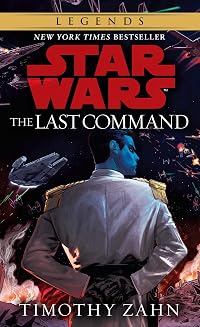
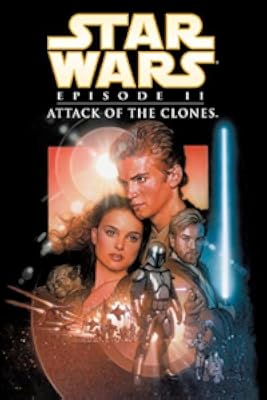

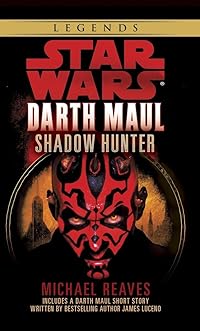
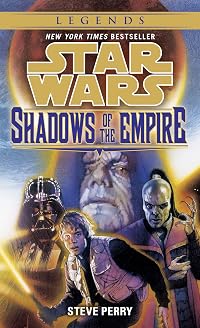
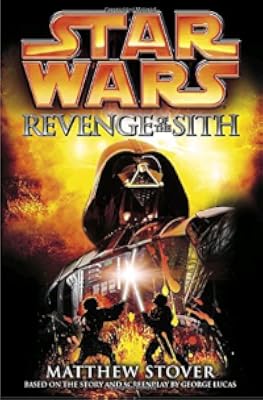
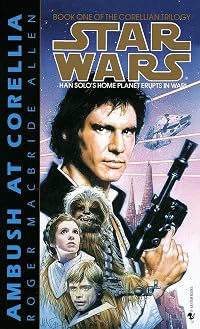
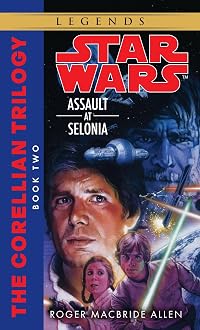
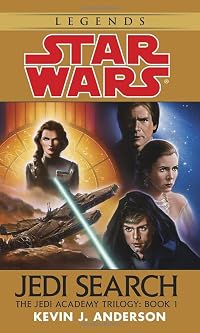

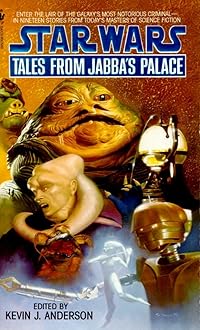
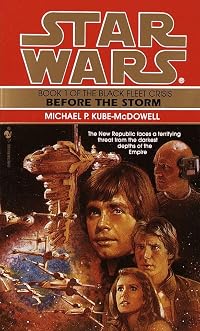
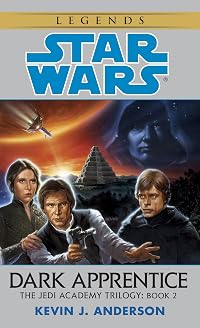
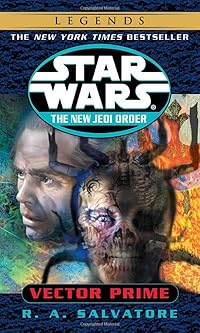
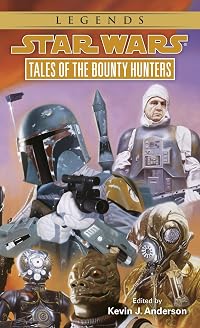
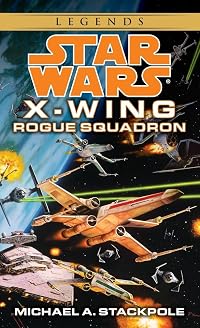
Member Recommendations
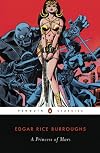
artturnerjr Anyone notice any similarities between the two?
11
Member Reviews
It’s been a long time since I read a proper Star Wars novel, and even longer since I read the original film novelizations, so even though I’m extremely familiar with the story it felt a bit like reading a whole new story. I was surprised that George Lucas actually wrote the novelization of the first Star Wars film, but considering that before the film was taken up by audiences around the world he was just a young filmmaker without a huge fan following and people to do some of the heavy lifting for him in terms of marketing. Lucas’ passion for his space opera story and his creativity is evident throughout the novel, even with his lack of professional writing credentials, so while we may be a bit underwhelmed by the choppy show more storytelling we are swept away by the story itself. What stood out to me most about the novelization is that while the surface action remains decidedly true to the finished film, we get a lot more character development from two of the minor characters who seem to play largely stationary roles - droids R2D2 and C3PO. They are the first major characters introduced in the book, and Lucas reveals many of their thoughts throughout the story, further acting to humanize the otherwise metallic robots and cementing them are far more than supporting characters alongside their human counterparts. Lucas also extrapolates on the galaxy that he has created, exploring the nature of Jawas, the Sandpeople, the Empire’s government officials, and the mysterious Force which act as the supporting backdrop to the fight between the Empire and the Rebellion which drives the plot of the film. These details are largely left out of the film to focus on the action and narration (and for practical reasons based on the narrative differences between film and books), but as a filmmaker trying to sell a pretty out there story Lucas is carefully building the realism that grounds his story. After this initial novel Lucas leaves the writing to established authors, but it was a bit of a treat to see his initial voice put to the page in comparison to the screen. show less
Okay, I'm not gonna write a serious review discussing the literary merit of this book. Like, the plot is that of Star Wars, therefore it is amazing, and the writing is supposedly by George Lucas, and therefore ... not great but it works (come on, there's a difference between a book and a screenplay, it's all I'm saying).
I'm just gonna discuss some quotes I found interesting for one reason or another:
I wish this had been in the movie and had been that one quote Luke is famous for (rather than the Tosche line). It's adorable!! It makes so much sense, of course Luke would never have seen a duck - he lives on a desert planet. I just want him to hang show more out with a duck at some point and think of old Ben.
Is this, like, a thing? I have very little knowledge of the EU (these novelizations and one Young Jedi Knights book is the only Star Wars books I ever read as a child), but I thought only jedis used lightsabers and I thought they were mostly extinct by this point. It's not a line in the movie, so ... I don't know what to make of it. I assume the book was written post-movie, so Lucas must've really wanted this to be true though.
HAH! This has been retconned to hell and back, but apparently it's not meant to be about a unit of lenght, it IS meant to be a unit of time. Still, it's so awkwardly phrased "twelve standard timeparts!" and makes even less sense given that they talk about minutes, hours, weeks and days in the rest of the book. I'm assuming there IS some sort of standardized way of measuring time (or how else would Jabba know when to expect Han - three weeks could mean anything in space), but that line makes even less sense without the parsecs ...
Dogs are canon!!! This makes me happy. I'm not sure what use Luke would have had of a dog. Droids seems pretty much like pets in this universe, and since they're not exactly herding sheep or anything back on Tattooine, I don't see why they'd have one. I hardly think uncle Owen would let him keep one just for fun?
I love how this line is EXACTLY how it appears in the movie ... except for the number on the stormtrooper. We see what you did there, Lucas. We all do.
3PO annoys the shit out of me sometimes, but things like this makes it hard not to like him. He's so weird. Oh yeah, and notice how it's 'droid and not droid. It's also 'puter at a lot of places, which is even worse.
This is spoken by an old pilot right before they go up against the death star. So it seems it's common knowledge who Anakin Skywalker was and who his son is. But no one knows that Anakin is Vader? And how does Leia fit into to all of this - do people know the father but not the mother? In ep 6 Leia says she remembers her mother so it seems she was raised by her for a while before being adopted - how is this kept a secret but Luke's heritance is not? Or is "Skywalker" such an unusual name that people can just assume that his Anakin's son from hearing that?
I doubt those questions will be answered, ever, but it's still interesting to see things like this creep into the book. As I said, I assume the book was written after the movie, so any changes must have been stuff that Lucas really believed would be important later, and he claims to have planned all six movies from the beginning ... but I've always doubted that and I always will. show less
I'm just gonna discuss some quotes I found interesting for one reason or another:
"[...] Still, even a duck has to be taught to swim."
"What's a duck?" Luke asked curiously.
I wish this had been in the movie and had been that one quote Luke is famous for (rather than the Tosche line). It's adorable!! It makes so much sense, of course Luke would never have seen a duck - he lives on a desert planet. I just want him to hang show more out with a duck at some point and think of old Ben.
"Your father's lightsaber," Kenobi told him. "At one time they were widely used. Still are, in certain galactic quarters."
Is this, like, a thing? I have very little knowledge of the EU (these novelizations and one Young Jedi Knights book is the only Star Wars books I ever read as a child), but I thought only jedis used lightsabers and I thought they were mostly extinct by this point. It's not a line in the movie, so ... I don't know what to make of it. I assume the book was written post-movie, so Lucas must've really wanted this to be true though.
"Fast ship? You mean you've never heard of the Millenium Falcon?"
Kenobi appeared amused. "Should I?"
"It's the ship that made the Kessel run in less than twelve standard timeparts!"
HAH! This has been retconned to hell and back, but apparently it's not meant to be about a unit of lenght, it IS meant to be a unit of time. Still, it's so awkwardly phrased "twelve standard timeparts!" and makes even less sense given that they talk about minutes, hours, weeks and days in the rest of the book. I'm assuming there IS some sort of standardized way of measuring time (or how else would Jabba know when to expect Han - three weeks could mean anything in space), but that line makes even less sense without the parsecs ...
Oddly, Luke was thinking of a dog he had once owned [...].
Dogs are canon!!! This makes me happy. I'm not sure what use Luke would have had of a dog. Droids seems pretty much like pets in this universe, and since they're not exactly herding sheep or anything back on Tattooine, I don't see why they'd have one. I hardly think uncle Owen would let him keep one just for fun?
"THX-1138, why aren't you at your post? THX-1138, do you copy?"
I love how this line is EXACTLY how it appears in the movie ... except for the number on the stormtrooper. We see what you did there, Lucas. We all do.
"Are you both safe?"
"For the moment, though I'm not sanguine at my old age. We're in the man hangar, across from the ship."
[...] He clicked off, smiling suddenly at Threepio's reference to his "old age". Sometimes the tall 'droid was more human than people.
3PO annoys the shit out of me sometimes, but things like this makes it hard not to like him. He's so weird. Oh yeah, and notice how it's 'droid and not droid. It's also 'puter at a lot of places, which is even worse.
"I met your father once when I was just a boy, Luke. He was a great pilot. You'll do all right out there. If you've got half of your father's skill, you'll do a damn sight better than all right."
This is spoken by an old pilot right before they go up against the death star. So it seems it's common knowledge who Anakin Skywalker was and who his son is. But no one knows that Anakin is Vader? And how does Leia fit into to all of this - do people know the father but not the mother? In ep 6 Leia says she remembers her mother so it seems she was raised by her for a while before being adopted - how is this kept a secret but Luke's heritance is not? Or is "Skywalker" such an unusual name that people can just assume that his Anakin's son from hearing that?
I doubt those questions will be answered, ever, but it's still interesting to see things like this creep into the book. As I said, I assume the book was written after the movie, so any changes must have been stuff that Lucas really believed would be important later, and he claims to have planned all six movies from the beginning ... but I've always doubted that and I always will. show less
Continuing our way through Star Wars novelizations, my daughter and I read this very first piece of "Expanded Universe" media. Like other novelizations, the book contains scenes that were deleted or didn't even make it to filming. Also, Greedo shot first and somehow that was never edited otherwise. I find it interesting that with the larger mythos of Star Wars being created that Foster hints at story threads that wouldn't be followed-up or would end up very different once the sequels and prequels were rolled out. He also tends to use analogies to things on Earth more than later Star Wars writers would do. A significant downside is that Foster's descriptions of Jawa's use horribly prejudicial terms.
Favorite Passages:
Favorite Passages:
“Remember, Luke,show more
the suffering of one man is the suffering of all. Distances are irrelevant to injustice. If not stopped soon enough, evil eventually reaches out to engulf all men, whether they have opposed it or ignored it.”show less
"Remember, Luke, the suffering of one man is the suffering of all. Distances are irrelevant to injustice. If not stopped soon enough, evil eventually reaches out to engulf all men, whether they have opposed it or ignored it." Ch. 5
For the past 5 years or so, as I have rewatched most of the Star Wars catalogue, The Prequels, OG Trilogy, Sequels, Rogue One, The Clone Wars, Rebels, Andor, and a few other star wars media. I have had a growing suspicion that Star Wars might be better fit to literature, rather than film and animation. My reasoning for this, is I feel like the visual nature of film can de-emphasize the spiritual, political and philosophical nature that is inherent to the world of Star Wars.
When Vader is being evil, or the show more empire is doing something terrible, I feel like the literary format brings more attention to the horror of star wars than what the films can do or show
I have felt this with the movie, but I think it is highlighted even more in a written format, that Luke's character development and relationship with Obi-Wan is very rushed. I am usually all for good pacing, but it seemed like the story prioritized pacing over proper character development, and did not stick the landing or find a balance between good pacing and proper character development. It feels like A New Hope, should have been a trilogy all on it's own for the characters ethical development and motivations to make sense, as well as the terror of the empire to set in, to bring stakes to the plot.
The notable additions that the novelization brings is a deleted scene that was filmed, but not included at the beginning of the story, where Luke catches up with his friend Biggs Darklighter at a local hangout spot on Tatooine. The second notable addition is a fascinating history of the civilization that existed on Yavin IV.
In conclusion, like the movie, Star Wars: A New Hope novelization is a great proof of concept, but has some obvious rushed or missing pieces, making it feel a little bare-bones but manages to be a functional minimum viable product.
Title: Star Wars: A New Hope
Series: Star Wars Movie Novelizations
Order: 4
Author/Editor: George Lucas / Alan Dean Foster
Note (Accolades):
Genre/Subject: Star Wars Canon
Pages: 212
Owned/Platform: EPUB
Excitement: 7
Rating: 6
How did I hear about it: Star Wars is pop culture
Finished: Yes
Read over the course of: 2 Weeks
Date Finished: Wed, Jun 18, 2025
Reason Finished: The rare, but intriguing elements of world building, internal character motivations, and extra context that does not appear in the movie
Reason Dropped:
Expectations: Mixed
Pacing Feel: Too Short
Style: Narrative
Worth My Time: Kinda show less
For the past 5 years or so, as I have rewatched most of the Star Wars catalogue, The Prequels, OG Trilogy, Sequels, Rogue One, The Clone Wars, Rebels, Andor, and a few other star wars media. I have had a growing suspicion that Star Wars might be better fit to literature, rather than film and animation. My reasoning for this, is I feel like the visual nature of film can de-emphasize the spiritual, political and philosophical nature that is inherent to the world of Star Wars.
When Vader is being evil, or the show more empire is doing something terrible, I feel like the literary format brings more attention to the horror of star wars than what the films can do or show
I have felt this with the movie, but I think it is highlighted even more in a written format, that Luke's character development and relationship with Obi-Wan is very rushed. I am usually all for good pacing, but it seemed like the story prioritized pacing over proper character development, and did not stick the landing or find a balance between good pacing and proper character development. It feels like A New Hope, should have been a trilogy all on it's own for the characters ethical development and motivations to make sense, as well as the terror of the empire to set in, to bring stakes to the plot.
The notable additions that the novelization brings is a deleted scene that was filmed, but not included at the beginning of the story, where Luke catches up with his friend Biggs Darklighter at a local hangout spot on Tatooine. The second notable addition is a fascinating history of the civilization that existed on Yavin IV.
In conclusion, like the movie, Star Wars: A New Hope novelization is a great proof of concept, but has some obvious rushed or missing pieces, making it feel a little bare-bones but manages to be a functional minimum viable product.
Title: Star Wars: A New Hope
Series: Star Wars Movie Novelizations
Order: 4
Author/Editor: George Lucas / Alan Dean Foster
Note (Accolades):
Genre/Subject: Star Wars Canon
Pages: 212
Owned/Platform: EPUB
Excitement: 7
Rating: 6
How did I hear about it: Star Wars is pop culture
Finished: Yes
Read over the course of: 2 Weeks
Date Finished: Wed, Jun 18, 2025
Reason Finished: The rare, but intriguing elements of world building, internal character motivations, and extra context that does not appear in the movie
Reason Dropped:
Expectations: Mixed
Pacing Feel: Too Short
Style: Narrative
Worth My Time: Kinda show less
It's a good, solid take on this classic action adventure movie. At the time it was written, no one (especially the film makers) had any idea that it would become a cultural phenomenon. But it did, and owning the original book from back in the day brings some interesting tidbits to life. Besides the fact that Han shot first.
The movie was such a visual experience that the descriptions in the book seem a bit klunky. But it is also interesting to read how Lucas (and probably the late Gary Kurtz) had to put words to things that they saw in their heads. And there are also scenes in the book that didn't make it into the movie; place descriptions are also a good, fill-in backstory.
The movie was such a visual experience that the descriptions in the book seem a bit klunky. But it is also interesting to read how Lucas (and probably the late Gary Kurtz) had to put words to things that they saw in their heads. And there are also scenes in the book that didn't make it into the movie; place descriptions are also a good, fill-in backstory.
Star Wars as a whisky, adventure epic before it became the over saturated and bloated franchise it is today. A not too bad story written by an underrated writer (NOT LUCAS) Allan Dean Foster deserves more credit for his work.
A "can-do" upper-management go-getter for the ages!
Grand Moff Wilhuff Tarkin (played brilliantly by Peter Cushing) has been a hero and role model to business students for nearly two generations, and this is the book that started it all. Don’t get me wrong; he’s an evil bastard with no moral redeeming features- the Dick Cheney of long ago and far, far away- but he’s also one of the most able administrators in all of literature, which makes him a worthy subject to study. Truth be told, not only do most MBA’s probably not hold Tarkin’s evil against him, a good portion are probably secretly turned on by it. As an aside, American business schools, when they pay it any mind at all, have still not figured out how to infuse ethics show more into their curricula. In the wake of the TARP catastrophe, Bernie Madoff, Enron and Arthur Anderson (that's going back a few years) and the collapse of Bear Stearns, concern for ethics in business has at least gotten more lip service. Harvard brought on a prominent ethicist as the new head of its business school this year, but I suspect this is all just window dressing. They probably still see Tarkin foremost as a man who gets results. Well, he is that too, and in a big way!
"Intergalactic Man of Mystery"
Where to begin? It would be nice to begin at the beginning, but alas, Star Wars: A New Hope introduces us to Tarkin very late in his career (indeed, the very end), when he is fully-established and struggling to place an extraordinary capstone on an already-legendary career in public service. Like many fans of this series, I’m a bit disappointed at that. I yearn for more back-story, and marvel at what can only be a dumbfoundingly impressive biography. Where did he came from? How did he climb from obscurity (or not) all the way to the rarified atmosphere of senior galactic leadership? In this way, A New Hope resembles the 1987 movie Wall Street. Tarkin is Gordon Gekko, in every meaningful sense.
He comes to us with minimal exposition. Right out of the gate, he’s an ambitious executive with a whiff of street thug to him, who seems to have it all, yet continues to push himself relentlessly still higher. He is self-driven to a degree we find difficult to comprehend. While Gekko admonishes shareholders "Greed is good.", Tarkin has no need to sell his worldview to anybody. He obviously holds that power is good, but unlike Gekko has nobody to explain himself to. This in itself seems like supporting evidence that he is right. Also like Gekko, Tarkin is appallingly peripheral in his respective movie. Just as Wall Street abandons Gekko to focus on the story arc of infinitely-less-interesting Bud Fox, Star Wars gives Tarkin short-shrift in favor of Luke Skywalker and sister/girlfriend Leia. Tarkin alone could easily support an entire story franchise… and for all I know, he does. I haven’t followed much of the Star Wars fan literature, but I hope they’re doing the Grand Moff justice! The “Tarkinverse” (as I call it) must be very nearly as wondrous and astonishing as the overall Lucas/Star Wars universe of which it is a subset. Developing the Tarkinverse, however, is not the main point of A New Hope, which really functions as a showcase for this Master when he is at the top of his game. And man is he! In every measure of leadership, he’s firing on all cylinders! Let’s go down the list:
1) Organization
To list the obvious first, Tarkin is the Emperor’s point-man overseeing the all-time most ambitious construction project in all of literature, bar-none: the Death Star. My wife and I purchased what is best described as a “fixer upper” condo unit a year back, which had fallen into disrepair. To make the place livable, we had to rip out not only the floors (i.e. the “top floor“; the part you walk on) but also replace the sub flooring.
Subfloor repair
“Floating“ wood topfloor
Since we were ripping the place up anyhow, it seemed an opportune time to replace some damaged tile in the bathroom, and do some cabinet and countertop work in the kitchen. This required farming out work to independent subcontractors. If you haven’t had any experience with that sort of thing, I can tell you that it involves constant communication and coordination between the various players. If you aren't organized, you’ll have workers getting in each other's way, which is wasteful and therefore expensive (since you're paying them to be there, whether they're working or not). Also, if, for example, an electrician needs to shut off the power, the others won’t be able to use power tools and lighting in that area. To some extent, the contractor responsible for the overall project will manage the subcontractors, but I was surprised how active the customer still needs to be in this situation, to constantly clarify details about how you want the final product to appear.
Kitchen before
Kitchen after
This requires a lot of attention to detail, and I’m only still talking about a condo renovation. The Death Star is obviously orders of magnitude beyond my little project, both in scale and complexity. Given, the Star Wars universe is more technologically advanced than ours, and may have developed tools to address the organizational challenges of constructing the Death Star… but even by their own internal standards, the Death Star is a project of breathtaking scope. To be the head of such an undertaking, and to have executed it so nearly-perfectly (it was operational, after all) is a testament to organizational skills of near-Biblical proportion.
I cannot really address the fiscal management skills involved with the Death Star, although I expect they must be impressive. Obviously, the operating budget was astronomical (literally!), but the economics of the Star Wars universe was always a bit murky to me. On one hand there seems to be an element of free market economy, but it coexists with slavery, and a sort of military/governmental command economy. Witness the prequil movies, where you see the capitol planet of Coruscant - an entire planet covered with bureaucratic office buildings!
2) Vision
Organization alone does not make a leader. A true leader must possess an idea of what he would like the end result to be, and effectively shape the resources at his disposal to that end. This is the “big picture” aspect of senior leadership that characterized Teddy Roosevelt’s administration (the Panama Canal being akin to the Death Star in so many ways)
-and which has more recently been (excessively) applied to Disney’s former Chairman, Michael Eisner. Tarkin’s clarity of vision (and its apparent alignment with the overall vision of the Emperor) jumps out and steals nearly every scene he’s in. Consider some of his lines:
"The regional governors now have direct control over their territories. Fear will keep the local systems in line. Fear of this battle station."
"Princess Leia, before your execution, I would like you to be my guest at a ceremony that will make this battle station operational. No star system will dare oppose the Emperor now."
Vader: Obi-Wan is here. The Force is with him.
Tarkin: If you are right, he must not be allowed to escape.
.
.
.
And of course perennial favorite:
"Now Lord Vader will provide us with the location of the hidden Rebel fortress. We will then crush the Rebellion with one swift stroke!"
See? There’s no
“Uh, I’m not sure about that… I’ll have to check with the Emperor.”
...and you never hear stuff like
“The Rebellion? I don’t know… what do you think we should do?”
Why don’t you hear that? Because Tarkin has a strong operational vision, that’s why!
As an aside, he’s also got a strong artistic vision. I have to assume that a man in Tarkin’s position, directly managing the Death Star’s construction, must have had a hand in its design. If this is true, my hat’s off to his creative talents. The Death Star, with its unified sense of style and functionality, is seriously lookin’ better than a military platform’s got a right to! With its innovative use of vertical space
…and its well-lit, inviting, open common areas…
…it looks downright luxurious! I am sure it would have won some sort of awards, had it survived to completion.
3) Charisma
The Grand Moff cuts a marvelously confident figure. He is illustrious -almost regal- in his demeanor, yet possessing of a certain restraint which suggests untold power hiding, barely concealed, beneath his calm surface. The sum of these traits is a certain charisma you find in only a very few of the most effective leaders. As a result, his commanding presence is so perfectly constructed, so thorough and unquestioned, that it trumps Vader‘s dexterity with the Force. In fact, it doesn’t merely trump Vader, it so completely outclasses Vader as to make him irrelevent. Think I’m joking? First consider the scene when Darth Vader -a menacing figure in his own right- is using the Force to choke a high-ranking Imperial official.
How does that little exchange end? Tarkin steps in and rebukes Vader, commanding “Release him!” That puts things in perspective, doesn’t it? But that’s minor. Who’s giving the orders around that place? Tarkin. Who gives the command to destroy Alderaan? Tarkin. Do you think Vader could destroy an entire planet with the Force? (if the answer were yes, why build the Death Star at all?) I rest my case. Even as an eight-year-old sitting in the theater, watching the movie for the first time, I had a sense of this, as I’m sure so many others did. Vader was built up to be the one we were supposed to be scared of, but just like George W. Bush strutting around in his flight suit, he is all style and no substance. Tarkin is the Dick Cheney of the Death Star, hiding out in his “undisclosed locations”, wielding the real power from behind the scenes. David Rockefeller is the Emperor in this little analogy, which raises an interesting point: what about the Emperor? Isn’t he an even bigger fish than Tarkin? Well, on one hand, of course he is. Tarkin obviously answers to him and serves to carry out his vision, but Tarkin’s institutional knowledge and leadership proficiency make him indispensable. Further, just as Rockefeller was born into more money than any one person could accumulate in one lifetime, the Emperor possesses a supernatural skill which makes him something other than human. Tarkin is the apogee of what can be achieved with human qualities alone.
4) Courage
So let’s talk about his human qualities for a second. He is, after all, a man possessed of all the natural emotions any of us would experience. Do you think he‘s beyond feeling fear? Don‘t believe it for a second; Star Wars is a war movie, after all - just look: it's in the title! One of the most heartwrenching scenes of the entire series occurs when the Death Star is under Rebel attack. They are a small force, to be sure, but they have the secret of the battle station’s vulnerability. What’s more: Tarkin knows they have it. He has an inkling that they just might succeed, and thus he just might perish at any moment. Is he scared? "You betcha!" ...but when an aide comes up to him, advising of the Rebel threat, and asking whether he would like to have a shuttle standing by, Tarkin pushes his fears aside, and utters his now-famous response:
"Evacuate?! In our moment of triumph?! I think you overestimate their chances!"
You can practically see the aide’s morale reinflating at this. The boost troops get from seeing that their leader is willing to lead the charge, to expose himself to the very risks he would ask them to face, is intangible, but also incalculable. In the heat of battle, Tarkin puts on a stoic face and leads from the front! Can you imagine Douglas MacArthur doing more?
Wrap up
Of course, by outlining all this in excruciating detail, I am merely prolonging the admission that ultimately, Tarkin does not win the day. Luke, Leia and the rest of the Rebellion win a dark-horse victory in what will surely be their galaxy’s most famous long-shot story ever. These things happen. Like Gordon Gekko facing likely prison at the end of Wall Street, Tarkin manages to snatch defeat from the jaws of victory. Might, planning, organization and vision may make a great leader, but do not always translate to victory. There’s a morality tale at work here, of course, but also some lessons for your average high-finance sociopath: 1) never underestimate your enemies; 2) understand that even the best-laid plans may not cover every contingency- be prepared to abandon your plans if they are no longer suited to the situation at hand; 3) force, whether physical or symbolic (e.g. administrative),should only be applied as a last resort - it is inherently a position of weakness, because it can only be applied selectively to example cases, not wholesale across the entire broad base of society. This is why true grass-roots movements, like the Indian independence movement led by Gandhi, or the Montgomery Bus Boycott can never fail if they are carried out tenaciously by a determined and broad-based public. Great Leaders can be impressive figures, but are also fundamentally weak in the sense that leaders always need followers more than followers need leaders. What I mean by this is that in the "leader-as-dictator" model, force and authority move predominantly downward, and the entire system is destroyed if participation/consent/acquiescence don't extend all the way from the top to the bottom. (e.g. dictatorships are toppled when the broad base at the bottom no longer cooperates) By contrast, in the "leader-as-servant" (public servant, or servant to some widely-shared ideal) model, force and authority move predominantly upward. These systems remain intact even when the leaders, whose main purpose is to coordinate efforts and direct tactics, are removed. So Gandhi was a leader, but he was a leader-as-servant.. not bending the public to his will, but rather acting as a focal point lending coherance to a pre-existing public sentiment. MLK was much the same, and the civil rights movement continued with new leaders after he was assassinated. The bottom of the proverbial pyramid is always stable, and may exist without the top. The top always depends on the base for support.
==========================
If you enjoyed this review, you might also enjoy discussing some of the legal aspects of Star Wars in my review of The Oxford Companion to American Law show less
Members
- Recently Added By
Published Reviews
ThingScore 50
Despite some continuity errors with later material, Foster's novelization expands the early Star Wars universe and provides some interesting details left out of the movie.
added by siroc
Lists

Read the book and saw the movie
1,170 works; 193 members

Star Wars Legends
155 works; 3 members

My Star Wars Canon List
16 works; 1 member

Guilty Pleasures
223 works; 86 members
Author Information

155+ Works 17,531 Members
Awards and Honors
Awards
Work Relationships
Is contained in
Common Knowledge
- Canonical title
- Star Wars: From the Adventures of Luke Skywalker
- Original title
- Star Wars
- Alternate titles*
- Un nouvel espoir
- Original publication date
- 1976
- People/Characters
- Luke Skywalker; Obi-Wan Kenobi; Han Solo; C-3PO; R2-D2; Leia Organa (show all 14); Darth Vader; Biggs Darklighter; Laze "Fixer" Loneozner; Camie Loneozner; Owen Lars; Beru Lars; Wilhuff Tarkin; Jan Dodonna
- Important places
- Tosche Station; Tatooine; Death Star; Yavin 4
- Related movies
- Star Wars (1977 | IMDb); Star Wars: Episode VI - Return of the Jedi (1983 | IMDb); Star Wars: Episode V - The Empire Strikes Back (1980 | IMDb); Star Wars: Episode IV - A New Hope (1977 | IMDb)
- First words
- Another galaxy, another time.
- Last words
- (Click to show. Warning: May contain spoilers.)She noticed his unabashed stare, but this time she only smiled.
- Original language
- English
- Canonical DDC/MDS
- 813.087625
- Disambiguation notice
- This is the entry for the novelization for Star Wars, originally "Star Wars: From the Adventures of Luke Skywalker", and reissued under various names. Please keep separate from the comic book adaptations, screenplays and vide... (show all)orecordings. Thank you!
George Lucas has verified that this work was ghostwritten by Alan Dean Foster.
*Some information comes from Common Knowledge in other languages. Click "Edit" for more information.
Classifications
- Genres
- Science Fiction, Fiction and Literature
- DDC/MDS
- 813.087625 — Literature & rhetoric American literature in English American fiction in English By type Genre fiction Adventure fiction Speculative fiction Science fiction Space opera
- LCC
- PZ4 .L9328 — Language and Literature Fiction and juvenile belles lettres Fiction and juvenile belles lettres Fiction in English
- BISAC
Statistics
- Members
- 3,771
- Popularity
- 4,235
- Reviews
- 35
- Rating
- (3.61)
- Languages
- 15 — Czech, Dutch, English, Finnish, French, German, Hungarian, Italian, Japanese, Lithuanian, Polish, Portuguese, Romanian, Spanish, Swedish
- Media
- Paper, Audiobook, Ebook
- ISBNs
- 88
- UPCs
- 4
- ASINs
- 32
