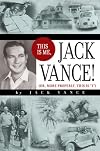
This is Me, Jack Vance!
by Jack Vance
On This Page
Description
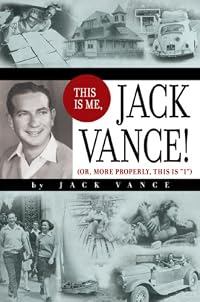
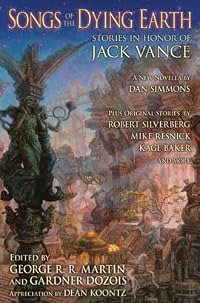
Living in interesting times... Jack Vance has long been one of the most influential, admired and imitated writers in science fiction and fantasy literature, the award-winning author of such widely acclaimed works as The Dying Earth, the Lyonesse trilogy, the adventures of Cugel the Clever, the Demon Princes series, and many other masterful tales set among the stars, in exotic fantasy realms or on our own Earth. For much of his career, Vance has also been one of the field's most private show more writers, an author who preferred to let his work speak for him. Now, at last, to coincide with the release of the tribute anthology Songs of the Dying Earth, Jack gives us this intimate and fascinating glimpse into his rich and eventful life, including an extensive photo section, and a valuable insight into how he went about practicing his craft. show lessTags
Recommendations











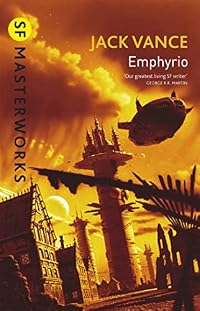
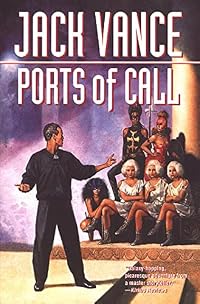


Member Recommendations

Member Reviews
For memoirists and autobiographers, timing matters. Write your life story too soon, and you might miss that late Nobel. Jack Vance made the other mistake. He waited to write a memoir until he was 92, blind, and no longer much interested in writing. It won a Hugo in 2010, more, I imagine, as a lifetime achievement award than a tribute to the book itself. It reads more like notes from a diary than a connected narrative. His prose in the memoir is transparent and acerbic, sounding nothing at all like his fictional voice, where we can see the influence of some of his early favorites, like P. G. Wodehouse and Lord Dunsany.
His travel writing and the story of his early life in the Depression are worth reading, but I would like to know more show more about his intellectual and emotional life. He was close friends with Frank Herbert and Poul Anderson, but we learn little about what they thought of each other and their work.
He does not discuss his own work or that of his contemporaries. He does mention his early inspirations--P. G. Wodehouse, L. Frank Baum, Edgar Rice Burroughs, and Lord Dunsany—but he does not say much about what he took from them.
He tells us: “Talking shop has never much appealed to me, and I have spent most of my career trying to avoid it.” In the last chapter, though, we do learn that he usually wrote handwritten drafts using fountain pens with different color inks. His wife, Norma, was his typist. When his vision failed, he moved to a computer with a text-to-speech synthesizer. For accounts of the science fiction community of the period, memoirs by Fred Pohl, Poul Anderson, and Isaac Asimov are much more helpful. show less
His travel writing and the story of his early life in the Depression are worth reading, but I would like to know more show more about his intellectual and emotional life. He was close friends with Frank Herbert and Poul Anderson, but we learn little about what they thought of each other and their work.
He does not discuss his own work or that of his contemporaries. He does mention his early inspirations--P. G. Wodehouse, L. Frank Baum, Edgar Rice Burroughs, and Lord Dunsany—but he does not say much about what he took from them.
He tells us: “Talking shop has never much appealed to me, and I have spent most of my career trying to avoid it.” In the last chapter, though, we do learn that he usually wrote handwritten drafts using fountain pens with different color inks. His wife, Norma, was his typist. When his vision failed, he moved to a computer with a text-to-speech synthesizer. For accounts of the science fiction community of the period, memoirs by Fred Pohl, Poul Anderson, and Isaac Asimov are much more helpful. show less
Jack Vance is one of the giants of the science fiction genre, and his autobiography is a pleasant ramble through what seems to have been a pleasant life. Misfortunes - his parents' separation and divorce, years of poverty, a long period of childlessness after his marriage, a beloved daughter-in-law's premature death, encroaching blindness - pass by with scarcely a word of complaint. Instead, the author rejoices in his blessings: over 60 years of marital happiness, a congenial career, travels to exotic lands, a son and grandchildren.
The author is clearly a happy man, and one whose happiness owes much to his own calm determination to see the better side of life. He will, however, disappoint readers who seek insight into his writing. show more Except for a few pages at the end, he barely mentions his literary work. His principal subjects are, in roughly descending order, family, travel, boats, music, carpentry and ceramics.
All in all, I have never before read such an unrevealing memoir. When a man covers his courtship and marriage in a single paragraph, he obviously has no intention of laying bare his soul. He is even less forthcoming about his opinions; the most controversial is his fondness for jazz. And, while the book abounds in anecdotes, almost none of them involves anyone whom any reader will have heard of.
This is not, in short, a deep and penetrating set of reflections. Rather, it is the sunny recollection of a man who has learned how to live. We should all do as well. show less
The author is clearly a happy man, and one whose happiness owes much to his own calm determination to see the better side of life. He will, however, disappoint readers who seek insight into his writing. show more Except for a few pages at the end, he barely mentions his literary work. His principal subjects are, in roughly descending order, family, travel, boats, music, carpentry and ceramics.
All in all, I have never before read such an unrevealing memoir. When a man covers his courtship and marriage in a single paragraph, he obviously has no intention of laying bare his soul. He is even less forthcoming about his opinions; the most controversial is his fondness for jazz. And, while the book abounds in anecdotes, almost none of them involves anyone whom any reader will have heard of.
This is not, in short, a deep and penetrating set of reflections. Rather, it is the sunny recollection of a man who has learned how to live. We should all do as well. show less
http://nwhyte.livejournal.com/1449979.html
I haven't read a lot of Vance's work - just The Dying Earth and The Last Castle - but I've enjoyed what I've read, and considering the fascinating material that 90-year-old Frederik Pohl is putting on his blog these days, I was rather looking forward to reading this volume of reminiscences by Vance, who is a couple of years older.
Unfortunately it's just not a very interesting book. The best bit is the early material about growing up during the Depression (Vance was born in 1916), but apart from that it's a sequence of dinners, holidays, parties, jazz concerts, enumerated in detail without much reflection. To give one example, I have seen the story of the Jack Vance / Frank Herbert / Poul show more Anderson houseboat told in several other places, and told better. To give another, Vance has been blind for the last twenty years (including when writing all his later books starting with Lyonesse), and while I shall bear in mind his extensive listing of mystery genre wriiters whose whork he enjoys listening to on audio, it would have been interesting to read something more profound about the effect of the loss of one of the five senses on the writer. A line about the distinctive smell of Irish peat is used twice. We really don't learn much about Vance the man, and even less about Vance the writer; and those like me who really only know him through his writing won't feel any the wise after reading this. show less
I haven't read a lot of Vance's work - just The Dying Earth and The Last Castle - but I've enjoyed what I've read, and considering the fascinating material that 90-year-old Frederik Pohl is putting on his blog these days, I was rather looking forward to reading this volume of reminiscences by Vance, who is a couple of years older.
Unfortunately it's just not a very interesting book. The best bit is the early material about growing up during the Depression (Vance was born in 1916), but apart from that it's a sequence of dinners, holidays, parties, jazz concerts, enumerated in detail without much reflection. To give one example, I have seen the story of the Jack Vance / Frank Herbert / Poul show more Anderson houseboat told in several other places, and told better. To give another, Vance has been blind for the last twenty years (including when writing all his later books starting with Lyonesse), and while I shall bear in mind his extensive listing of mystery genre wriiters whose whork he enjoys listening to on audio, it would have been interesting to read something more profound about the effect of the loss of one of the five senses on the writer. A line about the distinctive smell of Irish peat is used twice. We really don't learn much about Vance the man, and even less about Vance the writer; and those like me who really only know him through his writing won't feel any the wise after reading this. show less
Ratings
Members
- Recently Added By
Lists

Science Fiction and Fantasy Autobiographies
38 works; 3 members
Author Information

373+ Works 34,778 Members
John Holbrook Vance (August 28, 1916 - May 26, 2013) was an American mystery, fantasy and science fiction writer. Most of his work was published under the name Jack Vance. He also wrote 11 mystery novels as John Holbrook Vance and three as Ellery Queen, and once each used pseudonyms Alan Wade, Peter Held, John van See, and Jay Kavanse. Vance won show more the World Fantasy Award for Life Achievement in 1984. The Science Fiction Hall of Fame inducted him in 2001. Among his awards for particular works were: Hugo Awards, in 1963 for The Dragon Masters, in 1967 for The Last Castle, and in 2010 for his memoir This is Me, Jack Vance!; a Nebula Award in 1966, also for The Last Castle; the Jupiter Award in 1975; the World Fantasy Award in 1990 for Lyonesse: Madouc. He also won an Edgar (the mystery equivalent of the Nebula) for the best first mystery novel in 1961 for The Man in the Cage. He died at his home in Oakland, California, on May 26, 2013, aged 96. (Bowker Author Biography) show less
Awards and Honors
Awards
Distinctions
Common Knowledge
- Original publication date
- 2009
- People/Characters
- Jack Vance
Classifications
- Genres
- Biography & Memoir, Literature Studies and Criticism, Travel
- DDC/MDS
- 809 — Literature & rhetoric Literature, rhetoric & criticism History, description, critical appraisal of more than two literatures
- LCC
- PS3572 .A424 — Language and Literature American literature American literature Individual authors 1961-
- BISAC
Statistics
- Members
- 95
- Popularity
- 337,641
- Reviews
- 5
- Rating
- (3.07)
- Languages
- English, German
- Media
- Paper, Ebook
- ISBNs
- 4
- ASINs
- 4