
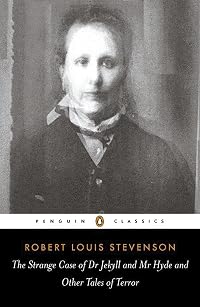
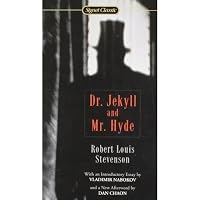
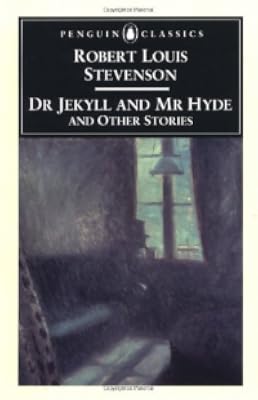
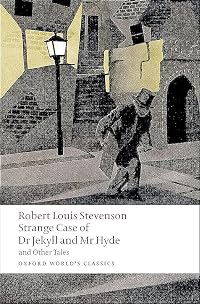
The Strange Case of Dr Jekyll and Mr Hyde and Other Tales of Terror
by Robert Louis Stevenson
On This Page
Description
The Strange Case of Dr Jekyll and Mr Hyde is Robert Louis Stevenson's thriller allegory of a medical experiment gone wrong and dual personalities, one the essence of good, the other the essence of evil, fighting for supremacy in one man. Filled with suspense, the book has had such an impact in popular culture that the expression "Jekyll and Hyde" has itself become synonymous with extremes of, or inconsistent behavior..
Tags
Recommendations
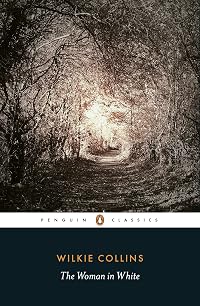
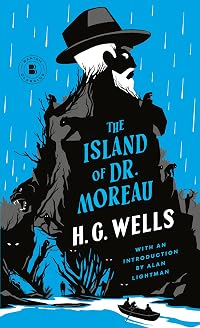
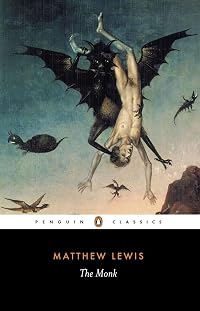


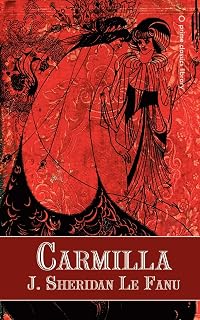

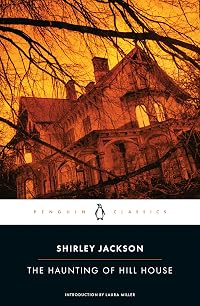
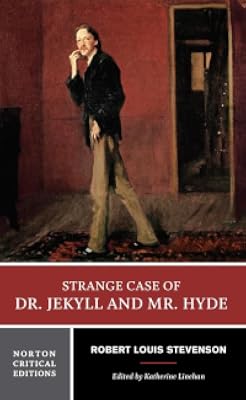

Member Recommendations
Voise15 Exploration of genetics and morality
sury.vemagal This story, also from H.G.Wells is very brilliant - especially considering the period it was written. Highly recommended
Member Reviews
You've seen Jekyll & Hyde in movies, cartoons, or even as a metaphor for those living a double life, but there's so much that popular media has oversimplified. Dr. Henry Jekyll is a well-off private chemist, "Harry" to his friends, and hosts dinner parties in his fully staffed house. But as Jekyll becomes more reclusive, old friend Mr. Utterson becomes understandably concerned; esp. after Jekyll draws up a new will with a "Mr. Edward Hyde" as his beneficiary. Hyde is not an overtly hideous, shuffling, Igor-type, nor is he a giant abomination as seen in the Van Helsing film. Utterson describes him as a pale, short young man, whose visage unexplainably gives off a "radiance of a foul soul," leaving him unnerved and perplexed.
It's not just show more a tale of "split personalities." "Henry Jekyll's Statement of the Case" at the end shows that it is more than an experiment gone awry. Jekyll created the drug with the intention of "shaking the doors of the prisonhouse of my disposition." For MONTHS, Jekyll uses his "two natures" to seek "undignified" pleasures. He becomes addicted and is completely consumed by lustful anger and violence. In the end, Hyde is merely a depraved felon, while Jekyll is the true psychopath. It's disturbing and brilliant writing!
Then Stevenson subverts the reader's expectations in the "The Body Snatcher" by going after, not the grave robbing brutes as was typical, but rather the doctors who bought the stolen bodies. Justice is served in a memorably shocking and ghastly way. As for "Olalla," I didn't even know Stevenson tried his hand at vampirism! It's no "Carmilla," but it checks all of the boxes. It was probably included in this collection because of its Gothic elements, but it's really a tragic romance. Altogether, these three stories are completely different tonally, but are proof of Stevenson's enduring skill as a storyteller. show less
It's not just show more a tale of "split personalities." "Henry Jekyll's Statement of the Case" at the end shows that it is more than an experiment gone awry. Jekyll created the drug with the intention of "shaking the doors of the prisonhouse of my disposition." For MONTHS, Jekyll uses his "two natures" to seek "undignified" pleasures. He becomes addicted and is completely consumed by lustful anger and violence. In the end, Hyde is merely a depraved felon, while Jekyll is the true psychopath. It's disturbing and brilliant writing!
Then Stevenson subverts the reader's expectations in the "The Body Snatcher" by going after, not the grave robbing brutes as was typical, but rather the doctors who bought the stolen bodies. Justice is served in a memorably shocking and ghastly way. As for "Olalla," I didn't even know Stevenson tried his hand at vampirism! It's no "Carmilla," but it checks all of the boxes. It was probably included in this collection because of its Gothic elements, but it's really a tragic romance. Altogether, these three stories are completely different tonally, but are proof of Stevenson's enduring skill as a storyteller. show less
I've never read this before, even though it's inporssible not to know a lot about it. So while the story arc was not entirely unexpected, the detail was. I'd not reaslised quite how short this story is. It took the form of a series of narratives, some chapetrs were in the form of letters or testimonials while others were narrated by the person investigating this "case" a Laywer called Utterson. He is of his time and class and is at first intent of finding what hold Hyde holds over Jekyll. It has a variety of twists and turns that, vene knowing the outline of the story, still came as a surprise. There's a lot that's left to the imagination, with Hyde's acts left largely in the dark, there's only 2 specific instances that are described. show more Then there are other things that are left unsaid, what was Danvers doing in a dodgy area of town when he was accosted by Hyde in the first place? It's an intriguing piece of work, for sure.
The edition I read had an introduction which advised that as the introduciotn contained plot details, the reader who was new to the story should go and read the book first, so I did. There was also 2 more short stories, The Body Snatchers and Olalla, as well as an abridged essay form Stevenson on how he came to write Jekyll & Hyde and an essay exploring the possible origins and inputs to the story. All of which were very interesting. show less
The edition I read had an introduction which advised that as the introduciotn contained plot details, the reader who was new to the story should go and read the book first, so I did. There was also 2 more short stories, The Body Snatchers and Olalla, as well as an abridged essay form Stevenson on how he came to write Jekyll & Hyde and an essay exploring the possible origins and inputs to the story. All of which were very interesting. show less
Digital audiobook performed by Scott Brick
Classic horror from a master of Victorian gothic fiction.
I appreciate the atmospheric nature of Stevenson’s writing. The reader can feel the dampness of a foggy London night, smell the freshly turned earth in the graveyard, hear the clip clop of a horse’s hooves on cobble-stoned streets, clearly see the horrific images of a mutilated body, and taste the bile that rises as a result of all the above.
The title story is an exploration of man’s baser instincts. Can a potion be created that will change a generous, kind, proper individual into a fiend? And once the gentleman has “tasted” the freedom from inhibition that results, can he go back? Will he want to? Of course, Dr Jekyll’s show more alter-ego changes physical appearance as well, further confounding those around him.
The other stories in the collection had similar psychological / ethical themes, though I didn’t like them all quite so much. The Bottle Imp explores greed and regret and selfless love. Stevenson shows that true events can be as frightening as fantasy in The Body Snatcher, which is based on the real practice of trafficking in bodies needed by medical students for dissection that happened in the 19th century. And the remote setting of The Merry Men make the ghost ships seem all the more real.
Scott Brick does a marvelous job of narrating the title story. But bear in mind that the audio version is limited to the Dr Jekyll short story. I had the text handy and read the remaining four short stories in that format. show less
Classic horror from a master of Victorian gothic fiction.
I appreciate the atmospheric nature of Stevenson’s writing. The reader can feel the dampness of a foggy London night, smell the freshly turned earth in the graveyard, hear the clip clop of a horse’s hooves on cobble-stoned streets, clearly see the horrific images of a mutilated body, and taste the bile that rises as a result of all the above.
The title story is an exploration of man’s baser instincts. Can a potion be created that will change a generous, kind, proper individual into a fiend? And once the gentleman has “tasted” the freedom from inhibition that results, can he go back? Will he want to? Of course, Dr Jekyll’s show more alter-ego changes physical appearance as well, further confounding those around him.
The other stories in the collection had similar psychological / ethical themes, though I didn’t like them all quite so much. The Bottle Imp explores greed and regret and selfless love. Stevenson shows that true events can be as frightening as fantasy in The Body Snatcher, which is based on the real practice of trafficking in bodies needed by medical students for dissection that happened in the 19th century. And the remote setting of The Merry Men make the ghost ships seem all the more real.
Scott Brick does a marvelous job of narrating the title story. But bear in mind that the audio version is limited to the Dr Jekyll short story. I had the text handy and read the remaining four short stories in that format. show less
This was a re-read, although the first time I read Dr Jekyll and Mr Hyde was well over 20 years ago and is very fuzzy in my memory, so I thought it was going to count as a new read. But it's such a well known story, that it was more like revisiting an old friend. I had to keep on reminding myself that this was ground-breaking stuff at the time, because it's just so familiar (and obvious) now.
I won't bother summarising the plot, as we all know it all already, though most probably through the movies or other references. (Hopefully better movies than the recent "Van Helsing" or "League of Extraordinary Gentlemen".)
The most interesting parts of the story aren't the transformations (although they are the money shot for the many movie show more adaptations), but the battle between good and evil raging between Jekyll and Hyde, and Dr Jekyll's addiction to evil. I particularly liked how Dr Jekyll has all the appearance of good, but is really evil underneath even before Hyde is unleashed. How many other people out there have these trappings of civilisation as a mere thin veneer? (Which always makes me rather afraid for society, that the rules and structures we have in place can be so easily torn apart by evil, and if that many people are evil... *shudder* It just doesn't bear thinking about.)
And the physical difference between Jekyll & Hyde is startling, not least that Hyde is small and weak, not at all the giant monster modern movies have made him out to be. While there is a strong indication that evil is physically manifest in Hyde, this evil is not shown in Jekyll. Our first real description of Mr Hyde:
Mr Hyde was pale and dwarfish, he gave an impression of deformity without any nameable malformation, he had a displeasing smile, he had borne himself to the lawyer with a sort of murderous mixture of timidity and boldness, and he spoke with a husky, whispering and somewhat broken voice.
And yet it's not just an unpleasant physiognomy and attitude, but something that cannot be described (or even pinpointed) that makes Mr Hyde universally reviled. It's an interesting idea, that somehow the practice of evil makes you somehow appear evil.
And once Dr Jekyll starts unleashing Hyde, he finds it difficult to stop - psychologically in that he doesn't want to stop, and then physically as the transformations can no longer be controlled. And, maybe it's just my reading, but I felt that he never particularly wanted to stop, but was forced into it. I feel that he would have been quite happy had he been able to let Hyde loose for the occasional debauch.
This book also contained the short stories The Body Snatchers and Olalla. The first is a black spooky re-imagining of the famous Burke and O'Hare murders (they killed people to supply bodies to the anatomical schools in Edinburgh); the second is a vampiric tale set in Spain. The first tale was a good macabre piece of gothic fiction; the second was more dated and clunky, but the notes in this edition were excellent and gave me a good understanding of this style of gothic fiction (so it wasn't a dead loss).
If you haven't read Dr Jekyll and Mr Hyde before, why are you waiting? show less
I won't bother summarising the plot, as we all know it all already, though most probably through the movies or other references. (Hopefully better movies than the recent "Van Helsing" or "League of Extraordinary Gentlemen".)
The most interesting parts of the story aren't the transformations (although they are the money shot for the many movie show more adaptations), but the battle between good and evil raging between Jekyll and Hyde, and Dr Jekyll's addiction to evil. I particularly liked how Dr Jekyll has all the appearance of good, but is really evil underneath even before Hyde is unleashed. How many other people out there have these trappings of civilisation as a mere thin veneer? (Which always makes me rather afraid for society, that the rules and structures we have in place can be so easily torn apart by evil, and if that many people are evil... *shudder* It just doesn't bear thinking about.)
And the physical difference between Jekyll & Hyde is startling, not least that Hyde is small and weak, not at all the giant monster modern movies have made him out to be. While there is a strong indication that evil is physically manifest in Hyde, this evil is not shown in Jekyll. Our first real description of Mr Hyde:
Mr Hyde was pale and dwarfish, he gave an impression of deformity without any nameable malformation, he had a displeasing smile, he had borne himself to the lawyer with a sort of murderous mixture of timidity and boldness, and he spoke with a husky, whispering and somewhat broken voice.
And yet it's not just an unpleasant physiognomy and attitude, but something that cannot be described (or even pinpointed) that makes Mr Hyde universally reviled. It's an interesting idea, that somehow the practice of evil makes you somehow appear evil.
And once Dr Jekyll starts unleashing Hyde, he finds it difficult to stop - psychologically in that he doesn't want to stop, and then physically as the transformations can no longer be controlled. And, maybe it's just my reading, but I felt that he never particularly wanted to stop, but was forced into it. I feel that he would have been quite happy had he been able to let Hyde loose for the occasional debauch.
This book also contained the short stories The Body Snatchers and Olalla. The first is a black spooky re-imagining of the famous Burke and O'Hare murders (they killed people to supply bodies to the anatomical schools in Edinburgh); the second is a vampiric tale set in Spain. The first tale was a good macabre piece of gothic fiction; the second was more dated and clunky, but the notes in this edition were excellent and gave me a good understanding of this style of gothic fiction (so it wasn't a dead loss).
If you haven't read Dr Jekyll and Mr Hyde before, why are you waiting? show less
Familiar tale exploring the underside or suppressed energies amidst upright Victorian London. The prose is sometimes dense and wordy (some passages need a reread), but the excitement and the ominous tone still get through. That atmosphere has plenty of Gothic stylings, with wild and dramatic language used to carry the story: “…there was borne in upon his mind a crushing anticipation of calamity”, “.. the thin trees were lashing themselves along the railing.” That dramatic storytelling has a more striking effect than the core theme itself: the duality of mankind. It’s a clever conceit, but there’s not that much reflection on the part of the various narrators to make convincing the appeal of the “lower” pleasures that show more Hyde pursues. Surprisingly short. show less
Like most people, I've been aware of Jekyll and Hyde most of my life, chiefly as a common descriptor for the contradictions and duality of human nature. I mean, even Eddie Murphy took up the theme in The Nutty Professor. Reading the classic short story filled in a lot of intriguing details left out of later reinterpretations. Stevenson evokes the fog-shrouded streets of London so convincingly I could almost hear the clip-clopping of horse's hooves on damp cobble-stoned streets. Not as frightening as it must have been to uninitiated 19th century readers, but still a deserving classic of the horror genre.
I try to avoid horror as much as I can, and can count on a single hand the number of horror stories I have ever actually enjoyed. This is one of them, and probably the only one I read voluntarily. And I'm glad I did, and that Robert Louis Stevenson listened to his wife on this one.
Members
- Recently Added By
Lists

1001 Books You Must Read Before You Die
1,448 works; 1,133 members

Philosophical Fiction
97 works; 27 members

Books Read in 2024
4,623 works; 126 members

el
1,139 works; 1 member
Author Information

2,800+ Works 139,270 Members
Novelist, poet, and essayist Robert Louis Stevenson was born in Edinburgh, Scotland. A sickly child, Stevenson was an invalid for part of his childhood and remained in ill health throughout his life. He began studying engineering at Edinburgh University but soon switched to law. His true inclination, however, was for writing. For several years show more after completing his studies, Stevenson traveled on the Continent, gathering ideas for his writing. His Inland Voyage (1878) and Travels with a Donkey (1878) describe some of his experiences there. A variety of essays and short stories followed, most of which were published in magazines. It was with the publication of Treasure Island in 1883, however, that Stevenson achieved wide recognition and fame. This was followed by his most successful adventure story, Kidnapped, which appeared in 1886. With stories such as Treasure Island and Kidnapped, Stevenson revived Daniel Defoe's novel of romantic adventure, adding to it psychological analysis. While these stories and others, such as David Balfour and The Master of Ballantrae (1889), are stories of adventure, they are at the same time fine studies of character. The Master of Ballantrae, in particular, is a study of evil character, and this study is taken even further in The Strange Case of Dr. Jekyll and Mr. Hyde (1886). In 1887 Stevenson and his wife, Fanny, went to the United States, first to the health spas of Saranac Lake, New York, and then on to the West Coast. From there they set out for the South Seas in 1889. Except for one trip to Sidney, Australia, Stevenson spent the remainder of his life on the island of Samoa with his devoted wife and stepson. While there he wrote The Wrecker (1892), Island Nights Entertainments (1893), and Catriona (1893), a sequel to Kidnapped. He also worked on St. Ives and The Weir of Hermiston, which many consider to be his masterpiece. He died suddenly of apoplexy, leaving both of these works unfinished. Both were published posthumously; St. Ives was completed by Sir Arthur Quiller-Couch, and The Weir of Hermiston was published unfinished. Stevenson was buried on Samoa, an island he had come to love very much. Although Stevenson's novels are perhaps more accomplished, his short stories are also vivid and memorable. All show his power of invention, his command of the macabre and the eerie, and the psychological depth of his characterization. (Bowker Author Biography) show less
Some Editions
Series
Belongs to Publisher Series
Work Relationships
Common Knowledge
- Canonical title
- The Strange Case of Dr Jekyll and Mr Hyde and Other Tales of Terror
- People/Characters
- Henry Jekyll; Edward Hyde
- Important places
- Soho, London, England, UK
- Epigraph
- It's ill to loose the bands that God decreed to bind;
Still will we be the children of the heather and the wind.
Far away from home, O it's still for you and me
That the broom is blowing bonnie in the north countrie. - Dedication
- To Katharine de Mattos
- First words
- Mr Utterson the lawyer was a man of a rugged countenance, that was never lighted by a smile; cold, scanty and embarrased in discourse; backward in sentiment; lean, long, dusty, dreary and yet somehow lovable.
- Quotations
- as soon as night had fallen and I could shake off my firends, the iron hand of indurated habit plunged me once again in to the mire of my vices
- Last words
- (Click to show. Warning: May contain spoilers.)Here then, as I lay down the pen and proceed to seal up my confession, I bring the life of that unhappy Henry Jekyll to an end.
- Publisher's editor
- Mighall, Robert
- Original language
- English
- Disambiguation notice
- This collection contains 3 of Robert Louis Stevenson's stories (the other two stories are "The Body Snatcher" and "Olalla"), "A chapter on dreams" (abridged), and an essay by the collection's editor (see description for the c... (show all)omplete contents of the work). It should not be combined with other collections that contain additional stories, fewer stories, or different stories.
Classifications
Statistics
- Members
- 2,265
- Popularity
- 8,817
- Reviews
- 31
- Rating
- (3.85)
- Languages
- English, French, Spanish, Turkish
- Media
- Paper, Audiobook, Ebook
- ISBNs
- 28
- ASINs
- 13