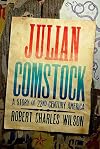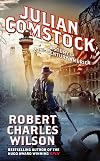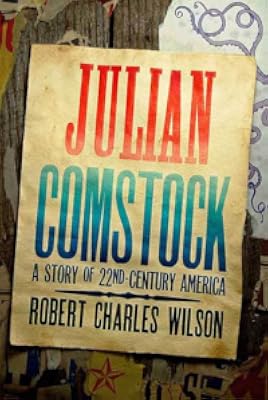
Julian Comstock: A Story of 22nd Century America
by Robert Charles Wilson
On This Page
Description
In the reign of President Deklan Comstock, a reborn United States is struggling back to prosperity. Over a century after the Efflorescence of Oil, after the Fall of the Cities, after the False Tribulation, after the days of the Pious Presidents, the sixty stars and thirteen stripes wave from the plains of Athabaska to the national capital in New York. In Colorado Springs, the Dominion sees to the nation's spiritual needs. In Labrador, the Army wages war on the Dutch. America, unified, is show more rising once again.Then out of Labrador come tales of the war hero "Captain Commongold." The masses follow his adventures in the popular press. The Army adores him. The President is...troubled. Especially when the dashing Captain turns out to be his nephew Julian, son of the President's late brother Bryce—a popular general who challenged the President's power, and paid the ultimate price.
As Julian ascends to the pinnacle of power, his admiration for the works of the Secular Ancients sets him at fatal odds with the Dominion. Treachery and intrigue will dog him as he closes in on the accomplishment of his lifelong ambition: to make a film about the life of Charles Darwin.
. show less
Tags
Recommendations

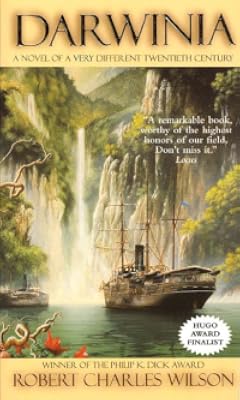
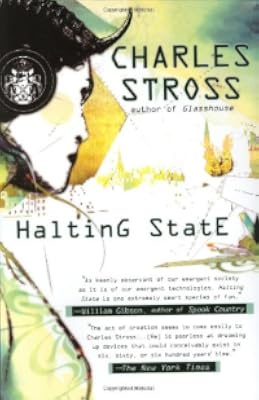

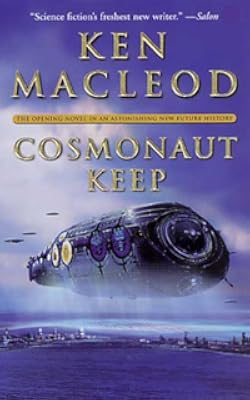
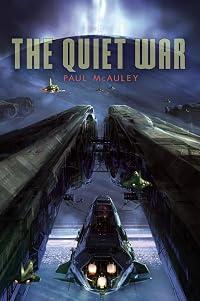







Member Recommendations
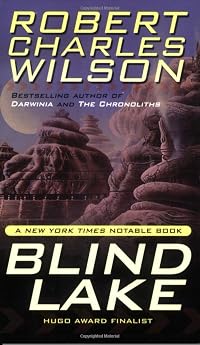
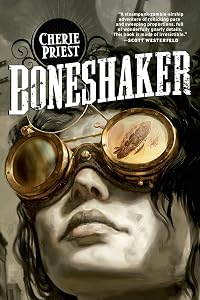
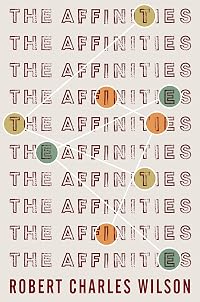
AlanPoulter Two novels on repressive near futures in a decayed North America.
12

aulsmith Wilson makes several homages to Davy, presumably because he was inspired by it to write his novel
Member Reviews
(Reprinted from the Chicago Center for Literature and Photography [cclapcenter.com]. I am the original author of this essay, as well as the owner of CCLaP; it is not being reprinted illegally.)
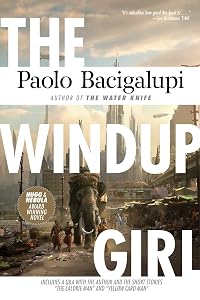
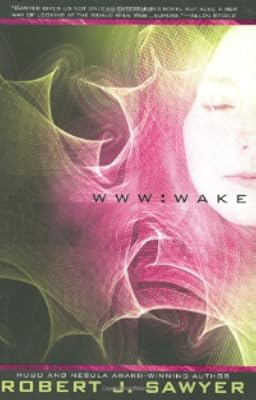
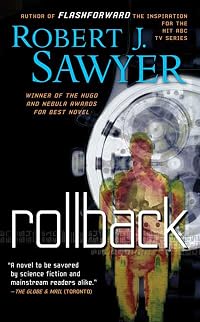
It's Hugo time! And as regular readers know, as with years past, I am trying to read as many of the nominees as possible for this most prestigious of science-fiction awards, before the award itself is actually given out this September at Worldcon in Melbourne, Australia. As of today I've now read three of the six -- Cherie Priest's Boneshaker, China Mieville's The City & The City, and now Robert Charles Wilson's astounding Julian Comstock: A Story of 22nd-Century America -- and in fact, along with Paolo Bacigalupi's The Windup Girl, these four are show more considered by most to be in a dead heat for odds-on favorite, making this a great year indeed for SF, in an industry that's seen some less-than-stellar years lately. (For what it's worth, I also have Catherynne M. Valente's Palimpsest on reserve at the library, although I'm not sure if I'm going to bother with the sixth nominee, Robert J. Sawyer's Wake, after reading his 2007 Rollback and being profoundly disappointed with it.)
To be specific, it's Comstock that seems to be generating the most passionate write-ups online out of all these nominees; and now that I've read it myself, I can see why, becuase of its sense of audience-pleasing uniqueness that seems absent in the other books I've read -- it is in fact a clever combination of a witty steampunk actioner and a dour Bushism post-apocalyptic tale, an almost perfect manuscript whose only minor weakness is that there's been an awful lot of other books by now that have taken the same concept for their own premise. And this of course is something else that regular readers know, that I've read so many post-9/11 books now regarding a conservative American government bringing about the end of civilization, I've been thinking of doing a book-length compendium of them all, entitled The CCLaP Guide to Bushist Literature; I've reviewed over a dozen titles now in the last three years that would fit in such a guide, the latest before today's being James Howard Kunstler's World Made by Hand.
But while I found Kunstler's book to be rather silly despite having the same theme -- this idea that the nation would revert after an apocalyptic event into a bunch of corpone-speaking, Amish-dressing farmers just because -- Wilson gets away with it by coming up with a compelling reason for such a thing happening; how the combination of losing most of the resources that made the Information Age work (oil, electricity, silicon) with a group of reactionary Luddites taking over the country post-apocalypse and turning it from a democracy into a Christian Republic (imagine Sarah Palin as President and with the court system replaced by Protestant deacons) has produced a world 150 years from now where not only does no technology exist newer than the early Industrial Age, but where even knowledge of post-Industrial technology is forbidden, a world where for an entire century the army has been collecting up every moldy 20th-century textbook still in existence and burning them, except for one archival copy inside a crumbling Library of Congress now under lock and key by the all-powerful Dominion of Christian Churches, one of a handful of organizations with their own large militias (including the army on the west coast, a separate national army on the east coast, and the aristocracy of "gentlemen farmers" who now run the government's executive branch) who through an uneasy truce are all managing to keep American society up and running again on a reasonably stable level. (For one ingenious example of what I'm talking about, see the running theme of how most Americans no longer believe that man actually went to the moon, but that it's simply one more godless lie that brought about the downfall of the atheistic, oil-worshipping old society to begin with.)
And in fact, this book could double as a sly history and sociology textbook on top of everything else, because of Wilson not taking these old feudal and aristocratic structures for granted, like so many other lazy post-apocalyptic stories do, but literally showing the real issues of an anarchic world that brought them about in the Middle Ages in the first place, and why they might form again in a future anarchic world -- how after the chaos of a genuine apocalypse (whether nuclear war or the fall of the Roman Empire), the first people to restore order are isolated groups of strong-willed individuals, warlords who eventually become just regular lords with their own little fiefdoms in the middle of nowhere, in which they provide protection and food for neighboring townfolk in return for them working the land and providing security, which as society becomes even further stabilized turns into a formal network of estates, with eventually a central bureaucracy with a king at its center (in this case still technically called the "President," but now a hereditary emperor in everything but name) to provide some semblance of rule of law, so that these fiefdoms don't have to spend their time in an endless series of petty Mad-Max-style border skirmishes, like exactly what you saw in Europe during the first 500 years of the Medieval Era, before their own formations of kings and national identities. Wilson takes the time and trouble in Comstock to patiently explain all this step by step, providing by the end a surprisingly solid and realistic world, a welcome change from the usual post-apocalyptic offhanded justifications for such things. ("Why has the world devolved into a series of warring little kingdoms? Because warring little kingdoms are freaking cool, maaaan.")
But of course this is ultimately all expository fodder I'm talking about; the true delight of Comstock instead is the almost perfect neo-Victorian tone Wilson finds for the whole thing, turning in a story that for the most part actually could've taken place in the 19th century, except for his occasional references to modern ruins, the Vietnam-style proxy war the US is fighting against a much better equipped European Union in the wilds of northern Canada (in which humorously the Americans no longer understand the difference between the Dutch and the Deutsche), and a lot more. It's within such a stylized milieu, then, that Wilson tells his bildungsromanesque tale, a look at the titular reluctant hero as seen through the eyes of his Watson-like journalist companion, an arts-loving adherent of heretical Darwinism who rises through his war exploits to eventually depose the current American President (who just happens to be his uncle), only to have the horrors of his military decisions and the corrupting influence of absolute power ruin even him by the end. And this is yet another brilliant element that's missing from so many other Bush-inspired post-apocalytpic tales; that while so many of them end on this sort of wishy-washy note of open-ended optimism, Comstock is more like a grand Shakespearean tragedy, adding a sense of gravitas to this otherwise lively adventure story that makes it truly a step above most other Bushist novels out there.
There are all kinds of other details about this book that I could mention, which further attests to its power -- I haven't even touched on its dryly engaging humor, for example, nor its cinematic descriptions of what exactly a neo-Victorian post-apocalyptic America looks like, nor Wilson's lovely premise that, even under the dictatorial control of a Christian Republic, there would still be large pockets of transgressive thought that exist, and with the sophisticates of large urban areas still openly thumbing their noses at what they see as the fascism of a bunch of superstitious hillbillies. (The novel opens in the rural Midwest, completely and utterly under the control of the Dominion, who themselves are headquartered at the old Air Force Academy in Colorado Springs; but then ends in New York, where supposedly banned activities like Judaism and homosexuality are still openly practiced, a nice touch by Wilson in a genre usually marked by dreary unstoppable totalitarianism.) And that's probably the best compliment I can pay this book, that I've been talking about it now for almost a thousand words, and still haven't even scratched the surface of all the interesting things there are to say about it.
I wouldn't necessarily call it better than the other two Hugo nominees I've now read, only different; and I have to say, at this point I would be immensely pleased to see any of these three end up as the big winner come September (and imagine will feel the same way about The Windup Girl as well, for which impassioned pleas by other readers have already started appearing in the comments of my other Hugo reviews over at Goodreads.com). In any case, it's almost undeniable by now what a great period we're in right now for science-fiction, and especially when you add genre-hopping projects in other media like Lost and the like; and needless to say that I highly recommend Julian Comstock to all my fellow genre-loving readers.
Out of 10: 8.9, or 9.9 for fans of steampunk and post-apocalyptic tales show less
It's Hugo time! And as regular readers know, as with years past, I am trying to read as many of the nominees as possible for this most prestigious of science-fiction awards, before the award itself is actually given out this September at Worldcon in Melbourne, Australia. As of today I've now read three of the six -- Cherie Priest's Boneshaker, China Mieville's The City & The City, and now Robert Charles Wilson's astounding Julian Comstock: A Story of 22nd-Century America -- and in fact, along with Paolo Bacigalupi's The Windup Girl, these four are show more considered by most to be in a dead heat for odds-on favorite, making this a great year indeed for SF, in an industry that's seen some less-than-stellar years lately. (For what it's worth, I also have Catherynne M. Valente's Palimpsest on reserve at the library, although I'm not sure if I'm going to bother with the sixth nominee, Robert J. Sawyer's Wake, after reading his 2007 Rollback and being profoundly disappointed with it.)
To be specific, it's Comstock that seems to be generating the most passionate write-ups online out of all these nominees; and now that I've read it myself, I can see why, becuase of its sense of audience-pleasing uniqueness that seems absent in the other books I've read -- it is in fact a clever combination of a witty steampunk actioner and a dour Bushism post-apocalyptic tale, an almost perfect manuscript whose only minor weakness is that there's been an awful lot of other books by now that have taken the same concept for their own premise. And this of course is something else that regular readers know, that I've read so many post-9/11 books now regarding a conservative American government bringing about the end of civilization, I've been thinking of doing a book-length compendium of them all, entitled The CCLaP Guide to Bushist Literature; I've reviewed over a dozen titles now in the last three years that would fit in such a guide, the latest before today's being James Howard Kunstler's World Made by Hand.
But while I found Kunstler's book to be rather silly despite having the same theme -- this idea that the nation would revert after an apocalyptic event into a bunch of corpone-speaking, Amish-dressing farmers just because -- Wilson gets away with it by coming up with a compelling reason for such a thing happening; how the combination of losing most of the resources that made the Information Age work (oil, electricity, silicon) with a group of reactionary Luddites taking over the country post-apocalypse and turning it from a democracy into a Christian Republic (imagine Sarah Palin as President and with the court system replaced by Protestant deacons) has produced a world 150 years from now where not only does no technology exist newer than the early Industrial Age, but where even knowledge of post-Industrial technology is forbidden, a world where for an entire century the army has been collecting up every moldy 20th-century textbook still in existence and burning them, except for one archival copy inside a crumbling Library of Congress now under lock and key by the all-powerful Dominion of Christian Churches, one of a handful of organizations with their own large militias (including the army on the west coast, a separate national army on the east coast, and the aristocracy of "gentlemen farmers" who now run the government's executive branch) who through an uneasy truce are all managing to keep American society up and running again on a reasonably stable level. (For one ingenious example of what I'm talking about, see the running theme of how most Americans no longer believe that man actually went to the moon, but that it's simply one more godless lie that brought about the downfall of the atheistic, oil-worshipping old society to begin with.)
And in fact, this book could double as a sly history and sociology textbook on top of everything else, because of Wilson not taking these old feudal and aristocratic structures for granted, like so many other lazy post-apocalyptic stories do, but literally showing the real issues of an anarchic world that brought them about in the Middle Ages in the first place, and why they might form again in a future anarchic world -- how after the chaos of a genuine apocalypse (whether nuclear war or the fall of the Roman Empire), the first people to restore order are isolated groups of strong-willed individuals, warlords who eventually become just regular lords with their own little fiefdoms in the middle of nowhere, in which they provide protection and food for neighboring townfolk in return for them working the land and providing security, which as society becomes even further stabilized turns into a formal network of estates, with eventually a central bureaucracy with a king at its center (in this case still technically called the "President," but now a hereditary emperor in everything but name) to provide some semblance of rule of law, so that these fiefdoms don't have to spend their time in an endless series of petty Mad-Max-style border skirmishes, like exactly what you saw in Europe during the first 500 years of the Medieval Era, before their own formations of kings and national identities. Wilson takes the time and trouble in Comstock to patiently explain all this step by step, providing by the end a surprisingly solid and realistic world, a welcome change from the usual post-apocalyptic offhanded justifications for such things. ("Why has the world devolved into a series of warring little kingdoms? Because warring little kingdoms are freaking cool, maaaan.")
But of course this is ultimately all expository fodder I'm talking about; the true delight of Comstock instead is the almost perfect neo-Victorian tone Wilson finds for the whole thing, turning in a story that for the most part actually could've taken place in the 19th century, except for his occasional references to modern ruins, the Vietnam-style proxy war the US is fighting against a much better equipped European Union in the wilds of northern Canada (in which humorously the Americans no longer understand the difference between the Dutch and the Deutsche), and a lot more. It's within such a stylized milieu, then, that Wilson tells his bildungsromanesque tale, a look at the titular reluctant hero as seen through the eyes of his Watson-like journalist companion, an arts-loving adherent of heretical Darwinism who rises through his war exploits to eventually depose the current American President (who just happens to be his uncle), only to have the horrors of his military decisions and the corrupting influence of absolute power ruin even him by the end. And this is yet another brilliant element that's missing from so many other Bush-inspired post-apocalytpic tales; that while so many of them end on this sort of wishy-washy note of open-ended optimism, Comstock is more like a grand Shakespearean tragedy, adding a sense of gravitas to this otherwise lively adventure story that makes it truly a step above most other Bushist novels out there.
There are all kinds of other details about this book that I could mention, which further attests to its power -- I haven't even touched on its dryly engaging humor, for example, nor its cinematic descriptions of what exactly a neo-Victorian post-apocalyptic America looks like, nor Wilson's lovely premise that, even under the dictatorial control of a Christian Republic, there would still be large pockets of transgressive thought that exist, and with the sophisticates of large urban areas still openly thumbing their noses at what they see as the fascism of a bunch of superstitious hillbillies. (The novel opens in the rural Midwest, completely and utterly under the control of the Dominion, who themselves are headquartered at the old Air Force Academy in Colorado Springs; but then ends in New York, where supposedly banned activities like Judaism and homosexuality are still openly practiced, a nice touch by Wilson in a genre usually marked by dreary unstoppable totalitarianism.) And that's probably the best compliment I can pay this book, that I've been talking about it now for almost a thousand words, and still haven't even scratched the surface of all the interesting things there are to say about it.
I wouldn't necessarily call it better than the other two Hugo nominees I've now read, only different; and I have to say, at this point I would be immensely pleased to see any of these three end up as the big winner come September (and imagine will feel the same way about The Windup Girl as well, for which impassioned pleas by other readers have already started appearing in the comments of my other Hugo reviews over at Goodreads.com). In any case, it's almost undeniable by now what a great period we're in right now for science-fiction, and especially when you add genre-hopping projects in other media like Lost and the like; and needless to say that I highly recommend Julian Comstock to all my fellow genre-loving readers.
Out of 10: 8.9, or 9.9 for fans of steampunk and post-apocalyptic tales show less
I've not read every Robert Charles Wilson novel, but I've read a fair number of his earlier works, and this just might be his best book ever. Richly told, with wonderful detail, it is the story of, yes, Julian Comstock, popular hero and nephew to the current President of the re-formed United States, but also of our narrator, Adam Hazzard, Julian's childhood friend and an aspiring writer. The world they live in (so wonderfully envisioned by Wilson), now a century after the Efflorescence of Oil, the Fall of the Cities, the False Tribulation, and after the days of the Pious Presidents, resembles the 19th century (a century that is very much admired in the current thought of the Church of the Dominion, which, as its name suggests, show more dominants). It is this 19th century "feel" and the easy-going storytelling from Adam that draws us in, and It takes only a few pages—maybe only one—for a reader to be completely hooked.
While a great romp of a story, it also gives a nod to the writing and the art of storytelling. When Adam takes his first attempts of documenting his war experience, he is told by a veteran war journalist that, "Accuracy and drama are the Scylla and Charybdis of journalism, Adam. Steer between them, is my advice, but list toward drama, if you want a successful career." Later when Adam is assisting Julian with his lifelong dream of making movie of Charles Darwin's life, he asks, "Do you want to tell the truth, or do you want to tell a story?"
Interesting note: I recently came across a review on the web that connected this book with the subject matter of Gore Vidal's novel Julian: A Novel about the 4th century Roman emperor Julian (aka Julian the Apostate). The reviewer convinced me that the connection is likely not accidental. show less
While a great romp of a story, it also gives a nod to the writing and the art of storytelling. When Adam takes his first attempts of documenting his war experience, he is told by a veteran war journalist that, "Accuracy and drama are the Scylla and Charybdis of journalism, Adam. Steer between them, is my advice, but list toward drama, if you want a successful career." Later when Adam is assisting Julian with his lifelong dream of making movie of Charles Darwin's life, he asks, "Do you want to tell the truth, or do you want to tell a story?"
Interesting note: I recently came across a review on the web that connected this book with the subject matter of Gore Vidal's novel Julian: A Novel about the 4th century Roman emperor Julian (aka Julian the Apostate). The reviewer convinced me that the connection is likely not accidental. show less
I’ve never read a science fiction novel which so effectively emulates the nineteenth century fake memoir model, albeit with a sense of irony. This book tells the story of Julian Comstock, through the eyes of his best friend, Adam Hazzard. Whilst Adam is from the 22rd century’s lower middle class, Julian is an aristocrat whose murderous uncle happens to be president of the USA. The pair have a series of exciting adventures, involving war against Europe and other political machinations, against a curiously persuasive backdrop. After Peak Oil and other catastrophes, America has a much reduced population that seeks to emulate the 19th century without really understanding it. A feudal economy has developed, with an underclass of show more indentured labourers and a hereditary presidency. A monolithic national church has become the third branch of government, displacing the judiciary. Adam is a helpful narrator, explaining this sort of thing as he goes.
Although I appreciated the world-building, this book did not manage to engross me. I read it in fits and starts, as particular sequences are inventive and enjoyable, whereas others seem predictable and uninvolving. Throughout, there is a running joke of Adam’s obliviousness - he seems not to notice, amongst other things, that his best friend is gay and his wife is a political agitator. Moreover, he always has to have military and political matters explained to him. Despite this sometimes becoming frustrating, Adam is quite an appealing character and the book did make me laugh at times (Otis the giraffe was a stroke of genius). I also had sympathy for Julian, Calyxa, et al. Something about the narrative never quite gripped, though. Tension was in short supply. Perhaps it was the pacing, or the constant knowledge that our two heroes must have survived in order to recount their adventures? I think ‘Julian Comstock’ could have done with committing more fully to either comedy or tragedy; there was the potential for both but neither was fully achieved. I’m not sure. The setting was great, so I wanted to love this book. I liked it and was pleased at various points when it sidestepped cliche, but could not help but be a little disappointed overall. show less
Although I appreciated the world-building, this book did not manage to engross me. I read it in fits and starts, as particular sequences are inventive and enjoyable, whereas others seem predictable and uninvolving. Throughout, there is a running joke of Adam’s obliviousness - he seems not to notice, amongst other things, that his best friend is gay and his wife is a political agitator. Moreover, he always has to have military and political matters explained to him. Despite this sometimes becoming frustrating, Adam is quite an appealing character and the book did make me laugh at times (Otis the giraffe was a stroke of genius). I also had sympathy for Julian, Calyxa, et al. Something about the narrative never quite gripped, though. Tension was in short supply. Perhaps it was the pacing, or the constant knowledge that our two heroes must have survived in order to recount their adventures? I think ‘Julian Comstock’ could have done with committing more fully to either comedy or tragedy; there was the potential for both but neither was fully achieved. I’m not sure. The setting was great, so I wanted to love this book. I liked it and was pleased at various points when it sidestepped cliche, but could not help but be a little disappointed overall. show less
This is quite a readable novel, with an engaging idea behind it: in 22nd century America, the end of access to cheap oil, the ascendance of religious fundamentalism, war, famine and depopulation have brought about a Handmaid's Tale-esque, semi-feudal dystopia that bears a definite resemblance to the 19th century. The American Presidency is hereditary and intertwined with the Dominion, an evangelical and militarist religious organisation which rules out of Colorado Springs. From the perspective of Adam, a naive farmboy, we're told of the rise and fall of Julian Comstock, nephew of the reigning president and confirmed philosopher—whose biography is also modelled a little after that of the historical fourth century Roman emperor, Julian show more the Apostate.
There are lots of good moments in this—the incongruity of things like a giraffe wandering around the former Central Park, now the grounds of the presidential residence, are more than enough to catch the reader's attention—but ultimately this was as frustrating a novel for me as it was entertaining. Wilson's world-building relies a lot on little gracenotes like that, but the pacing's wonky and the foundations of his world-building don't hold up very well when you think about it (the book's a lot like Joss Whedon's Firefly in that regard). I could buy a future in which a fundamentalist, neo-Luddite Christianity is in the ascendancy—but why would the elite of such a society refer to themselves as Eupatridians (the Eupatridae being the nobility of ancient Attica)? Why would speech patterns have reverted to faux Victorian, why would people start referring to Japan as 'Nippon', where the hell have all the non-white people gone? Playing with the conventions of 19th century boys' own adventure novels would have been a lot of fun to read, if Wilson had only been willing to subvert them instead of (sometimes uncomfortably, it seems) acknowledging them with a nod and a wink. Why not have Adam realise that Julian is gay? Why have the book's one lesbian character (one of its very few female characters) exist entirely offscreen, as shorthand for the villainy of one male character and the inherent nobility of another?
I enjoyed the book more than this probably conveys, but couldn't help seeing it as a good book that could have been a really smart book, if only Wilson had thought it through a little more and had been prepared to push past the expected. show less
There are lots of good moments in this—the incongruity of things like a giraffe wandering around the former Central Park, now the grounds of the presidential residence, are more than enough to catch the reader's attention—but ultimately this was as frustrating a novel for me as it was entertaining. Wilson's world-building relies a lot on little gracenotes like that, but the pacing's wonky and the foundations of his world-building don't hold up very well when you think about it (the book's a lot like Joss Whedon's Firefly in that regard). I could buy a future in which a fundamentalist, neo-Luddite Christianity is in the ascendancy—but why would the elite of such a society refer to themselves as Eupatridians (the Eupatridae being the nobility of ancient Attica)? Why would speech patterns have reverted to faux Victorian, why would people start referring to Japan as 'Nippon', where the hell have all the non-white people gone? Playing with the conventions of 19th century boys' own adventure novels would have been a lot of fun to read, if Wilson had only been willing to subvert them instead of (sometimes uncomfortably, it seems) acknowledging them with a nod and a wink. Why not have Adam realise that Julian is gay? Why have the book's one lesbian character (one of its very few female characters) exist entirely offscreen, as shorthand for the villainy of one male character and the inherent nobility of another?
I enjoyed the book more than this probably conveys, but couldn't help seeing it as a good book that could have been a really smart book, if only Wilson had thought it through a little more and had been prepared to push past the expected. show less
I wanted to like this book a lot more than I did. It had all the makings of a fantastic book: first, it took place in a post-apocalyptic world that had devolved back to a colonial-style way of life. Second, there were political and military machinations galore. But for some reason, I was never completely pulled into the story or the world. Maybe it was the narrator, naive to the point of obtuseness. Maybe it was that I never connected with Julian as much of a sympathetic character, or even an interesting character at that. The world building was fantastic; the story was all right; the characterization just fell flat with me.
Robert Charles Wilson has written a fine novel combining the politics of the later Roman Empire with the technology of the mid-19th Century. Ostensibly, it's set 160-some years in the future. In actuality, that mis-en-scène is an artificial construct fashioned to fit the story. Thinking hard about how the world could have gotten from here to there, and trying to rationalize the internal contradictions, is a useless exercise. Taken at face value, the constructs are interesting and fit together well. The politics reflect a plausible semi-authoritarian regime. The religious hierarchy looks like a desiccated Establishment more concerned with self-perpetuation than dogma, just what such a regime might generate. The economic system, a show more reversion to a form of feudalism, completes the picture.
The central character, Julian Comstock, is obviously intended to remind us of Julian the Apostate, the short-reigned Emperor (361-363) who tried to restore paganism to the Christian Roman Empire. The novel's Julian (called "the Agnostic" or "the Atheist") is, like his namesake, a member of the imperial family relegated to obscurity after the murder of his father by the incumbent ruler. The trajectory is identical: from gilded imprisonment to military command to coup d'état to attempted renovation of the System to failure and death. The details of the future Julian's career are not, however, at all like the Emperor's, and, except for intellectual vagaries and a tendency to worship the past, their personalities are not very similar. Mr. Wilson has not blindly followed Isaac Asimov's advice to "brush up on your history/ And borrow day by day./ Take an Empire that was Roman/ And you'll find that it's at home in/ All the starry Milky Way". This future history proceeds from its own premises, not by copying its model.
In the fashion of many historical novels, the viewpoint character is a low-ranking companion of the Great Man. He is conventional and rather naive, never quite understanding - and to the extent he understands not wholly approving - Julian's projects. Quite helpfully, he writes his narrative for a foreign audience, so that explanations of 22nd Century North American customs and institutions can be inserted without awkwardness. I was somewhat reminded of Alfred Duggan. Adam Hazzard bears at least a passing resemblance to the narrator of Lord Geoffrey's Fancy.
The first few chapters of the book appeared in 2006 as a Hugo-nominated novella. The plot moves in different directions from what that opening led me to anticipate. That Julian would ascend politically and come into conflict with the Dominion of Jesus Christ on Earth was foreshadowed. It appeared, though, that the detritus of the wealthy past would play a larger role and that Julian's heterodoxy would take a more practical turn than it in fact does. I was misled, too, by an SF convention that Kingsley Amis identified long ago in New Maps of Hell: We expect a hero born into a dystopia to overthrow it, not to kick ineffectually against the pricks.
If one puts aside the artifices of the setting and doesn't mind the defiance of SF convention, Julian Comstock is an excellent novel, with interesting characters, a believable yet unpredictable plot, touches of humor and a denouement that seems inevitable after one reads it. I'm not surprised that it gained a Hugo Award nomination, albeit a purist might quibble that it properly belongs in an historical fiction category. show less
The central character, Julian Comstock, is obviously intended to remind us of Julian the Apostate, the short-reigned Emperor (361-363) who tried to restore paganism to the Christian Roman Empire. The novel's Julian (called "the Agnostic" or "the Atheist") is, like his namesake, a member of the imperial family relegated to obscurity after the murder of his father by the incumbent ruler. The trajectory is identical: from gilded imprisonment to military command to coup d'état to attempted renovation of the System to failure and death. The details of the future Julian's career are not, however, at all like the Emperor's, and, except for intellectual vagaries and a tendency to worship the past, their personalities are not very similar. Mr. Wilson has not blindly followed Isaac Asimov's advice to "brush up on your history/ And borrow day by day./ Take an Empire that was Roman/ And you'll find that it's at home in/ All the starry Milky Way". This future history proceeds from its own premises, not by copying its model.
In the fashion of many historical novels, the viewpoint character is a low-ranking companion of the Great Man. He is conventional and rather naive, never quite understanding - and to the extent he understands not wholly approving - Julian's projects. Quite helpfully, he writes his narrative for a foreign audience, so that explanations of 22nd Century North American customs and institutions can be inserted without awkwardness. I was somewhat reminded of Alfred Duggan. Adam Hazzard bears at least a passing resemblance to the narrator of Lord Geoffrey's Fancy.
The first few chapters of the book appeared in 2006 as a Hugo-nominated novella. The plot moves in different directions from what that opening led me to anticipate. That Julian would ascend politically and come into conflict with the Dominion of Jesus Christ on Earth was foreshadowed. It appeared, though, that the detritus of the wealthy past would play a larger role and that Julian's heterodoxy would take a more practical turn than it in fact does. I was misled, too, by an SF convention that Kingsley Amis identified long ago in New Maps of Hell: We expect a hero born into a dystopia to overthrow it, not to kick ineffectually against the pricks.
If one puts aside the artifices of the setting and doesn't mind the defiance of SF convention, Julian Comstock is an excellent novel, with interesting characters, a believable yet unpredictable plot, touches of humor and a denouement that seems inevitable after one reads it. I'm not surprised that it gained a Hugo Award nomination, albeit a purist might quibble that it properly belongs in an historical fiction category. show less
Wow. This novel by the distinguished science fiction (really, I should say: speculative fiction) author Robert Charles Wilson is about a North America existing long after most of the oil is gone, and disease has ravaged modern society. Everyday life has returned to nineteenth-century technology and mores. The author is Canadian, and great use is made of settings in the Canadian prairies and in Quebec and Labrador.
There are two aspects of this book that I found stunning:
(1) The style is a pastiche of boys' adventure books from the 19th-century. It is very wittily done. The narrator is either unaware of what he's telling, or he's exercising some very sophisticated double-irony.
(2) The big conflict is between the remnants of the American show more governmental system, which has declined into something like a monarchy; and, opposing that, a very strong religious state. It's not unlike Iran.
Good stuff. show less
There are two aspects of this book that I found stunning:
(1) The style is a pastiche of boys' adventure books from the 19th-century. It is very wittily done. The narrator is either unaware of what he's telling, or he's exercising some very sophisticated double-irony.
(2) The big conflict is between the remnants of the American show more governmental system, which has declined into something like a monarchy; and, opposing that, a very strong religious state. It's not unlike Iran.
Good stuff. show less
Members
- Recently Added By
Published Reviews
ThingScore 100
its sense of adventure, the unlikely accomplishments of its hero, and a cast of colorful characters make it the twenty-second century equivalent of what once would have been called a ripping good yarn.
added by sdobie
JULIAN COMSTOCK is a buffet of cool delights: The plot is epic; its steampunky Wild West future evokes the Bruce Campbell series THE ADVENTURES OF BRISCO COUNTY JR.; the characters are unique takes on classic archetypes; and the prose sounds authentically vintage without being hard to understand or difficult to read.
added by sdobie
Politically astute, romantic, philosophical, compassionate and often uproariously funny, Julian Comstock may be Wilson's best book yet -- and that's saying a lot of a man who has already collected a shelf full of awards for books like Spin.
added by lampbane
Lists

Top Five Books of 2013
1,562 works; 721 members

Dystopian and Apocalyptic Literature
350 works; 74 members

Books Set in Canada
80 works; 16 members

Political Science Fiction
43 works; 3 members

Books Read in 2013
1,630 works; 51 members

Books Set in New York City
127 works; 21 members

Inheritance and Succession Literature
24 works; 5 members
5 Best 5 Years
71 works; 4 members

Fiction with Men's Given Names in the Title
302 works; 11 members
Author Information

47+ Works 14,413 Members
Some Editions
Awards and Honors
Awards
Distinctions
Notable Lists
Series
Belongs to Publisher Series
Gallimard, Folio SF (491)
Work Relationships
Is an expanded version of
Was inspired by
Common Knowledge
- Canonical title
- Julian Comstock: A Story of 22nd Century America
- Original title
- Julian Comstock: A Story of 22nd Century America
- Original publication date
- 2009
- People/Characters
- Julian Comstock; Adam Hazzard; Calyxa Blake; Sam Godwin; Deklan Comstock; Lymon Pugh (show all 7); Otis
- Important places
- Williams Ford; Montréal, Québec, Canada; Manhattan, New York, New York, USA
- Epigraph
- We read the past by the list of the present, and the forms vary as the shadows fall, or as the point of vision alters.—James Anthony Froude.
Look not for roses in Attalus his garden, or wholesome flowers in a venomous plantation. And since there is scarce anyone bad , but some others are the worse for him, tempt not contagion by proximity, and hazard not thyself i... (show all)n the shadow of corruption.—Sir Thomas Browne
Crowns, generally speaking, have thorns.—Arthur E. Hertzler - Dedication
- To Mr. William Taylor Adams of Massachusetts, who might not have approved of it, this book is nevertheless respectfully and gratefully dedicated.
- First words
- I mean to set down here the story of the life and adventures of Julian Comstock, better known as Julian the Agnostic or (after his uncle) Julian Conqueror.
- Last words
- (Click to show. Warning: May contain spoilers.)The Green God's voice is faint enough that few of us hear it clearly, and that's our tragedy, I suppose, as a species--but I hear it distinctly just now. It asks me to step into the sunshine, and I mean to do its bidding.
- Publisher's editor
- Nielsen Hayden, Teresa
- Blurbers
- King, Stephen; Hobb, Robin; Doctorow, Cory
- Original language*
- Anglais canadien
*Some information comes from Common Knowledge in other languages. Click "Edit" for more information.
Classifications
Statistics
- Members
- 813
- Popularity
- 33,932
- Reviews
- 31
- Rating
- (3.60)
- Languages
- English, French, German
- Media
- Paper, Audiobook, Ebook
- ISBNs
- 13
- ASINs
- 12