On This Page
Description
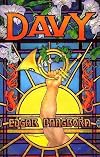
Edgar Pangborn's classic after the fall of civilization novel returns to print. "Pangborn's masterpiece" - - Spider Robinson"I was delighted all the way through." - - Robert A. Heinlein"A lovely book, a rollicking, cadenced, surprising, provocative and magical book." - - Theodore Sturgeon"DAVY is one of the very best books of its time, vivid, engrossing, sexy, funny, clear-eyed about human folly and yet deeply compassionate, amasterpiece that belongs on the exclusive short list of the three show more or four best After-The-Holocaust novels--and which may well be the best of themall." - - Gardner Dozois show lessTags
Recommendations






















Member Recommendations

Member Reviews
The Hugo Award has never aligned with my taste in science fiction. Occasionally it’s picked novels I like and admire, but more often than not I find its nominated works uninteresting or poor. So why I’ve been picking up and reading novels from old Hugo Award shortlists, I’ve no idea. Such as Davy, which was nominated in 1965, but lost out to Fritz Leiber’s The Wanderer.
The title is the name of the narrator, who lives in a balkanised USA several hundred years after a nuclear war. A rise in sea level has reduced the country to some three thousand square miles somewhere in the north-east of the original. The novel is presented as his memoir, written many years later while he’s fleeing across the Atlantic from a coup that saw him show more and his friends ousted from power. The ship reaches the Azores, where it founds a settlement.
The novel opens with Davy at fourteen, working as a yard-boy in an inn. In the first chapter alone, there’s child labour, indentured labour, slavery, sexual assault, capital punishment and religious oppression. America is now a pre-technological society, with several small nations and city-states all under the thumb of the Holy Murkan Church. There are mutant births - a popular, and long-since discredited, trope in US sf in the 1940s and 1950s - which has somehow led to a stratified society, with an aristocracy. None of the world-building is at all convincing, despite the narrator’s attempts to convince the reader. (This is definitely a story aimed as a reader, explicitly so, as it ‘s a memoir, and features footnotes by Davy’s wife and friends.)
Unfortunately, Davy is also badly structured. Davy the narrator is in his thirties, but fourteen when the novel opens. While he mentions events immediately before he began the memoir, two-thirds of its length only covers his escape from indentured labour and a handful of years afterwards. He meets up with some survivors from a neighbouring nation of a battle, and travels with them, and then joins a travelling caravan of musicians - making Davy explicitly a carnival novel, an over-used pattern in US genre fiction.
I don’t like carnival novels, I didn’t like Davy. I thought its world-building unimaginative, and its structure badly unbalanced. Also, as critics at the time noted, nothing actually happens in it. I’ve yet to read Leiber’s The Wanderer - I have it on the TBR - but I’m hoping it’s better than Davy. show less
The title is the name of the narrator, who lives in a balkanised USA several hundred years after a nuclear war. A rise in sea level has reduced the country to some three thousand square miles somewhere in the north-east of the original. The novel is presented as his memoir, written many years later while he’s fleeing across the Atlantic from a coup that saw him show more and his friends ousted from power. The ship reaches the Azores, where it founds a settlement.
The novel opens with Davy at fourteen, working as a yard-boy in an inn. In the first chapter alone, there’s child labour, indentured labour, slavery, sexual assault, capital punishment and religious oppression. America is now a pre-technological society, with several small nations and city-states all under the thumb of the Holy Murkan Church. There are mutant births - a popular, and long-since discredited, trope in US sf in the 1940s and 1950s - which has somehow led to a stratified society, with an aristocracy. None of the world-building is at all convincing, despite the narrator’s attempts to convince the reader. (This is definitely a story aimed as a reader, explicitly so, as it ‘s a memoir, and features footnotes by Davy’s wife and friends.)
Unfortunately, Davy is also badly structured. Davy the narrator is in his thirties, but fourteen when the novel opens. While he mentions events immediately before he began the memoir, two-thirds of its length only covers his escape from indentured labour and a handful of years afterwards. He meets up with some survivors from a neighbouring nation of a battle, and travels with them, and then joins a travelling caravan of musicians - making Davy explicitly a carnival novel, an over-used pattern in US genre fiction.
I don’t like carnival novels, I didn’t like Davy. I thought its world-building unimaginative, and its structure badly unbalanced. Also, as critics at the time noted, nothing actually happens in it. I’ve yet to read Leiber’s The Wanderer - I have it on the TBR - but I’m hoping it’s better than Davy. show less
The best of three novels and numerous short stories set in his post-apocalyptic world, this one follows the lead character as he grows to manhood, joins a traveling band of entertainers, and finally sets off in search of something greater. The landscape is bleak, but the book is wonderfully funny, mostly through the sheer force of Davy's personality. The final part is open-ended and very sad, and the writing is first rate throughout. Of all the post-apocalypse worlds in the books I've read, Pangborn's is the most richly detailed and completely realized; His other books that take place in this world are "The Company of Glory", "The Judgement of Eve," and a book of short stories "Still I Persist in Wondering." I've read other books since show more that seem influenced by it, most notably Emily St. John Mandel's Station Eleven, which is also first rate. show less
Liked the style and world building and the characters, but the plot structure is rather irritating where Davy is looking back on his life, narrates a section then goes forward, hinting at other things, then goes back again - but then runs out of steam. So only about half of his life is narrated and the catastrophic breakdown of society, the revolution, the reason he and his friends have to flee in a ship is all just referenced in passing. It also seems at the end that the author just lost interest with the whole thing, given how it ends.
This is an interesting book. I liked it a lot, but at the same time, it didn't totally work for me. It's worth bearing in mind this book was first published in the 60's, and is actually a precursor to today's post-apocalyptic genre writing.
Summary: Davy is a memoir set in a post-apocalyptic North America. It begins, more or less, with his 14 year old self running away from servitude, and ends with him as a married, adult man, still running after being on the losing side of a revolution.
The world is vivid and beautifully imagined, this is not a typical dystopia, nor has the past been entirely wiped out. There are still remnants of today's world available, fragments, poorly understood texts, some small ruins and artefacts of the "Old show more Times". But just as we can only imagine ancient Egypt, and probably have a lot of things quite wrong. What Davy's world understands about the 20th century is sometimes hilariously misunderstood, and sometimes surprisingly perceptive.
Also unlike most post-apocalyptic novels, the world is not a complete mess. There is functioning government, social structure, even social welfare (sort of). Also unlike most post-apocalyptic novels, there's not one group in charge either. The church (The Holy Murcan church, heh) holds a great deal of power - atheists are burned at the stake, for instance. But the regions range from empires to democratically elected governments, to elected kingships and all sorts of combinations. The world reads like a combination of the church power of the Holy Roman Empire in medieval Europe, crossed with slavery era United States, and it's a heck of an interesting mix.
The novel is largely written in a vernacular, and that takes a bit of getting used to, but it flows pretty well. It jumps around a little in time, with Davy partly telling how he ended up on an island in the Azores, with a wife and his wife's cousin, after failing to hold a government in a province called Nuin (which I think is New England), and partly telling us his life story beginning from an early age, and constantly dropping hints about what happened in the middle when he spent some time with a roving fair group of actors/singers/etc.
So my main problem is the pacing is quite random. Which our narrator Davy actually lampshades at one point, saying he's written half the book, but now the main story is done, so the rest is all epilogue. The story of his early life is most interesting, but with the amount of hints dropped about the time with the Ramblers and how important it is to him, that section is in fact fairly brief, and the actual story of the revolution and his escape from it is told piecemeal the whole way through. But the whole thing is engaging enough to keep me reading until the end.
As a FYI, there's a fair of sex here, but it's quite hilariously written. Adult Davy laughs at teenage Davy's failings in the area, but it's all very carefree. A bit hippy style, even. Something to do to fill in time when you're bored camping out in a cave, for instance.
What worked for me very well was the unique view of the world. I'm so used to genre dystopia where the entire world has fallen and either failed to pick itself back up (Jay Posey's Three for instance, or the Walking Dead, or The Road) or been put back together all wrong by a power elite (Allegiance or Hunger Games style), that this just sparkled for me. It's highly original and at it's best a lot of fun, and even at it's worst it's not boring.
In fact, I'm a little surprised more people haven't riffed off this the way they have off things like I am Legend or Brave New World, because there are a lot of stories you could tell in a world like this.
Recommended for: Anyone who loves dystopia / post-apocalyptic, but is finding the genre tropes getting a bit old.
Not recommended for: If you don't like the vernacular style writing, this would be very hard going. Ditto if you like a more linear story. show less
Summary: Davy is a memoir set in a post-apocalyptic North America. It begins, more or less, with his 14 year old self running away from servitude, and ends with him as a married, adult man, still running after being on the losing side of a revolution.
The world is vivid and beautifully imagined, this is not a typical dystopia, nor has the past been entirely wiped out. There are still remnants of today's world available, fragments, poorly understood texts, some small ruins and artefacts of the "Old show more Times". But just as we can only imagine ancient Egypt, and probably have a lot of things quite wrong. What Davy's world understands about the 20th century is sometimes hilariously misunderstood, and sometimes surprisingly perceptive.
Also unlike most post-apocalyptic novels, the world is not a complete mess. There is functioning government, social structure, even social welfare (sort of). Also unlike most post-apocalyptic novels, there's not one group in charge either. The church (The Holy Murcan church, heh) holds a great deal of power - atheists are burned at the stake, for instance. But the regions range from empires to democratically elected governments, to elected kingships and all sorts of combinations. The world reads like a combination of the church power of the Holy Roman Empire in medieval Europe, crossed with slavery era United States, and it's a heck of an interesting mix.
The novel is largely written in a vernacular, and that takes a bit of getting used to, but it flows pretty well. It jumps around a little in time, with Davy partly telling how he ended up on an island in the Azores, with a wife and his wife's cousin, after failing to hold a government in a province called Nuin (which I think is New England), and partly telling us his life story beginning from an early age, and constantly dropping hints about what happened in the middle when he spent some time with a roving fair group of actors/singers/etc.
So my main problem is the pacing is quite random. Which our narrator Davy actually lampshades at one point, saying he's written half the book, but now the main story is done, so the rest is all epilogue. The story of his early life is most interesting, but with the amount of hints dropped about the time with the Ramblers and how important it is to him, that section is in fact fairly brief, and the actual story of the revolution and his escape from it is told piecemeal the whole way through. But the whole thing is engaging enough to keep me reading until the end.
As a FYI, there's a fair of sex here, but it's quite hilariously written. Adult Davy laughs at teenage Davy's failings in the area, but it's all very carefree. A bit hippy style, even. Something to do to fill in time when you're bored camping out in a cave, for instance.
What worked for me very well was the unique view of the world. I'm so used to genre dystopia where the entire world has fallen and either failed to pick itself back up (Jay Posey's Three for instance, or the Walking Dead, or The Road) or been put back together all wrong by a power elite (Allegiance or Hunger Games style), that this just sparkled for me. It's highly original and at it's best a lot of fun, and even at it's worst it's not boring.
In fact, I'm a little surprised more people haven't riffed off this the way they have off things like I am Legend or Brave New World, because there are a lot of stories you could tell in a world like this.
Recommended for: Anyone who loves dystopia / post-apocalyptic, but is finding the genre tropes getting a bit old.
Not recommended for: If you don't like the vernacular style writing, this would be very hard going. Ditto if you like a more linear story. show less
My previous read of this book was when it was new, and I was a fairly innocent teenager. I knew it was bawdy, but I'm pretty sure I didn't realize how bawdy.
Anyway, it's a post-apocalyptic novel set about 400 years hence, after a war and climate change have messed the world up pretty badly and New England's become several small, but related, nation states. Young Davy breaks free from bondage, meets people, and becomes a roving musician. And other things happen.
A fun read. It's pretty much the story I remembered, except the bawdiness.
Anyway, it's a post-apocalyptic novel set about 400 years hence, after a war and climate change have messed the world up pretty badly and New England's become several small, but related, nation states. Young Davy breaks free from bondage, meets people, and becomes a roving musician. And other things happen.
A fun read. It's pretty much the story I remembered, except the bawdiness.
3.5 - A post-apocalyptic pastoral with episodes of sublimity and a pervading air of gentle humanism that make the picaresque tale of Davy's growth from childhood to manhood a compelling one. Some of the moments are a bit too cute, but ultimately they don't take away from the power of the story overall.
This is still one of my favorite future/past fantasies of all time...the great gusto with which the main character grasps at life puts him up there with the other greats like Beagle's _Last Unicorn_ and Meyers' _Silverlock_.
Members
- Recently Added By
Published Reviews
Vier eeuwen na de grote kernoorlog die de beschaving der Ouden heeft weggevaagd, trekt Davy door de Wereld die in primitieve staatjes is uiteengevallen.
added by karnoefel
Lists

Books Set in New York State
65 works; 11 members

Picaresque Novels
22 works; 9 members

Books Read in 2021
5,361 works; 114 members
Author Information

35+ Works 1,882 Members
Some Editions
Awards and Honors
Awards
Distinctions
Notable Lists
Series

Belongs to Publisher Series
Work Relationships
Common Knowledge
- Canonical title*
- Davy
- Original title
- Davy
- Original publication date
- 1964
- Dedication
- to All of Us including JUDY
- First words
- I'm Davy, who was king for a time. King of the Fools, and that calls for wisdom.
- Last words
- (Click to show. Warning: May contain spoilers.)I asked whether the generations could somedday restore the good of Old Time without the evil, and the ocean that was a voice in my mind suggested: Maybe soon, maybe only another thousand years.
- Blurbers
- Sturgeon, Theodore
- Original language*
- Englisch
*Some information comes from Common Knowledge in other languages. Click "Edit" for more information.
Classifications
Statistics
- Members
- 543
- Popularity
- 54,905
- Reviews
- 15
- Rating
- (3.47)
- Languages
- 5 — Dutch, English, German, Italian, Swedish
- Media
- Paper, Ebook
- ISBNs
- 15
- ASINs
- 17