On This Page
Description
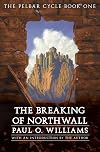
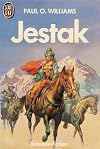
One thousand years after a devastating and chaotic series of nuclear exchanges, all that is left of the United States of America are scattered, warring tribes and small city-states. One of the latter is Pelbar-proud, civilized, and intolerant of change and new ideas. Rebels and troublemakers are sentenced to a year of exile at the massive midwestern fortress of Northwall, defending Pelbar against the fierce Shumai and Sentani tribes. Restless and brilliant Jestak is a visionary who has seen show more and learned too much in his distant travels to be content with life in Pelbarigan. During his exile at Northwall, he makes contact with Pelbar's age-old enemies and risks all to rescue his beloved Tia from nomads armed with long-lost weapons from before the atomic holocaust. Jestak's daring quest for love brings profound changes to his world. The Breaking of Northwall is the first in a series of seven classic postapocalyptic novels about the Pelbar people. Williams's fascinating and uniquely optimistic vision of an America long after a nuclear war has enthralled readers for decades. show lessTags
Recommendations


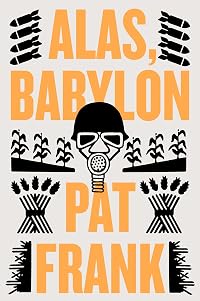












Member Recommendations

by Cecrow

Member Reviews
It's not the overlooked classic I was half hoping for, but in less than fifty pages I decided it's solid enough that I'm going to read the rest of this series. I find the setting very engaging. It's a sci-fi/fantasy hybrid, a post-apocalyptic North America now peopled by an intriguing mix of what stands in for medieval, indigeneous and perhaps early enlightenment cultures. 1,000 years after the "time of fire" (nuclear war?), these divided peoples are beginning to rediscover they have a common past. The Pelbar matriarchy is the most civilized among its neighbours, albeit too stiffly wedded to tradition. Challenging this stiffness is the novel's central theme, as changing times demand greater flexibility.
The author demonstrates either show more good research or a working knowledge of diplomacy, survival skills and various crafts, and the variety of cultures is well-drawn and developed. Unfortunately the characters are mostly flat, and romance can be wince-inducing. I'm also not fond of the rapid scene changes and too much info-dumping, as what happens in the very first chapter. Struggling past these, there's something worthwhile in the generated atmosphere. Mr. Williams presents a refreshingly positive view of a far-flung, back-to-the-land future, with the lightness of David Eddings' Belgariad and some of the feel of Jean Auel's Earth Children, mixed with a healthy dose of grittier action. show less
The author demonstrates either show more good research or a working knowledge of diplomacy, survival skills and various crafts, and the variety of cultures is well-drawn and developed. Unfortunately the characters are mostly flat, and romance can be wince-inducing. I'm also not fond of the rapid scene changes and too much info-dumping, as what happens in the very first chapter. Struggling past these, there's something worthwhile in the generated atmosphere. Mr. Williams presents a refreshingly positive view of a far-flung, back-to-the-land future, with the lightness of David Eddings' Belgariad and some of the feel of Jean Auel's Earth Children, mixed with a healthy dose of grittier action. show less
My spousal unit found out about this series somehow or other and ordered the first book. It's a thousand years into the future after a huge nuclear holocaust, the remnant populations, gathered in small tribal groups are reaching a turning point, large enough to start rubbing up against one another. In this first novel Williams introduces three major tribal groups near one another and in conflict, each group with quite different beliefs and folkways. Jestak, from the Pelbar tribe, a group that lives within huge fortresses and primarily governed by women, doesn't fit. He had been sent East to learn about the eastern coastal culture and beyond, but when he returned he wouldn't talk about his experience. First he was punished, then banished show more to the farthest north of the walled fortresses (Northwall) but he doesn't stay. There is a fourth tribal culture, not far away and he is aware they are going to try invading and wants to get the three groups to cooperate. OK so that is the plot. What makes the story work so well is that the characters are very engaging, the writing is straightforward and the different cultural choices are intriguing. I was on a trip and couldn't wait for book 2 and so continued by E. book, but will likely purchase the set! That's how much I love it! ****1/2 show less
Williams, Paul O. The Breaking of Northwall.1980. E-book ed., Bison 2014. Pelbar Cycle 1
Paul O. Williams is best known for his Haiku, essays in the Christian Science Monitor, and one seven-book series of post-apocalyptic science fiction. The Breaking of Northwall, the first volume of the Pelbar Cycle, is set a thousand years after a nuclear disaster. North America is now inhabited by tribes that do not share a common language. Some are village dwellers, while others are nomadic horsemen. Slavery and warfare are routine. The bow and arrow are the latest in weaponry. We follow Jestak, a young man exiled from his peaceful metalworking village of Pelbar. His travels teach him skills from multiple cultures. He becomes a change agent wherever show more he goes. Jestak is a likable hero, and the many cultures he visits are well-differentiated. The North American economy stretches credulity. We seem to have metalworking without mining, for example. I am not sure what accounts for the ability of horses to survive and thrive after the nukes. But these are quibbles. The Breaking of Northwall is an engrossing adventure with no pretensions as future history. 4 stars. show less
Paul O. Williams is best known for his Haiku, essays in the Christian Science Monitor, and one seven-book series of post-apocalyptic science fiction. The Breaking of Northwall, the first volume of the Pelbar Cycle, is set a thousand years after a nuclear disaster. North America is now inhabited by tribes that do not share a common language. Some are village dwellers, while others are nomadic horsemen. Slavery and warfare are routine. The bow and arrow are the latest in weaponry. We follow Jestak, a young man exiled from his peaceful metalworking village of Pelbar. His travels teach him skills from multiple cultures. He becomes a change agent wherever show more he goes. Jestak is a likable hero, and the many cultures he visits are well-differentiated. The North American economy stretches credulity. We seem to have metalworking without mining, for example. I am not sure what accounts for the ability of horses to survive and thrive after the nukes. But these are quibbles. The Breaking of Northwall is an engrossing adventure with no pretensions as future history. 4 stars. show less
This is really a good book, and the start of an excellent series. At some point far in the future, the world is recovering from some apocalypse, and the cities of Pelbar are some of the most civilized. However, they are dominated by women, and men have few rights. In this book we get introduced to the society of the Pelbar and their nomad neighbors, the Sentani and the Shumai. Jestak is exiled from Pelbarigan for not complying with orders, basically and after some adventures in the East, we follow him as he goes on an epic quest to the West (the Rockies). The title city of Northwall is led by a more progressive Protector, who knows she has to break the Pelbar out of their rigid adherence to the past.
Well written and excellent show more characters and a really interesting post-apocalyptic middle-America. One of my favorite post-apocalyptic series. show less
Well written and excellent show more characters and a really interesting post-apocalyptic middle-America. One of my favorite post-apocalyptic series. show less
Jestak of the Pelbar, a matriarchal society of metalworkers that lives in walled cities, is sent on a journey with several of his peers to establish trade with a city far to the west. Jestak alone returns and when he refuses to tell his tale he is exiled to Northwall. There he recounts the death of his party and how his travels lead him through the world, encountering many different cultures and learning of their customs. Jestak forges alliances with members of the hostile tribes surrounding Northwall and begs their aid in rescuing a woman he met on his travels. The Pelbar look on his activities with scorn, they do not understand the power of such alliances until they are called to arms when slavers attack their city.
A good read with show more well developed characters. The interactions between Jestak and the different tribes he encounters is quite interesting. I did find the book a bit dated while reading however but I'm not able to put my finger on exactly what gave me that impression. I look forward to getting my hands on the next book in the series. show less
A good read with show more well developed characters. The interactions between Jestak and the different tribes he encounters is quite interesting. I did find the book a bit dated while reading however but I'm not able to put my finger on exactly what gave me that impression. I look forward to getting my hands on the next book in the series. show less
Pretty good book. Takes place in the midwest, with some references to the south, southeast, and east coast. This is about a thousand years in a post nuclear future. Shows what happens when people are separated by vast distances, how they develop their own cultures and customs.
Thought I would give this a try, but I couldn't get more than a few pages into it. Lots of long, tedious expository dialogue. Confusing. Not worth the effort.
Members
- Recently Added By
Lists

Best Post-Apocalyptic Stories
143 works; 88 members
Author Information

18 Works 1,959 Members
Paul O. Williams is a professor emeritus of English at Principia College.
Some Editions
Awards and Honors
Awards
Series

Belongs to Publisher Series
Common Knowledge
- Canonical title
- The Breaking of Northwall
- Original title
- The Breaking of Northwall
- Original publication date
- 1980
- People/Characters
- Jestak
- Important places*
- Pelbarigan; Emerta
- Dedication
- To Nancy, who also knows all the seasons of the Heart.
- First words
- Once more toward evening Adai the Jestan toiled slowly up the wide, curving steps to the highest tower.
- Last words*
- (Click to show. Warning: May contain spoilers.)Alle lachten und verließen die Halle, die harzig roch nach frischenm Holz, nach neuem Mauerwerk und dem eben angezündeten Feuer im Kamin.
- Original language
- English
*Some information comes from Common Knowledge in other languages. Click "Edit" for more information.
Classifications
Statistics
- Members
- 410
- Popularity
- 75,438
- Reviews
- 8
- Rating
- (3.73)
- Languages
- English, French, German
- Media
- Paper, Ebook
- ISBNs
- 11
- ASINs
- 8