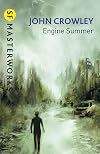
Engine Summer
by John Crowley
On This Page
Description
In the drowsy tranquility of Little Belaire, the Truthful Speakers lead lives of peaceful self-sufficiency ignoring the depopulated wilderness beyond their narrow borders. It is a society untouched by pain or violence and the self-destroying 'Angels' of the past are barely remembered. But when Rush That Speaks leaves his home on a pilgrimage of self-enlightenment, he finds a landscape haunted by myths and memories. The overgrown ruins reflect a world outside that is stranger than his people show more ever dreamed ... show lessTags
Recommendations






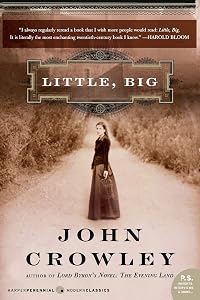








Member Recommendations

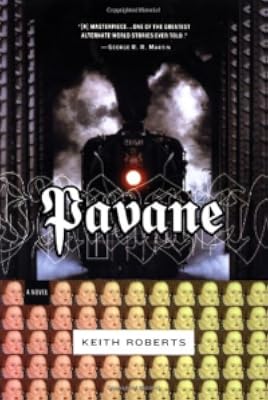
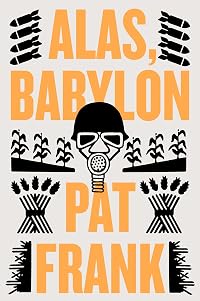
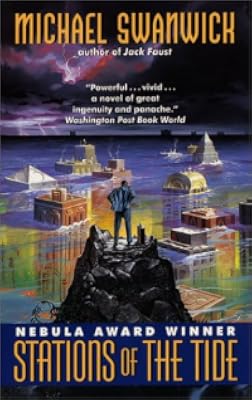
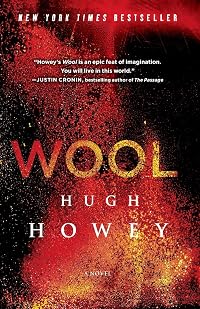
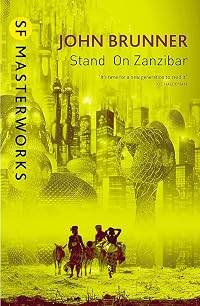
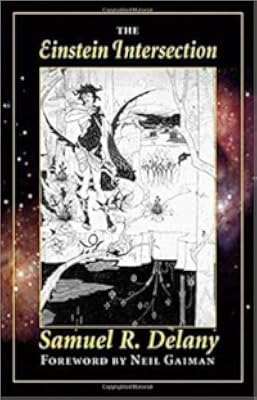
fugitive Another book about a post apocalyptic civilization which pays particular attention to the details of art, language, culture, religion, etc.
Member Reviews
Engine Summer follows an adolescent named Rush that Speaks who lives in a warren of "Angel" creation occupied by his small, secluded, and class-based community. Rush finds himself focused on the craft/art of Truth Speaking, and wishes to some day become a saint by effectively relating the experiences of his life in a way in which everybody can take something from his stories. To this end, he leaves the only people he has ever known in search of not only adventure and guidance from other enigmatic saints, but also a lost childhood love.
A decisive sense of melancholy hovers over the entire book. Humanity has lost something special, something we are unlikely to get back. We have changed fundamentally and yet have also learned to cope with show more that loss and push on in new directions. The post-apocalyptic world of Engine Summer feels alive and realized by comparison to other works in the genre like Station Eleven precisely because Crowley is able to write cultures that balance perfectly between forward and backward looking.
Engine Summer's slim size belies a shocking density of thematic exploration, world building, and arresting prose work. It's a microscopic yet enormous puzzle box in which Crowley invites you to piece things together for yourself. Sometimes the tangibles of the plot can feel impossibly obtuse and obfuscated, but most of the time Crowley gives precisely enough to get a sense of what's going on without destroying the mystical tone he also cultivates. To top it off, Engine Summer sticks the landing with a resolution that satisfies the plot but also leaves you wanting more in all the right ways.
As an avid reader, I find it difficult to not fall in love with a novel like Engine Summer that's as centered around storytelling and the ways in the stories we tell simultaneously shape our culture and ourselves. If a driving plot or transparent storytelling are things you must have in a book, then it may not be for you, but it happens to be right up my street and I'll sing its praises to anyone who will listen. Like most works of its caliber I fear I'm doing an absolutely horrid job communicating why I think it commands attention and respect. I hope at the very least that my enthusiasm has come across enough to make you curious enough to give it try. show less
A decisive sense of melancholy hovers over the entire book. Humanity has lost something special, something we are unlikely to get back. We have changed fundamentally and yet have also learned to cope with show more that loss and push on in new directions. The post-apocalyptic world of Engine Summer feels alive and realized by comparison to other works in the genre like Station Eleven precisely because Crowley is able to write cultures that balance perfectly between forward and backward looking.
Engine Summer's slim size belies a shocking density of thematic exploration, world building, and arresting prose work. It's a microscopic yet enormous puzzle box in which Crowley invites you to piece things together for yourself. Sometimes the tangibles of the plot can feel impossibly obtuse and obfuscated, but most of the time Crowley gives precisely enough to get a sense of what's going on without destroying the mystical tone he also cultivates. To top it off, Engine Summer sticks the landing with a resolution that satisfies the plot but also leaves you wanting more in all the right ways.
As an avid reader, I find it difficult to not fall in love with a novel like Engine Summer that's as centered around storytelling and the ways in the stories we tell simultaneously shape our culture and ourselves. If a driving plot or transparent storytelling are things you must have in a book, then it may not be for you, but it happens to be right up my street and I'll sing its praises to anyone who will listen. Like most works of its caliber I fear I'm doing an absolutely horrid job communicating why I think it commands attention and respect. I hope at the very least that my enthusiasm has come across enough to make you curious enough to give it try. show less
I almost want to go back and re-read this one immediately because there are a lot of revelations at the end that completely change how you understand the rest of the book. This book is going to haunt me for a long time.
It is set in a post-apocalyptic future, where some disaster has wiped out most of humanity. The story is narrated by Rush That Speaks in his old age, being interviewed about his youth. He grew up in a communal society, where people struggle to understand the lives of the humans who came before, who they call Angels. They still have some discarded Angel technology and artifacts, which they revere but do not understand (one character spends most of his life in a quest to understand "crostic words"). The human society was show more clearly far more advanced than ours, and there are elements of magic too - the people don't have to grow food, but can survive by smoking stuff they harvest from weird trees that were left by aliens.
As a teenager, Rush That Speaks goes on a quest, hoping to become a Saint. In his travels he learns different ways of understanding the world: in his native culture, he was a truthspeaker. He encounters other people who see the world in terms of dark and light instead of truth. He encounters scavengers who see the world in utilitarian terms. All along, he is trying to understand the world, and trying to form a relationship with Once a Day, a girl he played with as a child. His pursuit of her is part of his quest to understand the world.
All along, the reader gets more and more hints about how the world came to be how it is. It takes some sleuthing to piece them all together, and I'm sure I missed a lot of it along the way because I couldn't see how it was relevant.
The book can be mysterious and confusing, and sometimes as a reader you feel a bit unmoored and it's hard to follow what's happening, but it's still compelling. Rush That Speaks and his fellow people have a childlike wonder and innocence that makes the novel sparkle, even in the dark parts.
It all comes into sharp focus at the end, so if you're feeling lost, stick with it because it does all eventually make sense.
I love John Crowley's books. With this one, just like all of his others, I feel like I'm not quite smart enough to totally appreciate everything he's doing, and I might need two or three readings to fully appreciate it, but it's well worth two or three readings. show less
It is set in a post-apocalyptic future, where some disaster has wiped out most of humanity. The story is narrated by Rush That Speaks in his old age, being interviewed about his youth. He grew up in a communal society, where people struggle to understand the lives of the humans who came before, who they call Angels. They still have some discarded Angel technology and artifacts, which they revere but do not understand (one character spends most of his life in a quest to understand "crostic words"). The human society was show more clearly far more advanced than ours, and there are elements of magic too - the people don't have to grow food, but can survive by smoking stuff they harvest from weird trees that were left by aliens.
As a teenager, Rush That Speaks goes on a quest, hoping to become a Saint. In his travels he learns different ways of understanding the world: in his native culture, he was a truthspeaker. He encounters other people who see the world in terms of dark and light instead of truth. He encounters scavengers who see the world in utilitarian terms. All along, he is trying to understand the world, and trying to form a relationship with Once a Day, a girl he played with as a child. His pursuit of her is part of his quest to understand the world.
All along, the reader gets more and more hints about how the world came to be how it is. It takes some sleuthing to piece them all together, and I'm sure I missed a lot of it along the way because I couldn't see how it was relevant.
The book can be mysterious and confusing, and sometimes as a reader you feel a bit unmoored and it's hard to follow what's happening, but it's still compelling. Rush That Speaks and his fellow people have a childlike wonder and innocence that makes the novel sparkle, even in the dark parts.
It all comes into sharp focus at the end, so if you're feeling lost, stick with it because it does all eventually make sense.
I love John Crowley's books. With this one, just like all of his others, I feel like I'm not quite smart enough to totally appreciate everything he's doing, and I might need two or three readings to fully appreciate it, but it's well worth two or three readings. show less
Still the speculative fiction the novel I love the most. I re-read it every few years and I never tire of it, and never will, I think. Like the crystal that records the tale, it has many facets, impossible to appreciate all at once, or in a single reading. Crowley's writing, here as in Little, Big, is flawless. But it's his particular vision of how the world is transformed and what that says about being human that I fell and remain in love with. If you don't share a sense of longing for its poignant and melancholy beauty and a wonder at the aliveness of that vision, this book won't be for you.
Rush That Speaks is a dweller in Little Belaire, a self-sufficient community of Truthful Speakers in a post-apocalyptic world. He leaves this inward-looking place to seek truth in the wider world, where he pieces together stories of the Angels and the Storm which overwhelmed their world. The post-apocalypse world is a mostly peaceful and strange one, with few inhabitants. I like that the attitudes of these inhabitants are very different to today's. It reminded me of the very end of Doris Lessing's 'Shikasta'. I really enjoyed the language of this book, and I dreamed about it.
Fey, muted, beautiful. The story of Rush-that-speaks is a bildungsroman that will haunt you long after you have read the last page. The story follows the charming and inquisitive Rush as he grows up in his enclave of 'True Speakers', one of the few groups of humanity left after an apocalypse has destroyed most of civilization. It then follows him as he ventures out into the world to see what strangeness it may offer and in the hopes of finding his lost love.
Don't expect to find the mutant zombies or flesh-eating reavers of many other post-apocalyptic stories. Instead prepare to see with Rush the melancholy remnants of our society, given new strangeness and wonder when viewed through his eyes. Tied to this are the strange people we meet; show more those who survived the cataclysm and continued to live their lives, forever changed by the harsh reality of the end of civilization.
The ways in which these groups choose to meet the challenges presented by this world mark each of them in significant ways, and as Rush witnesses these things he is changed by them, becoming both more, and less, than he was when he started his journey.
This is one of my very favourites by Crowley (I seem to prefer his early work to his later) and I highly recommend it to any and all.
Edit: June 12/12 Upon reflection I think I have to give this one five stars. show less
Don't expect to find the mutant zombies or flesh-eating reavers of many other post-apocalyptic stories. Instead prepare to see with Rush the melancholy remnants of our society, given new strangeness and wonder when viewed through his eyes. Tied to this are the strange people we meet; show more those who survived the cataclysm and continued to live their lives, forever changed by the harsh reality of the end of civilization.
The ways in which these groups choose to meet the challenges presented by this world mark each of them in significant ways, and as Rush witnesses these things he is changed by them, becoming both more, and less, than he was when he started his journey.
This is one of my very favourites by Crowley (I seem to prefer his early work to his later) and I highly recommend it to any and all.
Edit: June 12/12 Upon reflection I think I have to give this one five stars. show less
There are some books that are bigger on the inside than on the outside. They may be small, but are so densely layered that they feel like they're opening onto infinite space, and when you finish reading you're dazed, like you've woken up from a vivid dream to find your waking life transformed.
Engine Summer is such a book, a deceptively slim novella set in a far-future world, which is at once a picaresque tale of love and adventure, and a dreamily gorgeous story about the nature of time, identity, consciousness, and the stories that make us really live.
You should read it.
Engine Summer is such a book, a deceptively slim novella set in a far-future world, which is at once a picaresque tale of love and adventure, and a dreamily gorgeous story about the nature of time, identity, consciousness, and the stories that make us really live.
You should read it.
‘Engine Summer’ is an odd and oblique little sci-fi novel from 1980. I think I must have found it on a list of post-apocalyptic sci-fi, as that is a favourite sub-genre of mine. Within that sub-genre, I would liken it to [b:Riddley Walker|776573|Riddley Walker|Russell Hoban|https://images.gr-assets.com/books/1383166398s/776573.jpg|762606] and [b:The Slynx|310722|The Slynx|Tatyana Tolstaya|https://images.gr-assets.com/books/1320532928s/310722.jpg|3535], as it uses changed language to create atmosphere and evoke the new world. The linguistic shift is less significant than in [b:Riddley Walker|776573|Riddley Walker|Russell Hoban|https://images.gr-assets.com/books/1383166398s/776573.jpg|762606], but still takes some getting used to. It show more took me about fifty pages to get into the novel. Quite unusually for its sub-genre, the narrative is very peaceful and relaxed. It follows Rush that Speaks through his childhood and on a journey (nonspecific quest?) that he undertakes. There is much discussion of the myths and stories of this changed world, which hint at then more explicitly describe how things came to be this way. I was pleased to find that this calm stability was apparently thanks to a conspiracy of women, led by a trans woman, who foresaw society’s immanent collapse and prepared for it. Although such background was intriguing, though, the actual events of the book were not really enough to keep me interested. I liked the twist at the end, but it seemed a minor payoff for the rambling of the previous 180 pages. There were some interesting subtexts about the relationship between humanity and nature, however these were not explored in any depth. Overall, a gentle, underwhelming novel. show less
Members
- Recently Added By
Lists

Best Post-Apocalyptic Stories
143 works; 88 members

S.F. Masterworks (Complete)
229 works; 15 members

Character-driven SF
59 works; 1 member

Favourite Books
1,820 works; 316 members

Best Science Fiction Novels
816 works; 430 members

David Pringle's Science Fiction: The 100 Best Novels
101 works; 9 members

SF Masterworks
193 works; 8 members
Favorite Science Fiction
457 works; 220 members
Author Information

46+ Works 12,780 Members
John Crowley was a recipient of the American Academy & Institute of Arts & Letters Award for Literature. He lives in the hills above the Connecticut River in northern Massachusetts with his wife & twin daughters. (Bowker Author Biography)
Some Editions
Awards and Honors
Awards
Notable Lists
Series
Belongs to Publisher Series
Work Relationships
Is contained in
Has as a commentary on the text
Common Knowledge
- Canonical title*
- L'été-machine
- Original title
- Engine summer
- Original publication date
- 1979-03
- People/Characters
- Rush that Speaks; Once a Day
- Important places
- Little Belaire
- Dedication
- For Lance Bird,
who also thinks that the snake's-hands
in a story can be the best part. - First words
- Asleep?
- Last words
- (Click to show. Warning: May contain spoilers.)Ever After. I promise. Now close your eyes.
*Some information comes from Common Knowledge in other languages. Click "Edit" for more information.
Classifications
Statistics
- Members
- 838
- Popularity
- 32,886
- Reviews
- 20
- Rating
- (4.04)
- Languages
- 6 — English, French, German, Japanese, Polish, Spanish
- Media
- Paper, Ebook
- ISBNs
- 15
- ASINs
- 5