
Always Coming Home
by Ursula K. Le Guin
On This Page
Description
Midway through her career, Ursula K. Le Guin embarked on one of her most detailed, impressive literary projects, a novel that took more than five years to complete. Blending story and fable, poetry, artwork, and song, Always Coming Home is this legendary writer's fictional ethnography of the Kesh, a people of the far future living in a post-apocalyptic Napa Valley. Having survived ecological catastrophe brought on by relentless industrialization, the Kesh are a peaceful people who reject show more governance and the constriction of genders, limit population growth to prevent overcrowding and preserve resources, and maintain a healthy community in which everyone works to contribute to its well-being. This richly imagined story unfolds through a series of narrated "translations" that illuminate individual lives, including a woman named Stone Telling, who travels beyond the Valley and comes to reside with another tribe, the patriarchal Condor people. With sharp poignancy, Le Guin explores the complexities of the Kesh's unified society and presents to us- in exquisite detail- their lives, histories, adventures, customs, language, and art. In addition to poems and folk tales, Le Guin created verse dramas, records of oral performances, recipes, and even an alphabet and glossary of the Kesh language. The novel is illustrated throughout with drawings by artist Margaret Chodos and includes a musical component- original recordings of Kesh songs that Le Guin collaborated on with composer Todd Barton- bringing this utterly original and compelling world to life. show lessTags
Recommendations



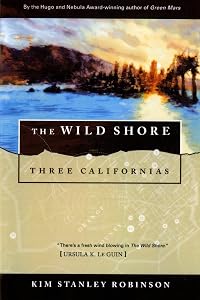
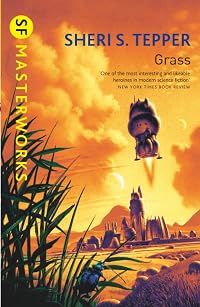
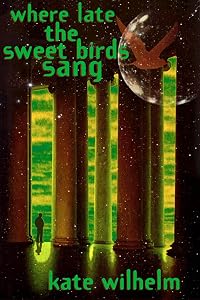
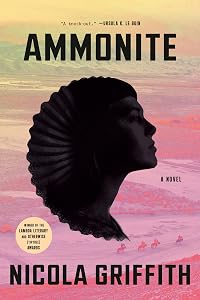










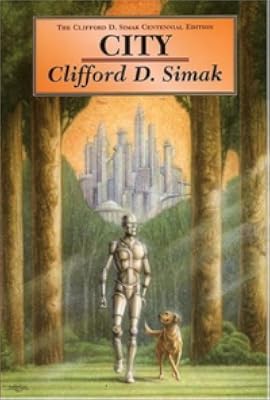
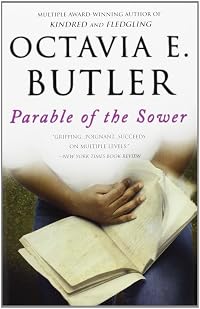
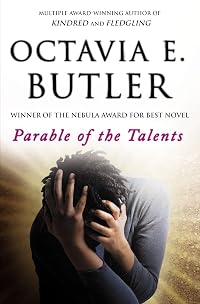
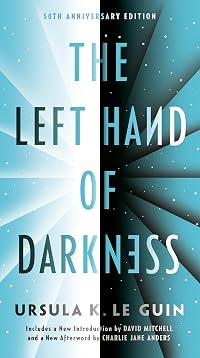



Member Recommendations

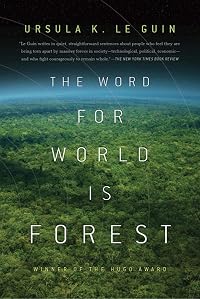
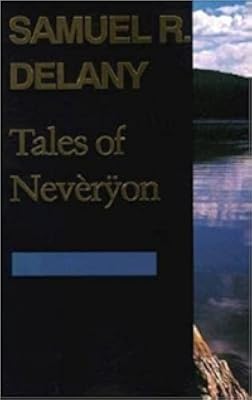
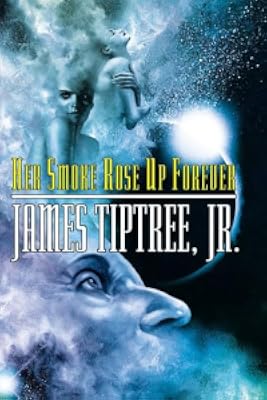
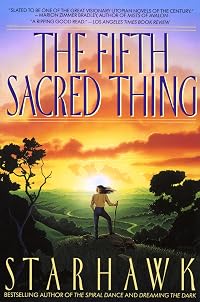
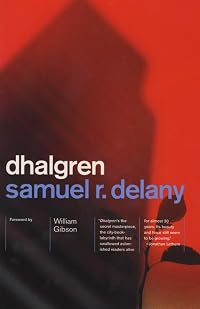
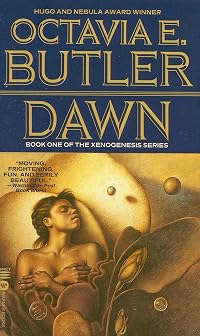
fugitive Another book about a post apocalyptic civilization which pays particular attention to the details of art, language, culture, religion, etc.
10
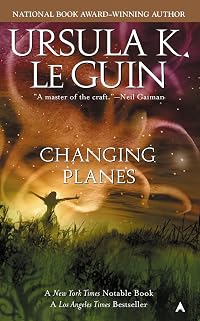
sturlington The underlying themes are similar: a return to the pre-industrial way of life, respect for the land, set in California post-apocalypse, with feminist undertones.
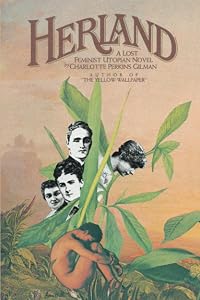
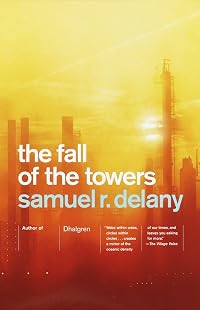
aulsmith Two Pacific Coast ecotopias


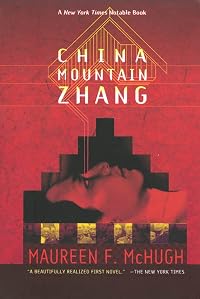
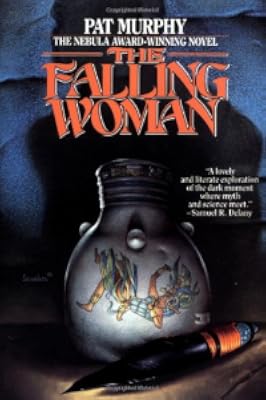
Cecrow Source of the concepts ania, apia and alia
Member Reviews
Not always a page-turner, but I had a great time in this world.
This felt a lot like the reading I did for my ancient civilization classes in college, but here Ursula K. Le Guin was doing the work of an entire people. I expect I'll be thinking a lot about the folks living in the Valley in the future.
What have I been thinking about already? Here's some
The portrayal of the Dayao is flatter than that of the Urrastians in the Dispossessed, I think. Maybe there just wasn't as much time to develop them - and maybe some of it is just how Stone Telling talks about her life.
The way Le Guin uses language and metaphor to shape a world-view is fascinating (& very self-aware). Examples include referring to all entities in the world as "people," or show more the way the Kesh identify "giving" and "wealth," or the way that one's child "makes someone a parent." I wonder if she read that Lakoff book.
Reading this book in 20 minute bursts on the MTA is a funny situation to be in.
One of my favorite quotes is from the introduction to the appendix: "Things from here on will be just as fictional, but more factual, although equally true." I think it captures the way she's been playing with fact and fiction and meaning and language throughout the whole book. show less
This felt a lot like the reading I did for my ancient civilization classes in college, but here Ursula K. Le Guin was doing the work of an entire people. I expect I'll be thinking a lot about the folks living in the Valley in the future.
What have I been thinking about already? Here's some
The portrayal of the Dayao is flatter than that of the Urrastians in the Dispossessed, I think. Maybe there just wasn't as much time to develop them - and maybe some of it is just how Stone Telling talks about her life.
The way Le Guin uses language and metaphor to shape a world-view is fascinating (& very self-aware). Examples include referring to all entities in the world as "people," or show more the way the Kesh identify "giving" and "wealth," or the way that one's child "makes someone a parent." I wonder if she read that Lakoff book.
Reading this book in 20 minute bursts on the MTA is a funny situation to be in.
One of my favorite quotes is from the introduction to the appendix: "Things from here on will be just as fictional, but more factual, although equally true." I think it captures the way she's been playing with fact and fiction and meaning and language throughout the whole book. show less
This was re-read for a group read, and I enjoyed reading it again. Le Guin's parents were anthropologists, with her father concentrating on cultures in the American Northwest, and their influence has always been discernible in her science fiction, but nowhere more so than here. This is not a linear story but an immersion into a post-apocalyptic world from the viewpoint of one cultural group. Both for this group, the Sinshan in their valley, and for the Condor, Le Guin accurately uses many features present in the aboriginal cultures of the Northwest and the Northern plains. The culture is shared not only by narrative but by song, poem, legend, and infrastructure, giving a rich, multi-layered texture to the society. The author, as show more Pandora, frets about her approach, but ultimately speaks her true purpose, I believe, in the chapter of Pandora speaking with the archivist.
ARC: But I have no answers and this isn't utopia, aunt!
PAN: The hell it ain't.
ARC: This is a mere dream dreamed in a bad time, an Up Yours to the people who ride snowmobiles, make nuclear weapons, and run prison camps by a middle-aged housewife, a critique of civilisation possible only to the civilised, an affirmation pretending to be a rejection, a glass of milk for the soul ulcered by acid rain, a piece of pacifist jeanjacquerie, and a cannibal dance among the savages in the ungodly garden of the farthest West. show less
ARC: But I have no answers and this isn't utopia, aunt!
PAN: The hell it ain't.
ARC: This is a mere dream dreamed in a bad time, an Up Yours to the people who ride snowmobiles, make nuclear weapons, and run prison camps by a middle-aged housewife, a critique of civilisation possible only to the civilised, an affirmation pretending to be a rejection, a glass of milk for the soul ulcered by acid rain, a piece of pacifist jeanjacquerie, and a cannibal dance among the savages in the ungodly garden of the farthest West. show less
This took me a long long time to read, in large part because I started out reading it as a compilation, instead of as a unified work. It *is* a compilation - but it's better read as a novel. You really have to develop and remember a sense of the Kesh to get the most of each component, and the ordering of stories is intentional.
It's a strange, unsettling, wonderful anthropological study of a people that doesn't exist, but drawing heavily on people who have existed. It's unbelievably rich and thoroughly thought-out (there's a CD of songs and poems, for God's sake). It's also maybe kinda self-indulgent.
If you really like LeGuin, you'll enjoy it.
A strange and painful book to read in October 2017, while the Valley burns.
It's a strange, unsettling, wonderful anthropological study of a people that doesn't exist, but drawing heavily on people who have existed. It's unbelievably rich and thoroughly thought-out (there's a CD of songs and poems, for God's sake). It's also maybe kinda self-indulgent.
If you really like LeGuin, you'll enjoy it.
A strange and painful book to read in October 2017, while the Valley burns.
At first, I didn’t think I would like this unusually structured book, but it very gradually and completely captured my imagination. It is a collection of writings–poems, songs, stories and essays–about the life and culture of a group of people living in California far in the future, long after our own civilization has collapsed and been almost obliterated. It is not clear who has collected these writings, but it seems to be a character named Pandora, an emissary from our present time who is perhaps merely dreaming this utopian future society.
The Kesh, as these people are called, are in many ways very primitive, with a Native American-style culture that revolves around seasonal celebrations, growing crops, caring for livestock, show more hunting and gathering, and taking care of all the work of life. The Kesh’s society is the opposite of capitalism, in that wealth comes through giving things away, not owning them, and everyone shares in the village’s resources.
But the Kesh are not entirely primitive. Though all fossil fuels are gone, they have electricity (sun-, wind- and water-powered, no doubt), as well as access to a network of computers–a network that extends around the globe and into outer space via unmanned probes and satellites–that store all of human history and knowledge. The Kesh just don’t seem interested in progressing past their idyllic state, and they refer to societies like ours as “people with their heads on backwards.”
Not that life is perfect for the Kesh. They suffer from a high rate of birth defects and early mortality due to radiation and chemical poisoning, leftovers from our defunct civilization, which keeps the population from growing too large. And their stories reveal that they suffer from human nature just like any of us.
One such story–the longest in the collection, almost a novel–presents a dystopian alternative to the Kesh. A warlike society called the Condor people come to the Valley where the Kesh live, and one of the soldiers marries a Kesh woman and fathers a daughter, Stone Telling. When she gets older, she chooses to accompany her father to his home. Her story is the only the knowledge the Kesh have of how the Condor people live. They hold slaves, are ruled by a dictator and worship a single powerful god. The women have no rights and are not allowed to leave their homes without completely covering themselves. They are obsessed with war and building war machines that they don’t have the fuel to power, at the expense of feeding their people. Eventually, Stone Telling escapes back to her own people, but we get the sense that the Condor people are well on the path to self-destruction.
It took me a while to get caught up in the stories of the Kesh. Stone Telling’s long memoir, broken into three parts and interspersed by other writings, helps anchor the book. I gradually found myself enchanted and fascinated by the Kesh as I learned more about them, especially their spiritual practices and the important ritual dances they hold at significant times of the year. Mostly, I admired their approach to life, without judgment or a strict moral code, respectful of both the individual and the whole, which includes the animals, plants, stones, earth, stars, everything.
I have lately felt overwhelmed by depressing world events, our materialistic culture and the problems we felt, particularly our environmental problems. This book offered both an escape and an alternative way of thinking about those problems. show less
The Kesh, as these people are called, are in many ways very primitive, with a Native American-style culture that revolves around seasonal celebrations, growing crops, caring for livestock, show more hunting and gathering, and taking care of all the work of life. The Kesh’s society is the opposite of capitalism, in that wealth comes through giving things away, not owning them, and everyone shares in the village’s resources.
But the Kesh are not entirely primitive. Though all fossil fuels are gone, they have electricity (sun-, wind- and water-powered, no doubt), as well as access to a network of computers–a network that extends around the globe and into outer space via unmanned probes and satellites–that store all of human history and knowledge. The Kesh just don’t seem interested in progressing past their idyllic state, and they refer to societies like ours as “people with their heads on backwards.”
Not that life is perfect for the Kesh. They suffer from a high rate of birth defects and early mortality due to radiation and chemical poisoning, leftovers from our defunct civilization, which keeps the population from growing too large. And their stories reveal that they suffer from human nature just like any of us.
One such story–the longest in the collection, almost a novel–presents a dystopian alternative to the Kesh. A warlike society called the Condor people come to the Valley where the Kesh live, and one of the soldiers marries a Kesh woman and fathers a daughter, Stone Telling. When she gets older, she chooses to accompany her father to his home. Her story is the only the knowledge the Kesh have of how the Condor people live. They hold slaves, are ruled by a dictator and worship a single powerful god. The women have no rights and are not allowed to leave their homes without completely covering themselves. They are obsessed with war and building war machines that they don’t have the fuel to power, at the expense of feeding their people. Eventually, Stone Telling escapes back to her own people, but we get the sense that the Condor people are well on the path to self-destruction.
It took me a while to get caught up in the stories of the Kesh. Stone Telling’s long memoir, broken into three parts and interspersed by other writings, helps anchor the book. I gradually found myself enchanted and fascinated by the Kesh as I learned more about them, especially their spiritual practices and the important ritual dances they hold at significant times of the year. Mostly, I admired their approach to life, without judgment or a strict moral code, respectful of both the individual and the whole, which includes the animals, plants, stones, earth, stars, everything.
I have lately felt overwhelmed by depressing world events, our materialistic culture and the problems we felt, particularly our environmental problems. This book offered both an escape and an alternative way of thinking about those problems. show less
I think this is a book that either strikes a deeply resonant chord with you, or else you're left somewhat wondering why people rave about it.
The closest analog I can think of for describing it might be Middle Earth—particularly the sequels to The Lord of the Rings—though the themes, and even the genre, are completely different. There is the same desire on the part of the author to create an entire world, with its geographies, customs, languages, writing, arts, history and every other aspect on full display.
For my part, Le Guin is less successful at this task than Tolkien was. Some of it may be different natural talents for this particular kind of detailed world-building. However, where Tolkien conceived of his world and then built show more stories in it, my impression is that Le Guin conceived of a novella (the main story line is only 133 pages out of 563) and built the world around it. Of course, I have no idea of her creative process and might be wrong, but the impression remains that this wasn't a living, breathing world for her from which stories arose organically.
The result is something that is inherently contradictory to read. The story of Stone Telling begs for linear reading. The rest is like an encyclopedia where one wants to dip here, follow a link there, skim things of less interest. I got the impression that Le Guin wanted to tell just a bit of the story and then say, "Ah, but forget the story for now; step over here and see if you can understand how the Kesh lived their lives." It sounded interesting in the book description but, in practice, I found myself losing interest in the story line while reading about pottery or village layout, and losing interest in the encyclopedia while reading the story.
Ironically, I think the novella portion, taken alone, shares some of the faults of the above-mentioned creation of Tolkien's: there are characters wearing the white hats; there are those wearing the black hats; there aren't (unlike the real world) a lot of people in between who are fleshed out for us. Le Guin does give a nod to the fact that jealousy, murder and rape exist in her world of the Valley, but she structures it through fables and offhand references such that it doesn't really impinge forcefully upon the reader's consciousness as part of the active Kesh world. The literal words she writes are submerged under a sensation that the flower children of the Summer of Love have encountered the KKK. She rescues this somewhat at the very end by having Stone Telling speculate on social natural selection, that the Kesh could live lightly upon the land and each other because the apocalypse that had destroyed our world had left only those who could survive in that way.
This book has a reputation in some quarters for boiling down to a formula of: patriarchy is bad; matriarchy is good. I think that's a misapprehension. There's little doubt about the "patriarchy is bad" part but, while the Kesh are matrilineal and matrilocal, I didn't see anything that indicated they were matriarchal. Rather, it seemed that they pursued an egalitarian form of consensus government, a philosophy more consistent with what I read in her other books. I think the erroneous impression is because there are very few sympathetic male figures in the story and the ones who are sympathetic tend to be rather peripheral. I feel that this creates an impression in the reader's mind of "women getting it right," with the extension to matriarchy being somewhat natural, if not necessarily indicated.
In the end, this was an ambitious project for which I have respect: building a world as finely detailed and consistently conceived is something most authors would fail at miserably. As a story, however, I was left wanting—it was a fair read but nothing more for me. Le Guin remains one of my favorite authors of speculative fiction but this is not among my favorites of her work. show less
The closest analog I can think of for describing it might be Middle Earth—particularly the sequels to The Lord of the Rings—though the themes, and even the genre, are completely different. There is the same desire on the part of the author to create an entire world, with its geographies, customs, languages, writing, arts, history and every other aspect on full display.
For my part, Le Guin is less successful at this task than Tolkien was. Some of it may be different natural talents for this particular kind of detailed world-building. However, where Tolkien conceived of his world and then built show more stories in it, my impression is that Le Guin conceived of a novella (the main story line is only 133 pages out of 563) and built the world around it. Of course, I have no idea of her creative process and might be wrong, but the impression remains that this wasn't a living, breathing world for her from which stories arose organically.
The result is something that is inherently contradictory to read. The story of Stone Telling begs for linear reading. The rest is like an encyclopedia where one wants to dip here, follow a link there, skim things of less interest. I got the impression that Le Guin wanted to tell just a bit of the story and then say, "Ah, but forget the story for now; step over here and see if you can understand how the Kesh lived their lives." It sounded interesting in the book description but, in practice, I found myself losing interest in the story line while reading about pottery or village layout, and losing interest in the encyclopedia while reading the story.
Ironically, I think the novella portion, taken alone, shares some of the faults of the above-mentioned creation of Tolkien's: there are characters wearing the white hats; there are those wearing the black hats; there aren't (unlike the real world) a lot of people in between who are fleshed out for us. Le Guin does give a nod to the fact that jealousy, murder and rape exist in her world of the Valley, but she structures it through fables and offhand references such that it doesn't really impinge forcefully upon the reader's consciousness as part of the active Kesh world. The literal words she writes are submerged under a sensation that the flower children of the Summer of Love have encountered the KKK. She rescues this somewhat at the very end by having Stone Telling speculate on social natural selection, that the Kesh could live lightly upon the land and each other because the apocalypse that had destroyed our world had left only those who could survive in that way.
This book has a reputation in some quarters for boiling down to a formula of: patriarchy is bad; matriarchy is good. I think that's a misapprehension. There's little doubt about the "patriarchy is bad" part but, while the Kesh are matrilineal and matrilocal, I didn't see anything that indicated they were matriarchal. Rather, it seemed that they pursued an egalitarian form of consensus government, a philosophy more consistent with what I read in her other books. I think the erroneous impression is because there are very few sympathetic male figures in the story and the ones who are sympathetic tend to be rather peripheral. I feel that this creates an impression in the reader's mind of "women getting it right," with the extension to matriarchy being somewhat natural, if not necessarily indicated.
In the end, this was an ambitious project for which I have respect: building a world as finely detailed and consistently conceived is something most authors would fail at miserably. As a story, however, I was left wanting—it was a fair read but nothing more for me. Le Guin remains one of my favorite authors of speculative fiction but this is not among my favorites of her work. show less
Sort of an exercise in building a low-tech society set after our industrial modern age. The people of the Valley live a largely peaceful, non-hierarchical communal life that prioritizes listening and understanding, and considers being generous synonymous with wealth. The poor are those who do not give; giving makes one rich. It's fascinating, and I loved the ways the world building was woven into Stone Telling's story, and how the world building sections (hundreds of pages of an anthropologist's notes) enriched my understanding of Stone Telling's sections. That said, the notes were so very long that at times I skimmed them.
This is not a novel, and expecting it to follow the conventions of that form will lead to disappointment. There's show more a fourteen page glossary, several hundred pages of songs, poems, and novel excerpts from the Valley culture, even extracts from the galactic computer system of the future about the Valley. And there are wonderfully meta moments, like this interchange between Pandora the anthropologist and her interview subject, a librarian of the Valley people:
This is a complex work, and I know I didn't get all of it--if I read this many times, I think I would understand something new, or differently, every time. show less
This is not a novel, and expecting it to follow the conventions of that form will lead to disappointment. There's show more a fourteen page glossary, several hundred pages of songs, poems, and novel excerpts from the Valley culture, even extracts from the galactic computer system of the future about the Valley. And there are wonderfully meta moments, like this interchange between Pandora the anthropologist and her interview subject, a librarian of the Valley people:
Pandora: I never did like smartass utopians. Always so much healthier and saner and sounder and fitter and kinder and tougher and wiser and righter than me and my family and friends. People who have the answers are boring, niece. Boring, boring, boring.
Archivist: But I have no answers and this isn't utopia, aunt!
Pandora: The hell it ain't.
Archivist: This is a mere dream dreamed in a bad time, an Up Yours to the people who ride snowmobiles, make nuclear weapons, and run prison camps by a middle-aged housewife, a critique of civilization possible only to the civilized, an affirmation pretending to be a rejection, a glass of milk for the soul ulcered by acid rain, a piece of pacifist jeanjacquerie, and a cannibal dance among the savages in the ungodly garden of the farthest West.
Pandora: You can't talk that way!
Archivist: True.
Pandora: Go sing heya, like any savage.
Archivist: Only if you'll sing with me.
This is a complex work, and I know I didn't get all of it--if I read this many times, I think I would understand something new, or differently, every time. show less
I love this ethnography of a fictional culture -- it could be the notes for a novel that was never written, but then two-thirds of it would have been discarded under the Kill Your Darlings rule. It's bigger, somehow, for being what it is instead; a multitude of stories, songs, recipes, practices, histories, essays, and other depictions of the lives of people who might live someday.
Members
- Recently Added By
Lists

Best Science Fiction Novels
816 works; 430 members

Favorite Science Fiction by Women Authors
741 works; 203 members

Best Feminist Science Fiction
188 works; 35 members

Best Post-Apocalyptic Stories
143 works; 88 members

S.F. Masterworks (Complete)
229 works; 15 members

20th Century Literature
1,161 works; 55 members

Dystopian and Apocalyptic Literature
350 works; 74 members

Utopian Anarchist Novels
10 works; 6 members

Best Feminist Literature
188 works; 26 members

Larry McCaffery's 20th Century Greatest Hits: 100 English-Language Books
103 works; 12 members

Broderick and Di Filippo's Science Fiction: The 101 Best Novels 1985-2010
103 works; 7 members

SF Masterworks
193 works; 8 members
Recommended Speculative Fiction by Women and People of Color
298 works; 45 members

Exploration of alternative economical systems
40 works; 3 members

Books Set in California
112 works; 15 members

Slipstream or Interstitial Fiction
160 works; 19 members

Speculative Fiction to Read
706 works; 32 members
Novels Published in 1985
14 works; 3 members

Experimental Literature
141 works; 19 members

Utopia
7 works; 2 members

Welcome to Ruritania!
22 works; 5 members
Book Worlds We'd Like To Visit
322 works; 158 members


National Book Award Finalists - Fiction
377 works; 12 members

Fiction With Familiar Settings
280 works; 94 members
1980s
356 works; 23 members
Books Read in 2018
4,360 works; 110 members

Books Read in 2008
336 works; 8 members

Works with inappropriate subject headings on LibraryThing
35 works; 5 members

Gimmicks
56 works; 12 members
BingoDOG - Genre Benders
74 works; 14 members
Favourite Books
1,820 works; 316 members

Religious Fiction
58 works; 13 members
Literature About Women and Girls
426 works; 41 members
Shannon's Read-Alikes List
71 works; 8 members
Best Fantasy Novels
821 works; 361 members

Female Protagonist
1,076 works; 57 members

Set in the Pacific Northwest
136 works; 7 members
Favorite Science Fiction
458 works; 225 members
Talk Discussions
Past Discussions
***Group Read: Always Coming Home by Ursula Le Guin (spoiler thread) in 75 Books Challenge for 2011 (August 2011)
Author Information

525+ Works 167,803 Members
Ursula K. Le Guin was born Ursula Kroeber in Berkeley, California on October 21, 1929. She received a bachelor's degree from Radcliffe College in 1951 and a master's degree in romance literature of the Middle Ages and Renaissance from Columbia University in 1952. She won a Fulbright fellowship in 1953 to study in Paris, where she met and married show more Charles Le Guin. Her first science-fiction novel, Rocannon's World, was published in 1966. Her other books included the Earthsea series, The Left Hand of Darkness, The Dispossessed: An Ambiguous Utopia, The Lathe of Heaven, Four Ways to Forgiveness, and The Telling. A Wizard of Earthsea received an American Library Association Notable Book citation, a Horn Book Honor List citation, and the Lewis Carroll Shelf Award in 1979. She received the Medal for Distinguished Contribution to American Letters in 2014. She also received the Nebula Award and the Hugo Award. She also wrote books of poetry, short stories collections, collections of essays, children's books, a guide for writers, and volumes of translation including the Tao Te Ching of Lao Tzu and selected poems by Gabriela Mistral. She died on January 22, 2018 at the age of 88. (Bowker Author Biography) show less
All Editions
Some Editions
Awards and Honors
Awards
Notable Lists
Series
Belongs to Publisher Series
SF Masterworks (New design)
Work Relationships
Is contained in
Is expanded in
Has as a student's study guide
Common Knowledge
- Canonical title*
- La vallée de l'éternel retour
- Original title
- Always Coming Home
- Original publication date
- 1985
- People/Characters
- Stone Telling; Pandora
- Important places
- California, USA; Northern California, USA
- First words
- Stone Telling is my last name.
- Quotations
- They might be going to have lived.
the worldwide technological web - Last words*
- (Click to show. Warning: May contain spoilers.)Il y a une vallée, de hautes collines l'entourent,
Il y a un fleuve, aux rives plantées de saules,
Il y a des gens, leurs pieds sont si beaux,
qui dansent au bord du fleuve dans la vallée. - Publisher's editor*
- Isabelle Reinharez
- Original language
- English
- Disambiguation notice
- This work is for editions containing the original 1985 text which do not contain the additional material from the 2019 "author's expanded edition".
*Some information comes from Common Knowledge in other languages. Click "Edit" for more information.
Classifications
Statistics
- Members
- 2,521
- Popularity
- 7,663
- Reviews
- 22
- Rating
- (3.91)
- Languages
- 8 — Danish, English, French, Italian, Polish, Russian, Spanish, Turkish
- Media
- Paper, Audiobook, Ebook
- ISBNs
- 30
- ASINs
- 24