On This Page
Description
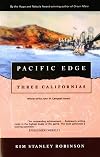
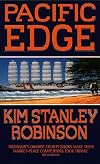
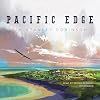
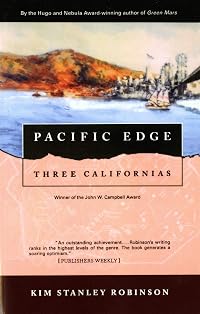
North America, 2065. In a world that has rediscovered harmony with nature, the village of El Modena, California is an ecotopia in the making. Kevin Claiborne, a young builder who has grown up in this "green" world, now finds himself caught up in the struggle to preserve his community's idyllic way of life from the resurgent forces of greed and exploitation.The final volume in Kim Stanley Robinson's Three Californias triptych, Pacific Edge is a brilliant work of science fiction and an show more outstanding literary achievement. show lessTags
Recommendations
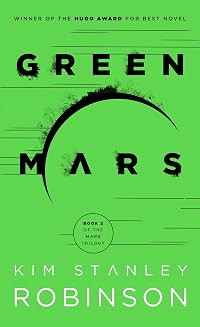
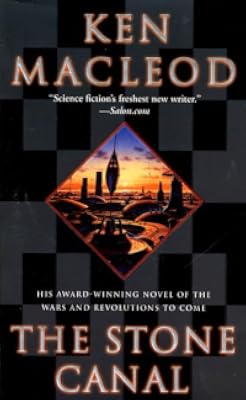
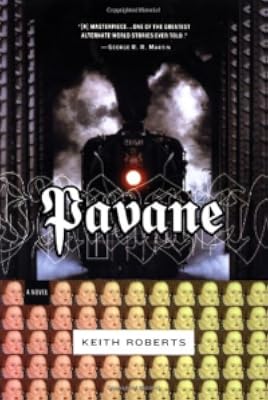
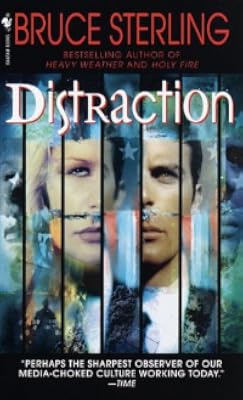

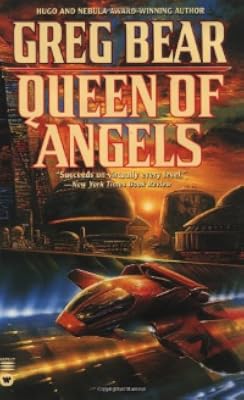
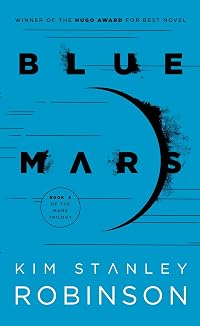
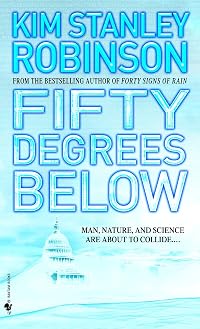
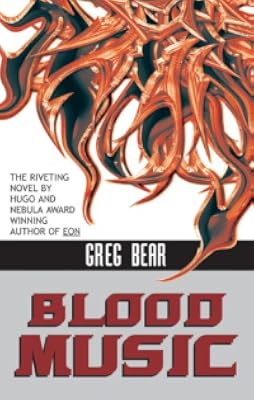


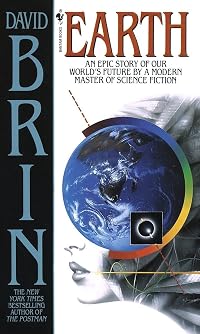

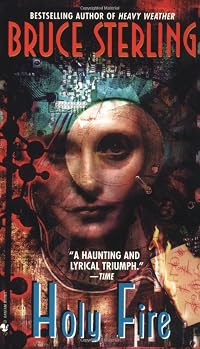
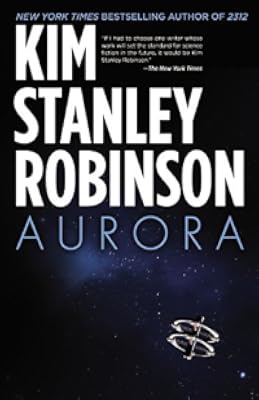

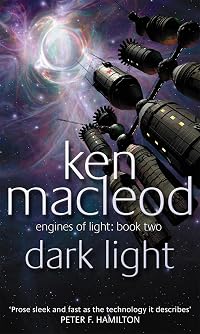
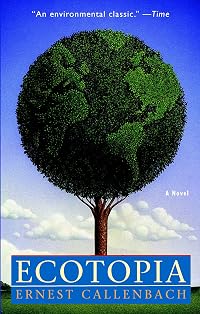

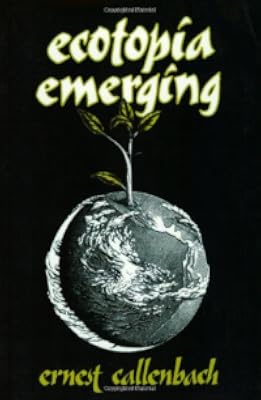
Member Recommendations

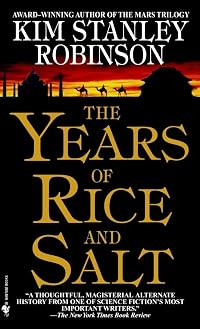
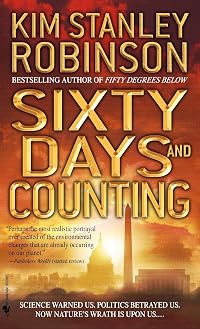
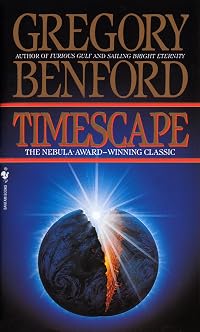
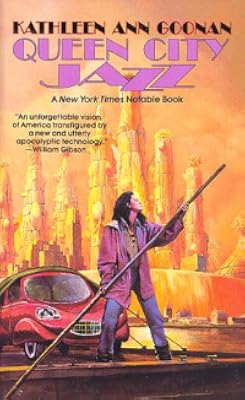
aulsmith Two Pacific Coast ecotopia's
Member Reviews
This is the second of the "Three Californias" series that I've read and it represents a huge improvement over the dull [b:The Gold Coast|41125|The Gold Coast (Three Californias Triptych)|Kim Stanley Robinson|http://d.gr-assets.com/books/1312020876s/41125.jpg|3269850], which probably would have put me off KSR forever if it had been the first book I'd read by him.
The Three Californias are really Three Orange Counties - three near future visions of what a place beloved to the author could turn out like. Gold Coast is an extrapolation of current trends toward money over everything, particularly environment. This is a "Utopia"; the one I haven't read is post-nuclear holocaust. But "Three Orange Counties" is probably not as internationally show more marketable a title as "Three Californias"... This was back in the days of KSR's optimism, when he thought presenting a choice of futures to people might help. Look at how strident he became when he realised that wasn't going to work: [b:Forty Signs of Rain|41129|Forty Signs of Rain (Science in the Capit0l, #1)|Kim Stanley Robinson|http://d.gr-assets.com/books/1320445817s/41129.jpg|962345] etc. And how depressed he became when that didn't work, either: [b:Galileo's Dream|6391377|Galileo's Dream|Kim Stanley Robinson|http://d.gr-assets.com/books/1303142224s/6391377.jpg|6579805]. Gold Coast, here we come.
"Utopia" is in quotes because the point is that whilst this is KSR's optimistic view of how things could turn out, where corporate power is severely limited, the environment is a paramount concern and nobody owns a car as an individual, KSR recognises the will to power within humanity and that the fight against it would have to never stop. That struggle, in microcosm, is the plot of the story - to save an undeveloped hill from organised powers intent on re-asserting control illegally.
It's also a love-story. This aspect of the novel was particularly well done; I don't off-hand remember relating so directly to the descriptions of the emotional state of the protagonist during his love-pangs in any other novel.
There is one flaw, though; KSR's obsession with baseball (strictly soft-ball, in this case) is over-indulged. Indulging it at all being an over-indulgement in my view because the only thing I find more boring in sport than watching baseball is reading about it. show less
The Three Californias are really Three Orange Counties - three near future visions of what a place beloved to the author could turn out like. Gold Coast is an extrapolation of current trends toward money over everything, particularly environment. This is a "Utopia"; the one I haven't read is post-nuclear holocaust. But "Three Orange Counties" is probably not as internationally show more marketable a title as "Three Californias"... This was back in the days of KSR's optimism, when he thought presenting a choice of futures to people might help. Look at how strident he became when he realised that wasn't going to work: [b:Forty Signs of Rain|41129|Forty Signs of Rain (Science in the Capit0l, #1)|Kim Stanley Robinson|http://d.gr-assets.com/books/1320445817s/41129.jpg|962345] etc. And how depressed he became when that didn't work, either: [b:Galileo's Dream|6391377|Galileo's Dream|Kim Stanley Robinson|http://d.gr-assets.com/books/1303142224s/6391377.jpg|6579805]. Gold Coast, here we come.
"Utopia" is in quotes because the point is that whilst this is KSR's optimistic view of how things could turn out, where corporate power is severely limited, the environment is a paramount concern and nobody owns a car as an individual, KSR recognises the will to power within humanity and that the fight against it would have to never stop. That struggle, in microcosm, is the plot of the story - to save an undeveloped hill from organised powers intent on re-asserting control illegally.
It's also a love-story. This aspect of the novel was particularly well done; I don't off-hand remember relating so directly to the descriptions of the emotional state of the protagonist during his love-pangs in any other novel.
There is one flaw, though; KSR's obsession with baseball (strictly soft-ball, in this case) is over-indulged. Indulging it at all being an over-indulgement in my view because the only thing I find more boring in sport than watching baseball is reading about it. show less
The third of KSR's linked 'Orange County' trilogy, 'Pacific Edge' concerns small-town politics in a California reshaped by a quiet, anti-corporatist revolution. We follow a number of protagonists in an ordinary life that is nonetheless radically different from our own time. These future Californians live an almost pastoral life, following their own artisanal occupations, providing municipal volunteer labour and following their own interests, whether that be softball, gliding or all-in wrestling. The world is electronically connected, and people have a global consciousness. Orange County in this novel appears a veritable liberal hippie paradise.
And yet there is a serpent in the garden, in the form of multi-national corporate forces show more stirring in the background. One of the protagonists of the book, an old-time campaigner, works to help uncover the powers behind a local building proposal; and although he had a hand in the change that made the world he lived in, he has to come out of self-imposed retreat to engage with change in his community.
Lest it look as though we are dealing wholly with first-world problems here, Robinson has that view challenged by other characters; and there are events and tragedies that shape the outcome of the story.
There is also another story, told in flashback, about how the world of the novel came about, and how that change was exercised on a global scale.
For a book written in 1990, the view of the coming world seems very prescient. Everyone is electronically connected with everyone else (and although the book pre-dates the internet and global personal communications, and the tech isn't quite what we now see, the society's engagement with the rest of the global village seems quite consistent with how things worked out in practice); environmental issues are taken very seriously, politics has gone through something of a re-alignment and the corporate world has been radically altered. Unusually, the process by which that corporate world, seemingly so entrenched in our own time, is described; global 'people power' is seen as the transforming influence, coupled to a willingness for the state to finally flex its legal muscles when the demands from the electorate become too insistent. Quietly, this is a very political book.
I certainly engaged with it, even though everyday life in California is something I only know very much at third hand, and I have no interest in softball whatsoever. I now want to re-read the entire Orange County trilogy to see exactly how Robinson pulled off the trick; this book has taken so long to rise to the top of my 'to be read' pile that I only have the slightest recollection of the other books in the series. But I shall be returning to Robinson's Orange County soon. show less
And yet there is a serpent in the garden, in the form of multi-national corporate forces show more stirring in the background. One of the protagonists of the book, an old-time campaigner, works to help uncover the powers behind a local building proposal; and although he had a hand in the change that made the world he lived in, he has to come out of self-imposed retreat to engage with change in his community.
Lest it look as though we are dealing wholly with first-world problems here, Robinson has that view challenged by other characters; and there are events and tragedies that shape the outcome of the story.
There is also another story, told in flashback, about how the world of the novel came about, and how that change was exercised on a global scale.
For a book written in 1990, the view of the coming world seems very prescient. Everyone is electronically connected with everyone else (and although the book pre-dates the internet and global personal communications, and the tech isn't quite what we now see, the society's engagement with the rest of the global village seems quite consistent with how things worked out in practice); environmental issues are taken very seriously, politics has gone through something of a re-alignment and the corporate world has been radically altered. Unusually, the process by which that corporate world, seemingly so entrenched in our own time, is described; global 'people power' is seen as the transforming influence, coupled to a willingness for the state to finally flex its legal muscles when the demands from the electorate become too insistent. Quietly, this is a very political book.
I certainly engaged with it, even though everyday life in California is something I only know very much at third hand, and I have no interest in softball whatsoever. I now want to re-read the entire Orange County trilogy to see exactly how Robinson pulled off the trick; this book has taken so long to rise to the top of my 'to be read' pile that I only have the slightest recollection of the other books in the series. But I shall be returning to Robinson's Orange County soon. show less
(...)
For the most part Pacific Edge does feel realistic – even if Robinson fails to show the exact path how we would get to a world where the scourge of global capital is restricted. The fact that he doesn’t even speak of the tipping point(s) that would set us on a more wholesome path might be the book’s biggest shortcoming. Either way, it is remarkable that the story retains its realism, even if the society KSR portrays seems farther away today, in 2022, than it might have seemed in 1990 – and as such is unrealistic.
It’s hard to wrap my head around those two conflicting notions of realism, but the fact that it retains a degree of realism is due to two things. Robinson draws his characters clearly, and as such his portrayals show more of love and friendship hit the mark. And maybe even more importantly for a novel that is about ideas as well: he identifies real problems standing in the way of utopia, most notably the way our market society is structured – problems that are still relevant today.
(...)
As such, it was very interesting to read Pacific Edge with The Ministry of the Future fresh in mind. It is as if Ministry is the book one of the characters in Pacific Edge had wanted to write. Not only do they have a sharp focus on finance & law in common, but also because Ministry does try and chronicle the way we get to a better world, in much more detail.
(...)
Full review on Weighing A Pig Doesn't Fatten It. show less
For the most part Pacific Edge does feel realistic – even if Robinson fails to show the exact path how we would get to a world where the scourge of global capital is restricted. The fact that he doesn’t even speak of the tipping point(s) that would set us on a more wholesome path might be the book’s biggest shortcoming. Either way, it is remarkable that the story retains its realism, even if the society KSR portrays seems farther away today, in 2022, than it might have seemed in 1990 – and as such is unrealistic.
It’s hard to wrap my head around those two conflicting notions of realism, but the fact that it retains a degree of realism is due to two things. Robinson draws his characters clearly, and as such his portrayals show more of love and friendship hit the mark. And maybe even more importantly for a novel that is about ideas as well: he identifies real problems standing in the way of utopia, most notably the way our market society is structured – problems that are still relevant today.
(...)
As such, it was very interesting to read Pacific Edge with The Ministry of the Future fresh in mind. It is as if Ministry is the book one of the characters in Pacific Edge had wanted to write. Not only do they have a sharp focus on finance & law in common, but also because Ministry does try and chronicle the way we get to a better world, in much more detail.
(...)
Full review on Weighing A Pig Doesn't Fatten It. show less
I'm not sure I'd recommend this book widely, but I connected with it in some surprising, jolting ways. The vision of a more just future, the abundant nature, Kevin's struggle with his emotions and sadness, Tom's life... A lot to chew on here, moreso than the first two books of the triptych. This feels like a true KSR novel at last (and that makes clear to me how much Le Guin influenced him).
The third and final volume in Robinson's California trilogy, it moves from the dystopia of the first two to a kind of utopia, a return to nature, not in the primitivist sense, but a nature from which the best can be obtained by applying technology, from renewable energies onwards. Of course, not all that glitters is gold, and the old methods of profit are always trying to peep through. The book's "ecotopist" pages alternate with those that record the memories of Tom, the protagonist's grandfather and one of the main drivers of change. Generally weaker than the other two volumes, it has a particularly irritating protagonist in Kevin.
Some very convincing characters, but boy do they spend a lot of time going over and over their internal dialogue. Paints a real picture of a world fifty years from now where ecological awareness is much more part of every day life, and big companies have been split up and not allowed to get big again. Some redeeming moments, but would not recommend - too much time in council meetings and too much navel gazing.
A good book, the sort of book that only a well established author could write. I don't think this works as a debut book. But as the 3rd of the 3 californias, it does work. I understand it's no fun to make the utopia one too idyllic, although I think Kim went somewhat far the other way. I also understand that utopia isn't something you just have, but something you have to constantly fight for, and I enjoyed the slice-of-life aspect of it a lot (I've had a hard time finding this type of novel in traditional printed books)
I also found the love story one of the best I've read. I really felt his love for Ramona and so many words I thought 'yes, it felt just like that'. But I'm unsure what to make of the rattle-snake hill part. All the work show more they did was largely from his grandfather being famous (which, if the point is that these battles are being fought constantly in small towns' boads, defeats the purpose for me). And in the end, only the grandfather dying made it happen. Uninspiring and depressing. It is interesting to read this and compare to Ministry of the Future, and see how he fleshed out the ideas.
Finally, I just found it a lot the way that Kim's (and the grandfather's) version of utopia is just california in the 70's/80's. It's not that those are bad times, but biking everywhere with no gasoline usage is easier when it's not freezing (or really most places not CA) show less
I also found the love story one of the best I've read. I really felt his love for Ramona and so many words I thought 'yes, it felt just like that'. But I'm unsure what to make of the rattle-snake hill part. All the work show more they did was largely from his grandfather being famous (which, if the point is that these battles are being fought constantly in small towns' boads, defeats the purpose for me). And in the end, only the grandfather dying made it happen. Uninspiring and depressing. It is interesting to read this and compare to Ministry of the Future, and see how he fleshed out the ideas.
Finally, I just found it a lot the way that Kim's (and the grandfather's) version of utopia is just california in the 70's/80's. It's not that those are bad times, but biking everywhere with no gasoline usage is easier when it's not freezing (or really most places not CA) show less
Members
- Recently Added By
Lists

Utopian Anarchist Novels
10 works; 6 members

Books Set in California
112 works; 15 members

Best Survival Stories
97 works; 15 members

Speculative Fiction to Read
706 works; 32 members

Read These Too
458 works; 9 members

Story Within a Story
65 works; 17 members

Gimmicks
56 works; 12 members

Fiction to Read for Earth Day
50 works; 8 members
Author Information

146+ Works 49,412 Members
Kim Stanley Robinson was born in Orange County, California on March 23, 1952. He received a B. A. and Ph. D. from the University of California at San Diego and an M. A. from Boston University. His first trilogy of books, Orange County, collectively won a Nebula Award and two Hugo Awards. His other works include the Mars trilogy, 2312, and Aurora. show more He has won an Asimov Award, a World Fantasy Award, a Locus Reader's Poll Award, and a John W. Campbell Award. (Bowker Author Biography) show less
Some Editions
Awards and Honors
Series

Belongs to Publisher Series
Bastei Science Fiction-Special (24151)
Work Relationships
Common Knowledge
- Canonical title
- Pacific Edge
- Original publication date
- 1990-09
- People/Characters
- Tom Barnard
- Important places
- Orange County, California, USA; California, USA; USA; El Modena, Orange City, Orange County, California, USA
- Dedication
- for my parents
- First words
- Despair could never touch a morning like this.
- Last words
- (Click to show. Warning: May contain spoilers.)And at that thought (thinking about it) he began to laugh.
- Publisher's editor
- Meacham, Beth
Classifications
Statistics
- Members
- 738
- Popularity
- 38,203
- Reviews
- 16
- Rating
- (3.84)
- Languages
- English, French, German
- Media
- Paper, Audiobook, Ebook
- ISBNs
- 18
- ASINs
- 8