
Ammonite
by Nicola Griffith
On This Page
Description
Change or die: the only options available on the Durallium Company-owned planet GP. The planet's deadly virus had killed most of the original colonists-and changed the rest irrevocably. Centuries after the colony had lost touch with the rest of humanity, the Company returned to exploit GP, and its forces found themselves fighting for their lives. Afraid of spreading the virus, the Company had left its remaining employees in place, afraid and isolated from the natives. Then anthropologist show more Marghe Taishan arrived on GP, sent to test a new vaccine against the virus. As she risked death to uncover the natives' biological secret, she found that she, too, was changing, and realized that not only had she found a home on GP-she herself carried the seeds of its destruction . . . show lessTags
Recommendations



















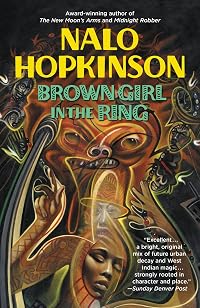






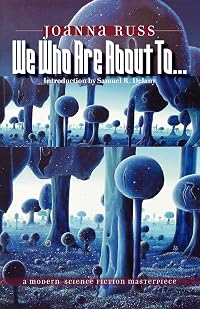

















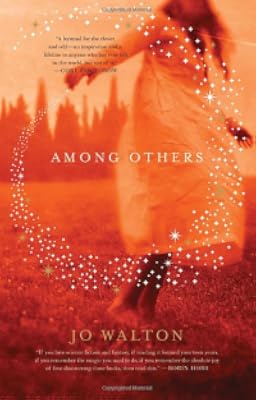


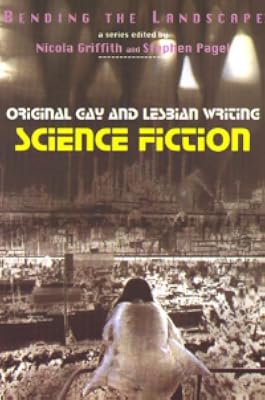


Member Recommendations






by anonymous user


by anonymous user
Member Reviews
This is a compact, polished narrative of world exploration. It’s enjoyable but maybe a little too compact at times. Griffith has envisioned a big world on Jeep that full of new fauna and flora and, apparently, rich in its varied peoples, folkways, and traditions. But so much of this background is compressed into such a tight space that it seems to lack dimensionality. I suppose I would have enjoyed more world building, but I’m not sure the plot would have been big enough to fill the space.
I won’t say anything that gives away the story, but there is a lot in here that subverts many sci-fi tropes, about the aims of exploration and discovery, the construction of “alien” and “other,” heck even the aims and assumptions of show more science. In that way, the novel really lives up to the label of feminist science fiction. I find that perspective so refreshing, and it is reason enough to recommend this novel. show less
I won’t say anything that gives away the story, but there is a lot in here that subverts many sci-fi tropes, about the aims of exploration and discovery, the construction of “alien” and “other,” heck even the aims and assumptions of show more science. In that way, the novel really lives up to the label of feminist science fiction. I find that perspective so refreshing, and it is reason enough to recommend this novel. show less
I didn't know what to expect when I first started reading this book. The premise sounded interesting, and I had heard good things about the author's work before. By the time I was about 100 pages in, I found that the book was not what I was expecting at all - and that I couldn't put it down. I think I read the bulk of the book in a 24 hour span!
The plot centers around a planet named Jeep, which also carries a virus of the same name. At some point in history, the virus killed all of the men and 20% of the women. The central character, Marghe, is sent to test out a vaccine on the new planet, where she is fascinated by the culture and attempts to unravel the mysteries of the planet, particularly how such a society is able to show more reproduce.
Without getting into spoiler territory, I love the various ways Griffith plays out the plot. Racism and sexism are both key elements at various points in the novel, as are the advantages and disadvantages of technology and the definitions of terms such as friends, family, and home. These are all woven in to an in depth plot and a setting that is masterfully described. At times, Jeep seemed like a very real place.
I absolutely loved the character of Marghe, and I loved how complex many of the other characters were, particularly Aoife and Thenike. I had a love/hate relationship with the character of Danner, finding some of her actions relatively inexplicable in the middle of the book (though I did come to enjoy her character's story arc closer to the end of the book).
I really enjoyed reading Ammonite and can't wait to pick up more by Nicola Griffith (and I'm hoping to re-read this one again someday!) show less
The plot centers around a planet named Jeep, which also carries a virus of the same name. At some point in history, the virus killed all of the men and 20% of the women. The central character, Marghe, is sent to test out a vaccine on the new planet, where she is fascinated by the culture and attempts to unravel the mysteries of the planet, particularly how such a society is able to show more reproduce.
Without getting into spoiler territory, I love the various ways Griffith plays out the plot. Racism and sexism are both key elements at various points in the novel, as are the advantages and disadvantages of technology and the definitions of terms such as friends, family, and home. These are all woven in to an in depth plot and a setting that is masterfully described. At times, Jeep seemed like a very real place.
I absolutely loved the character of Marghe, and I loved how complex many of the other characters were, particularly Aoife and Thenike. I had a love/hate relationship with the character of Danner, finding some of her actions relatively inexplicable in the middle of the book (though I did come to enjoy her character's story arc closer to the end of the book).
I really enjoyed reading Ammonite and can't wait to pick up more by Nicola Griffith (and I'm hoping to re-read this one again someday!) show less
Marghe, the protagonist of this speculative fiction novel, is an anthropologist sent to the planet nicknamed Jeep to study the “native” population, the descendants of colonizers hundreds of years earlier. “The Company” had rediscovered this planet and sent a contingent to explore it five years earlier, only to have all the males and 80% of the women die from a virus. Marghe arrives as the first subject of a test vaccine as well as in the role of an anthropologist to study the female-only resident population. Of particular interest is how the women have been able to reproduce. Outside the Company’s base are scattered communities of women who have survived in agrarian-type societies that vary geographically. Against the advice show more of the security head, Marghe sets off on a journey to the north, the site of the first colonizers, in the winter. She barely survives the journey but along the way learns about the “native” culture and how the virus itself has shaped the culture and its reproductive system. This is a well written, imaginative, engaging story with strong, complex characters. show less
I am not really good at writing elaborate reviews but I have to write a few words about this book because it's so dear to me. It quite literally gave me back my joy of reading. I couldn't put it down and afterward slept with it under my pillow.
It's rare that I am not annoyed with a protagonist and even more rare that I actually feel for the protagonist. Marghe doesn't always make the smartest decisions but she makes believable ones. Her journey is painful and she drags you with her every step of it. But there is also so much wonder and healing in the harsh world of Jeep. This is highly subjective but you know this feeling when you read a book that you just needed at that point of your life? And that defines everything about you in that show more current state and what is to come the next years? Ammonite is that book to me. It's a solid, fantastic story in a world you want to know more about but it's also a story that handles topics like individual trauma and generational trauma in such a sharp and deep way.
But what I probably loved most about this book is how it depicts women. This is a book with exclusively female characters. But you forget about that fact pretty quickly because all of these women are allowed to be human beings. They are allowed to be the full spectrum of humanity: cruelty, gentleness, stupidity, empathy...
Women aren't perfect and women aren't lesser (than men). A world full of only women isn't perfect but it's also not lacking anything. Including the not-so-ideal sides of humanity.
A lot of books about female-only societies fall into the trap of dehumanizing women by making them angel-like beings not capable of any evil or even nuance. Nicola Griffith certainly doesn't fall into that trap and writes the most convincing all female society I have ever read about.
The only thing I dislike about this book is that it left me wanting much much more of its world and characters. That doesn't make me want to have a sequel though. It's perfect as it is and this feeling is why I love this book so much. It left me stranded on my couch afterwards, wondering for a second where I was. I lived in that world and wanted to explore it further but it showed me exactly what I needed to see of it.
I recommend this book to everyone I know, so if the description sounds like it's vaguely your thing, give it a try. show less
It's rare that I am not annoyed with a protagonist and even more rare that I actually feel for the protagonist. Marghe doesn't always make the smartest decisions but she makes believable ones. Her journey is painful and she drags you with her every step of it. But there is also so much wonder and healing in the harsh world of Jeep. This is highly subjective but you know this feeling when you read a book that you just needed at that point of your life? And that defines everything about you in that show more current state and what is to come the next years? Ammonite is that book to me. It's a solid, fantastic story in a world you want to know more about but it's also a story that handles topics like individual trauma and generational trauma in such a sharp and deep way.
But what I probably loved most about this book is how it depicts women. This is a book with exclusively female characters. But you forget about that fact pretty quickly because all of these women are allowed to be human beings. They are allowed to be the full spectrum of humanity: cruelty, gentleness, stupidity, empathy...
Women aren't perfect and women aren't lesser (than men). A world full of only women isn't perfect but it's also not lacking anything. Including the not-so-ideal sides of humanity.
A lot of books about female-only societies fall into the trap of dehumanizing women by making them angel-like beings not capable of any evil or even nuance. Nicola Griffith certainly doesn't fall into that trap and writes the most convincing all female society I have ever read about.
The only thing I dislike about this book is that it left me wanting much much more of its world and characters. That doesn't make me want to have a sequel though. It's perfect as it is and this feeling is why I love this book so much. It left me stranded on my couch afterwards, wondering for a second where I was. I lived in that world and wanted to explore it further but it showed me exactly what I needed to see of it.
I recommend this book to everyone I know, so if the description sounds like it's vaguely your thing, give it a try. show less
I really liked this book, and the only reason I couldn't quite give it 5 stars is that I have a pet peeve around what I shorthand as "It's quantum." You know: weird thing needs explaining, a hole needs papering over, (unnecessary) explanation given, and an author (or self-help 'guru', or pseudoscience peddler) "explains" that "because quantum weirdness."
This book doesn't do that, but it does, right at the end, when it could have so easily avoided it, do a 30-year-old version of that where it's all because of life's electrical connection (to be fair, the character in the book even says this with doubt, acknowledging they are grasping at straws.)
Kudo's for leaving so much else unsaid (why does the virus invariably kill men? The author show more needs it to, but she leaves it at that. What/who *exactly* are the Goth? Left unsaid. How exactly does Company have this kind of unfettered power, and what are the government(s) of Earth doing? Not important.) But the "it's all connected electrically"... ehh, yeah, I'm old enough and that is just so 70's (??) to early 90's. Just far too "It's all energy, man," and it threw cold water on an otherwise great read.
I kind of want to give 5 stars, despite that (and hence, perhaps, this long explanation why not.) show less
This book doesn't do that, but it does, right at the end, when it could have so easily avoided it, do a 30-year-old version of that where it's all because of life's electrical connection (to be fair, the character in the book even says this with doubt, acknowledging they are grasping at straws.)
Kudo's for leaving so much else unsaid (why does the virus invariably kill men? The author show more needs it to, but she leaves it at that. What/who *exactly* are the Goth? Left unsaid. How exactly does Company have this kind of unfettered power, and what are the government(s) of Earth doing? Not important.) But the "it's all connected electrically"... ehh, yeah, I'm old enough and that is just so 70's (??) to early 90's. Just far too "It's all energy, man," and it threw cold water on an otherwise great read.
I kind of want to give 5 stars, despite that (and hence, perhaps, this long explanation why not.) show less
Marghe has an opportunity to travel to the newly rediscovered planet nicknamed "Jeep," where a virus killed all the male colonists and some of the women, resulting in an all-female society that has developed in primitive conditions over generations. When she arrives, though, she finds herself connecting with the planet and the women who live there in unexpected ways.
Marghe's character, as our guide to the world of Jeep, was particularly well-developed. I was intrigued early on by learning of her long practice of meditation and extensive work with biofeedback. These qualities make her very receptive to the unique aspects of Jeep's ecosystem, which helps believability, particularly when it comes to the issue of reproduction. I related show more well to the searching qualities of Marghe's character and how she grows into herself after coming to Jeep. The environment there is uniquely suited to self-discovery, if the individual is open to it.
Jeep is an interesting world that seems very real. The alien life and weather patterns are truly alien, and Griffith describes the planet's environment in almost sensual terms. While in many ways Jeep seems a paradise, it is not a utopia by any means. Life can be very difficult there, particularly in the frozen northern region. Jeep seems more like a real place than an ideal escape from Earth's gender-based social problems.
With the non-gendered names and large cast, it is easy to forget when reading Ammonite that every character is a woman. That's not to say that some characters are actually men in disguise. I never felt this was true. Instead, Griffith explores the entire range of human behavior in her characters. Some characters are wise mentors. Some are stern leaders who hide their self-doubts. Some are selfish, stubborn, impulsive, or even corrupt. Marghe is particularly traumatized when she is kidnapped by a northern tribe who then treat her more as an animal than a person. Even though these characters all come across as fully human, their social structure has evolved in a radically different way, with what I think may be seen as a more feminine (or more humane) outcome. The characters are more forthright and open with one another, particularly on issues of love and family. Kinship and other relationships are extremely important and are also fluid, not wholly dependent on having a genetic connection. Disputes are arbitrated and resolved mostly without violence. Storytelling and art are valued as true professions worthy of communal support. There is violence, but violence is seen as an aberration and not inevitable. This is a compelling vision of what a world can be. show less
Marghe's character, as our guide to the world of Jeep, was particularly well-developed. I was intrigued early on by learning of her long practice of meditation and extensive work with biofeedback. These qualities make her very receptive to the unique aspects of Jeep's ecosystem, which helps believability, particularly when it comes to the issue of reproduction. I related show more well to the searching qualities of Marghe's character and how she grows into herself after coming to Jeep. The environment there is uniquely suited to self-discovery, if the individual is open to it.
Jeep is an interesting world that seems very real. The alien life and weather patterns are truly alien, and Griffith describes the planet's environment in almost sensual terms. While in many ways Jeep seems a paradise, it is not a utopia by any means. Life can be very difficult there, particularly in the frozen northern region. Jeep seems more like a real place than an ideal escape from Earth's gender-based social problems.
With the non-gendered names and large cast, it is easy to forget when reading Ammonite that every character is a woman. That's not to say that some characters are actually men in disguise. I never felt this was true. Instead, Griffith explores the entire range of human behavior in her characters. Some characters are wise mentors. Some are stern leaders who hide their self-doubts. Some are selfish, stubborn, impulsive, or even corrupt. Marghe is particularly traumatized when she is kidnapped by a northern tribe who then treat her more as an animal than a person. Even though these characters all come across as fully human, their social structure has evolved in a radically different way, with what I think may be seen as a more feminine (or more humane) outcome. The characters are more forthright and open with one another, particularly on issues of love and family. Kinship and other relationships are extremely important and are also fluid, not wholly dependent on having a genetic connection. Disputes are arbitrated and resolved mostly without violence. Storytelling and art are valued as true professions worthy of communal support. There is violence, but violence is seen as an aberration and not inevitable. This is a compelling vision of what a world can be. show less
I haven't read any sci-fi for a little while, but during my teen years that was by far my favourite genre. It's a pity that I didn't have a copy of 'Ammonite' thirteen years ago, as it has the nearly unique distinction of being an exploring-a-new-planet adventure narrative with not a single male character. The planet, nicknamed Jeep, suffers from a virus that is deadly to carriers of the Y chromosome. Thus, all those orbiting around it, exploring it, and living upon it are ladies. The absence of men is never commented upon; it appears that they aren't missed. Since science fiction adventures tend towards male main characters, this made a lovely change.
The main narrative is the story of Marghe, who arrives on Jeep to test a vaccine show more against the man-killing virus (which also kills about 20% of women who contract it). In a similar manner to Le Guin's 'The Left Hand of Darkness', she travels across the planet, is kidnapped, suffers privations, learns about the natives, and finds herself transformed by these adventures. I found Marghe to be a very sympathetic character, as she is initially purely focussed on knowledge-gathering and research, which I can certainly relate to. Her journey towards being less emotionally closed-off and more willing to consider Jeep her home is well done and not too sentimental. A refreshing pragmatism runs through the whole book, in fact. Almost every character is willing to adapt to new circumstances and accept additional data.
I wouldn't describe 'Ammonite' as a sci-fi thriller as such, although some sequences are distinctly thrilling. The real main character is definitely the planet Jeep, with which the human characters interact in various ways. The world-building is extremely good. I particularly liked the contrast of Marghe's point of view with that of Danner, the commander of an external force originally intended as occupiers. It would have been easy to make Danner a villain, but instead she is consistently portrayed as someone trying to respond as best she can to incredibly difficult and unexpected circumstances. I found her to be very sympathetic too.
Although it didn't occur to me whilst reading it, in retrospect 'Ammonite' is somewhat utopian. It's certainly a very interesting piece of extrapolatory sci-fi, with appealing fake-science (the consequences of the virus) and excellent characterisation. I really enjoyed it. show less
The main narrative is the story of Marghe, who arrives on Jeep to test a vaccine show more against the man-killing virus (which also kills about 20% of women who contract it). In a similar manner to Le Guin's 'The Left Hand of Darkness', she travels across the planet, is kidnapped, suffers privations, learns about the natives, and finds herself transformed by these adventures. I found Marghe to be a very sympathetic character, as she is initially purely focussed on knowledge-gathering and research, which I can certainly relate to. Her journey towards being less emotionally closed-off and more willing to consider Jeep her home is well done and not too sentimental. A refreshing pragmatism runs through the whole book, in fact. Almost every character is willing to adapt to new circumstances and accept additional data.
I wouldn't describe 'Ammonite' as a sci-fi thriller as such, although some sequences are distinctly thrilling. The real main character is definitely the planet Jeep, with which the human characters interact in various ways. The world-building is extremely good. I particularly liked the contrast of Marghe's point of view with that of Danner, the commander of an external force originally intended as occupiers. It would have been easy to make Danner a villain, but instead she is consistently portrayed as someone trying to respond as best she can to incredibly difficult and unexpected circumstances. I found her to be very sympathetic too.
Although it didn't occur to me whilst reading it, in retrospect 'Ammonite' is somewhat utopian. It's certainly a very interesting piece of extrapolatory sci-fi, with appealing fake-science (the consequences of the virus) and excellent characterisation. I really enjoyed it. show less
Members
- Recently Added By
Lists

Best Feminist Science Fiction
188 works; 35 members

Best Lesbian Fiction (And Narrative Non-Fiction)
155 works; 36 members

Best Science Fiction Novels
816 works; 430 members

Favorite Science Fiction by Women Authors
741 works; 203 members

Best Books About Plagues and Epidemics
99 works; 17 members

Best Spec Fic Featuring Lesbians
27 works; 5 members
Science fiction novels with a female protagonist
105 works; 30 members

Best Feminist Literature
188 works; 26 members

S.F. Masterworks (Complete)
229 works; 15 members

Broderick and Di Filippo's Science Fiction: The 101 Best Novels 1985-2010
103 works; 7 members

Unbound Worlds 100 Best SF Books
100 works; 8 members
Recommended Speculative Fiction by Women and People of Color
298 works; 45 members
LGBTQ+ Speculative Fiction
821 works; 51 members
Arthur C. Clarke Award Winners and Shortlisted Books
219 works; 14 members

Female Protagonist
1,056 works; 57 members

Books Read in 2016
4,666 works; 199 members

Viral Outbreaks and Pandemics
82 works; 8 members

SF Masterworks
193 works; 8 members

Shannon's Read-Alikes List
71 works; 8 members
Favorite Science Fiction
457 works; 221 members
Author Information

34+ Works 8,084 Members
Some Editions
Awards and Honors
Awards
Notable Lists
Series
Belongs to Publisher Series
SF Masterworks (New design)
Common Knowledge
- Canonical title
- Ammonite
- Original publication date
- 1992
- People/Characters
- Marghe
- Important places
- Jeep (fictitious planet)
- Dedication
- For Kelley, who fills my life with grace
- First words
- Marghe's suit was still open at neck and wrist, and the helmet rested in the crook of her left arm.
- Last words
- (Click to show. Warning: May contain spoilers.)Thenike sang on, and while the drum beat softly and the flames danced, Marghe set her face north, toward Ollfoss. Toward home.
- Blurbers
- McIntyre, Vonda N.; Powers, Tim; Robinson, Kim Stanley
- Canonical DDC/MDS
- 813.54; 813.6
- Canonical LCC
- PS3557.R4892
Classifications
Statistics
- Members
- 1,537
- Popularity
- 15,020
- Reviews
- 58
- Rating
- (3.89)
- Languages
- English, German
- Media
- Paper, Audiobook, Ebook
- ISBNs
- 11
- ASINs
- 5