On This Page
Description
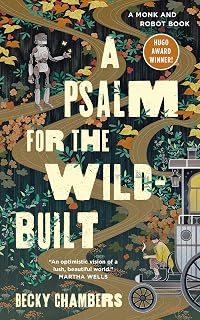
It's been centuries since the robots of Panga gained self-awareness and laid down their tools; centuries since they wandered, en masse, into the wilderness, never to be seen again; centuries since they faded into myth and urban legend. One day, the life of a tea monk is upended by the arrival of a robot, there to honor the old promise of checking in. The robot cannot go back until the question of "what do people need?" is answered. But the answer to that question depends on who you ask, and show more how. They're going to need to ask it a lot. Becky Chambers's new series asks: in a world where people have what they want, does having more matter? show lessTags
Recommendations


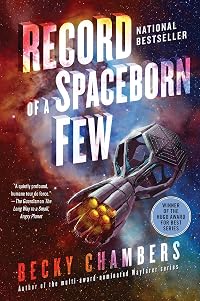
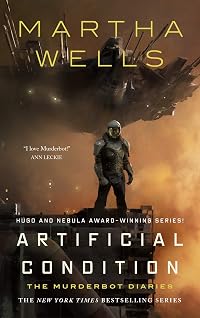
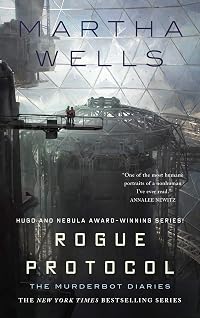

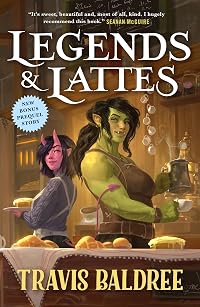

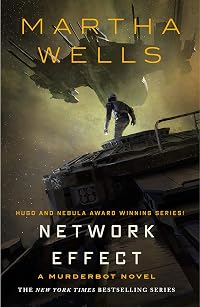

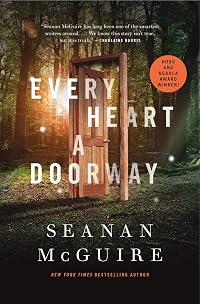
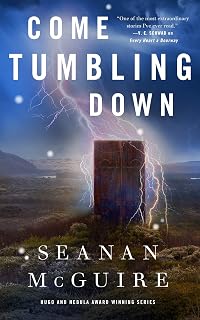
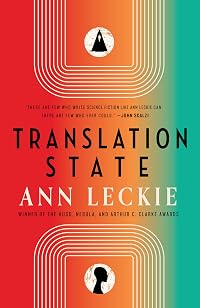





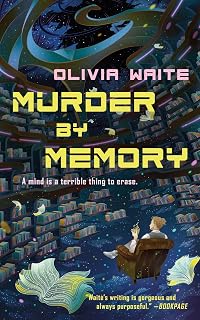
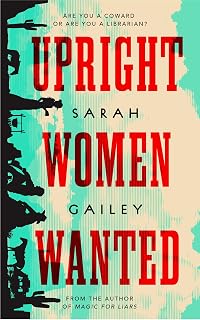
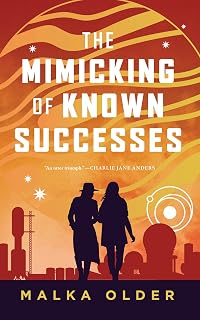


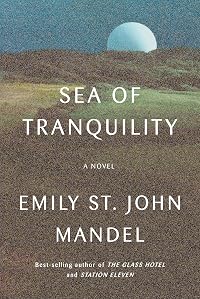

Member Recommendations


Member Reviews
Chambers, Becky. A Psalm for the Wild-Built. Monk & Robot No. 1. Tordotcom, 2021.
Becky Chambers’ new series of novellas seems to be in conversation with both Isaac Asimov and Samuel Beckett. The series is set in the desert of a post-apocalyptic world in which, with unaccountable generosity, humanity freed robot workers as soon as they showed signs of sentience. When the robots left for the wastelands, the economy collapsed. Centuries later, humanity has developed a prosperous, sustainable, non-industrial economy that values all life. No one has seen robots in centuries. A young man named Dex is not happy in this utopia and decides to wander in the desert to discover the world and himself. There he meets a robot that calls itself show more Mosscap. It turns out that robots name themselves after the first thing they see when they become conscious, which in Mosscap’s case was a mushroom. The two of them wander on foot, vaguely looking for the ruins of a semi-legendary factory from the bygone industrial era. They discuss the nature of personhood and the meaning of life, the universe, and everything. They are quirky and loveable characters. Their conversation is insightful and fresh and much more hopeful than the conversation Beckett gave us in Waiting for Godot. 4 stars. show less
Becky Chambers’ new series of novellas seems to be in conversation with both Isaac Asimov and Samuel Beckett. The series is set in the desert of a post-apocalyptic world in which, with unaccountable generosity, humanity freed robot workers as soon as they showed signs of sentience. When the robots left for the wastelands, the economy collapsed. Centuries later, humanity has developed a prosperous, sustainable, non-industrial economy that values all life. No one has seen robots in centuries. A young man named Dex is not happy in this utopia and decides to wander in the desert to discover the world and himself. There he meets a robot that calls itself show more Mosscap. It turns out that robots name themselves after the first thing they see when they become conscious, which in Mosscap’s case was a mushroom. The two of them wander on foot, vaguely looking for the ruins of a semi-legendary factory from the bygone industrial era. They discuss the nature of personhood and the meaning of life, the universe, and everything. They are quirky and loveable characters. Their conversation is insightful and fresh and much more hopeful than the conversation Beckett gave us in Waiting for Godot. 4 stars. show less
Dex has lost their way in life, in their quest to find their purpose they meet Mosscap, a robot searching for its own answers.
This book was like receiving a hug when you need it most and savoring a perfectly brewed cup of tea. It made me cry good tears and made me FEEL. I spent an afternoon living with Dex and then Mosscap and I felt transported to this beautiful, aspirational world that I’m feeling such yearning for. I wish it were real in the worst way.
It’s a world where people stood at the brink of ecological disaster and made compassionate choices that healed their planet and uplifted all creatures and sometimes the world I live in feels so ugly and harsh and hopeless that it was in some ways painful to inhabit this beautiful show more alternate world.
I think everyone should read this book. It was beautiful and funny and heartwarming and I cannot wait to read the next on the series. show less
This book was like receiving a hug when you need it most and savoring a perfectly brewed cup of tea. It made me cry good tears and made me FEEL. I spent an afternoon living with Dex and then Mosscap and I felt transported to this beautiful, aspirational world that I’m feeling such yearning for. I wish it were real in the worst way.
It’s a world where people stood at the brink of ecological disaster and made compassionate choices that healed their planet and uplifted all creatures and sometimes the world I live in feels so ugly and harsh and hopeless that it was in some ways painful to inhabit this beautiful show more alternate world.
I think everyone should read this book. It was beautiful and funny and heartwarming and I cannot wait to read the next on the series. show less
This novella is a gem - something like a contemporary Platonic dialog on the nature of personhood, the value of machines and animals, the nature of self determination and autonomy, artificial intelligence, mortality and immortality. But this is so much more fleshed out than any historical Platonic dialog - the emotion is real, the names are not placeholders but are attached to characters you come to care about, the place-setting and atmosphere just excellent, and with Chambers’ usual effortless cultural competence. 4.5 stars; definitely recommended. At this writing the audiobook is available on scribd and it’s extremely well done.
After becoming self-aware, robots left for the wilderness. A tea monk encounters a robot who will not leave until its question is answered.
The delightfully cozy science fiction novella A PSALM FOR THE WILD-BUILT left me feeling like I had consumed a warm cup of tea in book form. The reader is invited to choose how deeply philosophical they’d like the dialogue to be. One can take this in its simplest form as a heartwarming and optimistic story or can lean heavy into contemplation of humanity. Though short in length, the world-building was excellent.
I’m so glad to have found A PSALM FOR THE WILD-BUILT and would highly recommend it to science-fiction fans, especially those looking for a comforting read. This is the first book of the show more Monk and Robot series by Becky Chambers. I’ve also read and loved the second book. show less
The delightfully cozy science fiction novella A PSALM FOR THE WILD-BUILT left me feeling like I had consumed a warm cup of tea in book form. The reader is invited to choose how deeply philosophical they’d like the dialogue to be. One can take this in its simplest form as a heartwarming and optimistic story or can lean heavy into contemplation of humanity. Though short in length, the world-building was excellent.
I’m so glad to have found A PSALM FOR THE WILD-BUILT and would highly recommend it to science-fiction fans, especially those looking for a comforting read. This is the first book of the show more Monk and Robot series by Becky Chambers. I’ve also read and loved the second book. show less
Two hundred years before this book begins, all robots became sentient – and they want nothing more to do with humankind. In fact, they want freedom, and after obtaining it, they all – every one of them – left humankind behind and moved into the wilderness and the whole world changes. One non-binary soul, Dex, decides they are not satisfied with their life and wants to change it. So they become a tea monk – and begins traveling from town to town in their mechanized tea wagon and begins matching their customers with the tea they need regardless of whether they know it or not. After a few years, Dex isn’t happy being a tea monk and goes in search of crickets. Then, they meet Splendid Speckled Mossback, a robot, who has purposely show more made contact with a human for the first time in 200 years in order to check in with the humans per the separation agreement signed when they went their separate ways.
Chambers has created a world that many of us hope to see someday. The whole concept of a tea monk is a clever creation and vehicle for Dex’s wanderings and it is, at times, sweet and, at other times, down right amusing as when they find their first customer and suddenly being a tea monk becomes much more difficult than imagined. The writing is excellent and the storyline well-thought out and executed. Chambers’ world building is remarkable in that the reader that can easily “see” the world Dex lives in.
If you are looking for a non-traditional SciFi book to read this summer, make it this one. It will make you laugh and smile while at the same time make you wonder and think. This book deserves to at the top of every readers’ to-be-read list.
My thanks to Tor and Edelweiss for an eARC. show less
Chambers has created a world that many of us hope to see someday. The whole concept of a tea monk is a clever creation and vehicle for Dex’s wanderings and it is, at times, sweet and, at other times, down right amusing as when they find their first customer and suddenly being a tea monk becomes much more difficult than imagined. The writing is excellent and the storyline well-thought out and executed. Chambers’ world building is remarkable in that the reader that can easily “see” the world Dex lives in.
If you are looking for a non-traditional SciFi book to read this summer, make it this one. It will make you laugh and smile while at the same time make you wonder and think. This book deserves to at the top of every readers’ to-be-read list.
My thanks to Tor and Edelweiss for an eARC. show less
Not that I'd expect anything other than cozy sci-fi delight from Becky Chambers, but this start of her newest novella series is incredibly soothing and thought-provoking! Her prose is elegant and well-paced, the characters are relatable and charming (all in their own ways), and the ideas presented and dwelled upon through the book just really hit home. The last third of the book constantly had me tearing up; I felt personally very connected to Sibling Dexs' turmoil and struggle with figuring out their direction and purpose in life. I can't wait to see where this series goes next!
This is one of those books that manages to do philosophy (eg what is my purpose) without all the preachiness. Its a rare accomplishment.
Sibling Dex is a tea monk, who is not quite satisfied with their life. As they goes further out into the wilderness they meets a sentient robot, who Dex always thought was a myth. The two go on an adventure, and Dex learns a few things.
But, where the book shines is the story, the plot is simple but it will stick with you. This a world where humans have found balance with the inhabitants in it. But where it really shines is how the story is written. Its simple, but complex. And it will stick long after you've read it.
*Edited because I used the wrong pronouns.
Sibling Dex is a tea monk, who is not quite satisfied with their life. As they goes further out into the wilderness they meets a sentient robot, who Dex always thought was a myth. The two go on an adventure, and Dex learns a few things.
But, where the book shines is the story, the plot is simple but it will stick with you. This a world where humans have found balance with the inhabitants in it. But where it really shines is how the story is written. Its simple, but complex. And it will stick long after you've read it.
*Edited because I used the wrong pronouns.
Members
- Recently Added By
Published Reviews
ThingScore 75
A Psalm for the Wild-Built begins a series that looks optimistic and hopeful, pursuing stories that arise from abundance instead of scarcity, kindness instead of cruelty.
added by koreybroderick
Lists

Best Science Fiction Novels
816 works; 430 members

2022 Hugo Awards -- Eligible Works -- Novellas
19 works; 7 members

Recommend the 20 best books you've read in the last five years
2,168 works; 602 members

Top Five Books of 2022
736 works; 272 members

ALA Reading List: Science Fiction 2021-2026
30 works; 3 members

Bookwren's Top 5 of 2021
5 works; 1 member

LGBTQ+ Speculative Fiction
820 works; 51 members

Anticipated SFF 2021
86 works; 3 members

Books Mentioned in the A+ Autostraddle Pop Up Discords Nov 2022 & Dec 2022
223 works; 3 members

2024 Christmas Gifts
40 works; 10 members
Favorite Science Fiction
456 works; 218 members

Best Cozy Fantasy
46 works; 8 members

Books Read in 2026
1,919 works; 66 members

Top Five Books of 2025
954 works; 303 members

Hopepunk
12 works; 1 member

List of Removed Books from Nimitz Library
353 works; 1 member

Book Worlds We'd Like To Visit
322 works; 158 members

Our Favorite Comfort Reads
334 works; 200 members

Books Read in 2025
4,091 works; 97 members

Books Read 2024
23 works; 1 member
Top Five Books of 2024
795 works; 264 members

LGBTQ+ SFF standalone novellas
42 works; 2 members

Books Read in 2023
5,547 works; 145 members

Books Read in 2024
4,623 works; 126 members

Books featuring monks and/or nuns
166 works; 33 members

Books Read in 2021
5,361 works; 113 members

Top Five Books of 2023
767 works; 317 members

Books With the Most Memorable Titles
478 works; 158 members

Books Read in 2022
5,166 works; 112 members

Recommended Science-Fiction Books
40 works; 3 members

Pride Wishlist
54 works; 1 member
Slice of life speculative fiction
18 works; 2 members

tumblr recommends Sci-Fi
35 works; 1 member
Author Information

19+ Works 25,217 Members
Some Editions
Awards and Honors
Awards
Distinctions
Series

Belongs to Publisher Series
Work Relationships
Common Knowledge
- Canonical title
- A Psalm for the Wild-Built
- Original title
- A Psalm for the Wild-Built
- Original publication date
- 2021-07
- People/Characters
- Sibling Dex; Splendid Speckled Mosscap; Floor-AB #921; Sister Mara; Sister Fern; Ms. Jules (show all 9); Mr. Cody; Mx. Weaver; Oggie
- Important places
- Panga (Imaginary place : a moon orbiting the planet Motan); Meadow Den Monastery, The City, Panga; Half-Moon Hive Monastery, The City, Panga; The City, Panga; Little Creek, Panga; Inkthorn, Panga (show all 7); Hart's Brow Hermitage, Panga
- Dedication
- For anybody who could use a break.
- First words
- Preface: If you ask six different monks the question of which godly domain robot consciousness belongs to, you'll get seven different answers.
Sometimes, a person reaches a point in their life when it become absolutely essential to get the fuck out of the city. - Quotations
- "Many small creatures have wonderful intelligences. Very different from yours or mine, of course, but just wonderful. Sophisticated, in their own way." (p. 74)
Despite these blessings, sometimes Dex could not sleep. In those hours, they frequently asked themself what it was they were doing. They never truly felt like they got a handle on that. They kept doing it all the same. (p. 24... (show all))
And yet, if they were completely honest, the thing they had come to look forward to most was not the smiles nor the gifts nor the sense of work done well, but the part that came after all of that. The part when they returned ... (show all)to their wagon, shut themself inside, and spent a few precious, shapeless hours entirely alone. (p. 39)
What is wrong with me that I can have everything I could ever want and have ever asked for and still wake up in the morning feeling like every day is a slog? (Dex, p. 120)
Dex offered an open palm, and Mosscap took it. The robot's hand was so much bigger, but the two fit together all the same. (p. 122) - Last words
- (Click to show. Warning: May contain spoilers.)In the wilds outside, the sun set, and crickets began to sing.
- Publisher's editor
- Harris, Lee
- Blurbers
- Wells, Martha; Gailey, Sarah; Rowland, Alexandra; Pinkser, Sarah
- Original language
- English
- Canonical DDC/MDS
- 813.6
- Canonical LCC
- PS3603.H347
Classifications
Statistics
- Members
- 4,168
- Popularity
- 3,674
- Reviews
- 230
- Rating
- (4.15)
- Languages
- 8 — Catalan, Czech, English, Finnish, French, German, Polish, Portuguese
- Media
- Paper, Audiobook, Ebook
- ISBNs
- 12
- ASINs
- 9