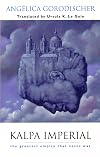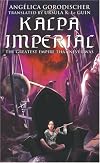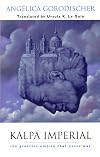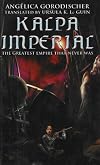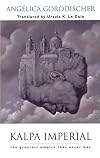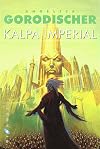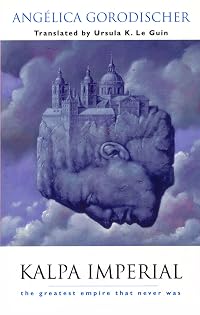
Kalpa Imperial: The Greatest Empire That Never Was
by Angélica Gorodischer
On This Page
Description
Emperors, empresses, storytellers, thievesand the Natural History of Ferrets.Tags
Recommendations

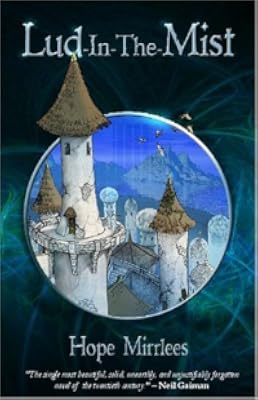
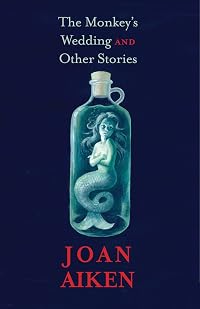
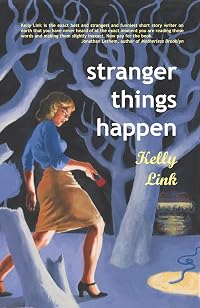
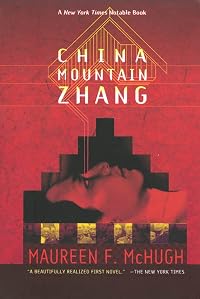


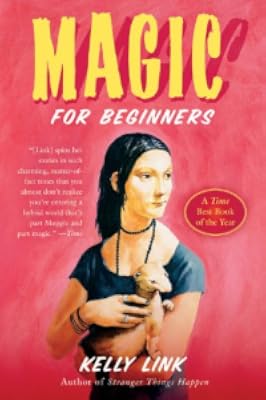
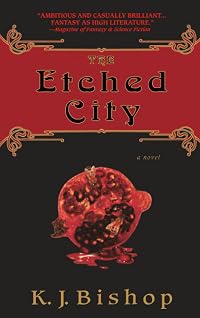
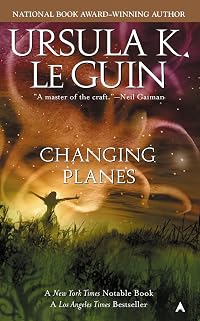
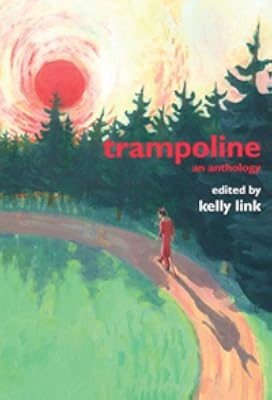
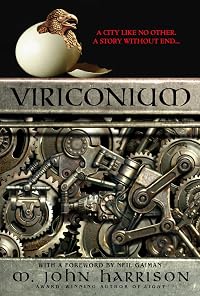
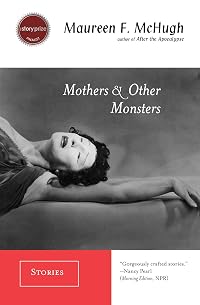




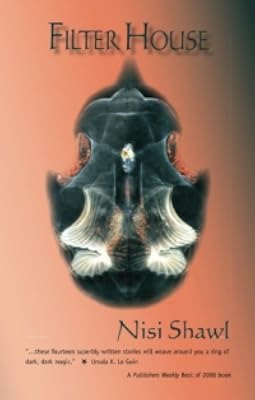

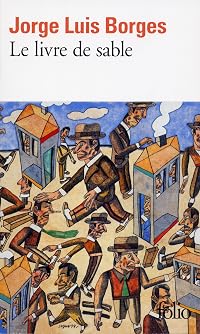
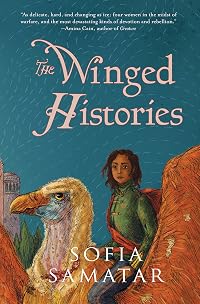
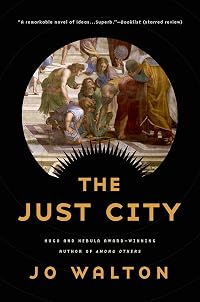

Member Recommendations


Member Reviews
This mysterious Argentinian fantasy novel reminded me of Sylvia Townsend Warner’s [b:Kingdoms of Elfin|970443|Kingdoms of Elfin|Sylvia Townsend Warner|https://images.gr-assets.com/books/1395851905s/970443.jpg|955340], Mervyn Peake’s [b:Gormenghast|258392|Gormenghast (Gormenghast, #2)|Mervyn Peake|https://images.gr-assets.com/books/1480786154s/258392.jpg|3599885], M. John Harrison's [b:Viriconium|304217|Viriconium|M. John Harrison|https://images.gr-assets.com/books/1347891771s/304217.jpg|295248], and, inevitably, the stories of Borges. Angelica Gorodischer tells a series of tales from the long history of an Empire, full of allegories for colonialism, dictatorships, and other political developments. If I knew more about the history of show more Argentina, perhaps I’d be able to pinpoint them more precisely. Yet my instinct is that the allegories are oblique rather than direct. The stories occur in apparently non-linear sequence and deal with the rise and fall of dynasties. This is a not a fantasy world of magic, although at one point a dragon briefly appears. The fantastical element is the seeming lack of technological development driving political events. Despite mentions of buses, guns, and suchlike, in most of the stories the setting appears pre-industrial (or perhaps post-apocalyptic?) and inclined to absolute hereditary rule. Most of the stories centre on emperors and empresses, but take a similarly impersonal, timeless approach to [b:Kingdoms of Elfin|970443|Kingdoms of Elfin|Sylvia Townsend Warner|https://images.gr-assets.com/books/1395851905s/970443.jpg|955340]. Centuries appear to pass in a few paragraphs and characters who are introduced with seeming importance vanish, as the narrative moves on to their great-grandchildren.
Like [b:Severance|36348525|Severance|Ling Ma|https://images.gr-assets.com/books/1507060524s/36348525.jpg|58029884], ‘Kalpa Imperial’ is concerned with life in cities. My second favourite of the stories is titled ‘Concerning the Unchecked Growth of Cities’ and follows the development of a city from bandit hideout to artistic centre to oppressed victim and beyond. Throughout the book, the reader is made very aware of the storyteller’s voice and their determination to tell the stories in a particular way. This narrative conceit is especially notable in my favourite story, ‘Portrait of the Empress’, as the storyteller himself is a main character. I liked it best, though, because of the Empress and her policy of banning nearly all wheeled transport. Since I would strictly control car ownership if I happened to be an empress, this was delightful to come upon:
The Great Empress is a wonderful role model. She is the most vivid character in the book, as cities and dynasties largely obscure individuals. ‘Kalpa Imperial’ contains some strange, irreverent, and thought-provoking fairytales. While these are entertaining in their own right, they also invite the reader to contemplate historiography and the formation of myths. show less
Like [b:Severance|36348525|Severance|Ling Ma|https://images.gr-assets.com/books/1507060524s/36348525.jpg|58029884], ‘Kalpa Imperial’ is concerned with life in cities. My second favourite of the stories is titled ‘Concerning the Unchecked Growth of Cities’ and follows the development of a city from bandit hideout to artistic centre to oppressed victim and beyond. Throughout the book, the reader is made very aware of the storyteller’s voice and their determination to tell the stories in a particular way. This narrative conceit is especially notable in my favourite story, ‘Portrait of the Empress’, as the storyteller himself is a main character. I liked it best, though, because of the Empress and her policy of banning nearly all wheeled transport. Since I would strictly control car ownership if I happened to be an empress, this was delightful to come upon:
When the Great Empress prohibited all private transportation by wheeled vehicles, many people said she was crazy. Even I, who knew her well by then, looked at her in astonishment and asked her what could be the use of so absurd a measure.
“They increase delinquency,” she answered, “they’ve increased divorces and confinements for mental instability.”
“I confess I don’t understand you, ma’am,” I said. “What have wheeled vehicles got to do with all that? What you ought to do, surely, is institute measures against delinquency, divorces, and insanity.”
“And increase the size of the police force and extend their powers?” said she. “Make it even harder for people to get a divorce? Encourage doctors to study and treat the mad? How stupid. You wouldn’t be a good ruler, my dear friend, although I hope my sons will be. All we’d get by that would be more policemen full of pride and brutality, more lawyers full of red tape, more doctors full of fatuity, and hence more criminal assaults, more divorces, and more nut cases.”
“And by prohibiting private transportation-?” I enquired.
“We’ll see,” she told me.
She was right, of course. Cars and private planes disappeared. Only those who absolutely had to travel more than twenty kilometres were allowed to use public transportation on wheels. Most people walked, or rode donkeys, or, if they were wealthy, had themselves carried in litters. Life slowed down. People didn’t get anxious, because it wasn’t any use. The big centres of buying and selling and banking and industry disappeared, where everybody used to crowd in and push each other and get cross and curse each other out, and small shops opened, little places in every neighbourhood where every merchant and banker and businessman knew his customers and their families.
[...]
And the Great Empress smiled in satisifaction and I admitted to her she’d been right and told her the history of Sderemir the Borenid.
“Yes,” she said, “I know a lot of people say the world is complicated. The ones who say so are the ones who are kept anxious all the time by their work or their family, by a move or an illness, a storm, anything unexpected, anything at all; and then they make bad choices and when things turn out badly they blame it on the world for being complicated and not on their own low and imperfect standards. Why don’t they go further? Why say ‘the world is complicated’ and stop there? I say the world is complicated but not incomprehensible. Only you have to look at it steadily.”
The Great Empress is a wonderful role model. She is the most vivid character in the book, as cities and dynasties largely obscure individuals. ‘Kalpa Imperial’ contains some strange, irreverent, and thought-provoking fairytales. While these are entertaining in their own right, they also invite the reader to contemplate historiography and the formation of myths. show less
"Why are there so many sick people?"
"Because it's easier to get sick than to look for one's right place in the world."
"Explain, explain."
"Yes," said the doctor. "We keep adding needless things, false things to ourselves, till we can't see ourselves and forget what our true shape is. And if we've forgotten what shape we are, how can we find the right place to be? And who dares pull away the falsities that are stuck to his eyelids, his fingernails, his heels? So then something goes wrong in the house and in the world, and we get sick."
This book has the bones and muscle of something good. It lionizes stories and story telling; it tells the history of a fantasy empire through the performances of various story tellers through time. But show more there's something sick and sad in its soul, and I just can't get past it.
On the one hand, this book was originally published in 1983. On the other hand, we knew it was wrong to blame sick people for their own illnesses in 1983. (At least, some of us did.) We knew better than to blame freedom for delinquency, divorce, and insanity. (Well, again, some of us did.) Mind you, I can understand why an Argentine writer would see some stability in government and succession as better than the upheaval and revolution, and I have no idea how I would feel about power and authority if I had lived through the junta, but I generally think both trend toward abuse now, and I can't imagine that experience would have made me think better. So I'm a little at a loss about the reactionary underpinnings of the book. I feel like I must have missed something, somehow. (It is of course dicey to attribute author voice to any one character in a book about overlapping story made of overlapping stories, but I would note that neither the Great Empress nor the wise doctor are contradicted, and both are presented in a rather heroic light, are really the main characters who are so presented.)
The other issue with the book is that there was much blather, but only one magnificent moment. The final story reached for some lovely intertextual transcendence, revealing the Empire to bethe book itself, one in a succession of many books in a great war of literature, and that was fun. But it was one sparkling moment that absolutely depended on the 240 page slog that preceded it, and frankly it wasn't that sparkling. [a:Italo Calvino|155517|Italo Calvino|https://images.gr-assets.com/authors/1501975461p2/155517.jpg] died in 1985, after all. [a:Jorge Luis Borges|500|Jorge Luis Borges|https://images.gr-assets.com/authors/1537559279p2/500.jpg] died in 1986. You would be better served spending your time with their works. Or, if you really want a history of a great empire that never was (as I did), do yourself a favor and curl up with [b:City of Saints and Madmen|230852|City of Saints and Madmen (Ambergris, #1)|Jeff VanderMeer|https://images.gr-assets.com/books/1390260432s/230852.jpg|522014] instead. show less
"Because it's easier to get sick than to look for one's right place in the world."
"Explain, explain."
"Yes," said the doctor. "We keep adding needless things, false things to ourselves, till we can't see ourselves and forget what our true shape is. And if we've forgotten what shape we are, how can we find the right place to be? And who dares pull away the falsities that are stuck to his eyelids, his fingernails, his heels? So then something goes wrong in the house and in the world, and we get sick."
This book has the bones and muscle of something good. It lionizes stories and story telling; it tells the history of a fantasy empire through the performances of various story tellers through time. But show more there's something sick and sad in its soul, and I just can't get past it.
On the one hand, this book was originally published in 1983. On the other hand, we knew it was wrong to blame sick people for their own illnesses in 1983. (At least, some of us did.) We knew better than to blame freedom for delinquency, divorce, and insanity. (Well, again, some of us did.) Mind you, I can understand why an Argentine writer would see some stability in government and succession as better than the upheaval and revolution, and I have no idea how I would feel about power and authority if I had lived through the junta, but I generally think both trend toward abuse now, and I can't imagine that experience would have made me think better. So I'm a little at a loss about the reactionary underpinnings of the book. I feel like I must have missed something, somehow. (It is of course dicey to attribute author voice to any one character in a book about overlapping story made of overlapping stories, but I would note that neither the Great Empress nor the wise doctor are contradicted, and both are presented in a rather heroic light, are really the main characters who are so presented.)
The other issue with the book is that there was much blather, but only one magnificent moment. The final story reached for some lovely intertextual transcendence, revealing the Empire to be
Kalpa Imperial is an imaginative work of fantasy from an Argentinian writer, translated into English by the Queen Herself, Ursula K. Le Guin. The stories are a multifaceted journey through the Eternal Imperium, a vast polity centered around a Golden Throne, and the succession of good and bad rulers. Each tale is told by a nameless storyteller, a popular historian.
The heart of the book is the chapter "Portrait of the Empress", which reveals how a girl who came from nothing claimed the imperial throne by truly thinking, seeing the world as it is, and not just gluing bits of others men thoughts together to make a world as we wish it to be, as most people live. That chapter is a shining gem, and many others have gorgeous dream like show more quality.
But the individual pieces don't quite cohere to the level of mythos, getting lost in a forest of symbols and signifiers. Maybe there's a thesis about history, power, domination, and the lure of the center in this book and I'm too inert to pick it up, or maybe it's just a metatextual game. Either way, this is very good and worth expanding my horizons for, but didn't quite hit home. show less
The heart of the book is the chapter "Portrait of the Empress", which reveals how a girl who came from nothing claimed the imperial throne by truly thinking, seeing the world as it is, and not just gluing bits of others men thoughts together to make a world as we wish it to be, as most people live. That chapter is a shining gem, and many others have gorgeous dream like show more quality.
But the individual pieces don't quite cohere to the level of mythos, getting lost in a forest of symbols and signifiers. Maybe there's a thesis about history, power, domination, and the lure of the center in this book and I'm too inert to pick it up, or maybe it's just a metatextual game. Either way, this is very good and worth expanding my horizons for, but didn't quite hit home. show less
I read this because Ursula Le Guin, obviously.
It was very good. I would go so far as to say it is the most intricate and imaginative fantasy I've read this year. The format is a collection of short stories which are feature a story or story being told - in one instance it's a story about a story being told in which many stories are told! This format works really well and is constantly engaging and fascinating.
It probably deserves five stars but I seem to prefer books with blatant, strong emotions at the minute, this one is pretty subtle with its feelings.
Highly recommended if you like thoughtful fantasy which isn't just blokes wandering about with swords.
It was very good. I would go so far as to say it is the most intricate and imaginative fantasy I've read this year. The format is a collection of short stories which are feature a story or story being told - in one instance it's a story about a story being told in which many stories are told! This format works really well and is constantly engaging and fascinating.
It probably deserves five stars but I seem to prefer books with blatant, strong emotions at the minute, this one is pretty subtle with its feelings.
Highly recommended if you like thoughtful fantasy which isn't just blokes wandering about with swords.
An old storyteller imparts disparate tales of empire. Are they allegories or maybe parables? Who cares? They're immensely satisfying, both elegant and down-to-earth, and they'd do even Calvino proud.
-- James
-- James
This is such a strange and fabulous book. All of the stories on their own could have been full length novels, but instead you get this overall feeling of overhearing stories at different firesides or inns or dinner tables about the Empire and the kaleidoscope effect is generally pleasing. My only critique is that it is slowish to start.
Of course, I read this because it was translated by Ursula K. LeGuin.
I can see why she liked it - the book touches on many of the themes that LeGuin deals with in her own work.
As usual (actually, without a known exception) LeGuin will not steer you wrong. (I've started buying any book that I see LeGuin has blurbed, and they are ALL good.)
However, although the book is very good, it's not as good as LeGuin.
The book is a series of stories all set in an imaginary (but rather realistic) ancient empire. It felt slightly Eastern European to me, but others may see it differently. The Empire is thousands of years old, and dynasties have come and gone, so Gorodischer has given herself a wide canvas to work on. The portrayals of the nature of show more human society, which this book focuses on, are similarly broad and deep. (My one criticism is that while the social and political situations were vivid and dramatic, the characters themselves, to me, were not so memorable.)
The Empire has been ruled by men and women wise and foolish, cruel and just. Those they ruled have also been venal or honest, have succeeded or failed...
The stories are all told as if they were oral narratives, folk stories told by a storyteller in a village square or around a campfire...as such, they have a feeling of mythology, and also create a commentary about how a society is defined by the stories it tells about itself. show less
I can see why she liked it - the book touches on many of the themes that LeGuin deals with in her own work.
As usual (actually, without a known exception) LeGuin will not steer you wrong. (I've started buying any book that I see LeGuin has blurbed, and they are ALL good.)
However, although the book is very good, it's not as good as LeGuin.
The book is a series of stories all set in an imaginary (but rather realistic) ancient empire. It felt slightly Eastern European to me, but others may see it differently. The Empire is thousands of years old, and dynasties have come and gone, so Gorodischer has given herself a wide canvas to work on. The portrayals of the nature of show more human society, which this book focuses on, are similarly broad and deep. (My one criticism is that while the social and political situations were vivid and dramatic, the characters themselves, to me, were not so memorable.)
The Empire has been ruled by men and women wise and foolish, cruel and just. Those they ruled have also been venal or honest, have succeeded or failed...
The stories are all told as if they were oral narratives, folk stories told by a storyteller in a village square or around a campfire...as such, they have a feeling of mythology, and also create a commentary about how a society is defined by the stories it tells about itself. show less
Members
- Recently Added By
Lists

Best Fantasy Originally Published in a Language Other Than English
84 works; 25 members

Expand Your Reading Demographics!
47 works; 15 members

SF & Fantasy in Translation
95 works; 18 members

Welcome to Ruritania!
22 works; 5 members

Speculative Fiction from around the World
610 works; 16 members
Best Science Fiction Originally Published in a Language Other Than English
449 works; 34 members

What Makes This Book So Great
102 works; 16 members

LIBROS DE CIENCIA FICCIÓN Y FANTASIA
60 works; 1 member

Fantasy by Women Who Broke Away from Europe
144 works; 12 members

Read These Too
458 works; 9 members

Books Read in 2018
4,360 works; 110 members

Books We Couldn't Put Down
443 works; 197 members
Author Information

35+ Works 1,149 Members
Some Editions
Awards and Honors
Notable Lists
Work Relationships
Common Knowledge
- Canonical title*
- Kalpa Imperial: Das größte Imperium, das es nie gegeben hat
- Original title
- Kalpa Imperial
- Original publication date
- 1983 (volume 1) (volume 1); 1984 (volume 2) (volume 2); 2003 (English: Le Guin) (English: Le Guin)
- Last words
- (Click to show. Warning: May contain spoilers.)Then, they say, old Z'Ydagg told the twenty directions of the world, and the empress listened, and when he was done she tried to forget them. And they say that she succeeded, but not wholly: there was one, they say, that she could not forget; but nobody, not the tellers nor their tales, can tell us what it was.
- Blurbers
- Amato, Mariana; Perilli, Carmen; Martinez, Rodolfo; Prado, Luis G.
- Original language
- Spanish
*Some information comes from Common Knowledge in other languages. Click "Edit" for more information.
Classifications
- Genres
- Fiction and Literature, Fantasy, General Fiction
- DDC/MDS
- 863.64 — Literature & rhetoric Spanish Literature Spanish fiction 20th Century 1945-2000
- LCC
- PQ7798.17 .O73 .K313 — Language and Literature French, Italian, Spanish and Portuguese literatures Spanish literature Provincial, local, colonial, etc. Spanish America
- BISAC
Statistics
- Members
- 686
- Popularity
- 41,704
- Reviews
- 21
- Rating
- (3.92)
- Languages
- English, French, German, Spanish
- Media
- Paper, Ebook
- ISBNs
- 14
- ASINs
- 4