On This Page
Description
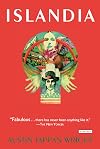
Published 11 years after the author's death, this classic of utopian fiction tells the story of American consul John Lang. He visits the isolated and alien country of Islandia and is soon seduced by the ways of a compelling and fascinating world.Tags
Recommendations


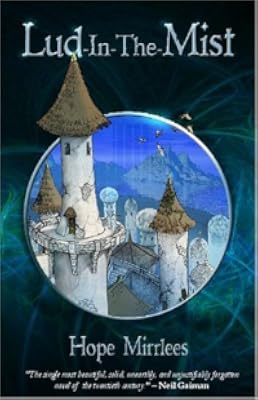

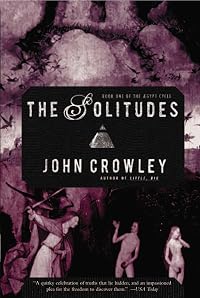
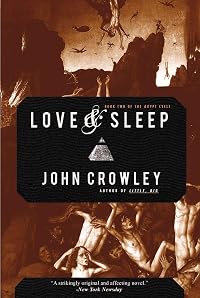


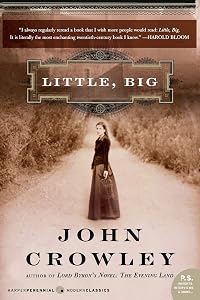

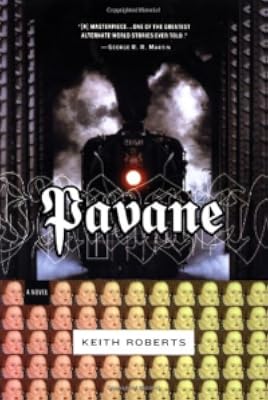
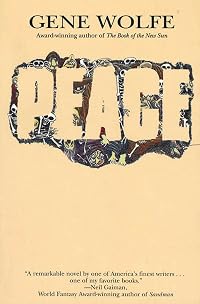


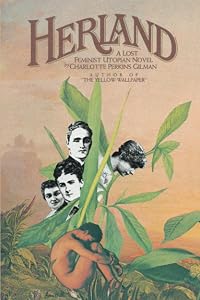


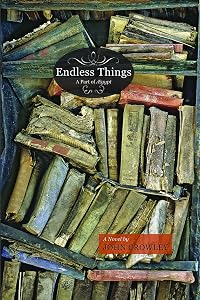




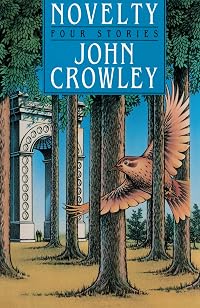

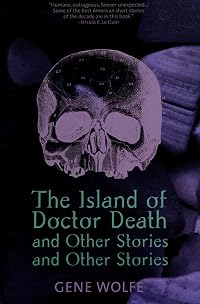

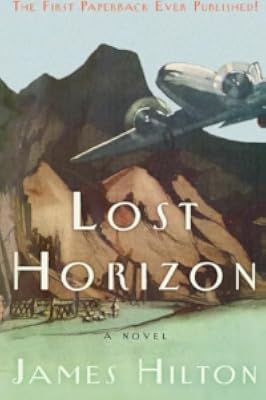


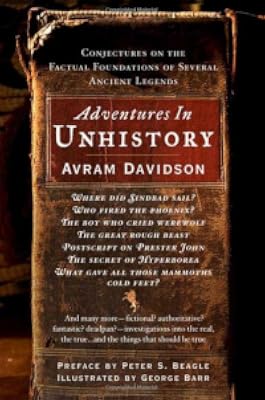



Member Recommendations

Cecrow Ania, apia and alia
Member Reviews
A rag-eared copy of this has sat on the parents’ shelves since I was born. Its companions were The Fountainhead and Lord of the Rings — best selling behemoths in the 60s/70s. As I grew into a book nerd, I always intended to give it a chance, but have just finally gotten around to it.
A slow-moving personal narrative really just ends up being an overwrought romance novel with notions about romantic and domestic relationships that manage to sound both modern and dated at the same time. It was interesting to witness a male author and protagonist of 1900 trying to develop a less puritanical concept of sex and relationships that sounds almost like a concept from the 60s. Yet there is still a strange misogyny in it. I really enjoyed the show more arguments against capitalism, ambition and modern living — the conservative Islandia becomes the progressive utopia. Considering that most of the content was composed pre-ww1, this skepticism Western society was refreshing.
By the end I was just sick and tired of circular discussions of love and wished it had more action and political intrigue. Fortunately, it’s well written with pastoral descriptions of Islandia and simple turns of phrase that charm you into reading further.
A few choice quotes:
Speaking of America: “But the men most thoroughly at home in life here, the men who live most naturally under present conditions, are business men. The rest are either parasites or critics.”
“The voice of a foreign government is not the voice of its people, for the people are too diverse in their lives and aims to have a single voice. ‘Government’ abroad is merely a mask with a terrible face put on by different groups at different times.”
“You foreigners have built up for yourselves an environment that makes the satisfaction of these desires less easy, for its complexity makes the desires complex, and its diversity makes the desires of the mind confused and obscure.” show less
A slow-moving personal narrative really just ends up being an overwrought romance novel with notions about romantic and domestic relationships that manage to sound both modern and dated at the same time. It was interesting to witness a male author and protagonist of 1900 trying to develop a less puritanical concept of sex and relationships that sounds almost like a concept from the 60s. Yet there is still a strange misogyny in it. I really enjoyed the show more arguments against capitalism, ambition and modern living — the conservative Islandia becomes the progressive utopia. Considering that most of the content was composed pre-ww1, this skepticism Western society was refreshing.
By the end I was just sick and tired of circular discussions of love and wished it had more action and political intrigue. Fortunately, it’s well written with pastoral descriptions of Islandia and simple turns of phrase that charm you into reading further.
A few choice quotes:
Speaking of America: “But the men most thoroughly at home in life here, the men who live most naturally under present conditions, are business men. The rest are either parasites or critics.”
“The voice of a foreign government is not the voice of its people, for the people are too diverse in their lives and aims to have a single voice. ‘Government’ abroad is merely a mask with a terrible face put on by different groups at different times.”
“You foreigners have built up for yourselves an environment that makes the satisfaction of these desires less easy, for its complexity makes the desires complex, and its diversity makes the desires of the mind confused and obscure.” show less
Every now and then a book comes along that is entirely different. The urge to throw superlatives around like confetti becomes irresistible. But there is the word I seek! Irresistible! Wright imagines a continent, Karain, somewhere in the Southern Hemisphere, the "southern" tip of which is a country unto itself, Islandia. Here live a people, essentially white, who came down from the glacial heights of the mountain chain that separates this part of the continent from the rest and took over the area from the original natives, black, many hundreds of years earlier. Islandians live in an idyllic pastoral culture of great stability (which is based, on Epicurean values --they know nothing of the philosopher--but that is, in essence, the show more culture they have evolved)--the real Epicurean values--not the negative overlay dumped by the evolving Christian power base. For me it is as if I had carefully prepared to read [Islandia]--by recently reading both [The Swerve] (about the recovery of Green and Roman texts that triggered the Renaissance) and [The Metaphysical Club] (the attempt in the late 19th and early 20th centuries to move philosophy in the direction of social utility--which is a horrible reduction). Wright tries to create a society where there is an attempt to balance human need for close bonds within a group with the equally pressing need to be allowed to make independent choices. It is by no means a perfect world, people sometimes make stupid choices, that make them unhappy, but no one makes the mistake of blaming others. It is startling that a hundred years ago Wright was creating this world in which men and women strive to meet as true equals, the whole culture is based on each person standing squarely on their own ground (literally as every family has their patch of earth) and to know how tentative is the progress world cultures have made toward that ideal (for many it is not even become an ideal, of course). The second and equally important thread is man's relationship and responsibilities toward the planet and its resources. This forms the crux of the Islandian hesitation to open themselves up to immigration and trade as the predominant western cultures, American, French, German and British are all about exploitation and greed dressed up as progress, development and civilization (and that arrogant attitude hasn't changed much either!).
The story is set in 1908 and our protagonist, John Lang, becomes friends with Dorn, an Islandian, who is sent to Harvard (interestingly not Oxford or Cambridge--as if they can guess what the next dominant world power is soon going to be). Lang learns Islandian and is chosen to be the first American consul to Islandia, his brief being to help the cause of opening up this isolationist country to trade. Lang soon realizes that the benefits (spoils) will go to the outside world and destroy the Islandian culture and is torn. The plot hinges around this conflict and his own attractions to various Islandian women -- and his gradual learning of what a different culture this is as many of his assumptions about men and women and how they should relate are overthrown.
The false note is in the treatment of the other races on the continent, casually evicted a thousand years earlier from what became Islandia, and not in any way encouraged to have any interaction with Islandians. Also, as a plot device, the Germans have infilitrated most of the rest of the continent and are using the native black population to further their devious and ambitious ends to take over the whole of the continent. Given that the bulk of the novel was written between the two wars, this is isn't surprising, but the racial insensitivity casts a shadow on Islandia as a utopia, they have their blind spots too -- so open about gender equality, but so closed about race.
There is always something to cavil about and that is it, and it isn't enough to damage what is a great story full of wonderful ideas, wisdom, and joy. Despite the flaws it gets ***** show less
The story is set in 1908 and our protagonist, John Lang, becomes friends with Dorn, an Islandian, who is sent to Harvard (interestingly not Oxford or Cambridge--as if they can guess what the next dominant world power is soon going to be). Lang learns Islandian and is chosen to be the first American consul to Islandia, his brief being to help the cause of opening up this isolationist country to trade. Lang soon realizes that the benefits (spoils) will go to the outside world and destroy the Islandian culture and is torn. The plot hinges around this conflict and his own attractions to various Islandian women -- and his gradual learning of what a different culture this is as many of his assumptions about men and women and how they should relate are overthrown.
The false note is in the treatment of the other races on the continent, casually evicted a thousand years earlier from what became Islandia, and not in any way encouraged to have any interaction with Islandians. Also, as a plot device, the Germans have infilitrated most of the rest of the continent and are using the native black population to further their devious and ambitious ends to take over the whole of the continent. Given that the bulk of the novel was written between the two wars, this is isn't surprising, but the racial insensitivity casts a shadow on Islandia as a utopia, they have their blind spots too -- so open about gender equality, but so closed about race.
There is always something to cavil about and that is it, and it isn't enough to damage what is a great story full of wonderful ideas, wisdom, and joy. Despite the flaws it gets ***** show less
Well-loved books from my past
Rating: 5 very nostalgic stars out of five
The Book Report: John Lang, Harvard '10, meets Dorn...that's all, just Dorn, a red-skinned Islandian noble, during their college years. Lang likes the quiet, self-possessed man, and Dorn likes Lang's accepting nature. Friendship blossoms, Dorn spends holidays with Lang at his tart spinster aunt's farm doing hard labor and teaching Lang Islandian.
Graduation comes, Dorn goes, and Lang has no real idea what the hell to do with himself. Lang's rich businessman uncle suggests that Lang apply to be US Consul to Islandia, since he's one of the very few non-native speakers of the language. Islandia isn't a major power, isolated on the Karain semi-continent, south of Africa show more and projecting towards Antarctica. Its society has been closed for generations, as Japan's was, and like Japan, Islandia is now under great pressure to open itself up for trade with the Western world. Lang's uncle thinks that, since his nephew speaks the language and is already friends with one of the isolationist leaders (Dorn), he's got the “in” to work on opening the country up to American trade first. Strings are pulled, arrangements are made, a young lady-friend is left with promises to write often, and (150pp in) our story commences.
What a story! Lang and Dorn are, from the moment they see each other again, back to being the closest possible friends, despite their wide difference of opinion on the subject of trade and intercourse between their countries. Speaking of intercourse, Dorn's sister Dorna captures Lang's virginal fancy, plays with him, and then upon realizing Lang is falling for her for real, she tells him no...she's set to be queen. And she marries Alwin, the king. This will be important later.
Lang's job brings him more and more into conflict with his heart, as he comes to know and love with a fierce and befuddled passion the good and noble people, the beautiful and bounteous land, and the startlingly unrepressed and unreligious culture of Islandia. Lang ultimately finds himself in a position where he must decide between being himself, his full, awakened self, his Islandian self, and fight the invading armies seeking to subjugate Islandia, or being the US Consul.
Even though it means the US, in fact the whole world, will be forced out of Islandia again, even though it means the other Islandian girl he's fallen in love with (and lost that pesky virginity to), Hytha, will be lost to him forever, he fights with his friends for the country he loves, and he leaves it knowing he's done the only possible honorable and honest thing.
Back in the US, Mary, the young lady-friend he's corresponded with these years, and he take up again, and get married. Lang thinks, “oh well, I've had my fun, I've done the right thing” and settles into soul-killing ennui and horribly depressing severing from the world and the people he truly loves.
Remember Alwin the king marrying Lang's buddy's sister? Alwin, knowing Lang's actions and understanding Lang's love for Dorna, Islandia, and life lived in harmony with nature, grants Lang and his wife land and citizenship as thanks for Lang's battle service and his heart-gift to Alwin's family by marriage. Off go Lang and Mary! And what an adjustment it proves to be...never easy to remake yourself, and still less easy to do so for someone else's happiness...but, as in the best stories, Lang and Marya (as she's called now, all women's names ending in an “a”) struggle and goof up and make hideous blunders, and immerse themselves into their new, and beautiful, and deeply loved home.
My Review: Wright, a lawyer by trade, wrote Islandia over the course of decades. He filled notebooks and sketchpads, created histories and historians, plays and playwrights, a religion without a god, a full and vibrant and heart-hurtingly beautiful culture, and used Lang's entry into this rich and lively...I'd say living, but clearly it's not...ethos to explore the ways in which his fantasy world was superior to the early 20th century American culture he lived in.
After Wright died in a car crash in 1931, his Islandia was dormant until an accidental discovery by Mark Saxton, a young editor at Farrar and Rinehart (we now call them Farrar Straus and Giroux), led to the publication of some 1020 pages of the trove in 1942. The marketing stuff for the book touted the fact that, since you couldn't take your European vacation this year, you should go to Islandia!
It worked. Major bestseller. It was the Infinite Jest of the 1940s...whacking great block of a book that *everyone* had to have on the coffee table, but few people read all the way through.
I found a copy in the brand new Old Quarry branch of the Austin Public Library in 1973. The dust jacket was a topographical map with the title in lower case italic type, all of it in shades of ochre and brown. I picked it up, read a few lines, and was never the same boy again.
An honest and ethical culture! No stupid gawd-stories! Free love! People who felt so real to me, a world that was so beautifully complete, that I just *knew* I'd find it all someday.
I never have, but I've never entirely lost hope that I will. (Foolish old man to dream like that.)
In the intervening forty(ish) years, I've given away a dozen copies. I've read the book all the way through only twice, but have gone back to read parts so many times that the copy I had disintegrated. I haven't replaced it because I'm pondering whether to look for a decent copy of the 1942 edition...and dreading the likelihood that I simply can't hold the book in my painful hands anymore. It is a loss so painful that I dread making the experiment, and so do nothing. Some things it's better not to know.
Islandian culture is what a truly happy planet would follow. Islandian customs make sense, because they flow organically from the logical, happiness-seeking ethos that pervades Islandia. Now that I know, thanks to the marvelous book The Swerve, what Epicureanism is, I think I know now what Wright based his world-building on: What if a genuinely Epicurean people existed, and lived their lives and governed themselves, according to Epicurean principles?
There is an Islandian custom called tanrydoon. It means that, in the course of life, there are people one meets whose essential being is so in tune with our own, whose presence in our life is so necessary, that the person becomes a kind of family. A room in one's home is prepared. The room is designed to suit the tastes of the more-than-friend, the furnishings and the colors and the items in the room all relate to the person's family and achievements. The more-than-friend is brought to their new home place, and in true Islandian fashion, the existence of this space is taken as proof that the claims of tanrydoon are in place: One can never be barred from the home-place, one can never be so lost or so alone that the certainty of welcome and acceptance is withdrawn or abrogated without the most appalling provocation.
Dorn offers Lang tanrydoon. Lang has a home-place, a family claim, a harbor and haven...despite the fact that Dorn fights everything Lang's job stands for. It doesn't matter...Dorn loves Lang, needs his friendship and his companionship, and makes him understand that his place among the Dorns is always his.
I thought then, and I think now, that this is the most beautiful, the most moving, the most fulfilling passage in the book, and a cultural notion that should be encouraged in our solipsistic, anomie-ridden place and time. How much less hatred there would be if such an idea was encouraged and enacted.
This book is, to me, what Lord of the Rings is to others: A vision of a complete world that, if the Universe was properly run, would be accessible to us mere mortal humans. show less
Rating: 5 very nostalgic stars out of five
The Book Report: John Lang, Harvard '10, meets Dorn...that's all, just Dorn, a red-skinned Islandian noble, during their college years. Lang likes the quiet, self-possessed man, and Dorn likes Lang's accepting nature. Friendship blossoms, Dorn spends holidays with Lang at his tart spinster aunt's farm doing hard labor and teaching Lang Islandian.
Graduation comes, Dorn goes, and Lang has no real idea what the hell to do with himself. Lang's rich businessman uncle suggests that Lang apply to be US Consul to Islandia, since he's one of the very few non-native speakers of the language. Islandia isn't a major power, isolated on the Karain semi-continent, south of Africa show more and projecting towards Antarctica. Its society has been closed for generations, as Japan's was, and like Japan, Islandia is now under great pressure to open itself up for trade with the Western world. Lang's uncle thinks that, since his nephew speaks the language and is already friends with one of the isolationist leaders (Dorn), he's got the “in” to work on opening the country up to American trade first. Strings are pulled, arrangements are made, a young lady-friend is left with promises to write often, and (150pp in) our story commences.
What a story! Lang and Dorn are, from the moment they see each other again, back to being the closest possible friends, despite their wide difference of opinion on the subject of trade and intercourse between their countries. Speaking of intercourse, Dorn's sister Dorna captures Lang's virginal fancy, plays with him, and then upon realizing Lang is falling for her for real, she tells him no...she's set to be queen. And she marries Alwin, the king. This will be important later.
Lang's job brings him more and more into conflict with his heart, as he comes to know and love with a fierce and befuddled passion the good and noble people, the beautiful and bounteous land, and the startlingly unrepressed and unreligious culture of Islandia. Lang ultimately finds himself in a position where he must decide between being himself, his full, awakened self, his Islandian self, and fight the invading armies seeking to subjugate Islandia, or being the US Consul.
Even though it means the US, in fact the whole world, will be forced out of Islandia again, even though it means the other Islandian girl he's fallen in love with (and lost that pesky virginity to), Hytha, will be lost to him forever, he fights with his friends for the country he loves, and he leaves it knowing he's done the only possible honorable and honest thing.
Back in the US, Mary, the young lady-friend he's corresponded with these years, and he take up again, and get married. Lang thinks, “oh well, I've had my fun, I've done the right thing” and settles into soul-killing ennui and horribly depressing severing from the world and the people he truly loves.
Remember Alwin the king marrying Lang's buddy's sister? Alwin, knowing Lang's actions and understanding Lang's love for Dorna, Islandia, and life lived in harmony with nature, grants Lang and his wife land and citizenship as thanks for Lang's battle service and his heart-gift to Alwin's family by marriage. Off go Lang and Mary! And what an adjustment it proves to be...never easy to remake yourself, and still less easy to do so for someone else's happiness...but, as in the best stories, Lang and Marya (as she's called now, all women's names ending in an “a”) struggle and goof up and make hideous blunders, and immerse themselves into their new, and beautiful, and deeply loved home.
My Review: Wright, a lawyer by trade, wrote Islandia over the course of decades. He filled notebooks and sketchpads, created histories and historians, plays and playwrights, a religion without a god, a full and vibrant and heart-hurtingly beautiful culture, and used Lang's entry into this rich and lively...I'd say living, but clearly it's not...ethos to explore the ways in which his fantasy world was superior to the early 20th century American culture he lived in.
After Wright died in a car crash in 1931, his Islandia was dormant until an accidental discovery by Mark Saxton, a young editor at Farrar and Rinehart (we now call them Farrar Straus and Giroux), led to the publication of some 1020 pages of the trove in 1942. The marketing stuff for the book touted the fact that, since you couldn't take your European vacation this year, you should go to Islandia!
It worked. Major bestseller. It was the Infinite Jest of the 1940s...whacking great block of a book that *everyone* had to have on the coffee table, but few people read all the way through.
I found a copy in the brand new Old Quarry branch of the Austin Public Library in 1973. The dust jacket was a topographical map with the title in lower case italic type, all of it in shades of ochre and brown. I picked it up, read a few lines, and was never the same boy again.
An honest and ethical culture! No stupid gawd-stories! Free love! People who felt so real to me, a world that was so beautifully complete, that I just *knew* I'd find it all someday.
I never have, but I've never entirely lost hope that I will. (Foolish old man to dream like that.)
In the intervening forty(ish) years, I've given away a dozen copies. I've read the book all the way through only twice, but have gone back to read parts so many times that the copy I had disintegrated. I haven't replaced it because I'm pondering whether to look for a decent copy of the 1942 edition...and dreading the likelihood that I simply can't hold the book in my painful hands anymore. It is a loss so painful that I dread making the experiment, and so do nothing. Some things it's better not to know.
Islandian culture is what a truly happy planet would follow. Islandian customs make sense, because they flow organically from the logical, happiness-seeking ethos that pervades Islandia. Now that I know, thanks to the marvelous book The Swerve, what Epicureanism is, I think I know now what Wright based his world-building on: What if a genuinely Epicurean people existed, and lived their lives and governed themselves, according to Epicurean principles?
There is an Islandian custom called tanrydoon. It means that, in the course of life, there are people one meets whose essential being is so in tune with our own, whose presence in our life is so necessary, that the person becomes a kind of family. A room in one's home is prepared. The room is designed to suit the tastes of the more-than-friend, the furnishings and the colors and the items in the room all relate to the person's family and achievements. The more-than-friend is brought to their new home place, and in true Islandian fashion, the existence of this space is taken as proof that the claims of tanrydoon are in place: One can never be barred from the home-place, one can never be so lost or so alone that the certainty of welcome and acceptance is withdrawn or abrogated without the most appalling provocation.
Dorn offers Lang tanrydoon. Lang has a home-place, a family claim, a harbor and haven...despite the fact that Dorn fights everything Lang's job stands for. It doesn't matter...Dorn loves Lang, needs his friendship and his companionship, and makes him understand that his place among the Dorns is always his.
I thought then, and I think now, that this is the most beautiful, the most moving, the most fulfilling passage in the book, and a cultural notion that should be encouraged in our solipsistic, anomie-ridden place and time. How much less hatred there would be if such an idea was encouraged and enacted.
This book is, to me, what Lord of the Rings is to others: A vision of a complete world that, if the Universe was properly run, would be accessible to us mere mortal humans. show less
Austin Tappan Wright worked in an American law office until his death in a 1931 car accident, after which his family discovered thousands of pages devoted to an imaginary place he called Islandia. With the help of an editor they assembled a complete 1,000 page novel describing the visit of John Lang, American consul, to this isolated, largely closed country in the southern hemisphere.
Islandia is frequently described as a utopian novel. To the extent this is a utopia, it is not one achieved by any readily stated idealistic philosophy (allowing for some Epicurean shades). Islandians eschew environmental menace and advanced technology as being unnecessary to human happiness. Sociologically, Islandian language and culture might be rated show more more advanced than ours for having better defined and grappled with the different shades that exist in human relationships, acknowleding the inherent contradictions in pleasure and jealousy, lust and envy. As one of its people illustrates through a fable, for the Islandians happiness is not achieved by denying or seeking to eradicate unhappiness but by its better integration, aided by a strong appreciation for nature. They are also devoted to the merger of arts and science. Farming, for one example, is guided not only by practical considerations but also by the preservation of harmonious aesthetics.
For a nation invented from wholecloth, Islandia is curiously grounded in the real. There is nothing of the absurd, whimsical or fantastical in its creation; it might exist anywhere on Earth, just over the horizon. If anything is unrealistic, it is its people's curiously muted response to stimuli. They are not excited by competition, and are almost entirely lacking for ambition. In place of capitalism and service to the almighty dollar, they are driven only by their roles as caretakers of family property and persons. Whether this would actually transpire in reality is impossible to say, as it could not be faithfully tested by any experiment that lasted less than several hundred years. The overriding sense-of-place-and-home carries over into their attitude towards death. The dead are mourned, but not grieved over. Burial is to become one with the land as another type of service to it, and there are no graveyards to add blemish.
This is only the start. I could write an essay's worth (or several) on examining Islandian life and all of its curious detail; a fact which I find astonishing to reflect upon, given that in all its thousand pages the novel never falls into the weeds of exposition. John Lang learns about Islandia almost sheerly through experience, and I learned of it alongside him. For this reason, because nothing about it is sewn neatly together and presented as a whole for study, the opportunity for interpretation is enormous. Whole schools of thought might compete with one another over what makes Islandia tick (or whether it actually would tick), drawing on provided evidence.
I've scarcely touched upon what I loved most about this novel. I loved the romances John engages in with these incredibly complex and intelligent women who astound with their insights and clear-headedness, penetrating immediately to the core of what John is feeling long before he does, aided by a cultural upbringing that proves all of its worth by this one result alone. This all by itself makes me a believer in the Islandian way of life, or at least provides me with the longing to visit such a place where psychology has been rendered child's play and where love - given the four Islandian words for love that make the single English word look feeble and fumbling by comparison - can be plumbed to its depths and all of its riches unearthed.
I wish I did not have to acknowledge this novel's one sour note: that at the same time Mr. Wright was writing up this brilliant meeting of the sexes, he was also casually propping up racism in equating his continent's black population with savagery that requires containment so it does not invade Islandia's all-white population. It's an unfortunate stain on what would otherwise be a wonderful treasure for every reader to enjoy. show less
Islandia is frequently described as a utopian novel. To the extent this is a utopia, it is not one achieved by any readily stated idealistic philosophy (allowing for some Epicurean shades). Islandians eschew environmental menace and advanced technology as being unnecessary to human happiness. Sociologically, Islandian language and culture might be rated show more more advanced than ours for having better defined and grappled with the different shades that exist in human relationships, acknowleding the inherent contradictions in pleasure and jealousy, lust and envy. As one of its people illustrates through a fable, for the Islandians happiness is not achieved by denying or seeking to eradicate unhappiness but by its better integration, aided by a strong appreciation for nature. They are also devoted to the merger of arts and science. Farming, for one example, is guided not only by practical considerations but also by the preservation of harmonious aesthetics.
For a nation invented from wholecloth, Islandia is curiously grounded in the real. There is nothing of the absurd, whimsical or fantastical in its creation; it might exist anywhere on Earth, just over the horizon. If anything is unrealistic, it is its people's curiously muted response to stimuli. They are not excited by competition, and are almost entirely lacking for ambition. In place of capitalism and service to the almighty dollar, they are driven only by their roles as caretakers of family property and persons. Whether this would actually transpire in reality is impossible to say, as it could not be faithfully tested by any experiment that lasted less than several hundred years. The overriding sense-of-place-and-home carries over into their attitude towards death. The dead are mourned, but not grieved over. Burial is to become one with the land as another type of service to it, and there are no graveyards to add blemish.
This is only the start. I could write an essay's worth (or several) on examining Islandian life and all of its curious detail; a fact which I find astonishing to reflect upon, given that in all its thousand pages the novel never falls into the weeds of exposition. John Lang learns about Islandia almost sheerly through experience, and I learned of it alongside him. For this reason, because nothing about it is sewn neatly together and presented as a whole for study, the opportunity for interpretation is enormous. Whole schools of thought might compete with one another over what makes Islandia tick (or whether it actually would tick), drawing on provided evidence.
I've scarcely touched upon what I loved most about this novel. I loved the romances John engages in with these incredibly complex and intelligent women who astound with their insights and clear-headedness, penetrating immediately to the core of what John is feeling long before he does, aided by a cultural upbringing that proves all of its worth by this one result alone. This all by itself makes me a believer in the Islandian way of life, or at least provides me with the longing to visit such a place where psychology has been rendered child's play and where love - given the four Islandian words for love that make the single English word look feeble and fumbling by comparison - can be plumbed to its depths and all of its riches unearthed.
I wish I did not have to acknowledge this novel's one sour note: that at the same time Mr. Wright was writing up this brilliant meeting of the sexes, he was also casually propping up racism in equating his continent's black population with savagery that requires containment so it does not invade Islandia's all-white population. It's an unfortunate stain on what would otherwise be a wonderful treasure for every reader to enjoy. show less
Islandia is like a Victorian-era Hobbit, except the hobbits are humans, and live in a bucolic wonderland south of the equator instead of north, in lush pastures and woods and villages as delightful as any in the Shire. The country of Islandia is so well conceived — existing as it does on the continent of "Karain," a continent that's about the size of Australia but more like Africa in shape -- I'm convinced it indeed exists, somewhere….
The majestic mountains in Islandia's northernmost reaches, reminiscent of Switzerland's or New Zealand's, and that have formed a natural border but not-so-impenetrable barrier between it and its vulgar, uncivilized, cut-throat neighbors of the Sobo Steppes, are mandatory travel destinations for the show more most intrepid mountaineer's itinerary, thus making Islandia (as reported by Austin Tappan Wright, Esq.) as much of an in-depth documentary of this fascinating nation as it is a 1,024 page novel presently published by The Overlook Press.
At the novel's outset Islandia is on the cusp of opening its doors to foreign trade and diplomatic relations for the first time in her history, and it's this intrigue of industrialized Germany, England, and the United States attempting to outsmart one another (and agrarian Islandia) while vying for first rights to Islandia's unspoiled mineral deposits and other natural resources, that propel the narrative forward through the young idealistic eyes of recent Harvard grad and neophyte U.S. consul to Islandia, John Lang; or, "johnlang" -- one word -- as the natives would call him upon being introduced to him, since Islandians have no conception of last names. No conception, either, of wristwatches or pocket watches; no conception of time as we know time for that matter -- at least not time as civilization in the West understands it. Islandia is in fact timeless, I would wager, and maybe eternal.
Austin Tappan Wright was as accomplished with his intricate and eccentric world building as Mervyn Peake and Frank Herbert were with theirs in Gormenghast and Dune, respectively. The main difference between them and Islandia, and between it and other classic achievements of imagination like Lord of the Rings, being Islandia was not straight fantasy or science fiction like they were; rather, Islandia's rich and fully realized fictive locales and culture occupied the here and now alongside the real world of the first decade of the 1900's in what was Austin Tappan Wright's day, and it's this duality of interwoven fantasy and reality that make Islandia for me an utterly unique reading experience. It's also, because of its optimism, completely devoid of today's empty and stultifying cynicism, the unexpected reading equivalent of good old-fashioned comfort food. Like chicken fried steak w/country gravy and buttery mashed potatoes. Or like the flaky crust of a piping hot roast turkey potpie.
Hard to fathom how such a novel as vast and extraordinary as Islandia, going on seventy-five years now, has continued receding into obscurity through literature's mainstream cracks and not left its cult status behind ages ago. show less
The majestic mountains in Islandia's northernmost reaches, reminiscent of Switzerland's or New Zealand's, and that have formed a natural border but not-so-impenetrable barrier between it and its vulgar, uncivilized, cut-throat neighbors of the Sobo Steppes, are mandatory travel destinations for the show more most intrepid mountaineer's itinerary, thus making Islandia (as reported by Austin Tappan Wright, Esq.) as much of an in-depth documentary of this fascinating nation as it is a 1,024 page novel presently published by The Overlook Press.
At the novel's outset Islandia is on the cusp of opening its doors to foreign trade and diplomatic relations for the first time in her history, and it's this intrigue of industrialized Germany, England, and the United States attempting to outsmart one another (and agrarian Islandia) while vying for first rights to Islandia's unspoiled mineral deposits and other natural resources, that propel the narrative forward through the young idealistic eyes of recent Harvard grad and neophyte U.S. consul to Islandia, John Lang; or, "johnlang" -- one word -- as the natives would call him upon being introduced to him, since Islandians have no conception of last names. No conception, either, of wristwatches or pocket watches; no conception of time as we know time for that matter -- at least not time as civilization in the West understands it. Islandia is in fact timeless, I would wager, and maybe eternal.
Austin Tappan Wright was as accomplished with his intricate and eccentric world building as Mervyn Peake and Frank Herbert were with theirs in Gormenghast and Dune, respectively. The main difference between them and Islandia, and between it and other classic achievements of imagination like Lord of the Rings, being Islandia was not straight fantasy or science fiction like they were; rather, Islandia's rich and fully realized fictive locales and culture occupied the here and now alongside the real world of the first decade of the 1900's in what was Austin Tappan Wright's day, and it's this duality of interwoven fantasy and reality that make Islandia for me an utterly unique reading experience. It's also, because of its optimism, completely devoid of today's empty and stultifying cynicism, the unexpected reading equivalent of good old-fashioned comfort food. Like chicken fried steak w/country gravy and buttery mashed potatoes. Or like the flaky crust of a piping hot roast turkey potpie.
Hard to fathom how such a novel as vast and extraordinary as Islandia, going on seventy-five years now, has continued receding into obscurity through literature's mainstream cracks and not left its cult status behind ages ago. show less
Without a doubt, one of the strangest, most intriguing books I've ever read. I had to take it in small doses, because I found reading it rather like eating some kind of rich dessert: too much and it was simply overwhelming.
Wright's world-building talent is exquisite. You feel like you're there, experiencing the brilliance of the Islandian seasons, feeling the lush fabrics, hearing the waves lap around your boat with the warm sun on your face. The genealogies, the political processes, the linguistic quirks, the raw human emotion ... all here, all described with an uncommon skill. Islandia may be a fictional place, but Wright makes every rock, pony, and blush feel as real as anything.
I've got a few quibbles with the book, which is show more certainly of its time, but overall, just wow. Take your time and read it slowly, and it's like few other books out there. show less
Wright's world-building talent is exquisite. You feel like you're there, experiencing the brilliance of the Islandian seasons, feeling the lush fabrics, hearing the waves lap around your boat with the warm sun on your face. The genealogies, the political processes, the linguistic quirks, the raw human emotion ... all here, all described with an uncommon skill. Islandia may be a fictional place, but Wright makes every rock, pony, and blush feel as real as anything.
I've got a few quibbles with the book, which is show more certainly of its time, but overall, just wow. Take your time and read it slowly, and it's like few other books out there. show less
This one is a keeper. It’s one of those books that lives on your shelf and which you gaze at lovingly from time to time, considering whether this is the time to crack it open again or not. You don’t want to do it too often for fear that you might dilute some of its power (and let’s be frank…it’s a looong book), yet you don’t want to let your immersion in its world go too long between visits. This is one of those books that I would use as primary evidence to refute the arguments of people like M. John Harrison who believe that world-building is somehow the death of good fiction. This work by Austin Tappan Wright is the only one whose breadth and depth has come close to the example set by Tolkien. Like the latter author Wright show more worked on his world, and the stories it contains, for the duration of his life. From the time he was a child he was creating the world of Islandia: elements of its language, geography, culture and history. Upon his death were reams of manuscript that were ultimately edited by his daughter into a unified whole (another glimmer of similarity to Tolkien) and what was born was apparently a sensation when it was first published. It was a world unlike any other and the care and attention given to its genesis by its author in no way detracted from the power of the human story he told…it actually served to make it all the more palpable. I have read that the book was first marketed as a valid alternative to travel in Europe which had been curtailed due to the war. It was not an inappropriate comparison for reading this book does immerse you into a vividly realized world and I definitely found that taking the position that I was traveling through this strange country along with John Lang helped to make what had once been a difficult read (and at the time I first tried it a failed attempt) turned into a really enjoyable adventure.
What to say about this book? It has sometimes been classified as a fantasy novel, and I suppose it is one inasmuch as it details the life of a vividly imagined country (perhaps the most vividly imagined one I have ever experienced) modeled on the utopian ideals of its author, but it is very much about the 'real-life' concerns of its very ordinary protagonist. There is no epic quest, save that which each of us makes in our own lives, especially in our youth, when we are making the decisions that will shape who we are to become. Added to that is the risk of a country upon the verge of making a decision that will either change it forever or leave it behind and surrounded by enemies. There is simultaneously a heck of a lot going on and not much to report on aside from the daily life of a stranger in a slow-paced agrarian society whose level of technology, even in the early 20th century, seems more or less equivalent to that of Europe in the Middle Ages or the Renaissance. Ultimately, though, there are two stories intertwined in the book: the story of Islandia itself and the political and social crisis it faces between two opposing viewpoints: whether it should embrace the world at large and open its borders to outsiders, or remain true to the old ways and follow Islandian ideals; and the story of John Lang, a young man who becomes consul for the United States in Islandia and goes through the dual processes of learning about himself and his direction in life at the same time as he learns about the strange new country around him. It proves to be a culture that he grows to deeply love, but which is utterly alien to everything he has ever known. The plot is very much a slow burn, especially for the first few hundred pages, but I actually found it picking up speed once things got beyond the set-up chapters and I found myself moving along at a fairly quick pace through the remainder of the book. The ultimate payoff is very much worth the effort.
Our story begins when John Lang encounters the strange and taciturn Islandian exchange student known simply as Dorn during his days as an undergraduate at Harvard in the early 1900’s. The two meet at a party where Lang’s own feeling of awkwardness draws him to the steady and assured Islandian and from this simple beginning a deep and lasting friendship grows. As a result of this friendship, and Lang’s fascination with Dorn (which borders on hero-worship), Lang soon develops an interest in Islandia, going so far as to learn the rudiments of its language and dip into its literature. Eventually Dorn leaves to return to his homeland and Lang is left feeling out of sorts. With no real direction after University and having lost his best friend, Lang begins to daydream about the strange country about which he had heard so many tales. Serendipity soon intervenes and an opening for the position of American consul is brought to Lang’s attention by his business tycoon uncle. It appears as though a party in Islandia is agitating for greater openness with other countries and is proposing that they cease their heretofore unbroken policy of isolationism. Lang’s uncle and his high finance cronies sees dollar signs in this opportunity and who better for them to place in the position of consul than the young and aimless John Lang (who is also one of the few Americans with a working knowledge of Islandian), a boy certain to uphold the wishes of his betters? Thus Lang goes through the formalities of applying for the job, not fully aware of the role he is meant to play, certain he is unlikely to get the position, and hoping only to see his old friend once more.
Lang’s arrival in Islandia is a shock to his system. The quiet agrarian pace, the strange social customs and expectations, the utterly different way of looking at the world are all so unlike everything that he knows that Lang experiences a distinct culture shock. Added to this is the fact that Lang’s best friend is a member of the family who is spear-heading the opposition to opening Islandia’s borders. What will Dorn think of Lang when he discovers that he is in essence ‘working for the other side’? Still, beneath Lang’s shock and worry is a growing love for, and even understanding of, the ways of this seemingly backward country. Lang eventually meets up with his old friend and finds that his fears were unwarranted. Dorn doesn’t even really understand Lang’s concern. Weren’t they friends? Didn’t they have a deep understanding of and affection for each other? Why should politics get in the way of this? This, along with other revelations, begin to open Lang’s eyes to some of the foundational differences between the ways Islandians think from what he has been raised to expect. Time goes on and Lang travels extensively and immerses himself in the culture, becoming more and more enamoured of this new and strange land. Despite numerous warnings he falls in love not once, but twice with different Islandian women (one of them Dorn’s sister Dorna) though he soon discovers that his position as a foreigner could make his ability to attain anything so lasting as a lifetime relationship with an Islandian woman near impossible…unless the party opposed to his friend wins the political debate. Lang finds himself divided, a part of him struggling to be a good consul, loyal to his home and profession with the ulterior motive that his success at winning his country's desires will also bring him his own personal ones, though at the cost of all that his closest Islandian friends hold dear; and so an even stronger part of himself fights against his own 'better' judgement and all concepts of what is realistic or pragmatic in the name of a beautiful ideal that will mean the end of his own personal hopes and dreams.
In a nutshell that is the story of Wright’s novel. We are following the adventures of Lang, a stranger in a strange land, and through his eyes we learn all about the Islandian way of life just as he does. This is where Wright is able to build the utopian elements of his story. He is always contrasting the placid, certain and ultimately satisfying way of life in Islandia with the hectic, confusing and often anxiety-ridden life of the “civilized West”. Despite his obvious belief that a world built according to Islandia’s customs would be an eminently better one, Wright does somewhat leaven his love for Islandia by making clear how strange a world it is to us. It is in fact so strange that many of the foreigners we see there cannot abide the place. They seem to suffer an almost physical aversion to all things Islandian: "Islandia is hell to me" one character, Jennings, confesses and Lang notes that this man’s modern American sensibilities and desires were his undoing: "Islandia was too much for him." Despite his own inclination, really a near all-consuming desire, towards all things Islandian Lang also finds his own road of assimilation a long and painful one. Dorn tells him"...but you aren't one of us" and Lang feels that there "…was the old torture in this. Islandia again turned upon me its alien, stony face. In my heart I rebelled." Islandia and its customs are a force that seem almost insurmountable and they are almost never really questioned by those raised under them. When faced with the possibility that Jennings' paramour Mannera may have decided to contravene Islandian ways and adopt those of America there is no sense that this might be a valid personal choice for her to make. Islandia knows best. The people and their country truly are one in a way that we will likely find it hard to fathom. (Or if we do, we’d likely find it a bit scary.)
Just what are these strange ways? At one point Dorn notes that a foreign philosopher once described Islandian philosophy as “Hedonism with a kind heart.” Emotions and feeling, and one's 'tunefulness' to them and their urgings, are the foundation of Islandian life; with the central importance of the three concepts invented by Wright: alia, ania, and apia with the allied concept of tanrydoon. Simply put alia (which is probably the most significant element of Islandian thought) is one’s love of place, but also of family as they are related to that place. There is an absence of selfishness or purely personal interest in this aspect of Islandian thought. One is always looking to the long view of one's place and family across generations. The cultivation of one’s land thus becomes the project of generations, as though each Islandian family are building their own equivalent to a great cathedral, building up year upon year the beauty, productivity, and ultimate fulfilment of their home:
Another significant aspect of Islandian thought is the concept of “tunefulness” to one’s life. One is contented by what is, not constantly striving for what is not. The Islandians posit that modern American ways which directly contravene this produce a case where "…the father and the son are of different civilizations and are strangers to each other. They move too fast to see more than the surface glitter of a life too swift to be real." This isn’t an altogether invalid criticism, but sometimes Wright seems to be rather excessive in his championing of the slow and sure way of life that spans generations. He admits that the flipside to this may hold the possibility of stagnation and an apparent lack of opportunity for one to truly excel, but he does not really give this argument the credit it perhaps deserves. In the end though, I think that Wright is not as naive as he may sometimes appear and his ultimate point may be that this is the price of utopia...to give up one good for another that is, perhaps, better. Is it better to continually progress in a world that may become more and more alienating, leaving us less and less satisfied, or to delve completely into the fullness of a simpler life that may bear the risk of stagnation? In which does a human (both the individual and the group) find greater peace, fulfillment, and security? Is Wright successful at building Utopia? Well, as much as anyone else has been I suppose. There are aspects of Islandia that are compelling and seductive (not to mention convincing), but also others that I know would drive me batty if I lived there (not to mention that seem somewhat problematic). As with any Utopia, Wright’s Islandia would, I think, require human beings to behave in ways somewhat different from what I would consider ‘normal’ human nature in order to succeed. It would only take a tiny group of dissidents to destroy Islandia completely, and it is a bit hard to believe that such a thing has never occurred in all of its history. In the final analysis I think that Wright was aware of the problems inherent in utopianism and used it as a tool for criticism and the suggestion of alternatives, not an attempt to say “I have figured it out, now go live exactly like this!”
Despite all of this depth I never found Wright to be too heavy-handed in his project to build a utopia. He isn’t simply detailing a life-like world, for he never loses sight of Lang and his own personal story. This really is a novel about growth and change and the decisions we must make in order for those things to occur. Lang’s personal road to learn about, and love, Islandia as both a country and a set of ideals on which he can base his life is a hard one. Especially hard for Lang is the realization that his great love for Dorna will never be returned; that his hope for happiness founded on her is rejected. What follows is a fairly accurate and moving description of the effects of depression on Lang.
The final segment of the book describing Lang’s tenure back in the States, courtship of his American friend and correspondent Gladys, and ultimate return to Islandia with his bride-to-be is perhaps the most problematic. Lang’s love for Gladys, at least in the earlier parts of it, did not ring as true to me as did his love/desire for Dorna and Nattana in the earlier sections of the book. Gladys’ difficulty in adjusting to her new life, however, was portrayed very realistically. Often in these episodes I found myself thinking Lang was being a real dink. He seems to forget that his own assimilation to Islandia took almost two years and was fraught with complications, and yet he seems to react as though he thinks Gladys should come to it in a matter of weeks. While Lang may be certain that he has found his ultimate happiness in the prospect of an alia on a remote farm in a foreign country with only thoughts of a contented day-to-day life in which there
In the final analysis I think that _Islandia_ is a book that you will either love or hate (with the understanding that “hate” probably means you just aren’t compelled to read it beyond the first few chapters); it’s not likely to be one that you have lukewarm feelings about. It is definitely an experience, or at least it was for me, and one that I will look forward to having again. show less
What to say about this book? It has sometimes been classified as a fantasy novel, and I suppose it is one inasmuch as it details the life of a vividly imagined country (perhaps the most vividly imagined one I have ever experienced) modeled on the utopian ideals of its author, but it is very much about the 'real-life' concerns of its very ordinary protagonist. There is no epic quest, save that which each of us makes in our own lives, especially in our youth, when we are making the decisions that will shape who we are to become. Added to that is the risk of a country upon the verge of making a decision that will either change it forever or leave it behind and surrounded by enemies. There is simultaneously a heck of a lot going on and not much to report on aside from the daily life of a stranger in a slow-paced agrarian society whose level of technology, even in the early 20th century, seems more or less equivalent to that of Europe in the Middle Ages or the Renaissance. Ultimately, though, there are two stories intertwined in the book: the story of Islandia itself and the political and social crisis it faces between two opposing viewpoints: whether it should embrace the world at large and open its borders to outsiders, or remain true to the old ways and follow Islandian ideals; and the story of John Lang, a young man who becomes consul for the United States in Islandia and goes through the dual processes of learning about himself and his direction in life at the same time as he learns about the strange new country around him. It proves to be a culture that he grows to deeply love, but which is utterly alien to everything he has ever known. The plot is very much a slow burn, especially for the first few hundred pages, but I actually found it picking up speed once things got beyond the set-up chapters and I found myself moving along at a fairly quick pace through the remainder of the book. The ultimate payoff is very much worth the effort.
Our story begins when John Lang encounters the strange and taciturn Islandian exchange student known simply as Dorn during his days as an undergraduate at Harvard in the early 1900’s. The two meet at a party where Lang’s own feeling of awkwardness draws him to the steady and assured Islandian and from this simple beginning a deep and lasting friendship grows. As a result of this friendship, and Lang’s fascination with Dorn (which borders on hero-worship), Lang soon develops an interest in Islandia, going so far as to learn the rudiments of its language and dip into its literature. Eventually Dorn leaves to return to his homeland and Lang is left feeling out of sorts. With no real direction after University and having lost his best friend, Lang begins to daydream about the strange country about which he had heard so many tales. Serendipity soon intervenes and an opening for the position of American consul is brought to Lang’s attention by his business tycoon uncle. It appears as though a party in Islandia is agitating for greater openness with other countries and is proposing that they cease their heretofore unbroken policy of isolationism. Lang’s uncle and his high finance cronies sees dollar signs in this opportunity and who better for them to place in the position of consul than the young and aimless John Lang (who is also one of the few Americans with a working knowledge of Islandian), a boy certain to uphold the wishes of his betters? Thus Lang goes through the formalities of applying for the job, not fully aware of the role he is meant to play, certain he is unlikely to get the position, and hoping only to see his old friend once more.
Lang’s arrival in Islandia is a shock to his system. The quiet agrarian pace, the strange social customs and expectations, the utterly different way of looking at the world are all so unlike everything that he knows that Lang experiences a distinct culture shock. Added to this is the fact that Lang’s best friend is a member of the family who is spear-heading the opposition to opening Islandia’s borders. What will Dorn think of Lang when he discovers that he is in essence ‘working for the other side’? Still, beneath Lang’s shock and worry is a growing love for, and even understanding of, the ways of this seemingly backward country. Lang eventually meets up with his old friend and finds that his fears were unwarranted. Dorn doesn’t even really understand Lang’s concern. Weren’t they friends? Didn’t they have a deep understanding of and affection for each other? Why should politics get in the way of this? This, along with other revelations, begin to open Lang’s eyes to some of the foundational differences between the ways Islandians think from what he has been raised to expect. Time goes on and Lang travels extensively and immerses himself in the culture, becoming more and more enamoured of this new and strange land. Despite numerous warnings he falls in love not once, but twice with different Islandian women (one of them Dorn’s sister Dorna) though he soon discovers that his position as a foreigner could make his ability to attain anything so lasting as a lifetime relationship with an Islandian woman near impossible…unless the party opposed to his friend wins the political debate. Lang finds himself divided, a part of him struggling to be a good consul, loyal to his home and profession with the ulterior motive that his success at winning his country's desires will also bring him his own personal ones, though at the cost of all that his closest Islandian friends hold dear; and so an even stronger part of himself fights against his own 'better' judgement and all concepts of what is realistic or pragmatic in the name of a beautiful ideal that will mean the end of his own personal hopes and dreams.
In a nutshell that is the story of Wright’s novel. We are following the adventures of Lang, a stranger in a strange land, and through his eyes we learn all about the Islandian way of life just as he does. This is where Wright is able to build the utopian elements of his story. He is always contrasting the placid, certain and ultimately satisfying way of life in Islandia with the hectic, confusing and often anxiety-ridden life of the “civilized West”. Despite his obvious belief that a world built according to Islandia’s customs would be an eminently better one, Wright does somewhat leaven his love for Islandia by making clear how strange a world it is to us. It is in fact so strange that many of the foreigners we see there cannot abide the place. They seem to suffer an almost physical aversion to all things Islandian: "Islandia is hell to me" one character, Jennings, confesses and Lang notes that this man’s modern American sensibilities and desires were his undoing: "Islandia was too much for him." Despite his own inclination, really a near all-consuming desire, towards all things Islandian Lang also finds his own road of assimilation a long and painful one. Dorn tells him"...but you aren't one of us" and Lang feels that there "…was the old torture in this. Islandia again turned upon me its alien, stony face. In my heart I rebelled." Islandia and its customs are a force that seem almost insurmountable and they are almost never really questioned by those raised under them. When faced with the possibility that Jennings' paramour Mannera may have decided to contravene Islandian ways and adopt those of America there is no sense that this might be a valid personal choice for her to make. Islandia knows best. The people and their country truly are one in a way that we will likely find it hard to fathom. (Or if we do, we’d likely find it a bit scary.)
Just what are these strange ways? At one point Dorn notes that a foreign philosopher once described Islandian philosophy as “Hedonism with a kind heart.” Emotions and feeling, and one's 'tunefulness' to them and their urgings, are the foundation of Islandian life; with the central importance of the three concepts invented by Wright: alia, ania, and apia with the allied concept of tanrydoon. Simply put alia (which is probably the most significant element of Islandian thought) is one’s love of place, but also of family as they are related to that place. There is an absence of selfishness or purely personal interest in this aspect of Islandian thought. One is always looking to the long view of one's place and family across generations. The cultivation of one’s land thus becomes the project of generations, as though each Islandian family are building their own equivalent to a great cathedral, building up year upon year the beauty, productivity, and ultimate fulfilment of their home:
[Lang] sensed the absorbing interest of the immediate task that also is integrated with all other tasks of one’s life into a rounded whole, because one’s land and one’s farm is larger than oneself, reaching from a past long before one began into a future long after one is dead – but all of it one’s own.Ania is deeply tied to this and represents one’s love for one’s spouse, one’s “alia-sharing lover”. This is the person with whom one feels so strong a connection that both are willing to take on the same alia, the same place as their own and express their combined love through the children they produce. Apia is purely sexual (as well as what we would call ‘romantic’) desire. It may, and should, be a part of one’s ania, but the latter is not defined by it and can even survive the loss of it. The concept of tanrydoon is also closely allied to alia and represents the fact that one has given a portion (usually a specific room) of one’s home to another. It is the highest honour one can bestow on another, since one’s home is an integral part of one’s identity and it in effect makes them a real part of your family. No matter what happens in the future that person will always have a place there and will be welcome.
Another significant aspect of Islandian thought is the concept of “tunefulness” to one’s life. One is contented by what is, not constantly striving for what is not. The Islandians posit that modern American ways which directly contravene this produce a case where "…the father and the son are of different civilizations and are strangers to each other. They move too fast to see more than the surface glitter of a life too swift to be real." This isn’t an altogether invalid criticism, but sometimes Wright seems to be rather excessive in his championing of the slow and sure way of life that spans generations. He admits that the flipside to this may hold the possibility of stagnation and an apparent lack of opportunity for one to truly excel, but he does not really give this argument the credit it perhaps deserves. In the end though, I think that Wright is not as naive as he may sometimes appear and his ultimate point may be that this is the price of utopia...to give up one good for another that is, perhaps, better. Is it better to continually progress in a world that may become more and more alienating, leaving us less and less satisfied, or to delve completely into the fullness of a simpler life that may bear the risk of stagnation? In which does a human (both the individual and the group) find greater peace, fulfillment, and security? Is Wright successful at building Utopia? Well, as much as anyone else has been I suppose. There are aspects of Islandia that are compelling and seductive (not to mention convincing), but also others that I know would drive me batty if I lived there (not to mention that seem somewhat problematic). As with any Utopia, Wright’s Islandia would, I think, require human beings to behave in ways somewhat different from what I would consider ‘normal’ human nature in order to succeed. It would only take a tiny group of dissidents to destroy Islandia completely, and it is a bit hard to believe that such a thing has never occurred in all of its history. In the final analysis I think that Wright was aware of the problems inherent in utopianism and used it as a tool for criticism and the suggestion of alternatives, not an attempt to say “I have figured it out, now go live exactly like this!”
Despite all of this depth I never found Wright to be too heavy-handed in his project to build a utopia. He isn’t simply detailing a life-like world, for he never loses sight of Lang and his own personal story. This really is a novel about growth and change and the decisions we must make in order for those things to occur. Lang’s personal road to learn about, and love, Islandia as both a country and a set of ideals on which he can base his life is a hard one. Especially hard for Lang is the realization that his great love for Dorna will never be returned; that his hope for happiness founded on her is rejected. What follows is a fairly accurate and moving description of the effects of depression on Lang.
There were steps on the stair. Ears heard them, but they were a sound from another world and were no concern of the frozen existence that was myself. But a man turns to face those who at unexpected moments are heard approaching from behind. Reason said that the tall figure with the sunburned face and tired, but brilliant dark eyes, carrying a saddlebag and coming forward, was a friend – was Dorn. It also said that men do not usually sit at a desk doing nothing. Reason was aware that such idleness lays one open to curious questions and, to what is worse – sympathy. My heart was beating, and therefore, I knew that his sudden coming was a shock, and to feel so little of the old warmth and gladness – to feel nothing at all – brought a vague regret…At the mention of Dorna my blood stopped and then ran swiftly. She was real again. A fire burned in the cold deadness and pain came once more.This episode particularly rang true to me. I have felt that. The book is built upon many such episodes of ‘real life’ and the psychological realism of Wright’s story is part and parcel of the whole.
The final segment of the book describing Lang’s tenure back in the States, courtship of his American friend and correspondent Gladys, and ultimate return to Islandia with his bride-to-be is perhaps the most problematic. Lang’s love for Gladys, at least in the earlier parts of it, did not ring as true to me as did his love/desire for Dorna and Nattana in the earlier sections of the book. Gladys’ difficulty in adjusting to her new life, however, was portrayed very realistically. Often in these episodes I found myself thinking Lang was being a real dink. He seems to forget that his own assimilation to Islandia took almost two years and was fraught with complications, and yet he seems to react as though he thinks Gladys should come to it in a matter of weeks. While Lang may be certain that he has found his ultimate happiness in the prospect of an alia on a remote farm in a foreign country with only thoughts of a contented day-to-day life in which there
…would be the smell of burning leaves in autumn, rain that meant more than the need of overshoes and an umbrella, sun enjoyed not merely because it brightened the world and made me warm, wind and clouds watched with daily interest, and the earth that was more than the foundation for my house and the place where my feet restedand the prospect of children to continue it, it is a bit much to expect the same immediate response from Gladys. For here there“…would be no theatres, no opera, no illustrated magazines, no developed sophisticated art, none of the highly flavoured pleasures of the Western world.” To me that’s an awful lot to swallow at one gulp and despite Lang’s admitted attempts to describe such things to her Gladys can certainly be forgiven for finding the reality harder to accept than the idea. In many ways in his relations to her he is “more Islandian than the Islandians” as it were. There were also uncomfortable parts in Gladys’ struggle to “become Islandian” which perhaps were true enough representations of the attitudes of Wright’s time, but still felt a bit squicky to me. In them Gladys herself willingly desires to be ruled, in some sense even owned, by Lang in order to give her life meaning and it was Lang who had to be the one to break her of this habit, to free her to be truly Islandian. In essence he had to make their love not be the only thing to which she could cling or rely on for her own happiness. It’s a sentiment I can agree with, but somewhat difficult in its achievement.
In the final analysis I think that _Islandia_ is a book that you will either love or hate (with the understanding that “hate” probably means you just aren’t compelled to read it beyond the first few chapters); it’s not likely to be one that you have lukewarm feelings about. It is definitely an experience, or at least it was for me, and one that I will look forward to having again. show less
Members
- Recently Added By
Published Reviews
ThingScore 100
The fascination of Wright’s book lies partly in the way it matches our instinctive understanding of the interior richness of other people. The thrilling privacy and patience of its construction, its unique combination of vastness and particularity—together these give us the impression of an author slowly, painstakingly bringing forth a work as colossal and idiosyncratic as a self.
added by Cecrow
Lists

501 Must-Read Books
529 works; 72 members

Favorite Long Books
330 works; 42 members

Recommend the 20 best books you've read in the last five years
2,168 works; 606 members

Welcome to Ruritania!
22 works; 5 members

Books Set on Islands
190 works; 24 members
Speculative Fiction to Read
706 works; 32 members

The Seven-League Shelf
57 works; 3 members

1943 Retro-Hugo Eligible Novels
18 works; 2 members

Favorite Romance Fiction
247 works; 115 members
Book Worlds We'd Like To Visit
322 works; 158 members

Survey of Classic Science Fiction
171 works; 48 members
Author Information

5+ Works 562 Members
A Harvard-educated lawyer, Austin Tappan Wright was born to a distinguished family. His father was Dean of the Graduate School of Arts and Sciences at Harvard University, and his mother was a respected novelist. After serving in the Boston law firm of Louis Brandeis, Wright took faculty positions at the University of California Law School show more (Berkeley) and the University of Pennsylvania. He died at the age of 48 in an automobile accident leaving thousands of pages of manuscript detailing his lifelong construction of a wholly imagined world -- what was to become an acknowledged classic of utopian fantasy, Islandia. show less
Some Editions
Awards and Honors
Awards
Distinctions
Notable Lists
Series

Work Relationships
Inspired
Common Knowledge
- Original title
- Islandia
- Original publication date
- 1942
- People/Characters
- John Lang; Dorn; Dorna
- Important places
- Islandia; Harvard University, Cambridge, Massachusetts, USA
- First words
- Islandia was first published in April, 1942, eleven yers after my father's death. France was occupied, Singapore and Java lost, Australia threatened. "Abroad," an out-of-date word, had become "overseas." Many people un... (show all)able to travel obeyed the publishers' suggestion that they spend their vacations in Islandia. -Sylvia Wright
In the year 1901, it was the custom at Harvard for seniors to entertain the incoming freshmen at 'beer nights', where crackers and cheese and beer, to those who drank, and ginger ale, to those who did not drink, were served. ... (show all)To one of these I was invited with a random selection of my new classmates. However much alike we would have seemed to older persons, we believed in our own heterogeneity and, having us all social ambitions, feared meeting or being seen with the wrong man; but we also accepted the tradition that one of the greatest things in life was college and class spirit, and that knowing a great many men fostered it. We were therefore in conflict within ourself, but did not know it, nor were our hosts aware of it either. Having no knowledge of anything naturally in common we were all ill at ease. -Chapter 1, Appointed Consul to Islandia - Quotations
- “The ability to say things isn't what makes things true.”
History had it that white and black were separate when the Christians came, but that both races, taking literally the precept that men were brothers, intermarried as the only course of virtue, until in a few generations there... (show all) were few whose blood was still pure - Last words
- (Click to show. Warning: May contain spoilers.)"I know what you mean."
- Original language
- English
- Canonical DDC/MDS
- 813.52
- Canonical LCC
- PZ3.W92995 I
Classifications
- Genres
- Fiction and Literature, General Fiction, Fantasy
- DDC/MDS
- 813.52 — Literature & rhetoric American literature in English American fiction in English 1900-1999 1900-1945
- LCC
- PZ3 .W92995 — Language and Literature Fiction and juvenile belles lettres Fiction and juvenile belles lettres Fiction in English
- BISAC
Statistics
- Members
- 552
- Popularity
- 53,889
- Reviews
- 19
- Rating
- (4.14)
- Languages
- English
- Media
- Paper
- ISBNs
- 12
- ASINs
- 11