

Ursula K. Le Guin (1929–2018)
Author of The Left Hand of Darkness
About the Author
Ursula K. Le Guin was born Ursula Kroeber in Berkeley, California on October 21, 1929. She received a bachelor's degree from Radcliffe College in 1951 and a master's degree in romance literature of the Middle Ages and Renaissance from Columbia University in 1952. She won a Fulbright fellowship in show more 1953 to study in Paris, where she met and married Charles Le Guin. Her first science-fiction novel, Rocannon's World, was published in 1966. Her other books included the Earthsea series, The Left Hand of Darkness, The Dispossessed: An Ambiguous Utopia, The Lathe of Heaven, Four Ways to Forgiveness, and The Telling. A Wizard of Earthsea received an American Library Association Notable Book citation, a Horn Book Honor List citation, and the Lewis Carroll Shelf Award in 1979. She received the Medal for Distinguished Contribution to American Letters in 2014. She also received the Nebula Award and the Hugo Award. She also wrote books of poetry, short stories collections, collections of essays, children's books, a guide for writers, and volumes of translation including the Tao Te Ching of Lao Tzu and selected poems by Gabriela Mistral. She died on January 22, 2018 at the age of 88. (Bowker Author Biography) show less
Image credit: Photo: Dan Tuffs
Series
Works by Ursula K. Le Guin
Steering the Craft: Exercises and Discussions on Story Writing for the Lone Navigator or the Mutinous Crew (1998) 1,884 copies, 28 reviews
Worlds of Exile and Illusion: Three Complete Novels of the Hainish Series in One Volume (1996) 1,835 copies, 26 reviews
Lao Tzu : Tao Te Ching : A Book About the Way and the Power of the Way (1997) — Author; Translator; Narrator, some editions — 1,304 copies, 26 reviews
The Wave in the Mind: Talks and Essays on the Writer, the Reader, and the Imagination (2004) 807 copies, 12 reviews
The Unreal and the Real: The Selected Short Stories of Ursula K. Le Guin (2016) 540 copies, 4 reviews
The Unreal and the Real: Selected Stories Volume Two: Outer Space, Inner Lands (2012) 470 copies, 21 reviews
The Norton Book of Science Fiction: North American Science Fiction, 1960-1990 (1993) — Editor — 344 copies, 6 reviews
Hainish Novels and Stories, Volume One: Rocannon's World / Planet of Exile / City of Illusions / The Left Hand of Darkness / The Dispossessed / Stories (2017) 319 copies, 5 reviews
Hainish Novels and Stories, Volume Two: The Word for World Is Forest / Stories / Five Ways to Forgiveness / The Telling (2017) 283 copies, 2 reviews
Ursula K. Le Guin: The Hainish Novels and Stories [Library of America Boxed Set] (2017) 273 copies, 2 reviews
Five Complete Novels: Rocannon's World / Planet of Exile / City of Illusions / The Left Hand of Darkness / The Word for World (1985) 173 copies, 3 reviews
Five Novels : The Lathe of Heaven / The Eye of the Heron / The Beginning Place / Searoad / Lavinia (2024) 123 copies
The Selected Short Fiction of Ursula K. Le Guin Boxed Set: The Found and the Lost; The Unreal and the Real (2016) 41 copies
Ursula K. Le Guin Boxed Set: Rocannon's World, Planet of Exile, City of Illusions, The Left Hand of Darkness (1979) 32 copies, 1 review
Mundos de Ursula K. Le Guin / The Worlds of Ursula K. Le Guin (Minotauro Autores Varios) (Spanish Edition) (2008) 30 copies
Le Dit d'Aka : Suivi de Le nom du monde est forêt et de Malaise dans la science-fiction américaine (1972) 27 copies, 2 reviews
The Visionary: The Life Story of Flicker of the Serpentine / Wonders Hidden: Audubon's Early Years (1984) 18 copies
The Twins, the Dream / Las Gemelas, El Sueno: Two Voices : Poems = DOS Voces : Poemas (1996) 16 copies
The matter of Seggri [short fiction] 15 copies
A Woman's Liberation [novella] 13 copies
Ursula Leguin Collection: Left Hand of Darkness, the Earthsea Quartet & the Dispossessed (2011) 12 copies
Dangerous People: The Complete Text of Ursula K Le Guin's Kesh Novella: A Library of America eBook Classic (2019) 11 copies
Old Music and the Slave Women 10 copies
The Seasons of the Ansarac 10 copies
Unlocking the Air [short story] 9 copies
The Complete Earthsea Series & The Left Hand of Darkness: 3 BBC Radio Full Cast Dramatisations (2021) 9 copies, 1 review
Le Guin, Ursula Archive 9 copies
Mountain ways (novelette) 7 copies
Am Anfang war der Beutel: Warum uns Fortschritts-Utopien an den Rand des Abgrunds führten und wie Denken in Rundungen die Grundlage für gutes Leben schafft (Akt) (2020) 7 copies, 1 review
A man of the people (novella) 7 copies
Social Dreaming of the Frin 7 copies
Das Wort für Welt ist Wald / Quarantäne im Kosmos / Die denkenden Wälder. Drei Science Fiction Romane in einem Band. (1990) 6 copies
Music And Poetry Of The Kesh 5 copies
May's Lion 5 copies
Dancing To Ganam [short story] 5 copies
Betrayals {novelette} 5 copies
The Building [short story] 5 copies
Ether OR 5 copies
Proč číst fantasy, jak to, že zvířata v knížkách mluví, a odkdy se Američané bojí draků = (Cheek by jowl & why are… (2019) 5 copies
Earthsea & The Left Hand of Darkness: Two BBC Radio 4 Full-Cast Dramatisations (2016) 5 copies, 1 review
Talking about writing 4 copies
Confusions of Uñi [short story] 4 copies
Horse Camp [short story] 4 copies
Illusioonide linn ; Maailma nimi on mets ; Impeeriumitest suurem ja pikaldasem veel : [liromaanid ja jutustus] (2002) 4 copies
Imaginary Countries [short story] 4 copies
A Summary Report of the Yelcho Expedition to the Antarctic 1909-10 (in The Best American Short Stories of the Eighties - RAVENEL) (2017) 3 copies
Supermouse Comix 3 copies
The uses of music in uttermost parts [sound recording] — Author — 3 copies
Woeful Tales from Mahigul 3 copies
The Trouble with the Cotton People 3 copies
Texts 3 copies
The rock that changed things 3 copies
The Kerastion 3 copies
No Boats 3 copies
A Rant About Technology 3 copies
Unchosen Love [short story] 3 copies
Half past Four (short story) 3 copies
Sita Dulip's Method 2 copies
Sleepwalkers (short story) 2 copies
Los huesos de la tierra y otros cuentos (Relato Licenciado Vidriera) (Spanish Edition) (2024) 2 copies
Gwilanina harfa a jiné povídky 2 copies
Porridge on Islac 2 copies
The Lost Children (short story) 2 copies
The Princess and the Goblin 2 copies
You Rarely See Such Things Any More: Poems from the Side Porch — Author — 2 copies
Hand, Cup, Shell (short story) 2 copies
Lorenzo Bean, Dozing 2 copies
Tão Longe de Sítio Nenhum 2 copies
The Dispossessed [Volume II] 2 copies
Searoad : chronicles of klatsand 2 copies
Le nom du monde est forêt 2 copies
Torrey Pines Reserve 2 copies
Feeling at Home with the Hennebet 2 copies
Is Gender Necessary? {essay} 2 copies
Great Joy 2 copies
The Nna Mmoy Language 2 copies
The Ire of the Veksi 2 copies
Pity and Shame 1 copy
Gwilan's harp & Intracom 1 copy
viagem notempo 1 copy
planeta de exílio 1 copy
Un vrăjitor din Terramare 1 copy
Rocannon's World 1 copy
Changing Planes 1 copy
The Dead Astronaut 1 copy
Historias De Terramar I 1 copy
Historias De Terramar II 1 copy
Czarnoksieznik z Archipelagu 1 copy
Expulsos da Terra 1 copy
Sur {1982} 1 copy
The Greener Shore 1 copy
Findings 1 copy
奇幻大師勒瑰恩教你寫小說:關於小說寫作的十件事 1 copy
The Jar of Water [novelette] 1 copy
Discurso de graduación 1 copy
Rigel 9 — Words — 1 copy
Selected Stories 1 copy
Three Rock Poems [poems] 1 copy
The Modest One [essay] 1 copy
Escape Routes [essay] 1 copy
Four Cat Poems [poems] 1 copy
Five Vegetable Poems [poems] 1 copy
Mazes 1 copy
SQ 1 copy
Distance {poem} 1 copy
Mendenhall Glacier {poem} 1 copy
Kore 87 {short story} 1 copy
La spiaggia più lontana 1 copy
The Staring Eye [essay] 1 copy
Climbing to the Moon (short) 1 copy
Wake Island 1 copy
On Theme 1 copy
No Use to Talk to Me 1 copy
To Siva the Unmaker 1 copy
Notes On Werel And Yeowe 1 copy
Där världen kallas skog 1 copy
The Complete Earthsea Series & The Left Hand of Darkness: A BBC Radio 3 full-cast dramatisation 1 copy
Ruby on the 67 [short story] 1 copy
Elementals 1 copy
Le Guin's map of Earthsea — Cartographer — 1 copy
The Future of the Left 1 copy
Expulsos da Terra Livro 1 1 copy
Travelling 1 copy
Four different poems 1 copy
Infinitive 1 copy
July 1 copy
We Keep Writing Dystopias Instead of Envisioning a Better World--Maybe What We Need is Balance 1 copy
Supermouse XII: Batpoisson! 1 copy
A Citizen of Mondath [essay] 1 copy
At Kishamish 1 copy
Supermouse XI: Origins II 1 copy
In the Drought [short story] 1 copy
The Professor's Houses [short story] — Author — 1 copy
Limberlost [short story] 1 copy
The Spoons in the Basement [short story] — Author — 1 copy
Sunday in Summer in Seatown [short story] — Author — 1 copy
Os Túmulos de Atuan Livro 1 1 copy
O Mundo de Rocannon Livro 1 1 copy
A Cidade das Ilusões Livro 1 1 copy
Real Power 1 copy
Supermouse II: E.A.G. 1 copy
Supermouse VI: Pussa Returns 1 copy
Associated Works
Legends I: New Short Novels by the Masters of Modern Fantasy (1998) — Contributor — 2,080 copies, 19 reviews
The Story and Its Writer: An Introduction to Short Fiction (1976) — Contributor — 1,214 copies, 3 reviews
Kalpa Imperial: The Greatest Empire That Never Was (1983) — Translator, some editions — 685 copies, 21 reviews
Legends: Short Novels by the Masters of Modern Fantasy, Vol. 3 (of 3) (1998) — Contributor — 593 copies, 1 review
In the Stacks: Short Stories about Libraries and Librarians (2002) — Contributor — 546 copies, 13 reviews
The Big Book of Science Fiction: The Ultimate Collection (2016) — Contributor — 522 copies, 8 reviews
The Year's Best Science Fiction: Sixteenth Annual Collection (1999) — Contributor — 515 copies, 1 review
The Year's Best Science Fiction: Eighteenth Annual Collection (2001) — Contributor — 503 copies, 2 reviews
The Year's Best Science Fiction: Thirteenth Annual Collection (1996) — Contributor — 454 copies, 4 reviews
Sisters of the Earth: Women's Prose and Poetry About Nature (1991) — Contributor — 442 copies, 5 reviews
The Best of the Best: 20 Years of the Year's Best Science Fiction (2005) — Contributor; Contributor — 435 copies, 20 reviews
The Year's Best Science Fiction: Eighth Annual Collection (1991) — Contributor — 415 copies, 6 reviews
Women of Wonder: Science Fiction Stories by Women about Women (1975) — Contributor — 369 copies, 5 reviews
Sisters of the Revolution: A Feminist Speculative Fiction Anthology (2015) — Contributor — 343 copies, 8 reviews
The Year's Best Fantasy and Horror: First Annual Collection (1986) — Contributor — 333 copies, 6 reviews
Mirror, Mirror on the Wall: Women Writers Explore Their Favorite Fairy Tales (1998) — Contributor — 312 copies, 4 reviews
The Locus Awards: Thirty Years of the Best in Science Fiction and Fantasy (2004) — Contributor — 290 copies, 11 reviews
The Year's Best Fantasy and Horror: Seventh Annual Collection (1994) — Contributor — 282 copies, 3 reviews
The Future Is Female! 25 Classic Science Fiction Stories by Women, from Pulp Pioneers to Ursula K. Le Guin: A Library of America Special Publication (2018) — Contributor — 278 copies, 5 reviews
The Year's Best Fantasy and Horror: Fifteenth Annual Collection (2002) — Contributor — 275 copies, 4 reviews
Isaac Asimov's Magical Worlds of Fantasy, Volume 1: Wizards (1983) — Contributor — 265 copies, 1 review
The Road to Science Fiction #3: From Heinlein to Here (1979) — Contributor; Contributor — 264 copies, 4 reviews
The Year's Best Fantasy and Horror: Ninth Annual Collection (1996) — Contributor — 258 copies, 3 reviews
The Wand in the Word: Conversations with Writers of Fantasy (2006) — Contributor — 255 copies, 9 reviews
More Women of Wonder: Science Fiction Novelettes by Women about Women (1976) — Contributor — 254 copies, 7 reviews
The Year's Best Fantasy and Horror: Seventeenth Annual Collection (2004) — Contributor — 241 copies, 9 reviews
The Best of the Best, Volume 2: 20 Years of the Best Short Science Fiction Novels (2007) — Contributor — 234 copies, 10 reviews
The Moral Life: An Introductory Reader in Ethics and Literature (1999) — Contributor — 202 copies, 2 reviews
First Fiction: An Anthology of the First Published Stories by Famous Writers (1994) — Contributor — 196 copies, 1 review
Women of Wonder, the Classic Years: Science Fiction by Women from the 1940s to the 1970s (1995) — Contributor — 189 copies, 1 review
The James Tiptree Award Anthology 1: Sex, the Future, and Chocolate Chip Cookies (2005) — Contributor — 180 copies, 5 reviews
Arts of Living on a Damaged Planet: Ghosts and Monsters of the Anthropocene (2017) — Contributor — 173 copies, 2 reviews
The Mark Twain Anthology: Great Writers on His Life and Work (2010) — Contributor — 159 copies, 1 review
Legends: Short Novels by the Masters of Modern Fantasy, Vol. B (of 2) (2000) — Contributor — 148 copies, 5 reviews
The Very Best of Fantasy & Science Fiction: Sixtieth Anniversary Anthology (2009) — Contributor — 148 copies, 6 reviews
The Science Fiction Hall of Fame, Volume Four: Nebula Winners 1970-1974 (1986) — Contributor — 132 copies, 1 review
The Best From Fantasy and Science Fiction: The Fiftieth Anniversary Anthology (1999) — Contributor — 127 copies, 3 reviews
The Sophisticated Cat: A Gathering of Stories, Poems, and Miscellaneous Writings About Cats (1992) — Contributor — 112 copies, 1 review
Mythmakers and Lawbreakers: Anarchist Writers on Fiction (2010) — Contributor — 110 copies, 1 review
The Future Is Female! Volume Two, The 1970s: More Classic Science Fiction Storie s By Women: A Library of America Special Publication (2022) — Contributor — 108 copies, 3 reviews
The Choices We Made: Twenty-Five Women and Men Speak Out About Abortion (1991) — Contributor — 102 copies
The James Tiptree Award Anthology 2: Stories for Men, Women, and the Rest of Us (2006) — Contributor — 101 copies, 3 reviews
The James Tiptree Award Anthology 3: Subversive Stories about Sex and Gender (2007) — Contributor — 98 copies, 2 reviews
Nebula Awards 31: SFWA's Choices For The Best Science Fiction And Fantasy Of The Year (Nebula Awards Showcase) (1997) — Contributor — 97 copies
Isaac Asimov's Magical Worlds of Fantasy, Volume 9: Atlantis (1988) — Contributor — 93 copies, 1 review
Fantasists on Fantasy: A collection of Critical Reflections by Eighteen Masters of the Art (1984) — Contributor — 93 copies, 1 review
Nebula Awards 30: SFWA's Choices For The Best Science Fiction And Fantasy Of The Year (Nebula Awards Showcase) (1996) — Contributor — 89 copies, 2 reviews
A Reader's Companion to the Hobbit and the Lord of the Rings (1995) — Contributor — 88 copies, 1 review
Speeches of Note: An Eclectic Collection of Orations Deserving of a Wider Audience (2018) — Narrator, some editions — 74 copies, 1 review
New Eves: Science Fiction About the Extraordinary Women of Today and Tomorrow (1994) — Contributor — 71 copies, 3 reviews
The Best Science Fiction and Fantasy of the Year, Volume 13 (2019) — Contributor — 68 copies, 3 reviews
ParaSpheres: Extending Beyond the Spheres of Literary and Genre Fiction: Fabulist and New Wave Fabulist Stories (2006) — Contributor — 65 copies
Asimov's Science Fiction Magazine: 30th Anniversary Anthology (2007) — Contributor — 61 copies, 1 review
Flying Cups and Saucers: Gender Explorations in Science Fiction and Fantasy (1998) — Author — 57 copies, 3 reviews
Nebula Awards 26: SFWA's Choices for the Best Science Fiction and Fantasy of the Year (1992) — Contributor — 52 copies, 1 review
Women Who Run With the Werewolves: Tales of Blood, Lust and Metamorphosis (1996) — Contributor — 52 copies
This Way to the End Times: Classic Tales of the Apocalypse (2016) — Contributor — 51 copies, 2 reviews
Hear the Silence: Stories by Women of Myth, Magic, & Renewal (1986) — Contributor — 51 copies, 1 review
Jo's Girls: Tomboy Tales of High Adventure, True Grit, and Real Life (1997) — Contributor — 48 copies
Women of Other Worlds: Excursions Through Science Fiction and Feminism (1999) — Contributor — 42 copies
Face to Face: Women Writers on Faith, Mysticism, and Awakening (2004) — Contributor — 39 copies, 1 review
Light Years and Dark: Science Fiction and Fantasy of and for Our Time (1984) — Contributor — 38 copies
Antaeus No. 61, Autumn 1988 - Journals, Notebooks & Diaries (1988) — Contributor — 38 copies, 2 reviews
In Lands That Never Were: Tales of Swords and Sorcery from The Magazine of Fantasy & Science Fiction (2004) — Contributor — 36 copies
Grave Predictions: Tales of Mankind’s Post-Apocalyptic, Dystopian and Disastrous Destiny (2016) 35 copies, 7 reviews
She's Fantastical: The First Anthology of Australian Women's Speculative Fiction, Magical Realism and Fantasy (1995) — Foreword — 35 copies, 1 review
Women of Vision : Essays by Women Writing Science Fiction (1988) — Contributor, some editions — 34 copies, 1 review
Squaring the Circle: A Pseudotreatise of Urbogony (1900) — Translator, some editions — 31 copies, 2 reviews
A Home-Concealed Woman: The Diaries of Magnolia Wynn Le Guin, 1901-1913 (1990) — Foreword — 25 copies
Maailma mielen mukaan : yksitoista tieteisnovellia kolmeltatoista sci-fi -sarjan kirjailijalta (1986) — Contributor — 24 copies, 1 review
Le livre d'or de la Science-Fiction : Le manoir des roses (1978) — Contributor — 21 copies, 1 review
Old Growth: The Best Writing about Trees from Orion Magazine (2021) — Contributor — 16 copies, 1 review
Asimov's Science Fiction: Vol. 24, No. 2 [February 2000] (1999) — Contributor — 14 copies, 2 reviews
The Magazine of Fantasy and Science Fiction June 2000, Vol. 98, No. 6 (2000) — Contributor — 13 copies
Hive of Dreams: Contemporary Science Fiction from the Pacific Northwest (2003) — Contributor — 13 copies
Womens Fantastic Adventures. Stories. ( Fremdsprachentexte). (Lernmaterialien) (1992) — Author — 11 copies
Legends: Stories by the Masters of Fantasy, Vol. 3 (Audio) (1999) — Contributor — 11 copies, 1 review
Brave New Worlds {Second Edition ebook} — Contributor, some editions — 11 copies
The Magazine of Fantasy and Science Fiction November 1987, Vol. 73, No. 5 (1987) — Contributor — 11 copies
Das Science Fiction Jahr 1994. Ein Jahrbuch für den Science Fiction Leser (1994) — Contributor — 10 copies
Sylvia Plath's Tomato Soup Cake: A Compendium of Classic Authors' Favourite Recipes (2024) — Contributor — 6 copies
The Profession of Science Fiction: SF Writers on Their Craft and Ideas (1992) — Contributor — 6 copies
Faseskift : science fiction noveller : et udvalg (1984) — Author, some editions — 5 copies, 1 review
Second Set Out — Foreword — 5 copies
Fantastic Imaginings: A Journey Through 3500 Years of Imaginative Writing, Comprising Fantasy, Horror, and Science Fiction (2012) — Contributor — 4 copies
Fantasy Fiction: A Writer's Guide and Anthology (Bloomsbury Writer's Guides and Anthologies) (2024) — Contributor — 2 copies
Antaeus No. 29, Spring 1978 — Contributor — 2 copies
Mythlore, Issue 56. Vol.15, No.2. — Contributor — 2 copies
The Most Thrilling Science Fiction Ever Told, No. 13, Summer 1969 — Contributor — 2 copies
Millemondi Primavera 2001: Nuove avventure nell'ignoto — Contributor — 2 copies
The Little Magazine, v. 10, #1-2, Spring Summer 1976 — Contributor — 1 copy
The World Fantasy Convention 2011: Sailing the Seas of the Imagination — Contributor — 1 copy
SFの評論大全集 (別冊奇想天外 4) — Contributor — 1 copy
Tagged
Common Knowledge
- Canonical name
- Le Guin, Ursula K.
- Legal name
- Le Guin, Ursula Kroeber
- Birthdate
- 1929-10-21
- Date of death
- 2018-01-22
- Gender
- female
- Education
- Radcliffe College (AB|1951)
Columbia University (MA|1952) - Occupations
- writer
editor
poet
translator - Organizations
- Science Fiction and Fantasy Writers of America
Book View Cafe - Awards and honors
- Damon Knight Memorial Grand Master Award (2003)
Gandalf Award (1979)
World Fantasy Award (Life Achievement, 1995)
SFRA Pilgrim Award (1989)
PEN/Malamud Award (2002)
Charles Erskine Scott Wood Distinguished Writer Award (2006) (show all 14)
Robert Kirsch Award (1999)
SF Hall Of Fame (2001)
Margaret A. Edwards Award (2004)
Mythopoeic Fantasy Award
May Hill Arbuthnot Lecturer (2004)
Maxine Cushing Gray Fellowship (2006)
Fulbright Fellowship
American Academy of Arts and Letters (2017) - Agent
- Virginia Kidd
- Relationships
- Kroeber, Alfred L. (father)
Kroeber, Theodora (mother)
Le Guin, Charles (husband)
Kroeber, Karl (brother)
Kroeber, Clifton B. (brother)
Muller, H. J. (cousin) (show all 9)
LeGuin, Elisabeth (daughter)
Le Guin, Caroline (daughter)
Downes-Le Guin, Theo (son) - Cause of death
- heart attack (likely)
- Nationality
- USA
- Birthplace
- Berkeley, California, USA
- Places of residence
- Portland, Oregon, USA
- Place of death
- Portland, Oregon, USA
- Burial location
- body donated to medical science
- Associated Place (for map)
- Oregon, USA
Members
Discussions
Group Discussion - The Dispossessed - Ursula K. Le Guin in The Green Dragon (September 2023)
Earthsea in Folio Society Devotees (May 2023)
The Adventure of Cobbler’s Rune by Ursula K. le Guin - CHEAP STREET PRESS LIMITED EDITION 1982 in Fine Press Forum (November 2022)
Group Read, October 2022: The Dispossessed in 1001 Books to read before you die (September 2022)
A Wizard of Earthsea is back in stock in Folio Society Devotees (July 2022)
Problems adding a book in Common Knowledge, WikiThing, HelpThing (November 2021)
Ursula K. LeGuin in Library of America Subscribers (September 2021)
Ursula Le Guin's Hainish Cycle in The Green Dragon (June 2021)
June Group Read: Ursula K. Le Guin in 2018 Category Challenge (September 2018)
Ursula K. Le Guin: American Author Challenge in 75 Books Challenge for 2015 (July 2015)
February Read - SPOILERS - The Lathe of Heaven in The Green Dragon (July 2013)
February Read - NO SPOILERS - The Lathe of Heaven in The Green Dragon (February 2013)
Short story anthology / female coyote and various tricksters. in Name that Book (May 2012)
SciFi - Night people and day people in Name that Book (February 2012)
***Group Read: Always Coming Home by Ursula Le Guin (spoiler thread) in 75 Books Challenge for 2011 (August 2011)
The Dispossessed - by Ursula K. LeGuin in Feminist SF (July 2010)
A Wizard of Earthsea trilogy vs. quartet? in FantasyFans (February 2010)
Reviews

A Wizard of Earthsea was an early venture into "YA Fantasy" publishing, and it set much of the pattern for the wizard bildungsroman that later made the fortune of the world's richest woman. More than half a century after its original publication, it holds up very well. It is certainly a better book than its more "successful" imitators. I first read it when I was less than ten years old, and I had forgotten many of the details and much of the structure--despite in the interim having sampled show more some of the attempts to adapt it to the screen.
While the publishing press and the author herself have been quick to compare this high fantasy Earthsea to Tolkien's Middle Earth, I found the style far more reminiscent of Lord Dunsany, an author praised elsewhere by Le Guin with language similar to her remarks in the 2012 afterword to Wizard. There she mentions other fantasy literature that "mostly lurked in small secondhand bookshops smelling of cats and mildew" (262). To the extent that this book is an "epic" fantasy, it is more Odyssey than Illiad, deliberately spurning the matter of great wars and killer heroes.
As an orientation to esoteric wisdom, Le Guin's work far exceeds more recent tales of "wizard school." The teachings of Lao Tzu that she imbibed at her father's knee are evident in the magic of Earthsea. She has one clinker in her diction, where she misuses "adept" to mean "neophyte" (26). That lexical slip is far outweighed by such musings as this:
"You thought, as a boy, that a mage is one who can do anything. So I thought, once. So did we all. And the truth is that as a man's real power grows and his knowledge widens, ever the way he can follow grows narrower: until at last he chooses nothing, but does only and wholly what he must do ..." (99, italics and ellipsis in original)
Le Guin quietly but consciously twitted racial preconceptions of US readers when writing this book, but she admittedly conformed to received gender types for fantasy literature (263). As a result, the business with Serret reflects Aleister Crowley's observation that "the neophyte is nearly always tempted by a woman."
My reread of this novel was undertaken with a view to reading the entire Earthsea cycle of six volumes. Only the first three of these had existed for my childhood reading. As a reading project, then, it shares elements of my mature returns to Susan Cooper's Dark Is Rising books (a series about magic enjoyed in my childhood) and Gene Wolfe's Solar Cycle (a reread in order to approach the volumes subsequently published). I'm only encouraged by this first book. show less
While the publishing press and the author herself have been quick to compare this high fantasy Earthsea to Tolkien's Middle Earth, I found the style far more reminiscent of Lord Dunsany, an author praised elsewhere by Le Guin with language similar to her remarks in the 2012 afterword to Wizard. There she mentions other fantasy literature that "mostly lurked in small secondhand bookshops smelling of cats and mildew" (262). To the extent that this book is an "epic" fantasy, it is more Odyssey than Illiad, deliberately spurning the matter of great wars and killer heroes.
As an orientation to esoteric wisdom, Le Guin's work far exceeds more recent tales of "wizard school." The teachings of Lao Tzu that she imbibed at her father's knee are evident in the magic of Earthsea. She has one clinker in her diction, where she misuses "adept" to mean "neophyte" (26). That lexical slip is far outweighed by such musings as this:
"You thought, as a boy, that a mage is one who can do anything. So I thought, once. So did we all. And the truth is that as a man's real power grows and his knowledge widens, ever the way he can follow grows narrower: until at last he chooses nothing, but does only and wholly what he must do ..." (99, italics and ellipsis in original)
Le Guin quietly but consciously twitted racial preconceptions of US readers when writing this book, but she admittedly conformed to received gender types for fantasy literature (263). As a result, the business with Serret reflects Aleister Crowley's observation that "the neophyte is nearly always tempted by a woman."
My reread of this novel was undertaken with a view to reading the entire Earthsea cycle of six volumes. Only the first three of these had existed for my childhood reading. As a reading project, then, it shares elements of my mature returns to Susan Cooper's Dark Is Rising books (a series about magic enjoyed in my childhood) and Gene Wolfe's Solar Cycle (a reread in order to approach the volumes subsequently published). I'm only encouraged by this first book. show less
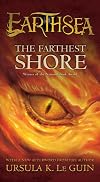
ok like, i know i kinda related to the presence of a caste of eunuchs in the previous book in ways that probably weren’t intentional on the author’s part and i don’t want to make this a pattern or anything but like… arren.
arren.
you know that genre of youtube videos that are just titled like “[character] being relatable for [x] minutes”? well, this babygirlified subby mess of a boy (who is destined to become king of all the isles i guess???) is variously described as “a gentle show more messenger for bad news” & “that girlish lad of yours”??? the latter comes when a bunch of patrons in a tavern ask ged if arren can sing, and after arren obliges they remark, “that’s a queer music.” and like, YEAH my dudes??? you asked a fucking subby femboy to sing??? if the music weren’t queer i would worry that something was wrong??? (yes, they’re not using “queer” in that context, but shut up, let me have this.)
anyway, this “girlish lad” meets his hero and IMMEDIATELY tries to become his sub ("as he had made his act of submission he forgot himself") and when fleeing the scene of that embarrassment turns into a boy disaster lesbian (“forgetting courtly farewells he hurried to the doorway, awkward, radiant, obedient.”) he later gets captured by slavers & chained up on a ship, there’s a curious comment about his soul not rebelling against the notion of slavery??? but anyway, ged rescues him which is pretty badass, and he later dreams about still being held captive. we’re meant to understand through context clues that these dreams are scary & unpleasant, but he never EXPLICITLY SAYS they are?
again, please don’t take this too seriously, i’m taking a character who was definitely intentionally written in some ways that appeal to me and reading WAY TOO MUCH INTO other things that were clearly NOT intended, but yeah i’m having a lot of fun with this and i love this character now, thank you for your time i will not be taking any questions.
so yeah, that was a big part of my enjoyment of the book, no lie, but like let’s just pivot i guess to the actual main action of the book and say that holy shit, this is one of the most original fantasy novels i’ve ever read??? we begin with arren bringing ged & the masters of roke the terrifying news that the power of magic has begun to fade from the outlying lands of earthsea. it turns out that they’ve been getting similar reports from other outlying lands, and arren’s report is sort of the straw that breaks the camel’s back, because whatever is happening is spreading. the archmage decides that he’s going to investigate this himself, and the only companion he’ll bring with him on this dangerous quest is arren himself.
they have some adventures while they’re investigating this that i already relayed some of, but the deeper they probe into what’s going on the scarier it gets? they find lands where not just magic, but all arts have begun to fade, as people grow obsessed with the promise of immortality promised to them by what we increasingly realize is a sorcerer who rivals archmage ged’s power. and like, it starts to sound like we’re basically dealing with a situation where ged is the most powerful servant of life & this other guy is the most powerful servant of death, and in a way that is kind of exactly what’s happening? but that makes it sound really simple & boring, which, nah! like, there’s just so much interesting characterization & worldbuilding around this, like, this is ursula k. motherfucking le guin we’re talking about, y’all! i don’t know that she really knows how to do “simple & boring.”
things escalate to the point where we find out that this evil power has even caused dragons to lose the power of speech??? arren & ged are tested in ways that are terrifyingly existential, and almost lose themselves several times, but it’s that thing where seeing these characters at their worst & most vulnerable actually helps emphasize how fucking strong they both are when they come out the other side of it still themselves?
this is exactly the same kind of “huge (in a good way), but also small (in a good way)” story le guin told in the a wizard of earthsea, and also tombs of atuan even though that one was harder for me to get into. the world faces existential threats that are mirrored in the personal threats the characters themselves grapple with, and the story is made so rich & meaningful because of this.
i’m looking forward to getting to the next book, because i know le guin is very frustrated with how male-dominated her first trilogy was, and the farthest shore is actually pretty easily the worst offender in this regard? but like, please please please don’t skip it as a result if you’re remotely interested in these books, because there’s so much good stuff in here. i’m just saying, i’m excited to get to the books where le guin feels like she rectified some of the issues she had with the original trilogy. show less
arren.
you know that genre of youtube videos that are just titled like “[character] being relatable for [x] minutes”? well, this babygirlified subby mess of a boy (who is destined to become king of all the isles i guess???) is variously described as “a gentle show more messenger for bad news” & “that girlish lad of yours”??? the latter comes when a bunch of patrons in a tavern ask ged if arren can sing, and after arren obliges they remark, “that’s a queer music.” and like, YEAH my dudes??? you asked a fucking subby femboy to sing??? if the music weren’t queer i would worry that something was wrong??? (yes, they’re not using “queer” in that context, but shut up, let me have this.)
anyway, this “girlish lad” meets his hero and IMMEDIATELY tries to become his sub ("as he had made his act of submission he forgot himself") and when fleeing the scene of that embarrassment turns into a boy disaster lesbian (“forgetting courtly farewells he hurried to the doorway, awkward, radiant, obedient.”) he later gets captured by slavers & chained up on a ship, there’s a curious comment about his soul not rebelling against the notion of slavery??? but anyway, ged rescues him which is pretty badass, and he later dreams about still being held captive. we’re meant to understand through context clues that these dreams are scary & unpleasant, but he never EXPLICITLY SAYS they are?
again, please don’t take this too seriously, i’m taking a character who was definitely intentionally written in some ways that appeal to me and reading WAY TOO MUCH INTO other things that were clearly NOT intended, but yeah i’m having a lot of fun with this and i love this character now, thank you for your time i will not be taking any questions.
so yeah, that was a big part of my enjoyment of the book, no lie, but like let’s just pivot i guess to the actual main action of the book and say that holy shit, this is one of the most original fantasy novels i’ve ever read??? we begin with arren bringing ged & the masters of roke the terrifying news that the power of magic has begun to fade from the outlying lands of earthsea. it turns out that they’ve been getting similar reports from other outlying lands, and arren’s report is sort of the straw that breaks the camel’s back, because whatever is happening is spreading. the archmage decides that he’s going to investigate this himself, and the only companion he’ll bring with him on this dangerous quest is arren himself.
they have some adventures while they’re investigating this that i already relayed some of, but the deeper they probe into what’s going on the scarier it gets? they find lands where not just magic, but all arts have begun to fade, as people grow obsessed with the promise of immortality promised to them by what we increasingly realize is a sorcerer who rivals archmage ged’s power. and like, it starts to sound like we’re basically dealing with a situation where ged is the most powerful servant of life & this other guy is the most powerful servant of death, and in a way that is kind of exactly what’s happening? but that makes it sound really simple & boring, which, nah! like, there’s just so much interesting characterization & worldbuilding around this, like, this is ursula k. motherfucking le guin we’re talking about, y’all! i don’t know that she really knows how to do “simple & boring.”
things escalate to the point where we find out that this evil power has even caused dragons to lose the power of speech??? arren & ged are tested in ways that are terrifyingly existential, and almost lose themselves several times, but it’s that thing where seeing these characters at their worst & most vulnerable actually helps emphasize how fucking strong they both are when they come out the other side of it still themselves?
this is exactly the same kind of “huge (in a good way), but also small (in a good way)” story le guin told in the a wizard of earthsea, and also tombs of atuan even though that one was harder for me to get into. the world faces existential threats that are mirrored in the personal threats the characters themselves grapple with, and the story is made so rich & meaningful because of this.
i’m looking forward to getting to the next book, because i know le guin is very frustrated with how male-dominated her first trilogy was, and the farthest shore is actually pretty easily the worst offender in this regard? but like, please please please don’t skip it as a result if you’re remotely interested in these books, because there’s so much good stuff in here. i’m just saying, i’m excited to get to the books where le guin feels like she rectified some of the issues she had with the original trilogy. show less
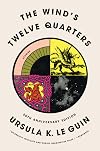
I can't think of an author whose stories generate such sharply contrasting reactions in me as Le Guin. Her stories either click solidly or leave me entirely cold. This volume collects 17 stories from her first (roughly) decade of work, originally published between 1962 and 1974, and it contains some of both.
Let's start with the high points. "Nine Lives" and "Vaster Than Empires and More Slow" are, as Le Guin notes in her introductions to the stories, as close as she comes to traditional SF show more adventure stories; each is the story of a small spaceship crew finding something unexpected on a distant planet. But even as she nears the traditional, Le Guin's angle of approach is distinctive; she's less interested in space battles and aliens than she is in psychology and the internal lives/conflicts of her characters.
And the story that is (of what I've read) by far my favorite of her work, "The Ones Who Walk Away from Omelas," is by some definitions barely even a story. There's no plot to speak of; you can't really summarize the piece without simply reiterating it in full. There's only one distinct character, and that character is more a symbol than a person. It's a piece about mood-setting and effect, more of a philosophical hypothetical than anything. In fact, in this volume, it carries the subtitle "Variations on a theme by William James," which I don't remember seeing when I've come across the story before. And yet, for all the "barely a story"-ness of it, it is an unforgettable piece of writing that shifts the way you see the world.
But when Le Guin doesn't click for me, which is most of the time, getting through her stories is like an uphill slog through molasses. There's a chilly intellectual detachment that puts me off, and let's face it, "chilly intellectual detachment" is pretty much my brand, so if it's too much for ME? (And yes, ChillIntDet is a large part of "Omelas;" if I could explain why it works so perfectly there and falls so flat everywhere else, they'd be paying me the big bucks to write literary criticism.)
She leans, I think, too heavily to the literary end of the spectrum to hold much interest for me. Is there a contradiction between that and my recent gushing over the literary innovations of Harlan Ellison? Perhaps, but I think the difference is that in Ellison, the style enhances and is subordinate to the stories, which are strong enough to stand up to the stylistic hyperactivity; in Le Guin, the stories are more fragile to begin with, and they disappear behind the wall of ice surrounding them.
Your mileage, of course, may vary, and Le Guin is a revered figure, one of the few SF authors to get her own volumes in the Library of America series. There are another 20-ish Le Guin stories waiting for me on my slow survey of award-nominated short SF, but I will take them one by one, as they pop up in various "year's best" volumes. Pushing my way through another volume of nothing but Le Guin stories would be more effort than I could take. show less
Let's start with the high points. "Nine Lives" and "Vaster Than Empires and More Slow" are, as Le Guin notes in her introductions to the stories, as close as she comes to traditional SF show more adventure stories; each is the story of a small spaceship crew finding something unexpected on a distant planet. But even as she nears the traditional, Le Guin's angle of approach is distinctive; she's less interested in space battles and aliens than she is in psychology and the internal lives/conflicts of her characters.
And the story that is (of what I've read) by far my favorite of her work, "The Ones Who Walk Away from Omelas," is by some definitions barely even a story. There's no plot to speak of; you can't really summarize the piece without simply reiterating it in full. There's only one distinct character, and that character is more a symbol than a person. It's a piece about mood-setting and effect, more of a philosophical hypothetical than anything. In fact, in this volume, it carries the subtitle "Variations on a theme by William James," which I don't remember seeing when I've come across the story before. And yet, for all the "barely a story"-ness of it, it is an unforgettable piece of writing that shifts the way you see the world.
But when Le Guin doesn't click for me, which is most of the time, getting through her stories is like an uphill slog through molasses. There's a chilly intellectual detachment that puts me off, and let's face it, "chilly intellectual detachment" is pretty much my brand, so if it's too much for ME? (And yes, ChillIntDet is a large part of "Omelas;" if I could explain why it works so perfectly there and falls so flat everywhere else, they'd be paying me the big bucks to write literary criticism.)
She leans, I think, too heavily to the literary end of the spectrum to hold much interest for me. Is there a contradiction between that and my recent gushing over the literary innovations of Harlan Ellison? Perhaps, but I think the difference is that in Ellison, the style enhances and is subordinate to the stories, which are strong enough to stand up to the stylistic hyperactivity; in Le Guin, the stories are more fragile to begin with, and they disappear behind the wall of ice surrounding them.
Your mileage, of course, may vary, and Le Guin is a revered figure, one of the few SF authors to get her own volumes in the Library of America series. There are another 20-ish Le Guin stories waiting for me on my slow survey of award-nominated short SF, but I will take them one by one, as they pop up in various "year's best" volumes. Pushing my way through another volume of nothing but Le Guin stories would be more effort than I could take. show less
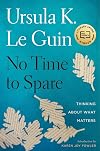
Ursula Le Guin is one of my heroes, in as much as I have them. Which is, to say, hardly at all, but her writing has often astounded me, literally impacting how I perceived the world. When I was a teen, [b:The Left Hand of Darkness|18423|The Left Hand of Darkness|Ursula K. Le Guin|https://images.gr-assets.com/books/1488213612s/18423.jpg|817527] did more to challenge my conception of gender identity than anything I would read or hear for years. However, her writing has also felt somewhat show more laborious to me, so when I saw this book of blog-style posts, I leapt at the chance to read it (figuratively, naturally. You think I leap at my age? What am I, a frog?) At any rate, I absolutely loved her in short-form, her words seemingly a little less crafted than her novels, sounding more like her voice, talking about everyday things--"The point of a soft-boiled egg is the difficulty of eating it, the attention it requires, the ceremony"--writerly things and general opinion pieces.
It's really, really good. The book comes with an introduction by Karen Joy Fowler and a note from Le Guin about her purpose and the informality of the writing. 'Part One: Going Over Eighty' is one of my favorite sections. 'Part Two: The Lit Biz' is in theory about literary stuff and contains some insight into the life of the writer --readers' questions and awards--as well as discussion on things like ubiquitousness of swearing, and narration. 'Part Three: Trying to Make Sense' of it is the most topical section. It was interesting, but not as favorite. 'Part Four: Rewards' shines, with writing beautiful enough, polished enough to remind me why she's a master. Parts One, Two and Three are all followed by 'The Annals of Pard,' brief pieces about her latest cat. I have a ridiculous amount of highlights, my Kindle equivalent of 'mm-hmm' affirmations.
The posts on aging are excellent and I probably could have just highlighted the entire piece of 'The Diminished Thing.' It does not sound as if aging has come easily, and I appreciate that she is both honest and old in claiming it. "Old age isn't a state of mind. It's an existential situation." How beautifully she negates the 'you are only as old as you think you are' mouthings!
I admire how she somewhat irascibly shares what she perceives as her failings. I love that she calls out the new generations of almost-memoirs with a writerly note on genres, and then gracefully turns it into a discussion of Delores, her 'hired help' who was so important to her ('Someone Named Delores'). I was fascinated by the entries on Pard, the latest cat, and his periodic skirmishes with mice. I think she summarized the entire problem with modern politics in three sentences (from 'The Diminished Thing' in Aging, no less):
"This is morally problematic when personal decision is confused with personal opinion. A decision worth the name is based on observation, factual information, intellectual and ethical judgment. Opinion--that darling of the press, the politician, and the poll--may be based on no information at all."
There's an interesting piece on what fantasy is that affirms why I've read so much in the field. My favorite highlight: "It doesn't have to be the way it is. That is what fantasy says... Yet it is a subversive statement." Can we please remind those who are nostalgic for the sprawling epic fantasies of the 80s and 90s or the pulp fantasy of the 50s and 60s that we can do more?
Part Three definitely spoke to me, with parts of it echoing my own hopelessness. From 'Lying it All Away:' "It appears that we've given up on the long-range view. That we've decided not to think about consequences--about cause and effect. Maybe that's why I feel that I live in exile. I used to live in a country that had a future."
It makes me wish for a coffee conversation, time to dive in and chew at these ideas. I wished I knew even more about her life, because I sense a kindred spirit, an introvert who communicates best through words, who appears transparent about ideas but extremely private about details of real life. The closing piece, is so crafted and beautiful it makes me tear. From 'Notes From a Week at a Ranch in the Oregon High Desert':
"Hundreds of blackbirds gathered in the pastures south of the house, vanishing completely in the tall grass, then rising out of it in ripples and billows, or streaming and streaming up into a single tree up under the ridge till its lower branches were blacker with birds than green with leaves, then flowing down away from it into the reeds and out across the air in a single, flickering, particulate wave. What is entity?"
Many, many thanks to NetGalley and Houghton Mifflin Harcourt for the advance reader copy. Quotes may change in final publication but are included to give a sense of the excellent writing. show less
It's really, really good. The book comes with an introduction by Karen Joy Fowler and a note from Le Guin about her purpose and the informality of the writing. 'Part One: Going Over Eighty' is one of my favorite sections. 'Part Two: The Lit Biz' is in theory about literary stuff and contains some insight into the life of the writer --readers' questions and awards--as well as discussion on things like ubiquitousness of swearing, and narration. 'Part Three: Trying to Make Sense' of it is the most topical section. It was interesting, but not as favorite. 'Part Four: Rewards' shines, with writing beautiful enough, polished enough to remind me why she's a master. Parts One, Two and Three are all followed by 'The Annals of Pard,' brief pieces about her latest cat. I have a ridiculous amount of highlights, my Kindle equivalent of 'mm-hmm' affirmations.
The posts on aging are excellent and I probably could have just highlighted the entire piece of 'The Diminished Thing.' It does not sound as if aging has come easily, and I appreciate that she is both honest and old in claiming it. "Old age isn't a state of mind. It's an existential situation." How beautifully she negates the 'you are only as old as you think you are' mouthings!
I admire how she somewhat irascibly shares what she perceives as her failings. I love that she calls out the new generations of almost-memoirs with a writerly note on genres, and then gracefully turns it into a discussion of Delores, her 'hired help' who was so important to her ('Someone Named Delores'). I was fascinated by the entries on Pard, the latest cat, and his periodic skirmishes with mice. I think she summarized the entire problem with modern politics in three sentences (from 'The Diminished Thing' in Aging, no less):
"This is morally problematic when personal decision is confused with personal opinion. A decision worth the name is based on observation, factual information, intellectual and ethical judgment. Opinion--that darling of the press, the politician, and the poll--may be based on no information at all."
There's an interesting piece on what fantasy is that affirms why I've read so much in the field. My favorite highlight: "It doesn't have to be the way it is. That is what fantasy says... Yet it is a subversive statement." Can we please remind those who are nostalgic for the sprawling epic fantasies of the 80s and 90s or the pulp fantasy of the 50s and 60s that we can do more?
Part Three definitely spoke to me, with parts of it echoing my own hopelessness. From 'Lying it All Away:' "It appears that we've given up on the long-range view. That we've decided not to think about consequences--about cause and effect. Maybe that's why I feel that I live in exile. I used to live in a country that had a future."
It makes me wish for a coffee conversation, time to dive in and chew at these ideas. I wished I knew even more about her life, because I sense a kindred spirit, an introvert who communicates best through words, who appears transparent about ideas but extremely private about details of real life. The closing piece, is so crafted and beautiful it makes me tear. From 'Notes From a Week at a Ranch in the Oregon High Desert':
"Hundreds of blackbirds gathered in the pastures south of the house, vanishing completely in the tall grass, then rising out of it in ripples and billows, or streaming and streaming up into a single tree up under the ridge till its lower branches were blacker with birds than green with leaves, then flowing down away from it into the reeds and out across the air in a single, flickering, particulate wave. What is entity?"
Many, many thanks to NetGalley and Houghton Mifflin Harcourt for the advance reader copy. Quotes may change in final publication but are included to give a sense of the excellent writing. show less
Lists
Magic schools (1)
First Novels (1)
ghibli (1)
To Read (1)
. (1)
Gaming Bookclub (1)
Finished in 2025 (1)
Europe (1)
Forest Books (1)
mom (1)
Ocean Setting (1)
Favorite Series (1)
Nineties (1)
Poly Sci Fi (1)
Review 3 (1)
Books for Tori (1)
Walls (1)
Teen Pregnancy (1)
Classic Sci-Fi (1)
PM Press (1)
Parallel Novels (1)
Women in War (1)
Summer 2025 (1)
Literary SF/F (1)
Read This Next (1)
Summer Reading (1)
Aeneas (1)
Into the Woods (1)
Gimmicks (1)
Writing (1)
SFFKit 2016 (1)
Dead narrators (1)
Ambleside Books (1)
Read in 2016 (1)
2025 (1)
To Read (1)
SF Masterworks (1)
War Literature (1)
Read in 2010 (1)
Read 2026 Ranked (1)
Read in 2008 (1)
KLW Read 2024 (1)
My TBR list (1)
Winter Books (1)
. (1)
Newbery Adjacent (3)
Overdue Podcast (4)
al.vick-series (4)
Read in 2003 (3)
Best Young Adult (3)
Short and Sweet (3)
Books Read in 2016 (10)
SF Masterworks (7)
Five star books (7)
1960s (7)
1970s (9)
Unread books (10)
Favourite Books (14)
Female Author (15)
Books Read in 2024 (16)
Books Read in 2018 (17)
Read These Too (5)
Best Dystopias (5)
Nebula Award (5)
Folio Society (2)
Lista d1 (2)
SF - To Read (2)
Utopia (2)
Summer Reading (1)
Wishlist (1)
Epic Fantasy (1)
Generation Ship (1)
Sonlight Books (1)
Sense of place (1)
AP Lit (1)
SFFCat 2015 (1)
1990s (2)
Cats in Fiction (2)
1980s (2)
um actually (2)
Science Fiction (2)
2000s decade (2)
A Novel Cure (2)
Best First Lines (2)
Carole's List (1)
Awards


Ursula K. Le Guin: The Hainish Novels and Stories [Library of America Boxed Set] (Winner – Collection – 2018)
The Wave in the Mind: Talks and Essays on the Writer, the Reader, and the Imagination (Winner – Non-Fiction – 2005)


You May Also Like


Associated Authors
Statistics
- Works
- 491
- Also by
- 388
- Members
- 166,884
- Popularity
- #36
- Rating
- 3.9
- Reviews
- 3,545
- ISBNs
- 2,143
- Languages
- 35
- Favorited
- 918


