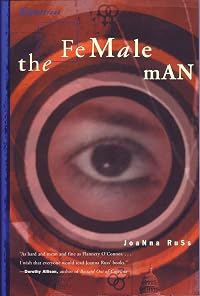
The Female Man
by Joanna Russ
On This Page
Description
Widely acknowledged as Joanna Russ's masterpiece, The Female Man is the suspenseful, surprising, darkly witty, and boldly subversive chronicle of what happens when Jeannine, Janet, Joanna, and Jael-all living in parallel worlds-meet. Librarian Jeannine is waiting for marriage in a past where the Depression never ended, Janet lives on a utopian Earth with an all-female population, Joanna is a feminist in the 1970s, and Jael is a warrior with claws and teeth on an Earth where male and female show more societies are at war with each other. When the four women begin traveling to one another's worlds, their preconceptions on gender and identity are forever challenged. With "palpable leavened by wit and humor" (The New York Times), Russ both employs and upends genre conventions to deliver a wickedly satiric and exhilarating version of when worlds collide and women get woke. show lessTags
Recommendations








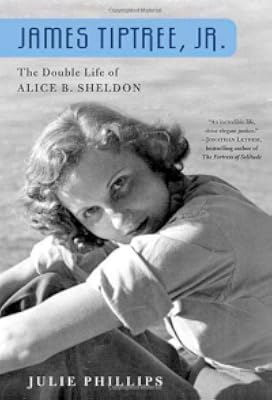


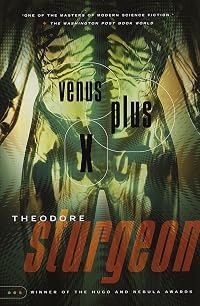
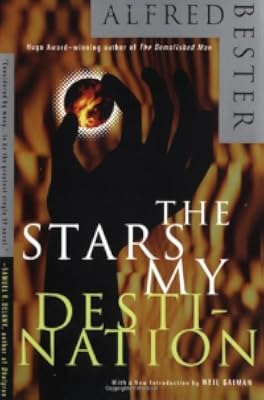
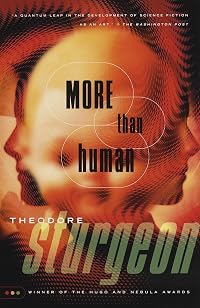



Member Recommendations
by anonymous user

Member Reviews
Four women from alternate universes come together in this work of feminist speculative fiction.
Although The Female Man is billed as a "classic of feminist science fiction," I hesitate to call it science fiction. It's barely even fiction. More accurately, it is a feminist stream-of-consciousness rant that employs speculative what-ifs to imagine worlds both better and worse than our own, specifically the positions of women in those worlds.
Russ herself is one of the four women, the "female man" who tries and fails to make herself into a man in order to succeed in what is presumably our world, at least our world of the 1970s, when this was published. Russ's anger is quite palpable throughout, although she tempers it somewhat with snarky show more humor. Several times, I found myself wondering whether we hadn't moved past all this male-female behavior that Russ is criticizing, but truthfully, you only have to read a few Internet comments to see it alive and kicking in the 21st century. In that sense, Russ's book is still needed and we are not yet free.
Those readers who come to The Female Man expecting a more straightforward narrative are bound to feel stymied by the lack of plot and the jumping around, without explanation, from one world to the next. Besides our own world, there is Jeannine's world, where the Great Depression has never ended and women are primarily preoccupied with catching husbands, and there is Janet's utopian world of Whileaway, where there are no men at all. I was feeling fairly adrift in all this until about three-quarters of the way through the book, when we meet Jael, a woman warrior in a world where men and women live separately and spend all their time literally at war with one another. This is probably the most cohesive section of the book, where Jael explains more or less what's going on and the plot, such as it is.
Forget it, this book is not concerned with plot. It's concerned with women, with what we endure and how things can possibly be different. Unfortunately, Russ does not seem able to imagine a world where men and women can live together with women not being subject to oppression. I hope she's wrong about that. show less
Although The Female Man is billed as a "classic of feminist science fiction," I hesitate to call it science fiction. It's barely even fiction. More accurately, it is a feminist stream-of-consciousness rant that employs speculative what-ifs to imagine worlds both better and worse than our own, specifically the positions of women in those worlds.
Russ herself is one of the four women, the "female man" who tries and fails to make herself into a man in order to succeed in what is presumably our world, at least our world of the 1970s, when this was published. Russ's anger is quite palpable throughout, although she tempers it somewhat with snarky show more humor. Several times, I found myself wondering whether we hadn't moved past all this male-female behavior that Russ is criticizing, but truthfully, you only have to read a few Internet comments to see it alive and kicking in the 21st century. In that sense, Russ's book is still needed and we are not yet free.
Those readers who come to The Female Man expecting a more straightforward narrative are bound to feel stymied by the lack of plot and the jumping around, without explanation, from one world to the next. Besides our own world, there is Jeannine's world, where the Great Depression has never ended and women are primarily preoccupied with catching husbands, and there is Janet's utopian world of Whileaway, where there are no men at all. I was feeling fairly adrift in all this until about three-quarters of the way through the book, when we meet Jael, a woman warrior in a world where men and women live separately and spend all their time literally at war with one another. This is probably the most cohesive section of the book, where Jael explains more or less what's going on and the plot, such as it is.
Forget it, this book is not concerned with plot. It's concerned with women, with what we endure and how things can possibly be different. Unfortunately, Russ does not seem able to imagine a world where men and women can live together with women not being subject to oppression. I hope she's wrong about that. show less
I read this ages ago, but someone reminded me that Jael's world has what are basically trans women living in the "male" space and the book treats them hideously. Like. They're presented as clearly women, and treated as women inside the male-only space, including being subject to abuse for being women, they're literally called "feminine", but they're not "real women". As soon as the main character women see a "half-changed", they get angry and hate them. The "changed and half-changed" are presented as horribly as possible. It's fucking vile. Like. Trans women were not totally unknown when Russ wrote this book. But she talks about them with a hatred that the men don't receive. Being a "half-man" is worse than being a "real man" to her, I show more guess.
The rest of the book has its moments and some deeply moving parts and it's incredibly personal but also often incredibly confusing because of the weird structure. It's very stereotypically second-wave feminist. Some of the ideas are good but I can't rate a book highly which has such a "Transexual Empire" vision of trans women. show less
The rest of the book has its moments and some deeply moving parts and it's incredibly personal but also often incredibly confusing because of the weird structure. It's very stereotypically second-wave feminist. Some of the ideas are good but I can't rate a book highly which has such a "Transexual Empire" vision of trans women. show less
If I read this before, it was 40 years ago, so this was bracing. It’s metafiction—the author encountering other versions of herself or women like herself in different timelines. It’s more like scream of consciousness than stream of consciousness, as Russ explores all the conflicting demands of white womanhood. The way it uses the language of race would not be repeated today (I like the idea of “period-typical anti-racism”), but very little it said about gender was hard to comprehend today, and—as the book’s last sentences indicate—that means we are still not free.
This was very much a breakthrough book when it was first published in 1975.
First, it was written by a woman writer, using her real (and recognizably female) name; second there's nary a rocket ship in sight; third, it deals with feminism at its 70s-era angriest; and fourth, it tosses most narrative traditions right out the window.
Obviously, it's not everyone's cup of tea. Some of it is dated. Some of it remains insightful and bitterly funny. And some of it attempts to shock with its frank sexuality -- and in these days of just-about-anything-goes, that may be where it shows its age the most.
The story, such as it is, wanders between three characters (and an occasional ephemeral, unnamed fourth) -- Jeannine, whose Earth never emerged from show more the Great Depression but which also never underwent WWII; Joanna, whose world is very much like our own; and Janet, whose world is not only vastly different than ours, but is also several millennia ahead of "our" timeline. There's a slight nod to the notion of diverging realities, in which each action splits off an entirely new future and which therefore allows the story to sneak in under the edges of the science fiction tent -- a tent which had been considerably enlarged in the preceding decade.
There is a vague plotline of sorts that emerges almost at the end of the novel, without which the entire book would be but a thin veneer over a feminist polemic pointing out how repressed, exploited, and psychologically abused women were at the hands of those beastly males.
At this remove, the novel verges on becoming an historical oddity -- angry and literate but flawed by its over-reliance on style over substance. show less
First, it was written by a woman writer, using her real (and recognizably female) name; second there's nary a rocket ship in sight; third, it deals with feminism at its 70s-era angriest; and fourth, it tosses most narrative traditions right out the window.
Obviously, it's not everyone's cup of tea. Some of it is dated. Some of it remains insightful and bitterly funny. And some of it attempts to shock with its frank sexuality -- and in these days of just-about-anything-goes, that may be where it shows its age the most.
The story, such as it is, wanders between three characters (and an occasional ephemeral, unnamed fourth) -- Jeannine, whose Earth never emerged from show more the Great Depression but which also never underwent WWII; Joanna, whose world is very much like our own; and Janet, whose world is not only vastly different than ours, but is also several millennia ahead of "our" timeline. There's a slight nod to the notion of diverging realities, in which each action splits off an entirely new future and which therefore allows the story to sneak in under the edges of the science fiction tent -- a tent which had been considerably enlarged in the preceding decade.
There is a vague plotline of sorts that emerges almost at the end of the novel, without which the entire book would be but a thin veneer over a feminist polemic pointing out how repressed, exploited, and psychologically abused women were at the hands of those beastly males.
At this remove, the novel verges on becoming an historical oddity -- angry and literate but flawed by its over-reliance on style over substance. show less
An intense, messy, piece of speculative fiction that goes some interesting places but, I think, seldom succeeds and seems, at this point, a bit of a product of its time. Split into four female voices, including at least two that inhabit alternate realities and and one set in contemporary New York City, "The Female Man," the book seems less polyphonic than schizophrenic, as characters slide in and out of their settings and the text switches from fiction to polemic and then back again. The author's voice dominates the entire text, sometimes because Russ can't seem to differentiate her characters' internal monologues and sometimes because she doesn't hesitate to comment on her own text or, in many places, criticize her characters for their show more attitudes. At times optimistic and gentle and astonishingly cruel and reductive at others, it seems a book that born out of serious emotional and political turmoil. It reminded me a bit of Frantz Fannon's "The Wretched of the Earth," which, for all of its insight into the colonial mindset, also presents a bunch of rather indefensible moral conclusions. Of course, a forgiving reader could point out that it was written right in the middle of the Algerian War for Independence. In that same spirit, "The Female Man" probably could have only been written in feminist circles in 1974. But so much of it doesn't work now, and I suspect that many parts of it never really did.
The sections set Whileaway, an all-female future utopia are perhaps the ones that are most worth rescuing, if only because they demonstrate, once again, how much our fantasies can tell us about ourselves. At once futuristic and decidedly agrarian, these sections describe a society that is fluid and protean, where physical and societal structures are constantly being unmade and remade. It presents a charmingly optimistic take on the coming computer revolution, and -- very productively, I think -- attempts to describe how social relationships and personal qualities such as strength, aggression and resilience, might evolve in a world where our gender binaries no longer apply. I found myself wondering how much these sections of the book owed to situationism, whose critiques of planning and permanent structures had such influence on Paris '68 protests and, later, on punk rock In another section of the book, a teenage lesbian who's still struggling to accept her own sexuality attempts to navigate family life in the seventies, which may be of at least historical interest to readers. The other sections, which depict a world in which men are pitted against women in a bloody, long-term conflict and a portrait of a woman with pre-feminist ideals in contemporary New York have aged rather less well, particularly the latter. While it's certainly possible that many of the attitudes and social constraints that Jeannine, the protagonist that calls this setting home, are depicted realistically enough, the author somehow manages to condescend to her even more than the various men in her life do. This section of the book feels less like a story than a particularly brutal consciousness-raising session and is a particularly joyless read. "The Female Man" may have been a wake-up call for writers looking to create more explicitly political science fiction, but, forty years on, the book seems overwhelmed by its own contradictions and knocked too far out of balance by the very force of the emotions it contains. It's more recommendable as a fascinating document than as a novel. Not an easy or satisfying read. show less
The sections set Whileaway, an all-female future utopia are perhaps the ones that are most worth rescuing, if only because they demonstrate, once again, how much our fantasies can tell us about ourselves. At once futuristic and decidedly agrarian, these sections describe a society that is fluid and protean, where physical and societal structures are constantly being unmade and remade. It presents a charmingly optimistic take on the coming computer revolution, and -- very productively, I think -- attempts to describe how social relationships and personal qualities such as strength, aggression and resilience, might evolve in a world where our gender binaries no longer apply. I found myself wondering how much these sections of the book owed to situationism, whose critiques of planning and permanent structures had such influence on Paris '68 protests and, later, on punk rock In another section of the book, a teenage lesbian who's still struggling to accept her own sexuality attempts to navigate family life in the seventies, which may be of at least historical interest to readers. The other sections, which depict a world in which men are pitted against women in a bloody, long-term conflict and a portrait of a woman with pre-feminist ideals in contemporary New York have aged rather less well, particularly the latter. While it's certainly possible that many of the attitudes and social constraints that Jeannine, the protagonist that calls this setting home, are depicted realistically enough, the author somehow manages to condescend to her even more than the various men in her life do. This section of the book feels less like a story than a particularly brutal consciousness-raising session and is a particularly joyless read. "The Female Man" may have been a wake-up call for writers looking to create more explicitly political science fiction, but, forty years on, the book seems overwhelmed by its own contradictions and knocked too far out of balance by the very force of the emotions it contains. It's more recommendable as a fascinating document than as a novel. Not an easy or satisfying read. show less
The Female Man is a novel about feminism, identity, and a time-travelling assassin with metal teeth. All of these parts are equally important.
It's a howl of rage against decades of sexism, of "women should be happy in their place", of "give me a kiss/you frigid bitch!" Janet comes from Whileaway, a world where men died out centuries ago, which has evolved into a classic women's utopia. Whileawayans are busy, happy, peaceful, ecologically sound and sexually liberated. At worst, they're prone to soliphism and sudden bouts of interpersonal violence limited by a duels. Janet is an emissary, sent to a world where World War 2 never happened and the Great Depression trundles on, where she falls in with Jeannine, a librarian who is unhappily show more engaged and looking for a man to put her life to rights. They then encounter Joanna, from our 1970s, an accomplished professor of English and modern women who never meets the receding standards of male acceptance, and fumes with impotent rage. And finally, there's Jael, from a world defined by the Battle of Sexes, where men and women live in separated countries and wage a deadly war and covert trade for necessities. She's the one with the metal teeth, a killer who specializing in subverting male societies across the multiverse.
The writing is a kaleidoscope of post-modern structure, shifting points-of-view and narration at will, moving from the sweep of history to outpourings of emotion and sudden philosophical knocks. It is not an approachable book. Russ has a lot of anger, and a dark outlook, seeing humanity as two crippled co-species, the inner wounds of men extroverted into violence of women who lack effective means of resistance. Still, this is a powerful classic. show less
It's a howl of rage against decades of sexism, of "women should be happy in their place", of "give me a kiss/you frigid bitch!" Janet comes from Whileaway, a world where men died out centuries ago, which has evolved into a classic women's utopia. Whileawayans are busy, happy, peaceful, ecologically sound and sexually liberated. At worst, they're prone to soliphism and sudden bouts of interpersonal violence limited by a duels. Janet is an emissary, sent to a world where World War 2 never happened and the Great Depression trundles on, where she falls in with Jeannine, a librarian who is unhappily show more engaged and looking for a man to put her life to rights. They then encounter Joanna, from our 1970s, an accomplished professor of English and modern women who never meets the receding standards of male acceptance, and fumes with impotent rage. And finally, there's Jael, from a world defined by the Battle of Sexes, where men and women live in separated countries and wage a deadly war and covert trade for necessities. She's the one with the metal teeth, a killer who specializing in subverting male societies across the multiverse.
The writing is a kaleidoscope of post-modern structure, shifting points-of-view and narration at will, moving from the sweep of history to outpourings of emotion and sudden philosophical knocks. It is not an approachable book. Russ has a lot of anger, and a dark outlook, seeing humanity as two crippled co-species, the inner wounds of men extroverted into violence of women who lack effective means of resistance. Still, this is a powerful classic. show less
"Woman is the gateway to another world; Woman is the earth-mother; Woman is the eternal siren; Woman is purity; Woman is carnality; Woman has intuition; Woman is the life-force; Woman is selfless love.
'I am the gateway to another world," (said I, looking in the mirror) 'I am the earth-mother; I am the eternal siren; I am purity,' (Jeez, new pimples) 'I am carnality; I have intuition; I am the life-force; I am selfless love.' (Somehow it sounds different in the first person, doesn't it?)"
It's an experience, it's worth reading, many of the ideas of second wave feminism present are still relevant today. Having said that, it's not enjoyable. Some might say that it's challenging, I would suggest it's obfuscating. On purpose, sure, but this show more type of surrealism and purposeful obtuseness annoys me more than anything else. Good ideas are made better by a clear narrative structure in my opinion, but maybe I'm just blind to its genius.
"Does it count if you love men's bodies but hate men's minds? Does it count if you still love yourself?" show less
'I am the gateway to another world," (said I, looking in the mirror) 'I am the earth-mother; I am the eternal siren; I am purity,' (Jeez, new pimples) 'I am carnality; I have intuition; I am the life-force; I am selfless love.' (Somehow it sounds different in the first person, doesn't it?)"
It's an experience, it's worth reading, many of the ideas of second wave feminism present are still relevant today. Having said that, it's not enjoyable. Some might say that it's challenging, I would suggest it's obfuscating. On purpose, sure, but this show more type of surrealism and purposeful obtuseness annoys me more than anything else. Good ideas are made better by a clear narrative structure in my opinion, but maybe I'm just blind to its genius.
"Does it count if you love men's bodies but hate men's minds? Does it count if you still love yourself?" show less
Members
- Recently Added By
Lists

The Guardian's 1000 Novels Everyone Must Read
1,005 works; 550 members

Best Dystopias
280 works; 277 members

Best Science Fiction Novels
816 works; 430 members

Best Feminist Science Fiction
188 works; 35 members

Favorite Science Fiction by Women Authors
737 works; 202 members
Survey of Classic Science Fiction
171 works; 48 members
Science fiction novels with a female protagonist
105 works; 30 members

Best Alternate History
111 works; 60 members

Best Feminist Literature
188 works; 26 members

Dystopian and Apocalyptic Literature
350 works; 74 members
A Syllabus and Book List for Novice Students of Science Fiction Literature
25 works; 11 members

S.F. Masterworks (Complete)
229 works; 15 members

Bookriot's 100 Must-Read Sci-Fi Fantasy Novels By Female Authors
100 works; 9 members

Speculative Fiction: Slipstream Literature
166 works; 16 members
Recommended Speculative Fiction by Women and People of Color
298 works; 45 members
Science Fiction
42 works; 7 members

Utopian Anarchist Novels
10 works; 6 members

New wave science fiction
23 works; 2 members
Unbound Worlds 100 Best SF Books
100 works; 8 members
Science Fiction: Top 10
10 works; 1 member

LibraryThingers' 1001 Books You Must Read Before You Die
442 works; 30 members

Short and Sweet
246 works; 24 members

Female Author
1,234 works; 67 members
LGBTQ+ Speculative Fiction
821 works; 51 members
Favorite Science Fiction
456 works; 218 members

AbeBooks: 50 essential science fiction books
50 works; 6 members

GraceCollection TBR/To Buy List
106 works; 1 member

Five star books
1,767 works; 110 members

Best Lesbian Fiction (And Narrative Non-Fiction)
155 works; 36 members

Books Read in 2014
2,343 works; 89 members

Angry Women Reading List
17 works; 2 members
Female Protagonist
1,056 works; 57 members

SF Masterworks
193 works; 8 members

Experimental Literature
141 works; 18 members
Literature About Women and Girls
394 works; 39 members
David Pringle's Science Fiction: The 100 Best Novels
101 works; 9 members
Read These Too
458 works; 9 members

Stream of Consciousness
87 works; 8 members

1970s
657 works; 23 members
An evolving science fiction novel canon
50 works; 2 members
Talk Discussions
Past Discussions
***The Female Man group read--spoiler thread in 75 Books Challenge for 2011 (May 2011)
Author Information

94+ Works 7,658 Members
Joanna Russ was born in New York City on February 22, 1937. She received a degree in English from Cornell University in 1957 and a MFA in playwriting from the Yale Drama School in 1960. She taught at various colleges and universities during her lifetime including a long stint at the University of Washington in Seattle. She was a critic and science show more fiction writer best known for books of criticism such as The Female Man (1975) and How to Suppress Women's Writing (1984) as well as the novel And Chaos Died (1970). She died on April 29, 2011 at the age of 74. (Bowker Author Biography) show less
Some Editions
Awards and Honors
Awards
Notable Lists
Series
Belongs to Publisher Series
Work Relationships
Common Knowledge
- Canonical title
- The Female Man
- Original title
- The Female Man
- Alternate titles*
- Eine Weile entfernt; Der weibliche Mann
- Original publication date
- 1975-02
- People/Characters
- Janet Evason; Jeannine Dadier; Joanna; Jael
- Important places
- Whileaway
- Dedication
- This book is dedicated to Anne, to Mary and to the other one and three-quarters billions of us.
- First words
- I was born on a farm on Whileaway.
- Quotations
- “I didn’t and don’t want to be a ‘feminine’ version or a diluted version or a special version or a subsidiary version or an ancillary version, or an adapted version of the heroes I admire. I want to be the heroes th... (show all)emselves.”
As my mother once said: the boys throw stones at the frogs in jest.
But the frogs die in earnest. - Last words
- (Click to show. Warning: May contain spoilers.)For on that day, we will be free.
- Blurbers
- Dorothy Allison; Piercy, Marge; Elizabeth Lynn; Douglas Barbour; Leiber, Fritz; Chesler, Phyllis
- Original language
- English
- Canonical DDC/MDS
- 813.54
- Canonical LCC
- PS3568.U763
*Some information comes from Common Knowledge in other languages. Click "Edit" for more information.
Classifications
Statistics
- Members
- 2,512
- Popularity
- 7,664
- Reviews
- 64
- Rating
- (3.48)
- Languages
- 10 — Catalan, Danish, Dutch, English, Finnish, French, German, Italian, Spanish, Swedish
- Media
- Paper, Ebook
- ISBNs
- 27
- UPCs
- 1
- ASINs
- 23