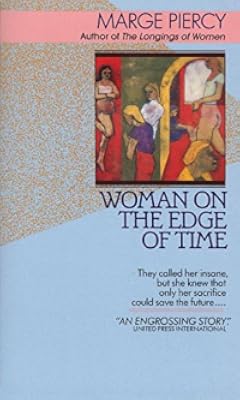
Woman on the Edge of Time
by Marge Piercy
On This Page
Description
Often compared to Margaret Atwood's The Handmaid's Tale and Naomi Alderman's The Power - Woman on the Edge of Time has been hailed as a classic of speculative science fiction. Disturbing and forward thinking, Marge Piercy's remarkable novel will speak to a new generation of readers. Connie Ramos has been unjustly incarcerated in a mental institution with no hope of release. The authorities view her as a danger to herself and to others. Her family has given up on her. But Connie has a secret show more - a way to escape the confines of her cell. She can see the fans of THE HANDMAID'S TALE, this is a reissue of a much loved feminist classic. show lessTags
Recommendations












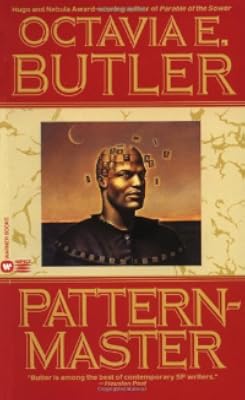


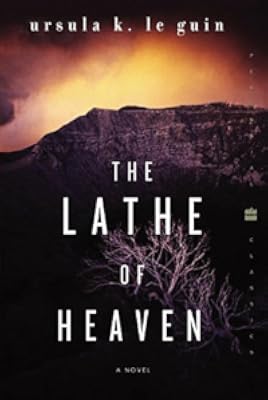

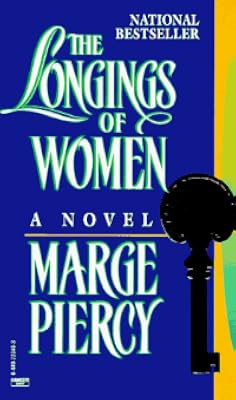
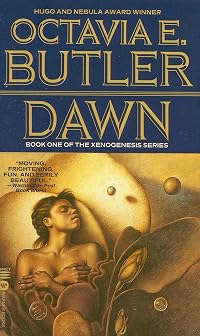








Member Recommendations

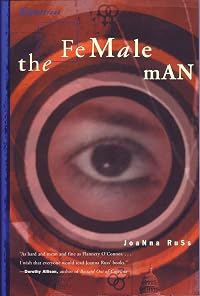
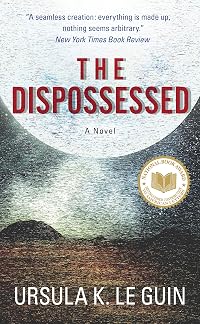
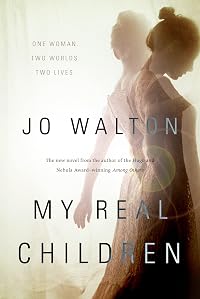
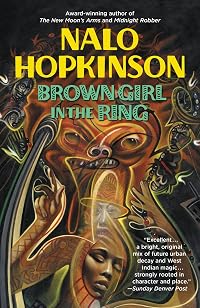
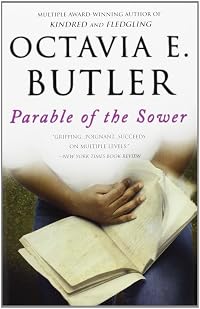
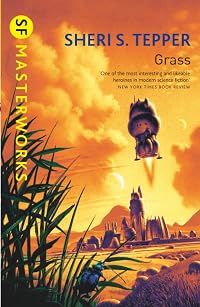
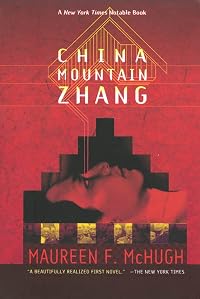
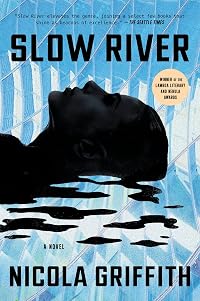
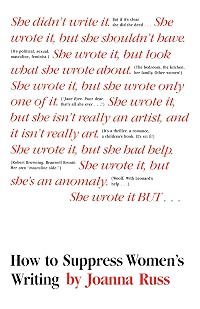
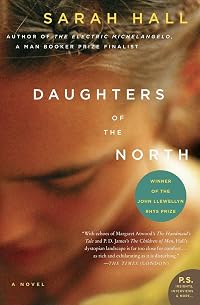
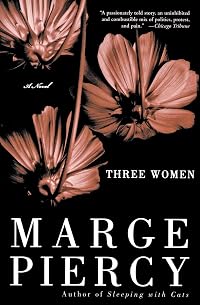
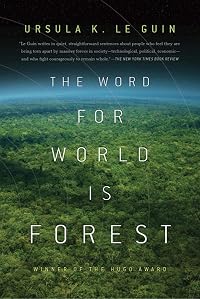
souloftherose Both novels use time travel to explore issues of race and inequality

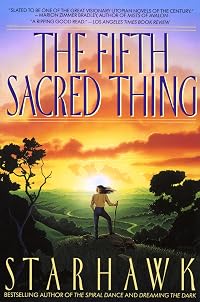
sturlington The feminist utopias seem similar.
Member Reviews
SPOILERS: Oh my days, what a fantastic read. But so sad, and so sad that it could have been written today but was actually published before I was born. Not only have we not learned anything, we're hurtling toward the bad future. Reading this felt at times like being given proper meaningful answers to the question But How Should We Live? I wish I'd read it twenty years ago, but then I probably wouldn't have understood either the question or the answer! This is a wonderfully crafted, terribly prescient novel about trauma, recovery, survival, the many possible futures, all topped off with a {SPOILER} clever twist But Was It Really A Mental Health Episode that made me sad and awestruck at the layers of cleverness going on here. Standing show more ovation from me. show less
After smashing her niece's pimp in the face with a bottle, Connie Ramos is declared violently insane. Trapped in the terrible tedium of the asylum ward, Connie, as a receiver, is able to escapes via her connection with Luciente to the year 2137. She sees first hand a utopian society, in which division of gender and race is nonexistent and people live in peace and connection with the earth and its animals. Meanwhile, in her own time, the doctors have signed her up for a dangerous experiment that could sever her from herself forever.
Connie is clearly sane, much more so than the many people on the outside, from the doctors (who see themselves as heroic gods) to her niece (who lets herself be beaten, abused and used over and over again) to show more her brother (who wishes to control everyone and everything around him). However, it's never really clear whether this utopia she visits is a real place or not. Piercy presents the time traveling in such a straightforward manner and the future in such rich detail, that one at first takes it for granted that its real, just as Connie does.
Real or not real doesn't really matter, however, for this vision of the future presents Connie with a different way of seeing not only the world around her, but also herself full of struggles and suffering. It also gives her the strength to fight back. show less
Connie is clearly sane, much more so than the many people on the outside, from the doctors (who see themselves as heroic gods) to her niece (who lets herself be beaten, abused and used over and over again) to show more her brother (who wishes to control everyone and everything around him). However, it's never really clear whether this utopia she visits is a real place or not. Piercy presents the time traveling in such a straightforward manner and the future in such rich detail, that one at first takes it for granted that its real, just as Connie does.
Real or not real doesn't really matter, however, for this vision of the future presents Connie with a different way of seeing not only the world around her, but also herself full of struggles and suffering. It also gives her the strength to fight back. show less
Unusually, I read this book is a large number of short bursts, rather than two or three extended sessions. In part this was because over the past week I've discovered two new TV shows, one of which has eight series, and binge-watched them. The other reason is that 'Woman on the Edge of Time' is painful and intense to read. I never considered giving up on it, I hasten to add, as it is richly rewarding. The painful nature of the novel stems from the contrast between the life of protagonist Connie and the utopian future she glimpses by communicating psychically with another woman named Luciente. Connie's background of poverty, tragedy, and subsequent appalling treatment in a mental hospital is deeply upsetting to read. Piercy is show more unflinching in her portrayal of the discrimination, neglect, racism, sexism, and cruelty that Connie experiences. Despite this, Connie is an interesting, vibrant character with agency and depth, not merely a tragic victim.
Luciente and the utopian future are evoked with equal elegance. Indeed, this novel contains the best thought-out utopia I've come across since le Guin's 'The Dispossessed'. It provoked a recent conversation with a friend about utopian sci-fi - which seems to be rarely written since the fall of the Iron Curtain and the whole 'End of History' cultural turn. All of the recent utopias my friend and I could think of assume the end of scarcity; essentially that technology will save humanity from needing to re-shape our social structures to deal with climate change, inequality, and discrimination. I think this demonstrates the power of the thesis that (not really) representative democracy and (not really) free market capitalism are not only the best thing humanity can come up with, but the only configuration of government and resource management that we can imagine. (If I've missed a recent political utopia, please let me know, as I'd love to read it!)
Piercy's vision of the future is impressively credible on a number of levels. It doesn't ignore interpersonal conflict, assume unlimited resources, or disregard history. I was particularly pleased with the ways in which misogyny had been uprooted. In this future, there are no gendered pronouns, everyone is 'per' or 'person'. There are no natural births, so that any gender can choose to become a mother. The institution of marriage doesn't exist. Gender presentation and sexuality aren't subject to discrimination or stereotyping. It's a very appealing vision, really. I'd like to live there, with the caveat that I object to their continued use of the death penalty.
I also appreciated the brief foray into another option for the future, this one a grim, polluted, and corporate-controlled dystopia. As with the utopia, this seems to have aged quite well; 'Woman on the Edge of Time' was first published in 1976. Depressingly, since then the communications and bio-technology that could enable certain aspects of the utopian future have emerged, but the economic and cultural trends have brought us much closer to the dystopia.
In order to avoid spoilers, I won't say much about the ending. Suffice to say, I liked the ambiguity and lack of neat resolution. And as with the rest of the book, I found it moving. 'Woman on the Edge of Time' is not a cheerful novel. In fact, the vision of utopia made me feel very sad, sadder than any grim dystopia would. When reading about a post-apocalyptic wasteland, I can shiver and appreciate running water and jaffa cakes. Whereas this utopia presents such a beautiful way to live, free from the conspicuous consumption, inequality, and environmental degradation of the 21st century, that it makes me feel wistful. I highly recommend it, though, as a genuine, intelligent utopia. They're a lot harder to write than dystopias, but in my opinion equally powerful and even more important. show less
Luciente and the utopian future are evoked with equal elegance. Indeed, this novel contains the best thought-out utopia I've come across since le Guin's 'The Dispossessed'. It provoked a recent conversation with a friend about utopian sci-fi - which seems to be rarely written since the fall of the Iron Curtain and the whole 'End of History' cultural turn. All of the recent utopias my friend and I could think of assume the end of scarcity; essentially that technology will save humanity from needing to re-shape our social structures to deal with climate change, inequality, and discrimination. I think this demonstrates the power of the thesis that (not really) representative democracy and (not really) free market capitalism are not only the best thing humanity can come up with, but the only configuration of government and resource management that we can imagine. (If I've missed a recent political utopia, please let me know, as I'd love to read it!)
Piercy's vision of the future is impressively credible on a number of levels. It doesn't ignore interpersonal conflict, assume unlimited resources, or disregard history. I was particularly pleased with the ways in which misogyny had been uprooted. In this future, there are no gendered pronouns, everyone is 'per' or 'person'. There are no natural births, so that any gender can choose to become a mother. The institution of marriage doesn't exist. Gender presentation and sexuality aren't subject to discrimination or stereotyping. It's a very appealing vision, really. I'd like to live there, with the caveat that I object to their continued use of the death penalty.
I also appreciated the brief foray into another option for the future, this one a grim, polluted, and corporate-controlled dystopia. As with the utopia, this seems to have aged quite well; 'Woman on the Edge of Time' was first published in 1976. Depressingly, since then the communications and bio-technology that could enable certain aspects of the utopian future have emerged, but the economic and cultural trends have brought us much closer to the dystopia.
In order to avoid spoilers, I won't say much about the ending. Suffice to say, I liked the ambiguity and lack of neat resolution. And as with the rest of the book, I found it moving. 'Woman on the Edge of Time' is not a cheerful novel. In fact, the vision of utopia made me feel very sad, sadder than any grim dystopia would. When reading about a post-apocalyptic wasteland, I can shiver and appreciate running water and jaffa cakes. Whereas this utopia presents such a beautiful way to live, free from the conspicuous consumption, inequality, and environmental degradation of the 21st century, that it makes me feel wistful. I highly recommend it, though, as a genuine, intelligent utopia. They're a lot harder to write than dystopias, but in my opinion equally powerful and even more important. show less
Challenging in places, but an interesting read. The central character lives in a world very unfamiliar to me, among the Hispanic American poor, bogged down in violence, addiction, and prostitution, and then trapped in a labyrinth of medical psychiatry which treats people only as examples of confidently misdiagnosed and brutally mistreated mental conditions.
Other reviewers have described this as "dated", but what struck me was the remarkable way in which the themes of feminism, sexual diversity, and gender fluidity chime with the concerns of the present day. I had to look back in the book to check that it was actually written 40 years ago. The sections in which we travel to the (possible) future(s) are a kind of updated version of H. G. show more Wells's "The Time Machine", with the beautiful and childlike Eloi represented by Luciente's contentedly anarchic and artistic people, and the bestial Morlocks by a world where a woman can be confined to a room for the amusement of others and entertained entirely by a screen, attended by a cyborg/android that can read human emotional states. As with many utopias/dystopias, they represent aspects of today's world extrapolated into caricature. I loved being in Luciente's world, where the constraints of sex, gender, and sexuality are outgrown, but the inevitable conflict of personalities is dealt with in an adult way, accepting the imperfections of human reality.
MB 24-iv-2019 show less
Other reviewers have described this as "dated", but what struck me was the remarkable way in which the themes of feminism, sexual diversity, and gender fluidity chime with the concerns of the present day. I had to look back in the book to check that it was actually written 40 years ago. The sections in which we travel to the (possible) future(s) are a kind of updated version of H. G. show more Wells's "The Time Machine", with the beautiful and childlike Eloi represented by Luciente's contentedly anarchic and artistic people, and the bestial Morlocks by a world where a woman can be confined to a room for the amusement of others and entertained entirely by a screen, attended by a cyborg/android that can read human emotional states. As with many utopias/dystopias, they represent aspects of today's world extrapolated into caricature. I loved being in Luciente's world, where the constraints of sex, gender, and sexuality are outgrown, but the inevitable conflict of personalities is dealt with in an adult way, accepting the imperfections of human reality.
MB 24-iv-2019 show less
Connie's ultimate crime is that she is poor and powerless, a woman and a member of an ethnic minority. People with a great deal or very little power sometimes use her as an example, sometimes harm her for their own enjoyment or to gain some little benefit for themselves but most of all she is ignored. Her capabilities are undervalued at all times and encouraged seldom. Her desires, her understanding of reality are completely irrelevant to almost everyone. There are some people who love and respect her, they mostly are people of color and always are people without power. Is she mentally ill? Does she hallucinate a world in which individuals and the earth are valued while wholesome people war with the ultimate capitalist culture, or does show more she really visit other times and other places through the strength of her mind?
This book is as relevant as when it was written in the 1970's because the same fights remain, the rich and powerful do whatever they want, the poor and undereducated are made to stay in their place and be grateful for what they have. Three cheers for Connie. show less
This book is as relevant as when it was written in the 1970's because the same fights remain, the rich and powerful do whatever they want, the poor and undereducated are made to stay in their place and be grateful for what they have. Three cheers for Connie. show less
After bashing her niece's pimp with a bottle, Connie Ramos is committed to a mental hospital, where she begins telepathically time traveling to a utopian future.
Published in 1976, Woman on the Edge of Time reminded me quite a lot of two other feminist speculative fiction classics of roughly the same period: The Female Man by Joanna Russ and Always Coming Home by Ursula K. Le Guin. All three present idealized anarchist utopias, as well as brief depictions of a dystopian counterpart. These utopian communities are presented as environmentally conscious and sustainable, having achieved equality among the sexes and races (albeit in different ways), where the people live communally and in harmony with nature. (Of the three, I liked Le Guin's show more the best, but it is the most recently published and the most fully baked, I think.) These are not novels so much as vehicles for ideas about how people could possibly be, and after reading so many of these--including a few minor versions not mentioned--I feel I've exhausted this narrow sub-genre. The ideas are attractive, but having moved well past the Age of Aquarius, they seem much more unworkable, relying on an idealized vision of human nature.
Of more interest in Piercy's novel is the present-day life of Connie Ramos, who is poor, Hispanic, undereducated, mentally ill and pretty much a victim of all our social institutions. Connie's plight, having been committed and then subjected to heinous experiments against her will, almost make us cheer her drastic actions after she accepts that she is at war. She is at war against our systems themselves, and the deck is well stacked against her. It's never very clear if Connie is literally time-traveling or if she is hallucinating as an escape. Given the epilogue with her medical history, I'm inclined to believe the latter, but I don't know if that is what Piercy intended as the author. There is a lot here to chew on, but I'm not sure Piercy has assembled it into a cohesive story. She seems to be trying to say so much that nothing comes through as powerfully as she might have intended. If she had focused on Connie in the present, and scaled back all the future scenes, using them more as an indicator of Connie's troubled psyche, this probably would have been a much more effective novel. show less
Published in 1976, Woman on the Edge of Time reminded me quite a lot of two other feminist speculative fiction classics of roughly the same period: The Female Man by Joanna Russ and Always Coming Home by Ursula K. Le Guin. All three present idealized anarchist utopias, as well as brief depictions of a dystopian counterpart. These utopian communities are presented as environmentally conscious and sustainable, having achieved equality among the sexes and races (albeit in different ways), where the people live communally and in harmony with nature. (Of the three, I liked Le Guin's show more the best, but it is the most recently published and the most fully baked, I think.) These are not novels so much as vehicles for ideas about how people could possibly be, and after reading so many of these--including a few minor versions not mentioned--I feel I've exhausted this narrow sub-genre. The ideas are attractive, but having moved well past the Age of Aquarius, they seem much more unworkable, relying on an idealized vision of human nature.
Of more interest in Piercy's novel is the present-day life of Connie Ramos, who is poor, Hispanic, undereducated, mentally ill and pretty much a victim of all our social institutions. Connie's plight, having been committed and then subjected to heinous experiments against her will, almost make us cheer her drastic actions after she accepts that she is at war. She is at war against our systems themselves, and the deck is well stacked against her. It's never very clear if Connie is literally time-traveling or if she is hallucinating as an escape. Given the epilogue with her medical history, I'm inclined to believe the latter, but I don't know if that is what Piercy intended as the author. There is a lot here to chew on, but I'm not sure Piercy has assembled it into a cohesive story. She seems to be trying to say so much that nothing comes through as powerfully as she might have intended. If she had focused on Connie in the present, and scaled back all the future scenes, using them more as an indicator of Connie's troubled psyche, this probably would have been a much more effective novel. show less
That Le Guin’s The Dispossessed is my favorite book did Woman on the Edge of Time no favors. After it was clear this book would not be anywhere close to the same level, I did my best to set aside direct comparisons—that didn’t really end up happening, but I do believe, even outside direct comparison to Le Guin, this book falls short in many respects.
My biggest critique is the lack of ethical complexity. I’m not of the belief that writing & thinking about utopia is imagining an actually perfect society. And I say that as a proponent of utopian socialism. Utopianism, to me, politically, is the commitment to imagining & building better futures. It seems that Piercy was trying to sell us her utopia, and in doing so, sacrificed show more word-building and deprived her story of moral complexity. Where her construction of utopia succeeds is in its imagination and in its exploration of alternate possibilities for systems, institutions, and customs that are today so ingrained that they go unquestioned & unchallenged.
I also found the writing lackluster. That, in combination with two other elements—instances of clunky plot progression and constant telling-not showing (especially when it’s clear Piercy is trying to make a political point)—led to several eye roll moments. I largely enjoyed reading this book, though, so it’s not like it was unbearable or anything.
Though this book is 5 decades old, it’s hard not to cringe at the treatment of race and ethnicity. Race/ethnicity is hypervisible—except for whiteness, that is. And there’s a thread of flattening. The main character, Connie, is Chicana, and there’re aspects of weird stereotyping in her backstory & depiction. There’s also the matter of how Black characters are frequently described—with disproportionate focus on their physical appearance, often exoticizing and sexualizing.
In the utopian future, the book depicts a rather… novel implementation of colorblindness. Phenotypical race is decoupled from “culture” such that the village we are shown in the future calls themselves “Wamponaug” (alternate spelling of Wampanoag? indigenous american tribe of the northeast), and say “Wamponaug Indians are the source of our [the village’s] culture,” though their village (like the rest of their broader society) is racially diverse. Another entire village calls themselves Black. I think there is potential in this idea, but Piercy has not done much with it, and her track record on race & ethnicity throughout the book betrays her lack of personal experience & shallow knowledge of white supremacy (which remains completely unaddressed).
All in all, it was still worth a read. I enjoyed the imagination of Piercy’s utopia, and I found it intellectually stimulating to critique the book’s political perspective & positioning. Purely on the quality of the book, though, it’s closer to 2 stars. If you want a well-written, well-crafted utopian novel with moral complexity, read The Dispossessed instead (not much in the way of contending with white supremacy, however). show less
My biggest critique is the lack of ethical complexity. I’m not of the belief that writing & thinking about utopia is imagining an actually perfect society. And I say that as a proponent of utopian socialism. Utopianism, to me, politically, is the commitment to imagining & building better futures. It seems that Piercy was trying to sell us her utopia, and in doing so, sacrificed show more word-building and deprived her story of moral complexity. Where her construction of utopia succeeds is in its imagination and in its exploration of alternate possibilities for systems, institutions, and customs that are today so ingrained that they go unquestioned & unchallenged.
I also found the writing lackluster. That, in combination with two other elements—instances of clunky plot progression and constant telling-not showing (especially when it’s clear Piercy is trying to make a political point)—led to several eye roll moments. I largely enjoyed reading this book, though, so it’s not like it was unbearable or anything.
Though this book is 5 decades old, it’s hard not to cringe at the treatment of race and ethnicity. Race/ethnicity is hypervisible—except for whiteness, that is. And there’s a thread of flattening. The main character, Connie, is Chicana, and there’re aspects of weird stereotyping in her backstory & depiction. There’s also the matter of how Black characters are frequently described—with disproportionate focus on their physical appearance, often exoticizing and sexualizing.
In the utopian future, the book depicts a rather… novel implementation of colorblindness. Phenotypical race is decoupled from “culture” such that the village we are shown in the future calls themselves “Wamponaug” (alternate spelling of Wampanoag? indigenous american tribe of the northeast), and say “Wamponaug Indians are the source of our [the village’s] culture,” though their village (like the rest of their broader society) is racially diverse. Another entire village calls themselves Black. I think there is potential in this idea, but Piercy has not done much with it, and her track record on race & ethnicity throughout the book betrays her lack of personal experience & shallow knowledge of white supremacy (which remains completely unaddressed).
All in all, it was still worth a read. I enjoyed the imagination of Piercy’s utopia, and I found it intellectually stimulating to critique the book’s political perspective & positioning. Purely on the quality of the book, though, it’s closer to 2 stars. If you want a well-written, well-crafted utopian novel with moral complexity, read The Dispossessed instead (not much in the way of contending with white supremacy, however). show less
Members
- Recently Added By
Published Reviews
ThingScore 75
It is the most serious and fully imagined Utopia since Ursula K. LeGuin's The Dispossessed, and even the cynical reader will leave it refreshed and rallied--as Piercy intended.
added by sturlington
Lists

Favorite Science Fiction by Women Authors
737 works; 202 members

Best Feminist Science Fiction
188 works; 35 members

Best Dystopias
280 works; 277 members

Best Science Fiction Novels
816 works; 426 members

Best Time Travel Novels
165 works; 125 members
Science fiction novels with a female protagonist
105 works; 30 members

Dystopian and Apocalyptic Literature
350 works; 74 members

Best Feminist Literature
188 works; 26 members

Diversity in Fantasy and Science Fiction
219 works; 32 members

Bookriot's 100 Must-Read Sci-Fi Fantasy Novels By Female Authors
100 works; 9 members

Utopian Anarchist Novels
10 works; 6 members

Exploration of alternative economical systems
40 works; 3 members
Recommended Speculative Fiction by Women and People of Color
298 works; 45 members
Unbound Worlds 100 Best SF Books
100 works; 8 members

SFFCat 2015
35 works; 1 member

Speculative Fiction: The Classics
36 works; 5 members

The Guardian's best novels in English: Readers' alternative list
15 works; 2 members

Patriarchy and white supremacy de-programming
69 works; 1 member

Books That Changed Our Perspective
423 works; 168 members
Books We Love to Reread
695 works; 298 members

Top Five Books of 2023
767 works; 317 members

Five star books
1,767 works; 110 members

The Five Books That Represent Us
391 works; 149 members

Books With Time Words in the Title
160 works; 4 members
Book Worlds We'd Like To Visit
322 works; 158 members

1970s
657 works; 23 members
David Pringle's Science Fiction: The 100 Best Novels
101 works; 9 members

Undiscovered Classics to Read
70 works; 15 members

Swinging Seventies
255 works; 18 members

Allie's Wishlist
217 works; 2 members

Favourite Books
1,820 works; 316 members

Female Protagonist
1,056 works; 57 members

Will She Be a Feminist?
8 works; 1 member

BingoDOG - Scientists in Fiction
111 works; 17 members

BingoDOG 2015 Challenge
49 works; 3 members

Books Read in 2015
3,299 works; 129 members
Mental health fiction
55 works; 18 members
500 Great Books by Women
507 works; 60 members
Favorite Science Fiction
456 works; 219 members

Speculative Fiction: Slipstream Literature
166 works; 16 members
Talk Discussions
Past Discussions
***Woman on the Edge of Time Group Read--spoiler thread in 75 Books Challenge for 2011 (June 2011)
Author Information

66+ Works 12,071 Members
Poet and novelist Marge Piercy was born in Detroit, Michigan on March 31, 1936. She received a B. A. from the University of Michigan and an M. A. from Northwestern. She is involved in the Jewish renewal and political work and was part of the civil rights movement. She won the Arthur C. Clarke award. Besides writing her own novels and collections show more of poetry, she has collaborated with her husband Ira Wood on a play, The Last White Class, and a novel, Storm Tide. In 1997, they founded a small literary publishing company called the Leapfrog Press. She currently lives in Cape Cod. (Bowker Author Biography) Marge Piercy is the author of 14 previous poetry collections and 14 novels. In 1990 her poetry won the Golden Rose, the oldest poetry award in the country. She lives on Cape Cod. (Publisher Provided) Marge Piercy is the author of 35 books of poetry & fiction, including the best sellers "Gone to Soldiers" & "The Longings of Women". (Publisher Provided) show less
Some Editions
Awards and Honors
Series
Belongs to Publisher Series
Common Knowledge
- Canonical title
- Woman on the Edge of Time
- Original title
- Woman on the Edge of Time
- Alternate titles*
- Die Frau am Abgrund der Zeit
- Original publication date
- 1976
- People/Characters
- Connie Ramos; Luciente; Bee; Jackrabbit; Hawk
- Important places
- New York, New York, USA; Mattapoisett (fictional community)
- First words
- Connie got up from her kitchen table and walked slowly to the door.
- Quotations
- I see the original division of labor, that first dichotomy, as enabling later divvies into haves and have-nots, powerful and powerless, enjoyers and workers, rapists and victims. The patriarchal mind/body split turned the bod... (show all)y to machine and the rest of the universe into booty on which the will could run rampant, using, discarding, destroying.
I must serve the talent that uses me, the energy that flows through me, but I mustn't make others serve me.
We are not three women, Connie thought. We are ups and downs and heavy tranks meeting in the all-electric kitchen and bouncing off each other's opaque sides like shiny pills colliding.
I was not born and raised to fight battles, but to be modest and gentle and still. Only one person to love. Just one little corner of loving of my own. For that love I'd have borne it all and I'd never have fought back. I wou... (show all)ld have obeyed. I would have agreed that I'm sick, that I'm sick to be poor and sick to be sick and sick to be hungry and sick to be lonely and sick to be robbed and used. But you were so greedy, so cruel! One of them, just one, you could have left me! But I have nothing. Why shouldn't I strike back? - Last words
- (Click to show. Warning: May contain spoilers.)I am not sorry, she thought, her heart pounding terribly, and she sat on her bed, waiting.
- Canonical DDC/MDS
- 813.54
- Canonical LCC
- PS3566.I4
*Some information comes from Common Knowledge in other languages. Click "Edit" for more information.
Classifications
Statistics
- Members
- 2,866
- Popularity
- 6,336
- Reviews
- 55
- Rating
- (3.92)
- Languages
- 8 — Danish, Dutch, English, German, Italian, Spanish, Swedish, Turkish
- Media
- Paper, Audiobook, Ebook
- ISBNs
- 35
- UPCs
- 1
- ASINs
- 26