
On This Page
Description
Originally published in 1984, this classic dystopian trilogy is a testament to the power of language and women's collective action. In 2205, the Nineteenth Amendment has long been repealed and women are only valued for their utility. The Earth's economy depends on an insular group of linguists who "breed" women to be perfect interstellar translators until they are sent to the Barren House to await death. But instead, these women are slowly creating a language of their own to make resistance show more possible. Ignorant to this brewing revolution, Nazareth, a brilliant linguist, and Michaela, a servant, both seek emancipation in their own ways. But their personal rebellions risk exposing the secret language, and threaten the possibility of freedom for all. show lessTags
Recommendations

















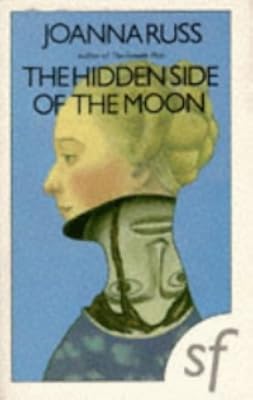


Member Recommendations

Member Reviews
A favorite read of the year, and a new addition to my favorite books of all time list!
This book was published in 1984, right around the same time as The Handmaid’s Tale. Historically, it reckons with the Equal Rights Amendment (a constitutional amendment intended to guarantee women equal rights) that had recently been defeated in 1982. Native Tongue explores the fears of what might follow the defeat of that amendment, and grapples with the rise of the religious right in American politics.
I ended up loving Native Tongue. It was so unique! I read it slowly and spent a lot of time thinking about what I had read before picking it up again to read more.
The worldbuilding is excellent and surprisingly realistic. I’ve heard plenty of the show more dialogue in Native Tongue come out of men’s mouths in the real world, almost verbatim. I’m impressed that Suzette Haden Elgin was able to capture their misogyny so accurately!
Native Tongue is split up into sections that skip around in time, which I didn’t expect going in. It’s also written in a removed, straightforward way, with less emotion than I would’ve preferred. But I could still sense the deep undercurrent of meaning and emotion running through the story, and I found that to be very moving every time I would pause to reflect.
Highly recommend for fans of The Handmaid’s Tale, feminist books, and thought-provoking scifi! show less
This book was published in 1984, right around the same time as The Handmaid’s Tale. Historically, it reckons with the Equal Rights Amendment (a constitutional amendment intended to guarantee women equal rights) that had recently been defeated in 1982. Native Tongue explores the fears of what might follow the defeat of that amendment, and grapples with the rise of the religious right in American politics.
I ended up loving Native Tongue. It was so unique! I read it slowly and spent a lot of time thinking about what I had read before picking it up again to read more.
The worldbuilding is excellent and surprisingly realistic. I’ve heard plenty of the show more dialogue in Native Tongue come out of men’s mouths in the real world, almost verbatim. I’m impressed that Suzette Haden Elgin was able to capture their misogyny so accurately!
Native Tongue is split up into sections that skip around in time, which I didn’t expect going in. It’s also written in a removed, straightforward way, with less emotion than I would’ve preferred. But I could still sense the deep undercurrent of meaning and emotion running through the story, and I found that to be very moving every time I would pause to reflect.
Highly recommend for fans of The Handmaid’s Tale, feminist books, and thought-provoking scifi! show less
I picked up [b:Native Tongue|285563|Native Tongue (Native Tongue, #1)|Suzette Haden Elgin|https://i.gr-assets.com/images/S/compressed.photo.goodreads.com/books/1348446358l/285563._SY75_.jpg|2866090] while browsing the library and am surprised I’d never heard of it before. It’s one of the SF Masterworks series that I’ve read avidly and has a fascinating conceit. The setting is 23rd century America, where women have the same inferior legal status as children. Humanity has made contact with many alien species and relies upon a small number of secretive families to act as translators. The linguist families raise their children, male and female, to speak many human and alien languages. The narrative loosely follows Nazareth, a highly show more gifted linguist, through her gruelling career, terrible marriage, and retirement. Once linguist women can no longer have children they move into ‘Barren Houses’, spaces away from men that allow some independence and even resistance. The narrative doesn’t just focus upon Nazareth, though, but also follows others connected with the linguists in various ways.
The social world-building in [b:Native Tongue|285563|Native Tongue (Native Tongue, #1)|Suzette Haden Elgin|https://i.gr-assets.com/images/S/compressed.photo.goodreads.com/books/1348446358l/285563._SY75_.jpg|2866090] is effective but, not to put too fine a point on it, grim as fuck. These are the thoughts of Thomas Blair Chornyak, head of the linguists, about a nurse that he’s having an affair with:
Michaela is a wonderful character. She isn’t a linguist, so acts as an outsider perspective on them when she joins the household to nurse Thomas’ elderly father.She has perfected the skill of lulling men into a false sense of security then murdering them. Her first husband and Thomas certainly do a lot to earn it. I appreciated her guilt when realising not all linguists are evil, though. Her role in the plot is to be an angel of death with a conscience, in contrast to the government scientists who murdered her baby. The denouement in which Thomas realises what the women of the Barren House are plotting and rants to Michaela about it is brilliantly tense. He thinks she is completely harmless, while she immediately grasps the danger the female linguists are in and kills him to save them.
It’s the linguistic elements that really stand out, as the antifeminist dystopia isn’t as original. One narrative thread follows a group of morally abhorrent government scientists who murder babies in the process of trying to dislodge the linguist families' oligopoly. They are trying these appalling human experiments because attempts at computer automated translation have so far failed. I found Elgin’s angle on this amazingly prescient, given the novel was published in 1984. The quote below is essentially still applicable 38 years later:
We can now automate translation via machine learning, but the computer certainly doesn’t understand the language. Would machine translation be trustworthy for vital international treaty negotiations? I don’t think so; it’s just replicating patterns ‘learned’ by crunching vast amounts of data created by humans. [b:Native Tongue|285563|Native Tongue (Native Tongue, #1)|Suzette Haden Elgin|https://i.gr-assets.com/images/S/compressed.photo.goodreads.com/books/1348446358l/285563._SY75_.jpg|2866090] examines the ways that languages can be oppressive but also liberatory. During their minimal spare time, the linguist women work on an experimental language that would allow them some freedom. Thus a generally depressing plot ends on rather a hopeful note, which made me keen to read the other two books in the trilogy. Although [b:Native Tongue|285563|Native Tongue (Native Tongue, #1)|Suzette Haden Elgin|https://i.gr-assets.com/images/S/compressed.photo.goodreads.com/books/1348446358l/285563._SY75_.jpg|2866090] is hard to read in places due to relentless oppression of women and cruelty to babies, it is rewarding and interesting in its treatment of linguistics. show less
The social world-building in [b:Native Tongue|285563|Native Tongue (Native Tongue, #1)|Suzette Haden Elgin|https://i.gr-assets.com/images/S/compressed.photo.goodreads.com/books/1348446358l/285563._SY75_.jpg|2866090] is effective but, not to put too fine a point on it, grim as fuck. These are the thoughts of Thomas Blair Chornyak, head of the linguists, about a nurse that he’s having an affair with:
They were frail reeds, women, especially in the hands of an experienced man like himself, and a man who was – as he was – a master of the erotic arts. If he’s had any doubts about that mastery, due to his advancing years and Rachel’s dutiful lukewarm attentions, Michaela’s rapt ecstasy at even his most casual efforts would have swiftly dispelled them. She was never in any way indelicate, never demanding, never lustful – lustfulness was abhorrent in a woman, and had she shown any sign of it he would have instantly dispensed with her. […]
An entirely satisfactory woman, this Michaela Landry. As nearly flawless a woman as he had ever encountered. Under the circumstances, he was willing to forgive her inability to resist his advances and live up to his earlier expectations. It is unjust, he reminded himself, to expect of a female more than her own natural characteristics allow her to accomplish.
Michaela is a wonderful character. She isn’t a linguist, so acts as an outsider perspective on them when she joins the household to nurse Thomas’ elderly father.
It’s the linguistic elements that really stand out, as the antifeminist dystopia isn’t as original. One narrative thread follows a group of morally abhorrent government scientists who murder babies in the process of trying to dislodge the linguist families' oligopoly. They are trying these appalling human experiments because attempts at computer automated translation have so far failed. I found Elgin’s angle on this amazingly prescient, given the novel was published in 1984. The quote below is essentially still applicable 38 years later:
The only way there is to acquire a language, which means that you know it so well you never have to be conscious of the knowledge, is to be exposed to that language while you are still very young – the younger the better. The infant human being has the most perfect language-learning mechanism on Earth, and no-one has ever been able to replicate that mechanism or even to analyse it very well. We know that it involves scanning for patterns and storing those that are found, but that’s something we can build a computer to do. But we’ve never been able to build a computer that can acquire a language. In fact, we’ve never even been able to build a computer that can learn a language in the imperfect way that a human adult can learn one.
We can now automate translation via machine learning, but the computer certainly doesn’t understand the language. Would machine translation be trustworthy for vital international treaty negotiations? I don’t think so; it’s just replicating patterns ‘learned’ by crunching vast amounts of data created by humans. [b:Native Tongue|285563|Native Tongue (Native Tongue, #1)|Suzette Haden Elgin|https://i.gr-assets.com/images/S/compressed.photo.goodreads.com/books/1348446358l/285563._SY75_.jpg|2866090] examines the ways that languages can be oppressive but also liberatory. During their minimal spare time, the linguist women work on an experimental language that would allow them some freedom. Thus a generally depressing plot ends on rather a hopeful note, which made me keen to read the other two books in the trilogy. Although [b:Native Tongue|285563|Native Tongue (Native Tongue, #1)|Suzette Haden Elgin|https://i.gr-assets.com/images/S/compressed.photo.goodreads.com/books/1348446358l/285563._SY75_.jpg|2866090] is hard to read in places due to relentless oppression of women and cruelty to babies, it is rewarding and interesting in its treatment of linguistics. show less
This is a feminist dystopia written in the 1980s, set in a future in which women's rights have been taken away and they are completely subservient to men. In this future, linguists are very important as they communicate with the many, many alien species that have been encountered to negotiating trading contracts and space colonies. The main events of the story take place 200 years in the future and follow the household of one of the 13 linguist families, whose children are trained from birth to acquire alien languages.
I had such mixed feelings about this book. For one thing, it took me so long to get into it, for two reasons. First, I didn't think it was plausible that all of women's rights would be taken away in the 1990s by show more constitutional amendments just because one paper was published positing that women were biologically not as intelligent as men. As someone who was alive in the 1990s, this just does not seem feasible. I can't imagine that even if 38 states had ratified these amendments, that our country would have remained whole after that.
Second, everyone talks like someone in a parody of a stiff 1950s television show. Sometimes, it was laughable. And the men are so ridiculous. I kept getting angry every time I picked this up to read and had to take breaks. Granted, there certainly are men who think this way about women, but in this book, it's ALL of them. And there is no romantic love, or even lust. Really? I get tired of misogyny too, but this goes against everything I know and have experienced of male-female relationships.
But I started getting more into it as I read. The baby-exploding caught my attention. That was a bit of horror I wasn't expecting. Too bad that plot line wasn't developed much more, but I gather that was probably left for the sequels. Then the character of Michaela, the one woman who's mad as hell and isn't going to take it anymore. I really liked her and all the bits of the book she was in. This story required an outsider character to give it some perspective, and she was it.
Overall, the writing was stiff and awkward and aggressively feminist, of its day. It did remind me a lot of The Female Man, in that sense. But it has interesting ideas to present in the guise of science fiction. Overall, I'm glad I read this, if not for the plot or characterization, but rather for the ideas and for it being a kind of artifact of a very particular time in the feminist movement (again, like The Female Man). show less
I had such mixed feelings about this book. For one thing, it took me so long to get into it, for two reasons. First, I didn't think it was plausible that all of women's rights would be taken away in the 1990s by show more constitutional amendments just because one paper was published positing that women were biologically not as intelligent as men. As someone who was alive in the 1990s, this just does not seem feasible. I can't imagine that even if 38 states had ratified these amendments, that our country would have remained whole after that.
Second, everyone talks like someone in a parody of a stiff 1950s television show. Sometimes, it was laughable. And the men are so ridiculous. I kept getting angry every time I picked this up to read and had to take breaks. Granted, there certainly are men who think this way about women, but in this book, it's ALL of them. And there is no romantic love, or even lust. Really? I get tired of misogyny too, but this goes against everything I know and have experienced of male-female relationships.
But I started getting more into it as I read. The baby-exploding caught my attention. That was a bit of horror I wasn't expecting. Too bad that plot line wasn't developed much more, but I gather that was probably left for the sequels. Then the character of Michaela, the one woman who's mad as hell and isn't going to take it anymore. I really liked her and all the bits of the book she was in. This story required an outsider character to give it some perspective, and she was it.
Overall, the writing was stiff and awkward and aggressively feminist, of its day. It did remind me a lot of The Female Man, in that sense. But it has interesting ideas to present in the guise of science fiction. Overall, I'm glad I read this, if not for the plot or characterization, but rather for the ideas and for it being a kind of artifact of a very particular time in the feminist movement (again, like The Female Man). show less
The concept that the language we use structures the way we perceive the world, and vice-versa, forms the basis of this story. There is plenty of non-fiction that touches on this (I'd recommend Mark Abley's absorbing consideration of vanishing languages, Spoken Here) but, as a fiction device, it seems tailor-made for the speculative fiction genre—what would happen to a culture if a language was changed?
It's not new territory: Vance's The Languages of Pao explored this in the late '50s and Delaney's Babel-17 did the same in the '60s. However, Elgin brings a linguistic background to the table and, as you might expect, her story is more focused and deeper. Previous efforts used the hypothesis as a backdrop or a hook for an adventure plot show more whereas, in Elgin's story, there's much more sense that this hypothesis is the central point. Leaving aside a few minor moments where her science didn't make sense and some poor world-building skills, her conception would have made for interesting science fiction of the social variety.
It's only "would have" because there's this 800 lb. gorilla in the room.
This is a book that absolutely demonizes men. Set some 200 years in the future, humanity has adopted an utterly extreme extension of 1980s American conservatism. The most significant aspect of this is that women have been reduced to a legal status of dependent minors, completely controlled by men...and the men are despicable. Not some men. Not the men of one particular culture or religious sect. All of them, everywhere on the planet and out in space. The absolute best are emotionally abusive—the average man adds physical abuse—we won't even discuss the callousness of the "stricter" men. About the only way one can deal with the flatness of the depiction is to assume that it is a metaphor for patriarchy rather than an attempt to portray males. This weakens the book immeasurably because there is no instinctive recognition of truth to the situation.
It's a book that admits of no common ground between men and women and that, in the words of the authors of the Afterword, is "...[insistent] on seeing men and women as...groups necessarily opposed to one another in thought, action, and desire." And that means that there is no way for me to relate to the book beyond acknowledging its antagonism: accepting the attack rather than engaging in the discussion.
In the end, the book is interesting as a reflection of the times in which it was written, the divisive and often strident early '80s following the failure of the Equal Rights Amendment. The bitterness and drama do not wholly surprise me. But, also in the end, it fails for me. show less
It's not new territory: Vance's The Languages of Pao explored this in the late '50s and Delaney's Babel-17 did the same in the '60s. However, Elgin brings a linguistic background to the table and, as you might expect, her story is more focused and deeper. Previous efforts used the hypothesis as a backdrop or a hook for an adventure plot show more whereas, in Elgin's story, there's much more sense that this hypothesis is the central point. Leaving aside a few minor moments where her science didn't make sense and some poor world-building skills, her conception would have made for interesting science fiction of the social variety.
It's only "would have" because there's this 800 lb. gorilla in the room.
This is a book that absolutely demonizes men. Set some 200 years in the future, humanity has adopted an utterly extreme extension of 1980s American conservatism. The most significant aspect of this is that women have been reduced to a legal status of dependent minors, completely controlled by men...and the men are despicable. Not some men. Not the men of one particular culture or religious sect. All of them, everywhere on the planet and out in space. The absolute best are emotionally abusive—the average man adds physical abuse—we won't even discuss the callousness of the "stricter" men. About the only way one can deal with the flatness of the depiction is to assume that it is a metaphor for patriarchy rather than an attempt to portray males. This weakens the book immeasurably because there is no instinctive recognition of truth to the situation.
It's a book that admits of no common ground between men and women and that, in the words of the authors of the Afterword, is "...[insistent] on seeing men and women as...groups necessarily opposed to one another in thought, action, and desire." And that means that there is no way for me to relate to the book beyond acknowledging its antagonism: accepting the attack rather than engaging in the discussion.
In the end, the book is interesting as a reflection of the times in which it was written, the divisive and often strident early '80s following the failure of the Equal Rights Amendment. The bitterness and drama do not wholly surprise me. But, also in the end, it fails for me. show less
Loved this - very happy to learn (after years of seeing this in bookshops and not getting round to picking it up) that it is in fact the first of a trilogy of feminist sf. And classic feminist sf it is too - classic sf, for that matter, with a very different society from ours clearly and intriguingly delineated in convincing detail.
I say very different society, but in fact it's a dystopia clearly originating from twentieth-century feminist concerns - like [book: The Handmaid's Tale], the cold war between men and women has been definitively lost by the women and a religious patriarchy has grown up in the place of the mocked past society in which women could even be Supreme Court Justices. (A representative quote from one of the chapter show more headers illustrating the views of that society: "Men are by nature kind and considerate, and a charming woman's eagerness to play at being a physician or a Congressman or a scientist can be both amusing and endearing; we can understand, looking back upon the period, how it must have seemed to 20th century men that there could be no harm in humoring the ladies.")
It's more extreme than [book: The Handmaid's Tale] and more distant in time from our world, but no less absorbing for that; plus it has aliens and linguistics and ties them together in a way that gives us the best of speculative fiction: a view of what could happen if things were different in just this or that sort of way. Where Atwood writes good feminist dystopian fiction with some trappings of sf, Elgin has written good feminist sf, and indeed some of the best of that kind I've read before. show less
I say very different society, but in fact it's a dystopia clearly originating from twentieth-century feminist concerns - like [book: The Handmaid's Tale], the cold war between men and women has been definitively lost by the women and a religious patriarchy has grown up in the place of the mocked past society in which women could even be Supreme Court Justices. (A representative quote from one of the chapter show more headers illustrating the views of that society: "Men are by nature kind and considerate, and a charming woman's eagerness to play at being a physician or a Congressman or a scientist can be both amusing and endearing; we can understand, looking back upon the period, how it must have seemed to 20th century men that there could be no harm in humoring the ladies.")
It's more extreme than [book: The Handmaid's Tale] and more distant in time from our world, but no less absorbing for that; plus it has aliens and linguistics and ties them together in a way that gives us the best of speculative fiction: a view of what could happen if things were different in just this or that sort of way. Where Atwood writes good feminist dystopian fiction with some trappings of sf, Elgin has written good feminist sf, and indeed some of the best of that kind I've read before. show less
Too Many Unanswered Questions.
I read Elgin's Native Tongue because it was touted as on par with Brave New World and The Handmaid's Tale. While it treats similar topics, it is not as good as either of those classics.
A major flaw for me is that the book's main premises are unexplained. First, the novel begins with excerpts from (fictional) constitutional amendments which repeal women's right to vote, and transform them into legal minors. While a similar premise is carefully and plausibly explained in The Handmaid's Tale, here in Native Tongue, the whole legal maneuver rests on one scientific paper which is never explained or even alluded to again. Why did this paper, which claimed to prove that women are the intellectual inferiors of show more men, carry so much weight? What was the proof? Were there protests? We'll never know.
Secondly, the plot revolves around the linguistic Households, or Lines, thirteen families which have cornered a monopoly on translation, crucial to Earth's rapid exploration and colonization of the galaxy. The Linguists claim to possess a genetic difference that justifies their monopoly; the government suspects that's a fabrication. We never find out if either option is true.
Elgin is also skeptical of "test tube" babies. Hers are not quite human, while we know now that babies conceived in vitro are indistinguishable from the more traditional kind. However, one must keep in mind that her "tubies" are more like Huxley's, spending the entire gestation in vitro and "decanted" instead of born, something we have (fortunately) not yet attempted.
Finally, the book ends with the separation of men and women, physically and linguistically. Is this the solution Elgin advocates? If so, it is an incredibly cynical one. It is true that in a world where men and women play segregated roles, they can't "speak each other's language," but if they are able to interact in a more egalitarian fashion, they should grow in understanding. "Separate but equal" was debunked decades before Elgin penned this tome, and I am surprised and disappointed to see her wind up at that lame conclusion.
show less
I read Elgin's Native Tongue because it was touted as on par with Brave New World and The Handmaid's Tale. While it treats similar topics, it is not as good as either of those classics.
A major flaw for me is that the book's main premises are unexplained. First, the novel begins with excerpts from (fictional) constitutional amendments which repeal women's right to vote, and transform them into legal minors. While a similar premise is carefully and plausibly explained in The Handmaid's Tale, here in Native Tongue, the whole legal maneuver rests on one scientific paper which is never explained or even alluded to again. Why did this paper, which claimed to prove that women are the intellectual inferiors of show more men, carry so much weight? What was the proof? Were there protests? We'll never know.
Secondly, the plot revolves around the linguistic Households, or Lines, thirteen families which have cornered a monopoly on translation, crucial to Earth's rapid exploration and colonization of the galaxy. The Linguists claim to possess a genetic difference that justifies their monopoly; the government suspects that's a fabrication. We never find out if either option is true.
Elgin is also skeptical of "test tube" babies. Hers are not quite human, while we know now that babies conceived in vitro are indistinguishable from the more traditional kind. However, one must keep in mind that her "tubies" are more like Huxley's, spending the entire gestation in vitro and "decanted" instead of born, something we have (fortunately) not yet attempted.
Finally, the book ends with the separation of men and women, physically and linguistically. Is this the solution Elgin advocates? If so, it is an incredibly cynical one. It is true that in a world where men and women play segregated roles, they can't "speak each other's language," but if they are able to interact in a more egalitarian fashion, they should grow in understanding. "Separate but equal" was debunked decades before Elgin penned this tome, and I am surprised and disappointed to see her wind up at that lame conclusion.
show less
The year is 2179, the war between the sexes is over and the men have 'won'. Women the world over are second-class citizens, without any power or independence. Even the best educated are totally subservient to men, only able to work if a husband or father permits. Our way into the world is through the Chornyak family, one of the 13 'Lines' of linguists. Mankind has reached the stars, and they are full of aliens. Linguists are a despised yet essential part of the global space-trading economy, gifted families whose infant children learn alien languages in a semi-naturalistic way, aided by a mental Interface, and so speak them as native tongues.
A compelling and fascinating read, Native Tongue reads like a forgotten classic, and is certainly show more a classic of feminist SF. Sometimes the polemic grabs you by the collar with one hand and punches you in the face with the other, the politics is brutal, the relationships between men and women barely functional. The world is prosperous but it is an emotional dystopia. The men may be in charge but they are trapped in their own world-views as much as the women. Everybody suffers and everyone is brutalised, the women more so, as they are the underclass, a near slave-cast, at least in how they are regarded as thinking beings - flawed and of low capacity.
The main fault is the lack of individuality. All the men buy into the patriarchal misogynistic culture without question and without fail. All the women are, if not persecuted angels, at least hold the moral and empathic high-ground, universally kind and sympathetic. Not once do individual men or women question or even introspect on the nature of their society or the roles they inhabit. Some want to get out, some want to smash it down, but in terms of individual relationships between the men and women there is no lasting kindness and an absence of affection and in these terms there is not one rebel.
If this all sounds a bit black and white it's not. The relationships between the sexes are nuanced, and there are clever insights into the hard lives of the linguist families through the eyes of an unusual serial killer outsider.
Native Tongue is an intriguing book about language, oppression, and self-oppression and delusion, written by a linguist. If you are interested in quality SF this is an essential read. And if you are not, then just read it as a very good and distinctive book.
~ show less
A compelling and fascinating read, Native Tongue reads like a forgotten classic, and is certainly show more a classic of feminist SF. Sometimes the polemic grabs you by the collar with one hand and punches you in the face with the other, the politics is brutal, the relationships between men and women barely functional. The world is prosperous but it is an emotional dystopia. The men may be in charge but they are trapped in their own world-views as much as the women. Everybody suffers and everyone is brutalised, the women more so, as they are the underclass, a near slave-cast, at least in how they are regarded as thinking beings - flawed and of low capacity.
The main fault is the lack of individuality. All the men buy into the patriarchal misogynistic culture without question and without fail. All the women are, if not persecuted angels, at least hold the moral and empathic high-ground, universally kind and sympathetic. Not once do individual men or women question or even introspect on the nature of their society or the roles they inhabit. Some want to get out, some want to smash it down, but in terms of individual relationships between the men and women there is no lasting kindness and an absence of affection and in these terms there is not one rebel.
If this all sounds a bit black and white it's not. The relationships between the sexes are nuanced, and there are clever insights into the hard lives of the linguist families through the eyes of an unusual serial killer outsider.
Native Tongue is an intriguing book about language, oppression, and self-oppression and delusion, written by a linguist. If you are interested in quality SF this is an essential read. And if you are not, then just read it as a very good and distinctive book.
~ show less
Members
- Recently Added By
Lists

Best Feminist Science Fiction
188 works; 35 members

Best Science Fiction Novels
816 works; 430 members

Favorite Science Fiction by Women Authors
737 works; 202 members
Science fiction novels with a female protagonist
105 works; 30 members

Novels featuring language professionals
98 works; 12 members

Best Feminist Literature
188 works; 26 members

Books That Changed Me
158 works; 47 members

Dystopian and Apocalyptic Literature
350 works; 74 members

Top Five Books of 2013
1,562 works; 721 members

Bookriot's 100 Must-Read Sci-Fi Fantasy Novels By Female Authors
100 works; 9 members
Recommended Speculative Fiction by Women and People of Color
298 works; 45 members

SFFKit 2022
5 works; 1 member

Female Author
1,234 works; 67 members

Shannon's Read-Alikes List
71 works; 8 members

Speculative Fiction to Read
706 works; 31 members

BingoDOG - Language in Fiction
35 works; 12 members

BingoDOG 2015 Challenge
49 works; 3 members
Favourite Books
1,820 works; 316 members
Literature About Women and Girls
394 works; 39 members

SF Masterworks
193 works; 8 members

Books Read in 2013
1,630 works; 51 members

Books featuring grandmothers
56 works; 12 members

Angry Women Reading List
17 works; 2 members

Books Read in 2022
5,226 works; 115 members
Female Protagonist
1,056 works; 57 members

Strong Characters
39 works; 2 members

Linguistics in Science Fiction
27 works; 4 members
Best Dystopias
280 works; 277 members
Talk Discussions
Past Discussions
Found: Sci-fi book about translators in Name that Book (September 2021)
***Group Read: Native Tongue by Suzette Hadel Elgin (spoiler thread) in 75 Books Challenge for 2011 (March 2011)
Author Information

66+ Works 5,344 Members
Suzette Haden Elgin was born Patricia Anne Wilkins on November 18, 1936 in Missouri. She received a PhD in linguistics from the University of California at San Diego in 1973. She taught there from 1972 to 1980, when she retired to focus on her writing full time. Her books include The Communipaths, Furthest, At the Seventh Level, Yonder Comes the show more Other End of Time, Twelve Fair Kingdoms, The Grand Jubilee, A First Dictionary and Grammar of Láadan, Peacetalk 101, and Native Tongue Trilogy. She founded the Science Fiction Poetry Association in 1978. The organization's Elgin Award, for best poetry book and chapbook of the year, is named in her honor. She wrote The Science Fiction Poetry Handbook. She was also widely published as a linguist. Her works include the Gentle Art of Verbal Self-Defense series. She died on January 27, 2015 at the age of 78. (Bowker Author Biography) show less
Some Editions
Series

Belongs to Publisher Series
Work Relationships
Is contained in
Common Knowledge
- Original publication date
- 1984-08
- People/Characters
- Nazareth Chornyak
- First words
- There is a sense in which no book can be said to be "ordinary" today; we are well aware of that.
- Last words
- (Click to show. Warning: May contain spoilers.)Round and round and round, in a lovely endless loop.
- Blurbers
- Heilbrun, Carolyn; Gilbert, Sandra M.; Gubar, Susan; Barr, Marleen S.; Wilhelm, Kate
Classifications
Statistics
- Members
- 1,260
- Popularity
- 19,526
- Reviews
- 32
- Rating
- (3.80)
- Languages
- 6 — Catalan, English, German, Italian, Portuguese, Spanish
- Media
- Paper, Audiobook, Ebook
- ISBNs
- 20
- UPCs
- 1
- ASINs
- 11