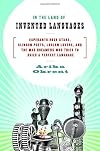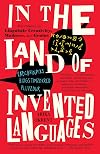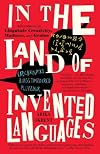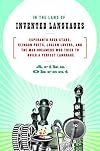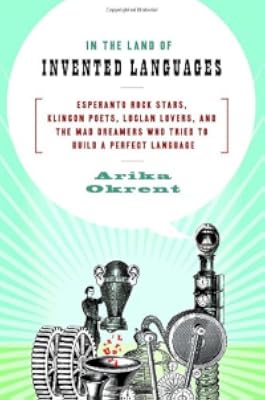
In the Land of Invented Languages: Esperanto Rock Stars, Klingon Poets, Loglan Lovers, and the Mad Dreamers Who Tried to Build A Perfect Language
by Arika Okrent
On This Page
Description
Okrent tells the fascinating and highly entertaining history of man's enduring quest to build a better language. Peopled with charming eccentrics and exasperating megalomaniacs, the land of invented languages is a place where you can recite the Lord's Prayer in John Wilkins's Philosophical Language, say your wedding vows in Loglan, and read "Alice's Adventures in Wonderland" in Lojban--not to mention Babm, Blissymbolics, and the nearly nine hundred other invented languages featured in this show more language-lover's book. show lessTags
Recommendations
















Member Recommendations
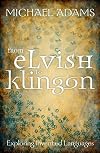


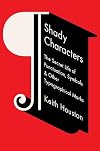
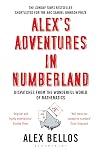
wandering_star Similar approach/style, one about words and one about numbers.
Member Reviews
I did not have high expectations. Inventing a language seems a bit nutty and childish, perhaps a way to put off writing a science-fiction/fantasy novel. But this was surprisingly interesting! Yes, there is a certain nuttiness factor, especially with modern conlangs. But there is also science, ideals, a huge diversity of approaches, and some art. Okrent's selection of topics, and depth, was just right for me.
> There was excitement, praise, and plans for translating the work into Latin. The king expressed an interest in learning the language. Robert Hooke suggested it should be the language of all scientific findings and published a description of the mechanics of pocket watches in it. The mathematician John Wallis wrote letters to show more Wilkins in the language and claimed that they “perfectly understood one another as if written in our own language.” Newton, Locke, and Leibniz read Wilkins's book with interest.
> Traveling missionaries of the previous century had noted that people who spoke mutually incomprehensible languages—Mandarin, Cantonese, Japanese, Vietnamese—could understand each other in writing. They got the impression that Chinese characters by-passed language entirely, and went right to the heart of the matter.
> In 1881, when Ben-Yehuda and his wife, Devora, immigrated to Palestine from Europe, Hebrew also served as a sort of lingua franca of the marketplace for Jews from various language backgrounds, but it was nobody's mother tongue. In 1882, when Ben-Yehuda's first child was born, he declared that his household would be Hebrew speaking only, and thus raised the first native Hebrew speaker in over a thousand years.
> a young Hungarian named George Soros. His father, Tivadar, was an active Esperantist and had changed the family name from Schwartz to Soros, an Esperanto verb meaning “will soar.”
> “Word Magic,” the illusion that a thing exists “out there,” just because we have a word for it. When we are under the spell of Word Magic, we fail to see that “sin” is a moral fiction, “ideas” are “psychological fictions,” “rights” are “legal fictions,” and “cause” is “a physical fiction.” (He also feels compelled to pick on “swing” by pointing out that it is a “saxophonic fiction.”) Word Magic makes us lazy; we don't question the assumptions that are hidden in words, and so we allow ourselves to be manipulated by “press, politics, and pulpit.” Ogden thought Basic English could work as an antidote to Word Magic by forcing people to express themselves in simple terms, thus forcing them to really think about what they are saying.
> Winston Churchill, himself a tireless advocate of plain language, was a fan of Basic English and made efforts to promote it. He thought it could help create a different kind of empire, one based not on “taking away other people's provinces or land or grinding them down in exploitation” but on a shared language. He encouraged the BBC to take it to the airwaves and teach it far and wide.
> Roosevelt promised to look into the matter, but he couldn't resist teasing that Churchill's inspiring speech about offering his “blood, toil, tears, and sweat” to his country may have been less effective if he “had been able to offer the British people only blood, work, eye water and face water, which I understand is the best that Basic English can do with five famous words.”
> In 1959, two years after Ogden's death, the Voice of America began broadcasting news stories in something they called Special English, and these programs are still popular today in non-English-speaking countries all over the world. Special English is simplified, but not according to any particular theory or rules. It doesn't have anything against verbs, and while it has a core vocabulary of fifteen hundred words, other terms are introduced when they are needed, along with brief explanations. The few rules it does claim—no passive voice, one idea per sentence—are violated when they interfere with sensible judgment. It is what Basic English probably would have become if Ogden wasn't so hung up on grand philosophical justifications for his system
> The Chinese writing system is based on Mandarin Chinese. Other languages spoken in China, like Cantonese, are different but historically related—about as similar as French and Italian are. So what happens when a Cantonese speaker picks up a Mandarin newspaper? Does he just read it off into his own language? No. Essentially, he reads it in Mandarin. In order to become literate, he has had to learn the Mandarin way of marking grammatical distinctions and the Mandarin way of putting sentences together. He may not have learned the Mandarin way of pronouncing every word, but many of the Cantonese pronunciations are similar (as are the French jour and the Italian giorno), so the sound clues in the characters are sometimes helpful. However, they are much less helpful, so he has had to do a lot more brute memorization. This is why it has taken him a couple of years longer than a Mandarin speaker to become literate.
> sign languages differ considerably from country to country, so much so that in the 1950s, the newly formed World Federation of the Deaf assigned a committee to look into the matter of developing an auxiliary sign standard that could be used at the federation's world congress and other international deaf events. The result, finally published in 1975, was Gestuno, the Esperanto of sign language.
> Gestuno was only a lexicon, not a grammar, so there were no explicit guidelines for putting sentences together. At the 1979 World Deaf Congress in Bulgaria, the first congress to provide Gestuno interpretation of the presentations, the interpreters simply stuck Gestuno signs into (spoken) Bulgarian sentence structures (sign languages do not follow the same word order or grammar as their surrounding spoken languages). No one understood what was going on, and Gestuno never recovered from the fiasco. Something else took its place—a spontaneous sort of pidgin signing now called International Sign.
> In 1982, the OCCC got an exclusive, noncancelable, and perpetual license to use Blissymbolics, and he got $160,000. Easter Seals, the charitable foundation under whose auspices the program was now working, paid the settlement. That's right. There's no other way to put it: Bliss, self-proclaimed savior of humanity, stole $160,000 from crippled children.
> Interlingua positioned itself as a way for scientists of different language backgrounds to keep up with their fields. They wouldn't even necessarily have to speak the language. As long as they understood it, it would fulfill its businesslike function. By attaching itself to science, and refraining from grand claims, Interlingua spread a little further than it otherwise might have. Some major medical congresses and journals published abstracts in Interlingua throughout the 1950s and 1960s. But it failed to sustain interest.
> It might even be seen as a treatment of a disease we didn't know we had! LLL, the disease of “logical language limitation,” or UNM of “unnecessarily narrowed minds” … And wouldn't Loglan itself then be seen as the gentle new cure for that ancient human malady? … An antidote for the bigotry with which even “civilized people” tend to view their neighbors in the global village? … This is what is very likely to happen given what the journalists will call a “positive” outcome of our Whorfian experiment … Backed up by such a result, Loglan would probably be seen as ideal in the role of that international auxiliary, for example: the first language to be taught to the world's school children, the one slated to become everybody's second tongue … our engineered new second-language would be seen as the mind-expander, the instrument of thought, reason, invention, and exposition … and perhaps also the medium of intercultural mediation, a culture-spanning bridge to a more tolerant and peaceful world.
> “John and Alice (considered jointly) are friends.” If you used joi here, you would have said John and Alice massed together form some kind of friend entity. If you used e, you would have said that John is a friend (of someone) and Alice is a friend (of someone), and maybe they don't even know each other. There are at least twenty ways to say “and” in Lojban. But that's nothing compared with what happens when you get into “or” and “if.”
> “How many Lojbanists does it take to change a broken light-bulb?” goes the old Lojban joke. “Two: one to decide what to change it into and one to decide what kind of bulb emits broken light.”
> Until Loglan, invented languages had never been very explicit about how sentences should be put together. In philosophical languages like Wilkins's, or symbol languages like Blissymbolics, once you had done the hard work of finding the appropriate concept words, you just arranged them in an English-Latin-type hybrid grammar. There was never a well-defined “correct” syntax for these languages. Esperanto developed a better-defined standard of proper sentence structure, but it came naturally through usage, and not because the inventor laid down the rules from the beginning. You don't learn the rules of Esperanto; you intuit them from examples.
> One must clearly specify the structure of the sentence as a whole, using various markers that serve, in effect, as spoken parentheses. There can be no confusion, for example, between an “ancient (history teacher)” and an “(ancient history) teacher” in Lojban … Composing a sentence in Lojban is like writing a line of computer code. Choose the wrong function, drop a variable, forget to close a parenthesis, and it doesn't work. … Fortunately, you can visit jboski, the online Lojban-to-English translator, and at least see if your Lojban sentence parses. If you've made any major errors, or left out a crucial structural element, you'll get an error message.
> It would likewise be inappropriate to use dizlo (low) to say you're feeling low, because dizlo only means low “as compared with baseline/standard height z.” The metaphorical extension of lowness to emotions doesn't hold in Lojban. There is a Lojban word for these kinds of mistakes— malglico (damned English!). Malglico is what happens when you let the assumptions of English creep into your Lojban. And this must be avoided in Lojban, because to remain valid in a test of the Whorfian hypothesis, it must remain culturally neutral. In terms of vocabulary, this means that definitions should be unclouded by connotations and metaphorical extensions that may not be shared from culture to culture. In terms of grammar, this means that it should have the resources to express the range of distinctions that languages express, including distinctions that English might not have.
> In the Austronesian language Mekeo, you express possession one way if the possessed thing could potentially be transferred to someone else (e?u ngaanga : “my canoe”) and a different way if it cannot (aki-u : literally “brother-my,” so “my brother”). If it is true that the difference in the grammatical treatment of possession between English and Mekeo gives rise to some difference in worldview between the two cultures, Lojban doesn't want to force Mekeo speakers to blur the distinction, thereby forcing them to take on the English view of possession. In Lojban you can make the distinction, but you are not required to (because that would be forcing the Mekeo worldview on English speakers).
> she created the “pejorative” marker ih (it helps turn bini , “gift,” into rabinilh , “a gift with strings attached”) after a similar marker in Navajo
> Along with ui ([happiness] Yay!), u'u ([repentance] I feel guilty), it ([fear] Eek!), and .o'u ([relaxation] Phew!), there are compound indicators ranging from .uecu'i ([surprise][neutral] ho hum), to .o'unairo'a ([relaxation][opposite][social] I feel social discomfort), to .uiro'obe'unai ([happiness][physical][lack/need][opposite] Yay![physical] Enough!), something you might say after enjoying a big meal. As the Lojban grammar states, “We have tried to err on the side of overkill. There are distinctions possible in this system that no one may care to make in any culture.” Strictly speaking, these indicators fall outside the realm of formal logic: their validity cannot be evaluated; there are no truth tables that can account for them. But the Lojbanists love them, and they have a lot of fun playing with them. So much fun that one of them proposed a new language called Cinban (from cinmo bangu , “emotion language”), which would just be English with the attitudinal indicators thrown in … He set up a new Web forum in which “to practice .o'o [patience] using Cinban until I'm fully fluent .a'o [hopefully] in it. Anyone's welcome .e'uro'a [suggestion, social] to join me, of course uenaidai [expectation, empathy].”
> the language was supposed to be tough sounding, befitting a warrior race—which he achieved through the preponderance of back-of-the-throat sounds and the intentional absence of small-talk greetings such as “Hello.” (The closest translation in Klingon is nuqneH —“What do you want?”) Okrand did not just make up a list of words. Knowing that fans would be watching closely, he worked out a full grammar with great attention to detail. Klingon both flouts and follows known linguistic principles, and its real sophistication lies in the balance between the two tendencies. It gets its alien quality from the aspects that set it apart from natural languages: its phonological inventory of sounds that don't normally occur together, its extremely rare basic word order of OVS (object-verb-subject).
> By the time the books were published in the mid-1950s, he [Tolkien] had been working on his languages for over forty years. The creation of these languages consumed him almost against his will. At twenty-four years old he wrote of his obsession, “I often long to work at it and don't let myself 'cause though I love it so it does seem such a mad hobby!” He later claimed that he wrote The Lord of the Rings to legitimize his madness: “Nobody believes me when I say that my long book is an attempt to create a world in which a form of language agreeable to my personal aesthetic might seem real. But it is true.” show less
> There was excitement, praise, and plans for translating the work into Latin. The king expressed an interest in learning the language. Robert Hooke suggested it should be the language of all scientific findings and published a description of the mechanics of pocket watches in it. The mathematician John Wallis wrote letters to show more Wilkins in the language and claimed that they “perfectly understood one another as if written in our own language.” Newton, Locke, and Leibniz read Wilkins's book with interest.
> Traveling missionaries of the previous century had noted that people who spoke mutually incomprehensible languages—Mandarin, Cantonese, Japanese, Vietnamese—could understand each other in writing. They got the impression that Chinese characters by-passed language entirely, and went right to the heart of the matter.
> In 1881, when Ben-Yehuda and his wife, Devora, immigrated to Palestine from Europe, Hebrew also served as a sort of lingua franca of the marketplace for Jews from various language backgrounds, but it was nobody's mother tongue. In 1882, when Ben-Yehuda's first child was born, he declared that his household would be Hebrew speaking only, and thus raised the first native Hebrew speaker in over a thousand years.
> a young Hungarian named George Soros. His father, Tivadar, was an active Esperantist and had changed the family name from Schwartz to Soros, an Esperanto verb meaning “will soar.”
> “Word Magic,” the illusion that a thing exists “out there,” just because we have a word for it. When we are under the spell of Word Magic, we fail to see that “sin” is a moral fiction, “ideas” are “psychological fictions,” “rights” are “legal fictions,” and “cause” is “a physical fiction.” (He also feels compelled to pick on “swing” by pointing out that it is a “saxophonic fiction.”) Word Magic makes us lazy; we don't question the assumptions that are hidden in words, and so we allow ourselves to be manipulated by “press, politics, and pulpit.” Ogden thought Basic English could work as an antidote to Word Magic by forcing people to express themselves in simple terms, thus forcing them to really think about what they are saying.
> Winston Churchill, himself a tireless advocate of plain language, was a fan of Basic English and made efforts to promote it. He thought it could help create a different kind of empire, one based not on “taking away other people's provinces or land or grinding them down in exploitation” but on a shared language. He encouraged the BBC to take it to the airwaves and teach it far and wide.
> Roosevelt promised to look into the matter, but he couldn't resist teasing that Churchill's inspiring speech about offering his “blood, toil, tears, and sweat” to his country may have been less effective if he “had been able to offer the British people only blood, work, eye water and face water, which I understand is the best that Basic English can do with five famous words.”
> In 1959, two years after Ogden's death, the Voice of America began broadcasting news stories in something they called Special English, and these programs are still popular today in non-English-speaking countries all over the world. Special English is simplified, but not according to any particular theory or rules. It doesn't have anything against verbs, and while it has a core vocabulary of fifteen hundred words, other terms are introduced when they are needed, along with brief explanations. The few rules it does claim—no passive voice, one idea per sentence—are violated when they interfere with sensible judgment. It is what Basic English probably would have become if Ogden wasn't so hung up on grand philosophical justifications for his system
> The Chinese writing system is based on Mandarin Chinese. Other languages spoken in China, like Cantonese, are different but historically related—about as similar as French and Italian are. So what happens when a Cantonese speaker picks up a Mandarin newspaper? Does he just read it off into his own language? No. Essentially, he reads it in Mandarin. In order to become literate, he has had to learn the Mandarin way of marking grammatical distinctions and the Mandarin way of putting sentences together. He may not have learned the Mandarin way of pronouncing every word, but many of the Cantonese pronunciations are similar (as are the French jour and the Italian giorno), so the sound clues in the characters are sometimes helpful. However, they are much less helpful, so he has had to do a lot more brute memorization. This is why it has taken him a couple of years longer than a Mandarin speaker to become literate.
> sign languages differ considerably from country to country, so much so that in the 1950s, the newly formed World Federation of the Deaf assigned a committee to look into the matter of developing an auxiliary sign standard that could be used at the federation's world congress and other international deaf events. The result, finally published in 1975, was Gestuno, the Esperanto of sign language.
> Gestuno was only a lexicon, not a grammar, so there were no explicit guidelines for putting sentences together. At the 1979 World Deaf Congress in Bulgaria, the first congress to provide Gestuno interpretation of the presentations, the interpreters simply stuck Gestuno signs into (spoken) Bulgarian sentence structures (sign languages do not follow the same word order or grammar as their surrounding spoken languages). No one understood what was going on, and Gestuno never recovered from the fiasco. Something else took its place—a spontaneous sort of pidgin signing now called International Sign.
> In 1982, the OCCC got an exclusive, noncancelable, and perpetual license to use Blissymbolics, and he got $160,000. Easter Seals, the charitable foundation under whose auspices the program was now working, paid the settlement. That's right. There's no other way to put it: Bliss, self-proclaimed savior of humanity, stole $160,000 from crippled children.
> Interlingua positioned itself as a way for scientists of different language backgrounds to keep up with their fields. They wouldn't even necessarily have to speak the language. As long as they understood it, it would fulfill its businesslike function. By attaching itself to science, and refraining from grand claims, Interlingua spread a little further than it otherwise might have. Some major medical congresses and journals published abstracts in Interlingua throughout the 1950s and 1960s. But it failed to sustain interest.
> It might even be seen as a treatment of a disease we didn't know we had! LLL, the disease of “logical language limitation,” or UNM of “unnecessarily narrowed minds” … And wouldn't Loglan itself then be seen as the gentle new cure for that ancient human malady? … An antidote for the bigotry with which even “civilized people” tend to view their neighbors in the global village? … This is what is very likely to happen given what the journalists will call a “positive” outcome of our Whorfian experiment … Backed up by such a result, Loglan would probably be seen as ideal in the role of that international auxiliary, for example: the first language to be taught to the world's school children, the one slated to become everybody's second tongue … our engineered new second-language would be seen as the mind-expander, the instrument of thought, reason, invention, and exposition … and perhaps also the medium of intercultural mediation, a culture-spanning bridge to a more tolerant and peaceful world.
> “John and Alice (considered jointly) are friends.” If you used joi here, you would have said John and Alice massed together form some kind of friend entity. If you used e, you would have said that John is a friend (of someone) and Alice is a friend (of someone), and maybe they don't even know each other. There are at least twenty ways to say “and” in Lojban. But that's nothing compared with what happens when you get into “or” and “if.”
> “How many Lojbanists does it take to change a broken light-bulb?” goes the old Lojban joke. “Two: one to decide what to change it into and one to decide what kind of bulb emits broken light.”
> Until Loglan, invented languages had never been very explicit about how sentences should be put together. In philosophical languages like Wilkins's, or symbol languages like Blissymbolics, once you had done the hard work of finding the appropriate concept words, you just arranged them in an English-Latin-type hybrid grammar. There was never a well-defined “correct” syntax for these languages. Esperanto developed a better-defined standard of proper sentence structure, but it came naturally through usage, and not because the inventor laid down the rules from the beginning. You don't learn the rules of Esperanto; you intuit them from examples.
> One must clearly specify the structure of the sentence as a whole, using various markers that serve, in effect, as spoken parentheses. There can be no confusion, for example, between an “ancient (history teacher)” and an “(ancient history) teacher” in Lojban … Composing a sentence in Lojban is like writing a line of computer code. Choose the wrong function, drop a variable, forget to close a parenthesis, and it doesn't work. … Fortunately, you can visit jboski, the online Lojban-to-English translator, and at least see if your Lojban sentence parses. If you've made any major errors, or left out a crucial structural element, you'll get an error message.
> It would likewise be inappropriate to use dizlo (low) to say you're feeling low, because dizlo only means low “as compared with baseline/standard height z.” The metaphorical extension of lowness to emotions doesn't hold in Lojban. There is a Lojban word for these kinds of mistakes— malglico (damned English!). Malglico is what happens when you let the assumptions of English creep into your Lojban. And this must be avoided in Lojban, because to remain valid in a test of the Whorfian hypothesis, it must remain culturally neutral. In terms of vocabulary, this means that definitions should be unclouded by connotations and metaphorical extensions that may not be shared from culture to culture. In terms of grammar, this means that it should have the resources to express the range of distinctions that languages express, including distinctions that English might not have.
> In the Austronesian language Mekeo, you express possession one way if the possessed thing could potentially be transferred to someone else (e?u ngaanga : “my canoe”) and a different way if it cannot (aki-u : literally “brother-my,” so “my brother”). If it is true that the difference in the grammatical treatment of possession between English and Mekeo gives rise to some difference in worldview between the two cultures, Lojban doesn't want to force Mekeo speakers to blur the distinction, thereby forcing them to take on the English view of possession. In Lojban you can make the distinction, but you are not required to (because that would be forcing the Mekeo worldview on English speakers).
> she created the “pejorative” marker ih (it helps turn bini , “gift,” into rabinilh , “a gift with strings attached”) after a similar marker in Navajo
> Along with ui ([happiness] Yay!), u'u ([repentance] I feel guilty), it ([fear] Eek!), and .o'u ([relaxation] Phew!), there are compound indicators ranging from .uecu'i ([surprise][neutral] ho hum), to .o'unairo'a ([relaxation][opposite][social] I feel social discomfort), to .uiro'obe'unai ([happiness][physical][lack/need][opposite] Yay![physical] Enough!), something you might say after enjoying a big meal. As the Lojban grammar states, “We have tried to err on the side of overkill. There are distinctions possible in this system that no one may care to make in any culture.” Strictly speaking, these indicators fall outside the realm of formal logic: their validity cannot be evaluated; there are no truth tables that can account for them. But the Lojbanists love them, and they have a lot of fun playing with them. So much fun that one of them proposed a new language called Cinban (from cinmo bangu , “emotion language”), which would just be English with the attitudinal indicators thrown in … He set up a new Web forum in which “to practice .o'o [patience] using Cinban until I'm fully fluent .a'o [hopefully] in it. Anyone's welcome .e'uro'a [suggestion, social] to join me, of course uenaidai [expectation, empathy].”
> the language was supposed to be tough sounding, befitting a warrior race—which he achieved through the preponderance of back-of-the-throat sounds and the intentional absence of small-talk greetings such as “Hello.” (The closest translation in Klingon is nuqneH —“What do you want?”) Okrand did not just make up a list of words. Knowing that fans would be watching closely, he worked out a full grammar with great attention to detail. Klingon both flouts and follows known linguistic principles, and its real sophistication lies in the balance between the two tendencies. It gets its alien quality from the aspects that set it apart from natural languages: its phonological inventory of sounds that don't normally occur together, its extremely rare basic word order of OVS (object-verb-subject).
> By the time the books were published in the mid-1950s, he [Tolkien] had been working on his languages for over forty years. The creation of these languages consumed him almost against his will. At twenty-four years old he wrote of his obsession, “I often long to work at it and don't let myself 'cause though I love it so it does seem such a mad hobby!” He later claimed that he wrote The Lord of the Rings to legitimize his madness: “Nobody believes me when I say that my long book is an attempt to create a world in which a form of language agreeable to my personal aesthetic might seem real. But it is true.” show less
I have been waiting to read this one ever since I first heard of it—a book devoted to all the languages that have been created by other people. Everyday languages are organic: they have no real inventor but time and culture. These things shape the way we talk about the world and express ourselves. But someone had to sit down and invent Esperanto, to compose Klingon, to shape the way that Loglan works. These languages were created for many reason, but the main one seems to be so that people of different nationalities and cultures could finally communicate with one another. Arika Okrent’s In the Land of Invented Languages explores the rich history of those people who tried (and ultimately failed) to create a single language that all show more of humanity could use. And along the way, she reveals what little truth in contained in language, and how that reflects on us as language’s users.
Over the last nine hundred years, approximately nine hundred language have been artificially created. They come in bursts, though. After Hildegard von Bingen composed Lingua Ignota in the twelfth century, it was three hundred years before Muhyi-I Gulseni created Balaibalan. The last two centuries have been the heyday for language creation, with some 470 documented new languages. Okrent’s tour through language creation hits the highlights, from Wilkin’s Philosophical Language (1668) to Schleyer’s Volapuk (1879) to Zamenhof’s incredibly popular Esperanto (1887) and even to the modern-day tussles over Klingon.
Her investigations of these languages talk about whether language can ever truly represent ideas, how we perceive and classify the physical and metaphysical world, and if the rules of spoken language can ever really be made simple. Many languages, once invented and released into the “wild,” change radically, serving the needs of the speakers rather than the rulebooks of the inventors (much to the chagrin of the inventors). James Cooke Brown lost control of Loglan much like C. K. Bliss could not tolerate the changes made to his Blissymbolics.
As a language nut, I really enjoyed this book. Okrent’s joyful attitude towards language and grammar speaks to her background as a linguist. She whole-heartedly immerses herself in contemporary artificial languages, hoping to find one that both fun to learn and follows more rules than the others. What she does find, however, are groups of people so enamored with the communities that new languages create, that sometimes it doesn’t really matter if you can’t understand each other. Simply the act of trying to communicate is all you need to bring people together. And perhaps also a dictionary. A quick and fun book. show less
Over the last nine hundred years, approximately nine hundred language have been artificially created. They come in bursts, though. After Hildegard von Bingen composed Lingua Ignota in the twelfth century, it was three hundred years before Muhyi-I Gulseni created Balaibalan. The last two centuries have been the heyday for language creation, with some 470 documented new languages. Okrent’s tour through language creation hits the highlights, from Wilkin’s Philosophical Language (1668) to Schleyer’s Volapuk (1879) to Zamenhof’s incredibly popular Esperanto (1887) and even to the modern-day tussles over Klingon.
Her investigations of these languages talk about whether language can ever truly represent ideas, how we perceive and classify the physical and metaphysical world, and if the rules of spoken language can ever really be made simple. Many languages, once invented and released into the “wild,” change radically, serving the needs of the speakers rather than the rulebooks of the inventors (much to the chagrin of the inventors). James Cooke Brown lost control of Loglan much like C. K. Bliss could not tolerate the changes made to his Blissymbolics.
As a language nut, I really enjoyed this book. Okrent’s joyful attitude towards language and grammar speaks to her background as a linguist. She whole-heartedly immerses herself in contemporary artificial languages, hoping to find one that both fun to learn and follows more rules than the others. What she does find, however, are groups of people so enamored with the communities that new languages create, that sometimes it doesn’t really matter if you can’t understand each other. Simply the act of trying to communicate is all you need to bring people together. And perhaps also a dictionary. A quick and fun book. show less
I love love love this book! I've been fascinated with language since... well, since as far back as I can remember having language. I don't have the requisite gifts to hack it as a linguist, but my fascination and delight in language is no less for that.
And delight is was makes this book so enjoyable. The author's intelligence and expertise are obvious - her conclusions about language and culture are spot-on. But it's her sense of humor and the joy she takes in the material that make this book utterly compelling! I never would have thought that a book about language, written by a linguist, could make me laugh out loud. But this one did - more than once!
Anyone who is even slightly interested in the nature and workings of language should show more read this book! show less
And delight is was makes this book so enjoyable. The author's intelligence and expertise are obvious - her conclusions about language and culture are spot-on. But it's her sense of humor and the joy she takes in the material that make this book utterly compelling! I never would have thought that a book about language, written by a linguist, could make me laugh out loud. But this one did - more than once!
Anyone who is even slightly interested in the nature and workings of language should show more read this book! show less
This book was the perfect balance of everything: humor, information, history, thought-provocation, etc. And the exact book I needed to get me out of the rut of non-reading I've been in the last 2 months.
It's a look into the amusing world of invented languages, ones invented by a single person as opposed to a language arising organically through a community of users who create it on the fly, evolving it to their needs. And there have not been a shortage of them: an estimated 900 in the last 900 years. Almost all of these are complete failures, if you define a failure of a language as one that isn't used by anyone. But what drives these people to create them in the first place, against all odds of mass adaption?
Well, first of all, it show more takes a hell of an eccentric to come up with a language and have the guns to stick with the laborious task of creating a full vocabulary, rules, syntax, etc. These folks are usually dreamers. They were unsatisfied with natural languages for various reasons: inconsistencies, illogicality, difficulty, imprecision, etc. so they set out to create a language of their own that would be free from these flaws.
This book follows five main invented languages as well as covering many other competing ones in lesser detail: Wilkin's Philosophical Language, Esperanto, Blissymbolics, Loglan, and Klingon. Each one had a different history, a different ideal that the inventor wanted to achieve, and a different outcome in terms of real world use.
But what makes this book head and shoulders above most other books that cover a fascinating subject is…
1.
Unlike some books written by a journalist who has dabbled in a weird subculture, Arika Okrent is herself a linguist that just happens to be a really good writer, and so she is more than equipped to bring out subtle insights (without getting too technical for the layman)... things like what made this language unique, and why did it succeed/fail? I particularly enjoyed the section on why the many flaws and imperfections in natural languages are actually necessary and/or good for certain things (usability for example). And she's more than just a distant academic voice, throughout the book she makes a good effort to learn each language that she talks about, and when available, immerses herself in the subculture of its speakers (Esperanto, Klingon). Even though she is an academic, there is no sober stuffiness here, her enthusiasm for her subject is evident on every page.
2.
The book is hilarious! I laughed through many parts of it, especially the part where she described going out to a restaurant with a bunch of Klingon speakers who have sworn to speak only Klingon that day, and how she died of shame as they started to order in their made-up language, pointing and grunting at the menu despite the poor waiter's confusion.
But the humor isn't a cheap one. It would be easy to just poke fun all day at this cast of characters (they definitely give her plenty of material). But because she relates to them (to a degree), she sees through to what drives them, what makes them devote so much time to such a futile enterprise. And so the humor is very good natured, very balanced and genuine, and in a way, it's as if she's having a good chuckle at herself at times.
3.
She doesn't just highlight these languages and the people behind them, providing factoids and interesting tidbits good for dinner-party conversations. No, at the beginning of each chapter she gives a timeline of the key events before and after. This allows you to see that these languages weren't invented in a vacuum, but that they represented a real continuity sprung from a certain context. These inventors were idealists, but idealists within their time, and so the languages they invented reflected these dreams: the need for an ultimate order to the world for example (Wilkins), or the need to circumvent the duplicity of words (Blissymbolics). She's somehow able to tell very human stories through the medium of linguistics. show less
It's a look into the amusing world of invented languages, ones invented by a single person as opposed to a language arising organically through a community of users who create it on the fly, evolving it to their needs. And there have not been a shortage of them: an estimated 900 in the last 900 years. Almost all of these are complete failures, if you define a failure of a language as one that isn't used by anyone. But what drives these people to create them in the first place, against all odds of mass adaption?
Well, first of all, it show more takes a hell of an eccentric to come up with a language and have the guns to stick with the laborious task of creating a full vocabulary, rules, syntax, etc. These folks are usually dreamers. They were unsatisfied with natural languages for various reasons: inconsistencies, illogicality, difficulty, imprecision, etc. so they set out to create a language of their own that would be free from these flaws.
This book follows five main invented languages as well as covering many other competing ones in lesser detail: Wilkin's Philosophical Language, Esperanto, Blissymbolics, Loglan, and Klingon. Each one had a different history, a different ideal that the inventor wanted to achieve, and a different outcome in terms of real world use.
But what makes this book head and shoulders above most other books that cover a fascinating subject is…
1.
Unlike some books written by a journalist who has dabbled in a weird subculture, Arika Okrent is herself a linguist that just happens to be a really good writer, and so she is more than equipped to bring out subtle insights (without getting too technical for the layman)... things like what made this language unique, and why did it succeed/fail? I particularly enjoyed the section on why the many flaws and imperfections in natural languages are actually necessary and/or good for certain things (usability for example). And she's more than just a distant academic voice, throughout the book she makes a good effort to learn each language that she talks about, and when available, immerses herself in the subculture of its speakers (Esperanto, Klingon). Even though she is an academic, there is no sober stuffiness here, her enthusiasm for her subject is evident on every page.
2.
The book is hilarious! I laughed through many parts of it, especially the part where she described going out to a restaurant with a bunch of Klingon speakers who have sworn to speak only Klingon that day, and how she died of shame as they started to order in their made-up language, pointing and grunting at the menu despite the poor waiter's confusion.
But the humor isn't a cheap one. It would be easy to just poke fun all day at this cast of characters (they definitely give her plenty of material). But because she relates to them (to a degree), she sees through to what drives them, what makes them devote so much time to such a futile enterprise. And so the humor is very good natured, very balanced and genuine, and in a way, it's as if she's having a good chuckle at herself at times.
3.
She doesn't just highlight these languages and the people behind them, providing factoids and interesting tidbits good for dinner-party conversations. No, at the beginning of each chapter she gives a timeline of the key events before and after. This allows you to see that these languages weren't invented in a vacuum, but that they represented a real continuity sprung from a certain context. These inventors were idealists, but idealists within their time, and so the languages they invented reflected these dreams: the need for an ultimate order to the world for example (Wilkins), or the need to circumvent the duplicity of words (Blissymbolics). She's somehow able to tell very human stories through the medium of linguistics. show less
Invented languages have been around for hundreds of years, the result of man trying to improve on natural language. Some languages were totally developed from scratch while others were modifications of existing languages. Some used existing alphabets while others used symbols. And some were developed for literature and film. Arika Okrent, a linguist, writes of the inventors, the languages, the reasons and the reactions in an easy to read style. Interspersed with her personal story (she managed to get an excellent grade on the first level Klingon exam) are the stories of men and women who made developing a new language their life’s work. She focuses on several important inventors: John Wilkins and his hierarchies, Ludwig Zamenhof and show more Esperanto, Charles Bliss and his symbols, and finally to TV and film with Marc Okrand’s Klingon. She also discusses the revival of Hebrew as a spoken language and ties it to the establishment of Israel.
Of special interest to me was her section on sign language. With deaf parents and maternal grandparents, I grew up with sign language; Okrent also has connections with the Pennsylvania School for the Deaf in Philadelphia, Pennsylvania, where she lives. The development of sign language closely parallels both artificial and natural languages with signs that are universal and others that develop within a culture. This section also outlined Blissymbolics, a way of communication for persons who had speech and motor problems. Had Charles Bliss been more reasonable, that system may have helped many children and adults. Bliss made so much trouble for a Toronto school that was using his system that others stayed away from it.
The book includes a list of 500 invented languages and their inventors (of the 900 that Okrent was able to identify), a bibliography along with references in the text itself including some web sources, and samples of languages along with the translations. The text also includes text which can be translated. However this is not easy to do in some of the languages even with Okrent’s instructions. She also outlines her quest to find the proper word for “shit” using John Wilkins categories in his philosophical language published in 1668. As it turns out, the categories do read like an early version of a thesaurus but it isn’t easy. Try speaking it!
This is an enjoyable and informative book, one that has been an incentive to get out my Klingon dictionary and language immersion program. show less
Of special interest to me was her section on sign language. With deaf parents and maternal grandparents, I grew up with sign language; Okrent also has connections with the Pennsylvania School for the Deaf in Philadelphia, Pennsylvania, where she lives. The development of sign language closely parallels both artificial and natural languages with signs that are universal and others that develop within a culture. This section also outlined Blissymbolics, a way of communication for persons who had speech and motor problems. Had Charles Bliss been more reasonable, that system may have helped many children and adults. Bliss made so much trouble for a Toronto school that was using his system that others stayed away from it.
The book includes a list of 500 invented languages and their inventors (of the 900 that Okrent was able to identify), a bibliography along with references in the text itself including some web sources, and samples of languages along with the translations. The text also includes text which can be translated. However this is not easy to do in some of the languages even with Okrent’s instructions. She also outlines her quest to find the proper word for “shit” using John Wilkins categories in his philosophical language published in 1668. As it turns out, the categories do read like an early version of a thesaurus but it isn’t easy. Try speaking it!
This is an enjoyable and informative book, one that has been an incentive to get out my Klingon dictionary and language immersion program. show less
Arika Okrent does an excellent job of explaining why language invention is an interesting subject apart from 14or if one can get over 14any prejudices one might have against such projects. While critics have always had mild objections to earnest attempts to construct artificial languages, the appearance on the scene of out-and-out charlatans like Webster Edgerly, a.k.a., Edmund Shaftesbury, a.k.a., Dr. Ralston, have positively poisoned many people's opinion on the subject. (Edgerly 19s Adam-Man Tongue, introduced in 1903, 1Cis nothing more than a bizarre-looking English. 1D)
But among the earnest contingent of language inventors, there is as much to be admired as there is to critique. Yes, these inventors are often laboring under show more illusions that lofty goals such as world peace can be reached through their efforts, and yes, they often have illusions about how language works that get in the way of their construction process, but some of them are both admirably sincere and admirably willing to sacrifice a great deal of comfort and success to pursue their dream (or 1Csecret vice 1D as JRR Tolkien 14himself an inveterate language inventor 14called it). Creating a language is hard work. After studying so many invented languages, Okrent inevitably asks herself whether she has any interest in trying to invent one. 1CI guess I don 19t have it in me, 1D she concludes (page 290); she is 1Cnot a language creation artist 1D but 1Ca language creation appreciator, which in itself takes a certain amount of work and background knowledge. The more you know about language and linguistics in general, the better you can enjoy the truly elegant or complex idea, and the better you can tell the good stuff from the lazy stuff, the mature solutions from the beginners 19 mistakes. 1D Note well the use of the word "artist" because Okrent thinks that many of the best language inventors are really exhibiting artistry whether this is incidental to their avowed purpose, as in the case of Esperanto, or deliberate, as in the case of Dritok, a language that mimics chipmunk noises invented by Dan Boozer, a librarian from Cleveland, who apparently has no agenda/ambition for his language other than to impress/entertain language creation appreciators like Okrent.
There are a variety of motives for inventing a language, and these motives say something very intriguing about humankind 19s ingenuity, imagination, strivings, longings, and also about the sociology of movements around novel ideas and their often charismatic and even difficult innovators. And, yes, artificial languages even have something to teach us about natural languages.
As to the various motives we can point these out in typical exemplars: John Wilkins (17th century) created his Philosophical Language and James Brown (20th century) created Loglan in order to give the world hyper-logical languages; Ludwik Zamenhof (19th century) created Esperanto as an easy-to-learn lingua franca that he hoped would promote world peace (and nothing more ambitious than that); Marc Okrand (twentieth century) created Klingon for entertainment purposes.
There can be mixtures of purpose. For example, Brown originally offered Loglan as part of a proposal to launch experiments with language learning to see how it affects the learner 19s ability to be logical; but in his last published work on Loglan, he betrayed his heretofore hidden grandiose ambition for his constructed language as a consciousness transformer, 1Ca treatment of a disease we didn 19t know we had 26 18logical language limitation 19 26or 26 18unnecessarily narrowed minds 19 26. Loglan would be seen as ideal in the role of that international auxiliary language, the first language to be taught to the world 19s school children, the one slated to be everybody 19s second tongue 26. The mind-expander, 26 and perhaps also the medium of intercultural mediation, a culture-spanning bridge to a more tolerant and peaceful world. 1D (quoted by Okrent, pages 228-229) Mind you, the remarkable thing about this gushiness is that up until this 1989 passage, Brown, who first revealed Loglan in 1960, had kept these idealistic hopes to himself.
Zamenhof introduced some features that were supposed to make Esperanto more logical, but, as Okrent points out, 1CThe best hope a language inventor has for the survival of his or her project is to find a group of people who will use it, and then hand it over and let them ruin its perfection. 1D Indeed, this appears to be happening to Esperanto as the million or so people who speak it 14including those who actually have learned it as their first language 14are already changing it in ways that have introduced potential irregularities. (See pages 258-259, which are probably based on the reference on page 328: B.K. Bergen, 1CNativization Processes in L1 Esperanto, 1D Journal of Child Language 28 [2001], pp. 575-595.)
I love languages and linguistics although I am a rank amateur. (I speak only one language and that one not as well as I'd like. I only know smatterings of other languages that I have begun to study but not followed through on.) If you are fascinated by language, this book might be for you. If you are fascinated by people, this book might also be for you because Okrent takes a very human approach to her subject, often interviewing the people involved if they are still alive, or if invented languages have communities of speakers who still get together. She explores the motives of people and looks at the messiness of personal relationships that inevitably affected the development and use of each artificial language. She also looks at these languages subjectively, evaluating both her personal reactions to them and her professional evaluation. (She has a Ph.D. in linguistics.)
The book contains appendices that include samples of the same texts written in different artificial languages and a list of 500 artificial languages dating back to the twelfth century; there are actually more artificial languages than that, but Okrent decided to cut it off at 500! show less
But among the earnest contingent of language inventors, there is as much to be admired as there is to critique. Yes, these inventors are often laboring under show more illusions that lofty goals such as world peace can be reached through their efforts, and yes, they often have illusions about how language works that get in the way of their construction process, but some of them are both admirably sincere and admirably willing to sacrifice a great deal of comfort and success to pursue their dream (or 1Csecret vice 1D as JRR Tolkien 14himself an inveterate language inventor 14called it). Creating a language is hard work. After studying so many invented languages, Okrent inevitably asks herself whether she has any interest in trying to invent one. 1CI guess I don 19t have it in me, 1D she concludes (page 290); she is 1Cnot a language creation artist 1D but 1Ca language creation appreciator, which in itself takes a certain amount of work and background knowledge. The more you know about language and linguistics in general, the better you can enjoy the truly elegant or complex idea, and the better you can tell the good stuff from the lazy stuff, the mature solutions from the beginners 19 mistakes. 1D Note well the use of the word "artist" because Okrent thinks that many of the best language inventors are really exhibiting artistry whether this is incidental to their avowed purpose, as in the case of Esperanto, or deliberate, as in the case of Dritok, a language that mimics chipmunk noises invented by Dan Boozer, a librarian from Cleveland, who apparently has no agenda/ambition for his language other than to impress/entertain language creation appreciators like Okrent.
There are a variety of motives for inventing a language, and these motives say something very intriguing about humankind 19s ingenuity, imagination, strivings, longings, and also about the sociology of movements around novel ideas and their often charismatic and even difficult innovators. And, yes, artificial languages even have something to teach us about natural languages.
As to the various motives we can point these out in typical exemplars: John Wilkins (17th century) created his Philosophical Language and James Brown (20th century) created Loglan in order to give the world hyper-logical languages; Ludwik Zamenhof (19th century) created Esperanto as an easy-to-learn lingua franca that he hoped would promote world peace (and nothing more ambitious than that); Marc Okrand (twentieth century) created Klingon for entertainment purposes.
There can be mixtures of purpose. For example, Brown originally offered Loglan as part of a proposal to launch experiments with language learning to see how it affects the learner 19s ability to be logical; but in his last published work on Loglan, he betrayed his heretofore hidden grandiose ambition for his constructed language as a consciousness transformer, 1Ca treatment of a disease we didn 19t know we had 26 18logical language limitation 19 26or 26 18unnecessarily narrowed minds 19 26. Loglan would be seen as ideal in the role of that international auxiliary language, the first language to be taught to the world 19s school children, the one slated to be everybody 19s second tongue 26. The mind-expander, 26 and perhaps also the medium of intercultural mediation, a culture-spanning bridge to a more tolerant and peaceful world. 1D (quoted by Okrent, pages 228-229) Mind you, the remarkable thing about this gushiness is that up until this 1989 passage, Brown, who first revealed Loglan in 1960, had kept these idealistic hopes to himself.
Zamenhof introduced some features that were supposed to make Esperanto more logical, but, as Okrent points out, 1CThe best hope a language inventor has for the survival of his or her project is to find a group of people who will use it, and then hand it over and let them ruin its perfection. 1D Indeed, this appears to be happening to Esperanto as the million or so people who speak it 14including those who actually have learned it as their first language 14are already changing it in ways that have introduced potential irregularities. (See pages 258-259, which are probably based on the reference on page 328: B.K. Bergen, 1CNativization Processes in L1 Esperanto, 1D Journal of Child Language 28 [2001], pp. 575-595.)
I love languages and linguistics although I am a rank amateur. (I speak only one language and that one not as well as I'd like. I only know smatterings of other languages that I have begun to study but not followed through on.) If you are fascinated by language, this book might be for you. If you are fascinated by people, this book might also be for you because Okrent takes a very human approach to her subject, often interviewing the people involved if they are still alive, or if invented languages have communities of speakers who still get together. She explores the motives of people and looks at the messiness of personal relationships that inevitably affected the development and use of each artificial language. She also looks at these languages subjectively, evaluating both her personal reactions to them and her professional evaluation. (She has a Ph.D. in linguistics.)
The book contains appendices that include samples of the same texts written in different artificial languages and a list of 500 artificial languages dating back to the twelfth century; there are actually more artificial languages than that, but Okrent decided to cut it off at 500! show less
This is a terrifically entertaining read for language-nerds. It's essentially a guided tour of artificial languages and the personalities behind them, ranging from Hildegard von Bingen's 12th century Lingua Ignota, through Esperanto and Klingon, to the hair-splitting logic of Lojban. Besides grouping the languages into broad types (philosophical languages, humanist languages, symbolic languages, logical languages and so on), Okrent narrates her experiences learning something of them and getting to know the communities that support them. She gets her basic certification in Klingon, attends an Esperanto congress, dabbles in translating Borges into John Wilkins' philosophical language, and scrutinizes Loglan poetry.
But perhaps the most show more satisfying aspect of the book is Okrent's close attention to both the intentions and fates of these invented languages. Many were supposed to unite humanity and foster peace, or become an easily learned lingua franca, or serve as the language of fictive realms, from Middle Earth to the Star Trek universe. The vast majority failed to thrive, surviving only in forgotten tomes. Some became useful in unexpected ways: helping children with cerebral palsy to communicate, being adapted for the blind, or simply creating a community for avid language lovers. When Suzette Haden Elgin invented a feminist language in her 1984 sci-fi novel, Native Tongue, she hoped it might find speakers interested in further adapting it to better express female experience. Instead, only the novel survives as an example of the intersection between science fiction and feminist utopias.
This is not a book for hard-core linguists who want to immerse themselves in the various grammars of the invented languages, but rather for lay readers interested in surveying the history of language invention and meeting some of the personalities engaged in this Sisyphean undertaking. show less
But perhaps the most show more satisfying aspect of the book is Okrent's close attention to both the intentions and fates of these invented languages. Many were supposed to unite humanity and foster peace, or become an easily learned lingua franca, or serve as the language of fictive realms, from Middle Earth to the Star Trek universe. The vast majority failed to thrive, surviving only in forgotten tomes. Some became useful in unexpected ways: helping children with cerebral palsy to communicate, being adapted for the blind, or simply creating a community for avid language lovers. When Suzette Haden Elgin invented a feminist language in her 1984 sci-fi novel, Native Tongue, she hoped it might find speakers interested in further adapting it to better express female experience. Instead, only the novel survives as an example of the intersection between science fiction and feminist utopias.
This is not a book for hard-core linguists who want to immerse themselves in the various grammars of the invented languages, but rather for lay readers interested in surveying the history of language invention and meeting some of the personalities engaged in this Sisyphean undertaking. show less
Members
- Recently Added By
Published Reviews
ThingScore 100
For linguists and language mavens alike, this is a massively enjoyable book, full of dreamers and geniuses who devoted their lives to building a better language and, quite often, failed spectacularly.
added by Katya0133
[Okrent] conveys fascinating insights into why natural language, with its corruptions, ambiguities and arbitrary conventions, trips so fluently off our tongues.
added by Katya0133
I’ve never had much interest in artificial languages, but this completely won me over. Arika Okrent writes well and tells a great story, but she also has a PhD in linguistics, which makes all the difference; any good journalist could spin a lively tale out of some of this material (people who spend their lives creating and trying to publicize languages tend to be pretty colorful), but it show more takes a linguist to see what’s going on with the languages and be able to point out where they succeed and where they fail. Okrent has written a gripping account of some amazing people and some fascinating changes in the European cultural environment. show less
added by pammab
Lists

Great Books About Language
73 works; 48 members

Top Five Books of 2015
811 works; 240 members

Books Read in 2013
1,630 works; 51 members

Read in 2016
107 works; 7 members

Books Read in 2018
4,360 works; 110 members
Author Information

2+ Works 1,084 Members
Awards and Honors
Distinctions
Common Knowledge
- Alternate titles
- In the Land of Invented Languages : Adventures in Linguistic Creativity, Madness, and Genius
- Original publication date
- 2009; 2007 (Ch 22 & 23 published as "Among the Klingons" in Tin House Magazine - Summer) (Ch 22 & 23 published as "Among the Klingons" in Tin House Magazine - Summer); 2006 (Ch 6 & 8 published as "Letter from Esperantoland" in Tin House Magazine - Winter) (Ch 6 & 8 published as "Letter from Esperantoland" in Tin House Magazine - Winter)
- Dedication
- To Derrick
- First words
- Klingon speakers, those who have devoted themselves to the study of a language invented for the Star Trek franchise, inhabit the lowest possible rung on the geek ladder.
- Last words
- (Click to show. Warning: May contain spoilers.)I bought her a drink, and we toasted to perseverance.
- Blurbers
- Shortz, Will; Erard, Michael
Classifications
- Genres
- General Nonfiction, Nonfiction, History
- DDC/MDS
- 499.99 — Language Other languages Non-Austronesian languages of Oceania, Austronesian languages, miscellaneous languages Miscellaneous languages Artificial languages
- LCC
- PM8008 .O37 — Language and Literature Hyperborean, Native American, and artificial languages Hyperborean, Indian, and artificial languages Artificial languages--Universal languages
- BISAC
Statistics
- Members
- 950
- Popularity
- 27,932
- Reviews
- 33
- Rating
- (4.04)
- Languages
- English
- Media
- Paper, Ebook
- ISBNs
- 3
- ASINs
- 7