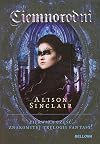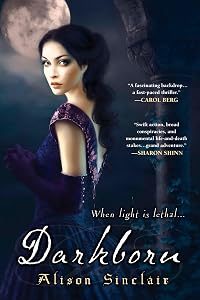
On This Page
Description
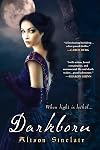
For the Darkborn, sunlight kills. For the Lightborn, darkness is fatal. Living under a centuries-old curse, the Darkborn and Lightborn share the city of Minhorne, co-existing in an uneasy equilibrium but never interacting. When Darkborn physician Balthasar Hearne finds a pregnant fugitive on his doorstep just before sunrise, he has no choice but to take her in. When men come for her children, Balthasar is saved by the intervention of his Lightborn neighbour.Tags
Recommendations









Member Recommendations

ultimatebookwyrm Although Barrayar is a sci-fi and Darkborn is fantasy, both have great characters, a fast-moving plot, mystery, suspense, action, and phenomenal world-building. Plus a kick-ass Mom who will stop at nothing to retrieve her child.
sandstone78 Fantasy that plays with the concepts of day and night in mannered societies.
Litrvixen A young woman falls in love with a visitor from a dark world who cant endure sunlight.
Member Reviews
I liked this book more than I expected. Well, from the cover and the blurb, I expected more fluff. When I started reading, perhaps because of that, the book felt more stiff to me than was necessary. However, just one or two more chapters in, it had captured me, and I found it to have more depth than expected.
For one, the world is quite original. Due to a long-ago curse, half the people cannot stand the light (darkborn) and half cannot stand the dark (lightborn). The lightborn and darkborn are living side-by-side, unable to be in the same room together. The only way they can manage it is by dividing a room using a paper screen. a sign of trust in itself, because if the paper wall were to be breached, the darkborn would burn. Then there show more is such a thing as shadowborn, who exist on the border of the realm and aggressively attack the darkborn who live there. The darkborn cannot see, and use a sort of sonar (sonn) instead. Although there were some little issues with sonn at the beginning, where I felt there were some inconsistencies, the concept is quite intriguing.
This first book mostly follows the darkborn, but there is some interaction with the lightborn as well, since the main characters share a house with lightborn (using the paper-wall concept).
Then, the characters. I felt they were amazingly diverse. There is a psychiatrist, an aristocrat lady who despite wanting to fit into society, flaunts its rules by marrying him, and the psychiatrist's sister, who is a mage and healer, and works in a hospital (something that is equally flaunting the rules, since in darkborn society, magic is abhorred and women are expected to be ornaments). Then there is the darkborn mage who fights the shadowborn, and the lightborn assassin who is a guard of the lightborn princes.
Perhaps more importantly, the characters had a depth to them that I was not expecting. What I loved most is that although the story starts with Balthasar, the psychiatrist, before long it becomes clear that the real protagonist is his wife Telmaine. She is expected to be ornamental and tries to conform to society where she must, although it means hiding her abilities. Even while denying her own powers, she does not lack courage, however, and when events force her to use them, she is no cowering wallflower. I was glad that the men directly around her (Balthasar and the shadowhunter Ishmael) may sometimes be worried about her safety, but they also recognize her strength and the necessity of the situation and do not stand in her way. Considering that this is the society that belittles women, the number of strong women in it and the number of men who are willing to support them gives high hopes for the sequels, which I expect to focus more on lightborn society (where women are values as equals).
I think there is more to say about this book, but for now I will simply warmly recommend it to anyone interested in good fantasy. show less
For one, the world is quite original. Due to a long-ago curse, half the people cannot stand the light (darkborn) and half cannot stand the dark (lightborn). The lightborn and darkborn are living side-by-side, unable to be in the same room together. The only way they can manage it is by dividing a room using a paper screen. a sign of trust in itself, because if the paper wall were to be breached, the darkborn would burn. Then there show more is such a thing as shadowborn, who exist on the border of the realm and aggressively attack the darkborn who live there. The darkborn cannot see, and use a sort of sonar (sonn) instead. Although there were some little issues with sonn at the beginning, where I felt there were some inconsistencies, the concept is quite intriguing.
This first book mostly follows the darkborn, but there is some interaction with the lightborn as well, since the main characters share a house with lightborn (using the paper-wall concept).
Then, the characters. I felt they were amazingly diverse. There is a psychiatrist, an aristocrat lady who despite wanting to fit into society, flaunts its rules by marrying him, and the psychiatrist's sister, who is a mage and healer, and works in a hospital (something that is equally flaunting the rules, since in darkborn society, magic is abhorred and women are expected to be ornaments). Then there is the darkborn mage who fights the shadowborn, and the lightborn assassin who is a guard of the lightborn princes.
Perhaps more importantly, the characters had a depth to them that I was not expecting. What I loved most is that although the story starts with Balthasar, the psychiatrist, before long it becomes clear that the real protagonist is his wife Telmaine. She is expected to be ornamental and tries to conform to society where she must, although it means hiding her abilities. Even while denying her own powers, she does not lack courage, however, and when events force her to use them, she is no cowering wallflower. I was glad that the men directly around her (Balthasar and the shadowhunter Ishmael) may sometimes be worried about her safety, but they also recognize her strength and the necessity of the situation and do not stand in her way. Considering that this is the society that belittles women, the number of strong women in it and the number of men who are willing to support them gives high hopes for the sequels, which I expect to focus more on lightborn society (where women are values as equals).
I think there is more to say about this book, but for now I will simply warmly recommend it to anyone interested in good fantasy. show less
I have had the Darkborn trilogy on my bookshelf to read for quite awhile. I’ve actually started it a couple times and just couldn’t get past the first couple chapters. I was determined to read at least the first 100 pages this time to give it a fair shot….I still didn’t like it much.
Let’s start with the things I thought were interesting. I think the main draw for this story is the unique world. Sinclair has created a world with two different species of human: one that will burn in the light and lives in the dark and one that will unravel in darkness but thrives in the light. What is interesting is they live side by side (literally) in the same cities. There is a council of representatives that meet occasionally to make sure show more both species are coexisting okay. Despite that each species has their own forms of government and generally lead completely separate lives from each other. This whole concept is a bit unbelievable but still kind of neat.
Okay, so then why did I stop reading it? Well there are a lot of readings. First of all the characters names were tough to keep track of; two of the main heroines have names that are very close and I was constantly getting confused about who was doing what. Secondly the book jumps around between POVs a lot and it just wasn’t working; it was jarring when we switched POV and not at all well done. Thirdly our main heroine, Telmaine, is married to sweet and scientific minded man who adores her and whom she adores. She has two lovely children and is generally happy. Then when another mage enters the story (an older man) she is suddenly drawn to him. Now I didn’t get to the point where she actually cheats on her wonderful husband but that’s kind of where the story seemed to be going and it was just...yucky.
Less specifically I didn’t like that the story didn’t flow well and was very hard to engage with. The characters were likewise hard to engage with and I pretty much struggled to read every page of this book. I read it until 100 pages and then stopped. This is one of those cases where I just didn’t have the patience or time to read something I just was not enjoying.
Overall I didn’t like this book. The world-building is well done and unique but the characters were hard to engage with and the story didn’t flow well. I wouldn’t recommend this and, obviously, won’t be reading the last two books in the series. show less
Let’s start with the things I thought were interesting. I think the main draw for this story is the unique world. Sinclair has created a world with two different species of human: one that will burn in the light and lives in the dark and one that will unravel in darkness but thrives in the light. What is interesting is they live side by side (literally) in the same cities. There is a council of representatives that meet occasionally to make sure show more both species are coexisting okay. Despite that each species has their own forms of government and generally lead completely separate lives from each other. This whole concept is a bit unbelievable but still kind of neat.
Okay, so then why did I stop reading it? Well there are a lot of readings. First of all the characters names were tough to keep track of; two of the main heroines have names that are very close and I was constantly getting confused about who was doing what. Secondly the book jumps around between POVs a lot and it just wasn’t working; it was jarring when we switched POV and not at all well done. Thirdly our main heroine, Telmaine, is married to sweet and scientific minded man who adores her and whom she adores. She has two lovely children and is generally happy. Then when another mage enters the story (an older man) she is suddenly drawn to him. Now I didn’t get to the point where she actually cheats on her wonderful husband but that’s kind of where the story seemed to be going and it was just...yucky.
Less specifically I didn’t like that the story didn’t flow well and was very hard to engage with. The characters were likewise hard to engage with and I pretty much struggled to read every page of this book. I read it until 100 pages and then stopped. This is one of those cases where I just didn’t have the patience or time to read something I just was not enjoying.
Overall I didn’t like this book. The world-building is well done and unique but the characters were hard to engage with and the story didn’t flow well. I wouldn’t recommend this and, obviously, won’t be reading the last two books in the series. show less
I liked this book more than I expected. Well, from the cover and the blurb, I expected more fluff. When I started reading, perhaps because of that, the book felt more stiff to me than was necessary. However, just one or two more chapters in, it had captured me, and I found it to have more depth than expected.
For one, the world is quite original. Due to a long-ago curse, half the people cannot stand the light (darkborn) and half cannot stand the dark (lightborn). The lightborn and darkborn are living side-by-side, unable to be in the same room together. The only way they can manage it is by dividing a room using a paper screen. a sign of trust in itself, because if the paper wall were to be breached, the darkborn would burn. Then there show more is such a thing as shadowborn, who exist on the border of the realm and aggressively attack the darkborn who live there. The darkborn cannot see, and use a sort of sonar (sonn) instead. Although there were some little issues with sonn at the beginning, where I felt there were some inconsistencies, the concept is quite intriguing.
This first book mostly follows the darkborn, but there is some interaction with the lightborn as well, since the main characters share a house with lightborn (using the paper-wall concept).
Then, the characters. I felt they were amazingly diverse. There is a psychiatrist, an aristocrat lady who despite wanting to fit into society, flaunts its rules by marrying him, and the psychiatrist's sister, who is a mage and healer, and works in a hospital (something that is equally flaunting the rules, since in darkborn society, magic is abhorred and women are expected to be ornaments). Then there is the darkborn mage who fights the shadowborn, and the lightborn assassin who is a guard of the lightborn princes.
Perhaps more importantly, the characters had a depth to them that I was not expecting. What I loved most is that although the story starts with Balthasar, the psychiatrist, before long it becomes clear that the real protagonist is his wife Telmaine. She is expected to be ornamental and tries to conform to society where she must, although it means hiding her abilities. Even while denying her own powers, she does not lack courage, however, and when events force her to use them, she is no cowering wallflower. I was glad that the men directly around her (Balthasar and the shadowhunter Ishmael) may sometimes be worried about her safety, but they also recognize her strength and the necessity of the situation and do not stand in her way. Considering that this is the society that belittles women, the number of strong women in it and the number of men who are willing to support them gives high hopes for the sequels, which I expect to focus more on lightborn society (where women are values as equals).
I think there is more to say about this book, but for now I will simply warmly recommend it to anyone interested in good fantasy. show less
For one, the world is quite original. Due to a long-ago curse, half the people cannot stand the light (darkborn) and half cannot stand the dark (lightborn). The lightborn and darkborn are living side-by-side, unable to be in the same room together. The only way they can manage it is by dividing a room using a paper screen. a sign of trust in itself, because if the paper wall were to be breached, the darkborn would burn. Then there show more is such a thing as shadowborn, who exist on the border of the realm and aggressively attack the darkborn who live there. The darkborn cannot see, and use a sort of sonar (sonn) instead. Although there were some little issues with sonn at the beginning, where I felt there were some inconsistencies, the concept is quite intriguing.
This first book mostly follows the darkborn, but there is some interaction with the lightborn as well, since the main characters share a house with lightborn (using the paper-wall concept).
Then, the characters. I felt they were amazingly diverse. There is a psychiatrist, an aristocrat lady who despite wanting to fit into society, flaunts its rules by marrying him, and the psychiatrist's sister, who is a mage and healer, and works in a hospital (something that is equally flaunting the rules, since in darkborn society, magic is abhorred and women are expected to be ornaments). Then there is the darkborn mage who fights the shadowborn, and the lightborn assassin who is a guard of the lightborn princes.
Perhaps more importantly, the characters had a depth to them that I was not expecting. What I loved most is that although the story starts with Balthasar, the psychiatrist, before long it becomes clear that the real protagonist is his wife Telmaine. She is expected to be ornamental and tries to conform to society where she must, although it means hiding her abilities. Even while denying her own powers, she does not lack courage, however, and when events force her to use them, she is no cowering wallflower. I was glad that the men directly around her (Balthasar and the shadowhunter Ishmael) may sometimes be worried about her safety, but they also recognize her strength and the necessity of the situation and do not stand in her way. Considering that this is the society that belittles women, the number of strong women in it and the number of men who are willing to support them gives high hopes for the sequels, which I expect to focus more on lightborn society (where women are values as equals).
I think there is more to say about this book, but for now I will simply warmly recommend it to anyone interested in good fantasy. show less
Darkborn is the first novel of a trilogy (I never would have thought I’d ever get nostalgic about these, but in this age of endless series it is quite refreshing to see someone still writing a trilogy) and it has one of the most unusal and fascinating settings I have encountered in recent years. Due to a curse whose specifics are never elucidated (but I expect the later volumes will shed some light on that) the realm the trilogy takes place in, or more precisely its inhabitants have been split apart – on the one hand there are the Darkborn who are blind and are burned by light, and the Lightborn to whom darkness is fatal.
As the novel’s title indicates, this part of the trilogy takes place among the Darkborn (although there is a show more minor character who is Lightborn and who will apparently play a larger role in the next volume), and in the way how carefully and thoroughly thought-out everything about them and their way of life is, you really notice that Allison Sinclair used to write Science Fiction. Unable to rely on sight, the Darkborn perceive the world by touch and smell, but most importantly by sound – like bats, they use echolocation to identify their surroundings and their own place relative to them. Unlike sight, it is not a passive process, but an active one, and it is also conscious, so that for a Darkborn, large parts of the world remain shrouded in shadow unless they specifically direct their attention towards them.
Allison Sinclair is very good at considering all the consequences of this, and of how the lack of sight would influence and shape a whole society of the blind, giving the impression of a world where everything connects to each other in a reasonable manner and the overall pictures makes sense. What she unfortunately is not quite so good at is in making this world come alive for the reader, or to be more precise, to rise to the peculiar esthetic challenge of making the reader feel what it might be like to live in constant darkness and perceive the world with the four remaining senses only. The problem here is not with world building (which really is admirable here), but with realising the world one has built, conjuring it for the reader so that it is not just mere statistics and an impressive concept but becomes something vivid and concrete that the reader can experience in reading the novel. Of course, it is still fiction, which is why I would like to call this effect “world conjuring” with quite intentional connations of a stage magician’s tricks. World Imagining is as much in need of this as is World Building, and it is really World Conjuring that turns either from idle daydreaming or mere doodling into literature. Therefore it stands to reason that when we’re dealing with a finished novel some kind of world conjuring will have been involved, but the degree of that involvement may vary greatly. (And before anyone asks – yes, I think you can have world conjuring without, or with only a very minimal degree of either world building or world imagining – just think of the umpteenth reiteration of Ye Olde Middle-European Medieval Fantasy Kingdom here.)
In Darkborn, then, to return to the ostensible subject of this post, there is not much emphasis on world conjuring at all, just the bare minimum to make us see the fundamental workings of this world and let us admire Alison Sinclair’s skill and thoroughness in building it - but does not really give any sense of what it is like to experience it. In all fairness it has to be said, though, that the author does not even try – she is much more interested in developing plot and character (this latter being very much the main emphasis of Darkborn) and so I’m critizising the novel the novel for lack of something it did not even set out to do. Still, I think it would have made for a better book if its language had been more evocative of the world and of the particular way its inhabitants experience it.
But while Darkborn is not as brilliant as it might have been, it is still a very solid novel - its world is fascinating, its characters multi-faceted and while the plot is not exactly fast moving, it does develop an intriguing mystery that pulls the reader in and will have me turn towards the other novels in the trilogy before too long. show less
As the novel’s title indicates, this part of the trilogy takes place among the Darkborn (although there is a show more minor character who is Lightborn and who will apparently play a larger role in the next volume), and in the way how carefully and thoroughly thought-out everything about them and their way of life is, you really notice that Allison Sinclair used to write Science Fiction. Unable to rely on sight, the Darkborn perceive the world by touch and smell, but most importantly by sound – like bats, they use echolocation to identify their surroundings and their own place relative to them. Unlike sight, it is not a passive process, but an active one, and it is also conscious, so that for a Darkborn, large parts of the world remain shrouded in shadow unless they specifically direct their attention towards them.
Allison Sinclair is very good at considering all the consequences of this, and of how the lack of sight would influence and shape a whole society of the blind, giving the impression of a world where everything connects to each other in a reasonable manner and the overall pictures makes sense. What she unfortunately is not quite so good at is in making this world come alive for the reader, or to be more precise, to rise to the peculiar esthetic challenge of making the reader feel what it might be like to live in constant darkness and perceive the world with the four remaining senses only. The problem here is not with world building (which really is admirable here), but with realising the world one has built, conjuring it for the reader so that it is not just mere statistics and an impressive concept but becomes something vivid and concrete that the reader can experience in reading the novel. Of course, it is still fiction, which is why I would like to call this effect “world conjuring” with quite intentional connations of a stage magician’s tricks. World Imagining is as much in need of this as is World Building, and it is really World Conjuring that turns either from idle daydreaming or mere doodling into literature. Therefore it stands to reason that when we’re dealing with a finished novel some kind of world conjuring will have been involved, but the degree of that involvement may vary greatly. (And before anyone asks – yes, I think you can have world conjuring without, or with only a very minimal degree of either world building or world imagining – just think of the umpteenth reiteration of Ye Olde Middle-European Medieval Fantasy Kingdom here.)
In Darkborn, then, to return to the ostensible subject of this post, there is not much emphasis on world conjuring at all, just the bare minimum to make us see the fundamental workings of this world and let us admire Alison Sinclair’s skill and thoroughness in building it - but does not really give any sense of what it is like to experience it. In all fairness it has to be said, though, that the author does not even try – she is much more interested in developing plot and character (this latter being very much the main emphasis of Darkborn) and so I’m critizising the novel the novel for lack of something it did not even set out to do. Still, I think it would have made for a better book if its language had been more evocative of the world and of the particular way its inhabitants experience it.
But while Darkborn is not as brilliant as it might have been, it is still a very solid novel - its world is fascinating, its characters multi-faceted and while the plot is not exactly fast moving, it does develop an intriguing mystery that pulls the reader in and will have me turn towards the other novels in the trilogy before too long. show less
Very good Victorian urban fantasy. Lots of good worldbuilding and characters. Best sci-fi gimmick: Darkborn live only in darkness and are blind but they have a sense called 'sonn' which is actually bat-like sonar. So, no colors, only textures. No continuous perception, only active use of the sense, which makes the one sensing also sensible to the one being sensed. Creates much dramatic tension: 'Is he sonning me?' The viewpoint characters are all honorable and vulnerable. Watching the heroine grow in kick-a**-ness is fun. The bad guys are really bad. By half-way through they have: 1) beaten and nearly killed Heroine's doctor husband 2) kidnapped their older daughter 3) killed the unmarried woman who bore twins and left them with the show more doctor husband 4) tried to frame the mage (who is helping H&H try to find their daughter) for the murder of the woman 5) blown up 9 city blocks of the city trying to kill the mage/the hidden fosterers of the twins 6) gotten the mage arrested and tried to have him killed in prison 3 or 4 times 6) started fomenting riot and rebellion in the Darkborn city folk against the Lightborn (these two peoples share the city on night and day shifts. Neither can survive in the other's time zone.) What dastardly deeds will they get up to next?
And all is concluded satisfactorily!
I really liked the author's consistency in describing a world without light, only 'sonn', and how she revealed her characters by their actions. I look forward to the sequel, Lightborn! show less
And all is concluded satisfactorily!
I really liked the author's consistency in describing a world without light, only 'sonn', and how she revealed her characters by their actions. I look forward to the sequel, Lightborn! show less
First in a series (trilogy?) but works as a stand-alone.
Intriguing worldbuilding - due to a goddess's curse, the world is divided into two races (maybe 3) those who live by night and are scorched to death by the sun, and those who live by day and cannot abide shadow. The Darkborn race cannot see, but have a sonar sense called sonning.
There are a bunch of questions raised by this arrangement, in my mind, and some are answered in this book, others presumably in the next. A few I thought were handwaved, but maybe they'll be covered properly later. Overall the author does a good job of incluing rather than info-dumping.
The first book is set, as you can guess from the title, in the world of the Darkborn, who are wary of magic and prefer show more technology - they have steam trains and clockwork automatons, though Sinclair doesn't really push the steampunk aspect. The society feels early 19th c. Anglo-French - they even have the beginnings of psychotherapy, which I thought was a really fascinating touch.
Balthasar Hearne is a physician who also treats nervous disorders, married to a gentlewoman who is hiding her magical talents (she'd lose her place in society, already precarious by her marriage). When a former love comes to his door minutes before the deadly sunrise, he is forced to shelter her - only to discover that she is about to give birth to the child of a mysterious lover. He delivers her twins and realises that one of them at least can see.
After that, things move quickly. The mother tries to murder the children by exposing them to daylight (a method of execution among the Darkborn), then thugs come after them and kidnap one of Balthasar's young daughters. In the meantime, the Shadowhunter, Ishmael Strumheller, is set on a secret and possibly suicidal mission by his spymaster, the crippled Vladimer, which will see him aiding Balthasar's wife, Telmaine - and unwillingly falling in love with her.
Overall recommended, for original worldbuilding and attention to court intrigue and commoner politicking both. There are hints of the next book in the Hearne's Lightborn neighbour, Fiamma of the White Hand, a female mage and assassin, and in the risk of outright war between Darkborn and Lightborn, possibly encouraged by the mysterious Shadowborn (creatures of the wild Shadowlands). show less
Intriguing worldbuilding - due to a goddess's curse, the world is divided into two races (maybe 3) those who live by night and are scorched to death by the sun, and those who live by day and cannot abide shadow. The Darkborn race cannot see, but have a sonar sense called sonning.
There are a bunch of questions raised by this arrangement, in my mind, and some are answered in this book, others presumably in the next. A few I thought were handwaved, but maybe they'll be covered properly later. Overall the author does a good job of incluing rather than info-dumping.
The first book is set, as you can guess from the title, in the world of the Darkborn, who are wary of magic and prefer show more technology - they have steam trains and clockwork automatons, though Sinclair doesn't really push the steampunk aspect. The society feels early 19th c. Anglo-French - they even have the beginnings of psychotherapy, which I thought was a really fascinating touch.
Balthasar Hearne is a physician who also treats nervous disorders, married to a gentlewoman who is hiding her magical talents (she'd lose her place in society, already precarious by her marriage). When a former love comes to his door minutes before the deadly sunrise, he is forced to shelter her - only to discover that she is about to give birth to the child of a mysterious lover. He delivers her twins and realises that one of them at least can see.
After that, things move quickly. The mother tries to murder the children by exposing them to daylight (a method of execution among the Darkborn), then thugs come after them and kidnap one of Balthasar's young daughters. In the meantime, the Shadowhunter, Ishmael Strumheller, is set on a secret and possibly suicidal mission by his spymaster, the crippled Vladimer, which will see him aiding Balthasar's wife, Telmaine - and unwillingly falling in love with her.
Overall recommended, for original worldbuilding and attention to court intrigue and commoner politicking both. There are hints of the next book in the Hearne's Lightborn neighbour, Fiamma of the White Hand, a female mage and assassin, and in the risk of outright war between Darkborn and Lightborn, possibly encouraged by the mysterious Shadowborn (creatures of the wild Shadowlands). show less
I happened upon Darkborn when I was at Chapters the other day. I’d never heard of the author or her series but I was immediately drawn in by the cover art and the blurb on the back, which I’m going to quote here:
For the Darkborn, sunlight kills. For the Lightborn, darkness is fatal. Living under a centuries-old curse, the Darkborn and the Lightborn share the city of Minhorne, coexisting in an uneasy equilibrium but never interacting…
When Darkborn physician Balthasar Hearne finds a pregnant fugitive on his doorstep just before sunrise, he has no choice but to take her in. Tercelle Amberley’s betrothed is a powerful Darkborn nobleman, but her illicit lover came to her through the daytime. When she gives birth to twin boys, they show more can see–something unheard of among the Darkborn.
Soon after, men arrive in search of the children. Balthasar is saved only by the intervention of his Lightborn neighbor–and healed by the hands of his wife, Telmaine.Soon Balthasar finds himself ensnared in a web of political intrigue and magic as an ancient enemy of both Darkborn and Lightborn appears in a new guise and with a hatred that has never waned. And Telmaine must confront a power she can no longer keep sheathed in gloves, a power she neither wants nor can control…
Awesome, no?
I really enjoyed reading Darkborn. It’s a great adventure, set in a very interesting world. Alison Sinclair has done a marvelous job crafting the world and its inhabitants and I love the way you just get tossed right in. I was a little confused at first, particularly about how sonning worked, but it came together rather quickly once I settled in. In terms of characters, I thought Telmaine, Ishmael, and Floria were fantastic; Bal was a little less inspiring but I think that’s what the author intended since she made him a softer, though by no means weak, man. Many of the secondary characters were intriguing and well developed, which makes me want to see more of them in the next book, Lightborn. (I’m going to have to wait a while for that, though, since it’s out in trade paperback format only right now; I have resolved to wait for some books to come out as mass market paperbacks to spare my pocketbook.)
All in all, Darkborn was a treat. The pages fly by effortlessly and I was completely sucked into this perfectly divided but oddly overlapping world. I highly recommend this book.
Also posted at http://ireadgood.wordpress.com show less
For the Darkborn, sunlight kills. For the Lightborn, darkness is fatal. Living under a centuries-old curse, the Darkborn and the Lightborn share the city of Minhorne, coexisting in an uneasy equilibrium but never interacting…
When Darkborn physician Balthasar Hearne finds a pregnant fugitive on his doorstep just before sunrise, he has no choice but to take her in. Tercelle Amberley’s betrothed is a powerful Darkborn nobleman, but her illicit lover came to her through the daytime. When she gives birth to twin boys, they show more can see–something unheard of among the Darkborn.
Soon after, men arrive in search of the children. Balthasar is saved only by the intervention of his Lightborn neighbor–and healed by the hands of his wife, Telmaine.Soon Balthasar finds himself ensnared in a web of political intrigue and magic as an ancient enemy of both Darkborn and Lightborn appears in a new guise and with a hatred that has never waned. And Telmaine must confront a power she can no longer keep sheathed in gloves, a power she neither wants nor can control…
Awesome, no?
I really enjoyed reading Darkborn. It’s a great adventure, set in a very interesting world. Alison Sinclair has done a marvelous job crafting the world and its inhabitants and I love the way you just get tossed right in. I was a little confused at first, particularly about how sonning worked, but it came together rather quickly once I settled in. In terms of characters, I thought Telmaine, Ishmael, and Floria were fantastic; Bal was a little less inspiring but I think that’s what the author intended since she made him a softer, though by no means weak, man. Many of the secondary characters were intriguing and well developed, which makes me want to see more of them in the next book, Lightborn. (I’m going to have to wait a while for that, though, since it’s out in trade paperback format only right now; I have resolved to wait for some books to come out as mass market paperbacks to spare my pocketbook.)
All in all, Darkborn was a treat. The pages fly by effortlessly and I was completely sucked into this perfectly divided but oddly overlapping world. I highly recommend this book.
Also posted at http://ireadgood.wordpress.com show less
Members
- Recently Added By
Lists

Gaslamp Fantasy
87 works; 15 members

Future Green Dragon Group Read Books
80 works; 6 members
Author Information

9+ Works 1,022 Members
Some Editions
Series

Common Knowledge
- Canonical title
- Darkborn
- Original title
- Darkborn
- Original publication date
- 2009-05-05
- People/Characters
- Telmaine Hearne; Balthasar Hearne; Ishmael de Studier, Baron Sturmheller
- Important places
- Minhorne
Classifications
Statistics
- Members
- 379
- Popularity
- 83,022
- Reviews
- 20
- Rating
- (3.31)
- Languages
- English, German, Polish
- Media
- Paper, Ebook
- ISBNs
- 6
- ASINs
- 3