On This Page
Description
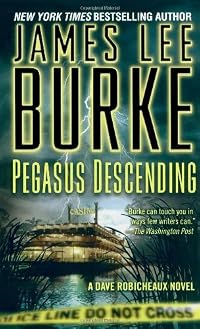
Detective Dave Robicheaux is facing the most painful and dangerous case of his career. A troubled young woman breezes into his hometown of New Iberia, Louisiana. She happens to be the daughter of Robicheaux's onetime best friend--a friend he witnessed gunned down in a bank robbery, a tragedy that forever changed Robicheaux's life. The twists begin when Trish Klein--the only offspring of Robicheaux's Vietnam-era buddy--starts passing marked hundred-dollar bills in local casinos. Is she a good show more kid gone bad? A victim's child seeking revenge? A promiscuous beauty seducing everyone good within her grasp? And how does her behavior relate to the apparent suicide of another "good" girl, an ace student named Yvonne Darbonne, who apparently participated in a college frat orgy before her death?--From publisher description. show lessTags
Recommendations







































Member Reviews
The past sin Robicheaux has to tackle in this circle of purgatory finds him drunk almost to stupor and watching a friend gunned down during an armored car robbery. Dave can't sober himself up enough to save his friend. He knows the people behind the robbery and murder but nobody listens to a drunk, especially not a drunk cop. Years later, the daughter of that friend shows up in New Iberia. It may be that the daughter wants revenge, but she's going about it in less than legal means, and that puts her in Dave's sights.
While that's one plot avenue, Dave is also working the unsolved hit-and-run death of an unidentified man, and the senseless suicide of a young college girl - the same family keeps turning up in those two cases. Burke is in show more a groove!
5 bones!!!!!
Highly recommended! show less
While that's one plot avenue, Dave is also working the unsolved hit-and-run death of an unidentified man, and the senseless suicide of a young college girl - the same family keeps turning up in those two cases. Burke is in show more a groove!
5 bones!!!!!
Highly recommended! show less
Years ago, Dave Robicheaux witnessed a good friend’s brutal death during a bank robbery at a time when Robicheaux was too drunk to intervene or help. This memory has followed him through sobriety and into his job as a detective with the Iberia Parish Sheriff’s Department. Robicheaux is unsettled when Trish Klein, his dead friend’s daughter, shows up in his hometown, even more so that the men he thinks responsible for his friend’s death are now living there. Robicheaux suspects Trish has vengeance on her mind and grows concerned when he learns Clete Purcel, his former partner and best friend, is involved with Trish. Even more discomfiting to Robicheaux is his investigation into the apparent suicide of a young college student that show more leads back to the men who killed his friend years earlier.
Dave Robicheaux is a complex character, an alcoholic haunted by demons from his tour of duty in Vietnam. Married to a former nun, Robicheaux desperately tries to lead a good life and seeks redemption through her, but cannot shake the past nor his more primitive nature. James Lee Burke writes with a love and admiration for southern Louisiana, delivered with a Cajunesque lilt. The plot is twisty enough to keep the reader guessing, the characterization intriguing. show less
Dave Robicheaux is a complex character, an alcoholic haunted by demons from his tour of duty in Vietnam. Married to a former nun, Robicheaux desperately tries to lead a good life and seeks redemption through her, but cannot shake the past nor his more primitive nature. James Lee Burke writes with a love and admiration for southern Louisiana, delivered with a Cajunesque lilt. The plot is twisty enough to keep the reader guessing, the characterization intriguing. show less
Unlike many of his other novels, I read Pegasus Descending, rather than listening to the audiobook. Reading James Lee Burke is different than listening to the audiobook. The chosen narrators have really captured the character of Dave Robicheaux. I have those voices in my head now when I read a Robicheaux novel. It works.
A few general observations that struck me about JL Burke's stories: Nothing is ever as it seems. Even the gambler with a vendetta has a twist of her own. Burke doesn't do cardboard characters. They all have depth, history, and substance. The full humanity of Burke's characters is revealed gradually. A look, an unexpected response to a question, or a lack of response. A gesture, failure to make eye contact--all show more demonstrate flaws that have led or will lead to tragic consequences for one character or another.
The setting has so much depth and vibrancy, it's a character as well. Burke paints a sunset over Lake Ponchartrain or a cluster of live oaks dripping with moss that will have you believing you've been there.
One more thing: he doesn't ignore race. His stories aren't about race, but this is the South, Louisiana, and often race a factor in disputes, politics, in the social landscape. Race still matters. JL Burke doesn't forget that.
Pegasus Descending starts out similar to other Robicheaux stories: unrelated incidents in Dave's life dredges up the past, and they gradually converge into a big problem for Dave. In the end, one thing remains true: In Dave Robicheaux's world, solutions are never easy, and justice is never simple. show less
A few general observations that struck me about JL Burke's stories: Nothing is ever as it seems. Even the gambler with a vendetta has a twist of her own. Burke doesn't do cardboard characters. They all have depth, history, and substance. The full humanity of Burke's characters is revealed gradually. A look, an unexpected response to a question, or a lack of response. A gesture, failure to make eye contact--all show more demonstrate flaws that have led or will lead to tragic consequences for one character or another.
The setting has so much depth and vibrancy, it's a character as well. Burke paints a sunset over Lake Ponchartrain or a cluster of live oaks dripping with moss that will have you believing you've been there.
One more thing: he doesn't ignore race. His stories aren't about race, but this is the South, Louisiana, and often race a factor in disputes, politics, in the social landscape. Race still matters. JL Burke doesn't forget that.
Pegasus Descending starts out similar to other Robicheaux stories: unrelated incidents in Dave's life dredges up the past, and they gradually converge into a big problem for Dave. In the end, one thing remains true: In Dave Robicheaux's world, solutions are never easy, and justice is never simple. show less
I've now read books 1 through 7, 9, 11, and 15 in the Dave Robicheaux series, and I'm sad to report this will be my last, as each new book seems to reinforce Burke's flaws without building further on his great strengths. There have been no good surprises in several books now.
The repetitiveness of the later entries of the Robicheaux series shouldn't detract from Burke's achievement in creating an intriguingly complex hero and a rich and unique environment in which he lives and works. Burke is one of the very best thriller writers from the standpoint of prose style. His descriptions are fine, and when probing human character he never underestimates the reader's capacity to register nuance. You can pick up almost any of these books as your show more first, and be satisfied. But I'd start at the beginning. show less
The repetitiveness of the later entries of the Robicheaux series shouldn't detract from Burke's achievement in creating an intriguingly complex hero and a rich and unique environment in which he lives and works. Burke is one of the very best thriller writers from the standpoint of prose style. His descriptions are fine, and when probing human character he never underestimates the reader's capacity to register nuance. You can pick up almost any of these books as your show more first, and be satisfied. But I'd start at the beginning. show less
I had never read a book by James Lee Burke until two months ago. If you've never read James Lee Burke, you're probably saying, "Yeah, so what?" If you have read him, though, the words running through your head are more likely to be, "What the hell took you so long?"
You know, it sometimes seems as if I've shelved practically every book there is at least once. Some books, I've shelved dozens of times. The books of James Lee Burke fall into the latter category. I love shelving in the fiction sections, and heck, I'm the boss, so I shelve wherever I want. I finally picked up one of James Lee Burke's books for a purpose other than placing it alphabetically on a shelf a couple of months ago, after running out of things to read (I know--I have show more pile upon pile of unread books in every room of the house, not to mention all the books that have made it to the shelves without ever having been read...still, I run out. It's not rational, so don't ask me to explain it.). I had grabbed an advance reading copy of his latest book Pegasus Descending, at a publisher's expo, and decided to give it a whirl.
I read the first paragraph:
"In the early 1980s, when I was still going steady with Jim Beam straight-up and a beer back, I became part of an exchange program between NOPD and a training academy for police cadets in Dade County, Florida. That meant I did a limited amount of work in a Homicide unit at Miami P.D. and taught a class in criminal justice at a community college way up on N.W. 27th Avenue, not far from a place called Opa-Locka."
Okay, I thought to myself, I'm willing to give this a try. It seems kind of hard-boiled (which I like), it's set in the south (a geographic and cultural area I'm relatively unfamiliar with), and it's not awkwardly written or overly cliched (so far).
So I read the next paragraph. Two sentences in, I was intrigued. "Opa-Locka was a gigantic pink stucco-and-plaster nightmare designed to look like a complex of Arabian mosques. In the early A.M., fog from either the ocean or the Glades, mixed with dust and carbon monoxide, clung like strips of dirty cotton to the decrepit minarets and cracked walls of the buildings." By the end of the paragraph I was hooked. "Low-rider gangbangers, the broken mufflers of their gas-guzzlers throbbing against the asphalt, smashed liquor bottles on the sidewalks and no one said a word." A beastly hot, polluted, crime-ridden community of bad luck and no hope drawn in seven amazing sentences.
Forget the compelling plot, forget the beautifully rendered characters fully informed by their pasts and being flung--sometimes on their own steam and sometimes propelled by forces beyond their control--into their futures, forget the exquisite descriptions of New Orleans and the New Iberia bayou, so real that you find yourself wiping the sweat off your brow and reaching for a long swallow of the Jax beer you think should be at your elbow--hell, I hadn't even gotten to any of those things yet. But this writing. This is writing that elevates the genre.
I know, James Lee Burke could probably care the less whether some bookseller believes his chosen genre is elevated by the caliber of his writing. He might even believe that the genre is just fine as it is, and has no need to be elevated. Shit, I kind of think that myself. I love a down-and-dirty thriller, driven by its dark cliches and workmanlike writing. But this writing. This writing. So unique. Simultaneously pure and ornate (how is that even possible). So evocative. So beautiful.
The action in Pegasus Descending ranges over two and a half decades, starting in 1980 with a violent, unsolved armored car robbery and murder, witnessed, drunkenly, by Dave Robichaux. Twenty-five years later the chain of events begun in 1980 in Dade County, Florida find their way to New Iberia, Louisiana. Now, as then, though he's clean and sober, married with a grown-up daughter, Dave Robichaux finds himself drawn into events, haunted by his past short-comings and driven to solve the case and make it right.
Although the story, as in all of Burke's novels, is a good one, well plotted and well told, it's the characters (both human and geographic, for New Orleans and its environs is as important a character as any)--particularly that of Dave Robichaux--that drive them. Dave Robichaux is as deep, complex, and interesting as they come: Vietnam vet, constantly recovering alcoholic, multiply married (three or four? I'm not sure, as I've read only four of the novels, and these out of chronological order), the voice of a poet with an almost unbearable violent streak. Robichaux makes mistakes, repeats those mistakes, realizes as he's making a mistake how foolish he's being. He's tender with his wife, he's stubborn in his convictions. He's often wrong. But he gets the job done, and so does James Lee Burke.
Burke ends this novel with a brief, post-Hurricanes Katrina and Rita coda, which, in other hands, might have been a cold and calculating move to gain sales with a release timed to just barely precede the anniversary of the storms. Rather, it celebrates the resilience of the people, and the heroes who worked round the clock to save them. "If there are saints who walk among us, many of them wear the uniform of the United States Coast Guard. They flew without rest or sleep, day after day, suspended from cables, holding the infirm and the elderly and the helpless against their chests, with no regard for their own safety, with a level of courage that others might equal but never surpass." And, "...you don't surrender the country of your birth to either the forces of greed or natural calamity. The songs in our hearts don't die. The spring will come aborning again, whether we're here for it or not."
Please read James Lee Burke. Read him for his edge-of-the-seat thrillers. Read him for his unforgettable characters. But most of all, read him for his heavenly prose. show less
You know, it sometimes seems as if I've shelved practically every book there is at least once. Some books, I've shelved dozens of times. The books of James Lee Burke fall into the latter category. I love shelving in the fiction sections, and heck, I'm the boss, so I shelve wherever I want. I finally picked up one of James Lee Burke's books for a purpose other than placing it alphabetically on a shelf a couple of months ago, after running out of things to read (I know--I have show more pile upon pile of unread books in every room of the house, not to mention all the books that have made it to the shelves without ever having been read...still, I run out. It's not rational, so don't ask me to explain it.). I had grabbed an advance reading copy of his latest book Pegasus Descending, at a publisher's expo, and decided to give it a whirl.
I read the first paragraph:
"In the early 1980s, when I was still going steady with Jim Beam straight-up and a beer back, I became part of an exchange program between NOPD and a training academy for police cadets in Dade County, Florida. That meant I did a limited amount of work in a Homicide unit at Miami P.D. and taught a class in criminal justice at a community college way up on N.W. 27th Avenue, not far from a place called Opa-Locka."
Okay, I thought to myself, I'm willing to give this a try. It seems kind of hard-boiled (which I like), it's set in the south (a geographic and cultural area I'm relatively unfamiliar with), and it's not awkwardly written or overly cliched (so far).
So I read the next paragraph. Two sentences in, I was intrigued. "Opa-Locka was a gigantic pink stucco-and-plaster nightmare designed to look like a complex of Arabian mosques. In the early A.M., fog from either the ocean or the Glades, mixed with dust and carbon monoxide, clung like strips of dirty cotton to the decrepit minarets and cracked walls of the buildings." By the end of the paragraph I was hooked. "Low-rider gangbangers, the broken mufflers of their gas-guzzlers throbbing against the asphalt, smashed liquor bottles on the sidewalks and no one said a word." A beastly hot, polluted, crime-ridden community of bad luck and no hope drawn in seven amazing sentences.
Forget the compelling plot, forget the beautifully rendered characters fully informed by their pasts and being flung--sometimes on their own steam and sometimes propelled by forces beyond their control--into their futures, forget the exquisite descriptions of New Orleans and the New Iberia bayou, so real that you find yourself wiping the sweat off your brow and reaching for a long swallow of the Jax beer you think should be at your elbow--hell, I hadn't even gotten to any of those things yet. But this writing. This is writing that elevates the genre.
I know, James Lee Burke could probably care the less whether some bookseller believes his chosen genre is elevated by the caliber of his writing. He might even believe that the genre is just fine as it is, and has no need to be elevated. Shit, I kind of think that myself. I love a down-and-dirty thriller, driven by its dark cliches and workmanlike writing. But this writing. This writing. So unique. Simultaneously pure and ornate (how is that even possible). So evocative. So beautiful.
The action in Pegasus Descending ranges over two and a half decades, starting in 1980 with a violent, unsolved armored car robbery and murder, witnessed, drunkenly, by Dave Robichaux. Twenty-five years later the chain of events begun in 1980 in Dade County, Florida find their way to New Iberia, Louisiana. Now, as then, though he's clean and sober, married with a grown-up daughter, Dave Robichaux finds himself drawn into events, haunted by his past short-comings and driven to solve the case and make it right.
Although the story, as in all of Burke's novels, is a good one, well plotted and well told, it's the characters (both human and geographic, for New Orleans and its environs is as important a character as any)--particularly that of Dave Robichaux--that drive them. Dave Robichaux is as deep, complex, and interesting as they come: Vietnam vet, constantly recovering alcoholic, multiply married (three or four? I'm not sure, as I've read only four of the novels, and these out of chronological order), the voice of a poet with an almost unbearable violent streak. Robichaux makes mistakes, repeats those mistakes, realizes as he's making a mistake how foolish he's being. He's tender with his wife, he's stubborn in his convictions. He's often wrong. But he gets the job done, and so does James Lee Burke.
Burke ends this novel with a brief, post-Hurricanes Katrina and Rita coda, which, in other hands, might have been a cold and calculating move to gain sales with a release timed to just barely precede the anniversary of the storms. Rather, it celebrates the resilience of the people, and the heroes who worked round the clock to save them. "If there are saints who walk among us, many of them wear the uniform of the United States Coast Guard. They flew without rest or sleep, day after day, suspended from cables, holding the infirm and the elderly and the helpless against their chests, with no regard for their own safety, with a level of courage that others might equal but never surpass." And, "...you don't surrender the country of your birth to either the forces of greed or natural calamity. The songs in our hearts don't die. The spring will come aborning again, whether we're here for it or not."
Please read James Lee Burke. Read him for his edge-of-the-seat thrillers. Read him for his unforgettable characters. But most of all, read him for his heavenly prose. show less
This is the fifteenth novel in the Dave Robicheaux series and James Lee Burke is at the top of his game. He has everything working: great characters, a great mystery plot with three murders intertwined, beautiful descriptive writing that makes the background come alive, all coming together in an ending that picks up speed like a fast train and then explodes with surprises like 4th of July fireworks. I listened to this on an audiobook which I will not do again with a James Lee Burke novel. I have to look all over to get the spelling of the names and I can't go back and savor a particularly good scene.
The story opens with the death of a lovely young woman Yvonne Darbonne. She starts out the day dancing to John Lee Hooker's "Boom, Boom" show more and ends up raped, full of drugs and with a hole in her head, probably self-inflicted. Then the corpse of Crustacean Man is found about 12 months dead from what looks like a hit and run. Then as the story moves on the body of Tony Lujan is found. A sensitive young man who had his face blown off with a shotgun. The last murder is that of Bella Lujan, Tony's father, his body eviscerated with vicious blows from a pickax whose tip was ground to a fine point to make a killing weapon.
Throughout the book Dave is haunted by the death of Dallas Klein, a friend who got caught up with guys who don't play, murdered in front of Dave who is too drunk to stop it. His daughter Trish Klein comes into the story out to get Whitey Bruxal an old time Miami hood who was responsible for her father's death.
Dave, as always, is trying to solve the secrets of life as he investigates the three murders. His inner monologue on the morality of life provides a moral compass that helps Dave navigate the stormy waters.
Clete Purcel enters the scene and hooks up with Trish Klein putting himself in harm's way chasing the dreams of his lost youth.
Only James Lee Burke can make you feel the mist coming in off of the water or notice the the hairline wrinkles around the mouth of Mrs. Lujan. Besides the criminals Lonnie Marceau, the Parish District Attorney, joins the list of bad guys with an ego fueled by the ambition to go to Washington.
Monarch Little a local gang banger and drug dealer is cast in the role of Tony Lujan's murderer by everyone except Dave.
Dave's support group of Molly, Clete and Sheriff Helen Soileau shake their heads when Dave's violence overflows and he lashes out and breaks one of Lonnie Marceau's teeth.
In the end it is the repeated sifting through the evidence that brings a solution to the crimes. Trish does pull an unwelcome surprise on Whitey Bruxal hitting him in his money bags. The bad guys go to jail and the good guys go on to another day.
James Lee Burke is an excellent writer. He makes you think as he entertains you. He presents the world as it is more greys than black and white. He adds moral content to a world of violence and evil. Do yourself a favor and try one of his books, betcha you can't read just one. show less
The story opens with the death of a lovely young woman Yvonne Darbonne. She starts out the day dancing to John Lee Hooker's "Boom, Boom" show more and ends up raped, full of drugs and with a hole in her head, probably self-inflicted. Then the corpse of Crustacean Man is found about 12 months dead from what looks like a hit and run. Then as the story moves on the body of Tony Lujan is found. A sensitive young man who had his face blown off with a shotgun. The last murder is that of Bella Lujan, Tony's father, his body eviscerated with vicious blows from a pickax whose tip was ground to a fine point to make a killing weapon.
Throughout the book Dave is haunted by the death of Dallas Klein, a friend who got caught up with guys who don't play, murdered in front of Dave who is too drunk to stop it. His daughter Trish Klein comes into the story out to get Whitey Bruxal an old time Miami hood who was responsible for her father's death.
Dave, as always, is trying to solve the secrets of life as he investigates the three murders. His inner monologue on the morality of life provides a moral compass that helps Dave navigate the stormy waters.
Clete Purcel enters the scene and hooks up with Trish Klein putting himself in harm's way chasing the dreams of his lost youth.
Only James Lee Burke can make you feel the mist coming in off of the water or notice the the hairline wrinkles around the mouth of Mrs. Lujan. Besides the criminals Lonnie Marceau, the Parish District Attorney, joins the list of bad guys with an ego fueled by the ambition to go to Washington.
Monarch Little a local gang banger and drug dealer is cast in the role of Tony Lujan's murderer by everyone except Dave.
Dave's support group of Molly, Clete and Sheriff Helen Soileau shake their heads when Dave's violence overflows and he lashes out and breaks one of Lonnie Marceau's teeth.
In the end it is the repeated sifting through the evidence that brings a solution to the crimes. Trish does pull an unwelcome surprise on Whitey Bruxal hitting him in his money bags. The bad guys go to jail and the good guys go on to another day.
James Lee Burke is an excellent writer. He makes you think as he entertains you. He presents the world as it is more greys than black and white. He adds moral content to a world of violence and evil. Do yourself a favor and try one of his books, betcha you can't read just one. show less
January 2007:
The latest Dave Robicheaux novel, and one of the best. If you read Burke, you know his special brand of detective fiction--hard boiled, but redemptive. His assessment of humanity is scathing and hopeful at the same time. And Louisiana is a character in every book. This one climaxes just before Hurricane Katrina hit the coast and wiped out much of Southern Louisiana, for decades, if not for always.
The latest Dave Robicheaux novel, and one of the best. If you read Burke, you know his special brand of detective fiction--hard boiled, but redemptive. His assessment of humanity is scathing and hopeful at the same time. And Louisiana is a character in every book. This one climaxes just before Hurricane Katrina hit the coast and wiped out much of Southern Louisiana, for decades, if not for always.
Members
- Recently Added By
Author Information

122+ Works 38,456 Members
James Lee Burke, winner of two Edgar awards, is the author of nineteen previous novels, many of them "New York Times" bestsellers, including "Cimmaron Rose", Cadillac Jukebox", & "Sunset Limited". He & his wife divide their time between Missoula, Montana, & New Iberia, Louisiana. (Publisher Provided)
Some Editions
Awards and Honors
Distinctions
Series

Work Relationships
Common Knowledge
- Canonical title
- Pegasus Descending
- Original publication date
- 2006
- People/Characters
- Clete Purcel; Dave Robicheaux
- Important places
- Atchafalaya Basin, Louisiana, USA; Bayou Teche, Louisiana, USA; New Iberia, Louisiana, USA
- First words
- In the early 1980's, when I was still going steady with Jim Beam straight-up and a beer back, I became part of a exchange program between NOPD and a training academy for police cadets in Dade County, Florida.
- Disambiguation notice
- Danish title (2008): Pegasus i frit fald; Norwegian title (2007): Pegasus
Classifications
Statistics
- Members
- 1,320
- Popularity
- 18,144
- Reviews
- 29
- Rating
- (4.04)
- Languages
- 5 — Danish, English, French, Italian, Norwegian (Bokmål)
- Media
- Paper, Audiobook, Ebook
- ISBNs
- 44
- UPCs
- 1
- ASINs
- 12