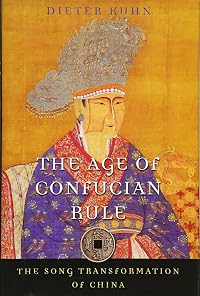
The Age of Confucian Rule: The Song Transformation of China
by Dieter Kuhn
History of Imperial China (4)
On This Page
Description
Just over a thousand years ago, the Song dynasty emerged as the most advanced civilization on earth. Within two centuries, China was home to nearly half of all humankind. In this concise history, we learn why the inventiveness of this era has been favorably compared with the European Renaissance, which in many ways the Song transformation surpassed. With the chaotic dissolution of the Tang dynasty, the old aristocratic families vanished. A new class of scholar-officials--products of a show more meritocratic examination system--took up the task of reshaping Chinese tradition by adapting the precepts of Confucianism to a rapidly changing world. Through fiscal reforms, these elites liberalized the economy, eased the tax burden, and put paper money into circulation. Their redesigned capitals buzzed with traders, while the education system offered advancement to talented men of modest means. Their rationalist approach led to inventions in printing, shipbuilding, weaving, ceramics manufacture, mining, and agriculture. With a realist's eye, they studied the natural world and applied their observations in art and science. And with the souls of diplomats, they chose peace over war with the aggressors on their borders. Yet persistent military threats from these nomadic tribes--which the Chinese scorned as their cultural inferiors--redefined China's understanding of its place in the world and solidified a sense of what it meant to be Chinese. The Age of Confucian Rule is an essential introduction to this transformative era. "A scholar should congratulate himself that he has been born in such a time" (Zhao Ruyu, 1194). show lessTags
Recommendations








Member Reviews
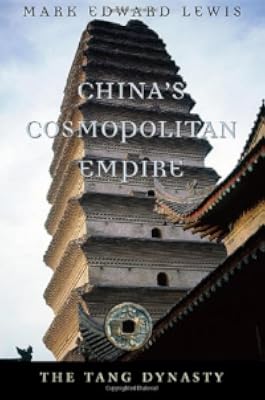
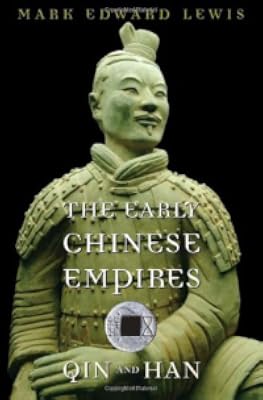
A very good introduction to a period I knew little about. Much easier reading than the earlier volumes in the series (all by Mark Edward Lewis); Kuhn includes masses of information, but it's well organized, and so you can skip paragraphs if you're not interested, safe in the knowledge that the point isn't buried in the middle somewhere. Kuhn describes the Song period (particularly the latter, Southern Song) as, essentially, a medieval version of our own world: monetized, slightly decadent, militarily unstable. But the Song, on his account, had first class administrators to see them through, and we have Trump, Putin, Erdogan and the Maybot.
I have now read the books in this series covering the Qing, Ming and Song. The book on the Ming is far and away the best of the three. This one has some interesting elements, but it also delves frequently into lists of boring statistics. I know this is a super interesting historical period, so this could have easily been made more interesting (like the Ming book). Still, I learned a TON and I don't at all regret having read this. Next up: the Tang dynasty. Really looking forward to that one!
This book is a survey of one Chinese imperial period, the Song dynasty. Like other volumes in this series, it begins with an overview of political events and then proceeds to quite detailed discussions of technology, trade and money, art and poetry and minutiae such as city layouts, family rituals, even clothing fashions. There's nothing wrong with details, but they are quickly forgotten as soon as you put down the book. The author offers very few generalizations which might be more lasting.
I was particularly disappointed with his sketchy presentation of Song political history. Despite the subtitle of this book ("The Age of Confucian Rule") the author says next to nothing about the scholarly bureaucratic system which governed China in show more this period. His presentation has a good geographic scope since it includes fairly long sections on the neighbouring empires which threatened and fought the Song empire. But this political history is very much a military narrative, where so-and-so many men fought each other at this location in that year, and that's it. Not very interesting.
In conclusion this is not a bad book to read if you're curious about imperial China. However, the author lists details instead of arguing to general conclusions, so this book isn't very helpful for actually understanding Chinese history. I would instead guide more inquisitive readers to Etienne Balazs' book "Chinese civilization and bureaucracy". show less
I was particularly disappointed with his sketchy presentation of Song political history. Despite the subtitle of this book ("The Age of Confucian Rule") the author says next to nothing about the scholarly bureaucratic system which governed China in show more this period. His presentation has a good geographic scope since it includes fairly long sections on the neighbouring empires which threatened and fought the Song empire. But this political history is very much a military narrative, where so-and-so many men fought each other at this location in that year, and that's it. Not very interesting.
In conclusion this is not a bad book to read if you're curious about imperial China. However, the author lists details instead of arguing to general conclusions, so this book isn't very helpful for actually understanding Chinese history. I would instead guide more inquisitive readers to Etienne Balazs' book "Chinese civilization and bureaucracy". show less
A Good Historical Survey
I'm no expert on early Chinese history but in my opinion this is a terrific primer on the Song Dynasty. The book is organized thematically rather than chronologically which is good because you can skip certain sections if they don't particularly interest you. For a survey text, I found that Kuhn struck a decent balance between the political, economic, social, and cultural dimensions.
Throughout the book, Kuhn uses the historical construct of neo-Confucianism to characterize the Song Dynasty. Kuhn argues that the Song Dynasty emerged as the most advanced civilization on earth transforming China based on principles of rationality, efficiency, predictability, and economic dynamism -- in short, the most pronounced show more features of enlightened modern capitalism.
So, you're probably asking what brought about its downfall?? Ghengis Khan. The nomadic ruler of the Mongols ran roughshod over all of east Asia pillaging and plundering anything and everything. Well, Kuhn doesn't go much into this but we all know where it goes from there.
Overall, this is a great introduction into early Chinese history. It is part of a broader collection, "History of Imperial China" and is certainly a good addition, I'm sure you'll find it very informative. show less
I'm no expert on early Chinese history but in my opinion this is a terrific primer on the Song Dynasty. The book is organized thematically rather than chronologically which is good because you can skip certain sections if they don't particularly interest you. For a survey text, I found that Kuhn struck a decent balance between the political, economic, social, and cultural dimensions.
Throughout the book, Kuhn uses the historical construct of neo-Confucianism to characterize the Song Dynasty. Kuhn argues that the Song Dynasty emerged as the most advanced civilization on earth transforming China based on principles of rationality, efficiency, predictability, and economic dynamism -- in short, the most pronounced show more features of enlightened modern capitalism.
So, you're probably asking what brought about its downfall?? Ghengis Khan. The nomadic ruler of the Mongols ran roughshod over all of east Asia pillaging and plundering anything and everything. Well, Kuhn doesn't go much into this but we all know where it goes from there.
Overall, this is a great introduction into early Chinese history. It is part of a broader collection, "History of Imperial China" and is certainly a good addition, I'm sure you'll find it very informative. show less
My four stars may be premature -- I have not yet read this volume. But I have read others in this series and found them good. This one follows the same pattern with an opening relatively brief overview of the political events followed by more detailed discussion of social and economic issues.
Ratings
Members
- Recently Added By
Author Information
All Editions
Series

Common Knowledge
- Canonical title
- The Age of Confucian Rule: The Song Transformation of China
Classifications
Statistics
- Members
- 139
- Popularity
- 234,264
- Reviews
- 5
- Rating
- (4.17)
- Languages
- Chinese, English, German
- Media
- Paper, Ebook
- ISBNs
- 4
- ASINs
- 1