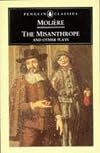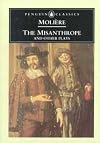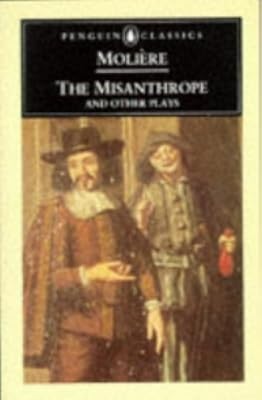
The Misanthrope and Other Plays (Penguin Classics)
by Molière
On This Page
Description
The Misanthrope, Moliere's richly sophisticated comic drama is accompanied in this volume by The Would-be Gentleman, another tale of a dangerously deluded and obsessive hero. Tartuffe dares to take on the subject of religious hypocrisy. Also included are Such Foolish Affected Ladies and Those Learned Ladies, both newly translated for this edition. Finally, The Doctor Despite Himself is a hilarious example of Moliere's long-standing vendetta against the medical profession.Tags
Recommendations































Member Reviews
Satirical plays by the French playwright who lived about a generation after Shakespeare. He uses stock characters, and places them in ridiculous situations, in order to mock the institutions of man. The church, the state, science, and the arts all get theirs sooner or later. This anthology contains five of his plays, including some of the better known such as The Misanthrope, The Imaginary Invalid, and Tartuffe. A prologue to The Imaginary Invalid (which I've never actually seen done in production that I can remember) is a tribute to King Louis XIV; an alternate prologue that actually relates to the play, is also supplied, so audiences that are no longer amazed by the feats of the King of France in 1673 can dispense with that prologue show more and perform the much shorter, more relevant prologue. It does serve to remind one of how tied to patrons (including kings) the arts were even back then, so that authors such as Moliere and Shakespeare had to couch any criticism of the state in careful language. Enjoyable reading. show less
My first exposure to Moliere. I wasn't sure what to expect but the fairly bawdy subject matter took me a little by surprise as did the common theme in all five plays of marrying off the daughter. I got some insights into the values and standards in French society of the 1600's but the themes were closer to the Carry On movies than Shakespeare.
I enjoyed this play in the most superficial way possible. It must have been a bitch to translate with thoroughly impressive results. It not only makes sense but actually rhymes! Sitcom-quality storyline holds up with the support of the ridiculous poetry of the play. I'm keeping this one in case I ever need to woo someone in rhyme. Never know when such a need will manifest.
It was through this Penguin Classic that I got to know the magic of Moliere, the humour of incongruity, the satire, the fun. It was life changing in the sense of broadening horizons and cost 5 shillings.
Each of the works in this collection has it's own character and unique fun, but taken together, they have a common themes of a foolish antagonist, innocent lovers who must resort to trickery to be together, or the impudent maid. While they are certainly fun to read, I imagine that Molière's plays are even more fun to see on the stage. For reviews of the individual plays, click on the following links: The Misanthrope, The Sicilian, Tartuffe, A Doctor in Spite of Himself, and The Imaginary Invalid.
Classic French
בשעתו לא כתבתי שום הערה על האוסף. לגבי הקמצן אין לי אלא להניח כי נהניתי לפחות כמו שנהניתי עשרים שנה מאוחר יותר כשקראתי זאת בפריז במקביל עם הצרפתית.
Dec 10, 2011Hebrew
Members
- Recently Added By
Lists

Philip Ward's Lifetime Reading Plan
592 works; 22 members

Tom's Bookstore
346 works; 2 members
Author Information

The French dramatist Moliere was born Jean-Baptiste Poquelin on January 15, 1622, in Paris. The son of a wealthy tapestry merchant, he had a penchant for the theater from childhood. In 1636, he was sent off to school at the Jesuit College of Claremont and in 1643, he embarked upon a 13-year career touring in provincial theater as a troupe member show more of Illustre Theatre, a group established by the family Bejarts. He married a daughter of the troupe, Armande Bejart, in 1662 and changed his name to Moliere. The French King Louis XIV, becoming entranced with the troupe after seeing a performance of The Would-Be Gentleman, lent his support and charged Moliere with the production of comedy ballets in which he often used real-life human qualities as backdrops rather than settings from church or state. Soon, Moliere secured a position at the Palais-Royal and committed himself to the comic theater as a dramatist, actor, producer, and director. Moliere is considered to be one of the preeminent French dramatists and writers of comedies; his work continues to delight audiences today. With L'Ecole des Femmes (The School for Wives) Moliere broke with the farce tradition, and the play, about the role played by women in society and their preparation for it, is regarded by many as the first great seriocomic work of French literature. In Tartuffe (1664), Moliere invented one of his famous comic types, that of a religious hypocrite, a character so realistic that the king forbade public performance of the play for five years. Moliere gave psychological depth to his characters, engaging them in facial antics and slapstick comedy, but with an underlying pathos. Jean Baptiste Moliere died in 1673. (Bowker Author Biography) show less
Some Editions
Awards and Honors
Notable Lists
Series
Belongs to Publisher Series
Work Relationships
Common Knowledge
- Original title
- The Misanthrope and Other Plays
- Original publication date
- 1666-06-04 The Misanthrope
- People/Characters
- Alceste; Tartuffe; Sganarelle; Argan; Adrastes
- Important places
- Paris, Île-de-France, France; Messina, Sicily, Italy
- Epigraph
- What is there left for us
that have seen newly discovered
stability of things changed from
enthusiasm to a weariness . . .
but to rediscover an art of the
theatre which shall be joyful,
fantastic, extr... (show all)avagant,
whimsical, beautiful, resonant and
altogether reckless. . . .
—W. B. Yeats - Dedication
- To René Varin
- First words
- A summary of Moliére's life and career with an estimate of his achievement as playwright and actor was given in the introduction to an earlier volume in this series.
--Introduction - Last words
- (Click to show. Warning: May contain spoilers.)[While the chorus is singing, the doctors, surgeons, and apothecaries go out all according to their several ranks, with the same ceremony as they entered.]
- Original language
- French
- Disambiguation notice
- Use this work for the older Penguin Classics edition that contained The Misanthrope, The Sicilian, Tartuffe, A Doctor in Spite of Himself, and The Imaginary Invalid. There is another work for the newer Penguin ... (show all)Classics selection.
Classifications
Statistics
- Members
- 706
- Popularity
- 40,419
- Reviews
- 7
- Rating
- (3.85)
- Languages
- English, French
- Media
- Paper, Ebook
- ISBNs
- 1
- ASINs
- 28